
Some special editions celebrate a racing victory.
Others revive a historic colour.
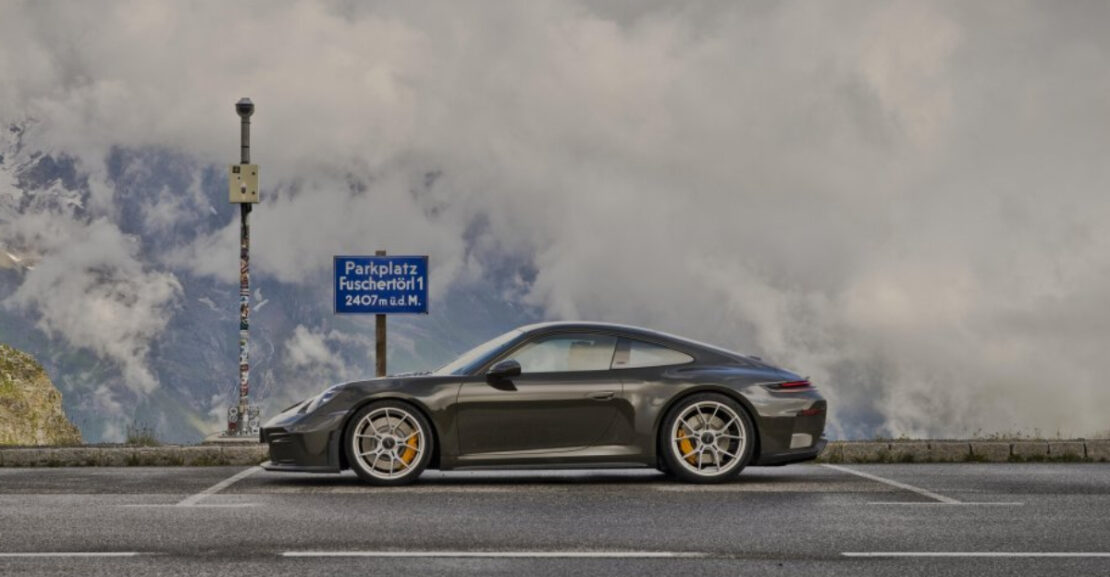
The Porsche 911 GT3 Bergsport celebrates something less tangible.
A road.
More precisely, a particular kind of road.
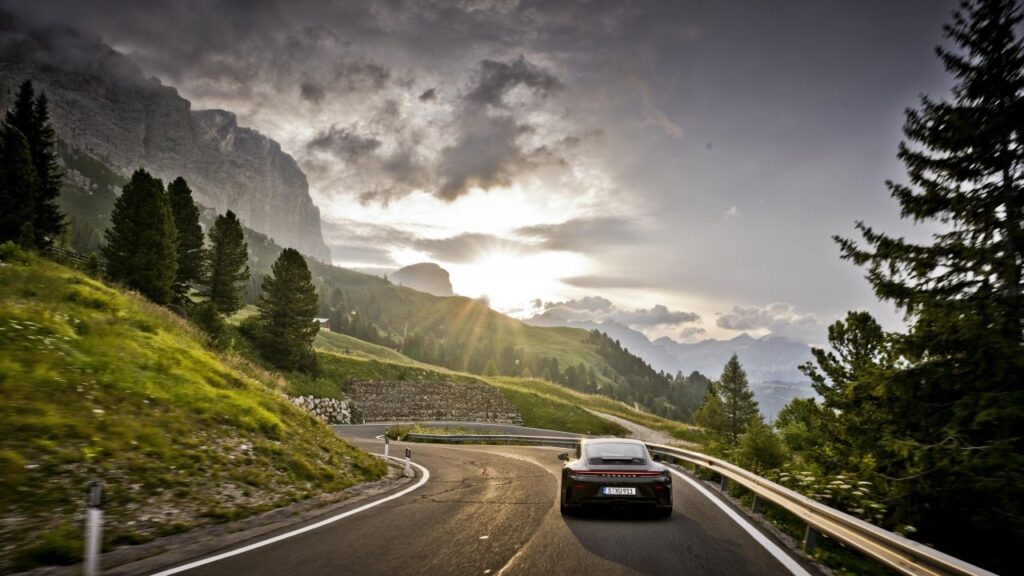
The narrow, twisting mountain passes that cross the Alps between Austria, France, Italy and Switzerland.
For Porsche, those roads are more than spectacular scenery. They form part of the company’s earliest history. The first Porsche sports cars took shape in Gmünd, Austria, beneath the Alpine landscape, and the surrounding mountain roads became natural proving grounds where lightweight construction, agility and mechanical precision mattered far more than outright power.
Nearly eight decades later, Porsche has returned to that idea.
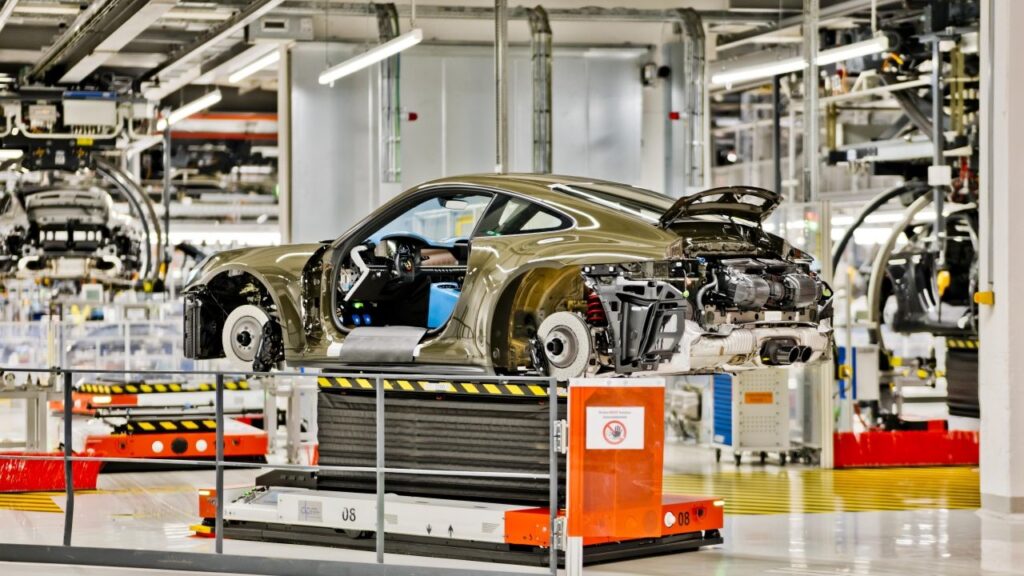
The 911 GT3 Bergsport is a highly limited interpretation of the current GT3 Touring, created by Porsche Exclusive Manufaktur specifically around the character of Alpine driving.
No additional horsepower.
No attempt to become a more aggressive GT3 RS.
Instead, Porsche has concentrated on lightness, feedback, usable performance and the kind of details that matter when the road climbs, narrows and begins folding back on itself.
Only 100 examples will be built.
And fittingly, they will be sold exclusively in the four countries whose mountains inspired them.
Where Porsche Learned to Build Sports Cars
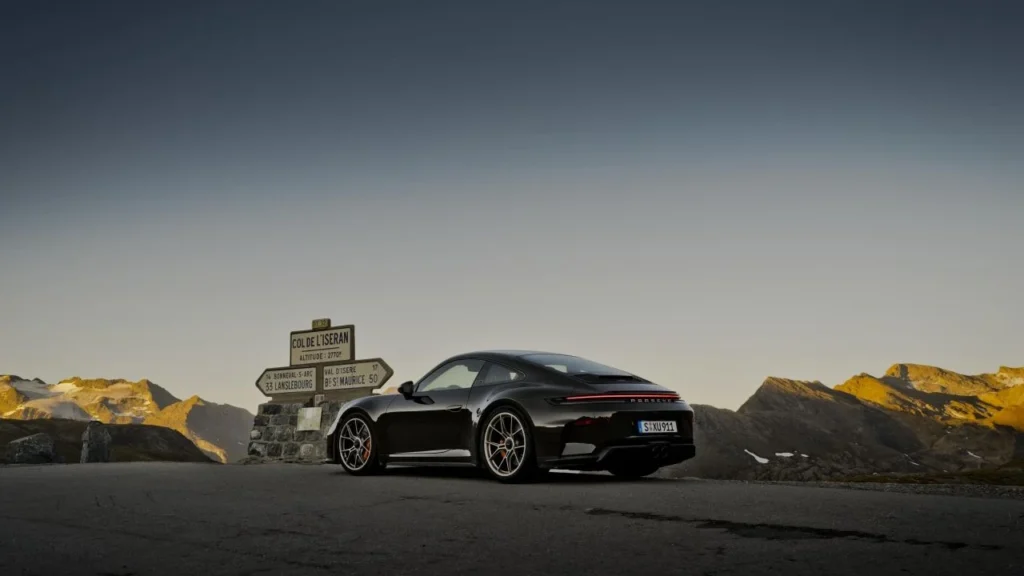
The connection between Porsche and the Alps predates many of the company’s most famous racing victories.
In the late 1940s, Porsche established operations in Gmünd, a small Austrian town surrounded by mountains.
It was there that the first sports cars bearing the Porsche name took shape.
The location was not merely picturesque.
The steep gradients, tight corners and constantly changing surfaces of the Alpine roads surrounding Gmünd provided an extraordinary environment in which to understand a lightweight sports car.
Power mattered.
But weight mattered more.
Braking mattered.
Steering mattered.
Traction mattered.
And above all, the relationship between driver and machine mattered.
Those same qualities remain central to the GT3 Bergsport.
Porsche 911 GT3 100 Jahre Nürburgring: A Love Letter to the Green Hell
Why Bergsport?
The name is carefully chosen.
Bergsport translates roughly as “mountain sport,” immediately linking the car with both Alpine driving and Porsche’s long history in European hill-climb competition.
During the middle decades of the twentieth century, hill climbs were an important part of European motorsport.
Lightweight racing cars attacked narrow mountain roads one at a time, racing against the clock rather than wheel-to-wheel.
Weight.
Precision.
Acceleration between corners.
Confidence under braking.
These were the ingredients that mattered.
Porsche became deeply involved in the discipline, developing extraordinary lightweight machines such as the 908 Bergspyder.
The new GT3 does not attempt to recreate those cars.
Instead, it carries the philosophy forward.
The GT3 Touring Was the Obvious Foundation
The Bergsport is based on the current 911 GT3 with Touring Package.
That choice immediately defines its character.
A conventional GT3 uses a prominent fixed rear wing.
The Touring removes it, producing a cleaner and more understated silhouette while preserving the naturally aspirated engine, chassis sophistication and driver-focused philosophy beneath.
For the Bergsport, that is exactly the right starting point.
An Alpine road rarely requires enormous aerodynamic load.
It rewards visibility.
Balance.
Compact responses.
Mechanical grip.
And a car that feels engaging long before reaching circuit speeds.
The Touring configuration allows the Bergsport to remain visually elegant while retaining serious GT3 capability.
Six Speeds Only
Perhaps the most important technical decision concerns the transmission.
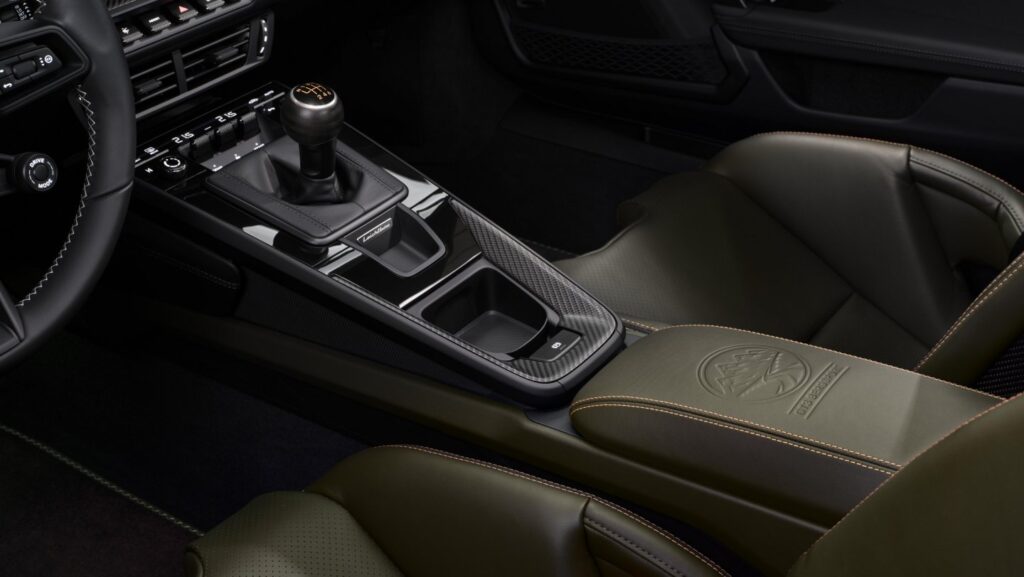
The GT3 Bergsport is fitted exclusively with a six-speed manual gearbox.
There is no PDK option.
That alone reveals what Porsche wants this car to be about.
A dual-clutch gearbox would change gears faster.
It would improve acceleration figures.
It would probably make the car slightly easier to drive quickly.
But Alpine driving is rarely about extracting another tenth of a second.
It is about rhythm.
Brake.
Turn.
Accelerate.
Clutch.
Shift.
Repeat.
The manual gearbox turns every corner into a sequence of decisions.
And on the kind of road that inspired the Bergsport, those decisions become the experience.
The 4.0-Litre Flat-Six Remains
Porsche has also resisted the temptation to increase engine output.
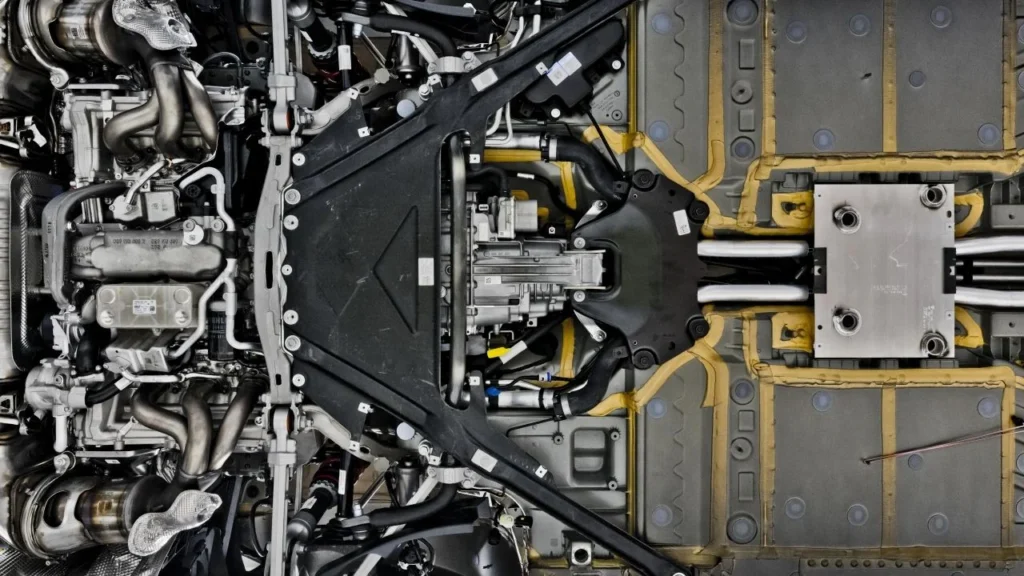
The Bergsport retains the familiar 4.0-litre naturally aspirated flat-six of the current 911 GT3.
That means approximately 510 PS and 450 Nm, delivered entirely to the rear wheels.
Again, there are more powerful 911s.
That hardly matters here.
The GT3 engine already provides exactly the kind of characteristics required for mountain driving.
Immediate throttle response.
Linear power delivery.
A willingness to rev.
And a soundtrack that becomes increasingly intense as engine speed rises.
Turbocharged torque would make the car faster between some corners.
The naturally aspirated engine makes the journey more interesting.
Lightweight Package as Standard
The Bergsport also incorporates Porsche’s Lightweight Package.
That gives the car a more focused specification while preserving the Touring philosophy.
But Porsche makes one particularly interesting change.
Ordinarily, the Lightweight Package can include forged magnesium wheels.
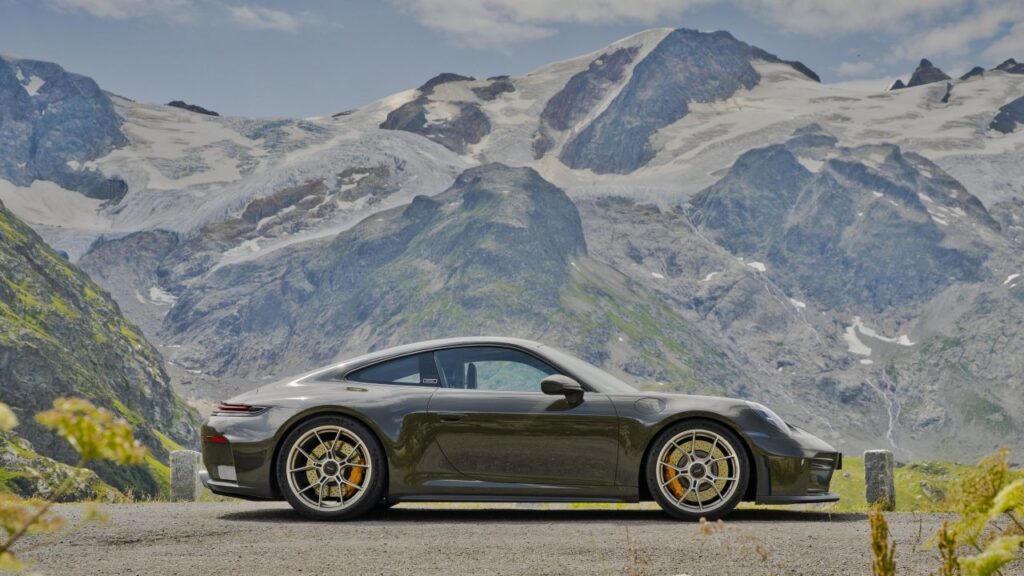
The Bergsport uses forged aluminium wheels instead.
At first glance, that sounds like a downgrade.
It isn’t.
Porsche Flachbau RS: The 911 GT2 RS Reimagined in the Spirit of Moby Dick
Why Porsche Chose Aluminium Over Magnesium
Magnesium wheels are exceptionally light.
Reducing unsprung and rotational mass can improve almost every dynamic aspect of a performance car.
But mountain roads introduce another consideration.
Durability.
Potholes.
Broken asphalt.
Sharp edges.
Uneven surfaces.
Conditions can be considerably harsher than a smooth racing circuit.
Porsche therefore chose forged aluminium because it provides greater robustness while retaining relatively low mass.
That single detail may explain the entire Bergsport philosophy better than any badge.
This is not a GT3 optimised for a specification sheet.
It is a GT3 optimised for real roads.
A Front-Axle Lift System
Another practical addition reinforces that idea.
The GT3 Bergsport comes with a front-axle lift system.
Anyone who has driven a low sports car through Alpine towns will immediately understand why.
Hotel entrances.
Underground garages.
Steep ramps.
Drainage channels.
Abrupt changes in road gradient.
All can become stressful in a low-slung GT3.
The lift system allows the nose to rise when required, giving the driver considerably more freedom to explore real mountain routes rather than worrying constantly about damaging the front splitter.
It is not glamorous.
It is extremely useful.
A 90-Litre Fuel Tank
Then there is the 90-litre fuel tank.
Again, this sounds like an unremarkable specification.
In context, it is almost perfect.
The Bergsport is intended for long-distance road driving through the Alps.
Fuel stations can be sparse on remote routes.
And nobody wants to interrupt an extraordinary drive simply because the tank is nearing empty.
The larger tank extends range and reinforces the idea that this is a car intended to travel.
Not simply attack a circuit for twenty minutes at a time.
Valleygreenmetallic
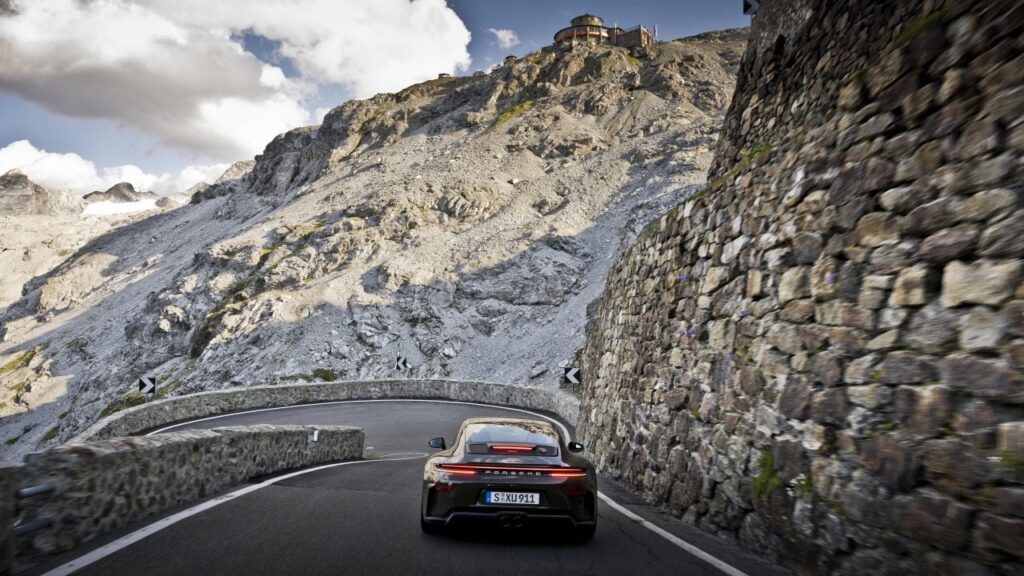
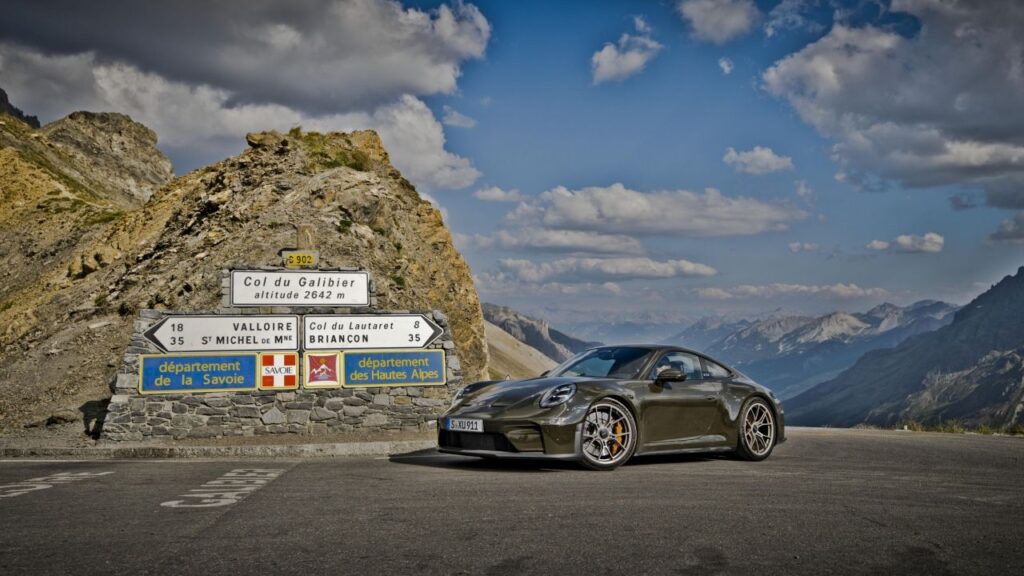
The most obvious visual signature is the new exterior colour.
Valleygreenmetallic was developed specifically for the Bergsport through Porsche’s Paint to Sample Plus programme.
The inspiration comes directly from the Alpine landscape.
Deep green.
Earthy brown undertones.
And metallic particles that produce a subtle golden shimmer in sunlight.
Porsche describes the effect as recalling the way fresh snow glows when illuminated by sunlight.
It is an unusually poetic specification for a GT3.
And one that works especially well with the Touring body.
Gold, Ceramic and Snow
The forged wheels receive their own elaborate finish.
White Gold.
Combined with Ceramica in satin.
The contrast is intended to evoke snow-covered Alpine peaks.
Then Porsche adds another colour.
Orange.
The brake calipers are finished in a vivid orange inspired by alpenglow, the phenomenon in which the first or final light of the day illuminates mountain summits with warm red and orange tones.
That idea continues throughout the car.
The Bergsport palette therefore represents an Alpine landscape at different moments.
Green valleys.
White peaks.
Golden sunlight.
Orange evening glow.
It could easily have become sentimental.
Instead, the restrained Touring shape keeps everything disciplined.
The 908 Bergspyder Appears on the Bonnet
One of the strongest historical references appears on the front bonnet.
A subtle chequered-flag graphic recalls the Porsche 908 Bergspyder.
The reference is particularly appropriate.
The 908 Bergspyder belonged to an era when Porsche created extraordinarily lightweight machines specifically for European mountain competition.
These cars stripped the sports-racing formula almost to its essentials.
Minimal bodywork.
Minimal mass.
Maximum agility.
The GT3 Bergsport cannot approach that level of purity within modern road-car requirements.
But the philosophy remains recognisable.
Four Mountains for Four Countries
The rear receives another more elaborate emblem.
A circular Bergsport badge depicts four mountain peaks.
Each represents one of the four countries where the car will be sold:
Austria.
France.
Italy.
Switzerland.
A winding road crosses the mountainous landscape beneath them.
The colours integrate the same Valleygreen, Ceramica, White Gold and orange palette used throughout the car.
The detail reinforces something unusual about this special edition.
Its exclusivity is geographical rather than merely numerical.
Only Four Countries Can Buy It
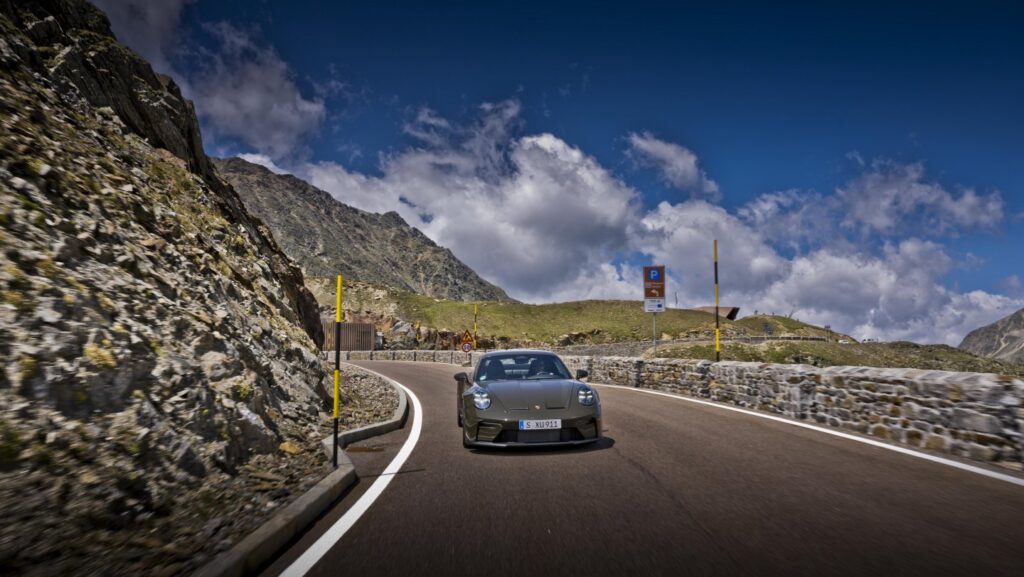
The GT3 Bergsport will be offered exclusively in:
Austria
France
Italy
Switzerland
Only 100 cars will be produced in total.
Germany does not receive it.
The United Kingdom does not receive it.
The United States does not receive it.
Even many important Porsche markets are excluded entirely.
That restriction gives the car a distinctive cultural identity.
This is not a global collector edition loosely inspired by mountains.
It belongs specifically to the Alpine region.
Arosa ClassicCar Is the Perfect Debut
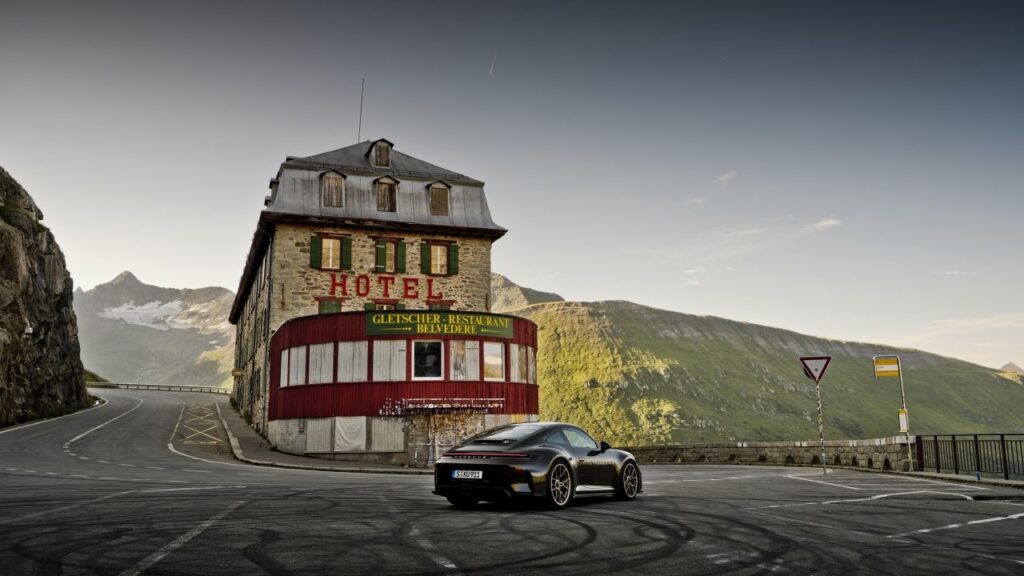
The GT3 Bergsport makes its dynamic debut on 3 September 2026 at the Arosa ClassicCar hill climb in Switzerland.
Porsche ambassador Jörg Bergmeister will drive it along the 7.3-kilometre course.
The route includes 76 corners and climbs approximately 422 metres from start to finish.
There could hardly be a more appropriate setting.
Not a static reveal inside a convention centre.
Not a racing circuit.
A mountain road.
Exactly where a car called Bergsport belongs.
RUF EHRA: A 650-HP Manual Grand Tourer Inspired by the Yellowbird Legacy
A GT3 With Rear Seats
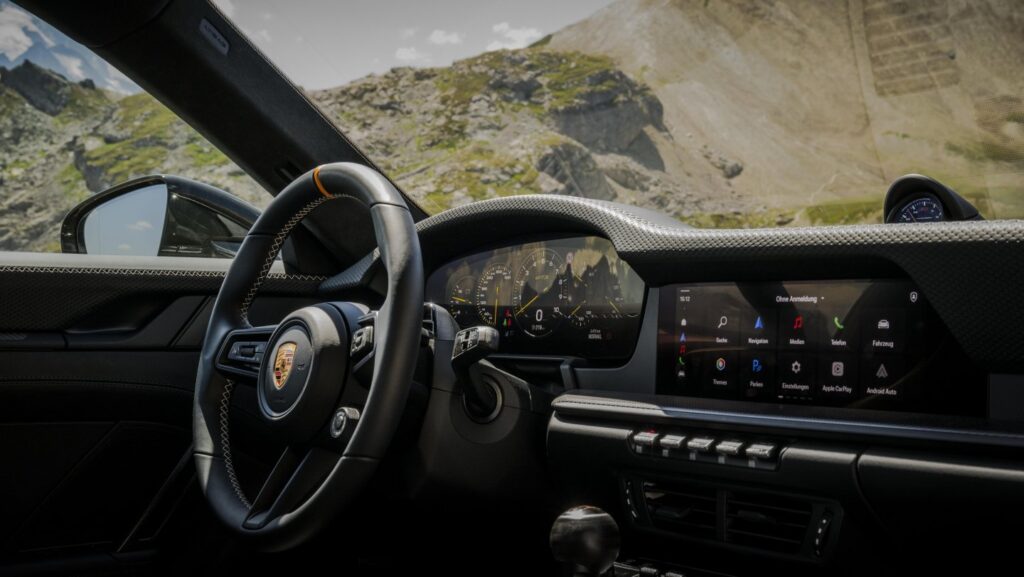
The interior reveals another important part of the car’s personality.
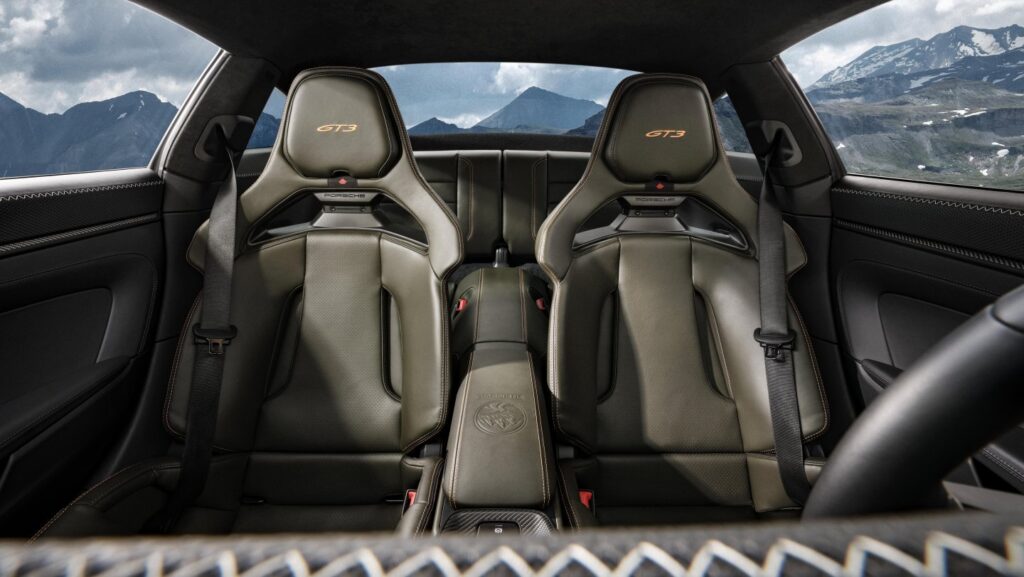
Despite the Lightweight Package and sporting focus, the Bergsport receives rear seats.
Again, that would make little sense in an uncompromising track special.
Here it fits perfectly.
The Bergsport is intended to be used.
Travel with luggage.
Take a passenger.
Perhaps even carry children in the rear.
Drive across borders.
Stop at mountain hotels.
Then wake early the next morning and attack another pass before the traffic arrives.
It remains a GT3.
But one engineered around the journey.
Carbon Bucket Seats in Valleygreen
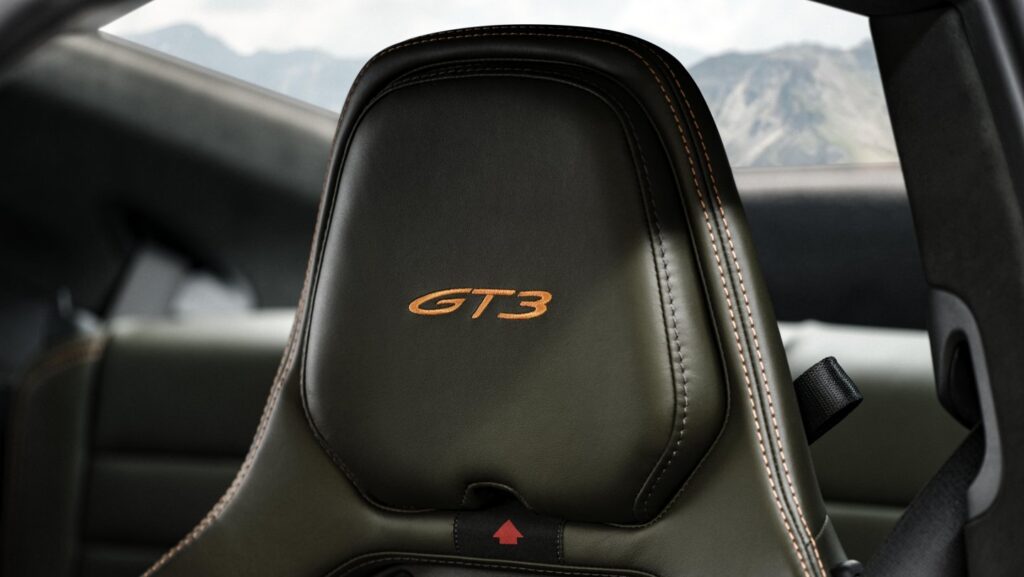
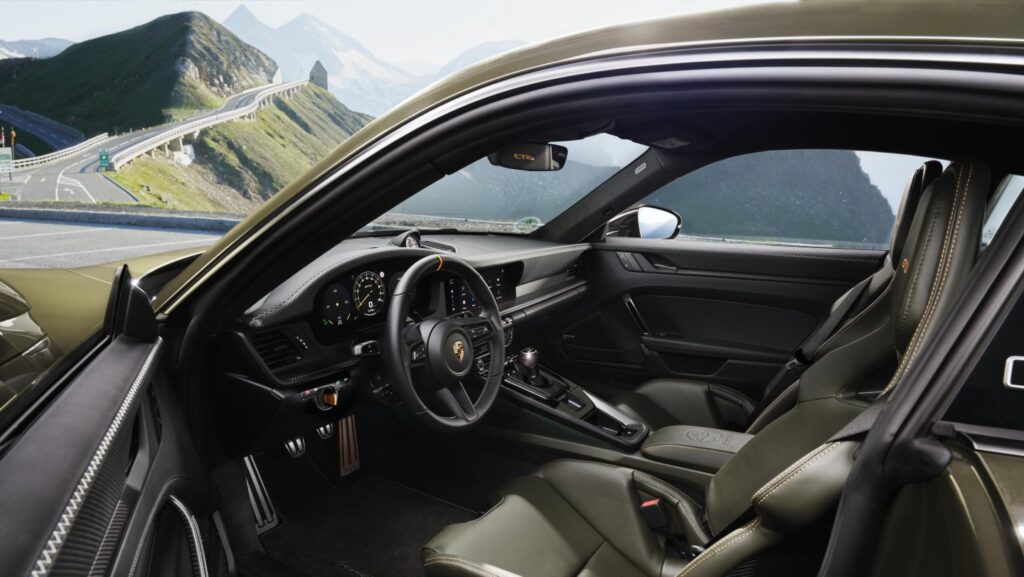
The folding carbon-fibre bucket seats receive Valleygreen leather.
Orange contrast stitching continues the alpenglow theme.
The GT3 lettering embroidered into the headrests uses the same warm colour.
The combination creates an unusually rich interior for a GT3.
Performance-focused materials remain.
But the palette feels far more connected to landscape and travel than the usual black-and-red motorsport specification.
Orange Appears Everywhere
Look closer and orange details begin appearing across the controls.
The engine-start switch.
The accelerator pedal.
The 12 o’clock marker on the steering wheel.
The manual gear-pattern graphic.
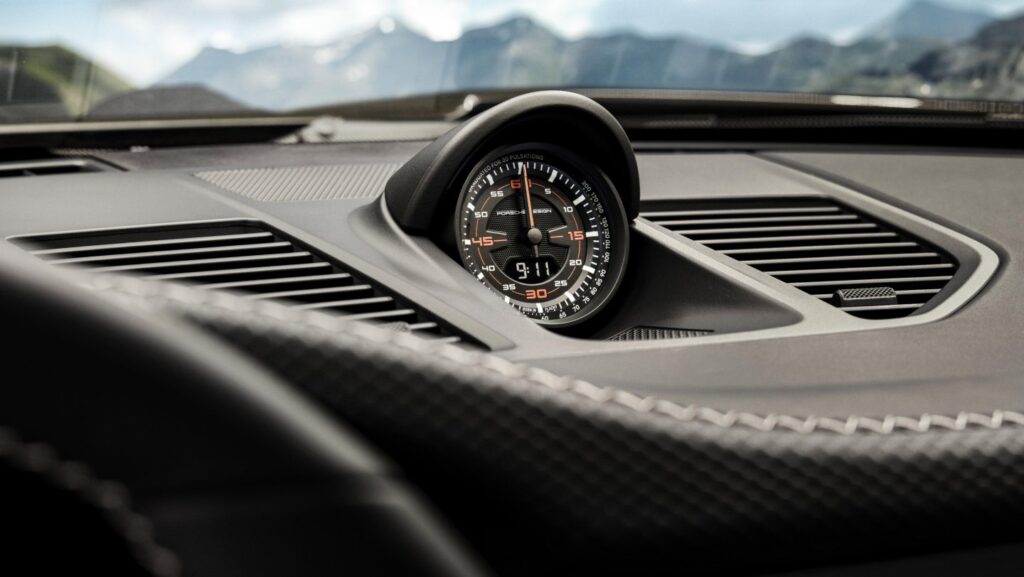
Even the Porsche Design GT clock included with Sport Chrono receives orange accents.
These are small changes.
But the consistency makes the interior feel intentionally designed rather than simply optioned.
Mountain Peaks Stitched Into the Dashboard
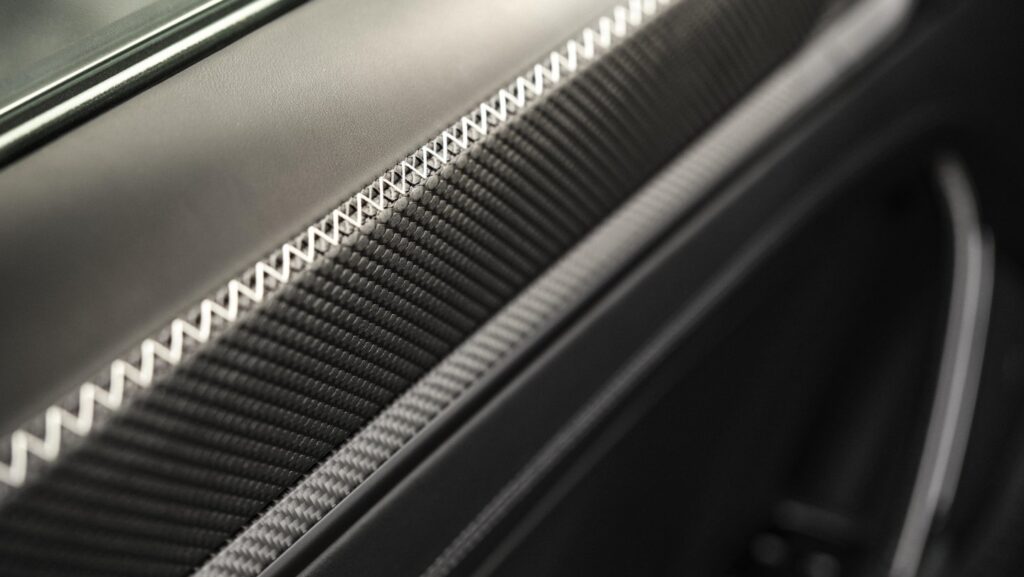
Perhaps the most charming interior detail appears in the decorative stitching.
Across the upper dashboard and doors, black and white thread forms stylised mountain silhouettes using a cross-stitch pattern.
It is exactly the kind of detail that works best when discovered slowly.
From a distance, the stitching appears decorative.
Up close, the Alpine reference becomes visible.
The Bergsport repeatedly rewards attention.
A Surprisingly Luxurious GT3
Another interesting aspect is how well equipped the car remains.
The Light Design Package adds ambient lighting.
A BOSE surround-sound system is fitted.
Bespoke leather trim appears throughout.
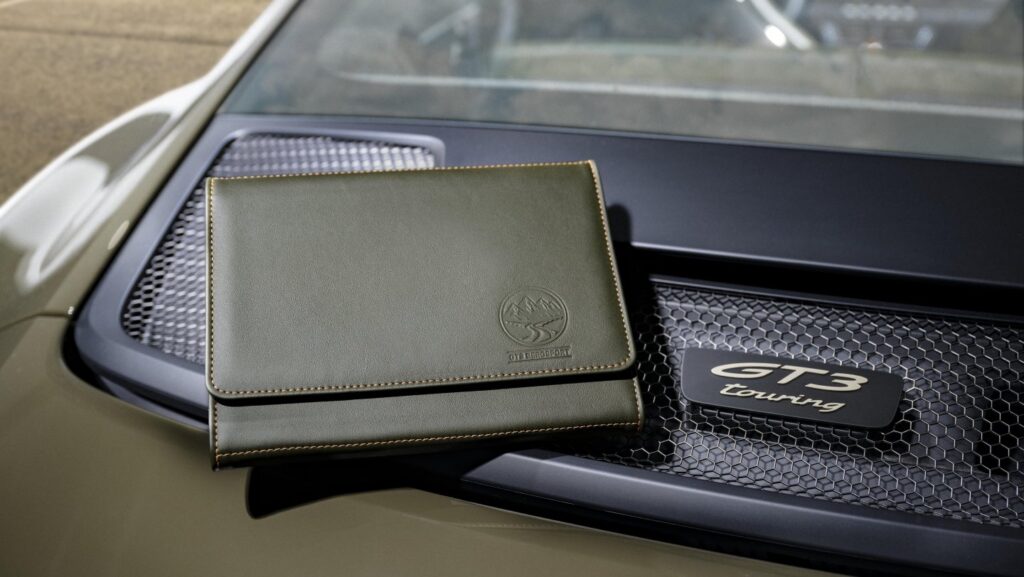
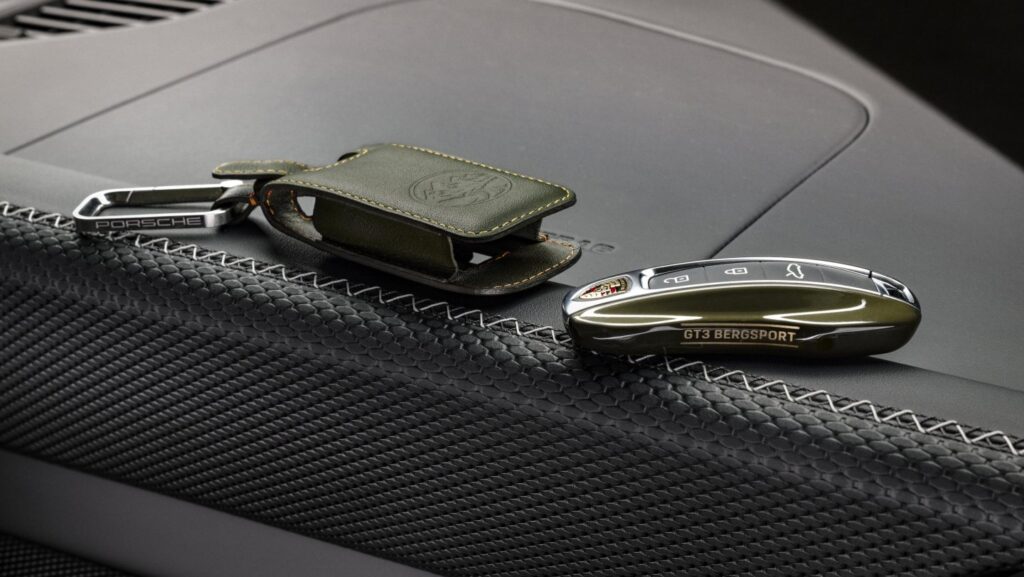
Even the key receives its own leather pouch and the document folder is finished to match the Bergsport palette.
This is not a stripped-out GT3.
Nor should it be.
A car designed around Alpine grand touring needs refinement alongside performance.
The lightweight philosophy is selective.
Why It Isn’t a GT3 RS
The comparison with the GT3 RS is inevitable.
The RS is faster around a circuit.
More aerodynamic and more extreme.
More technically dramatic.
The Bergsport deliberately avoids competing with it.
On a mountain road, much of the RS’s enormous aerodynamic capability becomes less relevant.
Its fixed wing dominates the design.
Its chassis is tuned around a different kind of driving environment.
The Bergsport chooses another path.
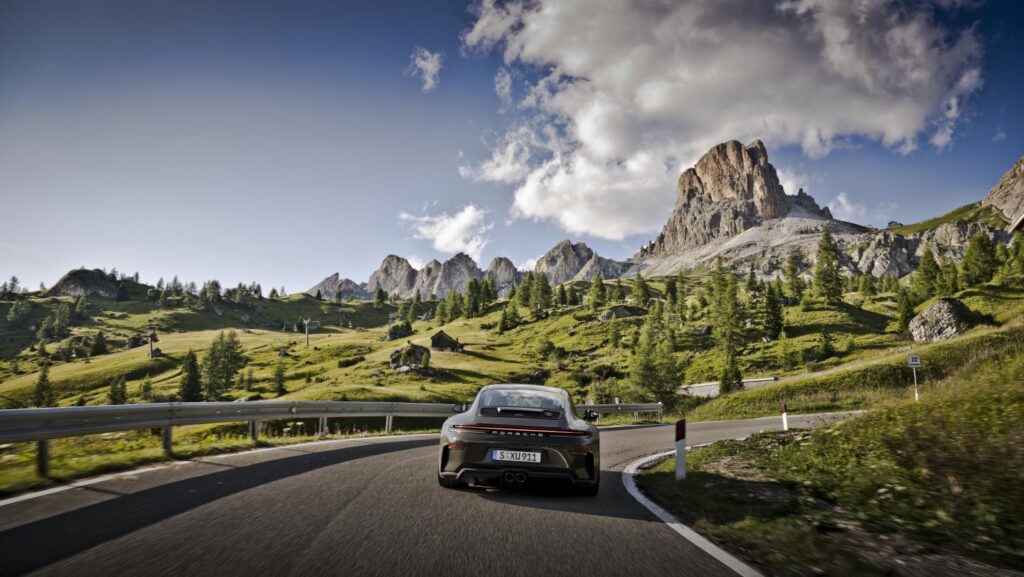
Clean Touring body.
Manual gearbox.
Mechanical grip.
Longer range.
Greater ride practicality.
And enough comfort to spend an entire day driving.
For its intended environment, that may actually make it more desirable.
A Sports Car for the Real World
This is perhaps the central idea behind the Bergsport.
The best driving roads are rarely perfect.
They can be narrow.
Uneven.
Cold.
Wet.
Covered in debris.
Crowded with cyclists.
Interrupted by villages.
A car designed exclusively around circuit performance can become frustrating there.
The Bergsport accepts reality.
The aluminium wheels tolerate harsher roads.
The nose lifts.
The fuel tank is larger.
Rear seats remain.
The body is clean.
The engine responds immediately.
And the driver controls every shift manually.
Porsche has effectively designed a GT3 around the imperfections that make mountain driving interesting.
Exclusive Manufaktur at Its Best
The Bergsport also demonstrates how Porsche Exclusive Manufaktur has evolved.
Personalisation was once largely about individual colours and upholstery.
Today, the department creates entire market-specific editions with bespoke materials, graphics and stories.
Porsche says almost every 911 customer globally selects at least one Exclusive Manufaktur option, while more than 230 additional Paint to Sample colours are available across the wider range.
The Bergsport represents the more ambitious end of that spectrum.
It is not simply a configuration.
It is a complete narrative.
A GT3 With Matching Skis
Porsche naturally extends the concept beyond the automobile.
A dedicated Lifestyle collection includes scale models, clothing, keyrings and travel accessories.
More appropriately, Porsche has also created GT3 Bergsport skis in collaboration with Austrian sports-equipment manufacturer HEAD.
They are scheduled to arrive for the 2027/2028 winter season.
Ordinarily, branded skis might feel like merchandising.
Here they almost make sense.
Few Porsche special editions have a more natural relationship with Alpine winter culture.
More Than a Regional Special Edition
It would be easy to dismiss the GT3 Bergsport as another limited-production collector car.
One hundred examples.
Special paint.
Special stitching.
Exclusive badges.
But the engineering details prevent that.
The choice of aluminium wheels.
The manual transmission.
The larger fuel tank.
The front lift.
The Touring body.
Rear seats.
These decisions all point towards the same intended experience.
Driving through mountains.
Not displaying the car outside a hotel.
Actually using it to reach one.
Why No Additional Horsepower Was Necessary
The decision to retain the standard GT3 output may ultimately be one of the smartest things Porsche did.
More power would create a better headline.
It would not necessarily create a better Alpine car.
A 510 PS naturally aspirated 911 is already extremely fast.
On narrow mountain roads, the driver rarely needs more.
What matters is how accurately the engine responds.
How precisely the car turns.
How quickly the driver can place it between rock face and guardrail.
And how enjoyable it feels doing all of that.
The Bergsport understands the difference between performance and experience.
Porsche 911 GT3 RS Sonderwunsch Macadamia Metallic
The Alps as a Design Brief
Automotive special editions often use geography decoratively.
A desert edition receives beige paint.
A coastal model receives blue leather.
The Bergsport goes further.
The landscape influences not only its colours but its specification.
The mountains dictate:
More durable wheels.
Greater ground-clearance flexibility.
Longer fuel range.
Manual engagement.
A lightweight chassis.
A clean aerodynamic profile.
The geography becomes part of the engineering brief.
That makes the concept unusually coherent.
From Gmünd to Arosa
There is also something poetic about the timing.
Porsche’s first sports cars emerged from Gmünd beneath the Austrian Alps.
Nearly eighty years later, another Porsche built around those same mountains makes its debut climbing through Arosa, Switzerland.
The technology could hardly be more different.
Modern carbon bucket seats.
HD Matrix LED lighting.
Sophisticated suspension.
A 9,000-rpm flat-six.
Yet the fundamental idea remains surprisingly familiar.
Build something light.
Make it agile.
Give the driver direct control.
Then find a mountain road.
The Road Car Porsche’s History Was Always Pointing Towards
The Porsche 911 GT3 Bergsport is not the fastest 911.
It is not the most powerful.
It does not have the most downforce.
And Porsche makes no attempt to pretend otherwise.
Its appeal lies somewhere less measurable.
A naturally aspirated engine.
Six manual gears.
A clean Touring body.
A large fuel tank.
A road climbing into the mountains.
One hundred cars will exist.
Only four countries can buy them.
And perhaps that geographical limitation is appropriate.
The Bergsport was never really designed for the world.
It was designed for the Alps.
For the roads that helped teach Porsche what a sports car should feel like.
And sometimes, after nearly eighty years of progress, the best idea is still the simplest one.
Less weight.
More feedback.
And another corner somewhere above the clouds.