
Some Porsche projects celebrate heritage through colour.
Others through badges.
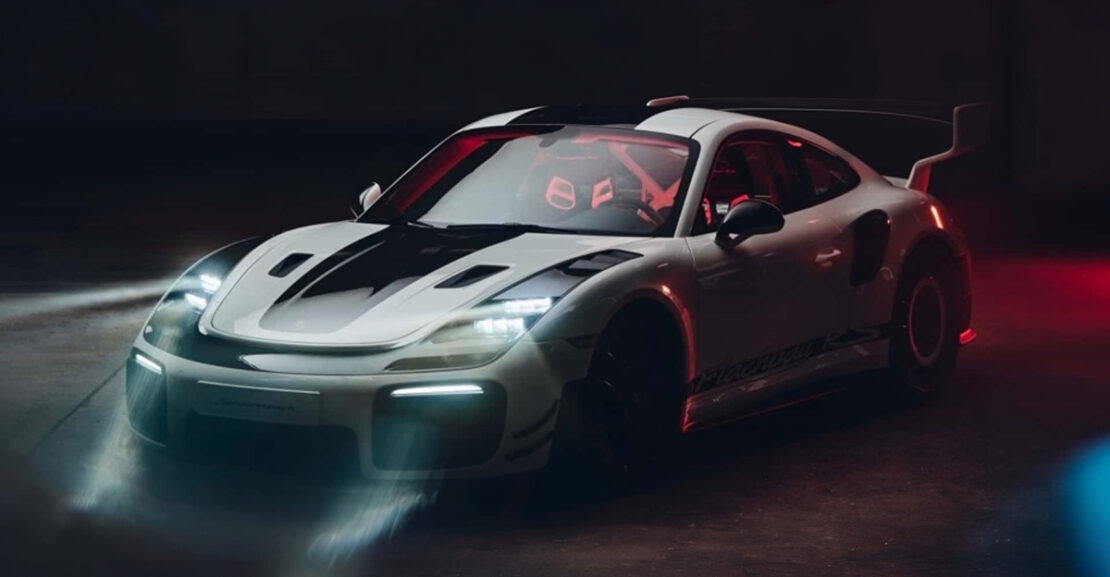
The Porsche Flachbau RS goes far deeper.
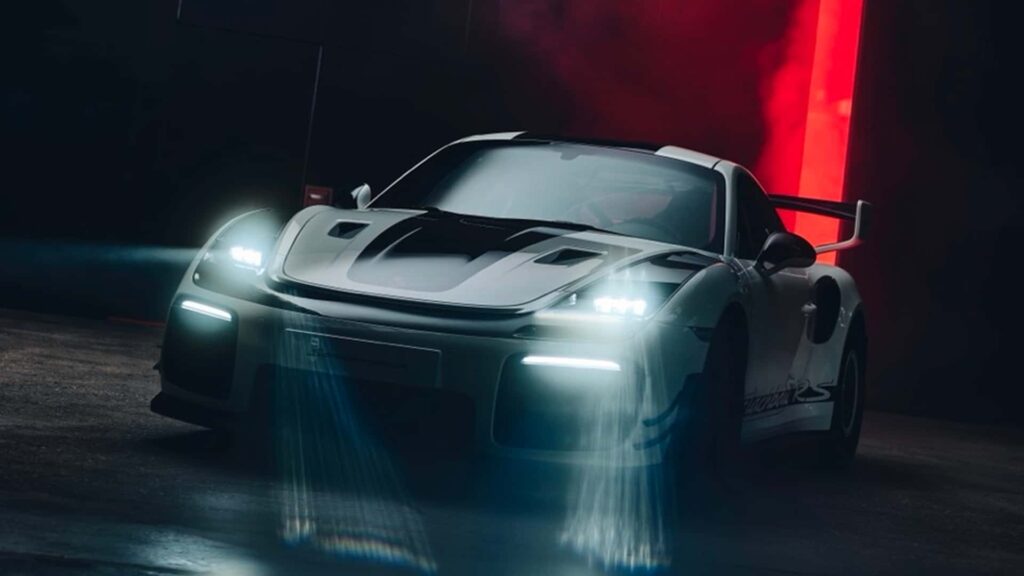
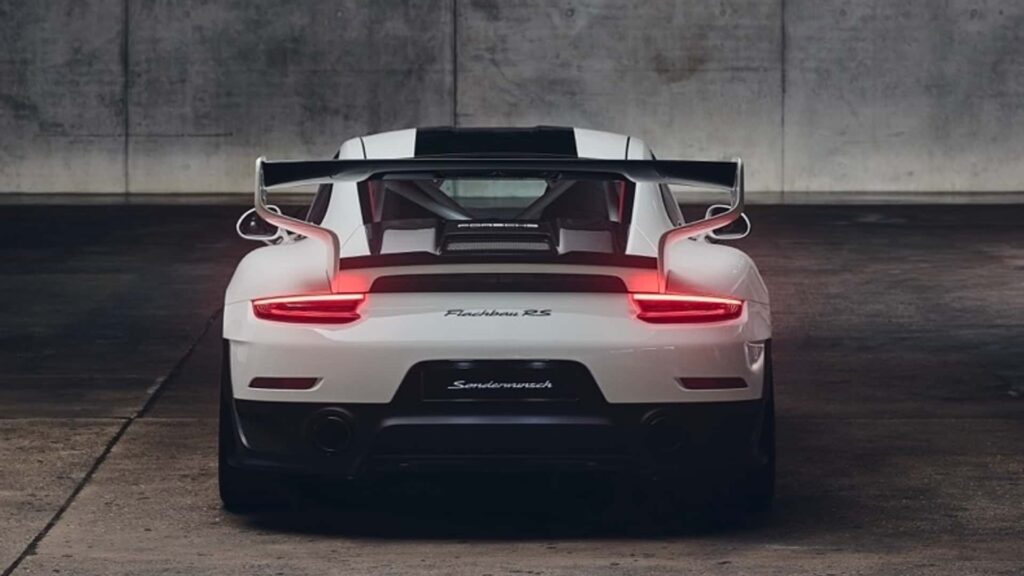
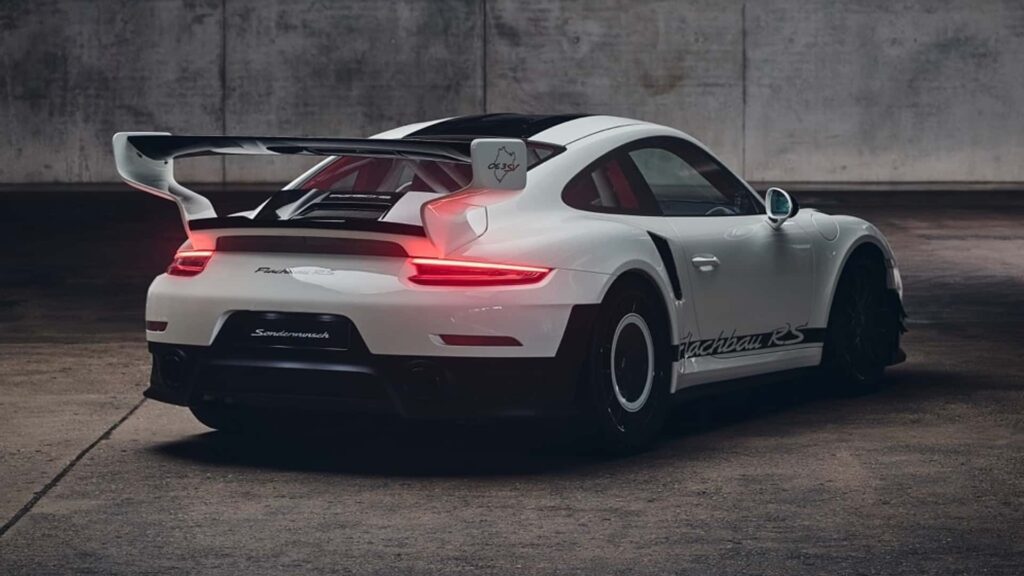
Created as a one-off through the marque’s Sonderwunsch programme, this extraordinary 911 begins with a virtually new 991.2-generation 911 GT2 RS with Weissach Package and transforms it into a modern interpretation of one of the most iconic racing shapes ever created in Weissach.
The inspiration is unmistakable.
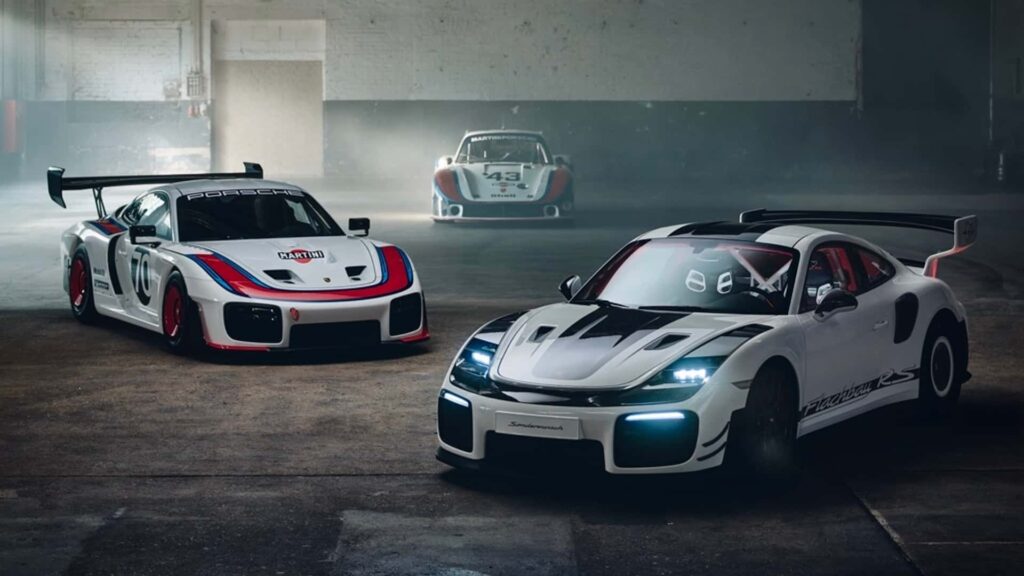
The Porsche 935/78 “Moby Dick.”
But the objective was never to create a replica.
Instead, Porsche was asked to imagine what the philosophy of the legendary Flachbau — or Slantnose — might look like if developed today around a road-legal GT2 RS using modern aerodynamics, carbon-fibre construction and contemporary motorsport engineering.
Three years of development later, the result is one of the most ambitious Sonderwunsch projects Porsche has completed.
A 700-horsepower twin-turbocharged GT2 RS.
A radically redesigned flat nose.
Less weight.
More aerodynamic performance.
And only one example in existence.
The Return of Flachbau
The word Flachbau translates literally as “flat construction,” but among Porsche enthusiasts it carries a much more specific meaning.
During the 1980s, Porsche offered a rare factory conversion for the 911 Turbo that replaced the car’s familiar raised front wings and round headlights with a lower, flatter nose inspired by the dominant 935 racing cars.
The result became known internationally as the Slantnose.
Between 1982 and 1989, Porsche produced only 948 factory Flachbau examples, making them some of the rarest series-production 911s of their era.
Their appeal was never simply visual.
The design was born directly from motorsport.
And specifically from one of Porsche’s most extraordinary racing machines.
Moby Dick
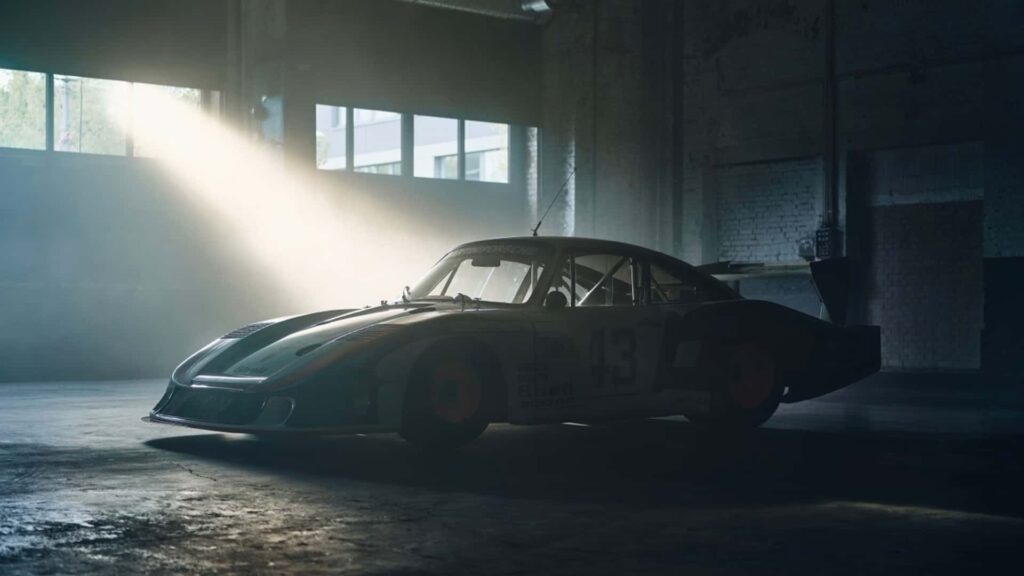
The 935/78 became the ultimate evolution of Porsche’s Group 5 racing programme.
Its enormous rear bodywork, extremely low nose and elongated aerodynamic surfaces made it look unlike almost anything else on the grid.
The car quickly acquired the nickname Moby Dick, partly because of its long white body and partly because of its almost mythical scale and performance.
The 935 family dominated endurance racing during the late 1970s.
Its influence extended far beyond competition.
The road-going Flachbau models of the 1980s effectively translated some of that visual identity onto public roads.
The new Flachbau RS repeats the idea almost forty years later.
Only now the starting point is considerably more extreme.
A 991.2 GT2 RS With Weissach Package
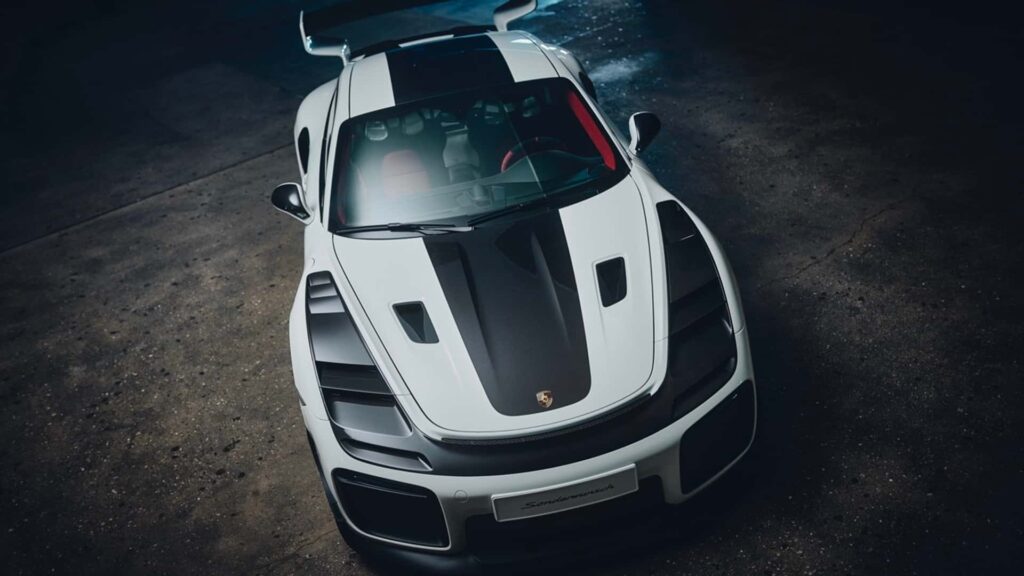
The donor car was already one of the most formidable road-going 911s ever created.
The 991.2 Porsche 911 GT2 RS uses a 3.8-litre twin-turbocharged flat-six producing 700 PS, sent exclusively to the rear wheels through a seven-speed PDK transmission.
With the optional Weissach Package, Porsche reduced additional weight through components including carbon-fibre anti-roll bars, a carbon roof and magnesium wheels.
It was already obsessive.
That made the Sonderwunsch brief particularly difficult.
Porsche could not simply strip hundreds of kilograms from an overweight road car.
The GT2 RS was already engineered around extreme performance.
Yet the Flachbau RS manages to remove another 31.6 kilograms — approximately 70 pounds.
The Owner Wanted More Than Styling
The customer brief was unusually ambitious.
The owner wanted a modern Flachbau.
But also greater performance.
Road legality had to remain.
Safety could not be compromised.
And the finished car needed to feel coherent enough to have come directly from Porsche rather than appearing as a collection of independent modifications.
That requirement brought together an extraordinary group.
Porsche Sonderwunsch.
Style Porsche.
Porsche Motorsport.
Manthey.
And engineers from Weissach.
The project ultimately required around three years of development and validation, including testing with a development vehicle at the Nürburgring and Porsche’s own proving facilities.
This is modern coachbuilding conducted with full manufacturer engineering resources.
Grant Larson Returns to the 935
The design work carries another important connection.
Former Porsche designer Grant Larson was brought into the programme.
Larson had already been responsible for the limited-production 935 introduced in 2018, itself a modern tribute to Moby Dick built around contemporary GT2 RS technology.
The challenge here was different.
The 2018 935 was a track-only automobile.
The Flachbau RS had to remain fully legal for public roads.
That meant headlights.
Road-homologated aerodynamic solutions.
Crash requirements.
Cooling.
Visibility.
And every other complication that disappears when a car is created only for circuits.
The result therefore needed to preserve the drama of the 935 while working within considerably stricter boundaries.
The Round 911 Headlights Disappear
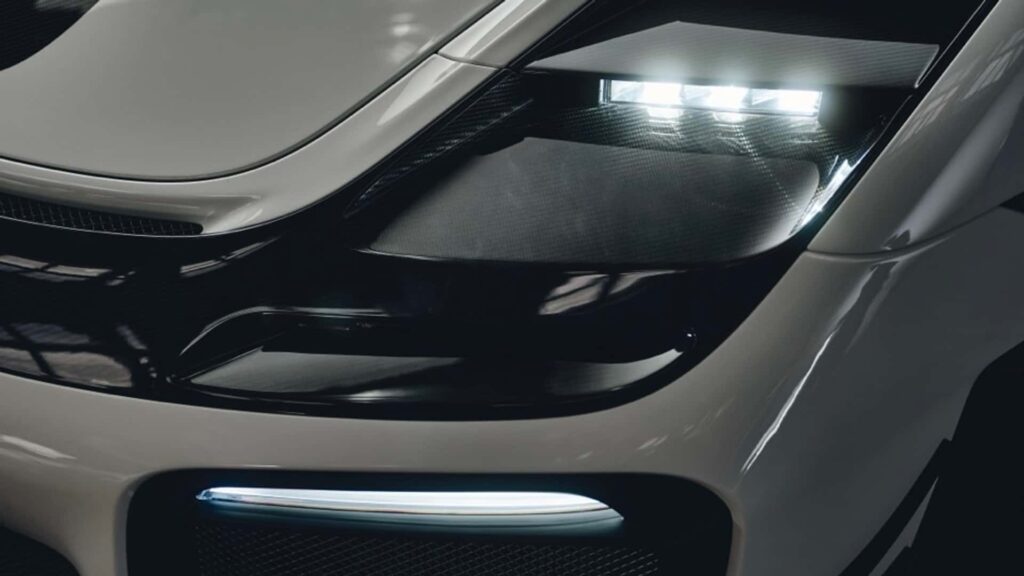
Nothing changes the character of a 911 more dramatically than removing its round headlights.
For generations, those lamps have been one of the most recognisable elements of the model.
The Flachbau RS abandons them completely.
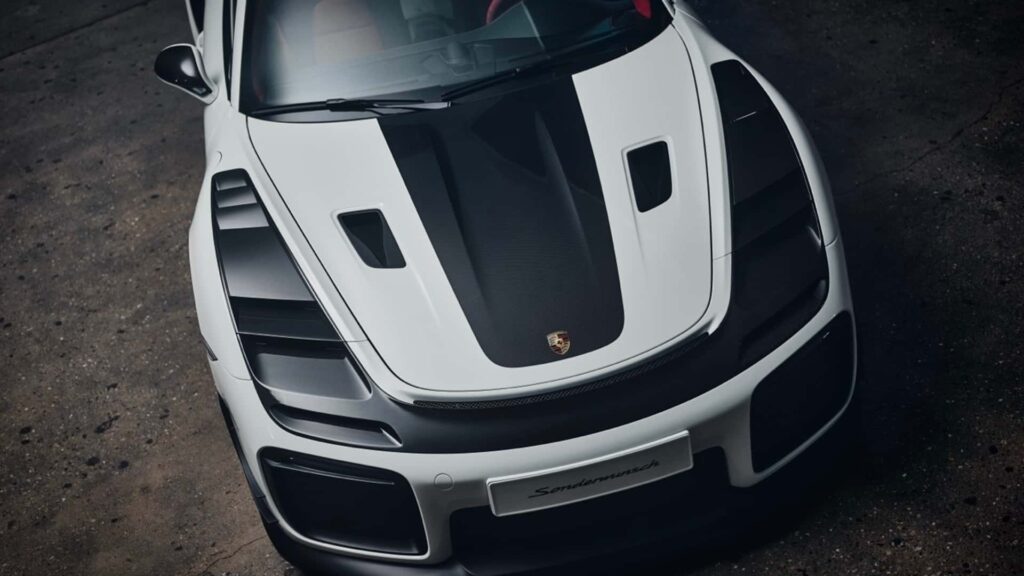
Newly developed front wings sit much lower than the conventional GT2 RS items and incorporate slim extraction vents across their upper surfaces.
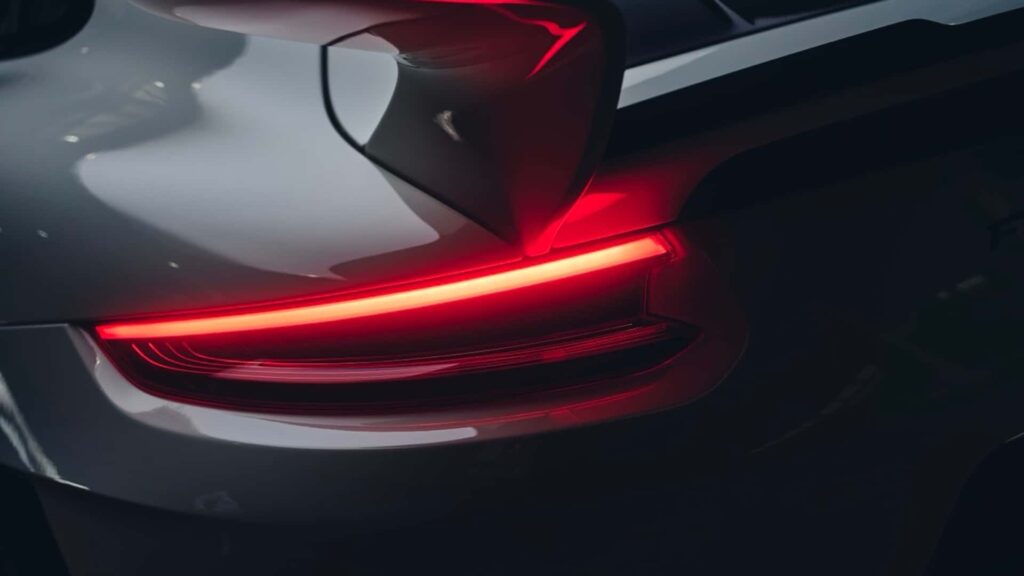
The lights themselves become a three-stage LED cascade.
Separate ultra-thin elements provide daytime running lights, dipped beam and high beam.
When switched off, they almost disappear.
The effect deliberately recalls the headlight-free appearance of historic racing 935s while still satisfying modern road requirements.
It completely changes the visual identity of the car.
A Slantnose Without Pop-Up Headlights
Historical Flachbau road cars often relied on pop-up headlights.
That solution would have made little sense here.
Modern pedestrian-safety regulations, aerodynamic requirements and lighting technology all point towards a different answer.
The ultra-slim LEDs allow the nose to remain almost uninterrupted.
Rather than recreating 1980s engineering, Porsche preserves the original design intention.
A lower, cleaner, more aerodynamically efficient front end.
That distinction makes the project considerably more interesting than a retro conversion.
The Front Splitter Is Only the Beginning
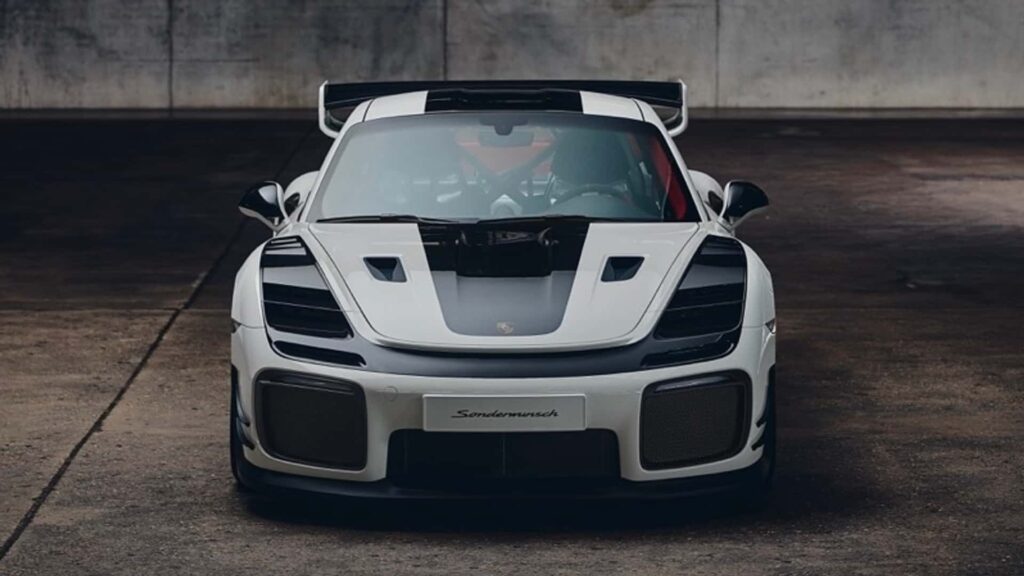
The aerodynamic transformation extends well beyond the new nose.
A substantial front splitter generates additional front-end load.
The underbody incorporates elements developed with Manthey.
A completely revised rear diffuser manages airflow beneath the car.
The body receives additional aerodynamic optimisation around the wheel arches.
And at the rear sits an enormous manually adjustable wing inspired by another very special Porsche competition machine.
The entire package has been developed as a system.
Not simply as styling.
A Wing Inspired by the GT3 R Rennsport
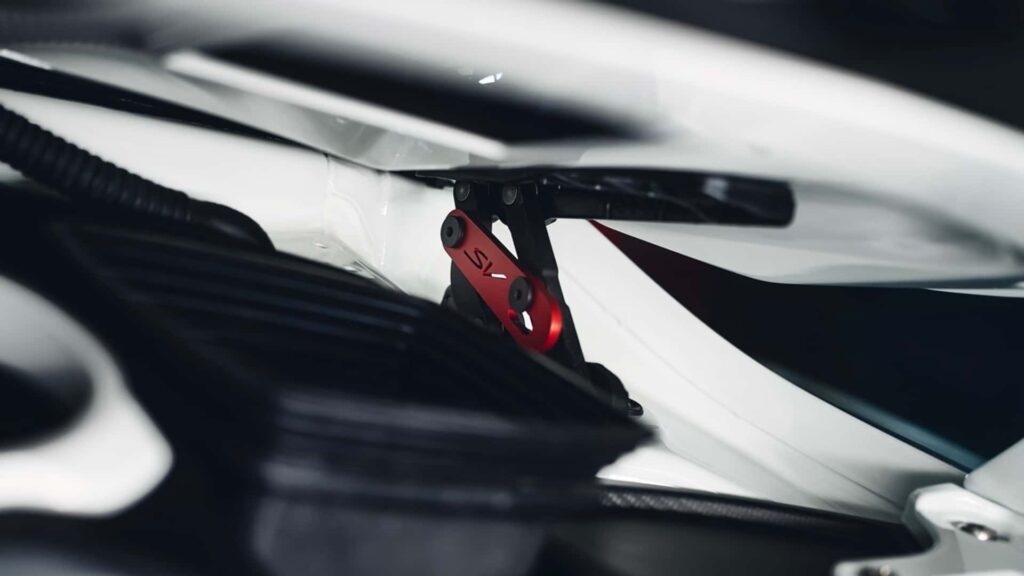
The rear wing takes inspiration from the Porsche 911 GT3 R Rennsport.
But Porsche did not simply transplant the component.
For the Flachbau RS, the wing sits approximately two inches higher than on the track-only Rennsport.
Its distinctive S-shaped profile can be manually adjusted through three different positions.
That allows aerodynamic balance to be changed according to how the owner intends to use the car.
Less drag.
More downforce.
Or a compromise between the two.
Again, the focus is functional.
The enormous wing is not there simply because Moby Dick had one.
It has a measurable job to perform.
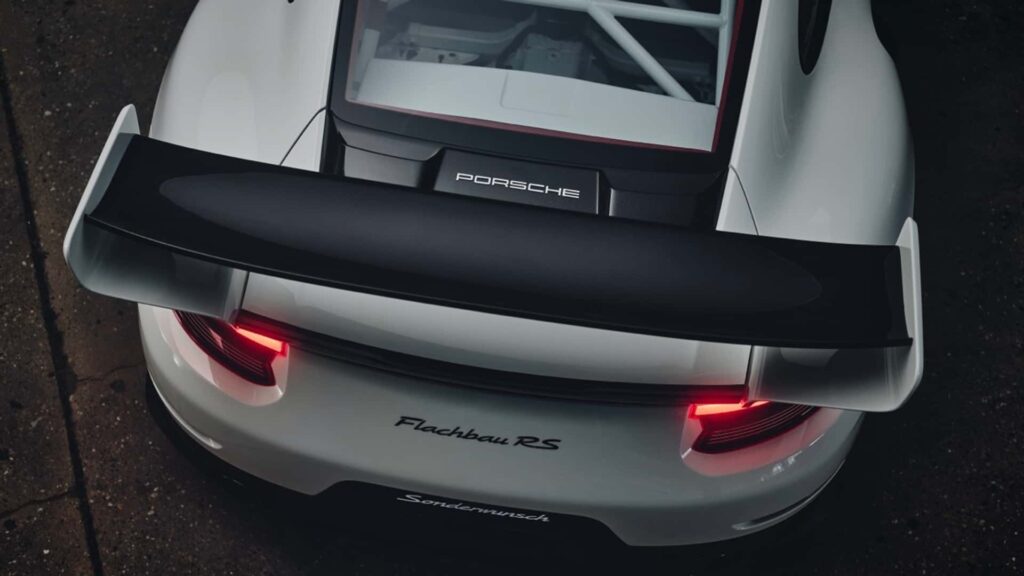
554 Kilograms of Rear Downforce
At its highest-downforce configuration, the Flachbau RS generates an extraordinary 554 kilograms — 1,221 pounds — of aerodynamic load over the rear axle at 340 km/h.
That figure is remarkable for a road-legal 911.
It also explains the scale of the wing and underbody work.
At more than 200 mph, aerodynamic balance becomes critical.
Small styling changes can create enormous consequences.
The Flachbau RS therefore required development far beyond what would normally be associated with a bespoke visual commission.
The car does not merely look like a racing Porsche.
It has been engineered using the same philosophy.
Aero Discs on the Rear Wheels
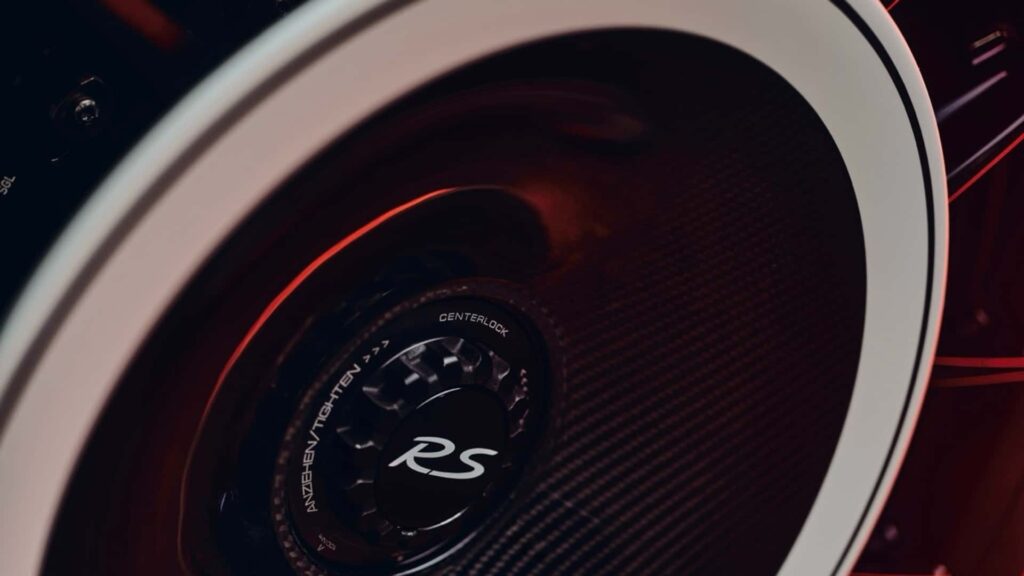
Another fascinating detail appears on the rear wheels.
Porsche has developed specific aero discs designed to reduce turbulence and drag around the rotating wheel surfaces.
This is a relatively small visual element with serious aerodynamic logic behind it.
Open-spoke wheels generate complex airflow.
At extremely high speed, smoothing that area can help reduce drag and improve stability.
The solution also creates another connection with endurance racing, where aerodynamic wheel covers have frequently been used in pursuit of efficiency.
On the Flachbau RS, even the wheels become part of the aerodynamic package.
Grand Prix White
The launch specification is intentionally restrained.
The body is finished in Grand Prix White, a historic Porsche colour matched against a period-correct example from the company’s own collection.
Black detailing and exposed carbon provide the contrast.
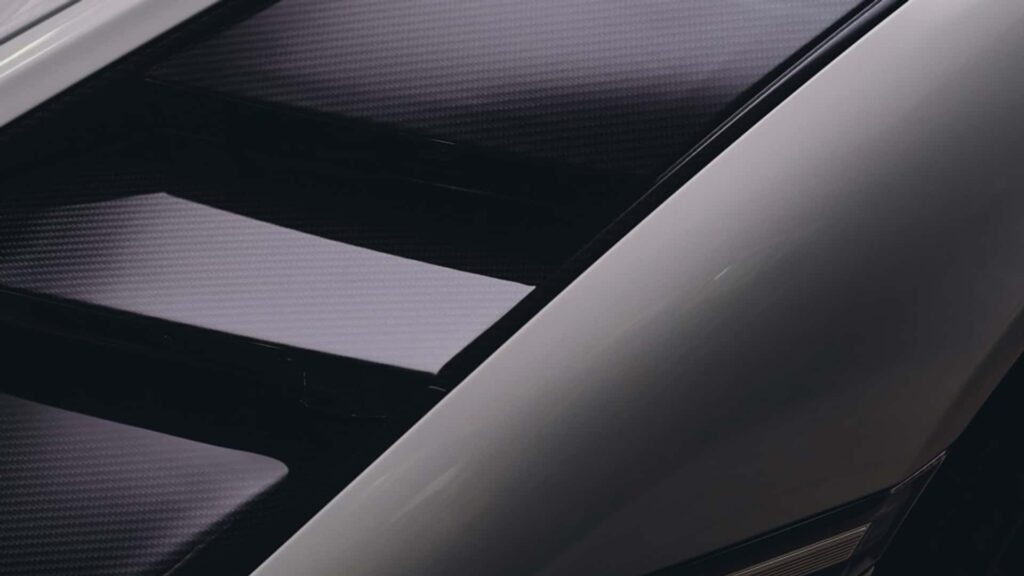
The combination subtly recalls the visual identity of Moby Dick without recreating one of its original racing liveries literally.
That restraint suits the project.
The shape already provides enormous drama.
It does not need elaborate graphics to explain itself.
Thirty-One Kilograms Removed From an Already Lightweight Car
The weight-saving programme is particularly impressive because of the donor vehicle.
A GT2 RS equipped with Weissach Package is already aggressively optimised.
Porsche nevertheless removed another 31.6 kg.
Some of those savings come from newly developed carbon components.
Others come from something simpler.
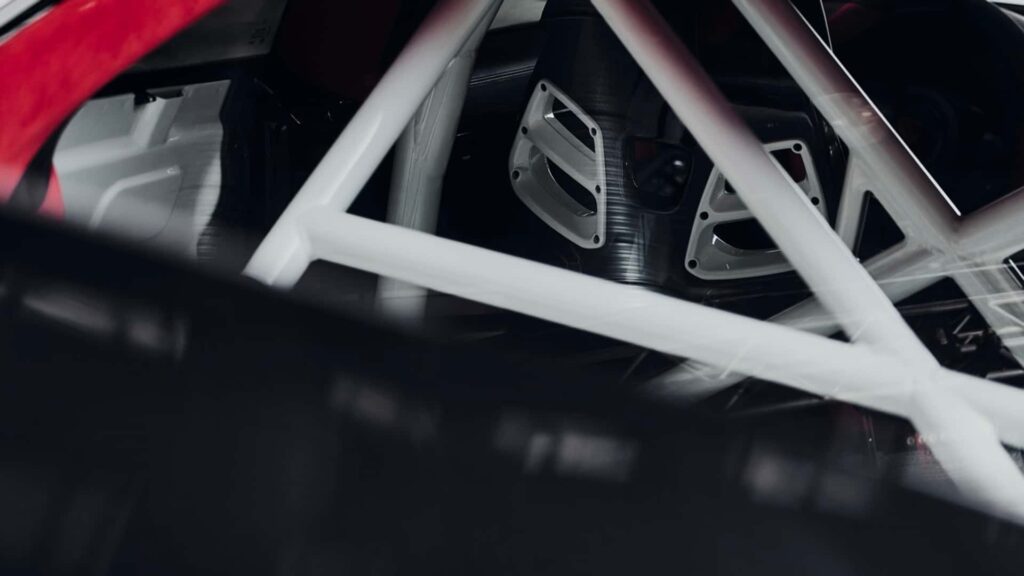
Deleting things.
The infotainment system disappears.
The PCM system is removed.
Audio equipment goes.
Sound insulation is reduced.
Unnecessary wiring is stripped from the car.
Comfort becomes secondary to purpose.
The cabin consequently feels much closer to a competition machine than a conventional GT2 RS.
The Interior Rejects Luxury
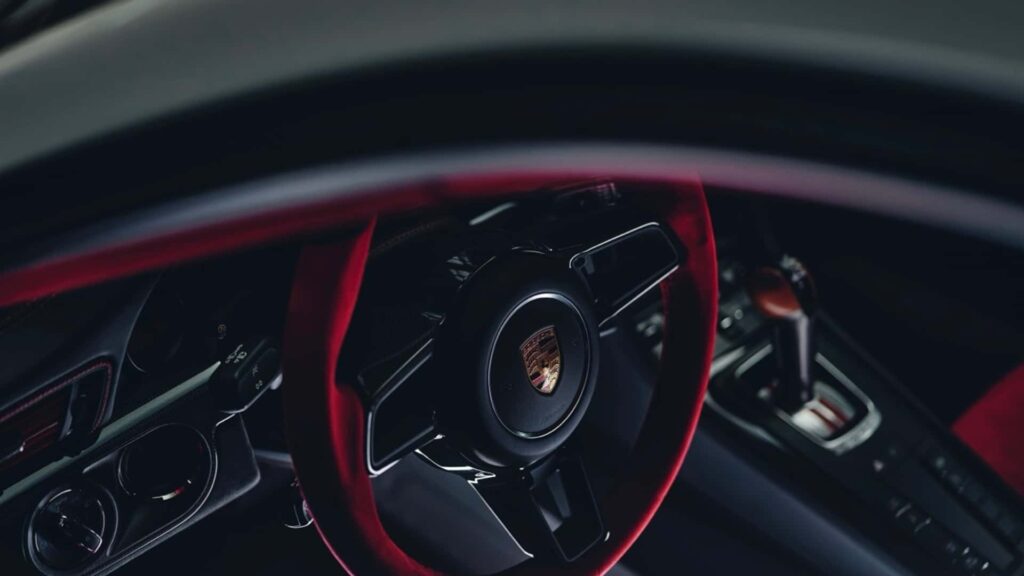
The Flachbau RS interior is deliberately sparse.
Much of the structure remains visible.
There is little attempt to disguise the fact that this car has been developed around weight and circuit performance.
That approach separates it from many contemporary one-offs.
Modern bespoke projects frequently add more.
The Flachbau RS does the opposite.
Its luxury comes from engineering exclusivity.
The fact that Porsche was willing to spend three years developing a single car.
That is a very different kind of bespoke value.
Singer vs Gunther Werks — Defining the Ultimate Porsche Reimagined
The 700-PS Flat-Six Remains
Interestingly, Porsche has not increased engine output.
The 3.8-litre twin-turbocharged flat-six retains its original 700 PS.
That decision is telling.
The GT2 RS never lacked power.
The Sonderwunsch team instead focused on areas capable of making the entire vehicle faster and more capable.
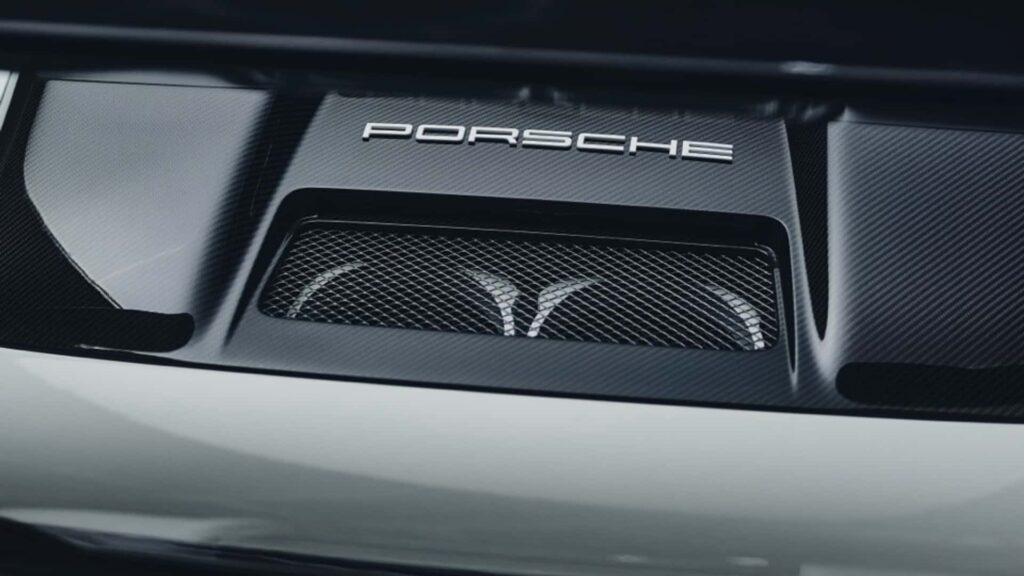
Less weight.
More aerodynamic stability.
Greater efficiency.
A cleaner body.
Better high-speed control.
It demonstrates an engineering principle increasingly lost in an industry obsessed with horsepower.
The fastest solution is not always a larger number.
340 km/h Remains Enough
The Flachbau RS retains a maximum speed of approximately 340 km/h — 211 mph.
Again, there was little need to pursue a headline record.
The aerodynamic programme is designed to make the vehicle substantially more stable and effective at those enormous speeds rather than simply increasing the theoretical maximum.
This makes the car particularly appropriate as a tribute to the 935.
Endurance racing has always been about more than one spectacular lap.
Consistency matters.
Stability matters.
Confidence matters.
The Flachbau RS applies those principles to a road-legal collector automobile.
Sonderwunsch at Its Most Ambitious
Porsche’s Sonderwunsch programme has expanded dramatically in recent years.
The name itself translates as “special request,” but the current programme encompasses several levels of individualisation.
At its most extreme, customers can commission extensive Factory Re-Commission or Factory One-Off projects involving engineering and design changes far beyond conventional Porsche Exclusive Manufaktur options.
The Flachbau RS demonstrates just how far that process can go.
The customer did not simply specify a colour that wasn’t in the catalogue.
Porsche created new bodywork.
New light and new engineering solutions.
Then validated them.
For one car.
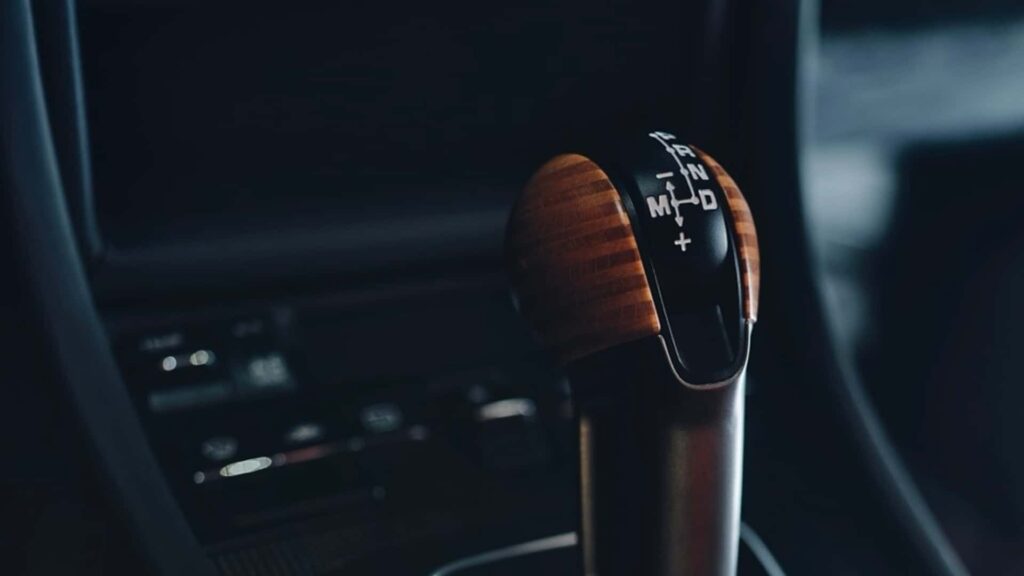
The Modern Return of Coachbuilding
That raises an interesting question.
At what point does personalisation become coachbuilding?
Historically, customers bought a mechanical chassis before commissioning a separate carrozzeria to create unique bodywork.
Modern construction makes that process vastly more difficult.
Crash structures.
Complex aerodynamics.
Cooling systems.
Electronic architecture.
Homologation.
All tightly integrate body and chassis.
The Flachbau RS effectively recreates the old coachbuilding model inside the manufacturer.
The original vehicle provides the architecture.
The Sonderwunsch programme provides the unique body.
Engineering validation makes the result genuinely usable.
The philosophy is traditional.
The execution could only exist today.
RUF EHRA: A 650-HP Manual Grand Tourer Inspired by the Yellowbird Legacy
Why the 935 Still Matters
Porsche has an enormous racing archive.
Few cars within it remain as visually distinctive as the 935.
The shape broke many of the conventions enthusiasts associated with the 911.
The front wings disappeared.
The body grew wider.
The rear extended dramatically.
Aerodynamics became more important than purity of silhouette.
Yet the result remained recognisably Porsche.
That tension between heritage and function continues to fascinate designers almost fifty years later.
The Flachbau RS proves that the idea still has enormous relevance.
Porsche Already Revisited Moby Dick Once
There is an interesting predecessor to this project.
In 2018, Porsche created a modern 935 based on GT2 RS architecture to celebrate its motorsport heritage.
Only 77 examples were produced.
That car was intentionally designed for track use and therefore had considerably greater freedom in areas such as lighting, aerodynamics and homologation.
The Flachbau RS takes a harder route.
It must provide some of the same visual drama while remaining a genuine road car.
In that sense, it may actually be the more difficult engineering exercise.
One-Off Means One-Off
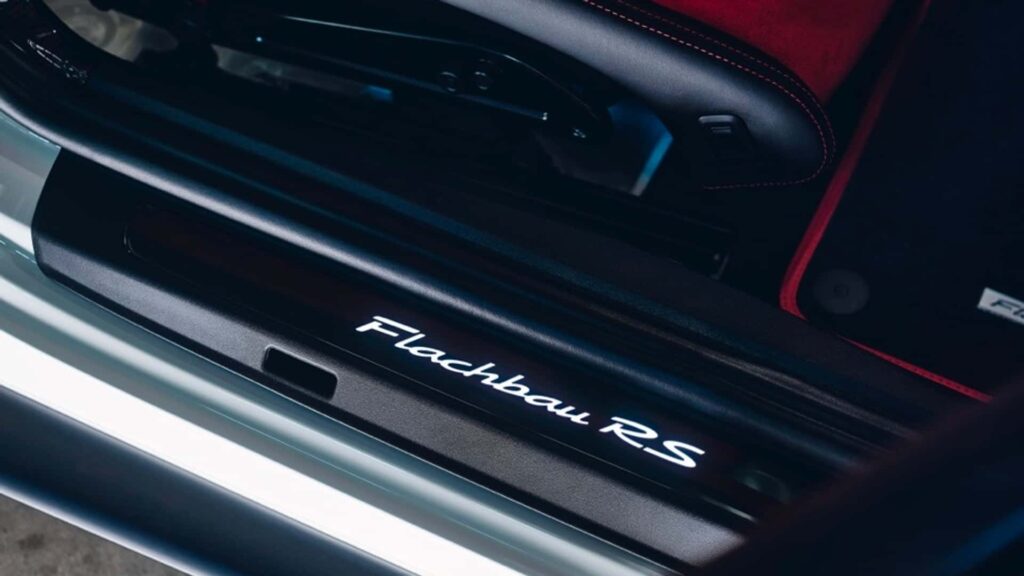
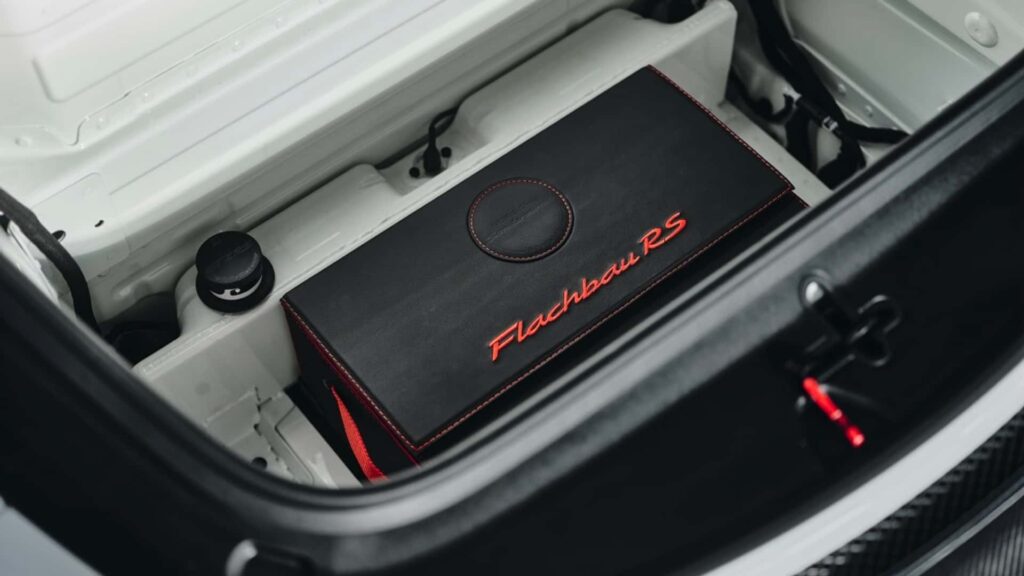
Porsche filed trademarks for Flachbau and Flachbau RS in Europe during 2025, inevitably leading enthusiasts to speculate that a production Slantnose might return.
Porsche has now clarified that those registrations were connected specifically with this commission.
There is currently no production Flachbau RS programme planned.
This car is one of one.
That is important.
No numbered run of 50 cars.
No second specification in another colour.
The owner wanted a road-legal modern Moby Dick.
Porsche built exactly one.
The Price of Building One Porsche
Porsche has not disclosed how much the project cost.
And realistically, the figure matters less than the process.
Factory one-off Sonderwunsch projects are believed to begin deep into seven-figure territory before the underlying car is considered, and a programme involving three years of development, motorsport engineering, bespoke lighting, aerodynamic validation and unique carbon components would inevitably sit at the extreme end of that spectrum.
But comparing the finished car with a normal GT2 RS misses the point.
The owner was not buying another specification.
They were commissioning a Porsche that did not exist.
A Better Tribute Than a Replica
Perhaps the greatest achievement of the Flachbau RS is that it avoids the obvious temptation.
It does not recreate a 935.
Its owner could have bought a historic racing car if that were the objective.
Instead, Porsche takes the idea behind Moby Dick and translates it into contemporary engineering.
The nose is flat because aerodynamics benefit.
The lights are modern because they need to function on today’s roads.
The wing uses modern motorsport knowledge.
The underbody comes from contemporary Manthey engineering.
The carbon structure belongs to the twenty-first century.
History provides the direction.
Technology provides the execution.
The Rise of Off-Road Supercars: When Hypercars Leave the Asphalt
Moby Dick Returns to the Road
The Porsche Flachbau RS represents exactly what the best heritage projects should achieve.
It does not pretend the last forty years never happened.
It uses them.
A modern GT2 RS provides 700 PS.
Manthey contributes aerodynamic expertise.
Porsche Motorsport brings competition knowledge.
Style Porsche translates the 935 into a contemporary form.
Sonderwunsch turns one customer’s idea into a factory-engineered reality.
And three years later, a silhouette born from endurance racing returns to public roads.
Lower.
Lighter.
More aerodynamic.
Still unmistakably a 911.
The original Moby Dick was created because racing regulations allowed Porsche’s engineers to stretch the 911 almost beyond recognition.
The Flachbau RS exists because one customer asked Porsche to do it again.
This time, with number plates.