
The modern luxury-car industry has become extraordinarily good at perfection.
Computer-controlled machining creates components measured in microns.
Robotic painting produces flawless surfaces.
Carbon fibre emerges from carefully controlled moulds with near-identical consistency.
Digital manufacturing can reproduce the same object thousands of times with remarkable accuracy.
The Carlex G-Stallion deliberately moves in the opposite direction.
Its defining feature is not horsepower.
Not acceleration.
Not carbon fibre.
It is the trace of the human hand.
Created as a one-of-one commission and unveiled at the 2026 Abu Dhabi International Hunting and Equestrian Exhibition, the G-Stallion transforms a Mercedes-AMG G 63 into something closer to functional sculpture than conventional luxury SUV.
Its price is equally extraordinary.
€3 million.
But understanding why requires looking somewhere most people would barely notice on an ordinary car.
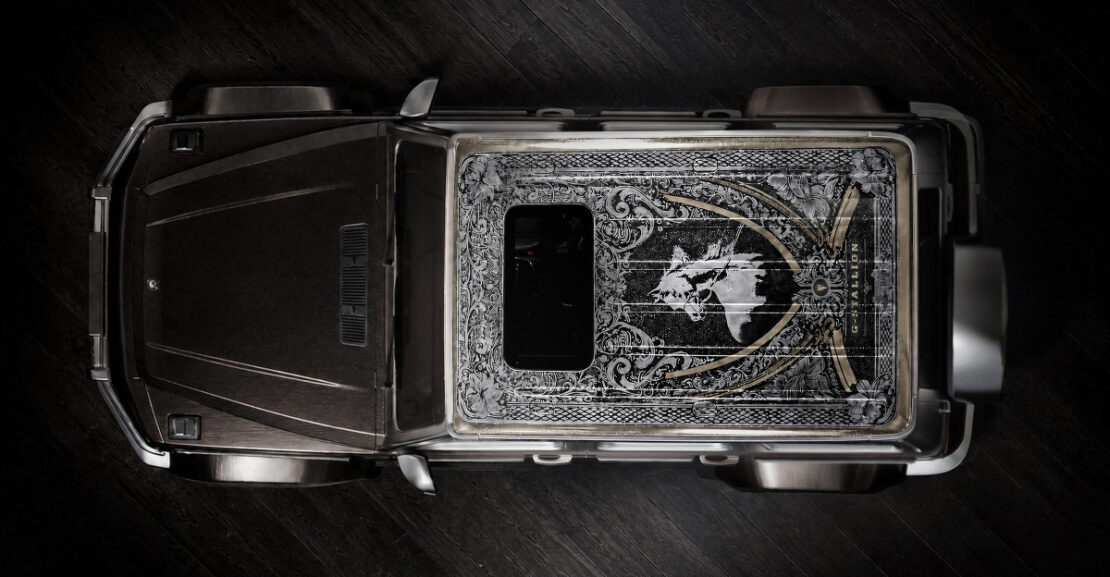
The roof.
Carlex spent more than 3,000 hours creating it by hand.
And once this G-Stallion is completed, Carlex says there will never be another identical one.
Not Another Modified G-Class

Carlex has spent years developing increasingly elaborate interpretations of the Mercedes-Benz G-Class.
Some are luxurious.
Some theatrical.
Others draw inspiration from yachts, classic automobiles or equestrian culture.
The G-Stallion belongs to a different category entirely.
It sits within the company’s One of One programme, an approach designed specifically to remove the compromises created by repetition.
There is no need to ask whether a component can be manufactured efficiently fifty times.
No requirement to optimise production time for the next customer.
No concern about creating moulds that can reproduce identical pieces.
The object only needs to exist once.
That changes everything.
Carlex describes the philosophy as creating space for materials, time and craftsmanship rather than designing every decision around future production. Once the project is finished, its configuration is permanently closed.
The G-Stallion is therefore not intended to become a limited edition.
It is not number one of ten.
It is simply one.
The Mercedes-AMG G 63 Becomes the Canvas
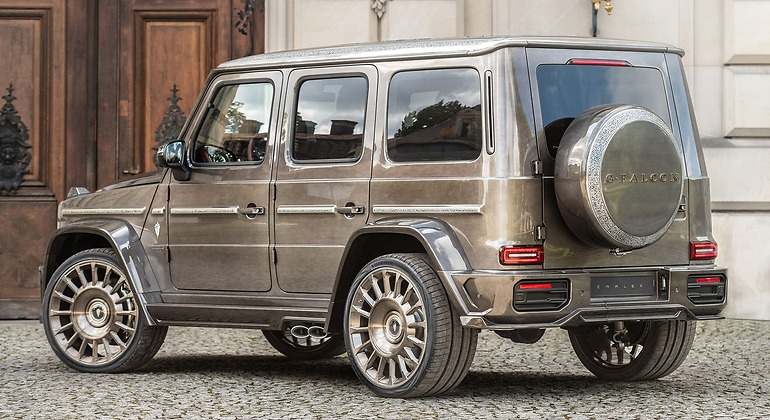
Beneath the transformation sits the familiar Mercedes-AMG G 63.
That foundation makes sense.
Few contemporary automobiles combine such a strong visual identity with such an unusual relationship between luxury and utility.
The G-Class began life as an extraordinarily functional off-road vehicle.
Decades later, it has become a global symbol of wealth while retaining the square body, upright windscreen, exposed hinges and unmistakable proportions of its utilitarian origins.
Carlex does not attempt to erase that identity.
Instead, it uses the G-Class almost like an architectural framework.
The body provides the volume.
The interior provides the rooms.
The roof becomes a canvas.
And every surface becomes an opportunity for craft.
The Arabian Horse as Inspiration
The project began not with an automobile, but with a horse.
Carlex drew inspiration from the Arabian horse, fascinated by the contradiction within its form.
Strength without heaviness.
Muscular tension without visual bulk.
Movement combined with extraordinary elegance.
More specifically, the G-Stallion takes inspiration from Pogrom, one of the distinguished Arabian stallions associated with the historic Janów Podlaski Stud in Poland, whose breeding tradition extends back more than two centuries.
Carlex did not simply collect photographs from the internet.
Its designers went to Janów.
They observed Pogrom moving.
Photographed him.
Studied the way he carried his head.
Watched the changing tension across his muscles.
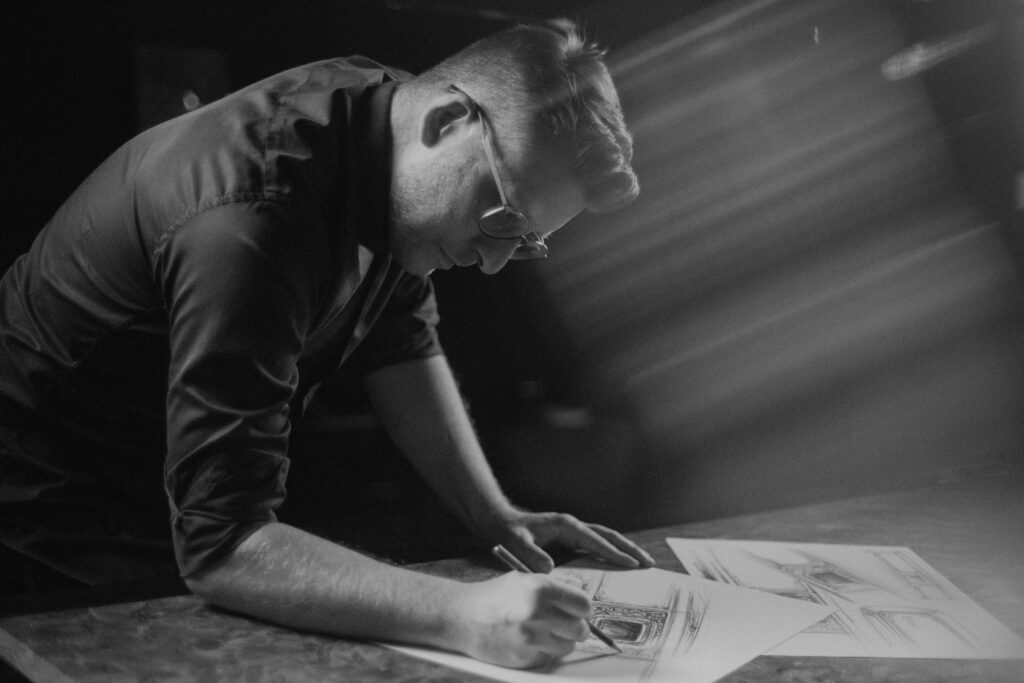
And even set up an easel inside one of the historic stables to sketch the animal directly from life.
Those drawings would eventually become the foundation for the most remarkable part of the car.
The Roof Began as a Flat Sheet of Aluminium
Most automotive roofs begin with tooling.
A digital surface is created.
A press forms sheet metal into the required shape.
Every example emerges essentially identical.
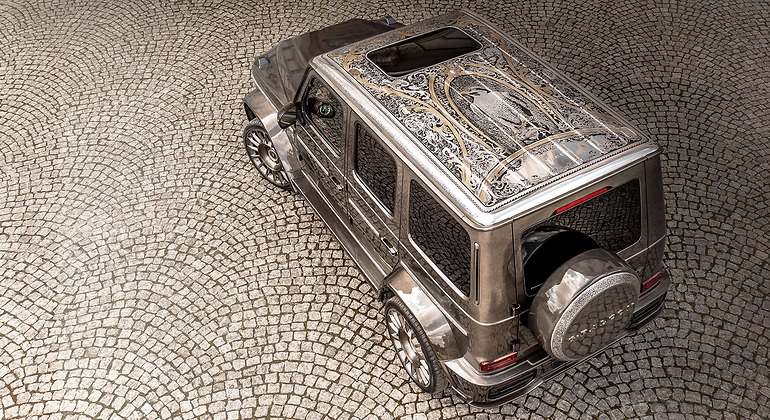
The G-Stallion roof began as a flat piece of aluminium.
Carlex craftsmen then shaped it manually using traditional metalworking tools and wooden bucks.
Slowly.
Section by section.
The underlying form alone required approximately two months of preparation before work on the relief could even begin.
That is an almost absurd amount of effort for a panel normally noticed only from an upstairs window.
Which is precisely why the project is interesting.
More Than 3,000 Hours for One Roof
Then came the relief.
There was no die.
No CNC-cut mould from which dozens of identical copies could emerge.
The surface was created entirely by hand.
Every hammer strike changed the metal.
Every line altered the way light would later move across it.
All transition between surfaces depended on decisions made by the craftsperson standing beside the panel.
Carlex says the roof alone required more than 3,000 hours of labour.
Think about that number.
Three thousand hours is roughly equivalent to one person working full time for well over a year.
For one panel.
On one car.
At that point, conventional industrial logic becomes almost irrelevant.
The Horse Is There Without Being Painted on the Car
The most sophisticated part of the design may be what Carlex avoided doing.
It would have been easy to place a large horse graphic across the roof.
Or engrave a realistic portrait of Pogrom.
Instead, the company chose abstraction.
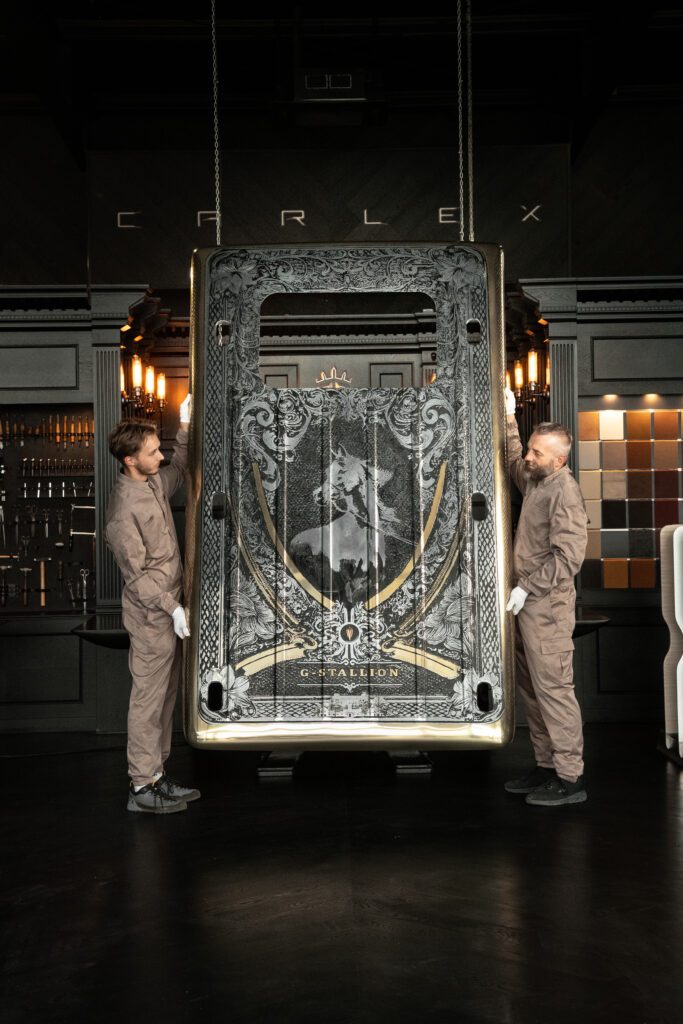
The designers were more interested in the tension of the horse’s muscles, the rhythm of movement and the way light travelled across its coat than in reproducing its appearance literally.
That philosophy explains why the roof needs to be experienced from different angles.
The image emerges.
Disappears.
Changes with reflections.
And becomes something different depending on where the observer stands.
It behaves more like sculpture than decoration.
Imperfection Is Part of the Value
Modern manufacturing usually treats tool marks as defects.
Carlex deliberately leaves some of them visible.
The reason is philosophical.
A hand-formed piece of metal contains evidence of how it came into existence.
Slight variations.
Minute transitions.
Surfaces that are not mathematically identical from one side to another.
Carlex chose not to eliminate those traces completely because they allow the manufacturing process itself to remain legible in the finished object.
This reverses one of the central assumptions of industrial luxury.
Perfection normally means removing every indication that a person touched the object.
Here, value comes precisely from knowing that someone did.
Silver, Patina and Pale Gold
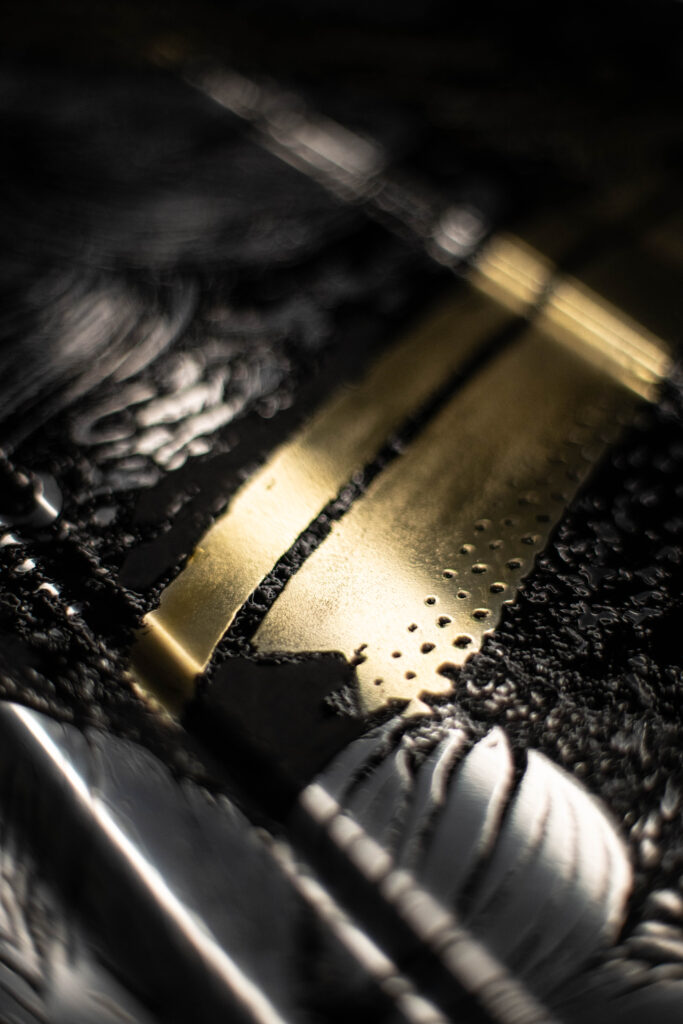
Once the shaping was complete, the roof received multiple surface treatments.
Silver.
A deep dark patina.
And carefully applied details of pale gold.
The purpose was not simply ornamentation.
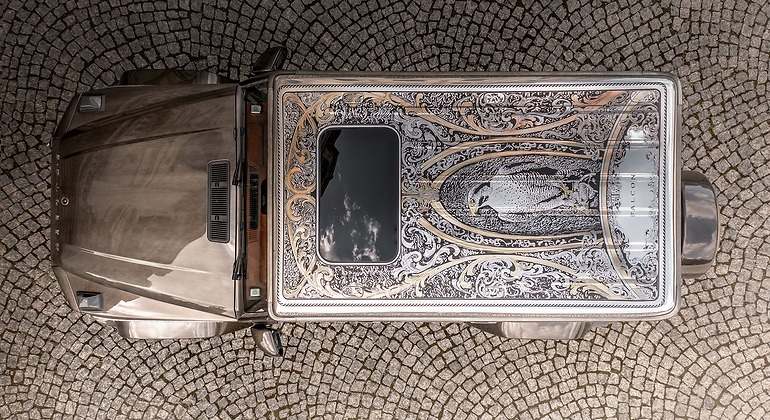
Different finishes respond differently to light, allowing individual sections of the relief to reveal themselves gradually as the observer moves around the vehicle.
The photographs supplied by Carlex make this particularly clear.
Viewed from directly above, the roof resembles a large engraved metal artwork.
Move closer and the composition fragments into individual lines, textures and metallic transitions.
The G-Class almost disappears beneath it.
For a moment, you are simply looking at craftsmanship.
A Roof That Can Be Considered an Artefact
Carlex goes as far as describing the roof as an artefact in its own right.
That is an unusual claim for an automotive body component.
Yet it makes sense within the philosophy of the project.
Remove the roof from the G-Stallion and it would still function visually as an independent sculptural object.
Its craftsmanship does not depend entirely on the car around it.
Few automotive projects can genuinely make the same argument.
The Rest of the Vehicle Follows the Same Philosophy
The roof may be the centrepiece, but the same mentality extends throughout the vehicle.
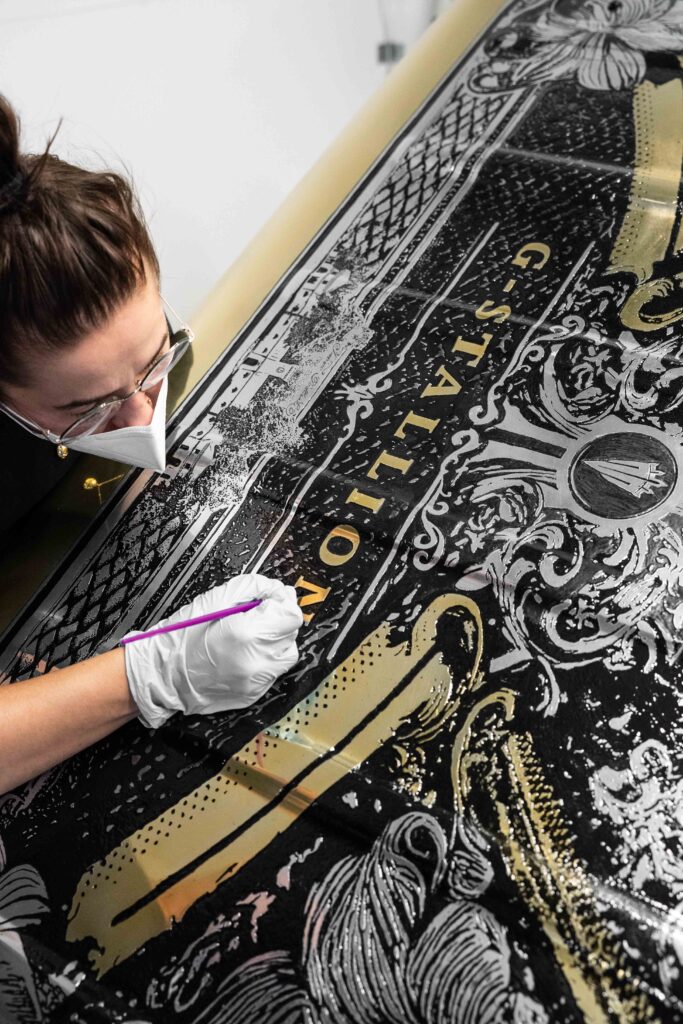
The exterior receives a dark, highly sophisticated finish interrupted by hand-applied decorative lines and metallic accents.
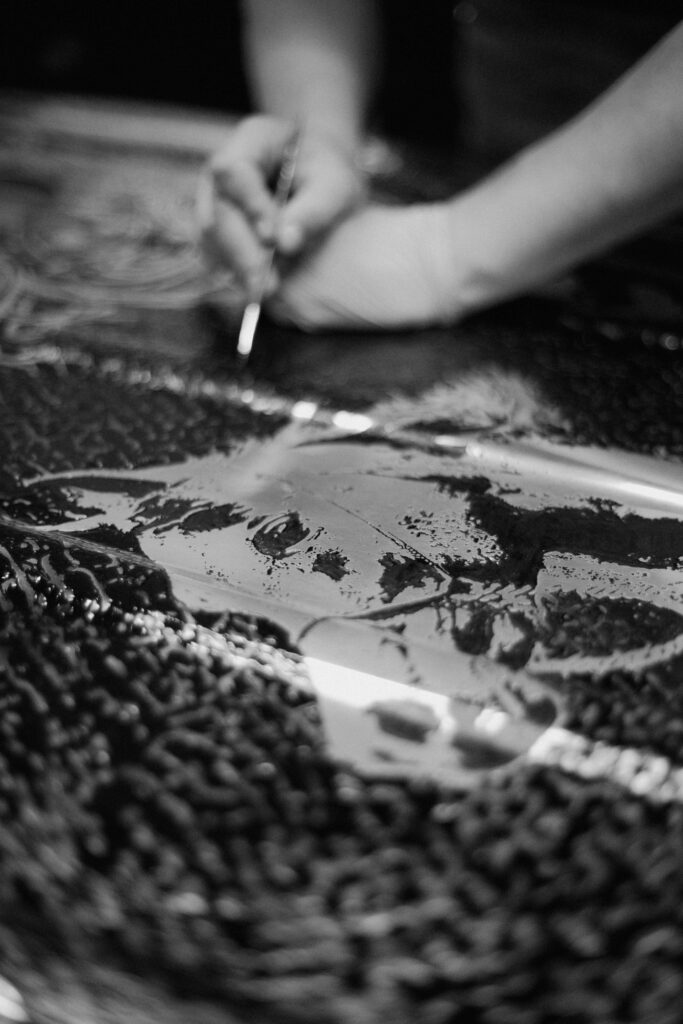
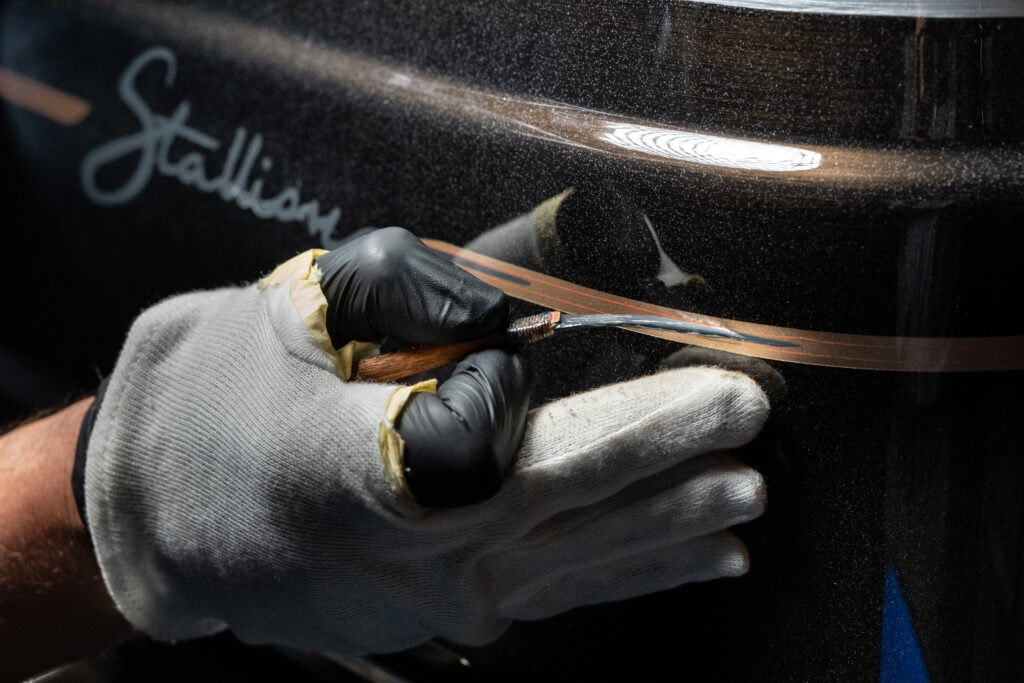
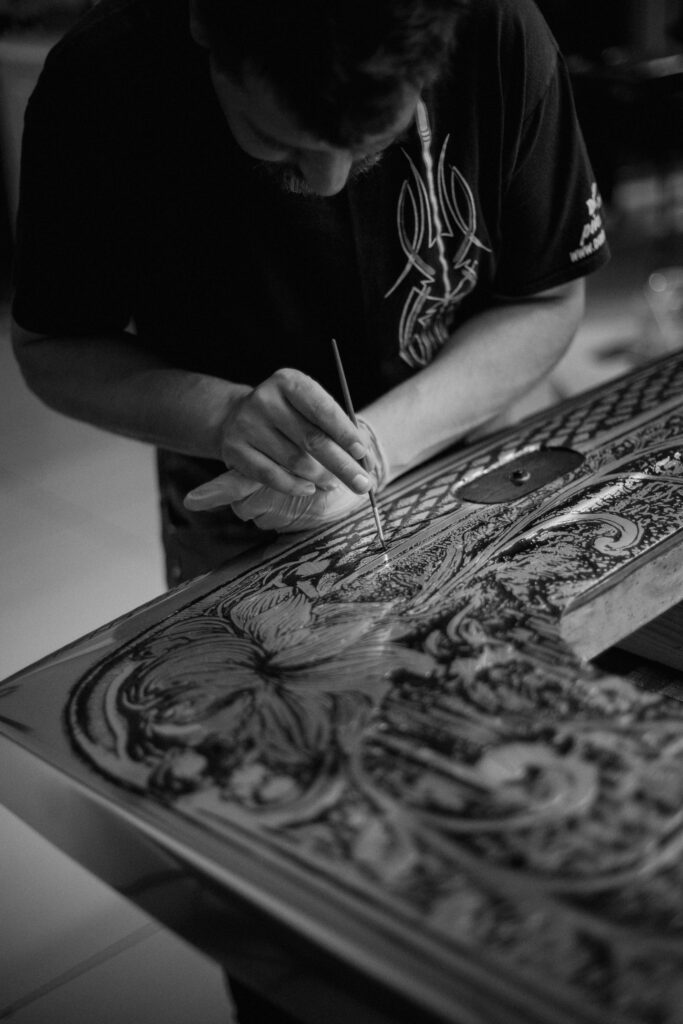
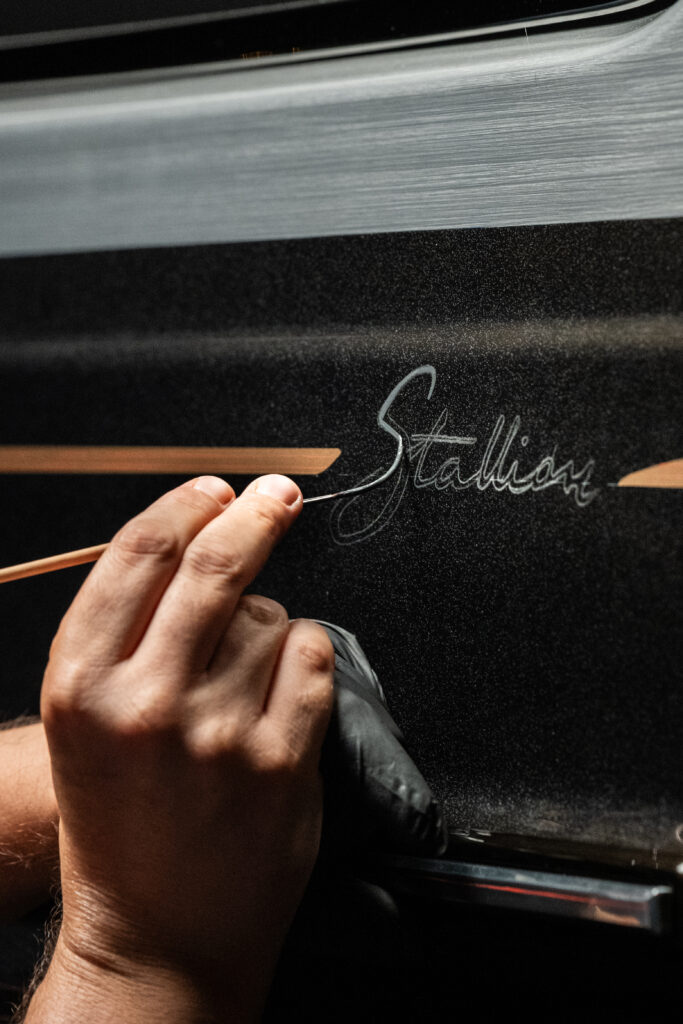
Close-up images supplied with the press kit show craftspeople working directly on the body surfaces rather than applying mass-produced decorative components.
Fine lines are created by hand.
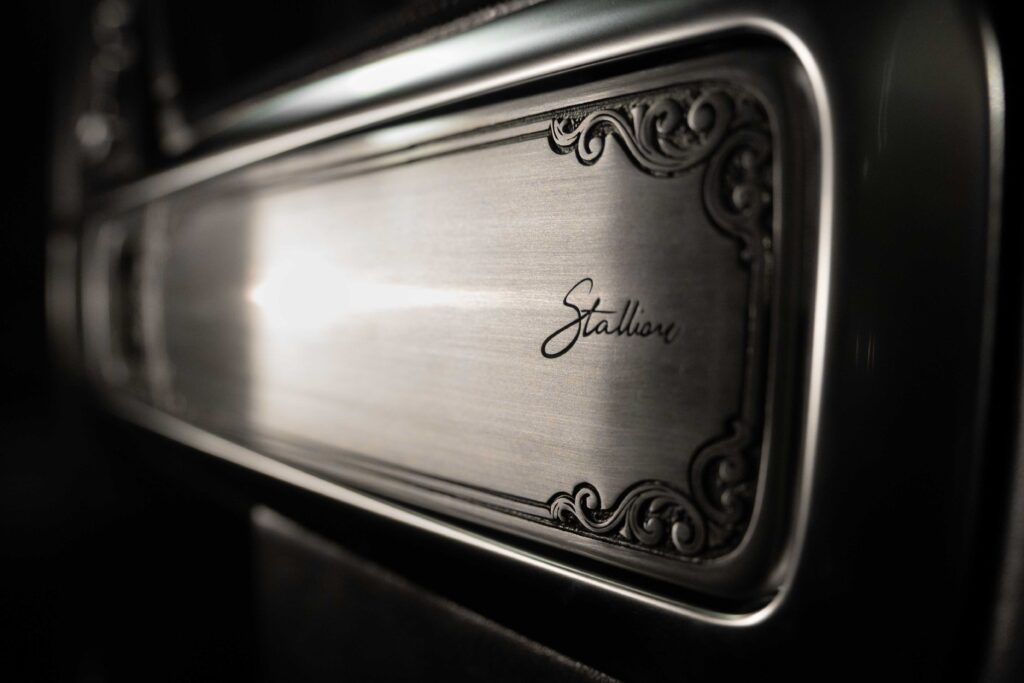
Signatures are added directly to surfaces.
Metal detailing is treated almost like jewellery.
The G-Stallion therefore rewards inspection.
From a distance, it remains recognisably a G-Class.
Up close, almost every surface begins telling another story.
The Interior Feels More Like Bespoke Furniture
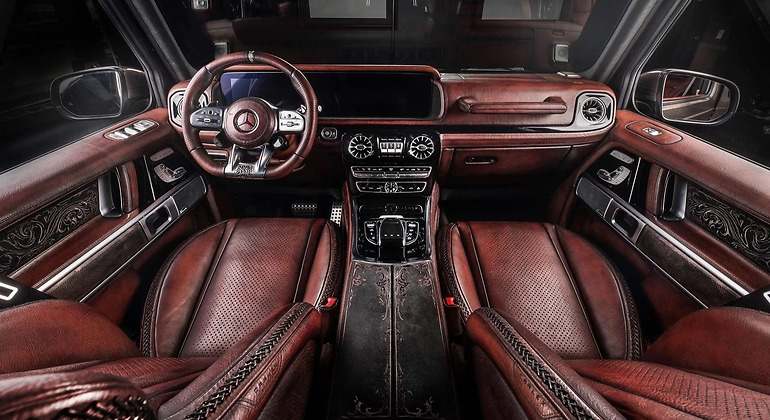
Open the doors and the character changes again.
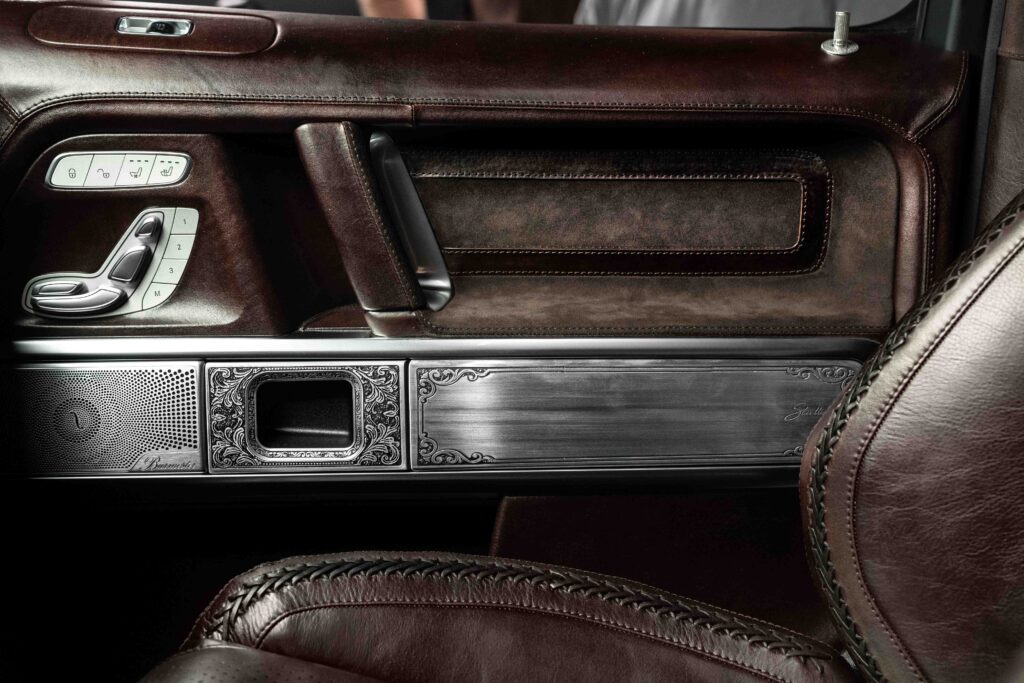
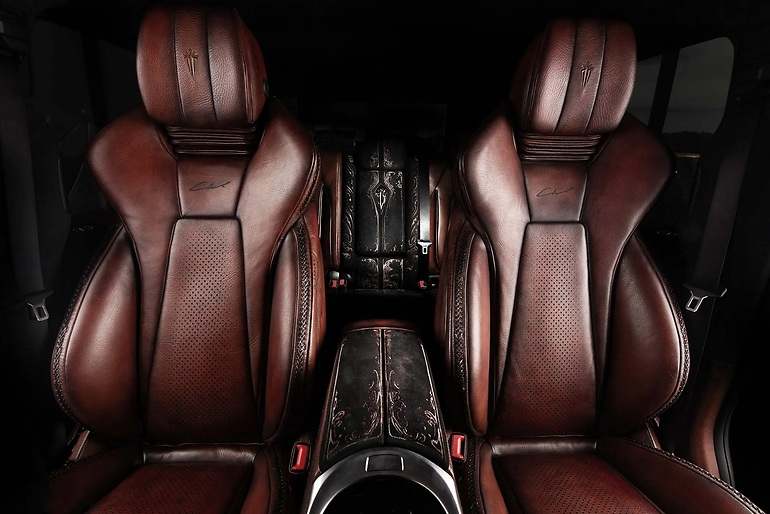
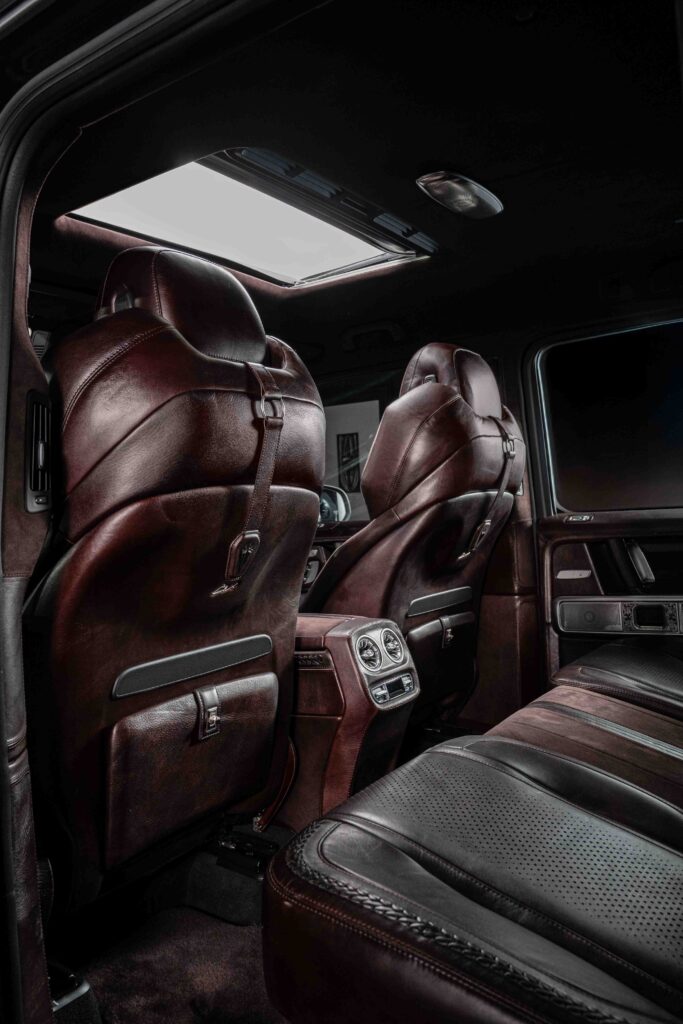
The cabin is dominated by deep brown and burgundy leather.
But colour is only the beginning.
The seats use extensive hand stitching.
Decorative metal inserts appear throughout.
Leather-wrapped grab handles replace ordinary utilitarian surfaces.
Even lower sections of the doors receive treatments normally reserved for high-end furniture or luggage.
The press photographs reveal an especially interesting combination of aged-looking leather, darker patinated metal and restrained gold-toned accents.
Nothing feels bright or excessively polished.
The atmosphere is rich rather than flashy.
Leather That Looks Better Because It Doesn’t Look New
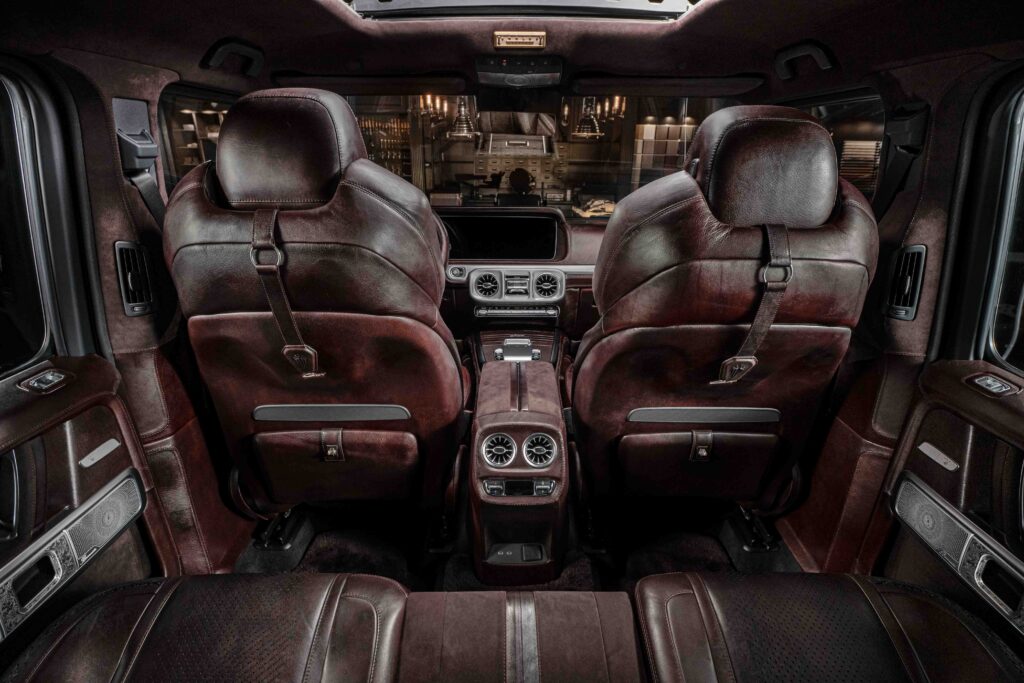
Many luxury interiors attempt to make leather appear perfectly uniform.
The G-Stallion takes a different approach.
Its hides display tonal variation.
Dark areas merge into lighter ones.
Creasing and surface character remain visible.
The result resembles a beautifully aged saddle more than conventional automotive upholstery.
That feels entirely appropriate for a vehicle inspired by equestrian culture.
Luxury here comes not from making the material look synthetic in its perfection.
It comes from allowing leather to look like leather.
The Horse Theme Continues Inside
Equestrian references appear throughout the cabin without turning it into a themed novelty.
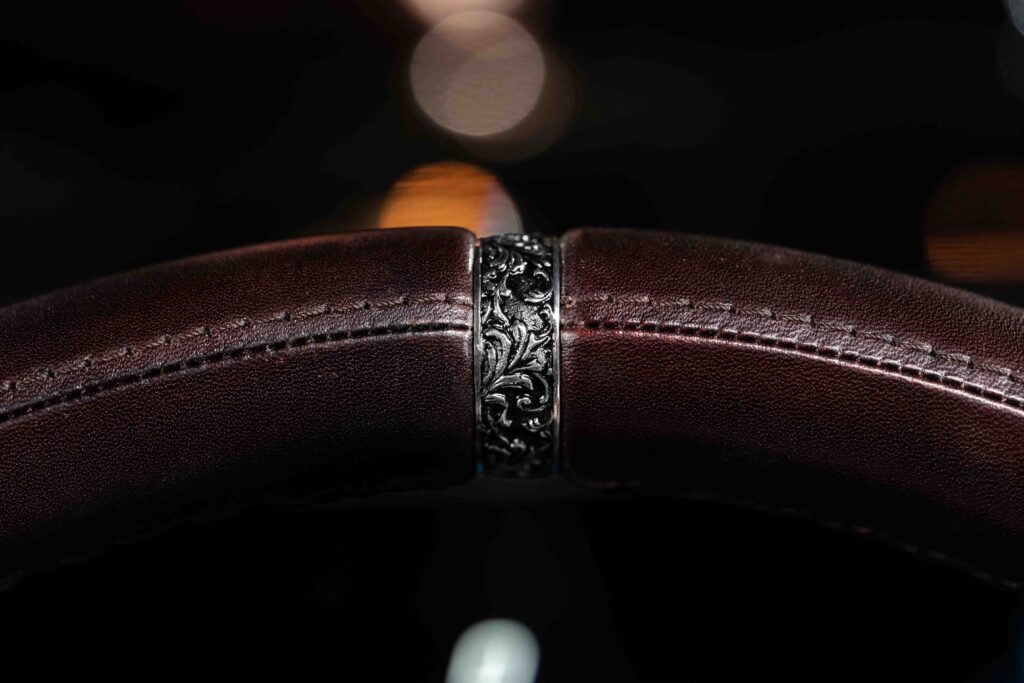
Leather straps.
Metal buckles.
Layered stitched panels.
Saddle-like textures.
The inspiration becomes tactile rather than literal.
That is important.
A project like this could easily cross the line into costume.
Instead, Carlex keeps returning to material and technique.
Leather feels equestrian because of the way it has been treated.
Metal feels historical because of its patina.
The relationship is suggested rather than explained.
Even the Door Panels Become Crafted Objects
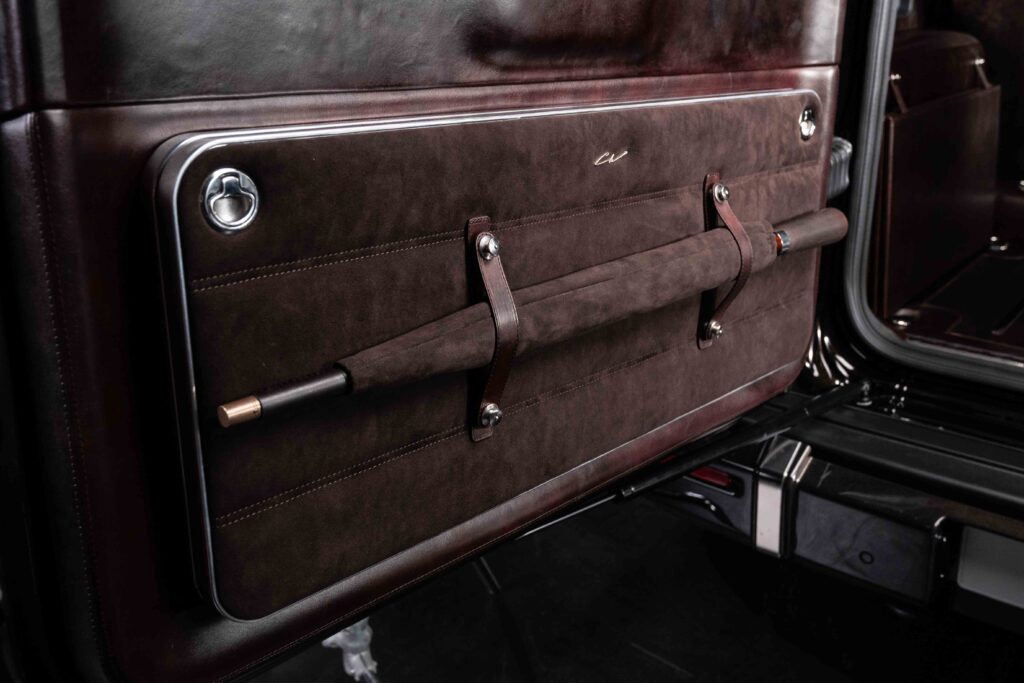
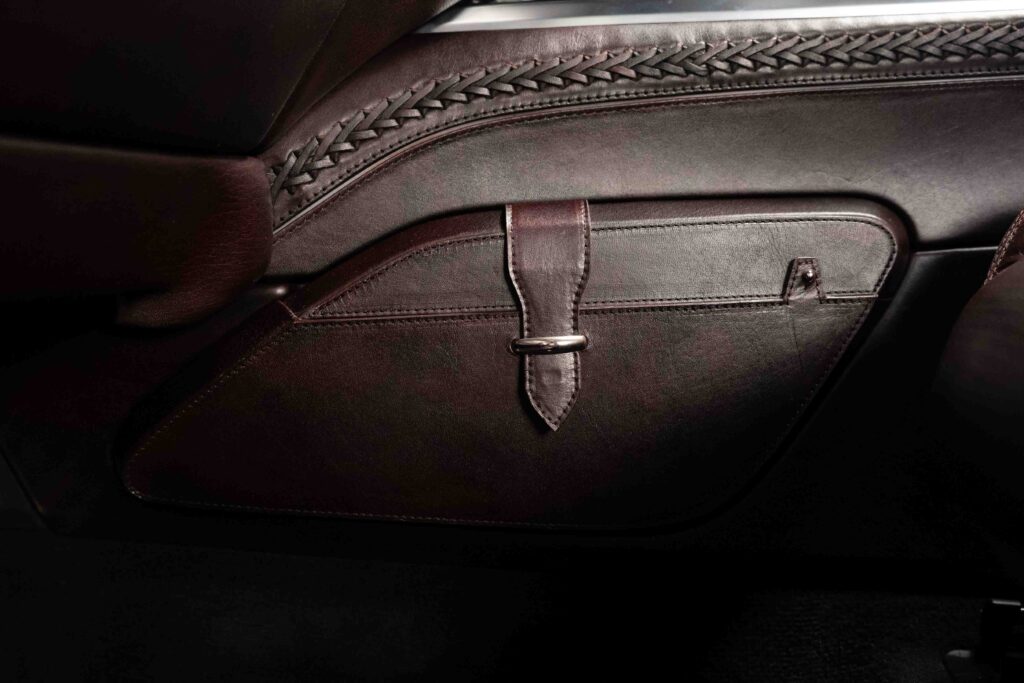
One of the strongest images in the supplied kit shows the rear door panel.
Ordinarily one of the least interesting parts of a G-Class interior.
Here, it becomes a composition of leather, stitched borders, straps, buckles and metal hardware.
Nothing about it appears designed for rapid production.
And that is exactly the point.
A normal vehicle interior is engineered around assembly efficiency.
Components need to fit quickly.
Fasteners need to be accessible.
Materials need to survive repeatable industrial processes.
The G-Stallion is designed around the finished object instead.
Efficiency becomes secondary.
The Luggage Area Is Not Forgotten
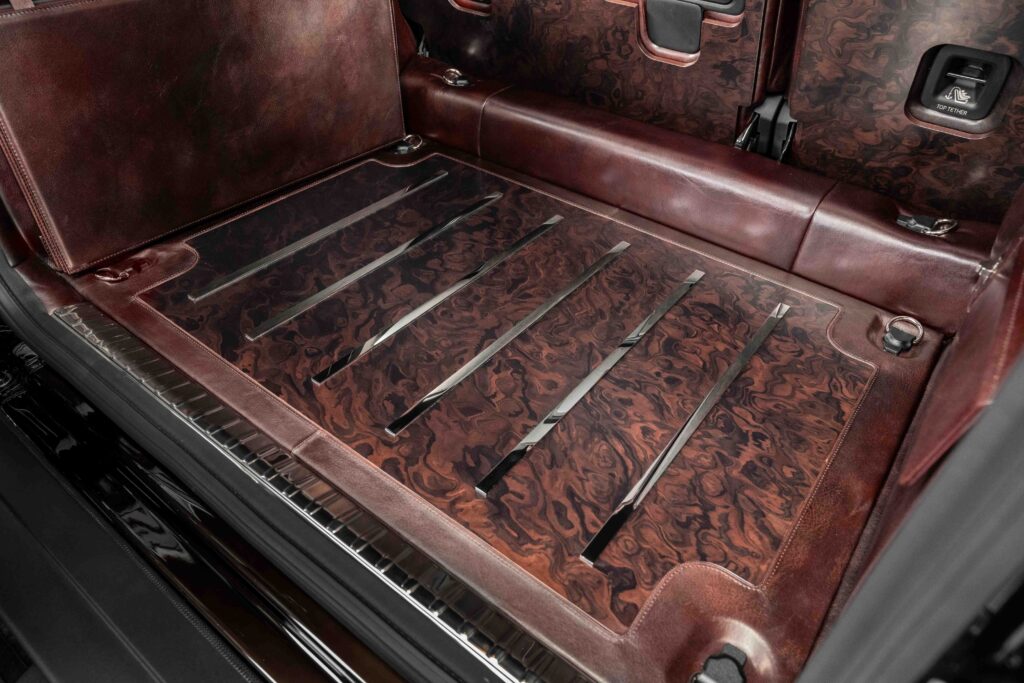
The rear luggage compartment receives the same treatment.
Rather than leaving a large practical cargo floor untouched, Carlex transforms it into another crafted surface.
Leather.
Decorative patterns.
Metal rails.
Carefully coordinated finishes.
That may reduce the psychological willingness to throw muddy luggage into the back of the car.
But practical anonymity was never part of the brief.
This is a collector automobile.
Even the boot needs to belong to the composition.
A Team Rather Than a Designer
Carlex emphasises another aspect that is easy to overlook when discussing bespoke automobiles.
The G-Stallion is not really the work of a single designer.
Metalworkers.
Upholsterers.
Painters.
Designers.
Craftspeople from several disciplines.

Individual components passed through multiple pairs of hands before being considered finished.
One person creates a surface.
Another shapes it.
Someone else finishes it.
The final object contains decisions from all of them.
This collaborative authorship feels closer to traditional decorative arts than conventional automobile manufacturing.
Carlex Yachting Vintage: When a Superyacht Becomes a G-Class
One of One Means Something Different Here
The phrase One of One has become increasingly common within the luxury-car industry.
Often, it simply means a unique colour combination.
Perhaps different upholstery.
Special badges.
A manufacturer can technically claim that no other car has exactly the same specification.
Carlex uses the phrase more literally.
The G-Stallion cannot be repeated precisely because its defining components depend on hand processes.
The same craftsperson striking the same piece of aluminium again would not create exactly the same marks.
The pressure would change.
The angle would change.
The metal itself would respond slightly differently.
The next roof might resemble this one.
It could never truly be this one.
That is a much more convincing definition of one-off craftsmanship.
The €3 Million Question
Then comes the unavoidable number.
€3,000,000.
The G-Stallion is being offered for acquisition at that figure during ADIHEX 2026 in Abu Dhabi.
For a Mercedes-AMG G 63-based vehicle, that price is extraordinary.
It places the G-Stallion far beyond conventional tuning.
Far beyond normal limited-edition SUVs.
And directly into the territory occupied by rare hypercars and significant collector automobiles.
Judged purely by the mechanical platform beneath it, the price makes little sense.
But that is not what Carlex is selling.
You Are Not Paying for More Horsepower
One important point deserves emphasis.
Carlex does not present the G-Stallion as an engineering programme built around increased engine output.
The official material focuses overwhelmingly on craftsmanship, material and artistic process.
That distinction matters.
There are plenty of companies capable of producing an extremely powerful G-Class.
Buyers can already choose heavily modified V8s producing spectacular numbers.
The G-Stallion competes somewhere else entirely.
Its defining number is not horsepower.
It is 3,000 hours.
Why ADIHEX Is the Perfect Setting
The location of the world premiere is unusually appropriate.
The Abu Dhabi International Hunting and Equestrian Exhibition sits at the intersection of several cultures relevant to the project.
Arabian horses.
Traditional craftsmanship.
Falconry.
Collecting.
Luxury.
Objects built around heritage and personal identity.
Carlex is presenting the G-Stallion there alongside the Safari Grande Royal and an early preview of its forthcoming Viking One of One project.
The environment contextualises the car differently from a conventional motor show.
It is not surrounded exclusively by performance vehicles.
It sits among objects whose value often comes from craftsmanship, provenance and tradition.
That is precisely where Carlex wants the G-Stallion to exist.
Janów Podlaski Meets Abu Dhabi
There is also an interesting cultural journey behind the project.
Its inspiration comes from a Polish Arabian stallion bred within the long tradition of Janów Podlaski.
Its craftsmen are based within Carlex’s Polish operation.
A public debut takes place in Abu Dhabi, within one of the regions where Arabian horse culture remains deeply important.
The project therefore connects two worlds through one object.
Polish craftsmanship.
Arabian equestrian heritage.
A German luxury SUV.
Displayed in the Middle East.
Modern luxury has rarely been more international.
From G-Falcon to G-Stallion
The G-Stallion also follows another important Carlex One of One project.
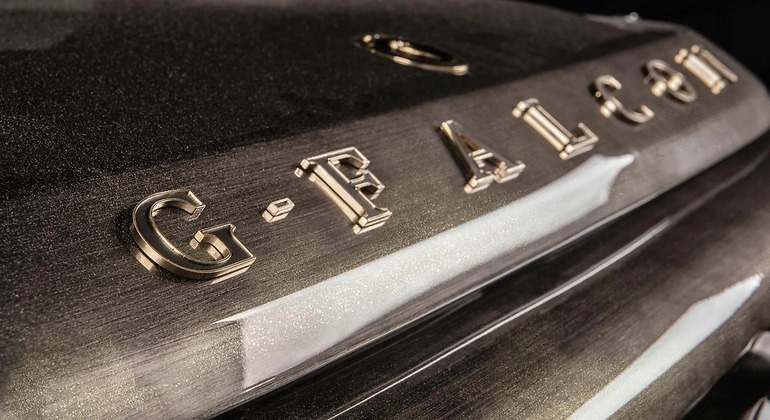
The G-Falcon.
That creation required around four years of work and became particularly associated with Carlex’s presence in the Middle East. Carlex says it now belongs to one of the world’s largest private automotive collections.
The G-Stallion develops the philosophy further.
Rather than treating the One of One concept as an isolated experiment, Carlex is beginning to create a recognisable category around it.
Falcon.
Stallion.
The forthcoming Viking.
Each project receives its own narrative.
Its own techniques.
Its own material language.
Carlex Is Moving Beyond Tuning
This may ultimately be the most important part of the G-Stallion story.
Calling Carlex a tuner increasingly feels incomplete.
Traditional tuning modifies an automobile.
More power.
Different wheels.
Suspension.
Bodywork.
Interior trim.
The G-Stallion operates closer to decorative art, coachbuilding and collectible design.
The underlying Mercedes remains essential.
But it is increasingly difficult to argue that the value of the finished object comes primarily from Mercedes-Benz.
The mechanical platform becomes infrastructure.
Carlex provides the identity.
Modern Coachbuilding Without Replacing the Body
Interestingly, Carlex reaches coachbuilding territory differently from companies that create completely new carbon-fibre bodies.
The G-Stallion does not need to disguise the G-Class.
Everyone knows what it is.
Instead, Carlex transforms how its surfaces are perceived.
The roof becomes sculpture.
The body becomes a painted and engraved object.
The cabin becomes bespoke furniture.
That approach is arguably closer to certain traditions of decorative craftsmanship than classic coachbuilding.
The handwork changes its meaning.
The Luxury of Time
The form remains familiar.
Perhaps the most important material used in the G-Stallion is not aluminium.
Or leather.
Or gold.
It is time.
The automotive industry is obsessed with reducing it.
Shorter development cycles.
Faster assembly.
Greater automation.
More units per hour.
Carlex deliberately spends thousands of hours on something one worker could never reproduce exactly again.
There is almost an anti-industrial quality to that decision.
In economic terms, it is wildly inefficient.
In luxury terms, inefficiency can become the ultimate scarcity.
Why Handwork Is Becoming More Valuable
The more precisely machines can manufacture objects, the more visible human work becomes.
A century ago, hand-formed metal was normal.
Today, it is exceptional.
The imperfections that industrial production worked so hard to eliminate become evidence of rarity.
A hammer mark becomes provenance.
A slight variation becomes identity.
The irony is fascinating.
Technology has not made craftsmanship irrelevant.
It may have made craftsmanship more valuable.
The G-Stallion is built entirely around that idea.
A Car That Records Its Own Making
Carlex founder and CEO Damian Skotnicki describes the project as an object that records the process of its own creation.
That may be the best way to understand it.
The roof remembers the hammer.
Leather remembers the hand that stitched it.
Metal retains traces of finishing.
The final car contains time within its surfaces.
In most automobiles, manufacturing history disappears before delivery.
Here, it remains visible.
Is It Worth €3 Million?
That question has no objective answer.
If the comparison is another Mercedes-AMG G 63, absolutely not.
If the comparison is transportation, the discussion becomes almost absurd.
But collector objects have never been priced according to transport efficiency.
A hand-made watch does not tell time better than a smartphone.
A painting does not perform a practical task more effectively than a photograph.
Craftsmanship acquires value because of authorship, rarity, process and emotional meaning.
Carlex is asking buyers to view the G-Stallion through that lens.
Whether the market agrees will be fascinating to discover.
When the G-Class Becomes the Frame
Ultimately, the Carlex G-Stallion is interesting because the Mercedes-AMG G 63 is almost secondary to the story.
It provides the frame.
The architecture.
The engine.
The utility.
But the reason this particular car exists lies somewhere else.
In a historic stable in Janów Podlaski.
Sketches made while watching an Arabian stallion move.
A flat piece of aluminium.
In thousands of hammer strikes.
Leather cut and stitched by people rather than machines.
In surfaces intentionally left imperfect enough to remember how they were made.
There will always be faster G-Classes and there will be more powerful ones.
There will almost certainly be cheaper ways to create something visually spectacular.
But there will never be another G-Stallion exactly like this one.
That is not a marketing limitation.
It is the consequence of how it was made.
And perhaps that is where the €3 million really went.