
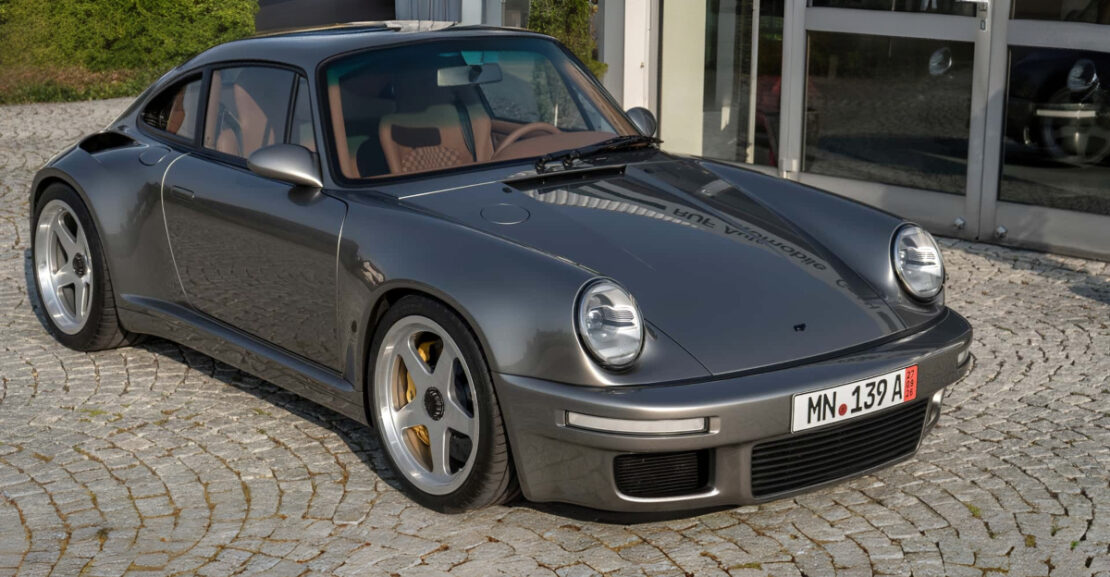
Few names in modern performance-car history carry the same quiet authority as RUF.
For decades, the German manufacturer has pursued a philosophy built around engineering purity rather than spectacle. Its cars rarely need enormous wings, elaborate hybrid systems or exaggerated styling to communicate their purpose.
The new RUF EHRA follows that tradition perfectly.
Unveiled at The Quail during Monterey Car Week 2026, the EHRA is a wide-bodied, all-wheel-drive grand tourer powered by a 650-horsepower twin-turbocharged flat-six and paired with something increasingly rare at this level of performance:
A seven-speed manual transmission.
Its name carries even greater significance.
EHRA references Ehra-Lessien, the German proving ground where the legendary RUF CTR “Yellowbird” reached 211 mph in 1987, establishing both the car and the company as genuine performance icons.
The new model is therefore not simply another RUF.
It is a modern grand tourer built around one of the most important moments in the company’s history.
The Meaning Behind EHRA
The name immediately connects the new car with RUF’s defining achievement.
In 1987, Road & Track assembled some of the world’s fastest production cars at the enormous Ehra-Lessien test facility in northern Germany.
Among them were machines from Ferrari, Lamborghini and Porsche.
The relatively understated yellow RUF CTR appeared almost modest beside them.
Then it reached 339.8 km/h — approximately 211 mph.
It was faster than everything else present, including the technologically extraordinary Porsche 959.
The performance transformed the CTR into a legend and earned it the nickname that would follow it forever:
Yellowbird.
Nearly four decades later, RUF has chosen that same location to inspire the identity of its latest automobile.
The EHRA does not attempt to recreate the Yellowbird.
Instead, it preserves the philosophy behind it.
Exceptional speed.
Minimal visual excess.
Mechanical involvement.
And the ability to travel extraordinary distances at extraordinary pace.
Marc Philipp Gemballa Marsien GT: From Dakar to Grand Touring
Built on RUF’s Own Carbon Architecture
The EHRA is based on the carbon-fibre monocoque architecture developed for the CTR Anniversary.
That distinction is important.
Although RUF’s visual language remains strongly associated with the Porsche 911, modern RUF automobiles such as the CTR Anniversary are not simply modified production Porsches.
The company manufactures its own carbon-fibre chassis, develops its own suspension architecture and assembles the finished automobiles under its own manufacturer identity.
The EHRA follows that same philosophy.
Its familiar silhouette therefore hides an engineering structure designed specifically by RUF rather than simply inherited from Stuttgart.
This gives the company considerably greater freedom over geometry, weight distribution, suspension behaviour and powertrain packaging.
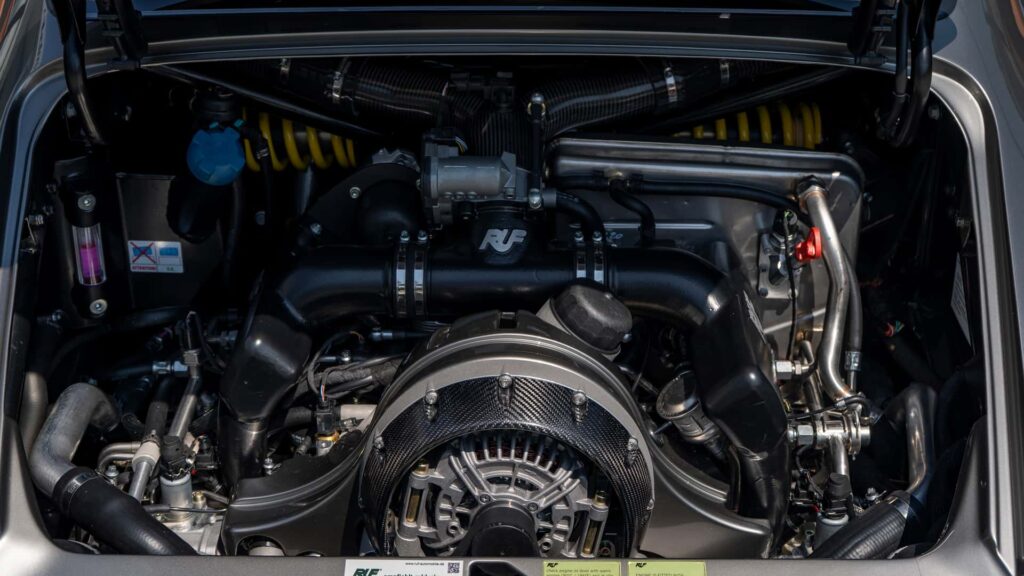
A 3.6-Litre Twin-Turbo Flat-Six
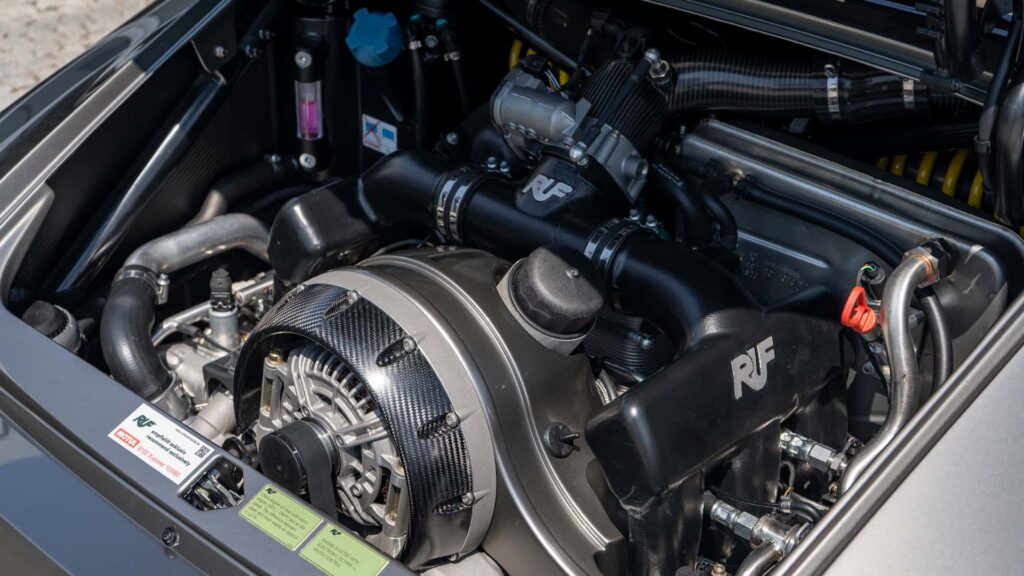
Power comes from a 3.6-litre twin-turbocharged horizontally opposed six-cylinder engine producing 650 horsepower and approximately 664 lb-ft of torque, or around 900 Nm.
Those numbers may not dominate the contemporary hypercar conversation.
That is precisely what makes the EHRA interesting.
RUF has never built cars around horsepower alone.
Six hundred and fifty horsepower in a relatively light carbon-bodied machine is more than enough to deliver extraordinary real-world performance without overwhelming everything else about the experience.
The engine is paired with all-wheel drive, allowing far more of that performance to be deployed regardless of road conditions.
But the most important component sits between the driver and the drivetrain.
Seven Speeds. Three Pedals.
The EHRA uses a seven-speed manual transmission.
In 2026, that specification immediately makes it unusual.
Seven-speed manuals remain exceptionally rare even among sports cars, while automated dual-clutch transmissions have become almost universal across the high-performance market.
Objectively, the automated alternative would be faster.
RUF knows that.
The company simply prioritises something else.
Driver participation.
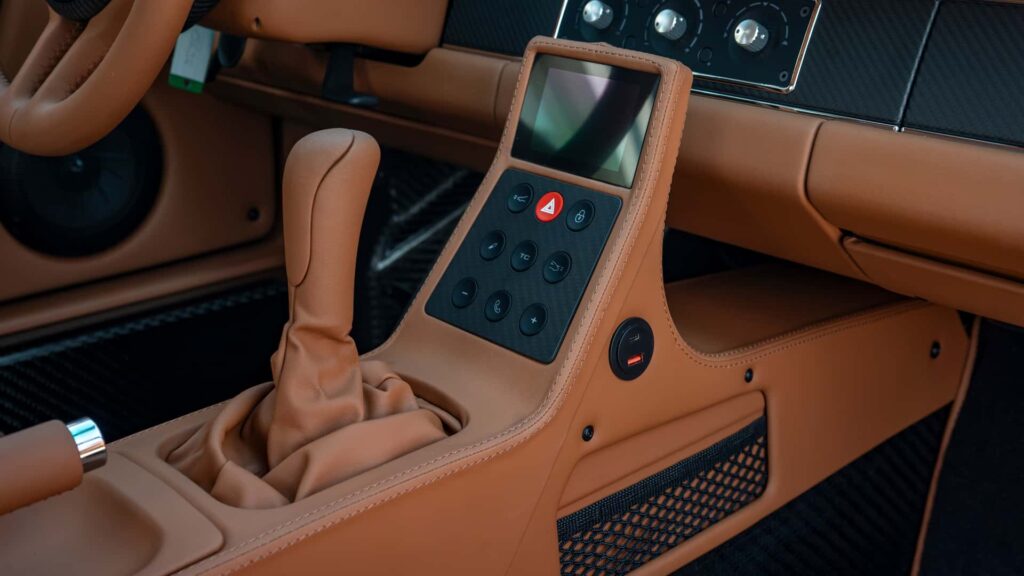
A manual gearbox transforms acceleration from an automated sequence into a deliberate process.
The driver chooses the moment.
Operates the clutch.
Moves the lever.
Releases the power again.
That interaction becomes particularly meaningful in a grand tourer designed to be driven frequently rather than preserved as a static collector object.
The EHRA is fast because of its engineering.
It is interesting because it still asks something from its driver.
Gunther Werks McKenna Commission: A Porsche 911 Reimagined Through Personal Heritage
All-Wheel Drive Without Losing Character
Power reaches all four wheels.
That gives the EHRA a fundamentally different character from the original rear-driven CTR Yellowbird, but it also reflects the new car’s broader mission.
This is not intended as an uncompromising lightweight track special.
RUF describes the EHRA as a vehicle capable of combining extreme performance with everyday comfort and drivability.
All-wheel drive helps achieve that.
Traction becomes more consistent.
High-output turbocharged performance becomes easier to exploit.
Poor weather becomes less intimidating.
And the car gains the long-distance usability expected from a true modern GT.
The engineering may be sophisticated.
The interaction remains refreshingly traditional.
0–60 MPH in 3.2 Seconds
RUF quotes 0–60 mph in approximately 3.2 seconds.
That figure deserves context.
There are hybrid supercars capable of reaching the same speed in considerably less time.
But the EHRA requires its driver to operate a manual gearbox while managing 650 horsepower.
Its appeal therefore cannot be reduced to stopwatch numbers.
Instead, performance becomes something experienced over an entire journey.
The mechanical engagement of changing gears.
The communication through the chassis.
The flexibility of the turbocharged engine.
And the ability to cover enormous distances quickly and comfortably.
That is a very different form of performance.
A Wider, More Muscular RUF
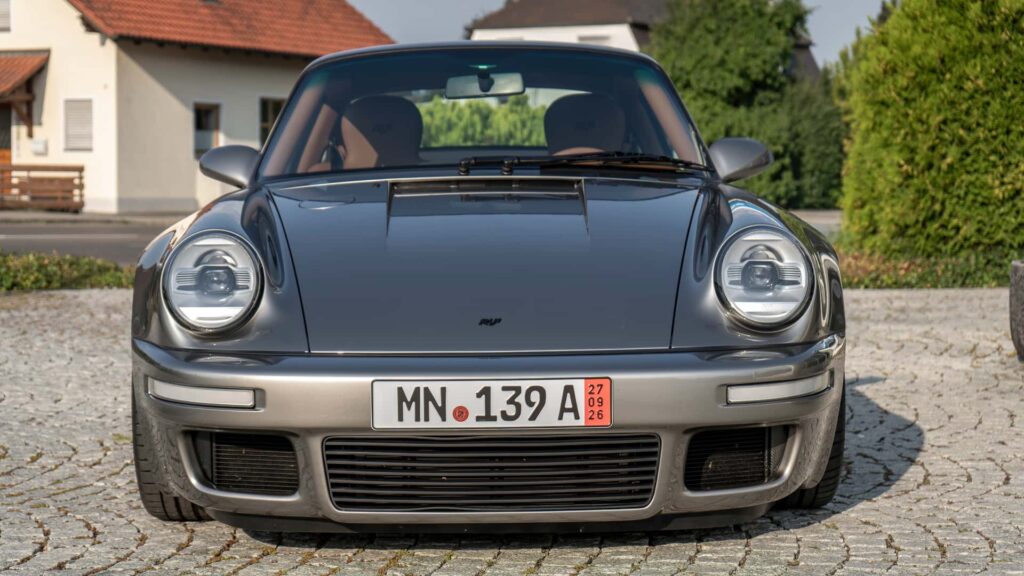
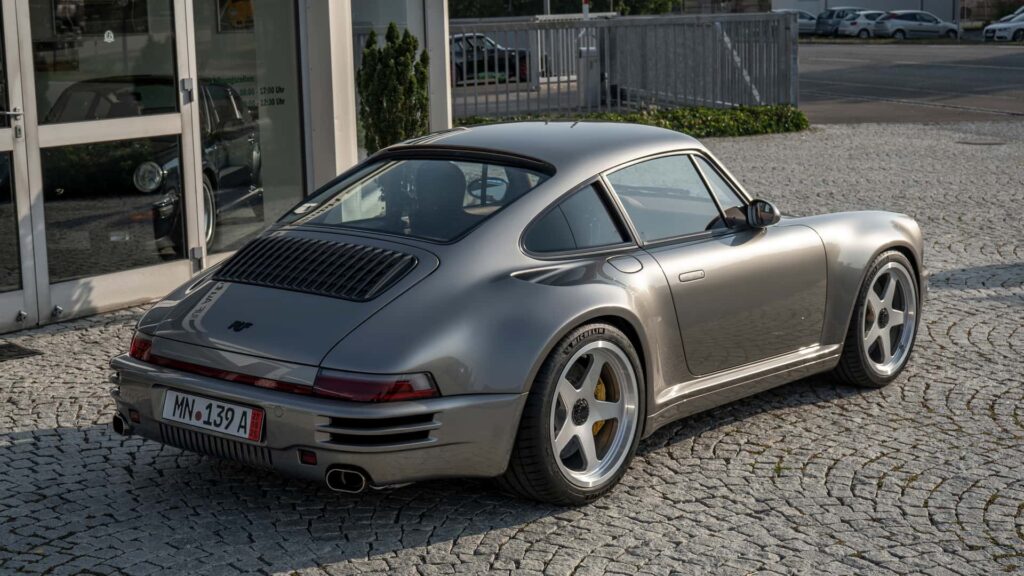
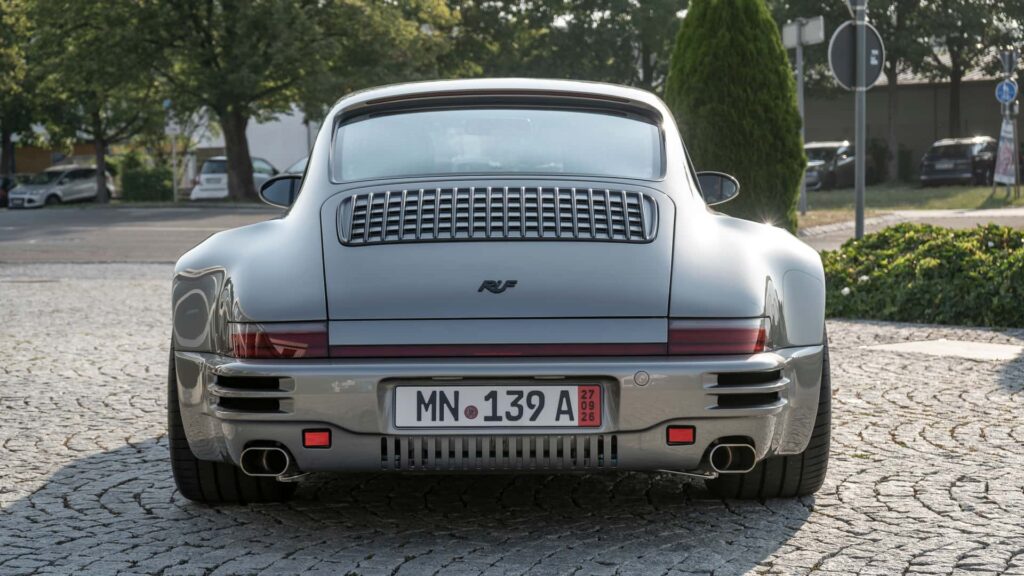
Visually, the EHRA retains the familiar RUF aesthetic while becoming significantly more muscular.
The front track is widened by approximately 2.3 inches, while the rear grows by roughly 2.1 inches.
New front and rear bodywork accommodates the increased width without resorting to excessive visual aggression.
The result is beautifully proportioned.
Broad shoulders.
Compact cabin.
Strong rear haunches.
And the unmistakable profile that has defined RUF’s most celebrated creations for decades.
The body appears purposeful rather than decorative.
Exactly as enthusiasts would expect.
Liquid Silver
The Monterey debut car is finished in Liquid Silver.
It is an inspired choice.
The metallic finish allows light to emphasise the broader bodywork and subtle transitions between each sculpted surface without distracting from the fundamental shape.
Against the California sun, the EHRA looks almost liquid.
Modern.
Technical.
Yet unmistakably connected to the lineage that inspired it.
Where the Yellowbird announced itself through an unforgettable shade of yellow, the EHRA takes a more restrained approach.
The engineering provides the drama.
The paint simply reveals it.
An Active Carbon-Fibre Rear Spoiler
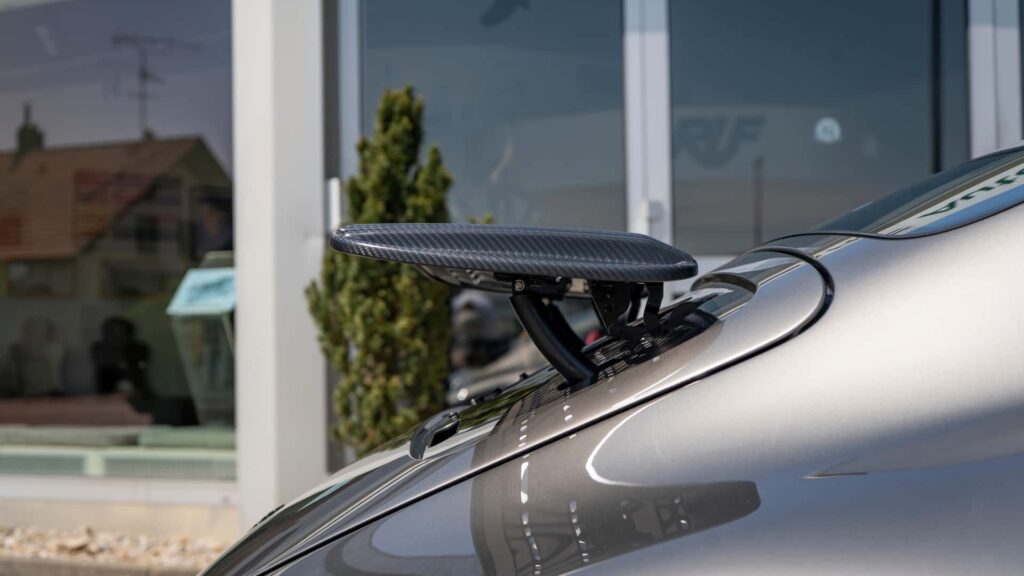
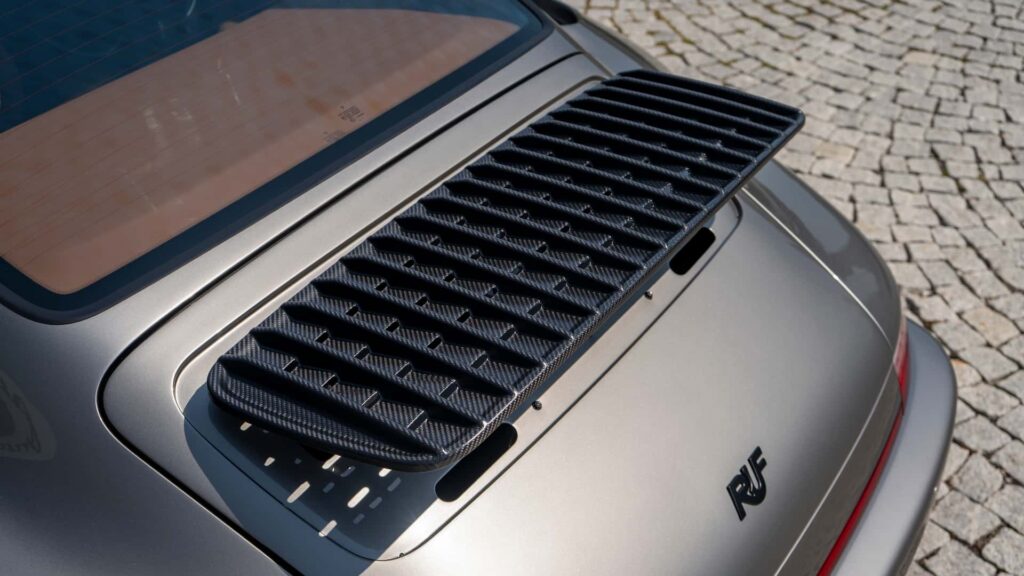
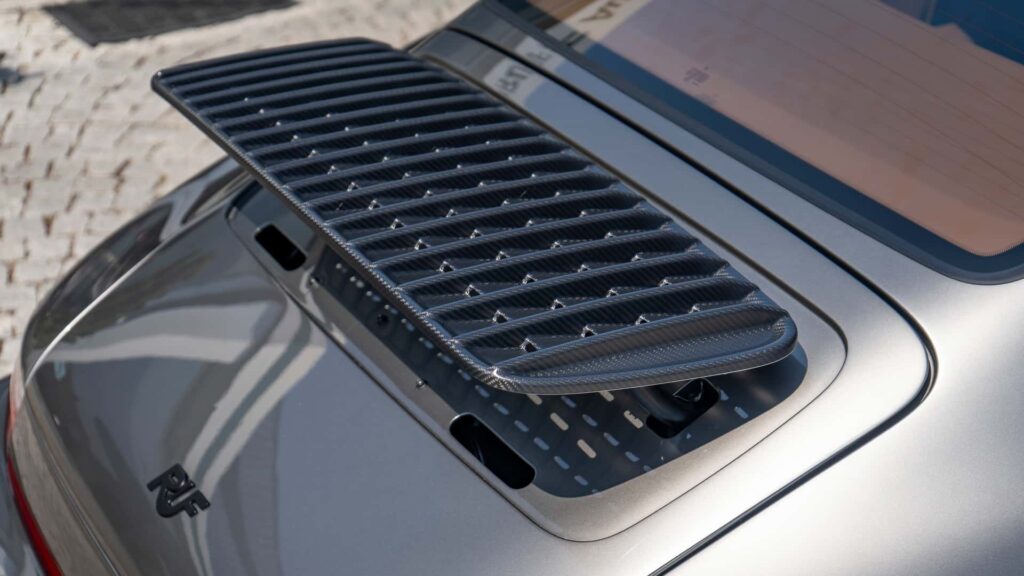
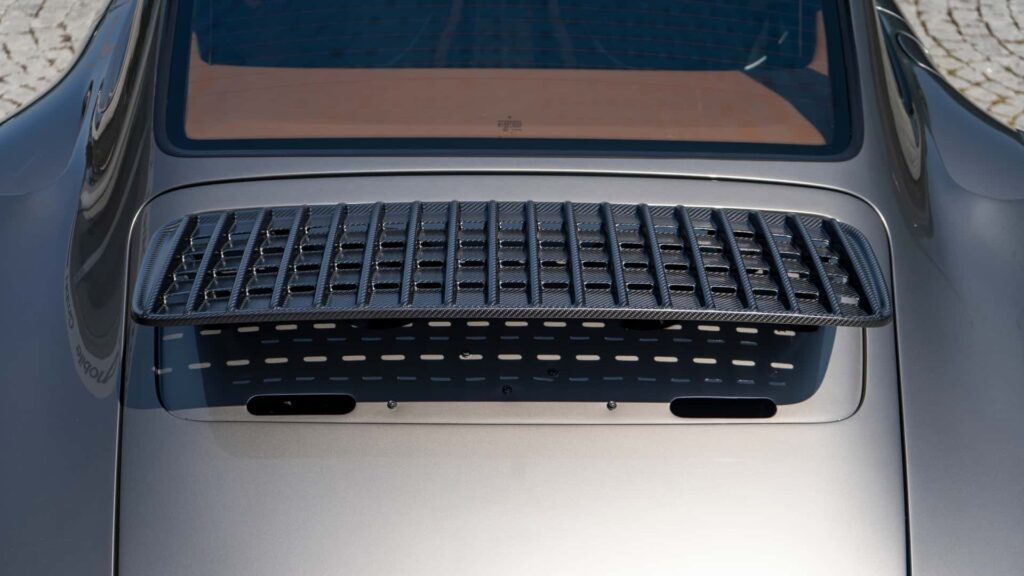
One of the most significant aerodynamic additions is the active carbon-fibre rear spoiler.
Integrated into the rear deck, it remains relatively discreet at lower speeds before deploying automatically when aerodynamic stability becomes more important.
The driver can also activate it manually.
This is classic RUF thinking.
The solution exists because the car needs it.
Not because the design requires theatricality.
Rather than fixing an enormous wing permanently above the body, the active element allows the EHRA to preserve the clean silhouette expected from a long-distance grand tourer while generating additional aerodynamic support when necessary.
New Centre-Lock Forged Wheels
The EHRA also receives a set of unique centre-lock forged wheels.
Again, the engineering matters as much as the appearance.
Forged construction reduces weight while retaining the strength required for sustained high-speed driving.
Centre-lock mounting reinforces the motorsport connection while providing a cleaner visual arrangement than conventional multi-lug designs.
The bright finish of the launch wheels contrasts beautifully with Liquid Silver, adding technical detail without overwhelming the body.
They feel designed for the automobile rather than simply selected for it.
The Interior May Be Its Most Charming Detail
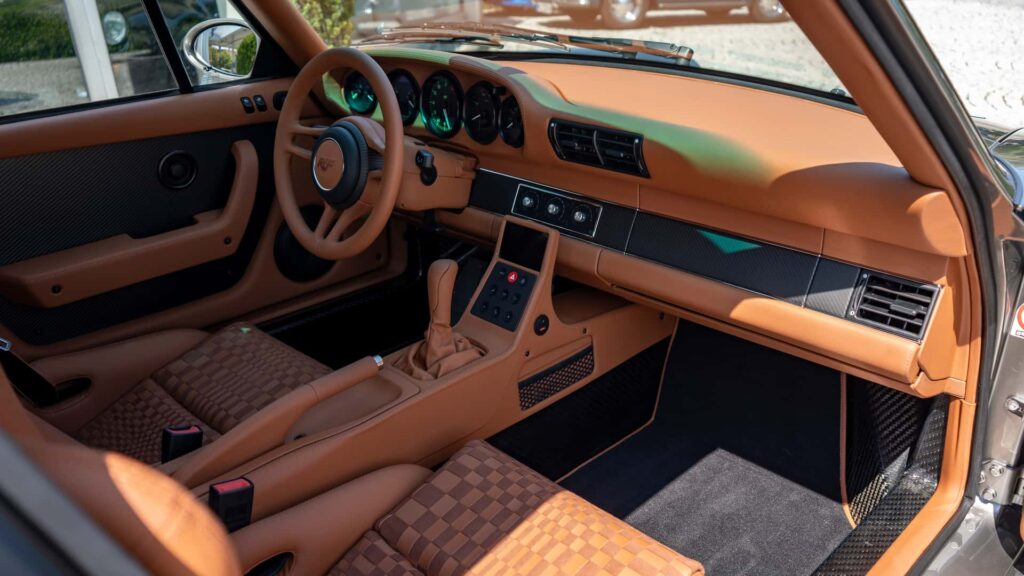
If the exterior is restrained, the interior introduces considerably more personality.
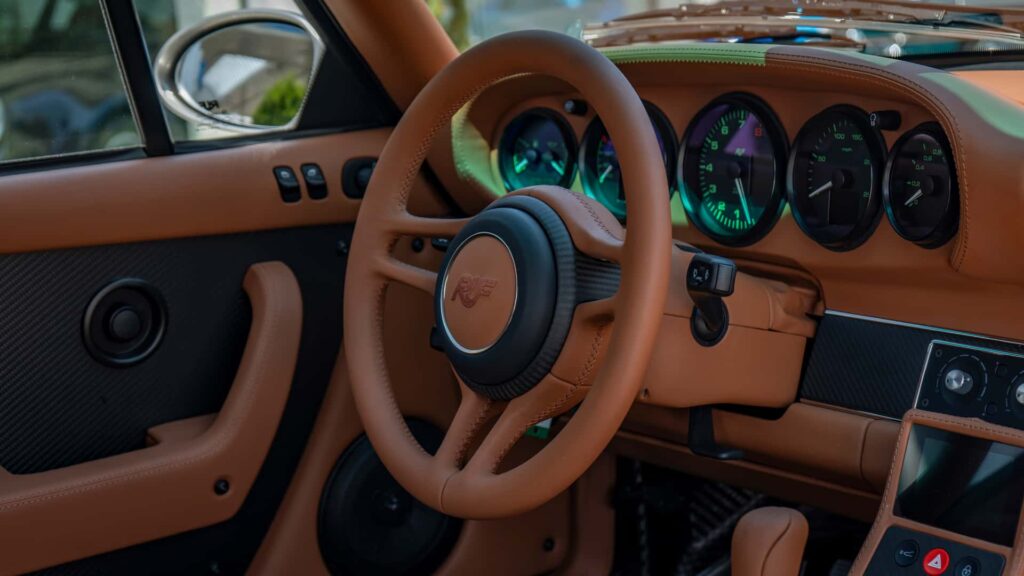
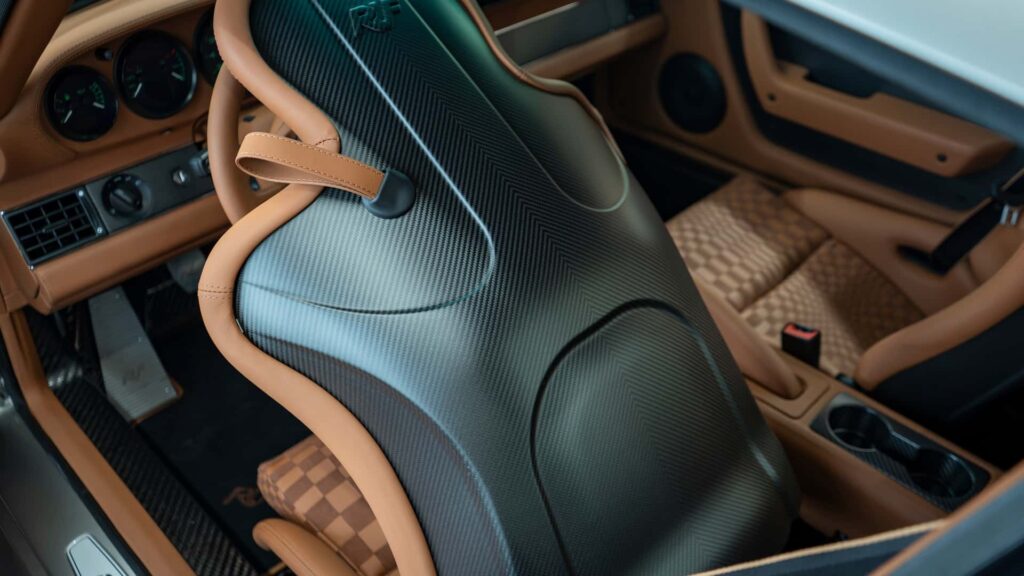
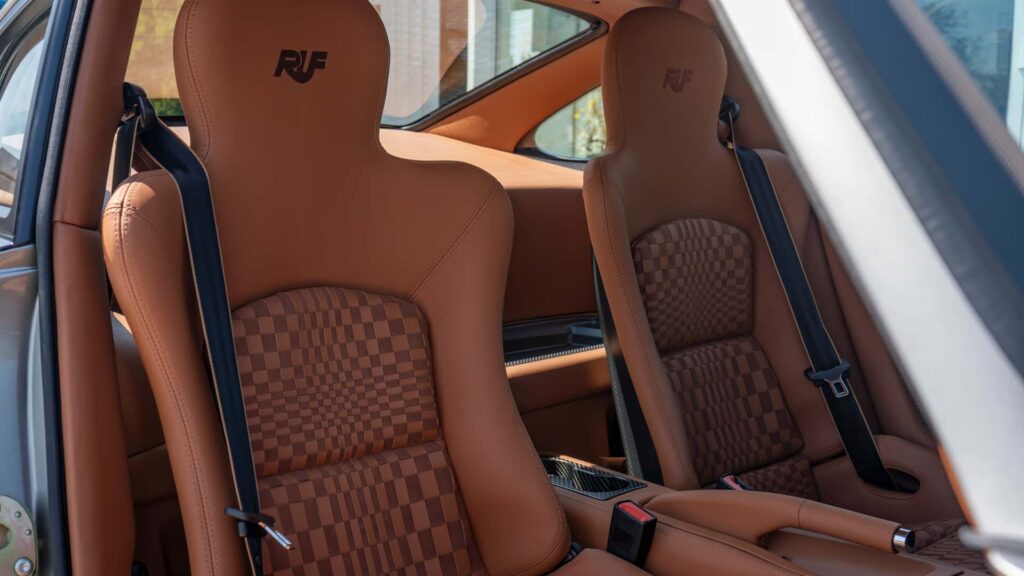
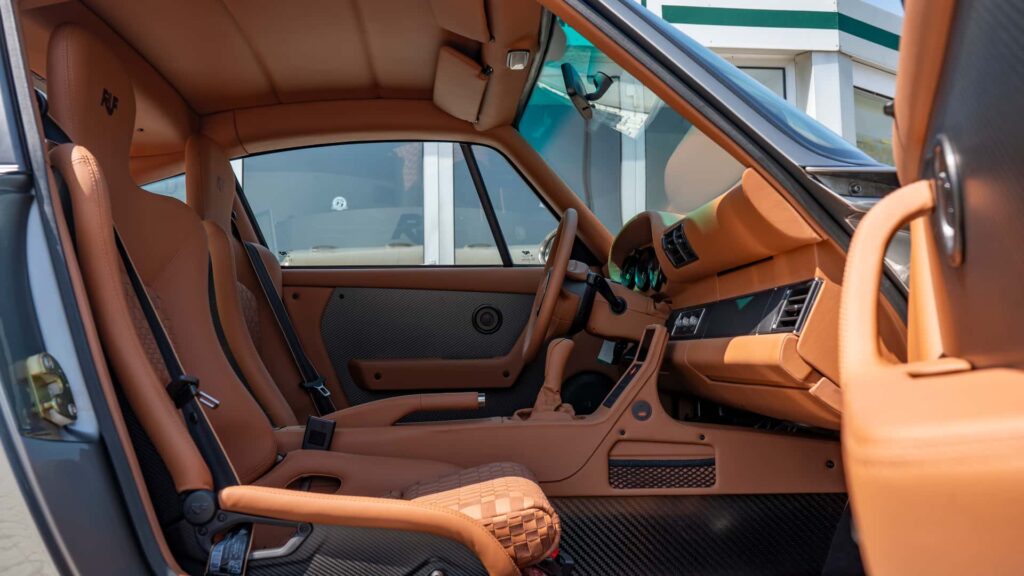
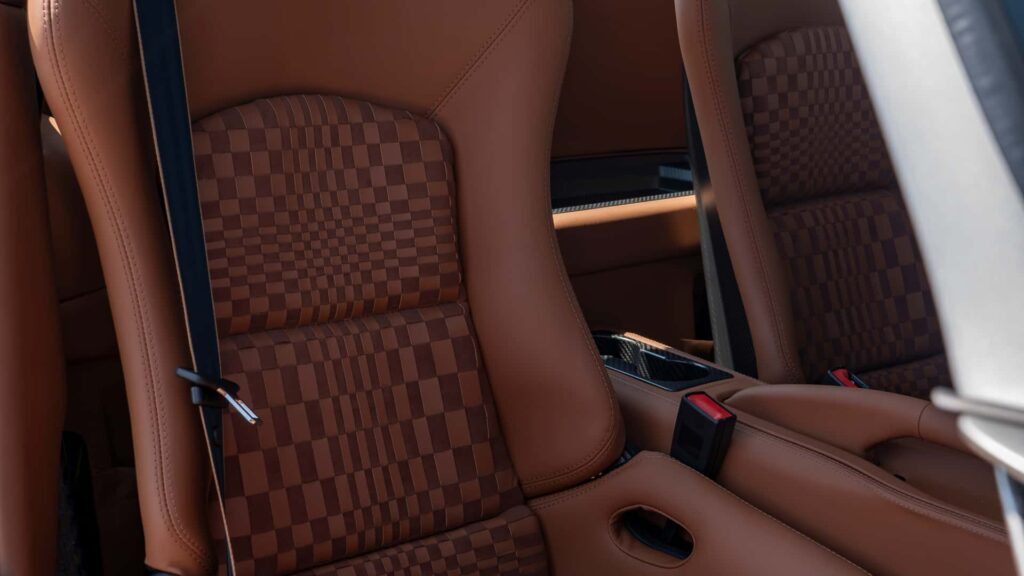
Brown leather creates a warm grand touring atmosphere, immediately distinguishing the EHRA from the often dark, carbon-dominated cabins found in modern supercars.
The seats feature a distinctive Pasha-inspired checkered pattern, referencing one of the most recognizable interior motifs associated with classic German sports cars.
Then there are the instruments.
Finished in signature RUF green, they provide an unmistakable visual connection to the company’s identity.
The combination works beautifully.
Traditional materials.
Historic references.
Modern engineering.
Rather than pretending to be a racing cockpit, the EHRA feels like somewhere its owner could genuinely spend hours.
TECHART Tsport R: A Purist 911 Reimagined for the Driver
Grand Touring Rather Than Track Theatre
This is perhaps where the EHRA becomes most distinctive.
Contemporary high-performance cars increasingly gravitate towards two extremes.
Extreme circuit machines.
Or increasingly luxurious, technologically dense GTs.
The EHRA occupies a compelling middle ground.
Its carbon-fibre architecture and 650-horsepower engine provide serious performance.
The manual transmission creates genuine interaction.
Its all-wheel drive increases confidence.
Its interior prioritises comfort.
And its styling remains sufficiently restrained for everyday use.
It feels like an automobile created primarily for driving rather than displaying.
That distinction matters.
The Legacy of the CTR Anniversary
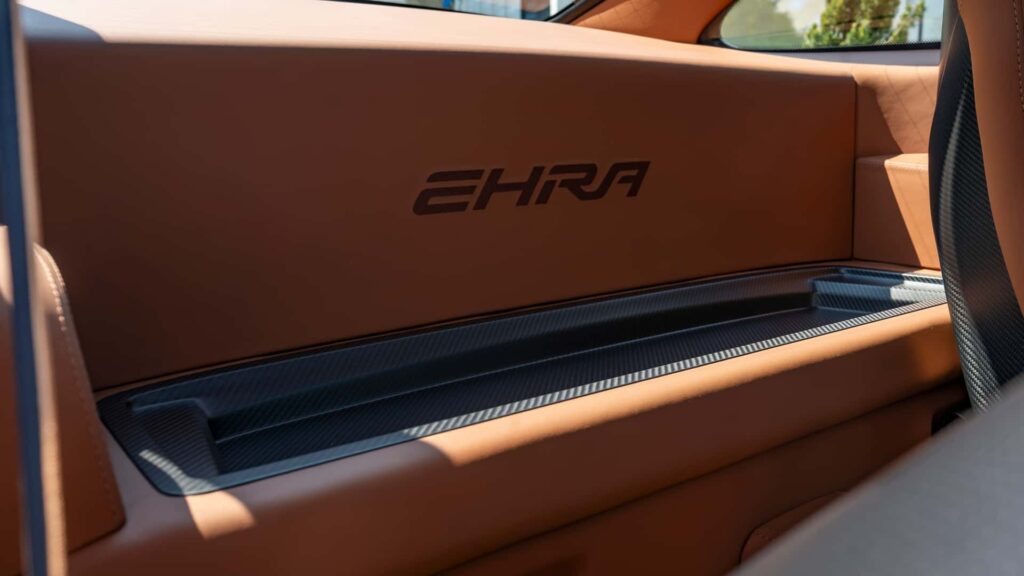
The carbon architecture beneath the EHRA also connects it directly to one of RUF’s most important modern projects.
Introduced in 2017, the CTR Anniversary was created forty years after the original CTR story began.
Rather than simply modifying a contemporary Porsche, RUF developed an entirely new automobile around its own carbon-fibre monocoque.
Its proportions deliberately evoked earlier RUF icons while its engineering belonged entirely to the modern era.
The EHRA takes that architecture and pushes it in a new direction.
More road-focused.
All-wheel drive.
A broader body.
More emphasis on long-distance usability.
It demonstrates the versatility of RUF’s in-house platform while expanding the manufacturer’s range beyond the personality established by the CTR Anniversary.
Why the Yellowbird Still Matters
The automotive world has changed almost beyond recognition since 1987.
The original CTR produced approximately 469 PS.
Today, production hypercars routinely exceed 1,000 horsepower.
Electric vehicles can produce acceleration figures unimaginable during the Yellowbird era.
Aerodynamic simulation and electronic chassis control have transformed high-speed stability.
Yet the Yellowbird remains legendary.
Why?
Because its significance was never purely numerical.
It combined modest visual appearance with extraordinary capability.
It surprised an industry filled with larger and more famous manufacturers.
And it demonstrated how intelligent engineering could achieve more than brute force alone.
The EHRA seems to understand that lesson.
It does not need 1,500 horsepower to honour Ehra-Lessien.
It needs character.
RUF Is Not Simply a Porsche Tuner
The EHRA also provides another opportunity to clarify something frequently misunderstood.
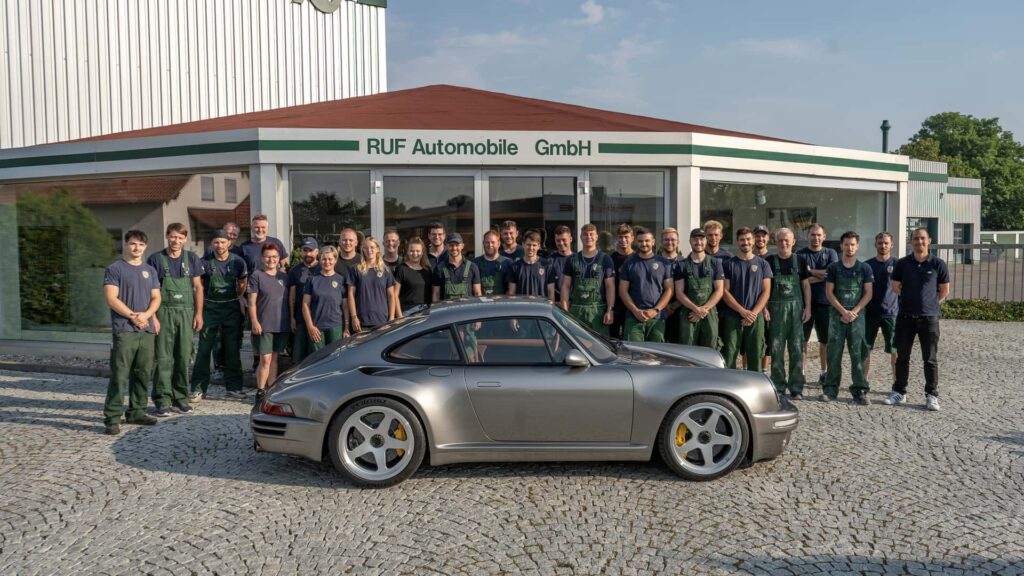
RUF Automobile is a manufacturer.
Its relationship with Porsche architecture and design is historically obvious, but cars such as the CTR Anniversary and EHRA use RUF’s own carbon-fibre chassis and engineering solutions.
This distinction places RUF in a unique position.
It can preserve a design language enthusiasts immediately recognise while developing automobiles according to its own priorities.
Few companies possess that combination of heritage and engineering independence.
The EHRA makes excellent use of both.
No Production Number Yet
RUF has not yet announced exactly how many EHRAs it intends to build.
Given the company’s production philosophy, volume is almost certain to remain extremely limited, but any specific figure would currently be speculation.
Pricing also remains undisclosed.
Again, that hardly diminishes the appeal.
RUF buyers rarely approach these automobiles like conventional showroom purchases.
Each car typically becomes a deeply personal specification shaped around its owner.
At this level, rarity comes naturally.
The Meaning of Performance Has Changed
Perhaps the EHRA arrives at exactly the right moment.
The performance industry has spent years pursuing ever larger numbers.
A thousand horsepower is no longer shocking.
Two thousand is becoming possible.
Acceleration times continue falling towards physical limitations.
Yet somewhere along that technological journey, enthusiasts have begun rediscovering simpler pleasures.
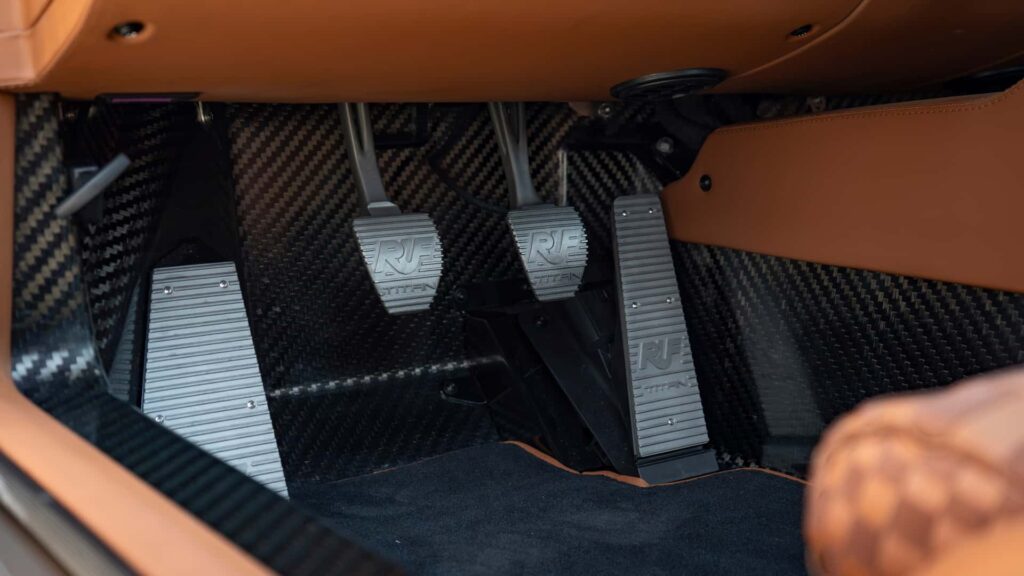
Manual transmissions.
Hydraulic communication.
Compact dimensions.
Mechanical sound.
Usability.
The ability to enjoy an automobile without travelling at impossible speeds.
The EHRA belongs to that movement.
Not because it rejects technology.
Its carbon structure, turbocharged engine, all-wheel-drive system and active aerodynamics are thoroughly modern.
It simply uses technology without allowing technology to dominate the experience.
From Ehra-Lessien to Monterey
There is something appropriately symmetrical about the story.
In 1987, a relatively understated yellow automobile arrived at Ehra-Lessien and shocked the performance establishment.
Nearly forty years later, RUF has used that same location to name a car intended for a different kind of high-speed driving.
The Yellowbird was defined by proving what was possible.
The EHRA is defined by making extraordinary capability usable.
A wider carbon body.
650 horsepower.
All-wheel drive.
Seven manual gears.
An elegant cabin.
An active rear spoiler.
Nothing feels unnecessary.
That may be the most RUF characteristic of all.
Singer vs Gunther Werks — Defining the Ultimate Porsche Reimagined
A Modern RUF for the Long Road
The RUF EHRA does not attempt to become another Yellowbird.
It would be impossible—and unnecessary.
Instead, it takes the qualities that made the original unforgettable and translates them into a completely different era.
Engineering before spectacle.
Performance before statistics.
Driver involvement before automation.
And speed that can be enjoyed not just for a few seconds, but across an entire continent.
But few combine a 650-horsepower twin-turbo flat-six, all-wheel drive and a seven-speed manual gearbox inside a bespoke carbon-fibre grand tourer.
Almost forty years after RUF made history at Ehra-Lessien, the EHRA demonstrates that the company still understands something fundamental.
Ultimate performance means very little if you do not want to keep driving.