
For decades, the manual gearbox was regarded as the ultimate expression of driver involvement.
Then technology took over.
Sequential transmissions became faster.
Dual-clutch gearboxes became smarter.
Hybrid systems delivered instantaneous torque.
By every measurable standard, the manual transmission became obsolete.
Except emotionally.
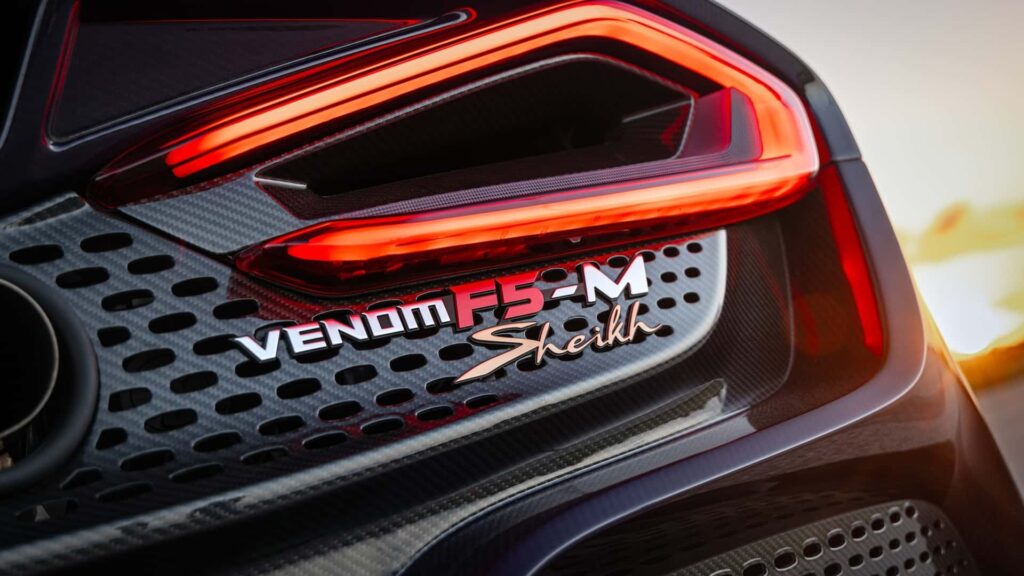
That is precisely why Hennessey has created the Venom F5-M.
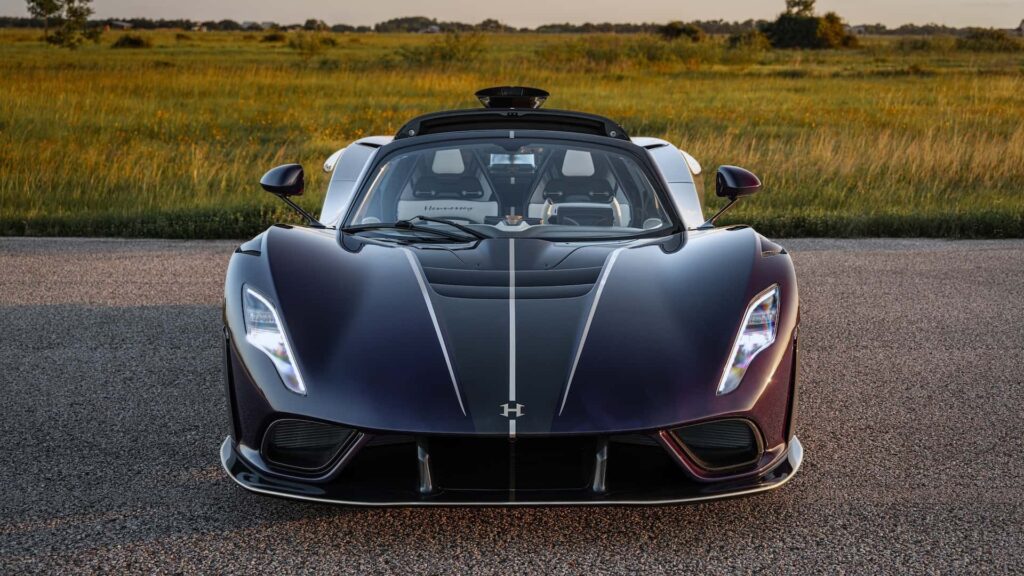
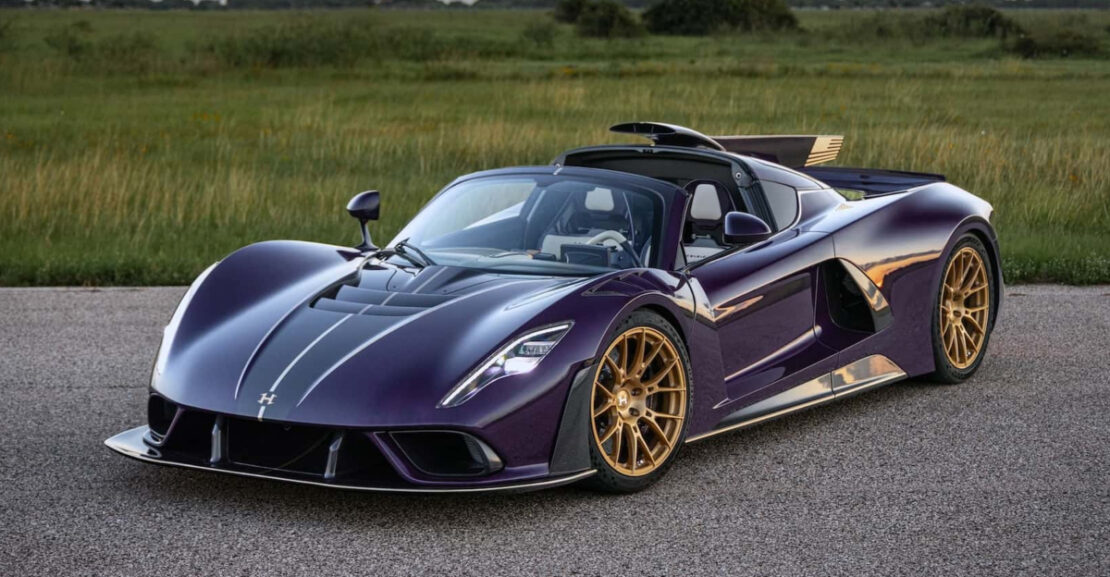
Rather than chasing another acceleration record or a higher top speed, the Texas manufacturer has chosen to celebrate something increasingly rare in the hypercar world: complete mechanical interaction between driver and machine. The result is unlike anything currently available — a 2,031-horsepower hypercar equipped with a six-speed gated manual transmission, making it the most powerful manual production car ever conceived.
It is not simply another version of the Venom F5.
It is a completely different interpretation of what a modern hypercar can be.
More Than a Manual Transmission
The “M” in Venom F5-M naturally stands for Manual.
Yet reducing the project to its gearbox alone would miss the point entirely.
Hennessey describes the F5-M as the purest and most engaging expression of the Venom platform ever created.
Rather than pursuing absolute efficiency, every engineering decision has been made to maximise driver involvement.
Every gear change requires intention.
Every acceleration becomes something earned rather than simply delivered by electronics.
In an era where software increasingly separates driver from machine, the Venom F5-M deliberately restores that connection.
It is a philosophy almost forgotten within today’s hypercar segment.
Hennessey Venom F5 Revolution LF: The First Maverick
The Most Powerful Manual Hypercar Ever Built
At the heart of the Venom F5-M remains Hennessey’s extraordinary 6.6-litre twin-turbocharged Fury V8.
Already one of the most powerful production engines in the world, it now produces an astonishing 2,031 horsepower, placing the F5-M among the most extreme road cars ever created.
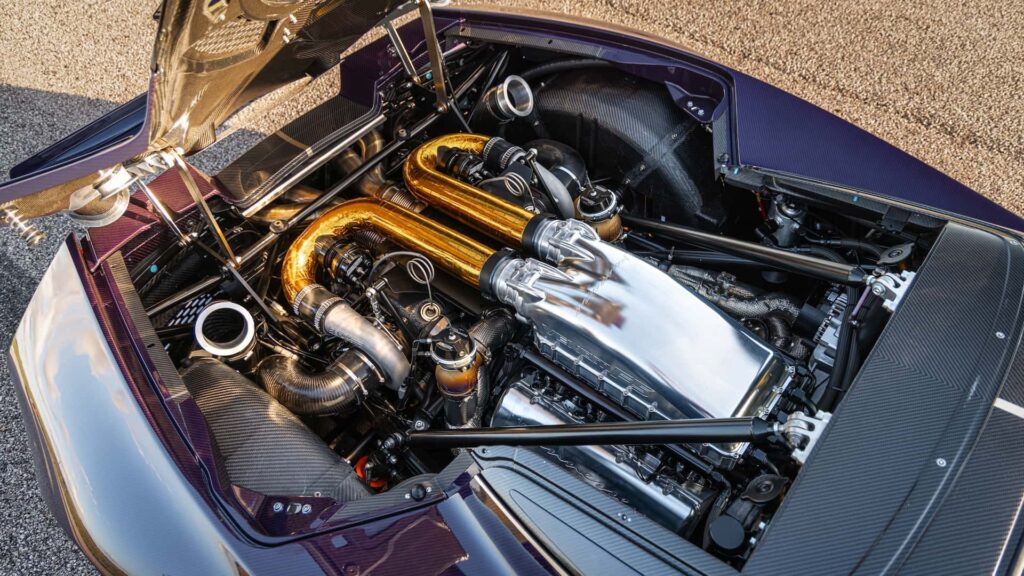
Unlike many contemporary hypercars, this performance arrives without hybrid assistance.
Just internal combustion in its purest form.
Power is sent exclusively to the rear wheels through a newly developed six-speed gated manual transmission, creating a combination that few manufacturers would even attempt.
Managing more than two thousand horsepower with three pedals requires genuine skill.
That challenge is exactly what defines the F5-M.
Inspired by Hennessey’s Own History
The Venom F5-M is not Hennessey’s first manual halo car.
Its origins can be traced back to the legendary Venom GT Spyder, which established the world speed record for an open-top production car equipped with a manual transmission.
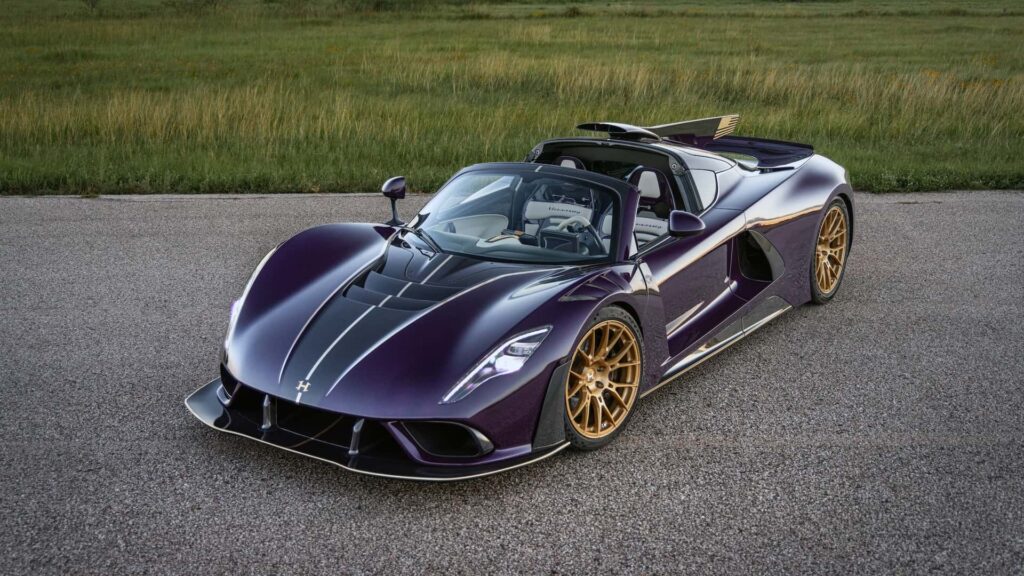
That achievement proved that extraordinary performance and traditional driver engagement could successfully coexist.
The F5-M takes the same philosophy dramatically further.
Rather than simply chasing records, it explores what the manual transmission can still offer in an era dominated by automated performance.
It is both a tribute to Hennessey’s past and a statement about the future of analogue driving.
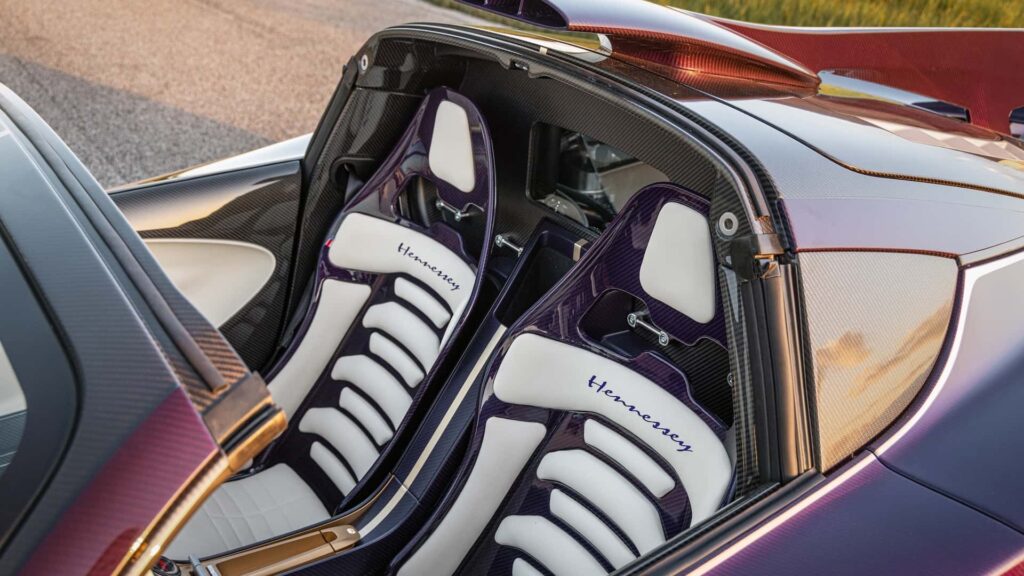
A Cockpit Designed Around the Driver
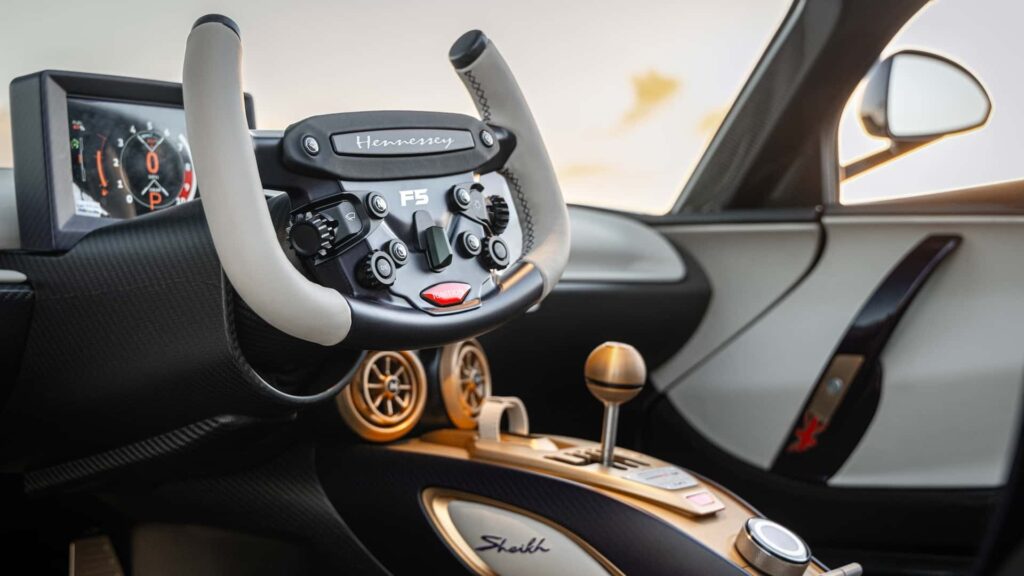
Introducing a manual gearbox required far more than changing the transmission.
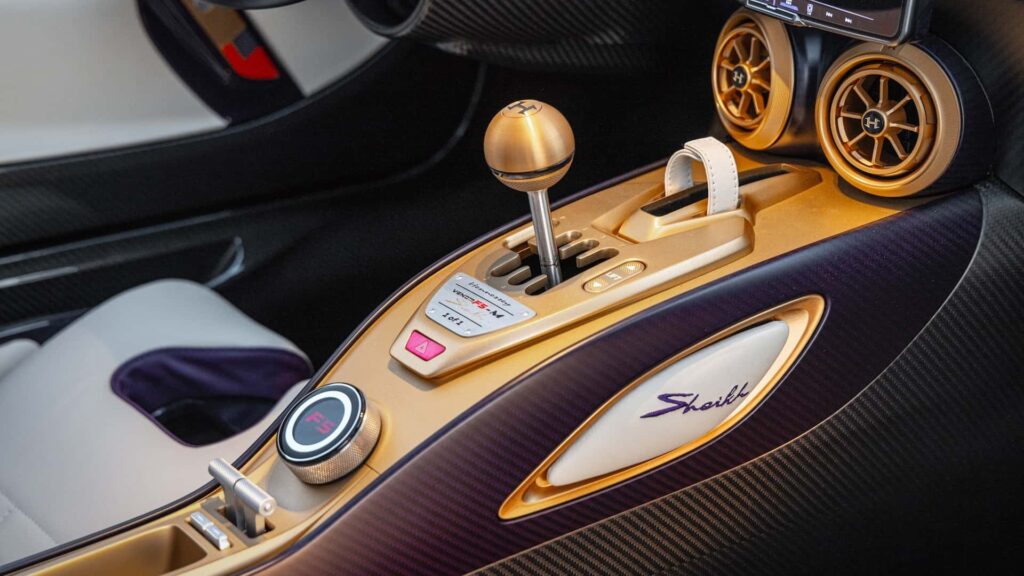
Hennessey’s designers completely reimagined the interior around the gear selector itself.
Positioned prominently on a redesigned centre console, the exposed aluminium gate immediately becomes the visual and emotional centrepiece of the cabin.
The carbon-fibre shift lever rises naturally into the driver’s hand, while new aviation-inspired toggle switches and revised horizontal air vents create an environment that feels focused entirely on driving.
Everything inside the F5-M serves a purpose.
Nothing distracts from the relationship between driver and machine.
It is a cockpit designed not around technology.
But around interaction.
Aerodynamics That Serve Performance
While the manual transmission defines the experience, the exterior introduces significant engineering developments of its own.
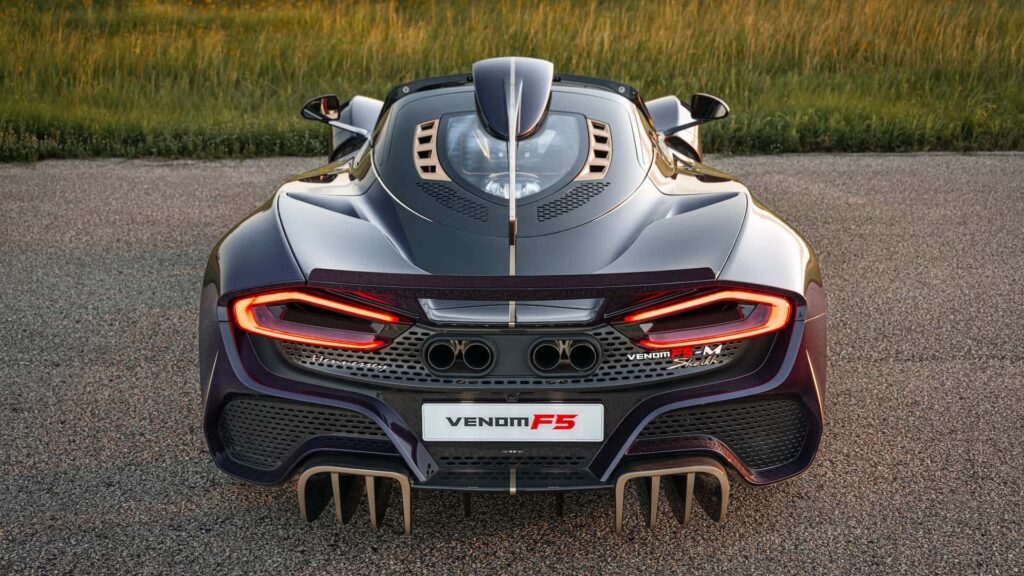
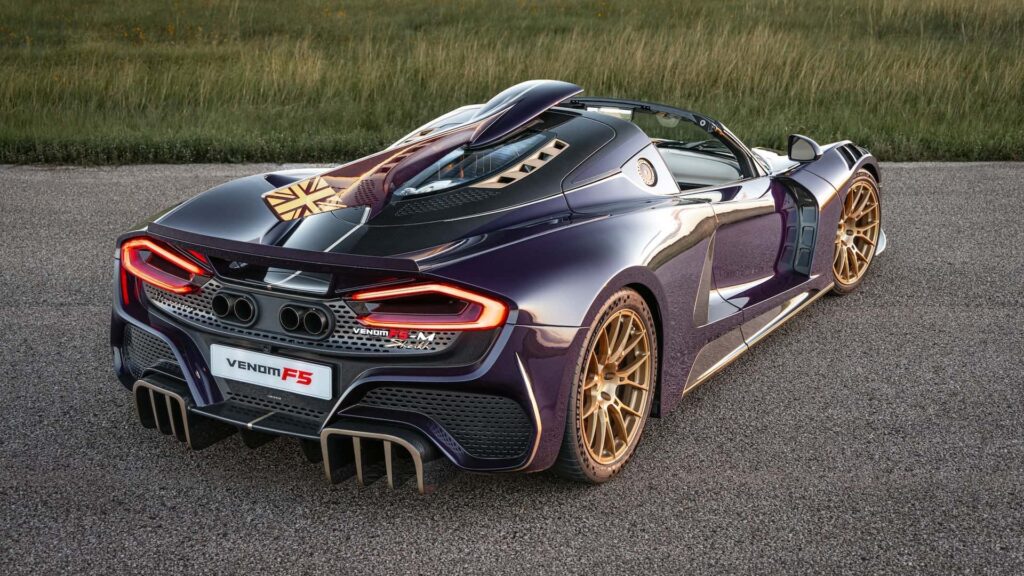
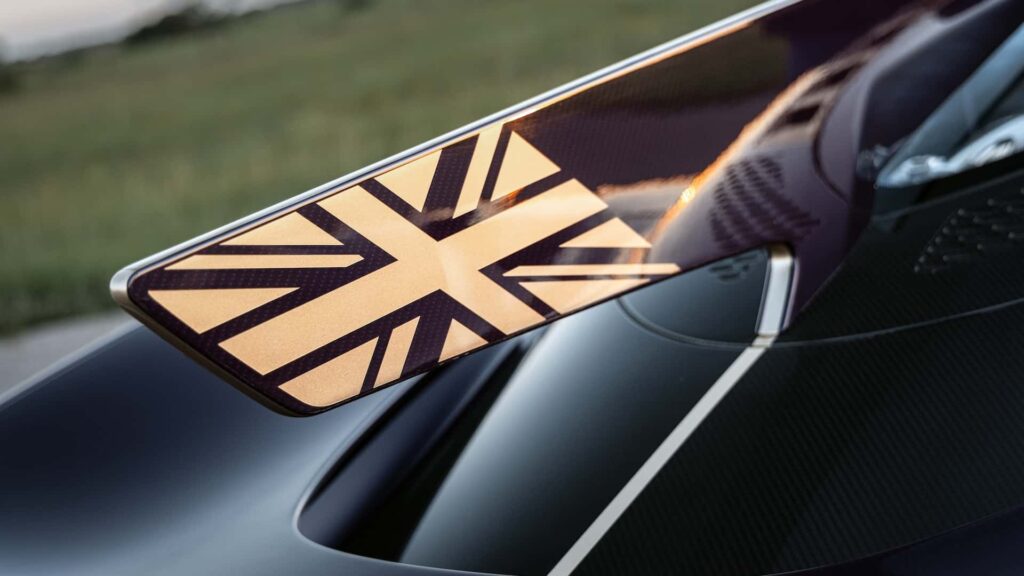
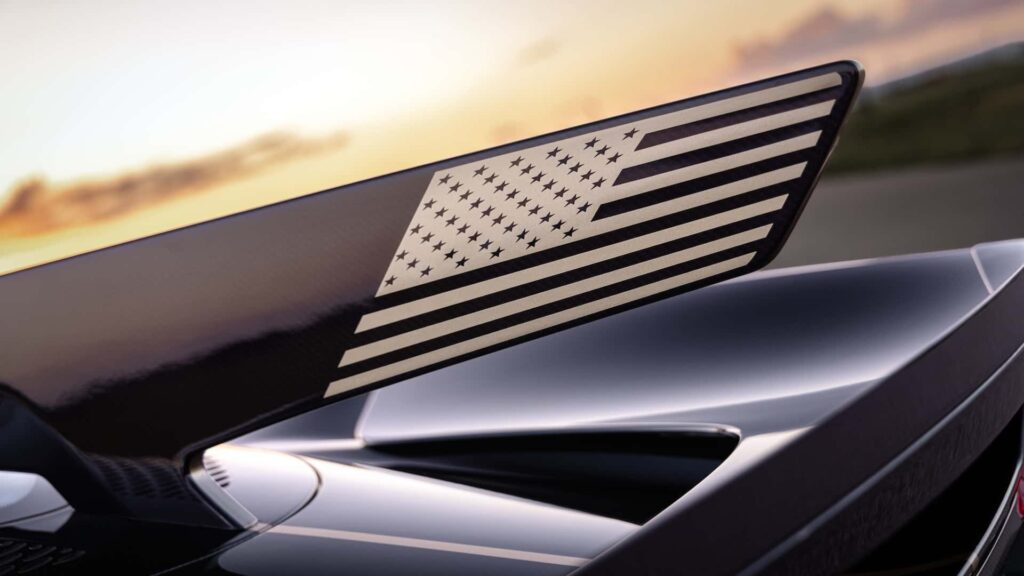
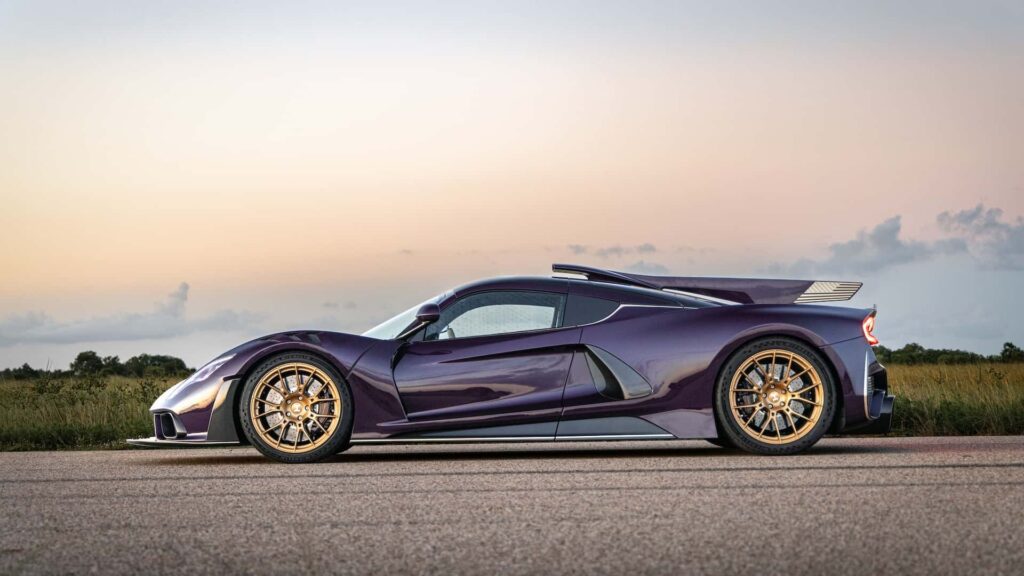
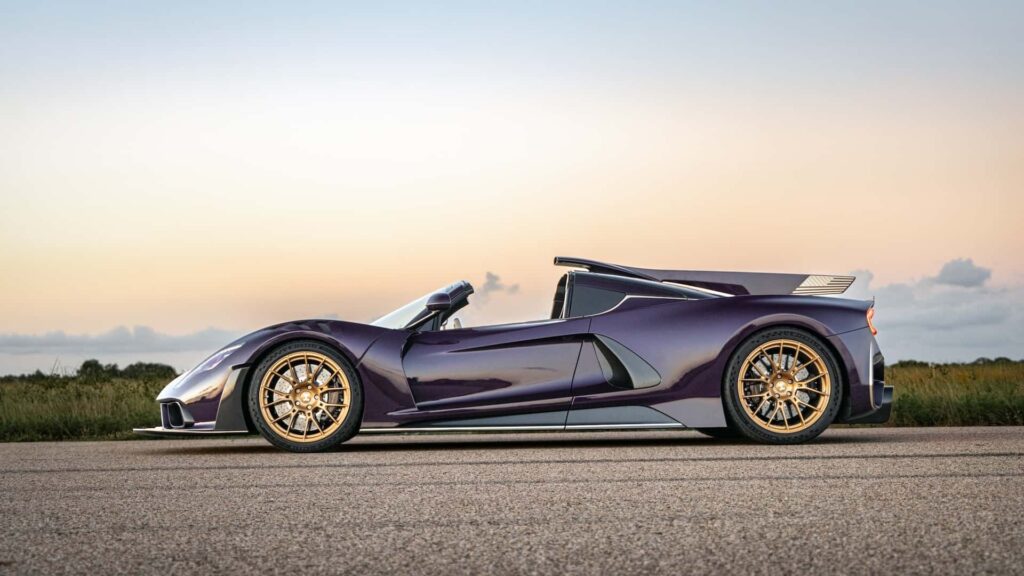
The most dramatic addition is a 55-inch dorsal fin extending from the roof toward the rear wing.
Inspired by endurance racing prototypes, it increases directional stability at extreme speeds while improving airflow across the rear bodywork.
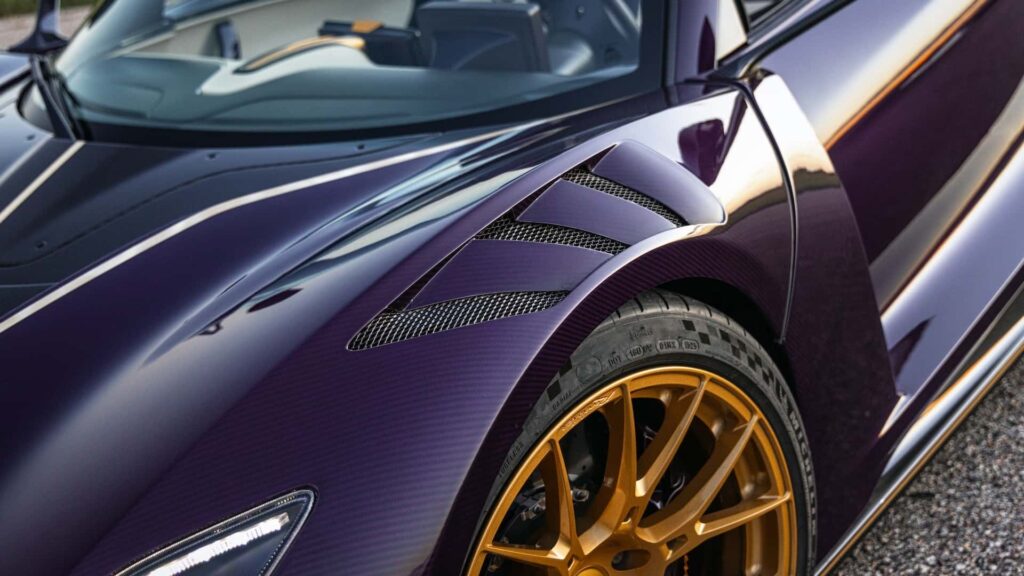
Additional aerodynamic revisions include a redesigned roof scoop, revised airflow management and carefully optimised body surfaces developed to generate greater stability without compromising the Venom’s remarkably clean silhouette.
Like every other component of the F5-M, the aerodynamic package exists because it contributes to the driving experience.
Not simply because it looks dramatic.
Carbon Fibre Without Compromise
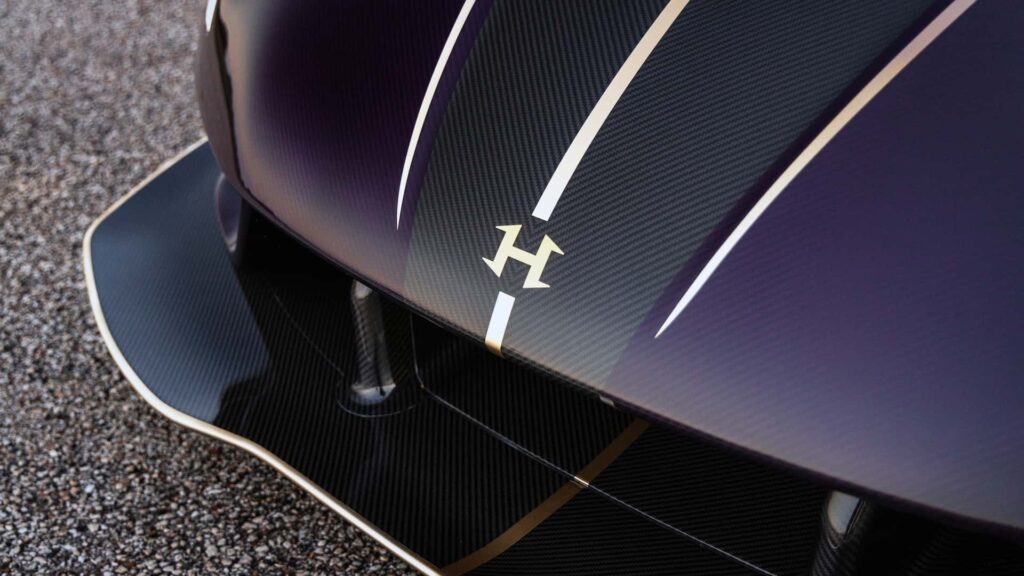
The Venom F5-M continues to utilise Hennessey’s advanced carbon-fibre monocoque, engineered to combine exceptional rigidity with remarkably low weight.
Every unnecessary kilogram has been removed wherever possible.
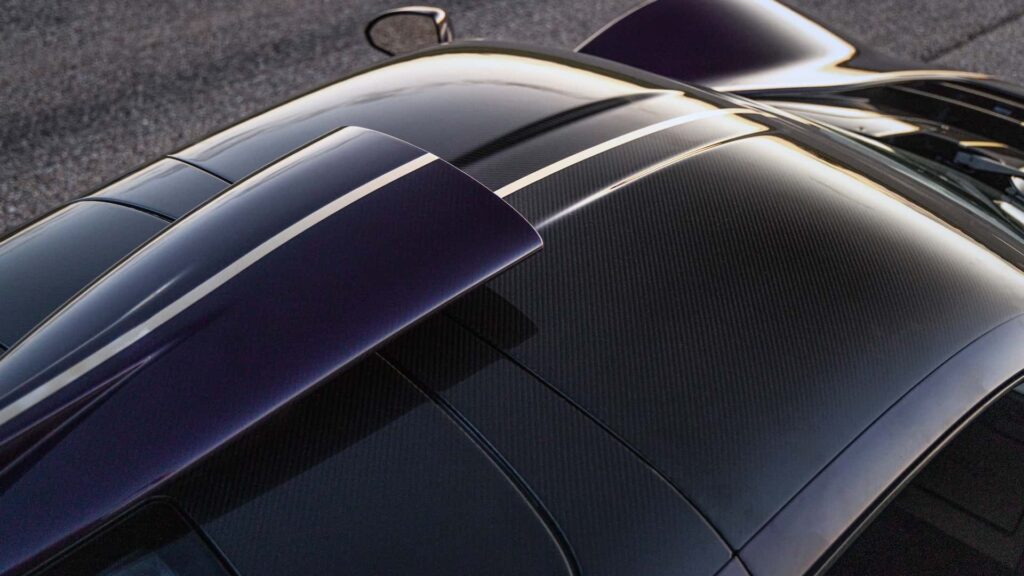
The lightweight structure is complemented by revised suspension calibration and chassis refinements designed specifically for the manual transmission, ensuring that the additional driver involvement is matched by equally precise vehicle responses.
The objective has never been comfort.
It has always been connection.
Twelve Cars. Twelve Unique Commissions.
Appropriately for such an exclusive project, production will be strictly limited to just twelve examples worldwide.
Each car will be individually commissioned and uniquely specified.
Rather than offering a fixed selection of colours, Hennessey will work directly with every customer to create bespoke combinations of exposed carbon fibre, paint finishes and interior materials.
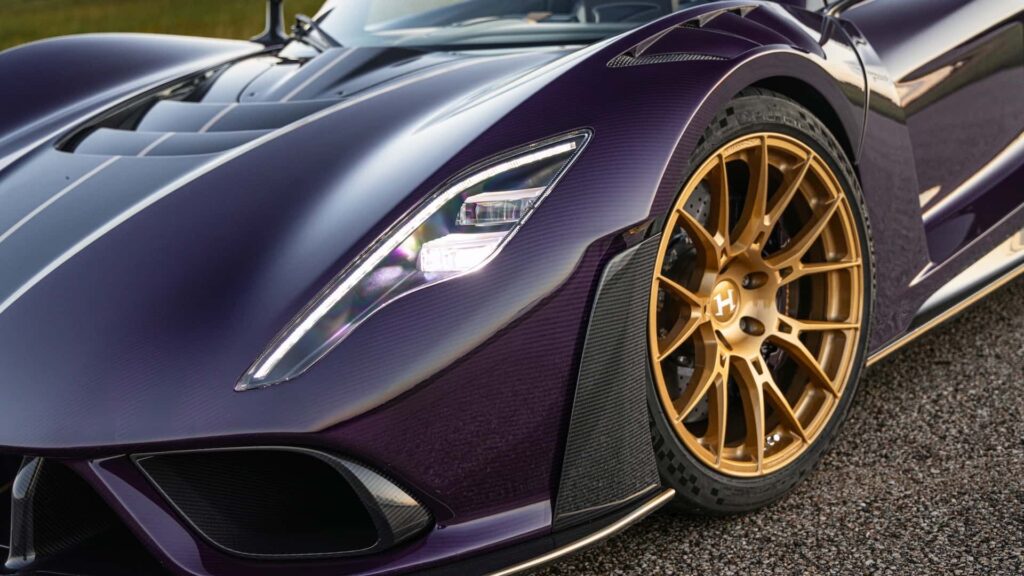
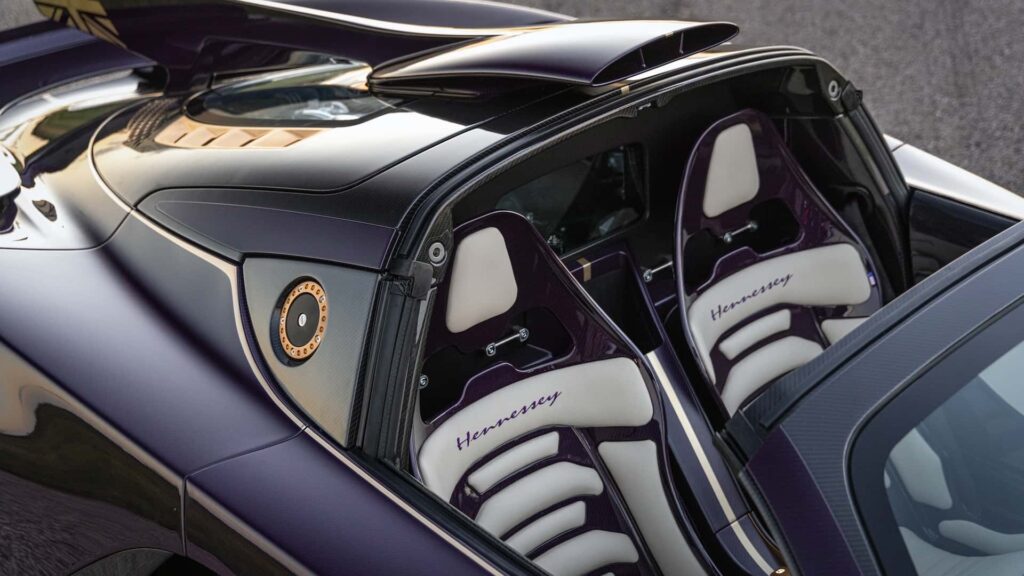
No two F5-Ms will be identical.
Every car becomes a one-of-one interpretation of the same extraordinary engineering platform.
It reflects the growing importance of individuality within the modern collector car market, where exclusivity is measured not only by production numbers but by personal expression.
CAV GT MkII: Reimagining the Ford GT40 for a New Era
Built for Drivers, Not Algorithms
Modern hypercars have become astonishingly capable.
Launch control.
Torque vectoring.
Predictive stability systems.
Artificial intelligence manages much of the performance.
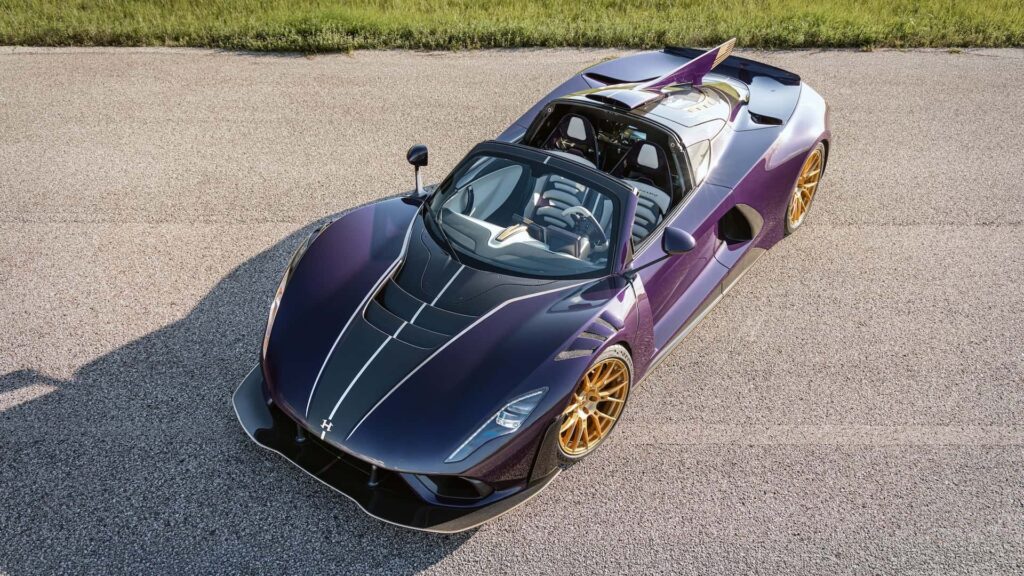
The Venom F5-M moves in the opposite direction.
Its performance still relies on cutting-edge engineering.
Its experience relies on the driver.
There is no shortcut through a difficult corner.
No software that can perfectly execute every gear change.
No automated process replacing human judgement.
Instead, the F5-M rewards precision.
Commitment.
Mechanical sympathy.
Qualities that have always defined the world’s greatest driver’s cars.
The Future of Analogue Performance
The arrival of the Venom F5-M is significant for reasons that extend beyond Hennessey itself.
It demonstrates that there remains genuine demand for hypercars prioritising emotion over absolute efficiency.
While electrification continues to reshape the automotive industry, projects like the F5-M prove that internal combustion still has stories left to tell.
Not through nostalgia.
But through innovation applied to traditional principles.
A gated manual gearbox.
A twin-turbocharged V8.
Rear-wheel drive.
Carbon fibre.
More than 2,000 horsepower.
On paper, the combination appears almost irrational.
Behind the wheel, it may become one of the most unforgettable driving experiences ever created.
A Celebration of Mechanical Emotion
The Hennessey Venom F5-M is more than a limited-production hypercar.
It is a celebration of everything enthusiasts feared was disappearing.
Mechanical engagement.
Physical interaction.
Driver responsibility.
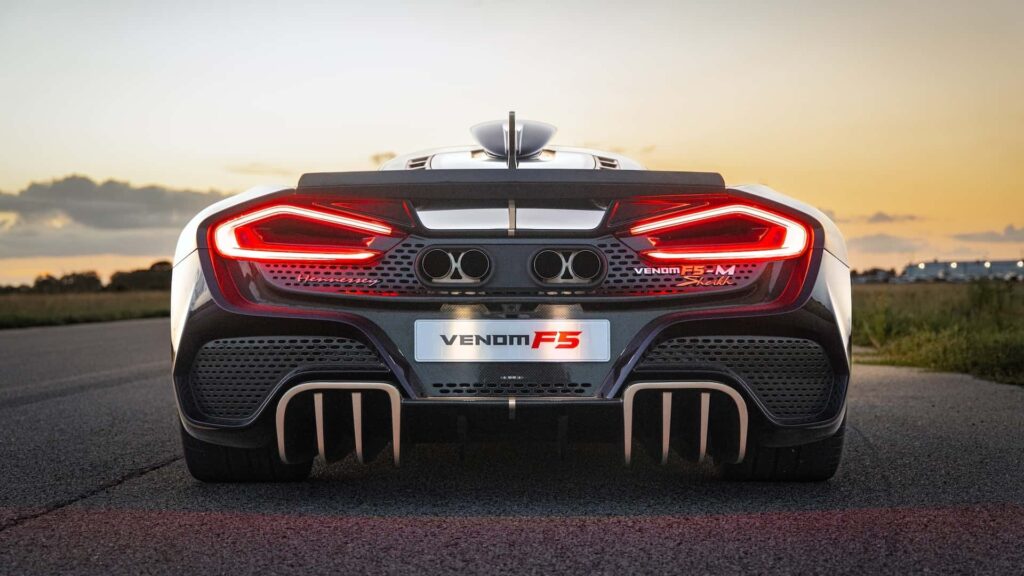
In an automotive landscape increasingly defined by automation, the F5-M reminds us that performance is not measured solely by numbers.
Sometimes, the greatest luxury is simply being part of the process.
And with the world’s most powerful manual hypercar, Hennessey has ensured that process remains as thrilling as ever.