
Some Bugattis celebrate performance.
Others celebrate craftsmanship.
The Bugatti W16 Mistral Blanc Éternel celebrates something even more enduring.
Beauty itself.
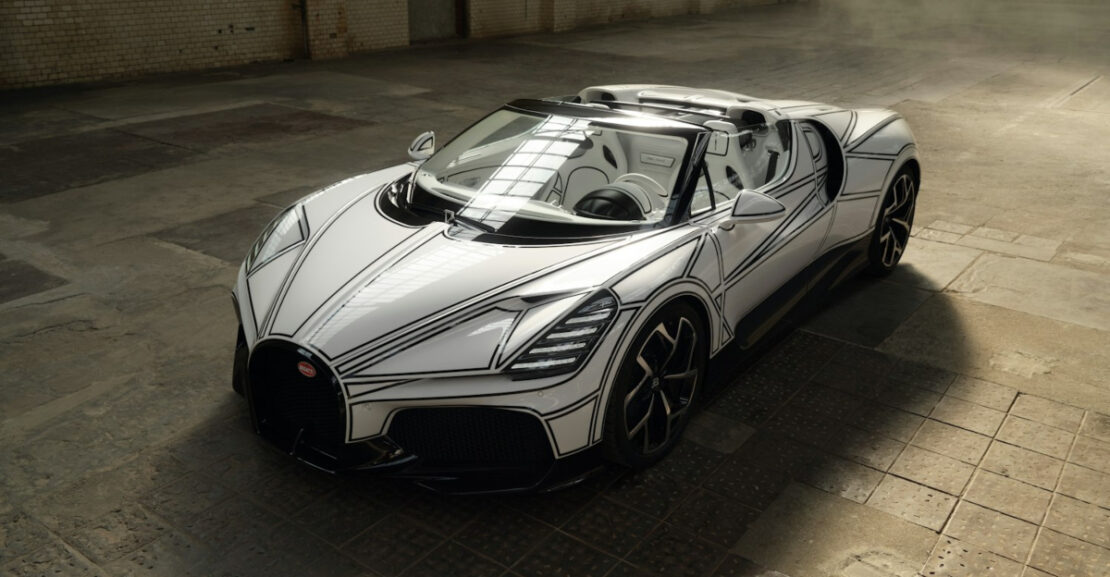
Created through Bugatti’s exclusive Sur Mesure personalization program, Blanc Éternel is a unique commission that transforms the final road-going W16 into an extraordinary work of automotive art. More than simply a bespoke specification, it represents the meeting point between digital automotive design, traditional craftsmanship and over 260 years of porcelain expertise from Königliche Porzellan-Manufaktur Berlin (KPM).
It is also a tribute to one of Bugatti’s most celebrated one-off creations.
A Story That Began Fifteen Years Ago
To understand Blanc Éternel, it is necessary to revisit one of Bugatti’s most remarkable commissions.
In 2011, Bugatti unveiled the Veyron Grand Sport L’Or Blanc, a collaboration with KPM Berlin that became one of the earliest and most daring expressions of the marque’s bespoke ambitions.
Rather than simply incorporating porcelain into the interior, L’Or Blanc integrated handcrafted porcelain details throughout the vehicle, creating a dialogue between automotive engineering and one of Europe’s oldest artistic traditions.
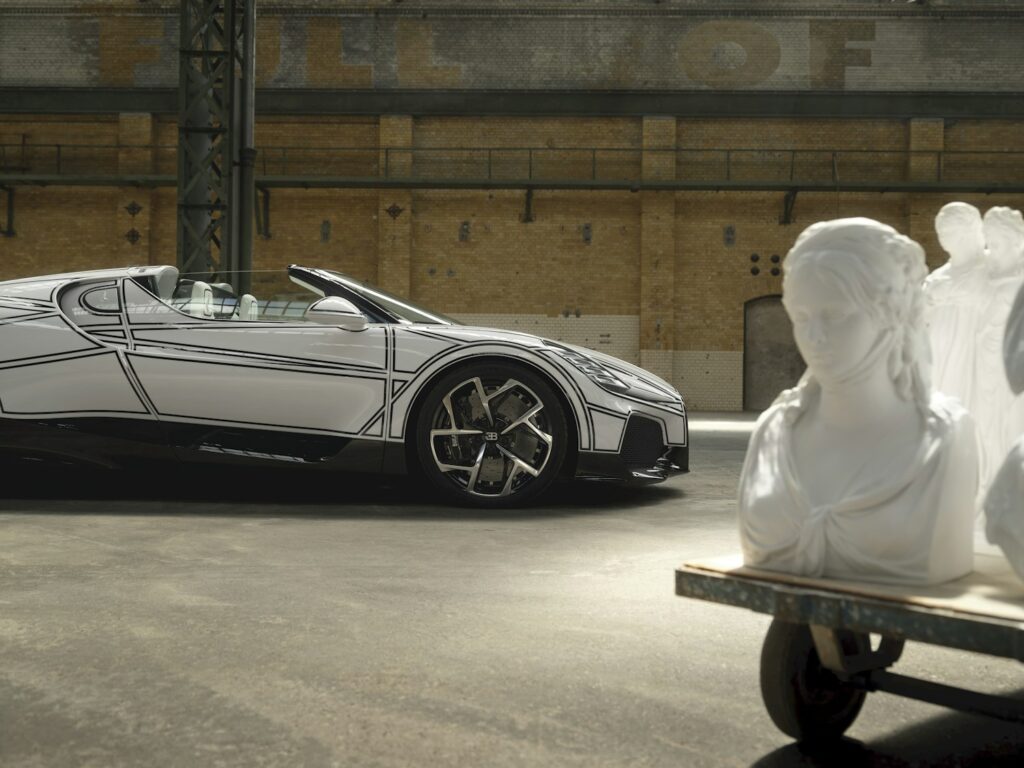
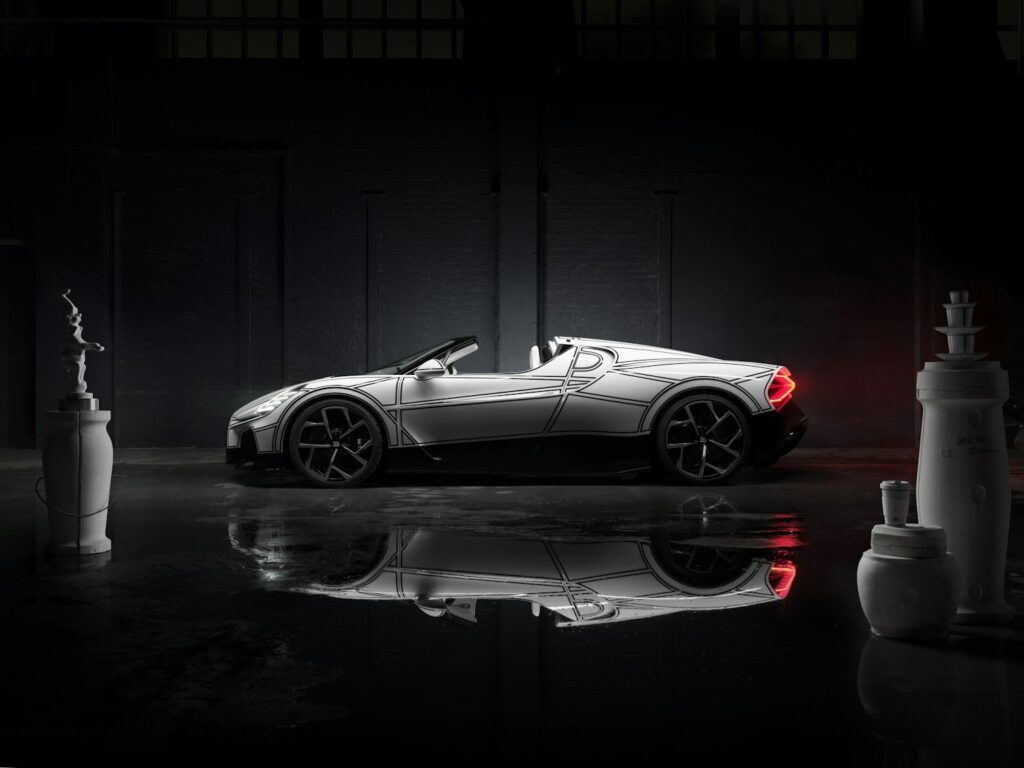
Its distinctive white bodywork decorated with flowing cobalt-blue lines immediately distinguished it from every other Veyron ever produced.
More importantly, it demonstrated that a Bugatti could become a genuine artistic canvas.
Now, fifteen years later, Bugatti has chosen the closing chapter of the legendary W16 engine to continue that story.
The Final W16, Reimagined
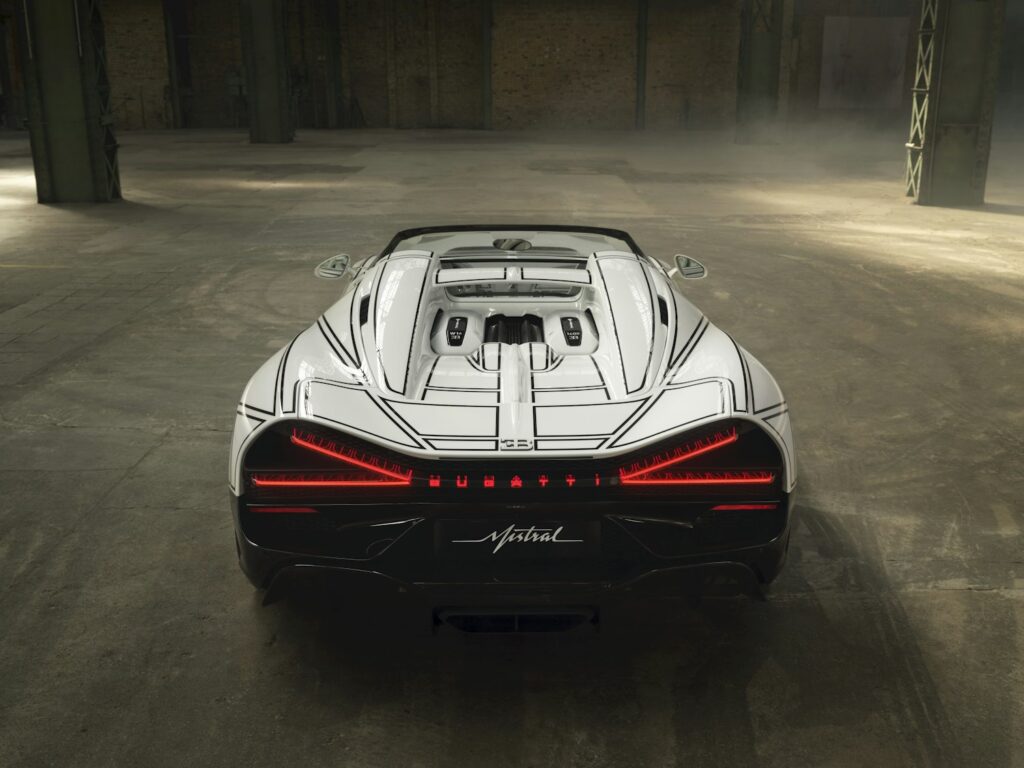
The W16 Mistral already occupies a unique place in Bugatti history.
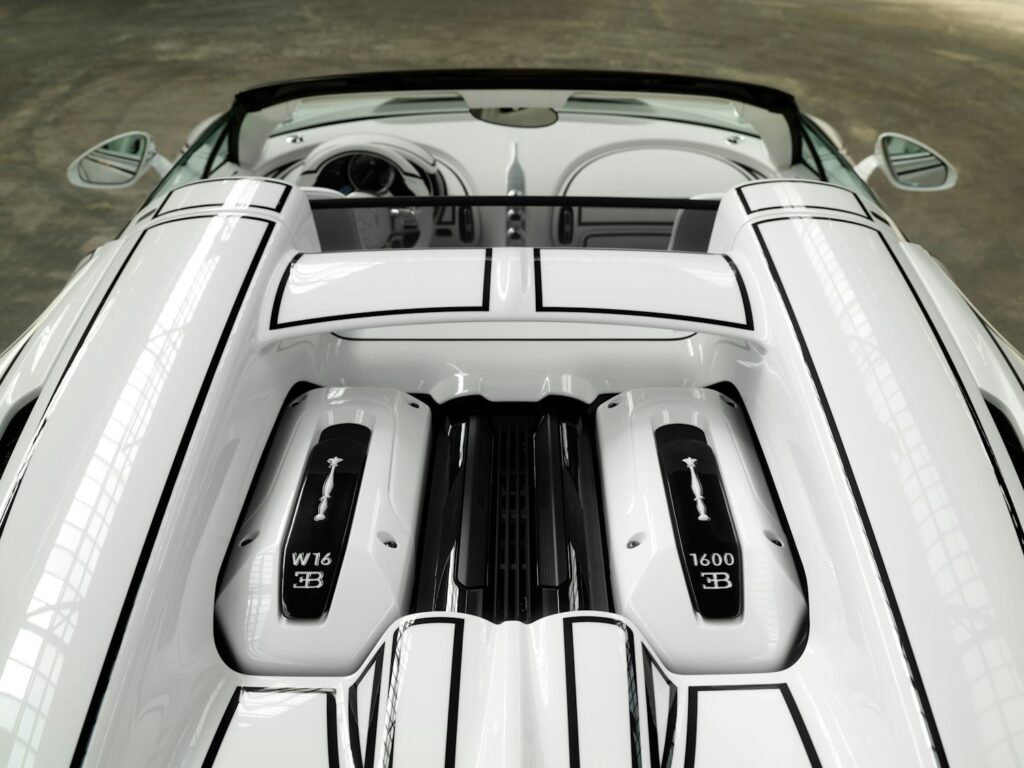
As the final road-going model powered by the legendary quad-turbocharged 8.0-litre W16 engine, it represents the conclusion of one of the greatest engineering achievements the automotive world has ever witnessed.
Blanc Éternel transforms that farewell into something deeply symbolic.
Instead of celebrating speed alone, Bugatti celebrates the creative process behind the automobile itself.
It is less about what the W16 can do.
And more about how it was conceived.
Bugatti W16 Mistral — The Final Masterpieces of the W16 Era
When Digital Design Becomes Art
Perhaps the most fascinating aspect of Blanc Éternel lies within its graphic composition.
Unlike L’Or Blanc, whose flowing blue lines were inspired by handcrafted porcelain decoration, the new commission draws inspiration from something rarely seen outside automotive design studios.
Every modern vehicle begins life as a digital surface model.
Designers construct the body through an intricate network of mathematical surfaces known as NURBS (Non-Uniform Rational B-Splines), which define every curve, radius and transition before a single physical component is ever produced.
Normally, these digital construction lines remain invisible.
Blanc Éternel makes them permanent.
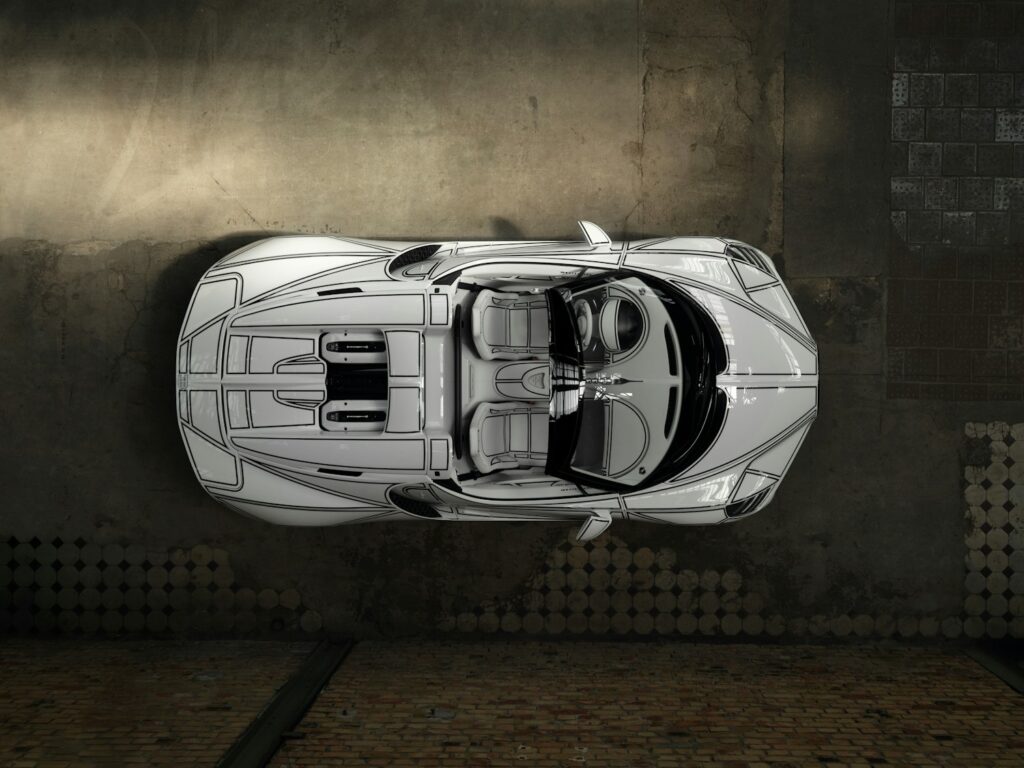
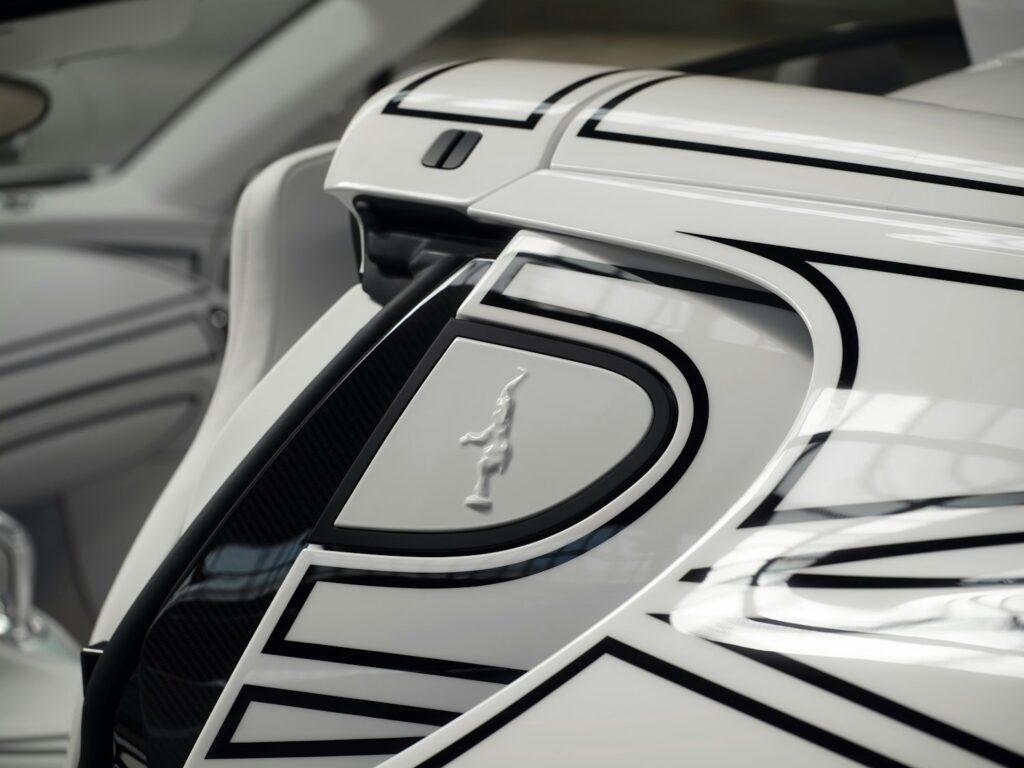
Fine black lines flow across the pure white bodywork, revealing the hidden geometry that shaped the W16 Mistral from its earliest digital conception.
What normally exists only inside computer software becomes visible for the first time.
The car quite literally wears its own design process.
Crafted Entirely By Hand
Ironically, despite its digital inspiration, the execution is almost entirely manual.
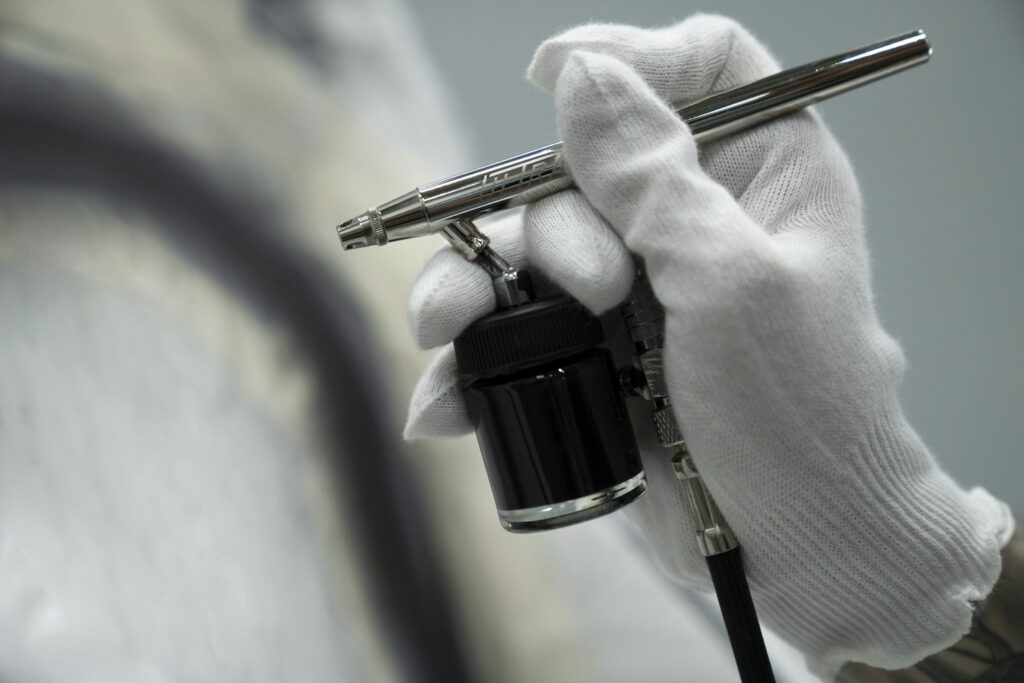
Each body panel is first finished in brilliant white paint before Bugatti’s craftspeople begin an extraordinarily delicate masking process.
Every individual line is positioned by hand.
The surrounding surfaces are carefully protected.
The exposed channels are then painted in deep black before the masking is removed.
No decals., no printed graphics and no shortcuts.
Only patient craftsmanship requiring absolute precision across the Mistral’s complex three-dimensional surfaces.
The result appears almost effortless.
In reality, it represents hundreds of hours of meticulous work.
A Dialogue With Porcelain
The partnership with KPM Berlin extends far beyond inspiration.
Porcelain itself becomes an integral material throughout the automobile.
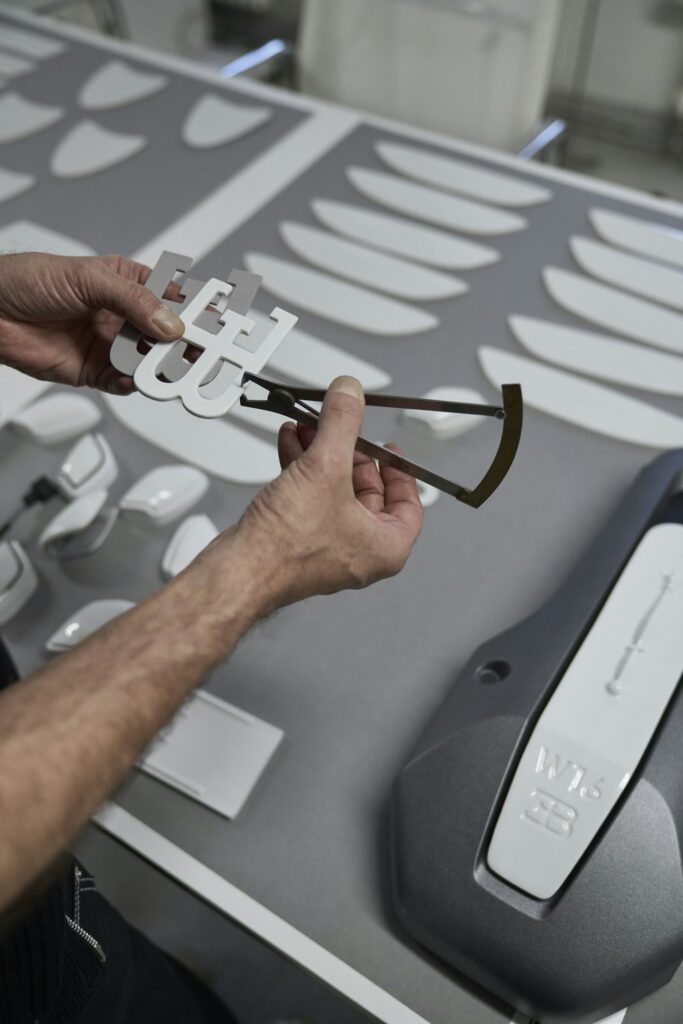
Externally, handcrafted porcelain elements appear within the famous EB emblem, the fuel and oil filler caps and bespoke inserts positioned above the engine compartment, each carrying KPM’s historic royal sceptre.
Creating these components presents extraordinary technical challenges.
Unlike metal or carbon fibre, porcelain shrinks by approximately seventeen percent during firing.
Every piece therefore has to be designed larger than its final dimensions, ensuring that once fired it fits the vehicle with absolute precision.
It is craftsmanship measured in fractions of a millimetre.
An Interior Unlike Any Other Bugatti
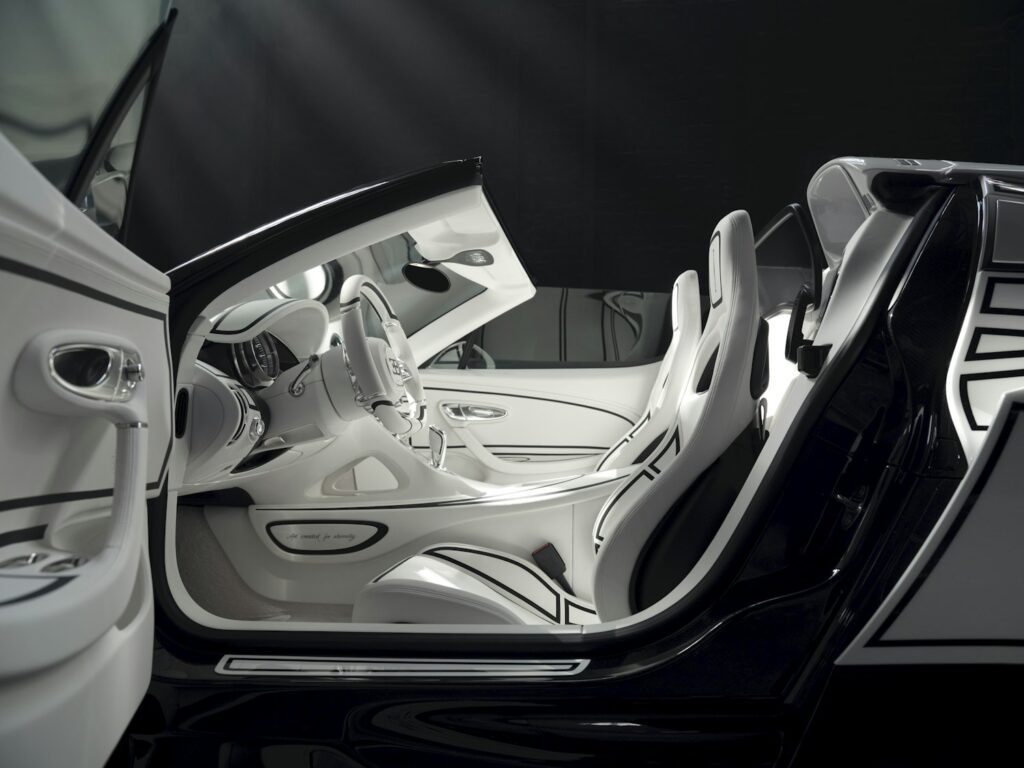
Inside, Blanc Éternel continues the same philosophy.
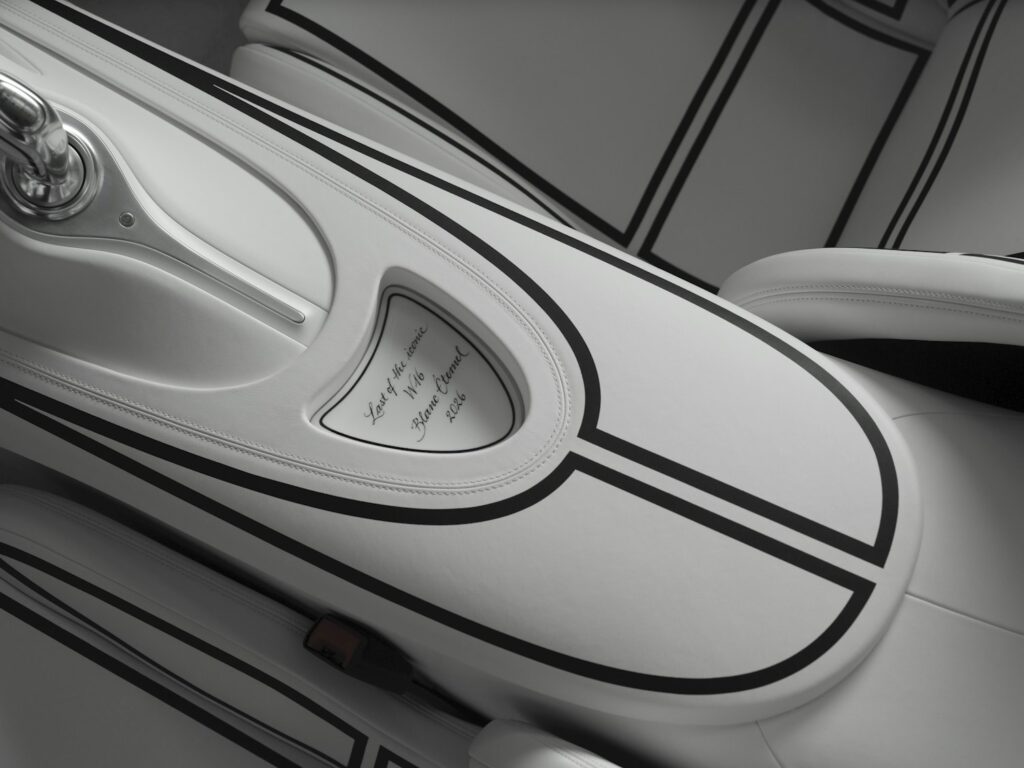
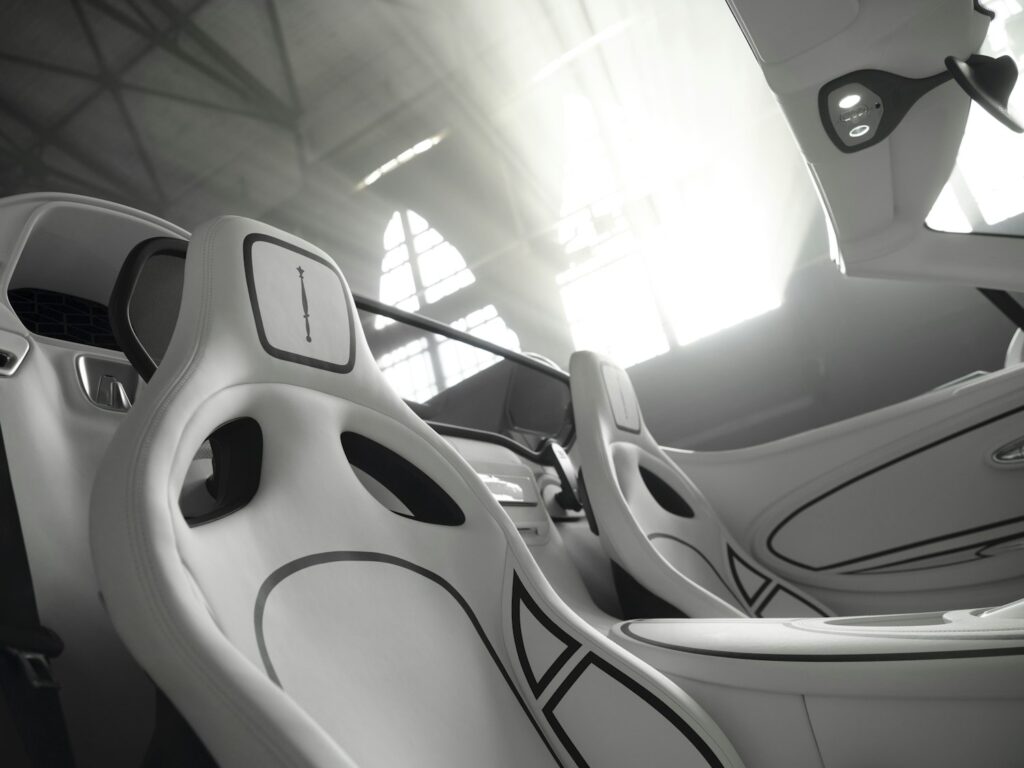
White leather forms the foundation of the cabin, while the digital linework from the exterior continues seamlessly across seats, doors and dashboard surfaces.
Achieving this required Bugatti to develop an entirely new manufacturing process.
The leather itself is individually masked before the graphic pattern is painted directly onto its surface, creating extraordinary definition while maintaining the flexibility and durability expected of a production-quality interior.
Porcelain again becomes part of the driving experience.
Rather than limiting it to decorative trim, Bugatti has integrated the material into components the driver touches every time the car is driven.
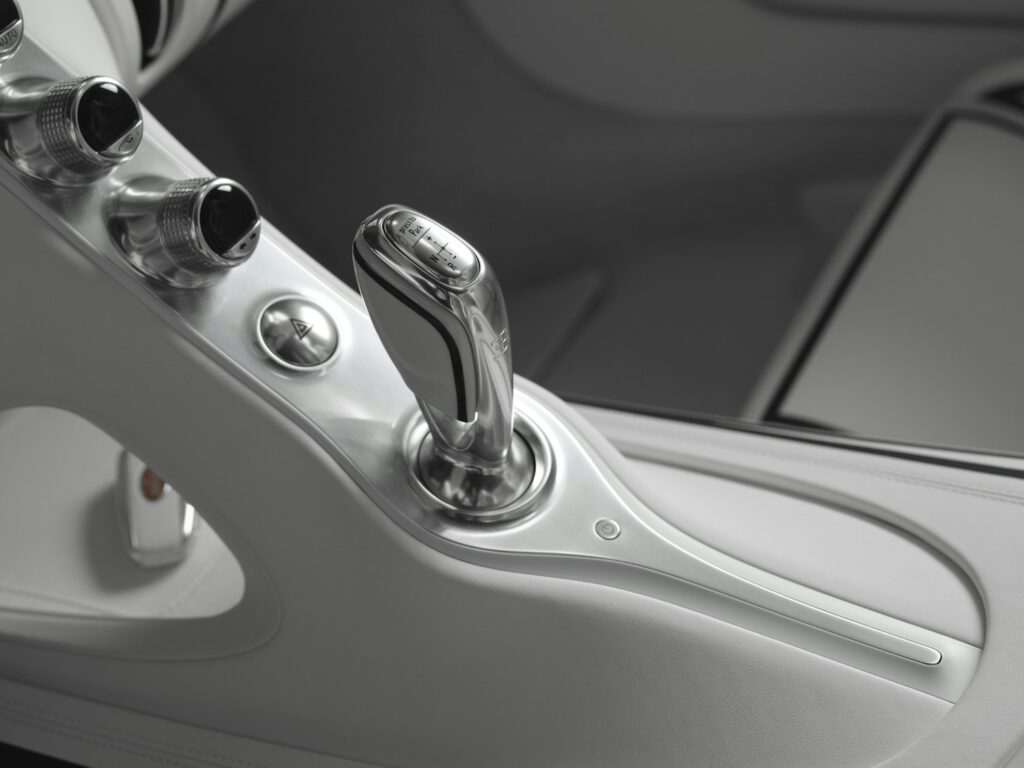
The gear selector.
The speaker grille.
The window switches.
The centre console.
The armrest.
Every interaction becomes a reminder that Blanc Éternel is as much an artistic object as it is a hypercar.
Bugatti F.K.P. Hommage — A Tribute to the Vision That Created the Hypercar Era
The Philosophy of Sur Mesure
Projects such as Blanc Éternel perfectly illustrate the purpose of Bugatti’s Sur Mesure division.
Rather than offering conventional personalization, Sur Mesure enables clients to commission automobiles that reflect deeply personal narratives, historical references and artistic inspirations.
Every material is selected with purpose, and every detail is considered. .
In Blanc Éternel, Bugatti has not merely created another one-off.
It has connected two defining moments of the modern Bugatti era.
L’Or Blanc marked the beginning of Bugatti’s contemporary bespoke journey.
Blanc Éternel brings that journey full circle as the W16 era comes to an end.
A Celebration Beyond the Automobile
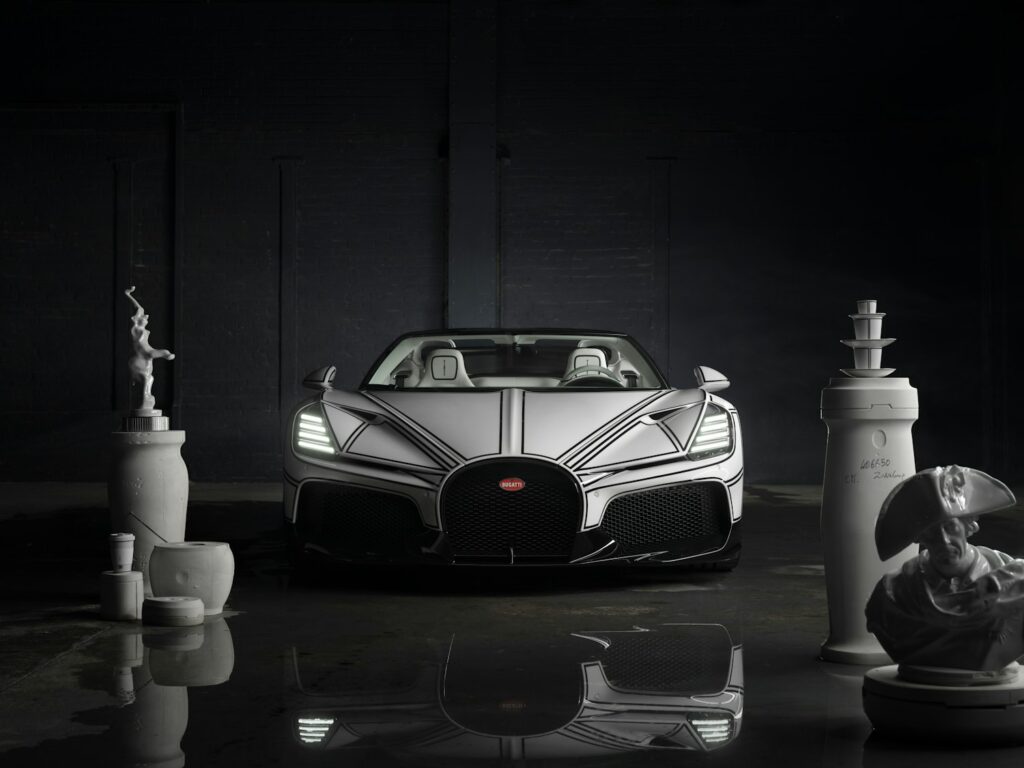
To commemorate the collaboration, Bugatti and KPM have also created a limited porcelain collection inspired by Blanc Éternel.
Comprising the elegant To-Drive Cup alongside KPM’s iconic Aviator Cup in two sizes, the collection is limited to just 1,000 handcrafted pieces.
Like the car itself, every object celebrates precision, purity and timeless craftsmanship.
It serves as a reminder that true luxury extends far beyond the automobile.
The Final Expression of an Icon
The Bugatti W16 Mistral Blanc Éternel is not the fastest Bugatti ever built.
It was never intended to be.
Instead, it celebrates something that may prove even more enduring.
The creative process.
The human hand.
The meeting of engineering and art.
As the legendary W16 engine approaches the end of its remarkable journey, Blanc Éternel provides a fitting conclusion.
It links Bugatti’s past with its future.
Traditional craftsmanship with digital innovation.
Porcelain with carbon fibre.
And automotive engineering with timeless artistic expression.
Some one-off commissions are memorable because they are rare.
Blanc Éternel will be remembered because it transforms the invisible language of automotive design into one of the most extraordinary Bugattis ever created.