
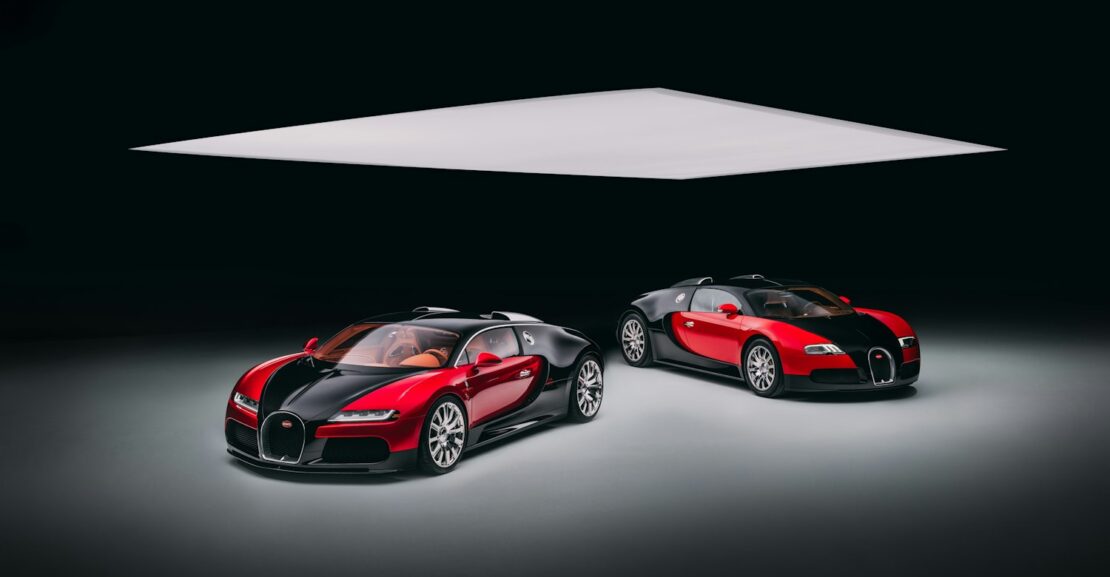
Honoring the Architect of Modern Bugatti
In the history of automotive engineering, few figures have reshaped the limits of possibility like Ferdinand Karl Piëch. His uncompromising vision led to the creation of the Bugatti Veyron—an automobile that did far more than break speed records. It redefined what a hypercar could be.
Now, two decades after the Veyron transformed the automotive landscape, Bugatti presents the F.K.P. Hommage, a singular creation designed to celebrate both the car that changed everything and the visionary mind behind it.
Created within Bugatti’s Programme Solitaire, this extraordinary project merges the timeless proportions of the Veyron with the technological evolution of Bugatti’s most advanced W16 hypercars.
The result is not simply a tribute.
It is the ultimate interpretation of the Veyron concept.
The Vision That Sparked a Revolution
The origins of the Veyron were rooted in a bold engineering ambition: to create a road car capable of delivering 1,000 horsepower while exceeding 400 km/h, all without sacrificing refinement or usability.
Achieving such a balance required a radical powertrain architecture.
The solution was the legendary W16 engine, an extraordinary configuration that compressed sixteen cylinders into a compact layout capable of producing immense power while maintaining stability and drivability.
This architecture became the foundation of Bugatti’s modern renaissance.
The F.K.P. Hommage now represents the most evolved expression of that philosophy.
The Ultimate Expression of Speed and Art: Bugatti W16 Mistral ‘La Perle Rare’
W16 Power at Its Ultimate Evolution
At the heart of the F.K.P. Hommage lies the most advanced iteration of Bugatti’s iconic engine platform.
The quad-turbocharged W16 produces 1,600 horsepower, representing the peak of two decades of development that began with the original Veyron.
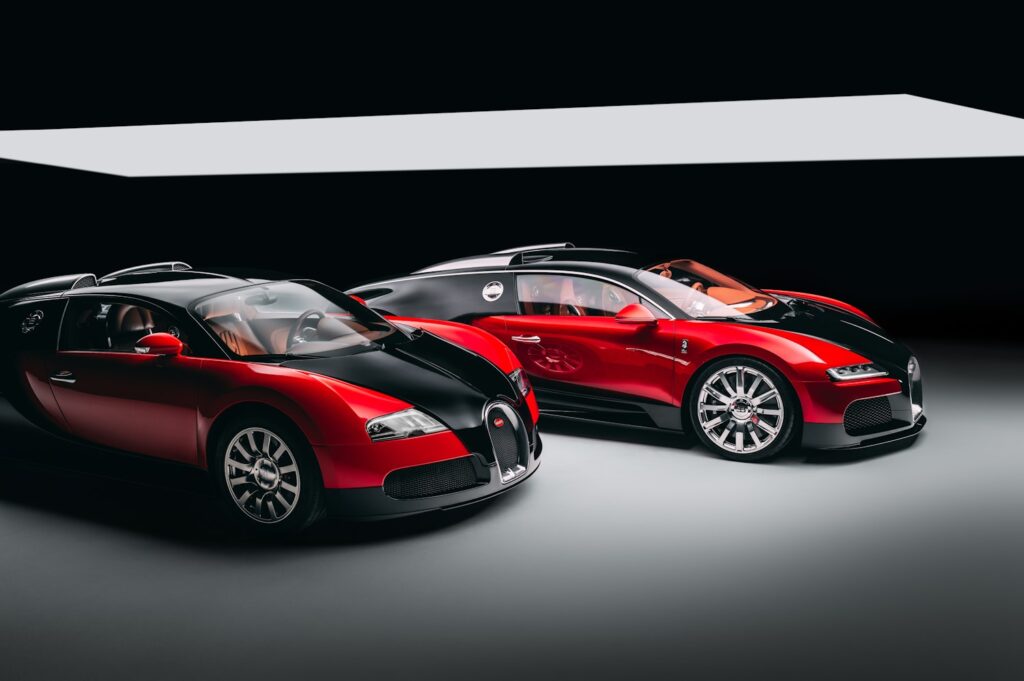
Enhanced turbochargers, improved intercooling systems, and strengthened drivetrain components ensure that the immense power is delivered with the composure expected from a Bugatti grand tourer.
Even with such extraordinary performance potential, the engineering goal remains consistent with Piëch’s original vision: a hypercar capable of extreme speed while retaining effortless refinement.
Design — The Evolution of a Modern Icon
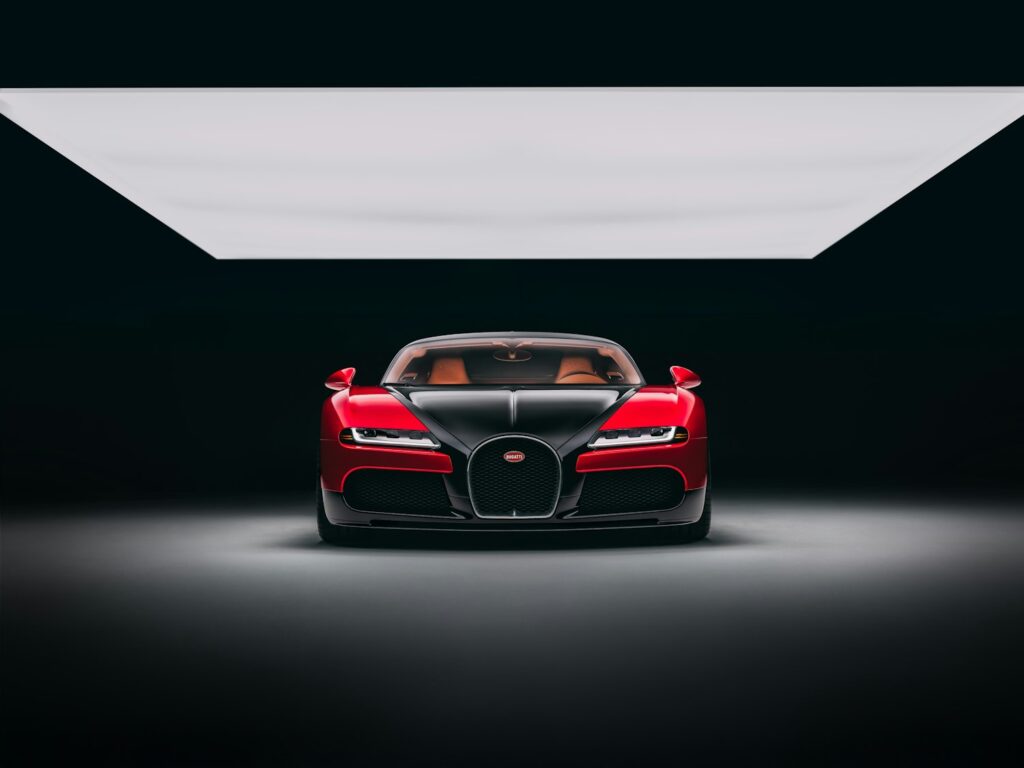
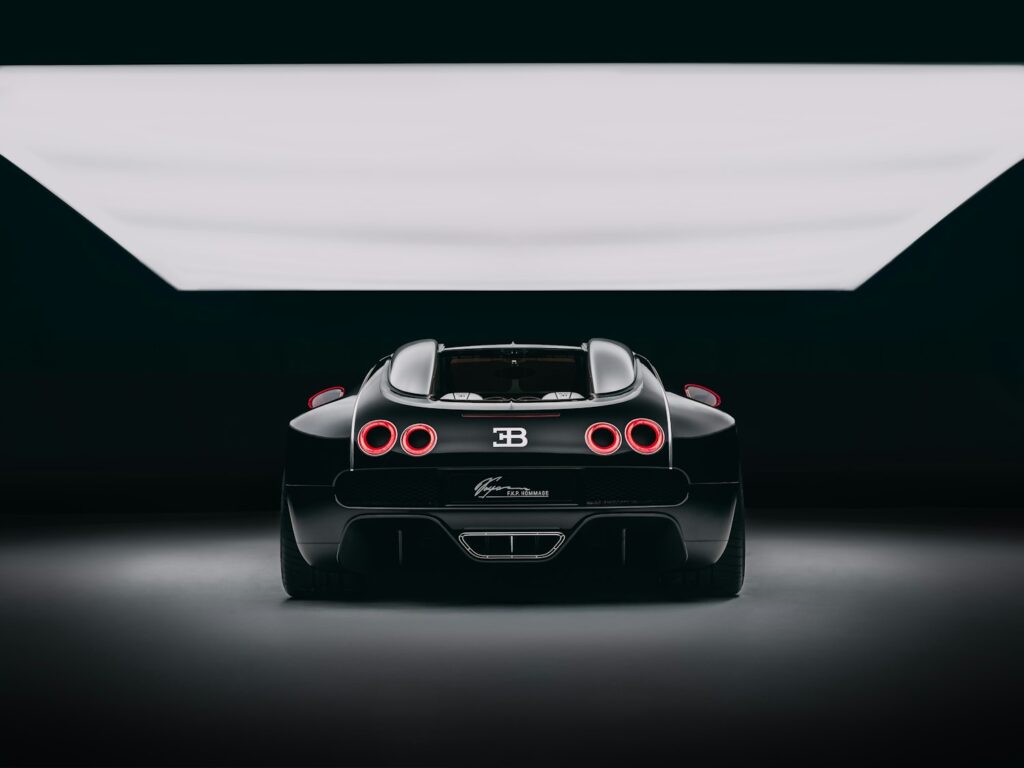
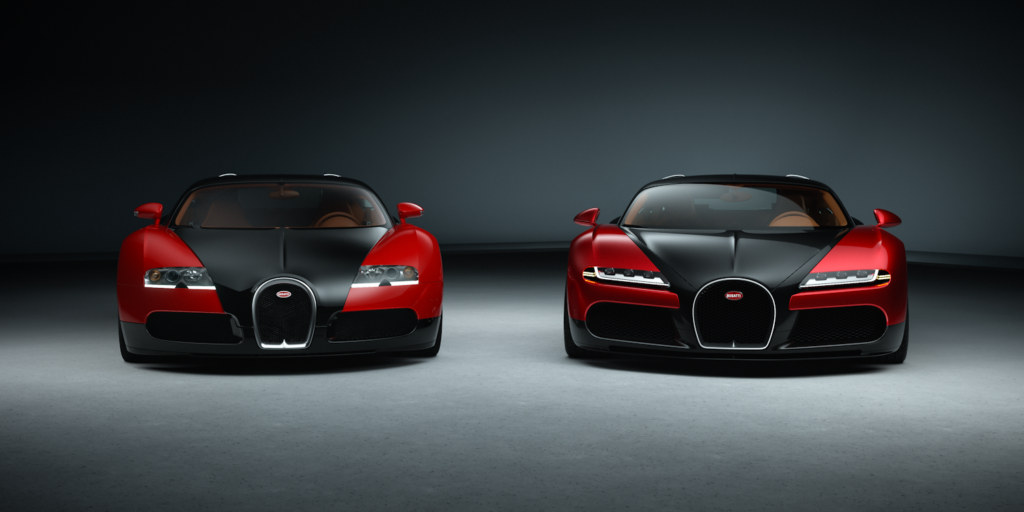
The silhouette of the F.K.P. Hommage unmistakably references the original Veyron.
Yet every surface has been refined.
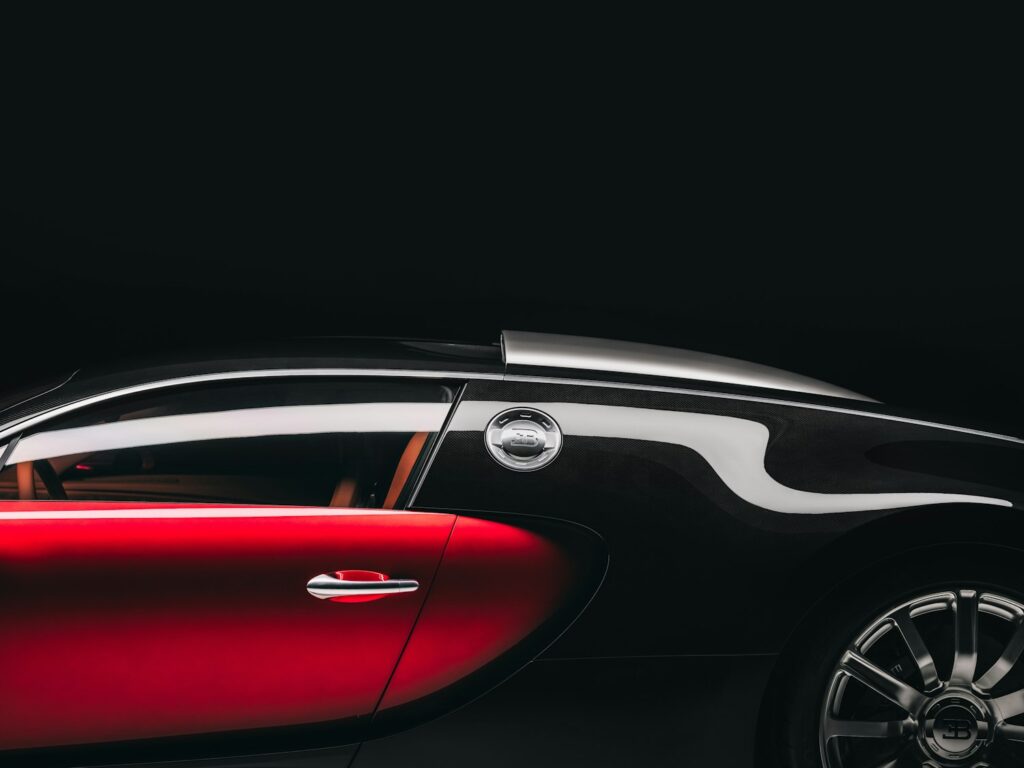
The body maintains the characteristic proportions of the earlier car—its relaxed stance and distinctive flowing beltline—while introducing modern sculptural precision.
A newly sculpted three-dimensional horseshoe grille, machined from solid aluminum, blends seamlessly into the surrounding bodywork, enhancing both visual presence and aerodynamic efficiency.
Larger air intakes provide additional cooling for the powerful engine, while the signature air channels behind the occupants remain a defining design feature.
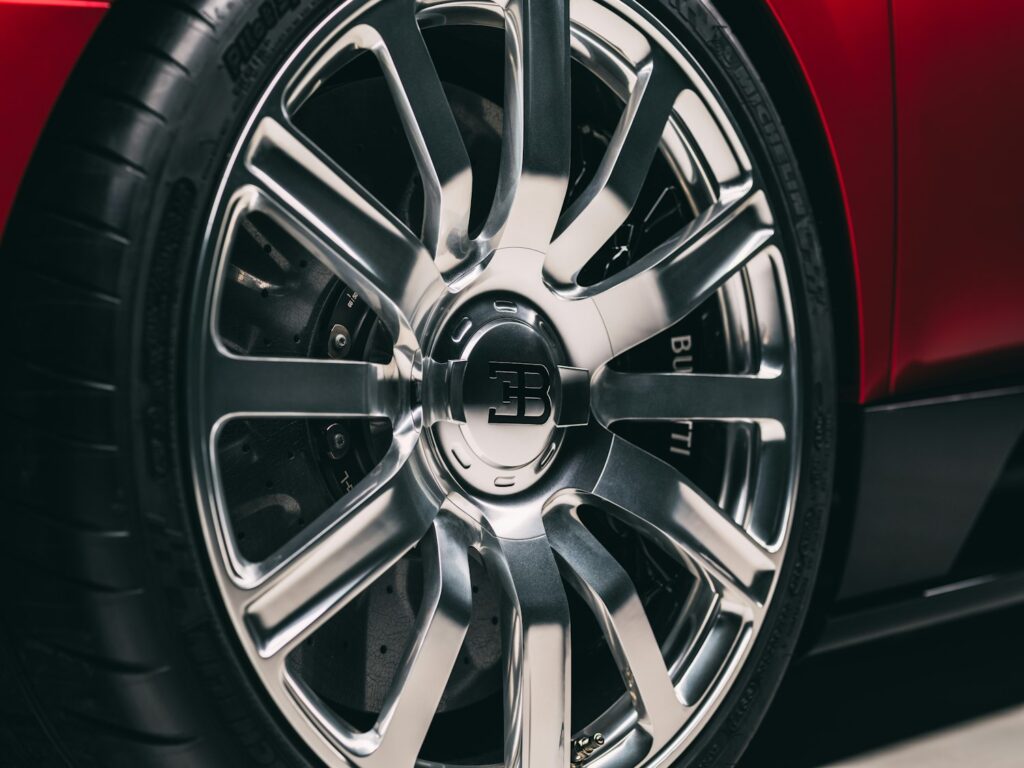
Wheel dimensions have also evolved, with 20-inch front and 21-inch rear wheels supporting the latest high-performance tire technology.
The result is a form that feels simultaneously familiar and unmistakably modern.
Advanced Materials and Deep Color Craftsmanship
The F.K.P. Hommage showcases the latest advances in automotive paint technology.
Its deep red finish is achieved through a multi-layer process that places a metallic silver base beneath a translucent tinted clear coat. This technique creates extraordinary visual depth, allowing the color to shift subtly depending on light and perspective.
Contrasting surfaces utilize exposed carbon fiber treated with a subtle black tint, preserving the technical texture of the material while enhancing its visual richness.
The result is a finish that reveals new layers of detail the closer one looks.
Interior — Mechanical Art Meets Bespoke Craft
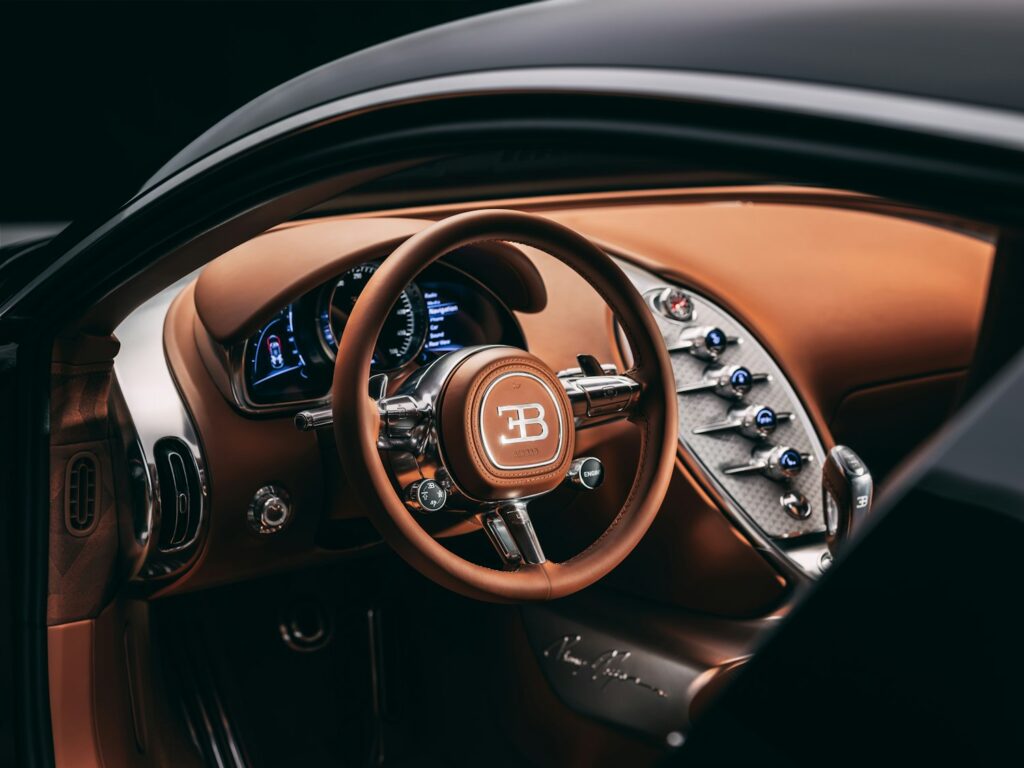
Inside the cabin, the F.K.P. Hommage departs significantly from recent Bugatti interiors.
A newly designed steering wheel references the clean geometry of the original Veyron, while the center console and transmission tunnel are machined from solid aluminum blocks—creating a mechanical aesthetic reminiscent of precision watchmaking.
Perhaps the most extraordinary element of the interior is a 41-millimeter Audemars Piguet Royal Oak Tourbillon integrated into the dashboard.
The timepiece sits within an engine-turned metal surface inspired by classic Bugatti engineering details. Even more remarkable is its mechanical integration: the watch winds itself through motion generated by the car, eliminating the need for an electrical connection.
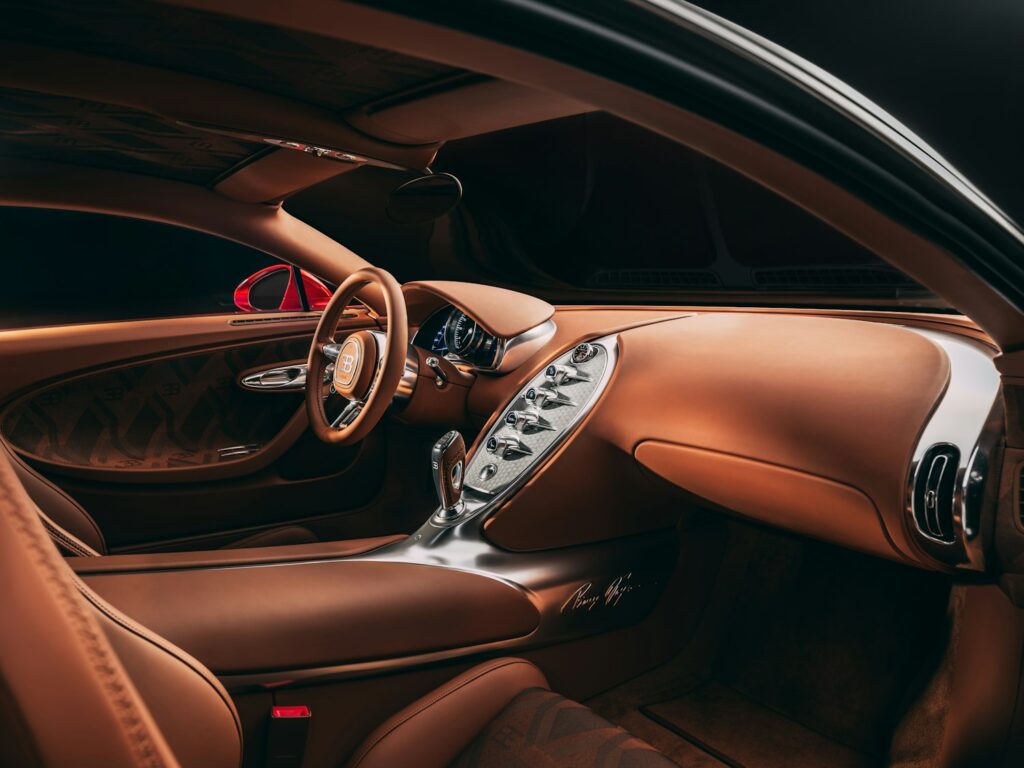
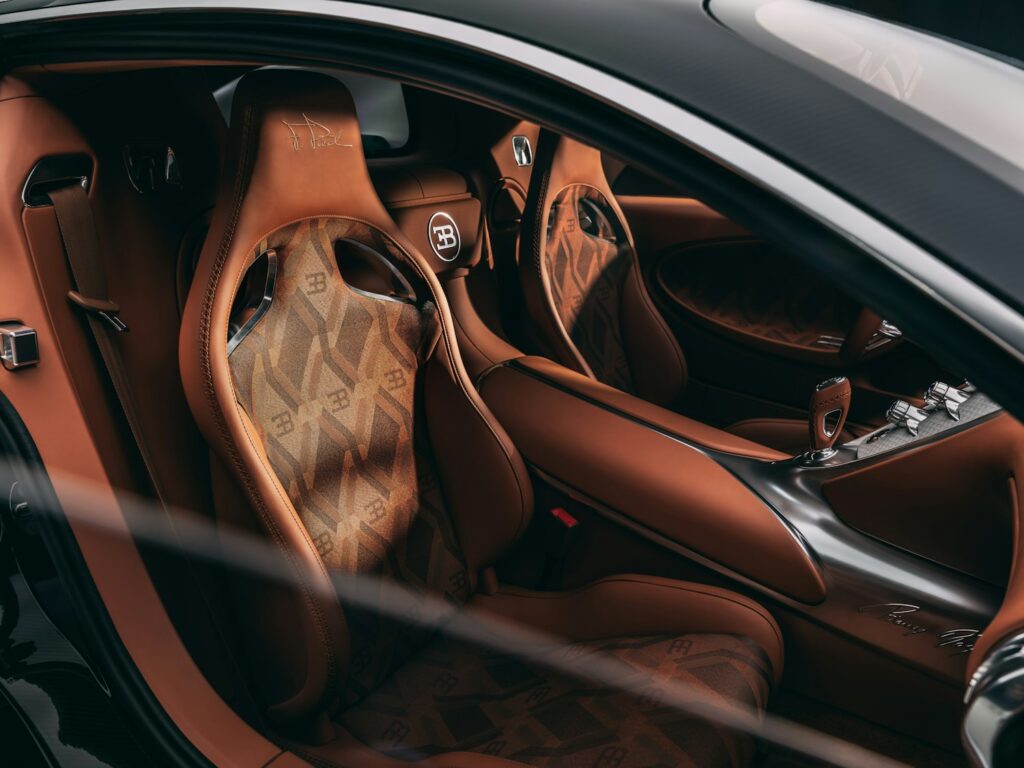
This remarkable feature reflects Bugatti’s commitment to blending automotive engineering with traditional craftsmanship.
Programme Solitaire — The Art of Ultimate Personalization
The F.K.P. Hommage is part of Bugatti’s Programme Solitaire, an initiative dedicated to creating a small number of bespoke masterpieces each year.
Within this program, clients collaborate directly with Bugatti’s designers and engineers to craft completely unique vehicles.
Every element—from bodywork to interior materials—can be tailored to the owner’s vision.
As the second creation of this program, the F.K.P. Hommage stands as a powerful example of how Bugatti merges heritage, engineering innovation, and individual expression.
Bugatti Veyron at 20: The Machine That Redefined Speed and Luxury (2005–2025)
A Celebration of Engineering Ambition
The Bugatti Veyron once defined an entirely new category of automobile: the hyper-GT, capable of delivering record-breaking speed while maintaining the comfort and elegance expected of a luxury grand tourer.
The F.K.P. Hommage celebrates that achievement while demonstrating how far the concept has evolved.
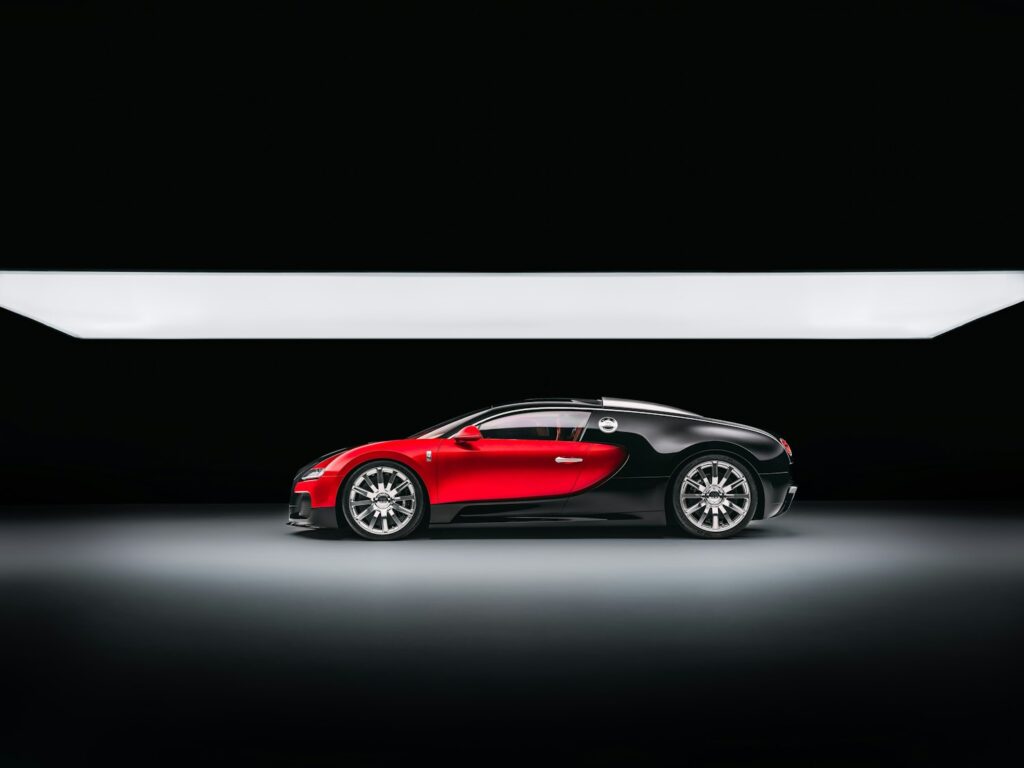
More powerful, more refined, and more technically advanced than the original, it represents the culmination of the W16 era and a tribute to the engineer whose ambition made it possible.
In the world of hypercars, where performance numbers often dominate headlines, the F.K.P. Hommage reminds us that the greatest machines are not defined solely by speed.
They are defined by vision.
And few visions have shaped the modern automotive world as profoundly as that of Ferdinand Karl Piëch.