

There is a particular kind of performance car that has almost disappeared.
Not the hypercar built around maximum downforce.
Not the hybrid machine designed to destroy acceleration records.
This is not the track special that becomes exhausting after an hour on the road.
The Gordon Murray S1 follows another philosophy.
A naturally aspirated V12.
A six-speed manual gearbox.
A central driving position.
Less than one tonne.
And enough refinement to cross entire countries without diluting the mechanical experience that defines the car.
Revealed at The Quail during Monterey Car Week 2026, the S1 represents the latest creation from Gordon Murray Special Vehicles and a road-focused evolution of the extraordinary S1 LM.
But this is not simply an S1 LM with softer suspension.
Almost every exterior panel is new.
The aerodynamics have been completely reconsidered.
The engine has been recalibrated around accessible torque.
The cabin gains genuine touring comfort.
And the entire personality moves away from lap times towards something arguably more difficult to create:
A supercar you want to keep driving after the perfect road has ended.
From S1 LM to S1

The starting point is one of Gordon Murray’s most exclusive creations.
The S1 LM was conceived as a celebration of the McLaren F1 GTR’s extraordinary victory at the 1995 24 Hours of Le Mans.
Only five examples are being produced.
Its philosophy is unapologetically intense.
Large fixed aerodynamic surfaces.
Aggressive suspension.
Minimal compromise.
And a V12 engineered around extraordinary response.
The new S1 uses the same fundamental platform but changes the objective completely.
Where the S1 LM asks how close a road-legal machine can move towards racing, the S1 asks how much of that engineering can be preserved while creating a genuinely usable grand tourer.
Same DNA.
Different mission.
Gordon Murray’s Definition of a GT
Grand touring traditionally means compromise.
More weight for greater comfort.
Automatic transmissions.

Larger cabins.
Additional insulation.
Perhaps even rear seats.
Gordon Murray approaches the idea differently.
For the S1, touring does not mean isolating the driver from the car.
It means removing the reasons an extraordinary driver’s car becomes tiring over distance.
The suspension gains compliance.
The cabin becomes quieter.
Seat comfort improves.
The windows actually lower.
The audio system becomes more capable.
But the engine remains naturally aspirated.
The gearbox remains manual.
And the driver still sits exactly where Gordon Murray believes they belong.
In the centre.
Gordon Murray Le Mans GTR: A Love Letter to Endurance Racing
Less Than 997 Kilograms
Perhaps the most remarkable specification is the weight.
Gordon Murray targets a figure below that of the T.50, which weighs approximately 997 kg.
That means the S1 should remain below one tonne despite gaining more interior refinement, improved acoustic insulation and additional touring equipment.
This is an extraordinary achievement in a modern supercar.
Contemporary performance vehicles increasingly approach — and sometimes exceed — two tonnes as batteries, hybrid systems, active chassis technology and luxury equipment accumulate.
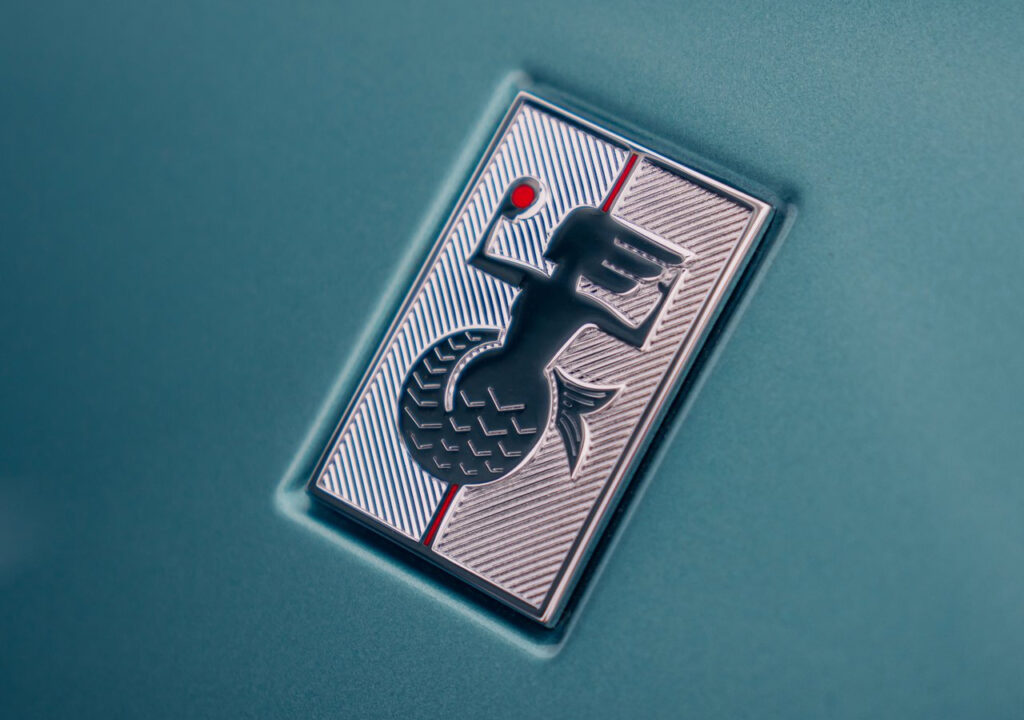
The S1 takes the opposite path.
Every additional gram must justify itself.
Comfort is added carefully rather than indiscriminately.
The result should preserve one of Gordon Murray’s most fundamental beliefs:
Weight is the enemy of everything.
Acceleration.
Braking.
Steering feel.
Ride quality.
Tyre load.
Mechanical response.
Remove mass and almost every aspect of the car improves simultaneously.
A Bespoke 4.2-Litre Cosworth V12
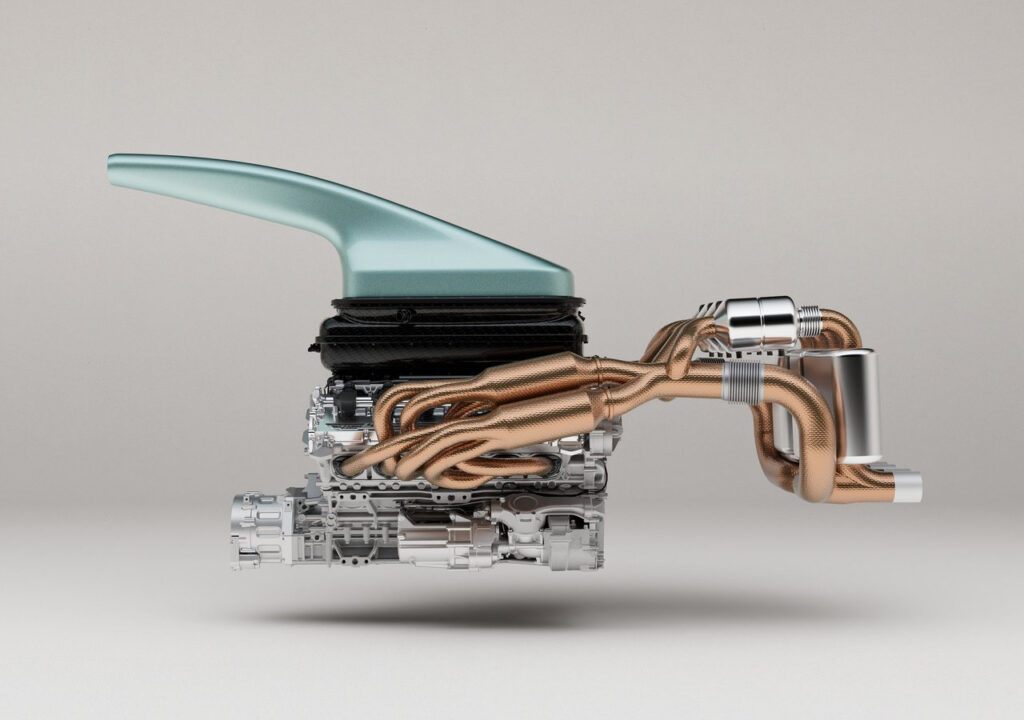
At the centre of the S1 sits another increasingly rare object.
A naturally aspirated 4.2-litre Cosworth V12.
It produces up to 690 PS and reaches peak power at an extraordinary 12,100 rpm.
There are no turbochargers.
No hybrid assistance.
No electric motors filling holes in the torque curve.
Air enters.
Fuel burns.
Twelve pistons move.
And the engine responds directly to the driver’s right foot.
In an era where extraordinary power has become relatively easy to achieve through forced induction and electrification, Gordon Murray continues to pursue something harder.
Response.
Character.
Sound.
And the mechanical connection between accelerator movement and combustion.
Competition Components Inside a Road Engine
The V12 is not simply theatrical.
Its construction includes an extraordinary collection of lightweight components.
Silicon-carbide-coated lightweight pistons.
Titanium valves.
Titanium connecting rods.
Dry-sump lubrication.
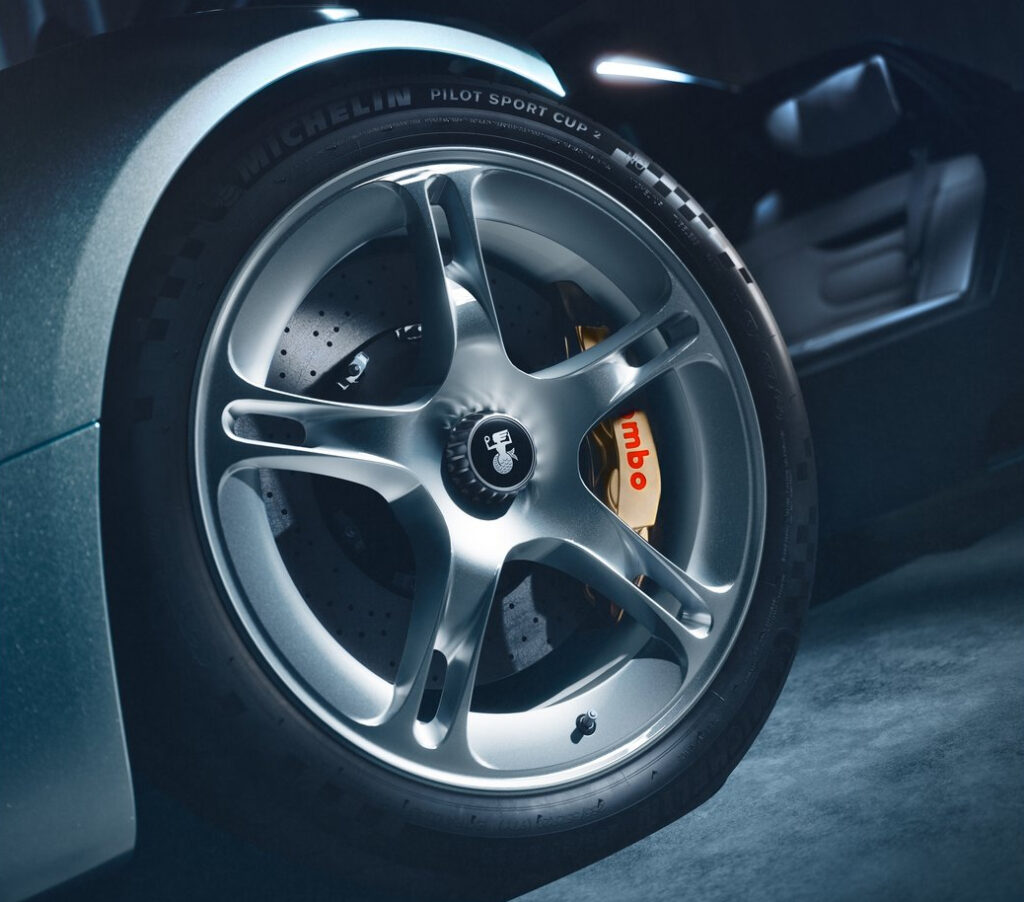
Every component is designed around reducing rotational inertia and allowing the engine to change speed with exceptional immediacy.
That matters because the sensation of a great naturally aspirated engine is not defined purely by its maximum output.
It is defined by how quickly it reacts.
How freely it accelerates through the rev range.
How little delay exists between intention and response.
For the S1, that quality sits at the heart of the entire experience.
McLaren McL 6GT: Bruce McLaren’s Lost Supercar Reborn
More Torque Where You Actually Use It
The S1’s touring character required another important change.
Rather than pursuing only maximum rpm performance, Cosworth and Gordon Murray have broadened the torque delivery.
Around 80 percent of maximum torque is available from only 2,500 rpm, while the engine produces approximately 500 Nm at 7,000 rpm.
That makes the car fundamentally different from a racing-inspired engine that demands constant high revs.
The driver should be able to leave the S1 in a higher gear.
Accelerate cleanly from low speed.
Overtake without immediately reaching for the lever.
And enjoy the V12 across a wider range of conditions.
Then, when the road clears, continue all the way towards 12,100 rpm.
That duality defines the S1.
Effortless when required.
Extraordinary when requested.
Six Speeds. A Real Manual.
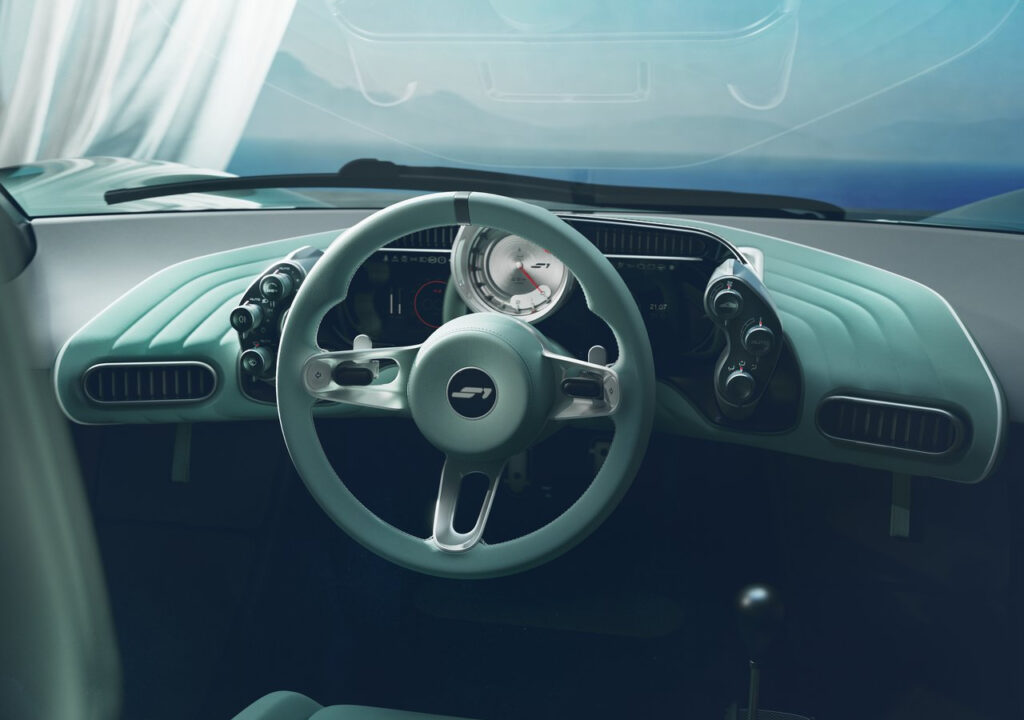
There is no dual-clutch gearbox.
No paddle-shift transmission.
No automatic option.
The S1 uses a six-speed manual gearbox.
And Gordon Murray has paid particular attention to the physical quality of the shift itself.
Straighter cable routing improves precision.
A dedicated touring sixth gear reduces engine speed during long-distance cruising.
And the mechanical action is designed to deliver the short, positive movement Murray has always valued in manual transmissions.
That final gear is particularly revealing.
A track car wants closely stacked ratios.
A GT needs somewhere quiet to settle at motorway speeds.
The S1 provides both.
Why Manual Still Matters
Objectively, a modern dual-clutch transmission would be faster.
It would improve acceleration.
Reduce shift times.
Potentially lower emissions.
And make the S1 easier to drive.
Gordon Murray is well aware of all of that.
The manual exists precisely because efficiency is not the only metric that matters.

Every gear change becomes a decision.
The clutch requires coordination.
The lever requires physical movement.
A badly executed shift belongs to the driver.
A perfect one does too.
That responsibility transforms the relationship with the machine.
The S1 does not simply transport its driver quickly.
It asks them to participate.
The Central Driving Position Remains
The S1 also retains one of Gordon Murray’s most iconic ideas.
The driver sits in the centre.
Two passenger seats are positioned behind and slightly to either side, creating the famous three-seat layout that immediately connects the car philosophically with both the T.50 and McLaren F1.
The advantages are more than theatrical.
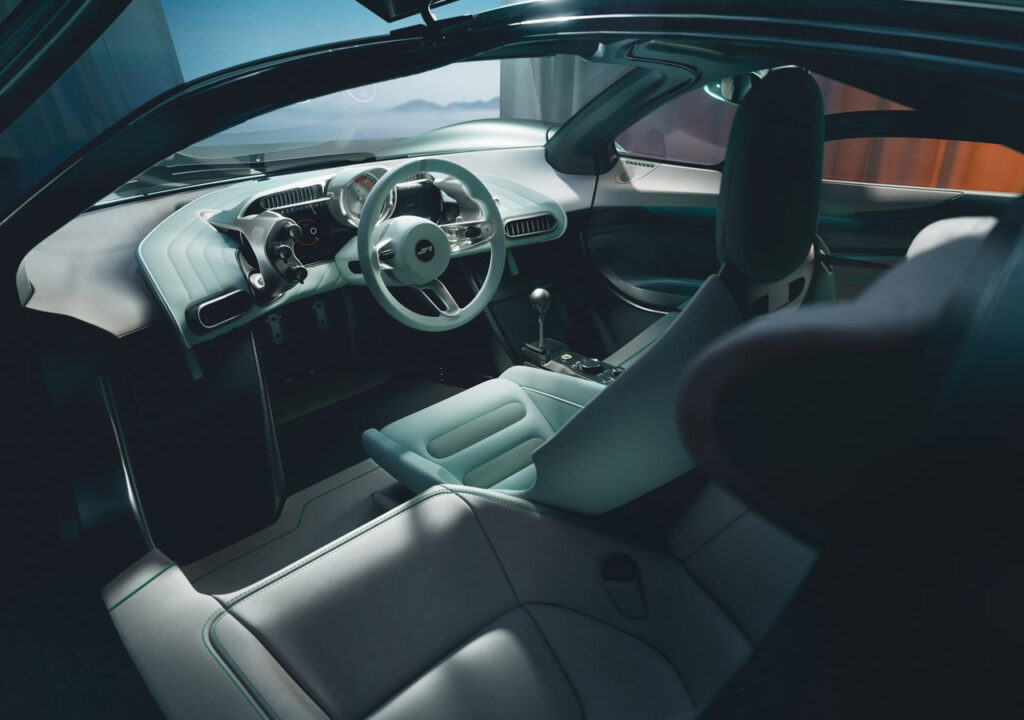
Forward visibility becomes symmetrical.
The driver’s relationship with the road feels completely natural.
There is no need to mentally compensate for sitting on one side of the car.
And both passengers gain their own unusual perspective from behind.
It remains one of the most distinctive driving environments in the automotive world.
Almost Every Body Panel Is New
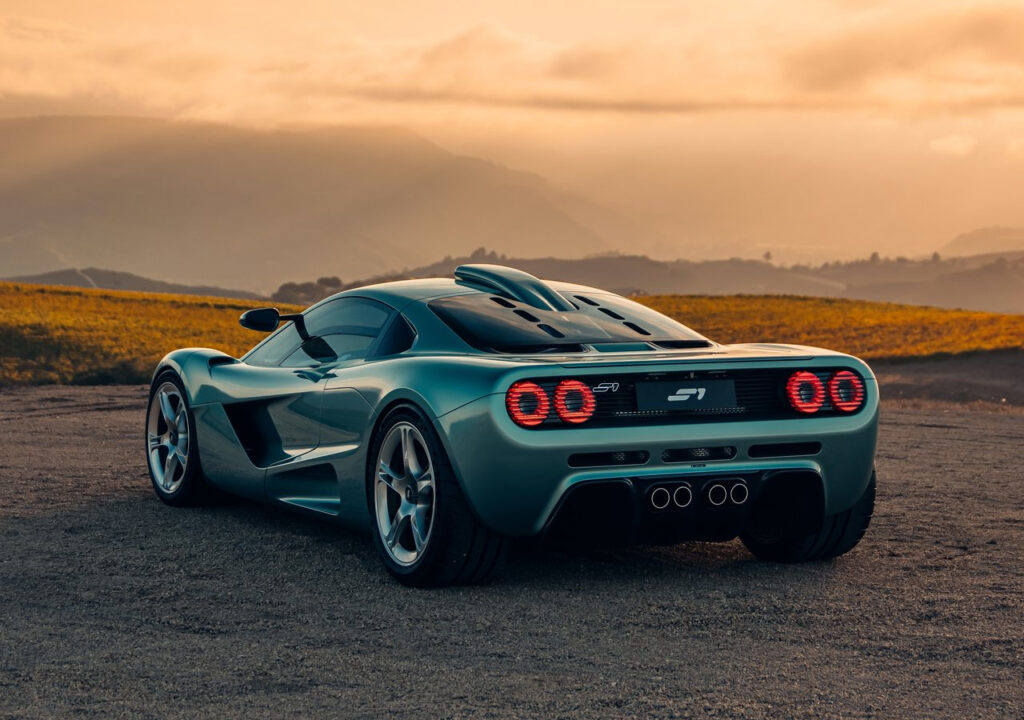
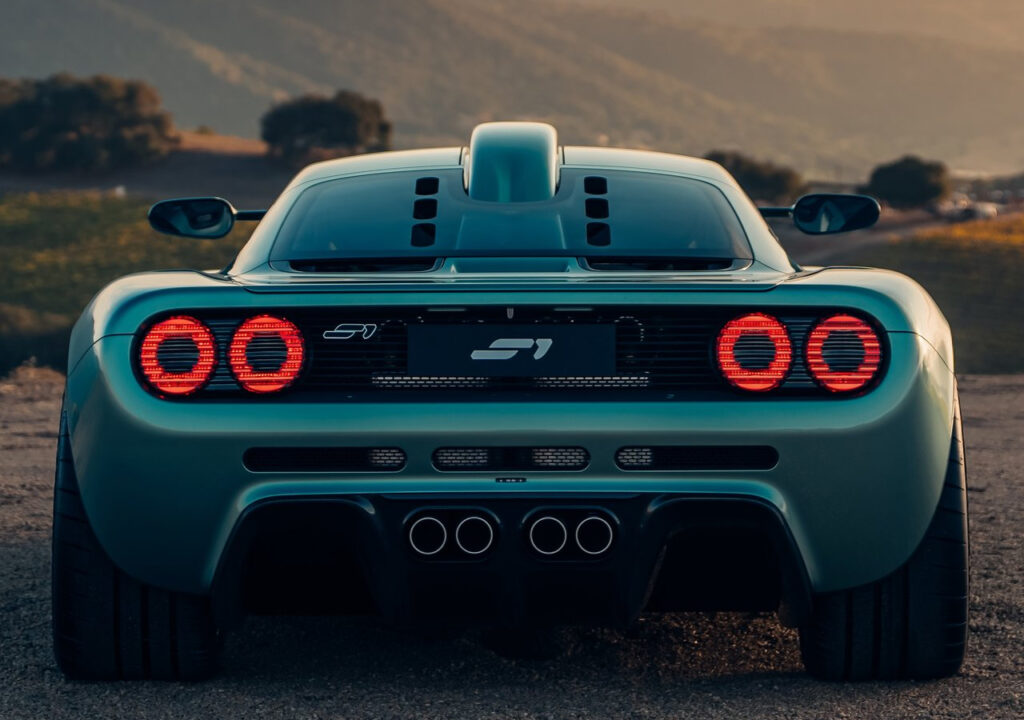
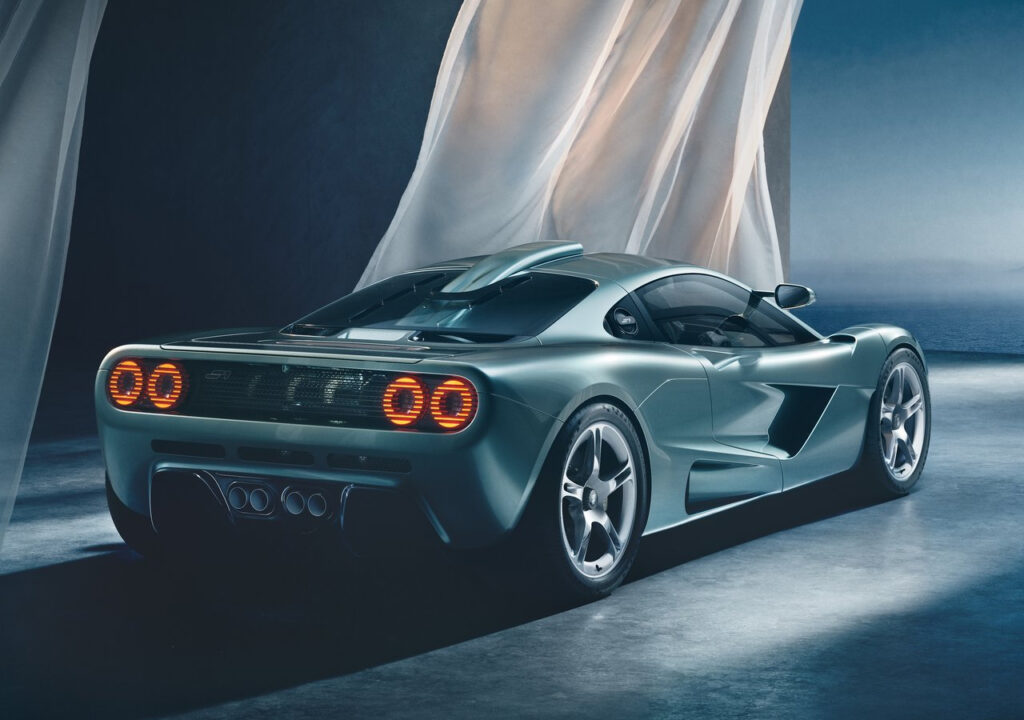
Although the S1 shares its basic architecture with the S1 LM, every exterior body panel has been redesigned.
The difference is immediately visible.
The huge fixed rear wing disappears.
The extended front splitter is removed.
Deep side skirts vanish.
The body becomes cleaner.
More elegant.
More compact visually.
This is a fascinating exercise in reduction.
Rather than adding design elements to create drama, Gordon Murray removes them to reveal the underlying proportions.
The result looks dramatically different despite preserving the same fundamental design DNA.
Beauty After Aerodynamics
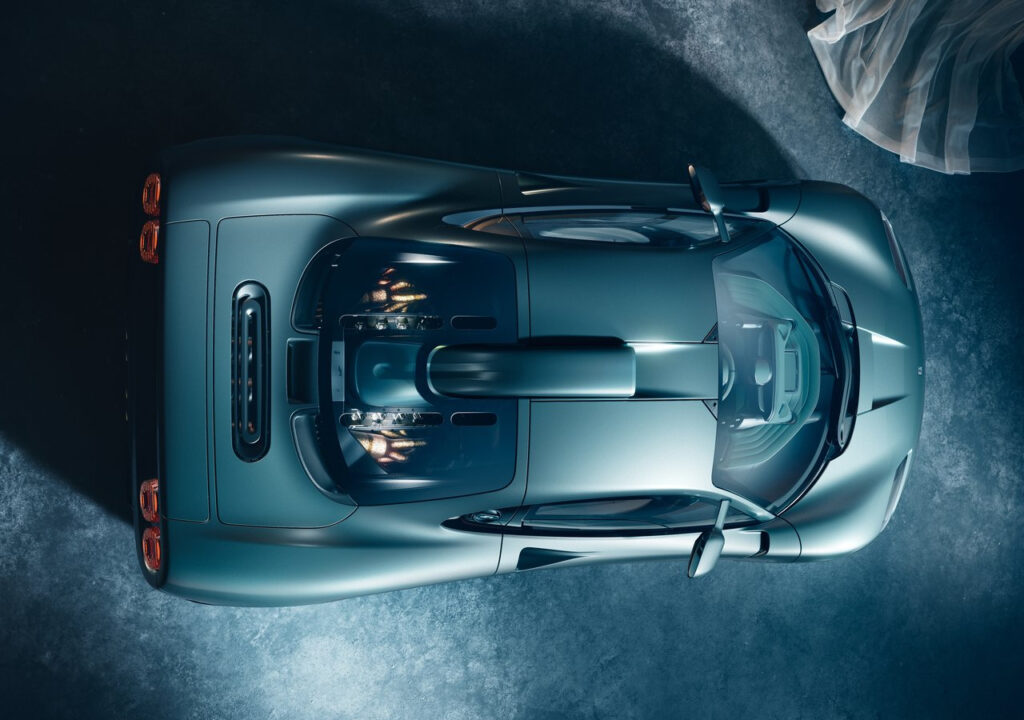
The S1 LM was shaped around extreme aerodynamic performance.
The S1 gives beauty more freedom.
That does not mean aerodynamics become irrelevant.
It means they become less visually dominant.
The fixed rear wing is replaced by an integrated active aerodynamic system hidden within the body.
At ordinary speeds, the silhouette remains clean.
At higher speeds or under braking, aerodynamic surfaces can adapt to improve stability.
The technology works.
But it does not need to announce itself constantly.
That restraint gives the S1 a very different personality from its LM sibling.
McLaren F1 — The Analog Hypercar That Redefined Automotive Perfection
Mechanical Grip Instead of Maximum Downforce
This may be the most important philosophical difference between the two cars.
The S1 LM pursues aerodynamic grip.
The S1 prioritises mechanical grip.
That means greater emphasis on chassis balance, tyres, suspension geometry and the fundamental relationship between mass and road surface.
For road driving, that approach makes enormous sense.
Aerodynamic downforce becomes increasingly effective as speed rises.
On a mountain road or sweeping country route, many corners occur below the velocities where extreme aero delivers its greatest advantages.
Mechanical grip is available immediately.
That should make the S1 feel alive at realistic speeds rather than requiring a circuit to reveal its personality.

Ten Millimetres Can Change a Car
The ride height increases by only 10 mm compared with the S1 LM.
That sounds insignificant.
It is not.
Those ten millimetres provide additional suspension travel.
Improve clearance.
Reduce the likelihood of damaging aerodynamic surfaces.
And allow the damping to be recalibrated around real roads rather than ideal circuit surfaces.
The suspension retains the lightweight architecture, track width and wider tyres of the S1 LM but receives a more compliant calibration.
The objective is not softness.
It is control without punishment.
Selectable Steering Assistance
The S1 introduces another unusually thoughtful detail.
Selectable power-steering assistance.
The driver can choose greater assistance when covering long distances or select a more direct, less filtered setting when the road becomes interesting.
This solution avoids one of the common compromises of modern steering.
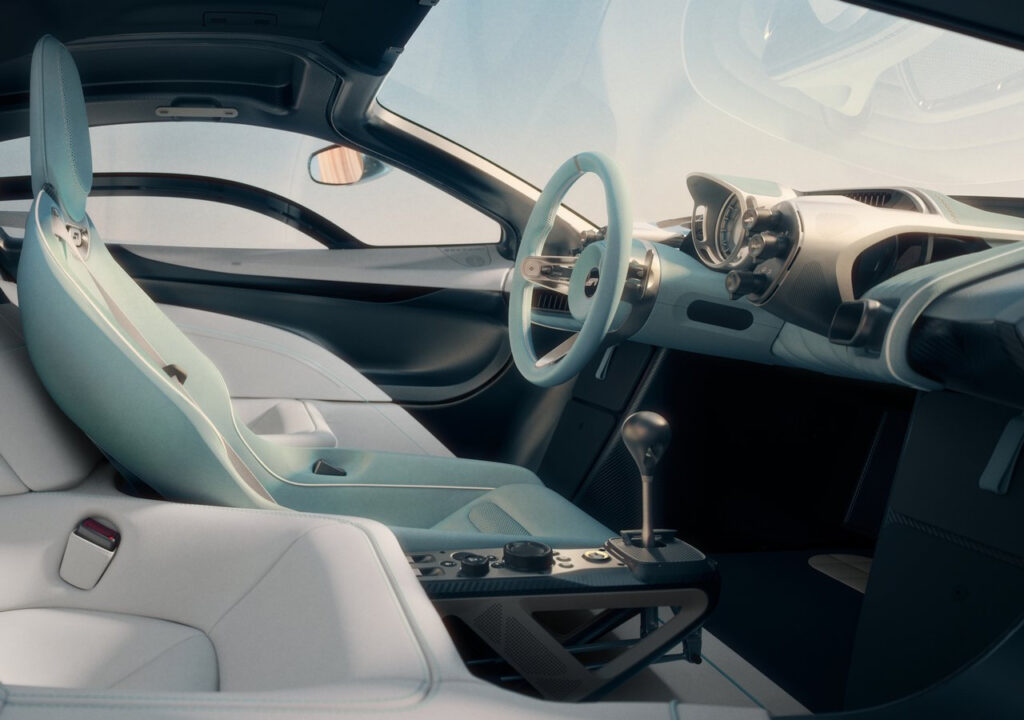
A single fixed calibration must usually work in city traffic, on motorways and during aggressive driving.
The S1 allows the character to change without altering the fundamental steering geometry.
Relaxed when desired.
Communicative when required.
The McLaren F1 Monaco Connection
The S1 also contains subtle references to a fascinating piece of Gordon Murray history.
In 1992, an early McLaren F1 show car appeared in Monaco with several design details that ultimately did not survive into production.
The new S1 revives some of those ideas.
Most notably, auxiliary main-beam lights sit low within the front air intakes, echoing the arrangement seen on that early F1 design.
It is a subtle reference.
Not a retro imitation.
And that distinction matters.
The S1 does not attempt to look like a McLaren F1.
It allows unfinished ideas from Murray’s past to finally find a home.
Wheels Inspired by 1992
The newly developed lightweight wheels carry another connection to the same Monaco show car.
Their design revisits proportions and visual ideas Murray explored more than three decades ago without directly reproducing them.
That continuity gives the S1 an unusual sense of history.

These are not generic heritage references selected by a marketing department.
They are ideas returning to the designer who originally conceived them.
Three decades later.
On another car carrying his philosophy.
Gold Returns to the Engine Bay
Open the rear bodywork and another unmistakable reference appears.
Behind the V12 sits a 24-carat gold-plated heat shield.
The McLaren F1 famously used gold foil around its engine bay because gold is an exceptionally effective reflector of radiant heat.
The material became one of the car’s most celebrated engineering details.
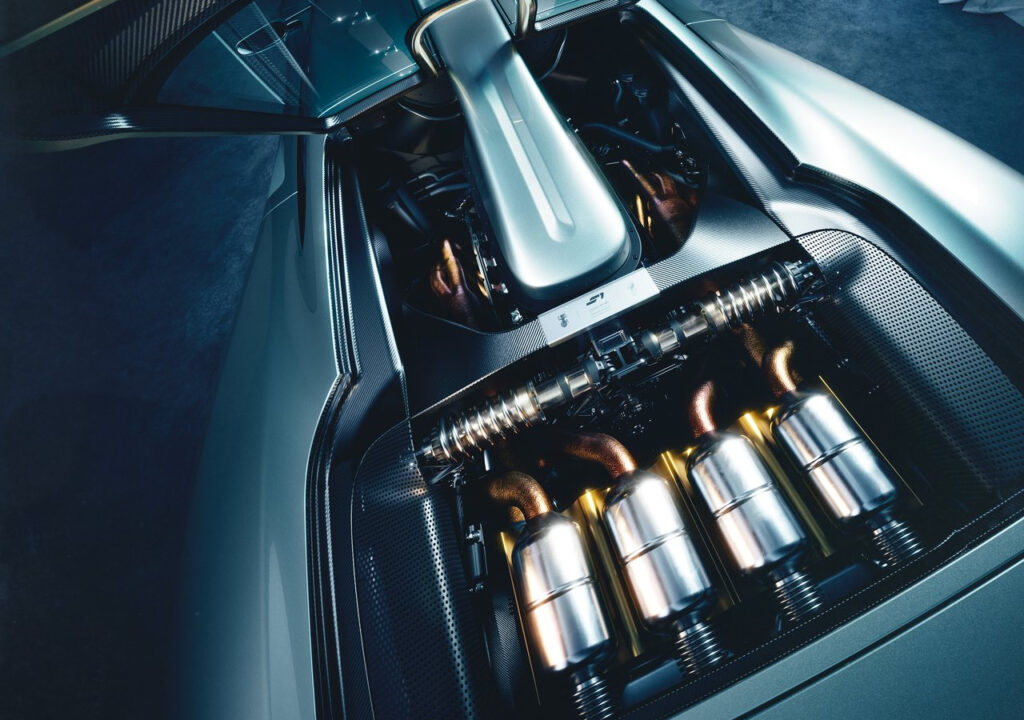
On the S1, the concept returns.
Alongside the polished Inconel exhaust, the gold surface transforms the engine compartment into something simultaneously technical and luxurious.
It is not decorative gold pretending to be engineering.
It is engineering that happens to look extraordinary.
Gordon Murray T.50s Niki Lauda — The Ultimate Expression of Track-Focused Purity
The Engine Is Meant to Be Seen
This matters because Gordon Murray treats the V12 as part of the visual experience.
The engine is not hidden beneath layers of plastic.
Its exhaust.
Heat shielding.
Mechanical architecture.
And surrounding carbon structure remain visible.
The engine bay becomes almost another room within the automobile.
A mechanical gallery.
That feels especially appropriate for a car where the naturally aspirated engine represents one of the primary reasons for its existence.
New Dihedral Doors

The S1 also receives completely new dihedral doors.
They open more widely than those of the S1 LM, making entry and exit easier.
Again, this is a small but important touring detail.
A supercar can be extraordinary dynamically and still become irritating if getting inside requires acrobatics every time.
Gordon Murray is clearly unwilling to accept that compromise.
The doors remain dramatic.
They simply become more useful.
Real Drop-Down Windows
Then there are the windows.
The S1 LM uses a race-inspired Lexan ticket window.
The S1 receives conventional electrically operated glass that actually lowers.
On paper, that sounds almost laughably ordinary.
On an ultra-exclusive supercar, it becomes surprisingly meaningful.
Open the window at a toll booth.
Speak to someone without opening the door.
Enjoy fresh air on a mountain road.
These mundane interactions often reveal whether an extreme car was truly designed to be used.
The S1 clearly was.
A More Luxurious Three-Seat Cabin
Inside, the car moves considerably further from the S1 LM.
Premium leather appears throughout.
Bespoke fabrics replace competition-oriented materials.
Seat cushioning is developed around longer journeys.
Additional acoustic insulation reduces fatigue.
Infotainment screens are revised.
And a dedicated lightweight audio system adds another layer of everyday usability.
None of these features sound revolutionary.
Their integration is.
Every comfort feature adds weight.
In a car obsessed with remaining below one tonne, nothing can simply be installed without consequence.
Luxury has to be engineered rather than merely added.
The Luxury of Low Mass
This may ultimately be what separates the S1 from conventional grand tourers.
Most luxury cars achieve refinement through isolation.
Thick glass.
Heavy insulation.
Massive seats.
Complex adaptive systems.
Hundreds of kilograms of equipment.
The S1 cannot follow that route.
Its refinement must come from better engineering.
Suspension calibration.
Structural stiffness.
Aerodynamics.
Seat design.
Precise control weights.
Reduced vibration.
Rather than burying imperfections beneath mass, the S1 attempts to remove the reasons that mass would be required in the first place.
That is a far more sophisticated definition of luxury.
S1 Versus T.50
The inevitable comparison is the Gordon Murray T.50.
Both use a naturally aspirated Cosworth V12.
Place the driver in the centre.
Both use six-speed manual gearboxes.
But their personalities differ considerably.
The T.50 was conceived as Gordon Murray’s definitive interpretation of the analogue supercar formula.
The S1 belongs to the more exclusive Special Vehicles world and uses a different platform, different engine specification, different body and a more touring-focused brief.
It is not a replacement.
Nor simply a more luxurious T.50.
It occupies its own space.
S1 Versus S1 LM
The comparison with the S1 LM is even more revealing.
The LM is the extrovert.
Huge aero.
More circuit bias.
Maximum intensity.
The S1 is the quieter interpretation.
Not slower in spirit.
Just less dependent on a racetrack to make sense.
The body loses its most aggressive aerodynamic appendages.
Suspension becomes more compliant.
The engine gains broader torque.
The cabin becomes genuinely comfortable.
Both cars celebrate driving.
They simply celebrate different roads.
Why Not Add More Power?

Six hundred and ninety PS might sound relatively restrained beside today’s 1,000- and 2,000-horsepower hypercars.
That misses the point completely.
A car weighing less than one tonne does not require four figures to feel extraordinary.
More power would bring consequences.
Larger cooling systems.
More drivetrain load.
Heavier tyres.
Potentially heavier brakes.
Greater difficulty deploying torque.
And increasing distance between the driver and the limits of the car.
Gordon Murray has never pursued specifications simply because the industry expects them.
The S1 has enough.
That may be the more radical philosophy.
A Supercar You Can Actually Rev Out
There is another advantage.
With approximately 690 PS rather than 1,500, the driver has more opportunities to actually use the V12.
Let the engine climb.
Listen as the induction note changes.
Approach 12,000 rpm.
Select another gear manually.
Repeat.
In an ultra-powerful turbocharged or hybrid hypercar, full throttle may last only seconds before speeds become irresponsible.
The S1 stretches the experience.
Performance becomes something to savour rather than merely survive.
Only 64 Cars

Production is limited to 64 examples worldwide.
That makes the S1 substantially more numerous than the five-car S1 LM programme, but still exceptionally rare by any conventional standard.
Every example will be individually commissioned.
Colour.
Leather.
Fabric.
Trim.
Details.
Owners will be able to shape the car around their preferences rather than selecting from a conventional specification hierarchy.
For Gordon Murray Special Vehicles, that customer relationship forms part of the product itself.
Why 64?
Gordon Murray has not attached a public historical explanation to the number in the current launch material.
That is worth noting because limited-production manufacturers increasingly choose numbers for symbolic reasons.
In this case, the official information simply confirms 64 cars worldwide.
Until Gordon Murray states otherwise, there is little reason to invent significance where none has been officially announced.
The number itself is exclusive enough.
Pricing Remains Secret
Gordon Murray has not disclosed the price.
That should hardly surprise anyone.
Special Vehicles operates at a level where conventional retail pricing becomes increasingly secondary to individual specification and exclusivity.
The five-car S1 LM programme has already demonstrated the extraordinary collector interest surrounding these vehicles.
The S1 will almost certainly sit comfortably within multimillion-dollar territory, but until Gordon Murray confirms an exact figure, speculation adds little.
Koenigsegg CCGT1: The Race Car That Finally Got Its Second Chance
The Most Expensive Car Is Not Necessarily the Best GT
This is perhaps the broader point.
The S1 does not need to become the world’s fastest car.
The most powerful.
The most expensive.
Or the most technologically complicated.
Its ambition is narrower and arguably more difficult.
To become one of the finest cars in which to actually drive a long road.
A car capable of making the mundane part of a journey enjoyable.
Then becoming extraordinary when the traffic disappears and the road begins to rise.
That is a different kind of engineering challenge.
The F1 Philosophy Evolves Again
It is impossible to discuss any Gordon Murray road car without eventually returning to the McLaren F1.
The central seat.
Gold heat shielding.
Low mass.
A naturally aspirated engine.
Manual transmission.
Elegant proportions.
These connections are obvious.
But the S1 is not another attempt to recreate the F1.
Gordon Murray has already spent decades refining the ideas that car introduced.
The T.50 explored one direction.
The S1 LM another.
The S1 takes perhaps the most emotionally familiar route.
A lightweight V12 supercar designed to cross countries as naturally as it attacks a corner.
In that sense, it may evoke the spirit of the F1 more strongly than many cars deliberately styled to resemble it.
Gordon Murray’s Return to Beauty
One of Murray’s seven core principles is A Return to Beauty.
The S1 may be one of the clearest expressions of that idea.
Remove the enormous wing.
Remove the deep skirts.
Reduce the aerodynamic theatre.
What remains is proportion.
The cabin.
The wheels.
The relationship between glass and body.
The stance.
The S1 demonstrates that a modern supercar does not need to look like a racing prototype to communicate performance.
Sometimes confidence comes from restraint.
Analogue Does Not Mean Primitive

The S1 also illustrates an important distinction.
Analogue is not the opposite of advanced.
Its carbon structure is sophisticated.
The active aerodynamics are sophisticated.
The V12 uses cutting-edge materials.
The suspension is highly developed.
The digital systems exist where useful.
The difference lies in where technology is allowed to intervene.
It supports the driver.
It does not replace them.
That philosophy becomes increasingly rare as the automotive industry moves towards automation.
The Supercar as a Journey
Perhaps the S1 is best understood through the journey Gordon Murray himself uses to describe it.
Los Angeles to Monterey.
Hundreds of kilometres.
Motorways.
Coastal roads.
Traffic.
Fast sweeping sections.
Changing surfaces.
The kind of trip where a track-focused hypercar might become exhausting long before arrival.
The S1 has been engineered specifically to remain enjoyable through all of it.
Then, when the Pacific Coast Highway opens ahead, the driver still has a 12,100-rpm V12 and six manual gears waiting.
That is the entire philosophy in one image.
The Art of Keeping What Matters
The Gordon Murray S1 is ultimately an exercise in selection.
Keep the V12.
The manual gearbox.
Keep the central driving position.
The lightweight structure.
Keep the mechanical feedback.

Remove the excessive aero.
Add only the comfort genuinely required.
Make the engine easier to use at ordinary speeds.
Allow the windows to open.
Make entry easier.
Reduce fatigue.
And ensure the finished car remains below one tonne.
That sounds simple.
It may be one of the hardest briefs in modern supercar engineering.
Most manufacturers know how to add.
More power and technology.
The S1 demonstrates that true sophistication can come from knowing what not to include.
A 4.2-litre V12.
12,100 rpm.
Six manual gears.
Three seats.
Less than 997 kilograms.
And one long road ahead.
Sometimes that really is enough.