
Some cars are designed around performance targets.
Others are designed around regulations.
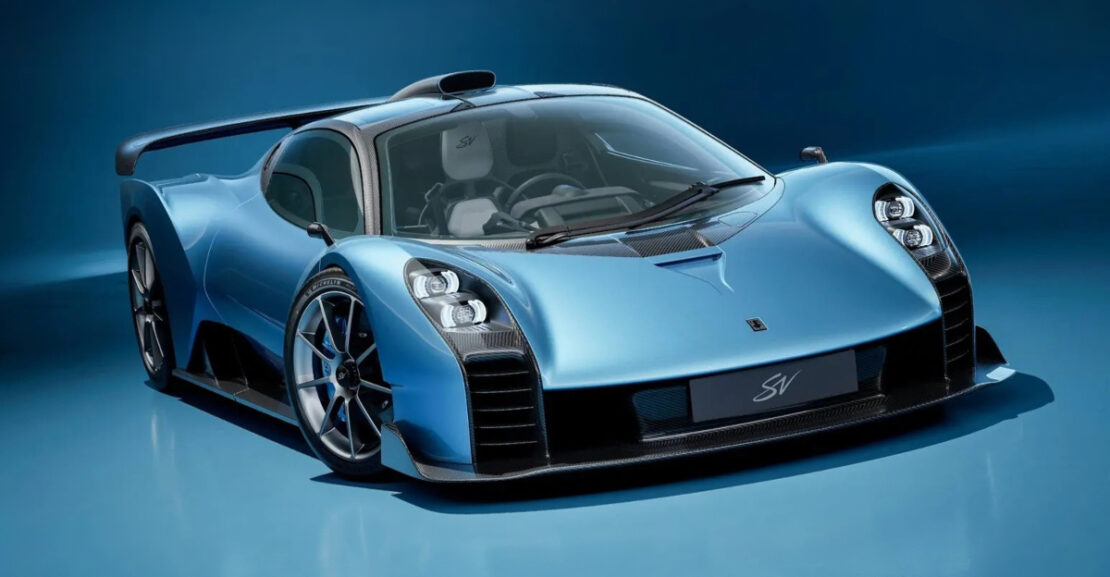
The Gordon Murray Le Mans GTR was designed around a memory.
A memory of the longtail racing machines that dominated the world’s greatest endurance races. A memory of Le Mans in its most romantic era. And perhaps most importantly, a memory of the philosophy that made Gordon Murray one of the most influential automotive engineers in history.
Unveiled through the newly created Gordon Murray Special Vehicles division, the Le Mans GTR is not simply another limited-production supercar. It is a deeply personal interpretation of what a modern longtail endurance-inspired machine should be — blending cutting-edge engineering with the timeless spirit of the legendary racers that inspired it.
The Birth of Gordon Murray Special Vehicles
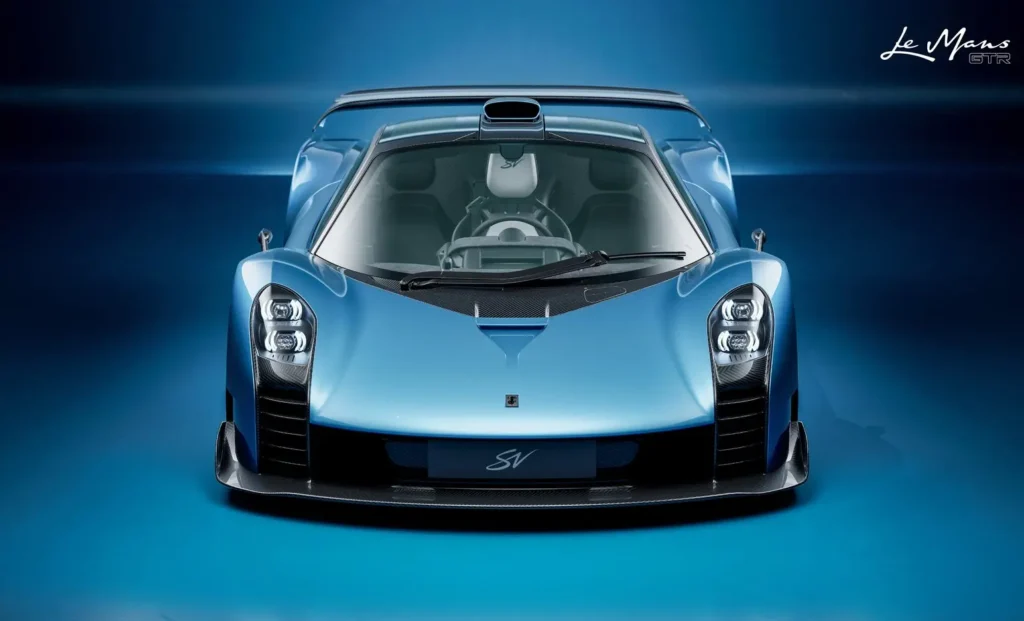
The Le Mans GTR is one of the first projects to emerge from Gordon Murray Special Vehicles (GMSV), a division created to develop highly exclusive low-volume automobiles beyond the traditional Gordon Murray Automotive range.
Unlike the T.50 and T.33, which follow clearly defined production programmes, GMSV exists to explore special projects, celebrate Gordon Murray’s motorsport heritage and create unique vehicles for a select group of collectors. The Le Mans GTR embodies that philosophy perfectly, combining historic inspiration with contemporary engineering in a way few manufacturers would attempt.
Gordon Murray S1 LM: Heritage Reborn
Inspired by the Great Longtails
The Le Mans GTR draws inspiration from some of endurance racing’s most iconic machines.
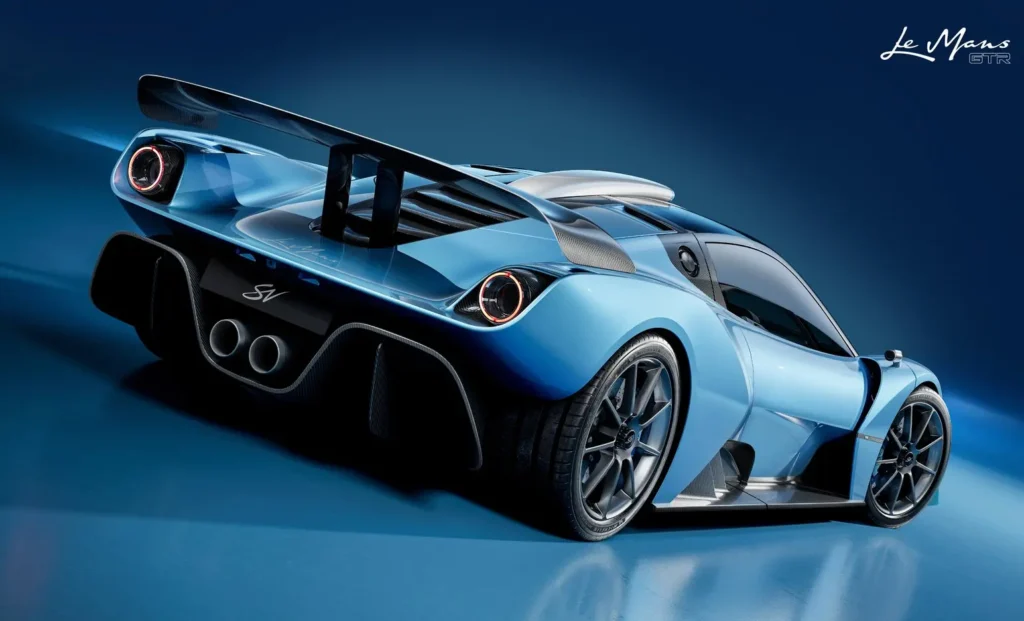
Its elongated bodywork pays tribute to the legendary longtail racers that competed at Le Mans throughout the 1970s, 1980s and 1990s. Influences can be seen from cars such as the Porsche 917 Longtail, Alfa Romeo Tipo 33/3 and Matra-Simca endurance racers, while the philosophy inevitably echoes the McLaren F1 GTR Longtail that helped cement Gordon Murray’s reputation in motorsport history.
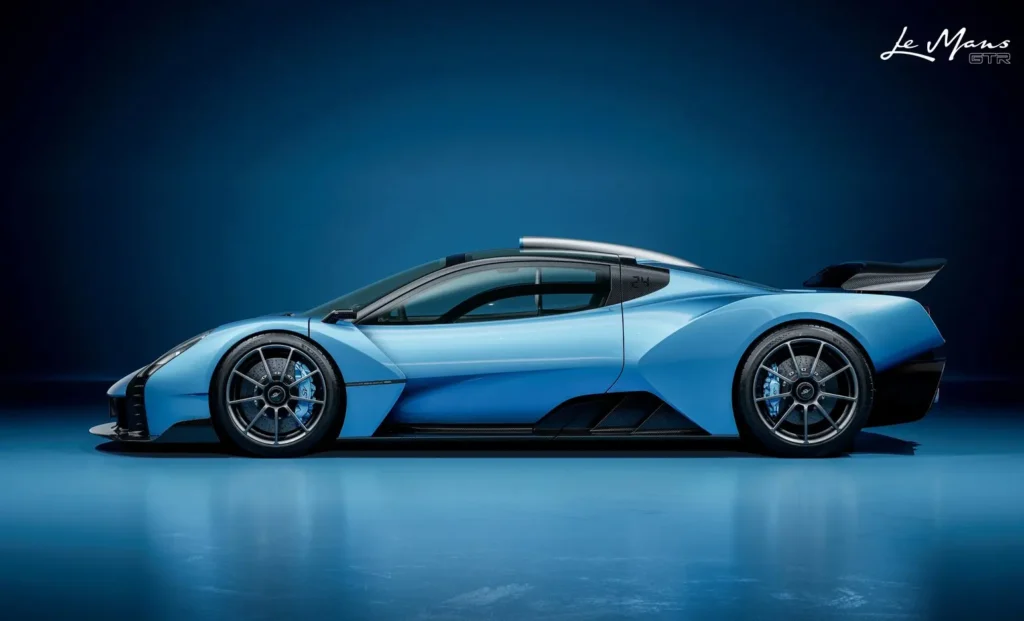
Rather than replicating any single model, the Le Mans GTR captures the essence of these machines: aerodynamic efficiency, visual purity and a relentless focus on high-speed stability.
The result is a silhouette that feels simultaneously nostalgic and futuristic.
A New Interpretation of the T.50 Philosophy
While the Le Mans GTR uses the acclaimed T.50 as its starting point, it is far more than a modified version of Gordon Murray’s flagship supercar.
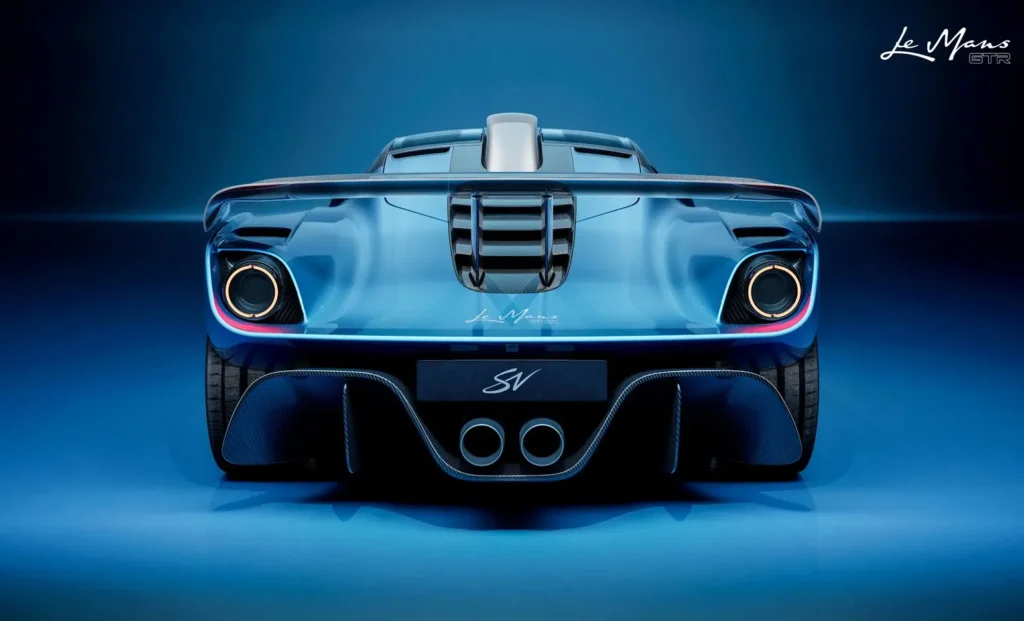
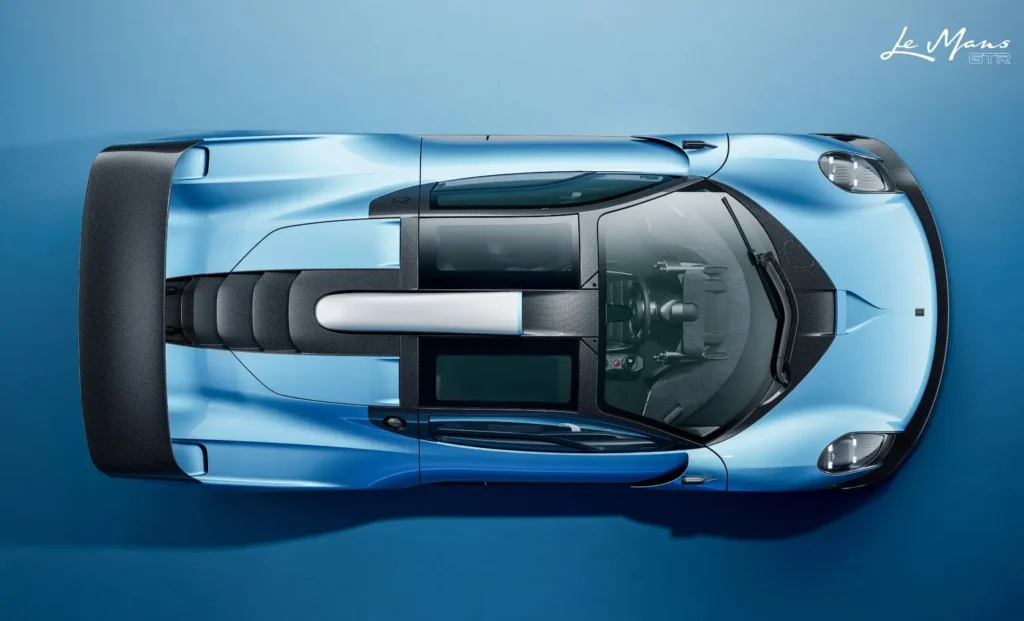
Almost every major element has been reconsidered. The car retains the naturally aspirated V12 and manual transmission that define the T.50 experience, but the platform, aerodynamics, suspension and overall character have been extensively reworked. Gordon Murray’s team created an entirely new aerodynamic package, replacing the T.50’s signature rear fan with a longtail body, massive rear wing, larger cooling intakes and dramatically revised airflow management.
The objective was clear: create a road-legal machine inspired by endurance racing while remaining faithful to Murray’s obsession with lightweight engineering and driver engagement.
The Last Great Naturally Aspirated Experience
At the heart of the Le Mans GTR remains one of the most extraordinary engines in the automotive world.
The Cosworth-developed naturally aspirated V12 continues to define the experience, revving to an astonishing 12,100 rpm and delivering the kind of response increasingly absent from modern performance cars. Paired with a six-speed manual gearbox, the powertrain embodies Gordon Murray’s long-standing belief that the engine should be at the centre of the driving experience.
In an era increasingly dominated by hybrid systems, turbocharging and electrification, the Le Mans GTR feels almost rebellious.
Mechanical.
Analog.
Pure.
Exactly as Murray intended.
Aerodynamics Inspired by Le Mans
Perhaps the most fascinating aspect of the Le Mans GTR is its aerodynamic philosophy.
Unlike many modern hypercars that rely on increasingly complex active systems, the Le Mans GTR focuses on efficiency through shape. Its extended rear section, enlarged diffuser, roof-mounted intake and carefully sculpted bodywork create a package optimized for high-speed stability and reduced drag. Advanced ground-effect solutions further enhance performance, reflecting lessons learned from decades of motorsport development.
Every vent, wing and surface exists for a reason.
Nothing is decorative.
Everything is functional.
That approach is quintessential Gordon Murray.
A Driver-Centric Cockpit
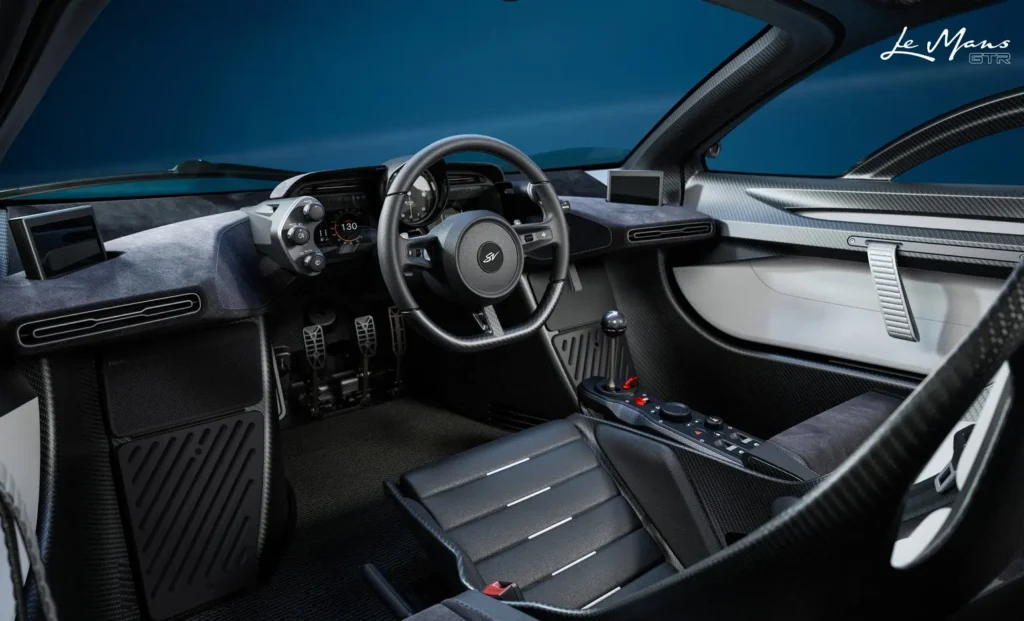
Inside, the Le Mans GTR remains faithful to one of Murray’s most celebrated concepts: the central driving position.
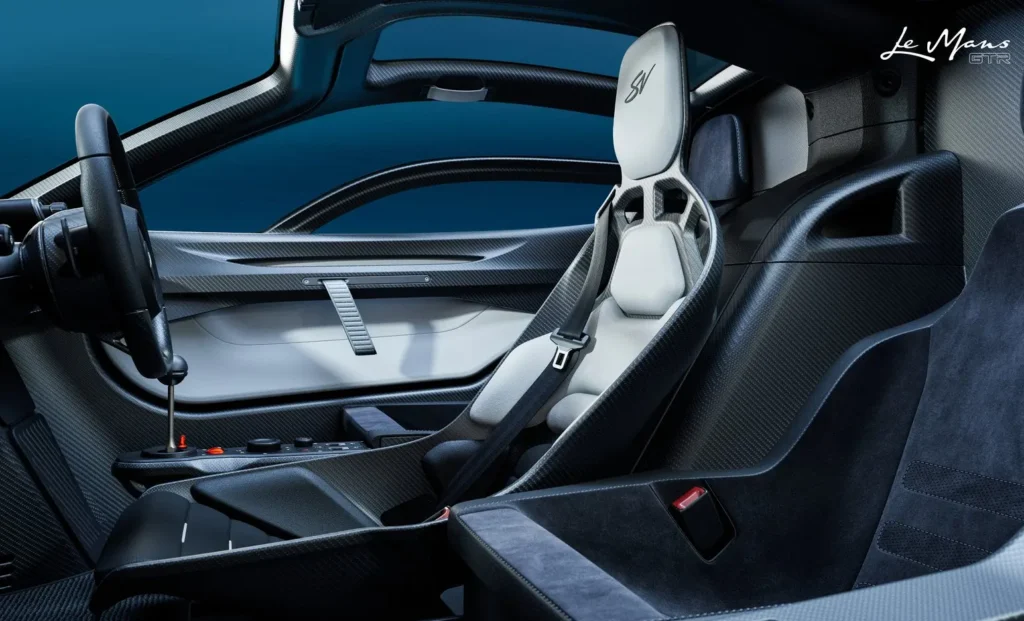
The cockpit follows the familiar three-seat layout that traces its lineage directly back to the McLaren F1. The driver sits at the centre of the experience, flanked by two passenger seats positioned slightly behind. This arrangement not only creates exceptional visibility but also reinforces the feeling that the car has been designed entirely around the person behind the wheel.
The cabin itself combines lightweight construction, bespoke craftsmanship and a purposeful atmosphere inspired by motorsport and aviation. It is luxurious without excess and focused without feeling austere.
Twenty-Four Cars for Twenty-Four Hours
Exclusivity has always been part of Gordon Murray’s philosophy.
For the Le Mans GTR, production is limited to just 24 examples, each symbolically representing one of the twenty-four hours of the famous endurance race that inspired its creation. Unsurprisingly, every car was allocated almost immediately, reinforcing the extraordinary demand for Gordon Murray’s most exclusive projects. Deliveries are scheduled to begin in 2026.
For collectors, ownership represents far more than access to a rare automobile.
It represents participation in a very specific chapter of automotive history.
More Than a Hypercar
The Le Mans GTR is not chasing Nürburgring records.
It is not attempting to become the fastest production car in the world.
And it does not rely on four-digit horsepower figures to justify its existence.
Instead, it celebrates something increasingly rare: the emotional connection between driver and machine.
The naturally aspirated V12.
The manual gearbox.
The lightweight construction.
The longtail silhouette.
Every element exists because it contributes to the experience rather than simply the specification sheet.
Miller Motorcars JC9: The Spiritual Successor to the Carrera GT That Porsche Never Built
Gordon Murray’s Endurance Racing Dream
In many ways, the Le Mans GTR feels like a distilled expression of everything Gordon Murray has spent decades advocating.
Lightness over excess.
Driver engagement over complexity.
Engineering elegance over brute force.
It is a car that looks to the future while honouring some of the greatest endurance racers ever created.
And in a world increasingly defined by digital technology and electrification, that philosophy feels more valuable than ever.
The Le Mans GTR is not merely a tribute to Le Mans.
It is a tribute to the idea that the greatest performance cars are those that make every mile unforgettable.