

Some automobiles look to the past for inspiration.
The McLaren McL 6GT goes considerably further.
It completes an unfinished story.
Nearly six decades ago, Bruce McLaren envisioned transforming the extraordinary performance of his racing machines into something that could be driven on the road. The result was the M6GT, a remarkably low, lightweight and uncompromising prototype that could have established McLaren as a road-car manufacturer decades before the legendary F1 appeared.
That dream never reached series production.
Now McLaren is returning to it.
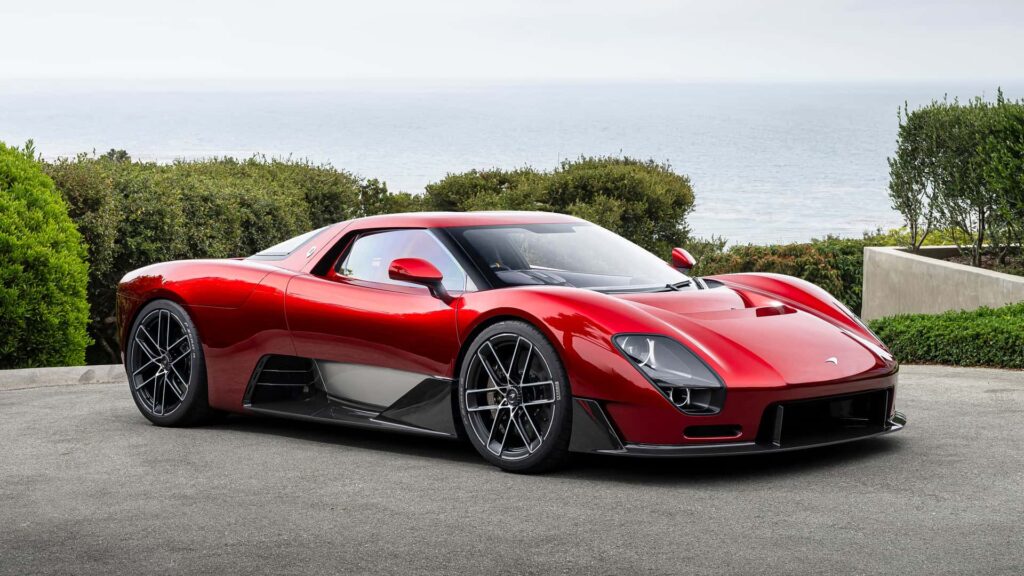
Revealed during 2026 Monterey Car Week, the new McL 6GT is a modern interpretation of Bruce McLaren’s original vision, combining a lightweight carbon-fibre structure with V8 power, rear-wheel drive and something absent from a new McLaren for more than three decades:
A real manual gearbox.
For the moment, the McL 6GT is a concept.
But this is no speculative design exercise.
McLaren has already confirmed that the philosophy will reach production in 2028, establishing a new and highly exclusive category of supercar positioned beyond its conventional model portfolio.
And remarkably, McLaren’s vision of the future begins with an idea from 1969.
The Supercar Bruce McLaren Never Got to Build
To understand the McL 6GT, it is necessary to return to the late 1960s.
McLaren had become an extraordinary force in motorsport, particularly in the Can-Am championship, where its powerful sports prototypes established a formidable reputation.
Bruce McLaren believed that the engineering behind those competition cars could form the basis of something equally extraordinary for the road.
The M6GT emerged from that ambition.
Originally connected to plans for a closed-cockpit Group 4 racing programme, the project evolved towards the creation of a road-going machine derived directly from McLaren’s competition expertise.
It was an extraordinarily ambitious idea for the period.

Low.
Light.
Mid-engined.
Extremely powerful.
And developed with racing engineering at its core.
Bruce even used his own M6GT regularly, driving it to work and to race meetings.
This was not intended to become a comfortable grand tourer wearing McLaren badges.
It was effectively a racing machine transformed just enough to live on the road.
An Unfinished Dream
McLaren initially envisaged producing 250 road cars.
It never happened.
Changing circumstances surrounding the racing programme undermined the original business case, and the project ultimately failed to progress into series production.
Then, on June 2, 1970, Bruce McLaren was killed while testing the M8D Can-Am car at Goodwood.
He was just 32.
His death effectively ended the possibility of developing the M6GT into the production automobile he had envisioned.
Only a tiny number of M6GTs were ultimately created.
But the idea survived.
A lightweight road car built using racing technology.
A carbon-like obsession with reducing unnecessary mass before carbon-fibre road structures even existed.
A mid-engined architecture.
Driver involvement above convenience.
Decades later, those principles would become fundamental to McLaren’s road cars.
The M6GT never became the first production McLaren supercar.
But philosophically, it may have been the beginning of all of them.
The McL 6GT Finishes the Story
The new McL 6GT deliberately returns to that unfinished chapter.
It does not attempt to recreate the M6GT literally.
Almost sixty years of engineering separate the two automobiles, and McLaren has no interest in disguising modern technology beneath a nostalgic body.
Instead, it asks a more interesting question:
What might Bruce McLaren’s philosophy look like if he were creating that car today?
The answer begins with familiar principles.
Low weight.
A mid-mounted combustion engine.
Rear-wheel drive.
Mechanical interaction.
And a body designed around aerodynamic purpose rather than visual excess.
The technology is contemporary.
The philosophy is unmistakably Bruce McLaren.
The Manual McLaren Returns
One component immediately separates the McL 6GT from every contemporary McLaren.
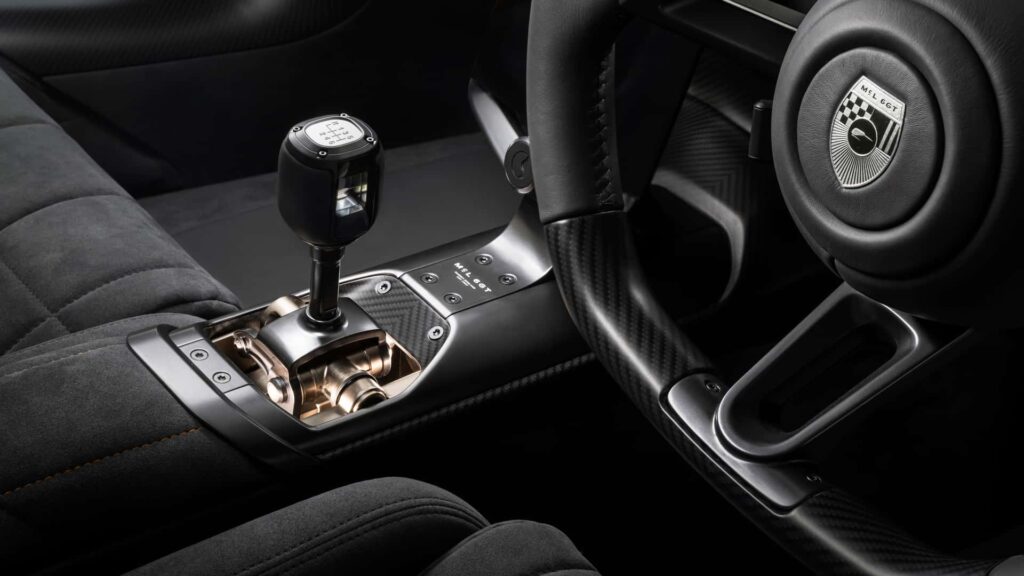
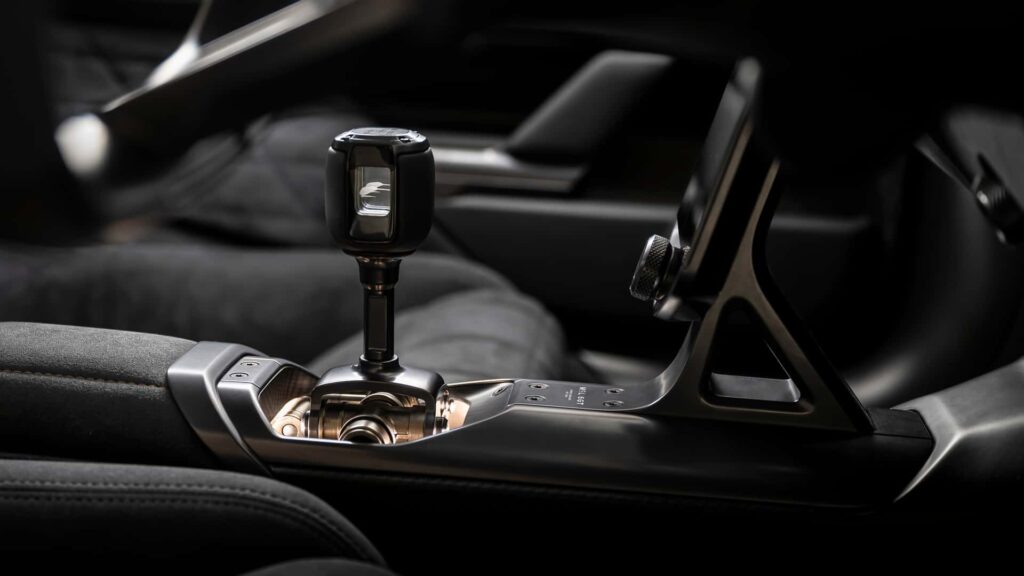
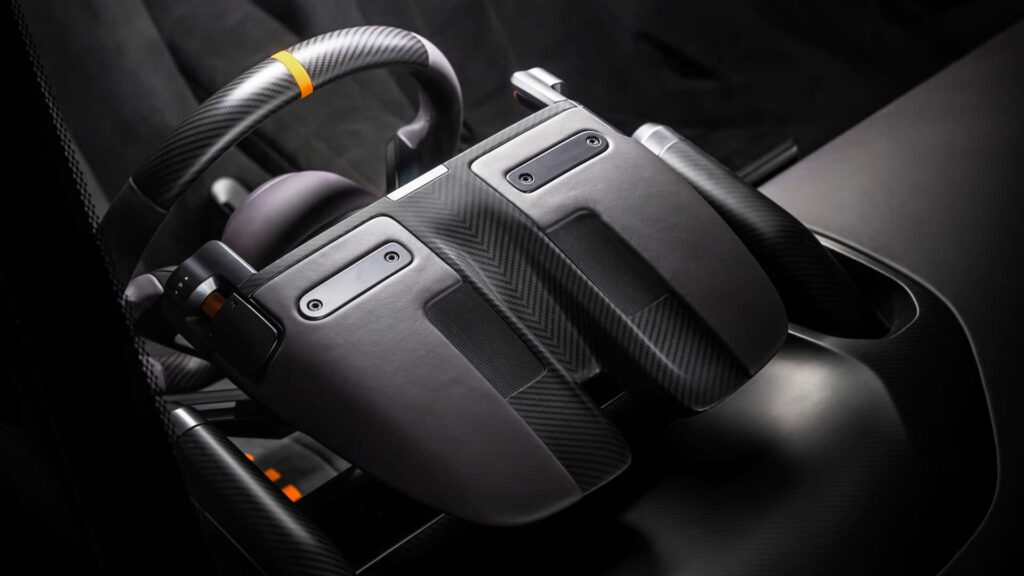
Between the seats sits a six-speed manual gearbox.
Not a simulated manual mode.
Not electronically controlled paddle shifters programmed to imitate one.
A genuine manual transmission.
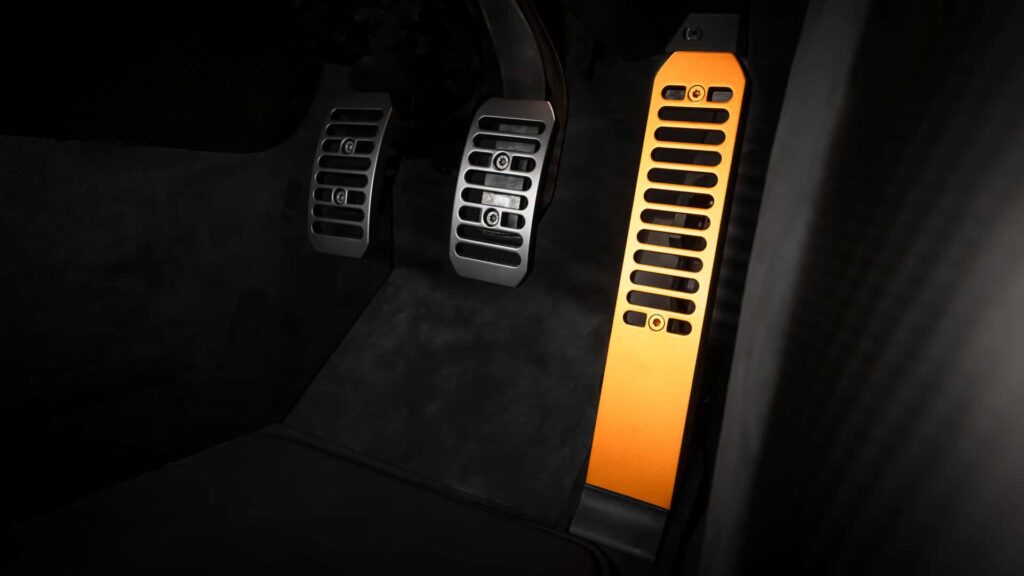
Three pedals.
A physical gear lever.
And responsibility for changing ratios returned entirely to the driver.
It is the first manual gearbox fitted to a new McLaren road car since the McLaren F1, introduced in 1992.
That makes its return enormously significant.
McLaren has spent decades developing some of the world’s fastest and most sophisticated transmission systems. Dual-clutch gearboxes are objectively faster, more efficient and more consistent than a human operating a clutch pedal.
The McL 6GT deliberately accepts that disadvantage.
Because maximum efficiency is not the objective.
Connection is.
A Gear Lever Designed Around Feel
Even the gear lever illustrates how seriously McLaren is taking that philosophy.
Rather than treating it as another control within the cabin, its shape has been developed specifically around feel and throw.
The exposed mechanism becomes something to interact with rather than something to hide.
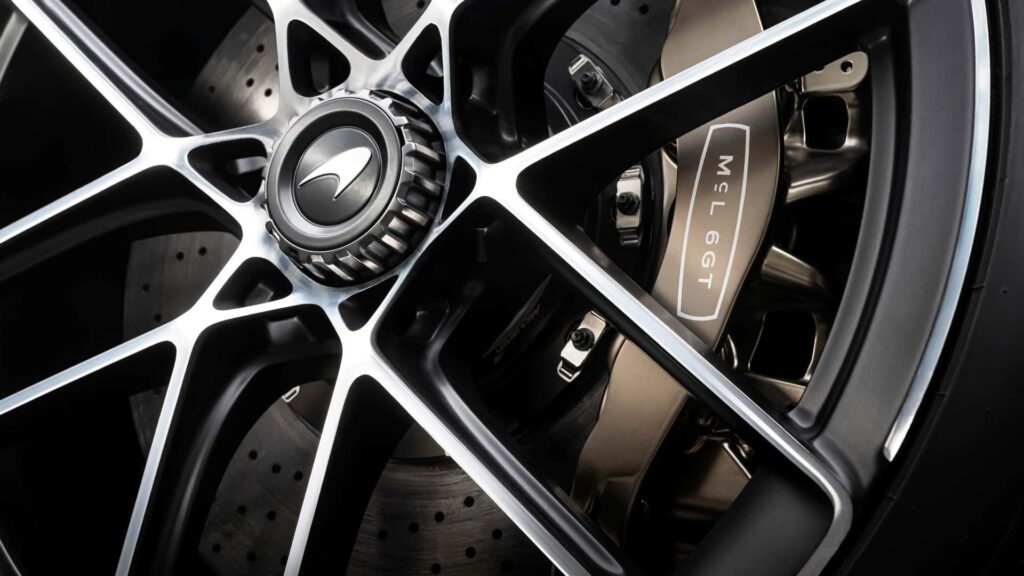
Integrated into the upright is a three-dimensional representation of McLaren’s historic Speedy Kiwi emblem.
It is a small detail.
But an important one.
The manual transmission is not present because McLaren lacked access to something faster.
It is there because selecting a gear has become part of the experience the car was designed to deliver.
In an age when supercars increasingly remove physical actions from the driver, the McL 6GT deliberately puts one back.
V8 Power Without Hybrid Assistance
Behind the cockpit sits a V8 internal-combustion engine.
McLaren has not yet revealed its displacement or power output, and until the production car approaches its 2028 launch, those figures remain open.
What matters today is the architecture.
The V8 sends its power exclusively to the rear wheels.
There is currently no announced hybrid system.
That combination immediately separates the McL 6GT from the technological philosophy of McLaren’s latest Ultimate Series flagship, the W1.
Where the W1 explores what becomes possible through extreme aerodynamics, electrification and enormous combined performance, the McL 6GT pursues something fundamentally different.
Mechanical simplicity.
Not simple engineering.
Simple interaction.
Engine.
Gearbox.
Rear wheels.
Driver.
Hydraulic Steering Matters Just as Much
The manual gearbox will inevitably dominate the headlines.
But another specification may prove equally important.
The McL 6GT uses hydraulic power steering.
McLaren has long remained one of the increasingly rare manufacturers committed to hydraulic assistance in its supercars because of the communication it can provide between the front tyres and the driver’s hands.
For the McL 6GT, that philosophy becomes even more important.
A manual gearbox would mean relatively little if everything else between driver and road felt filtered.
McLaren describes the character it wants to create around tactile, analogue and deeply mechanical interaction.
Hydraulic steering fits naturally into that ambition.
The driver changes the gears.
The driver controls the throttle.
The rear wheels deliver the power.
And the steering communicates what the front axle is doing.
It is an increasingly unusual formula.
Carbon Fibre Without Excess
Analogue interaction does not mean old-fashioned engineering.
The McL 6GT is built around McLaren’s latest generation of super-lightweight carbon-fibre monocoque technology, accompanied by an extensively carbon-fibre body.
This is where the relationship with the M6GT becomes particularly interesting.
Bruce McLaren wanted his road car to exploit the same lightweight engineering principles developed through competition.
The materials available today are completely different.
The objective is not.
Carbon fibre allows enormous structural rigidity while minimising mass, providing the foundation around which steering, suspension and drivetrain responses can be calibrated with far greater precision.
McLaren has not yet announced the car’s target weight.
But everything about the project suggests that reducing unnecessary mass will matter considerably more than chasing an enormous headline horsepower figure.
A McLaren That Looks Unlike Any Other McLaren
The design makes the connection with 1969 immediately visible.
Modern McLarens have developed an increasingly technical design language dominated by aerodynamic openings, highly sculpted surfaces and complex relationships between bodywork and airflow.
The McL 6GT feels different.
Cleaner.
Longer.
Lower.
Almost architectural.
Its cabin appears embedded within the body rather than sitting on top of it.
The roof flows continuously towards the rear deck and engine cover.
Its glasshouse evokes the simplicity of 1960s competition prototypes.
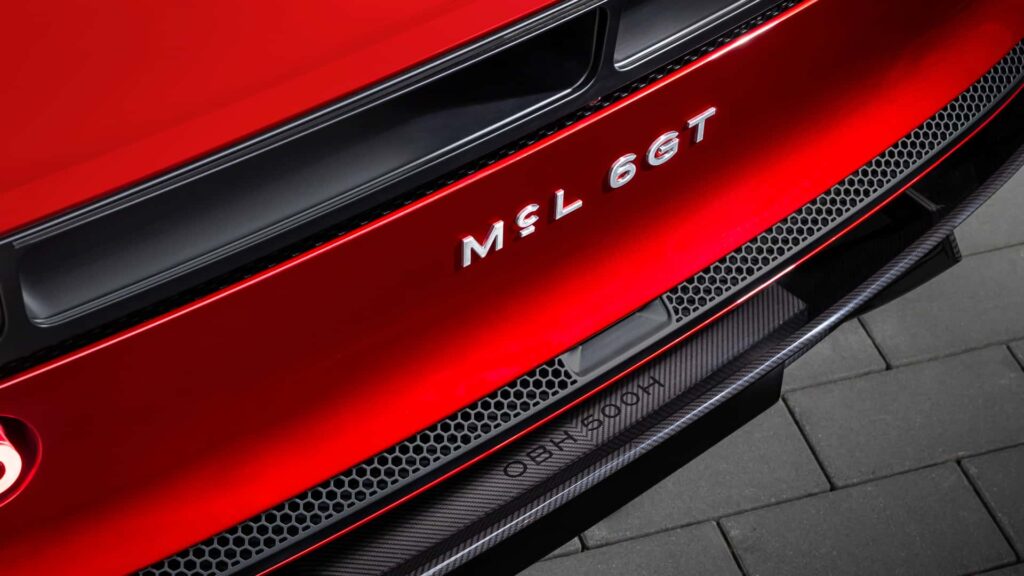
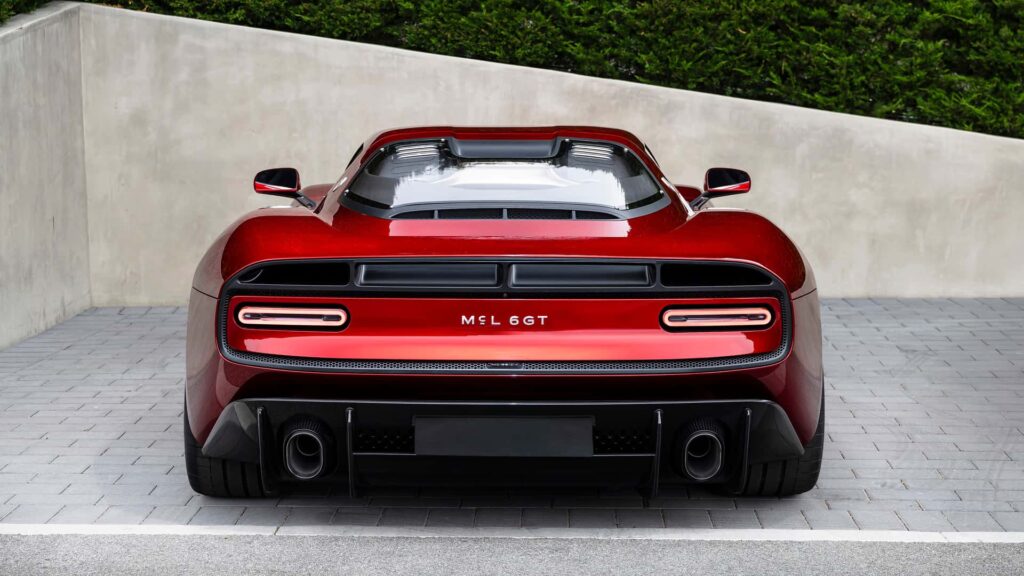
And the rear terminates in a distinctive Kammback-inspired form recalling the original M6GT.
There is nostalgia here.
But not imitation.
The Racing Loop
One visual element appears repeatedly throughout the car.
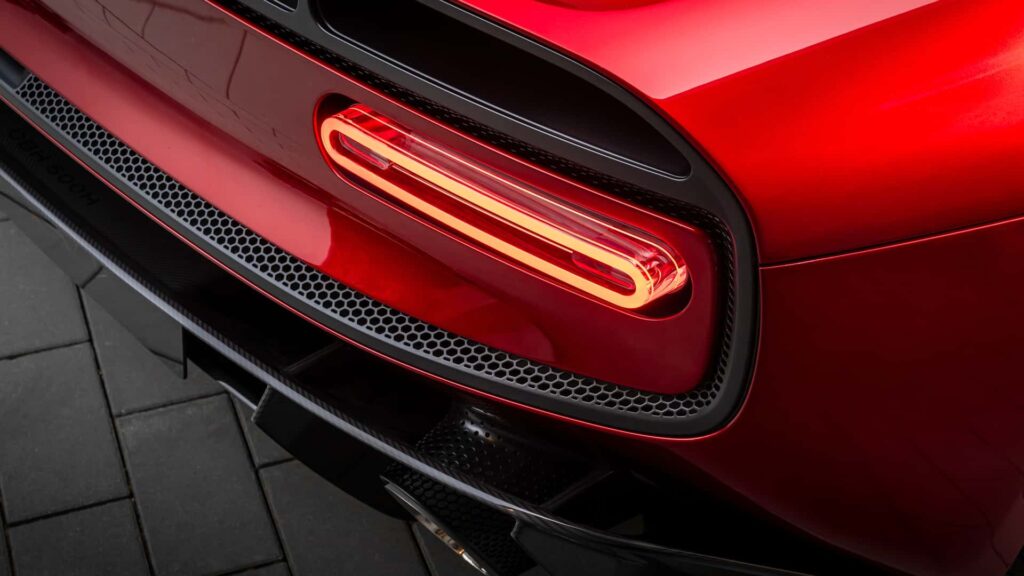
McLaren calls it the Racing Loop.
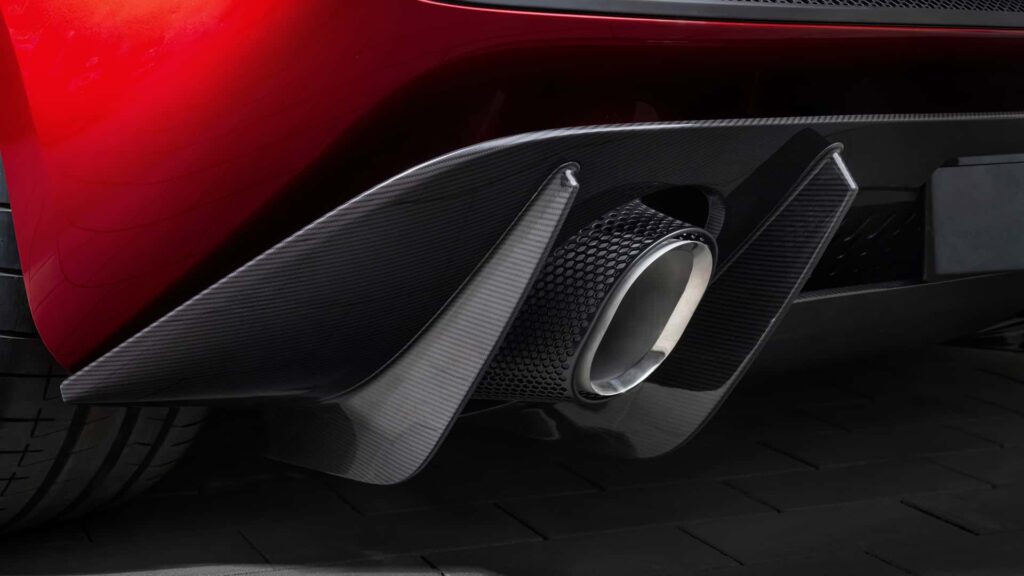
Its origins lie in the distinctive rear-light graphics of the original M6GT, but the shape has been transformed into a recurring design signature.
It appears within the rear lighting.
Around the exhaust treatment.
Across ventilation openings.
Inside the engine cover.
And throughout details within the cabin.
Rather than simply placing retro badges onto a contemporary McLaren, the designers have extracted one historical element and developed an entire visual language around it.
That is a considerably more sophisticated way of referencing heritage.
The McLaren M6GT Returns: The Road Car Bruce McLaren Never Got to Build
Hidden References to Bruce McLaren
Look closer and the McL 6GT begins revealing smaller historical details.
The registration number worn by Bruce McLaren’s original M6GT has been reinterpreted as a subtle tone-on-tone exterior graphic.
Bruce’s signature appears within the engine compartment.

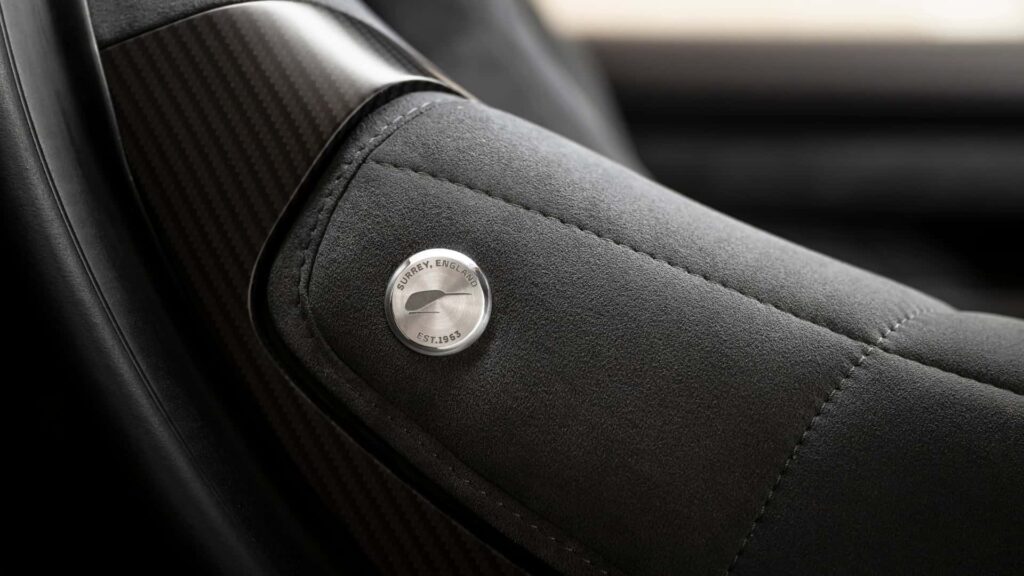
The Speedy Kiwi, one of the earliest symbols associated with McLaren, appears on the fuel filler cap and within the manual gear lever.
None dominates the design.
That restraint is important.
The McL 6GT is not covered in anniversary logos or historical graphics demanding attention.
Its heritage is there to be discovered.
A Cabin Built Around Physical Interaction
The same philosophy defines the interior.
Modern technology remains present where necessary, including digital instrumentation and a slim portrait-oriented central display.
But screens are not intended to dominate the experience.
Physical controls remain important.
Exposed carbon fibre reinforces the structural honesty of the cabin.
Three machined pedals immediately communicate what kind of automobile this is.
And the gear lever sits prominently between the occupants rather than disappearing beneath a collection of electronic selectors.
The interior therefore becomes an interesting compromise between two eras.
It does not pretend that digital technology disappeared after 1992.
It simply refuses to allow technology to eliminate physical interaction.
Heritage Without Becoming Retro
This distinction may ultimately define the McL 6GT.
There is an increasing market for automobiles inspired by the past.
Restomods reinterpret classics.
Manufacturers resurrect historical names.
Limited editions recreate famous liveries.
Manual gearboxes have themselves become objects of desire precisely because they are disappearing.
McLaren could easily have created another retro-inspired collector car.
Instead, the McL 6GT appears to use history as a philosophy rather than a styling exercise.
The objective is not to make a new car feel old.
It is to recover qualities that modern supercars have gradually abandoned.
Mechanical participation.
Visual simplicity.
Low mass.
Tactile controls.
And the feeling that extraordinary performance should require something from the person sitting behind the wheel.
Not a Replacement for the 750S or W1
Another important detail concerns its position within McLaren.
The production McL 6GT will not simply replace an existing model.
McLaren says it establishes the foundations for a newly positioned, highly exclusive type of supercar beyond its core and expanded portfolio.
That language matters.
The 750S remains the company’s core supercar.
The Artura provides a hybrid entry into the range.
The W1 represents the technological extreme of McLaren’s Ultimate Series philosophy.
The McL 6GT will occupy somewhere different.
Not necessarily above everything because it is faster.
Above the conventional hierarchy because it is rarer, more specialised and built around a distinct ownership experience.
This potentially opens an entirely new direction for McLaren.
The Beginning of a Heritage Family?
The McL 6GT may therefore represent more than one car.
Its production version, due in 2028, is expected to establish a new ultra-exclusive area within the McLaren portfolio where heritage, craftsmanship and driver engagement become as important as outright performance.
That creates fascinating possibilities.
McLaren possesses one of the richest motorsport archives of any manufacturer.
Can-Am.
Formula 1.
Le Mans.
The M6GT.
The F1.
The F1 GTR.
Decades of racing machines provide an enormous design and engineering vocabulary from which future projects could draw inspiration.
If the McL 6GT establishes the template, McLaren could have found a way to explore that heritage without simply reproducing old cars.
Hennessey Venom F5-M: Redefining the Manual Hypercar
Why Now?
The timing is particularly interesting.
For years, the supercar industry appeared to be moving inexorably towards the same destination.
More power.
More electrification.
Faster transmissions.
More sophisticated electronics.
Greater aerodynamic complexity.
Yet at the very top of the collector market, another movement has emerged simultaneously.
Buyers increasingly value experience over numbers.
Manual Porsche 911s command enormous enthusiasm.
Analogue supercars have become extraordinarily collectible.
Companies such as Gordon Murray Automotive have demonstrated the demand for lightweight, naturally aspirated and manually shifted machinery.
Even manufacturers capable of creating astonishing hybrid hypercars are rediscovering that technological superiority is not the only definition of desirability.
The McL 6GT arrives directly into that environment.
And McLaren may be uniquely qualified to exploit it.
The F1 Connection
Inevitably, the manual gearbox creates comparisons with the McLaren F1.
Those comparisons should be treated carefully.
The McL 6GT is not being presented as another F1.
Nor does it need to be.
The F1 remains one of the most important road cars ever created, defined by its naturally aspirated BMW V12, central driving position, extraordinary lightweight construction and obsessive engineering.
What connects the two is something less tangible.
Both reject the idea that ultimate performance should isolate the driver from the machine.
The F1 used a manual gearbox because that was the natural choice in 1992.
The McL 6GT uses one in 2026 because it isn’t.
That arguably makes the decision even more significant.
2028: From Concept to Production
For now, several important questions remain unanswered.
McLaren has not announced final power output.
It has not disclosed performance figures.
We do not yet know the production weight.
Pricing remains unconfirmed.
And the final production number has not been revealed.
Those details will arrive later.
What McLaren has confirmed is arguably more important at this stage.
The McL 6GT will become a production automobile in 2028.
Its fundamental philosophy will survive.
V8 power.
Rear-wheel drive.
Manual transmission.
Carbon-fibre construction.

And an unusually intense focus on mechanical driver engagement.
The concept is therefore not asking whether McLaren should build this car.
That decision has already been made.
The Road Car Bruce McLaren Had to Wait 59 Years For
The McL 6GT is fascinating because it connects two moments in McLaren history that appear impossibly far apart.
In 1969, Bruce McLaren looked at the racing machines carrying his name and imagined transforming their speed, lightness and engineering purity into a road car.
He never had the opportunity to finish it.
The company carrying his name eventually achieved extraordinary things without him.
The F1.
The P1.
The Senna.
The Speedtail.
The W1.

Yet the original road-car dream remained unfinished.
The McL 6GT finally returns to it.
Not by recreating a 1969 automobile.
Not by pretending six decades of technological progress never happened.
But by asking which parts of Bruce McLaren’s philosophy remain worth preserving.
Lightness.
Racing-derived engineering.
Mechanical simplicity.
Driver involvement.
And the belief that a supercar should feel extraordinary long before it reaches its maximum speed.
The original M6GT was the McLaren road car that never happened.
In 2028, nearly sixty years later, its story will finally continue.