
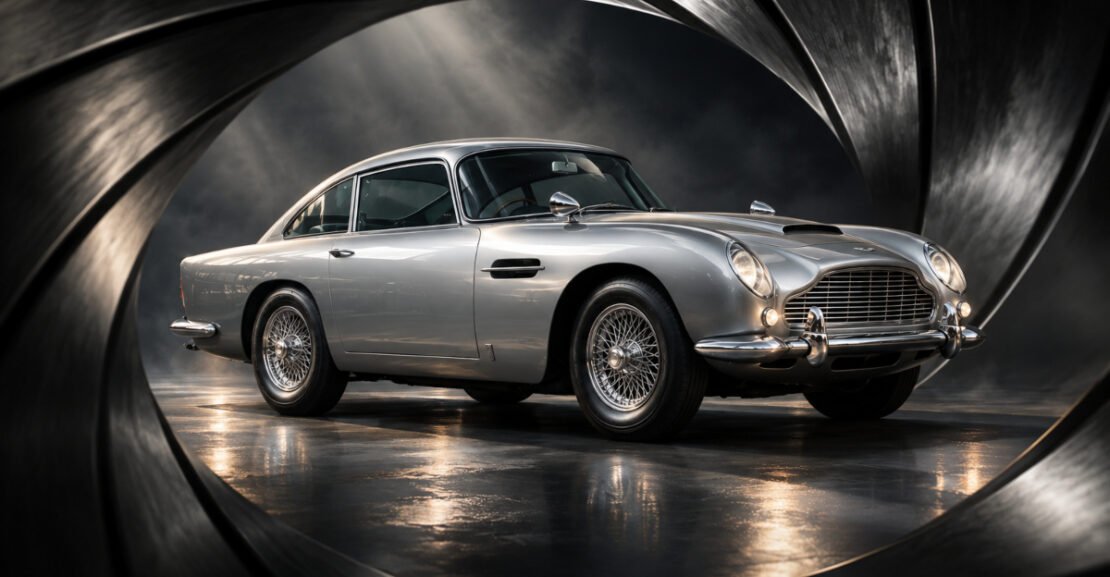
From the timeless Aston Martin DB5 to the revolutionary Lotus Esprit, the elegant Bentley of the early films and the spectacular Jaguar C-X75, the automobiles of James Bond have become an essential part of cinema history. LuxeonCars explores 15 extraordinary machines that helped define the world’s most famous secret agent.
With Robert Pattinson officially confirmed as the next James Bond, a new chapter is beginning for cinema’s most famous secret agent. Under the direction of Denis Villeneuve, the legendary 007 franchise is preparing to reinvent itself once again.
Yet beyond the actors, exotic destinations and unforgettable action sequences, one element has remained central to the James Bond universe for more than six decades: the automobile.
From the understated elegance of a pre-war Bentley to the timeless Aston Martin DB5, the revolutionary Lotus Esprit and the extraordinary Jaguar C-X75, Bond’s automotive history is a fascinating journey through luxury, engineering, design and cinematic legend.
As the world looks ahead to a new generation of 007, LuxeonCars revisits 15 of the most remarkable automobiles ever to appear in the James Bond films — machines that have become icons far beyond the silver screen.
James Bond and the Automobile: A Legendary Partnership
Few fictional characters have enjoyed such an enduring relationship with exceptional automobiles.
Since Sean Connery first appeared as James Bond in Dr. No in 1962, the franchise has evolved into a remarkable showcase of British grand tourers, Italian-inspired sports cars, revolutionary engineering and some of the most memorable automotive inventions ever imagined.
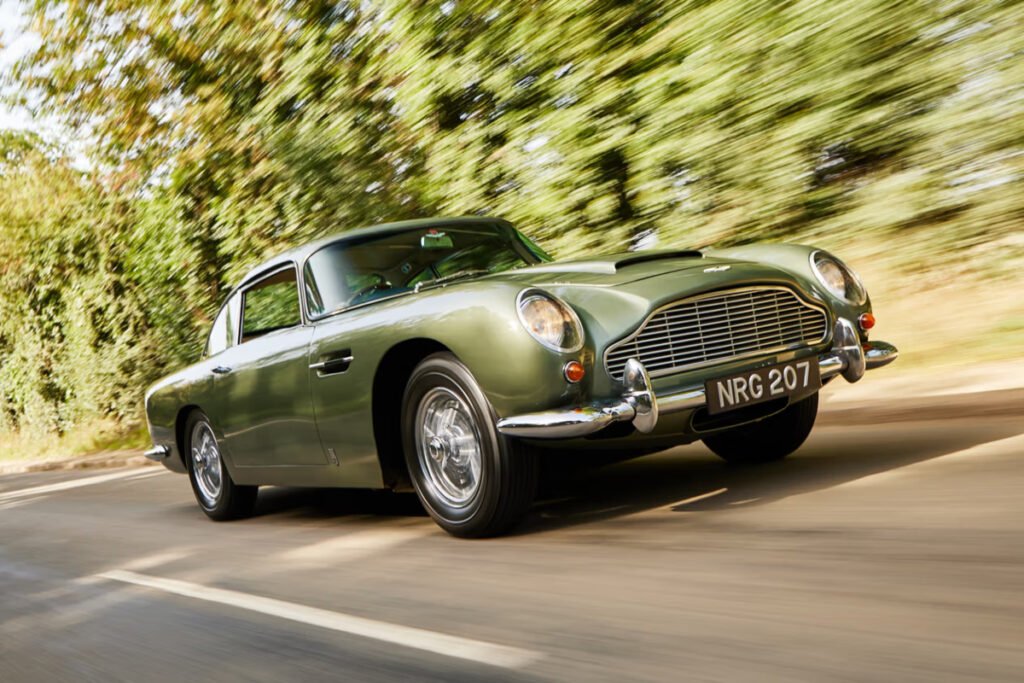
For Bond, an automobile has never been merely a means of transportation.
It can be a symbol of elegance, a sophisticated piece of technology, an instrument of survival or, occasionally, a weapon in its own right.
The relationship began long before the first Aston Martin appeared on screen.
In Ian Fleming’s original novels, Bond was particularly devoted to Bentley, including a supercharged 4½ Litre model. The cinematic interpretation would eventually establish a far more enduring association with Aston Martin, but the character’s appreciation of powerful, beautifully engineered automobiles was already fundamental to his identity.
Over the decades, manufacturers including Bentley, Rolls-Royce, Aston Martin, Lotus, BMW, Toyota and Jaguar have all contributed to this extraordinary automotive legacy.
Some models became famous because of their breathtaking appearance. Others were remembered for ingenious gadgets or spectacular chase sequences.
And a select few transcended the films entirely, becoming genuine automotive legends.
1. Bentley 3½ Litre Drophead Coupé — From Russia with Love (1963)
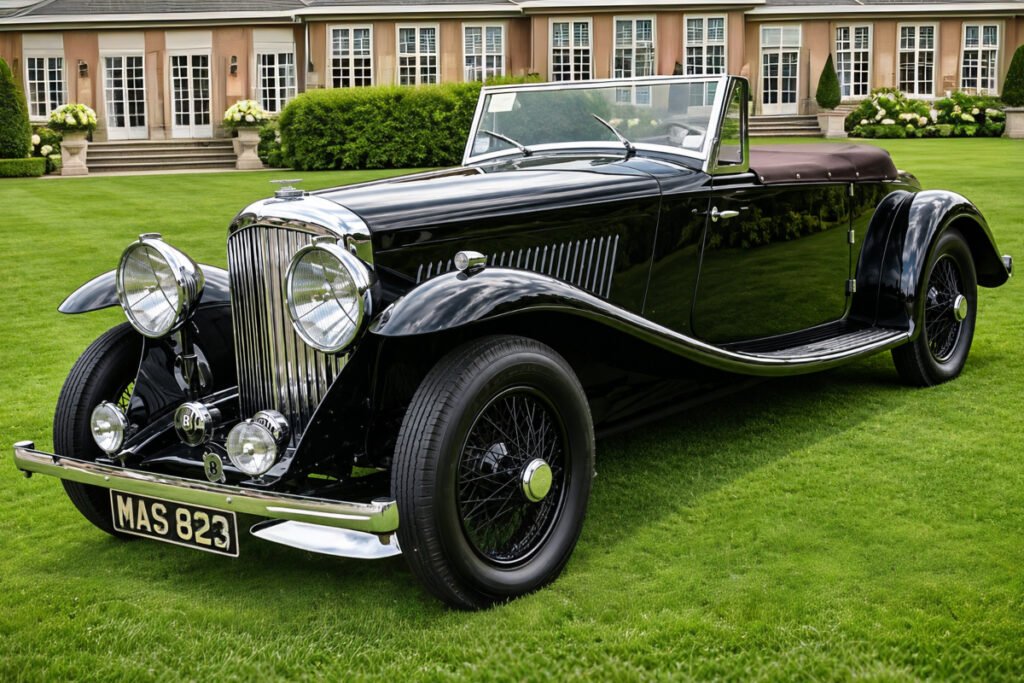
The British gentleman’s automobile before the Aston Martin era.
Long before the Aston Martin DB5 became synonymous with James Bond, the British secret agent was associated with another distinguished marque: Bentley.
In From Russia with Love, Sean Connery’s Bond is briefly seen with a pre-war Bentley 3½ Litre Drophead Coupé featuring elegant Park Ward coachwork.
The car appears during a relaxed encounter with Sylvia Trench, parked beside a picturesque riverside setting.
When Bond receives a message requesting his return to headquarters, he uses an unusually sophisticated piece of equipment for the period: a telephone installed inside the automobile.
By contemporary standards, the device seems almost ordinary. In 1963, however, it represented an extraordinary level of technological sophistication.
The Bentley itself embodied a very different approach to luxury motoring from the sports cars that would later define the franchise.
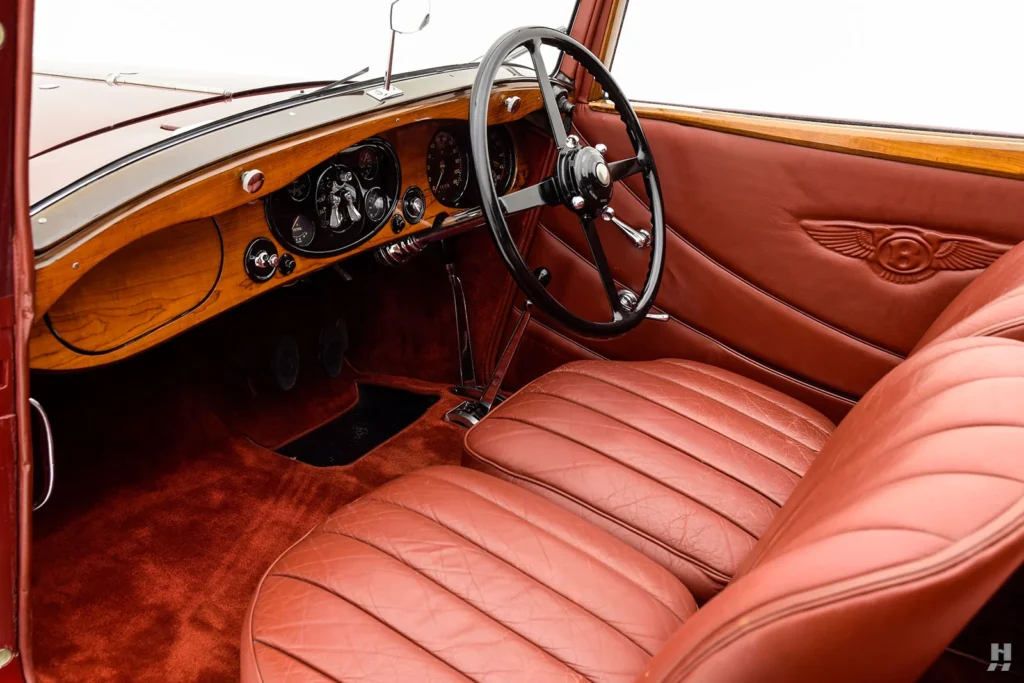
Its long bonnet, elegant proportions and handcrafted coachwork reflected the traditions of British grand touring during the 1930s.
It was an automobile built around refinement, prestige and effortless confidence rather than outright sporting aggression.
Although its appearance was relatively brief, the Bentley established an important connection between Bond’s cinematic identity and the automotive preferences described in Fleming’s novels.
It also created a fascinating contrast with the more technologically extravagant machines that would follow.
Why it matters: The Bentley represents the origins of Bond’s automotive sophistication, before Q Branch transformed the secret agent’s cars into extraordinary technological inventions.
2. Aston Martin DB5 — Goldfinger (1964)
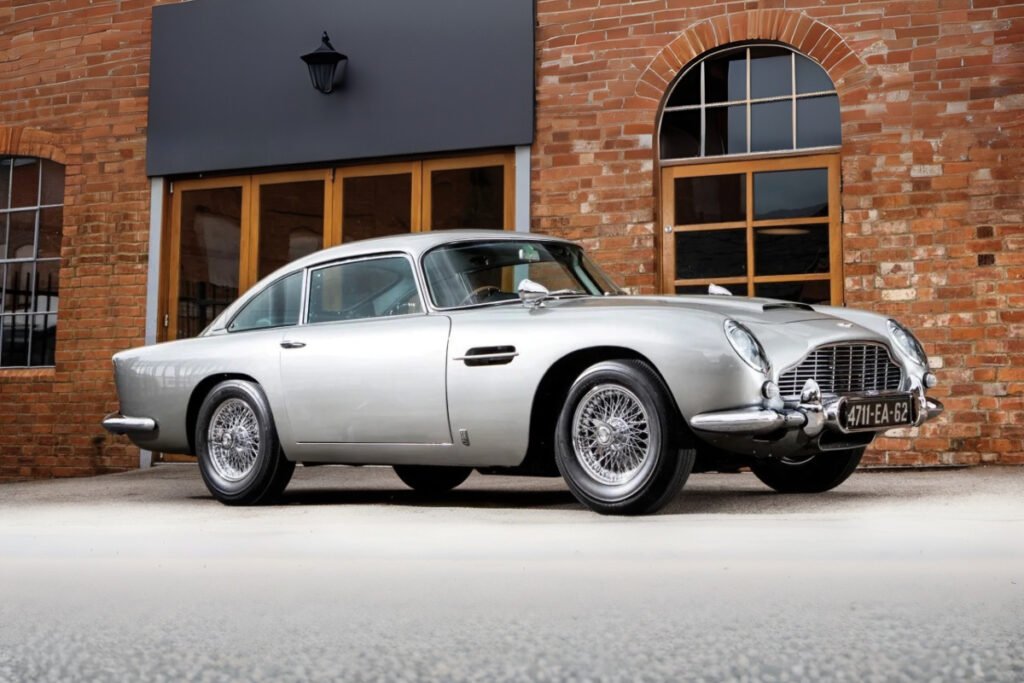
The automobile that became inseparable from James Bond.
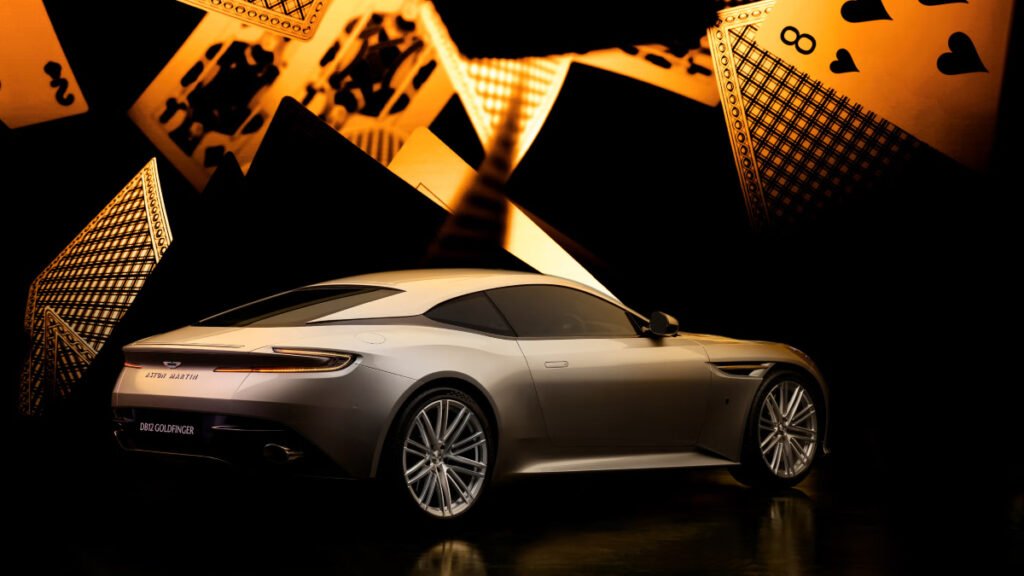
If one automobile can claim to define the entire James Bond franchise, it is unquestionably the Aston Martin DB5.
Introduced in Goldfinger in 1964, the elegant British grand tourer became an immediate cinematic sensation.
Designed by Italian coachbuilder Carrozzeria Touring, the DB5 combined timeless proportions with sophisticated engineering and a powerful 4.0-litre straight-six engine.
With approximately 282 bhp in standard form and a top speed approaching 145 mph, it was among the most desirable British grand tourers of its era.
Rolls-Royce Ghost Savile Row: Where Bespoke Tailoring Meets Automotive Craftsmanship
But Q Branch transformed the DB5 into something considerably more extraordinary.
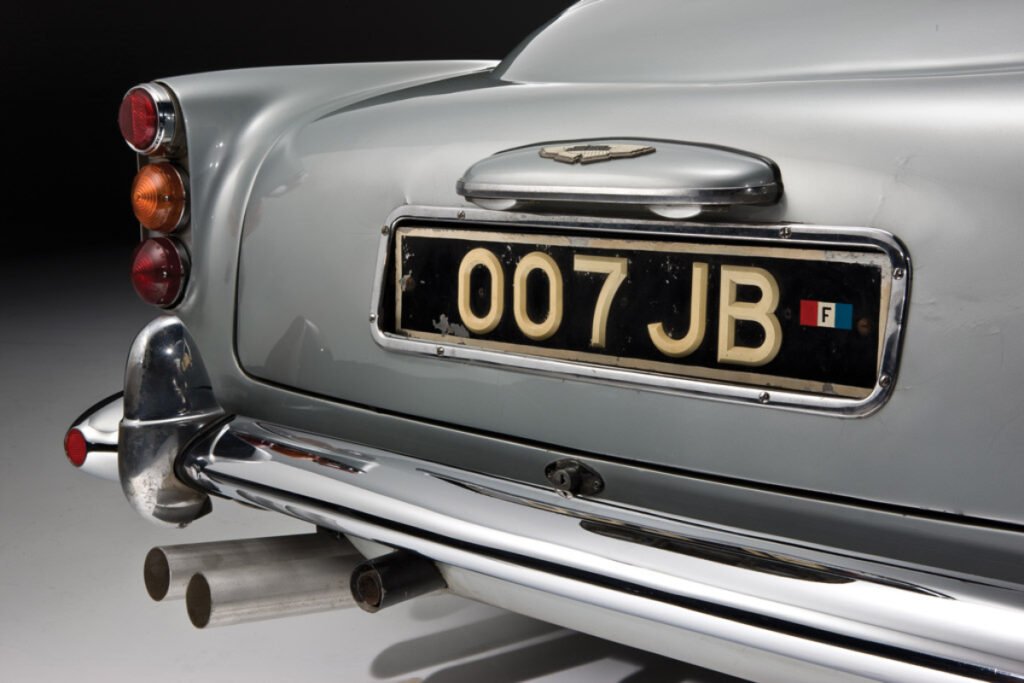
Its equipment included concealed machine guns, revolving registration plates, a smoke-screen system, an oil dispenser, tyre-slashing devices and, most famously, an ejector seat.
The combination of refined British elegance and ingenious technology established a formula that would influence the franchise for generations.
The DB5 would return repeatedly, appearing in films including Thunderball, GoldenEye, Casino Royale, Skyfall, Spectre and No Time to Die.
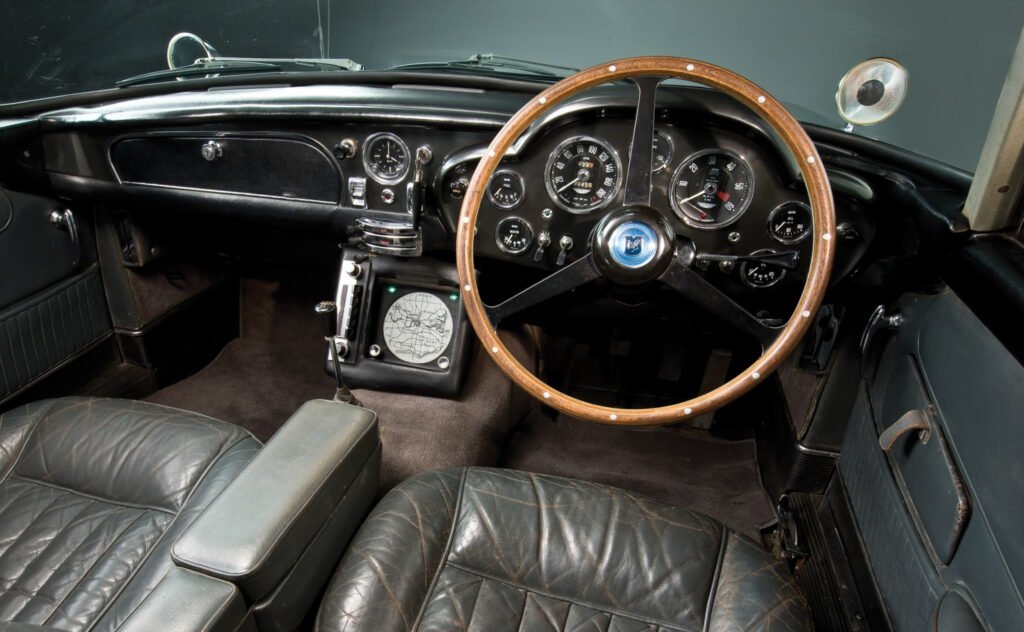
Its enduring importance is almost unprecedented.
More than sixty years after its original cinematic appearance, the silver Aston Martin remains one of the most recognizable automobiles in the world.
It has also become an object of extraordinary collector interest, with original Bond-associated vehicles achieving exceptional prices and Aston Martin developing its own DB5 Goldfinger Continuation programme.
Why it matters: The DB5 transformed the relationship between James Bond and the automobile, establishing an enduring symbol of British luxury, engineering and cinematic mythology.
3. Rolls-Royce Phantom III — Goldfinger (1964)
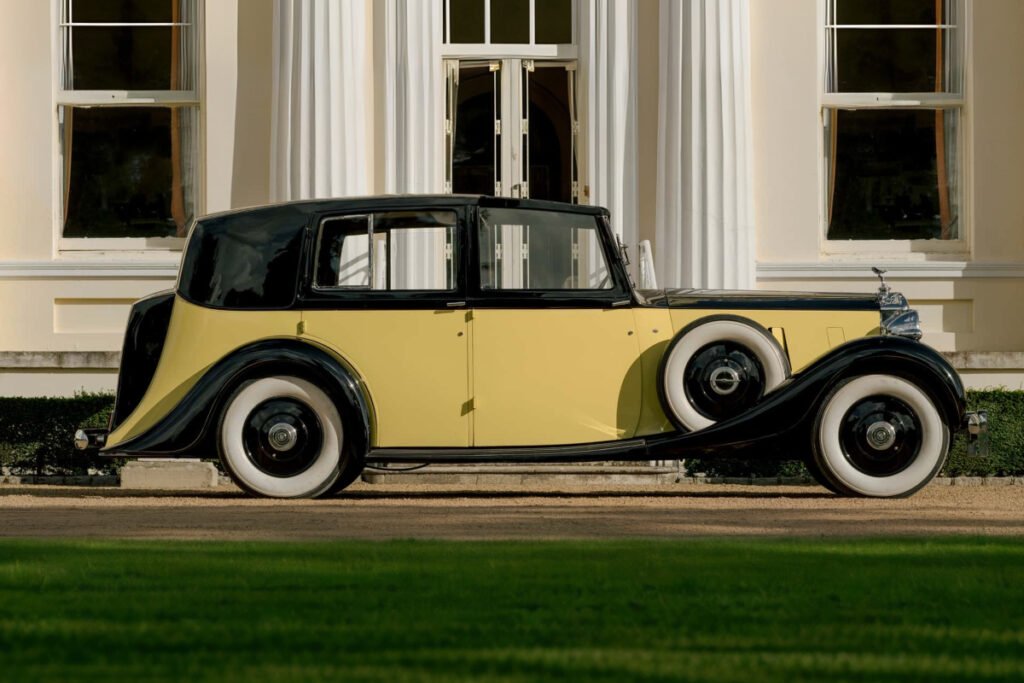
The ultimate expression of pre-war luxury, with a golden secret.
Not every remarkable automobile in the Bond universe belongs to 007.
The magnificent 1937 Rolls-Royce Phantom III featured in Goldfinger belongs to Auric Goldfinger, one of the franchise’s most memorable antagonists.
With its imposing proportions, elaborate coachwork and majestic radiator grille, the Phantom III represented the highest levels of British automotive luxury.
It was also mechanically significant.
Powered by a sophisticated 7.3-litre V12, the Phantom III was the first Rolls-Royce production model to feature a twelve-cylinder engine.
In the film, Bond follows Goldfinger’s chauffeur-driven Rolls-Royce across Europe, eventually discovering that its bodywork plays a central role in an elaborate gold-smuggling operation.
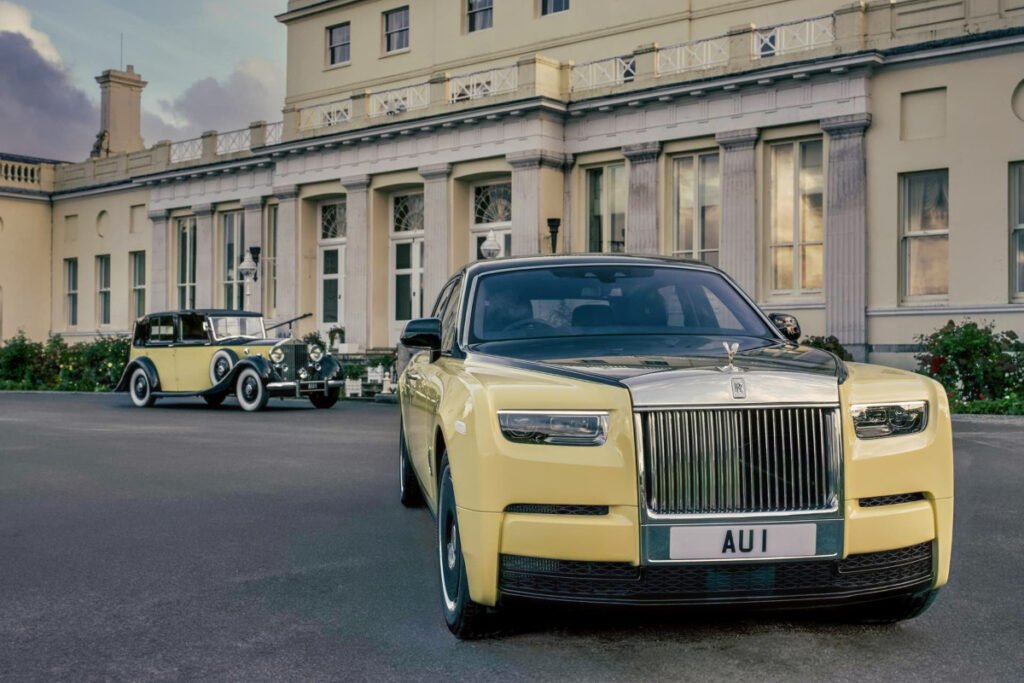
The vehicle’s association with the precious metal is more than a decorative flourish. It becomes part of the film’s central mystery.
For automotive enthusiasts, the Phantom III provides a fascinating glimpse into an era when luxury automobiles were frequently constructed through collaborations between specialist coachbuilders and prestigious manufacturers.
Its cinematic significance has endured for decades.
In 2024, Rolls-Royce commemorated the 60th anniversary of Goldfinger with a unique Phantom Goldfinger, incorporating design references to the original film automobile.
Why it matters: The Phantom III demonstrates that the Bond franchise’s automotive identity extends beyond performance and gadgets to include some of the finest examples of historic luxury coachbuilding.
4. Toyota 2000GT Roadster — You Only Live Twice (1967)
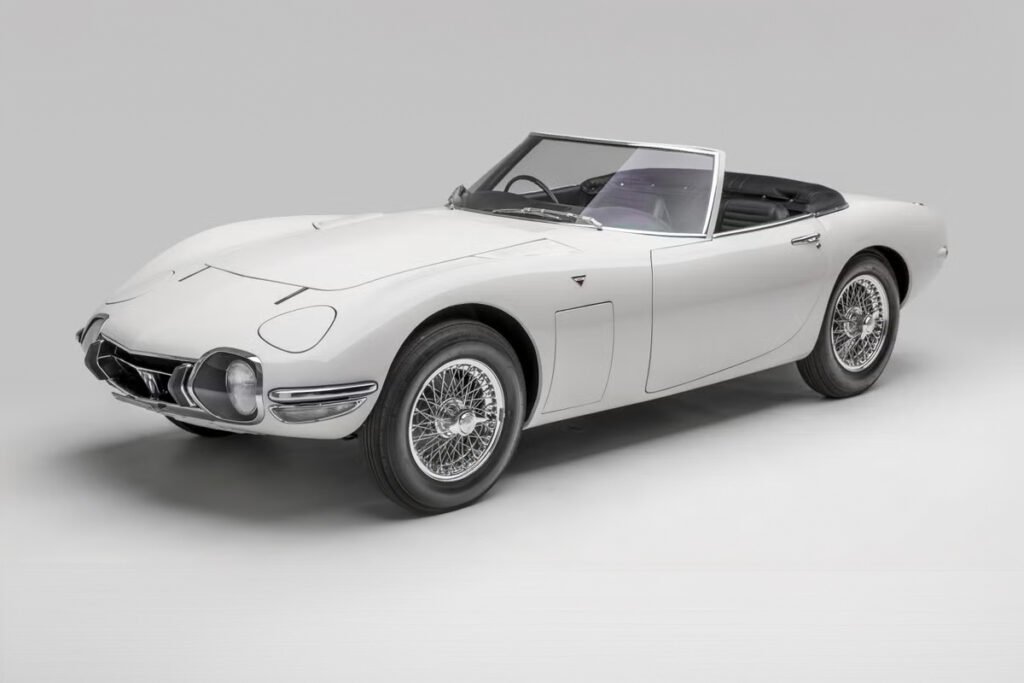
Japanese automotive excellence meets Bond’s international adventures.
The Toyota 2000GT is widely regarded as one of the most beautiful Japanese sports cars ever created.
Developed in collaboration with Yamaha and introduced during the 1960s, the original coupé combined elegant proportions, a sophisticated six-cylinder engine and exceptional engineering refinement.
For You Only Live Twice, however, Toyota developed something particularly special.
Two unique open-top versions were created for the production, replacing the coupé’s fixed roof with an open roadster configuration.
The modification was partly motivated by the need to accommodate Sean Connery comfortably during filming.
The resulting automobiles became among the rarest and most recognizable interpretations of the 2000GT.
In the film, the white Toyota is driven by Japanese intelligence agent Aki, played by Akiko Wakabayashi, who assists Bond during his mission in Japan.
The car’s clean lines and distinctive rear proportions provide a striking contrast with the British automobiles traditionally associated with 007.
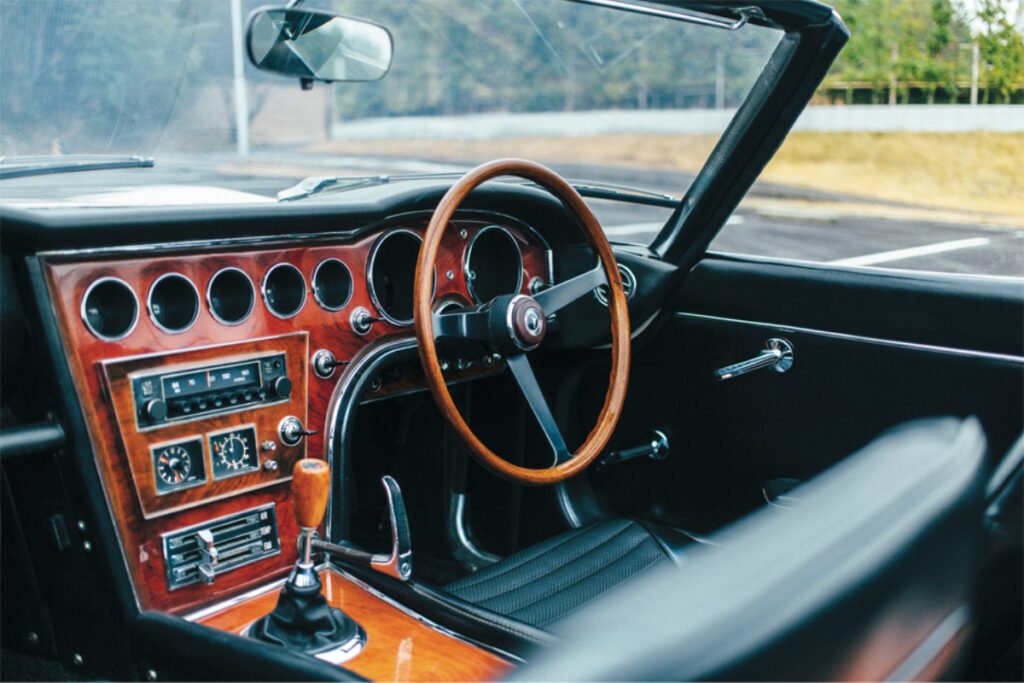
Beyond its cinematic appearance, the 2000GT helped establish Japan’s ability to produce sophisticated, high-performance sports cars capable of competing with prestigious European manufacturers.
Today, original Toyota 2000GT models are among the most desirable Japanese collector automobiles.
The Bond roadsters occupy an even more unusual position because of their unique coachwork and cultural significance.
Why it matters: The 2000GT demonstrated that the world’s finest automotive design was not confined to Europe, while introducing one of the most extraordinary Japanese sports cars ever built to a global audience.
5. Aston Martin DBS — On Her Majesty’s Secret Service (1969)
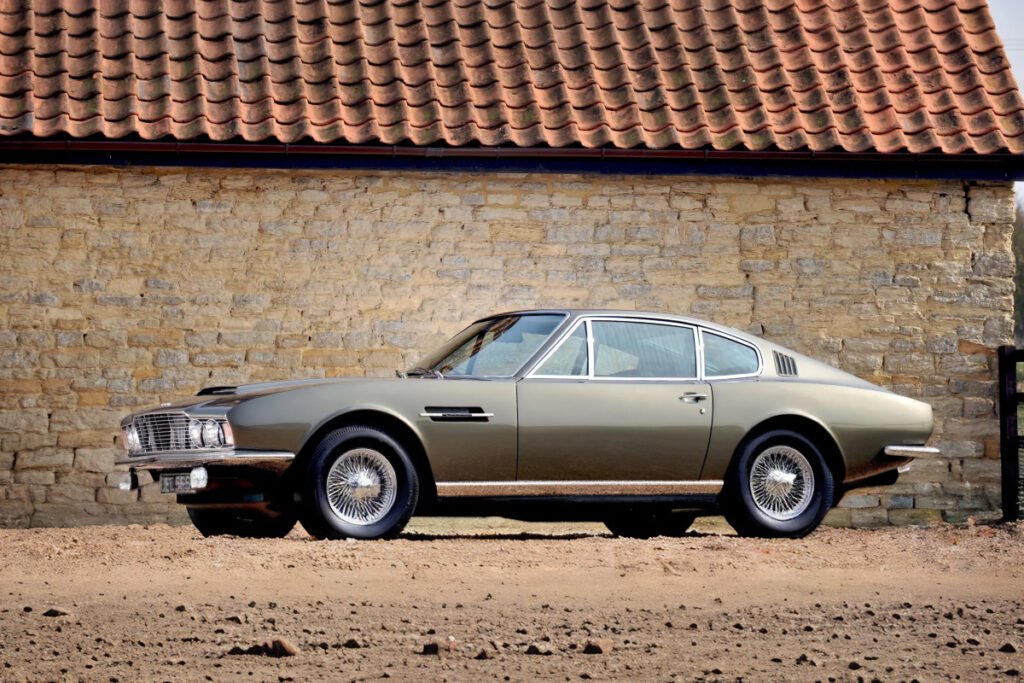
A sophisticated British grand tourer for a different James Bond.
When George Lazenby succeeded Sean Connery as James Bond, the franchise introduced another remarkable Aston Martin.
The Aston Martin DBS appeared in On Her Majesty’s Secret Service, reflecting the evolving design language of the late 1960s.
Compared with the elegant curves of the DB5, the DBS featured a broader, more angular silhouette.
Designed under the direction of William Towns, it represented a more contemporary interpretation of British grand touring.
Although later DBS models would receive V8 power, the car featured in the film belonged to the original six-cylinder generation.
Its restrained appearance suited the more grounded and emotionally complex atmosphere of the story.
Unlike the gadget-filled DB5, the DBS was not defined by elaborate weapons or extraordinary electronic systems.
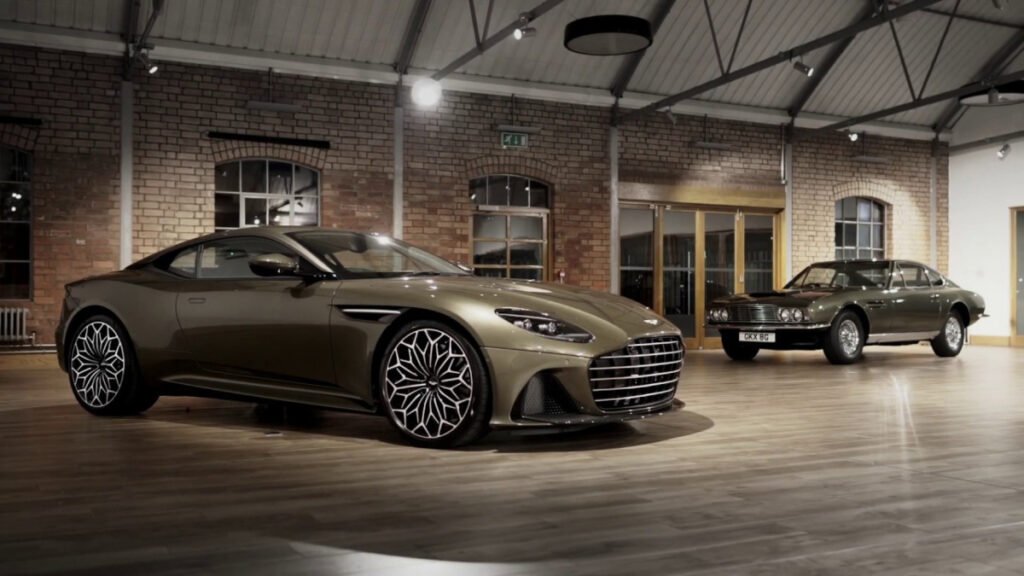
Instead, it was presented as a sophisticated performance automobile, one whose character relied on design and engineering rather than cinematic technology.
The vehicle also plays an important role in the film’s emotional conclusion, making its appearance particularly memorable within the franchise’s history.
For Aston Martin enthusiasts, the DBS represents a significant transitional design between the elegant proportions of the 1960s and the more muscular grand tourers of the following decade.
Why it matters: The original DBS brought a more contemporary visual identity to Bond’s automotive world and remains closely associated with one of the franchise’s most distinctive films.
6. Lotus Esprit S1 — The Spy Who Loved Me (1977)
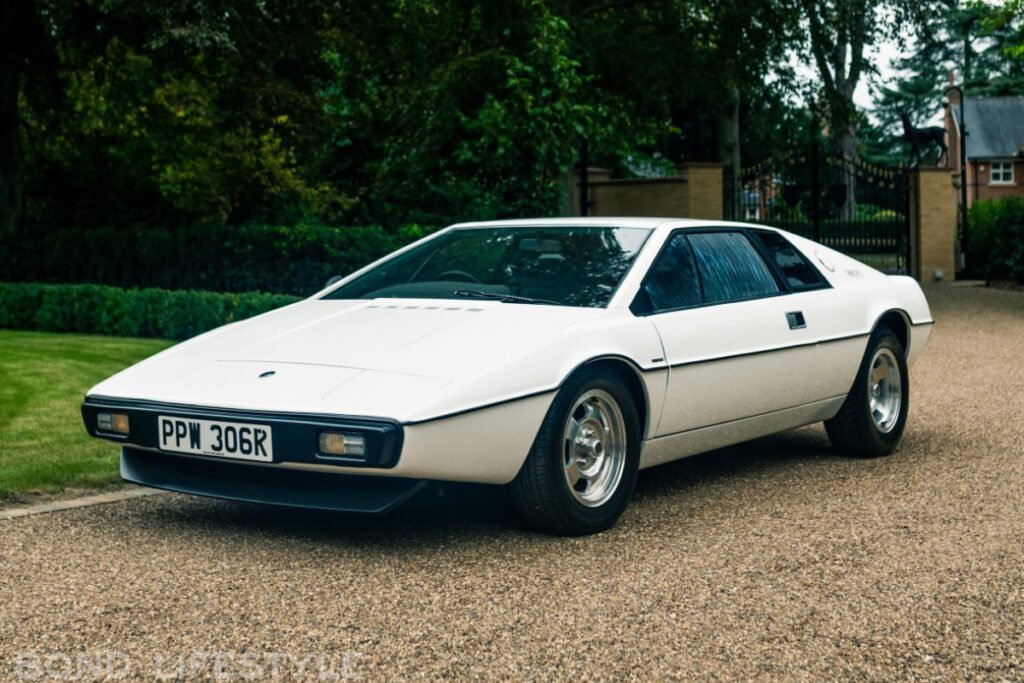
The sports car that became a submarine.
Few moments in automotive cinema are as unforgettable as the white Lotus Esprit S1 disappearing beneath the Mediterranean Sea.
In The Spy Who Loved Me, Roger Moore’s Bond drives the striking British sports car during a spectacular pursuit before transforming it into a fully functional fictional submarine.
Nicknamed Wet Nellie, the underwater vehicle became one of the most ambitious automotive creations in Bond history.
The original Lotus Esprit had already attracted considerable attention for its remarkable wedge-shaped design by Giorgetto Giugiaro.
Its sharp lines, low silhouette and mid-engine architecture represented a radical departure from the traditional proportions of earlier British sports cars.
The film transformed that futuristic appearance into a technological fantasy.
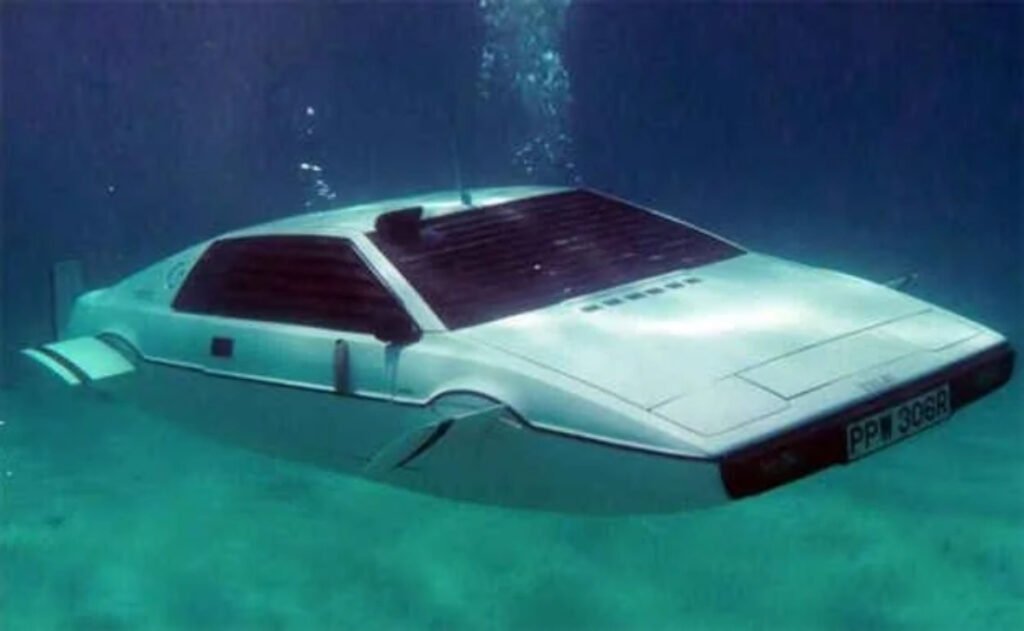
As the Esprit enters the water, its wheels retract and specialized underwater equipment appears, allowing Bond to escape his pursuers beneath the surface.
A specially constructed submersible vehicle was used to create the underwater sequences.
The result was so convincing that the scene became one of the most celebrated in the franchise.
The Esprit’s cinematic success also played an important role in establishing Lotus as an internationally recognized performance brand.
Why it matters: The Esprit combined avant-garde automotive design with one of cinema’s most imaginative vehicle transformations, becoming a defining symbol of the Roger Moore era.
7. Lotus Esprit Turbo — For Your Eyes Only (1981)
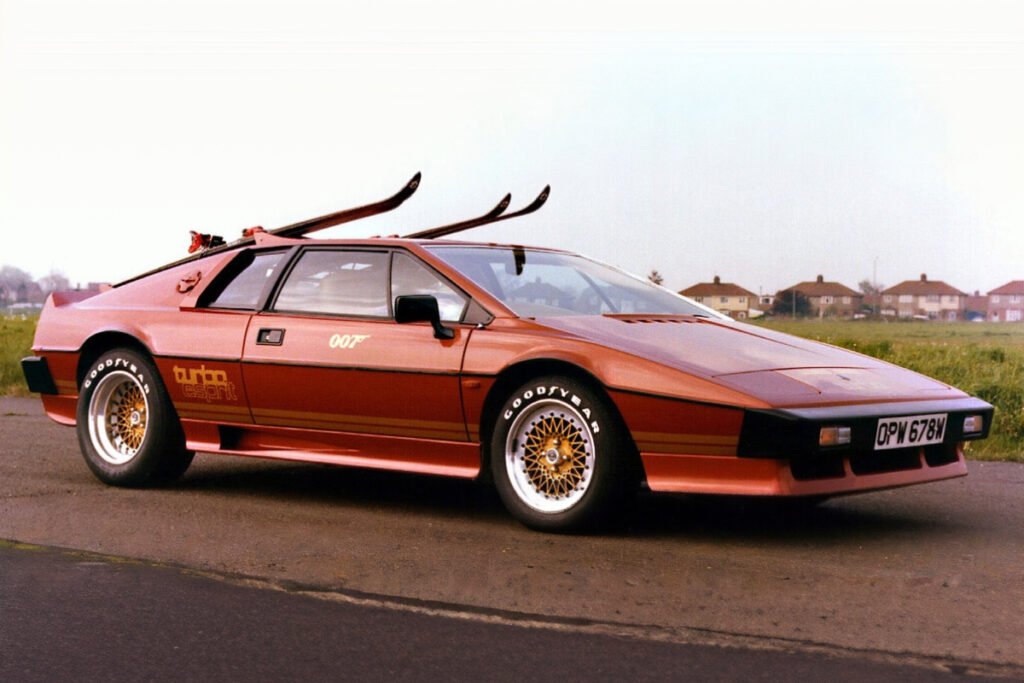
The evolution of a British sports car legend.
Following the extraordinary success of the original Esprit, Lotus returned to the Bond franchise in For Your Eyes Only.
This time, the car was the more powerful Lotus Esprit Turbo, representing a significant evolution of the original Giugiaro design.
The turbocharged four-cylinder engine delivered stronger performance, while revised aerodynamic details and exterior trim gave the car a more mature appearance.
The film featured Esprit Turbos in distinctive white and copper-bronze finishes.
Unlike its predecessor, the Turbo Esprit was not transformed into a submarine.
Instead, one of its most memorable moments came through a deliberately destructive security system.
When an intruder attempts to break into the parked vehicle, the anti-theft mechanism detonates, destroying the car.
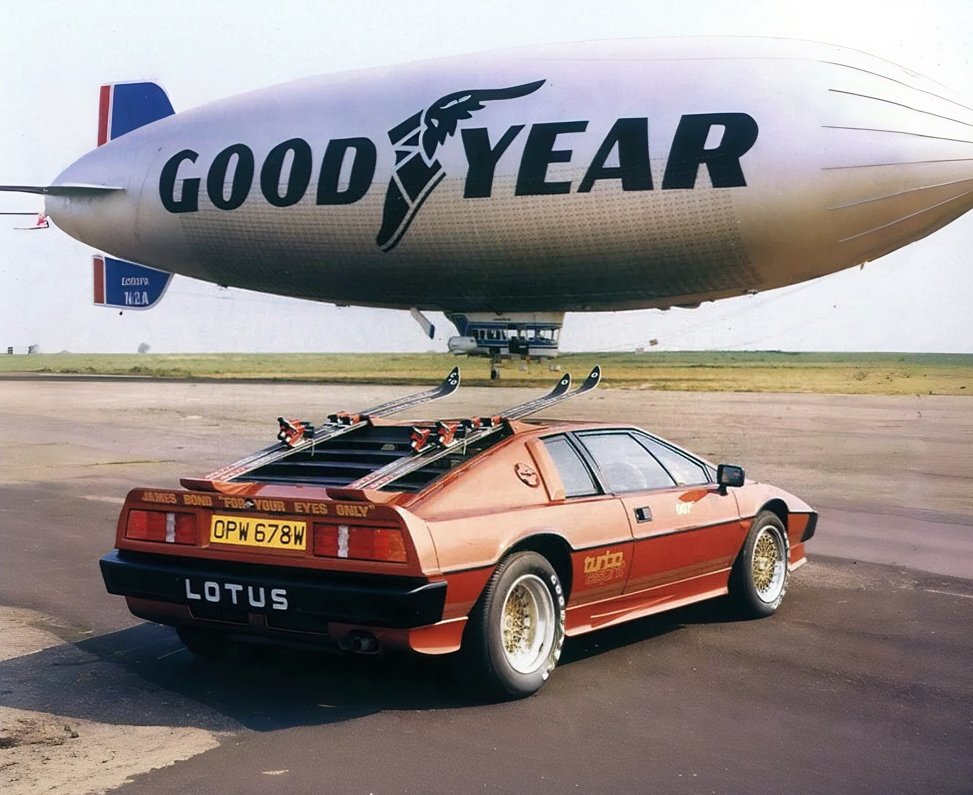
The sequence provides an amusingly extreme interpretation of Q Branch’s approach to vehicle security.
Bond subsequently continues the story with another Esprit Turbo, demonstrating the model’s continued association with the character.
From an automotive perspective, the Turbo Esprit marked an important stage in Lotus’s development.
It preserved the remarkable geometry of the original design while delivering more competitive performance.
Why it matters: The Esprit Turbo reinforced Lotus’s place in Bond history while representing the evolution of one of Britain’s most distinctive mid-engined sports cars.
8. Aston Martin V8 — The Living Daylights (1987)
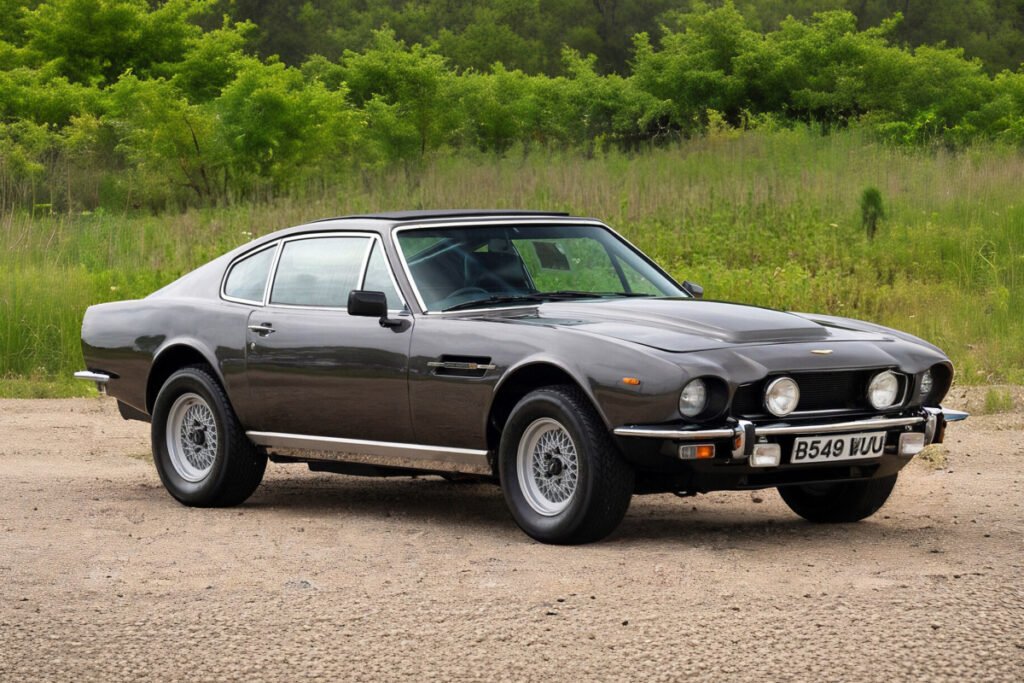
The return of Aston Martin, with an unmistakable Cold War character.
After years of Lotus and other automotive collaborations, Aston Martin returned to the forefront of the Bond franchise in The Living Daylights.
Driven by Timothy Dalton’s interpretation of 007, the Aston Martin V8 introduced a muscular and distinctly British character.
The production model’s powerful V8 engine, imposing bonnet and angular bodywork reflected the engineering philosophy of the 1970s and 1980s.
In the film, the Aston Martin is equipped with an extraordinary collection of defensive and offensive technology.
Its equipment includes retractable skis, tyre spikes, concealed missiles, a rocket-assisted propulsion system and laser-equipped wheel hubs.
During a spectacular pursuit across snow-covered roads, Bond uses these devices to evade his enemies.
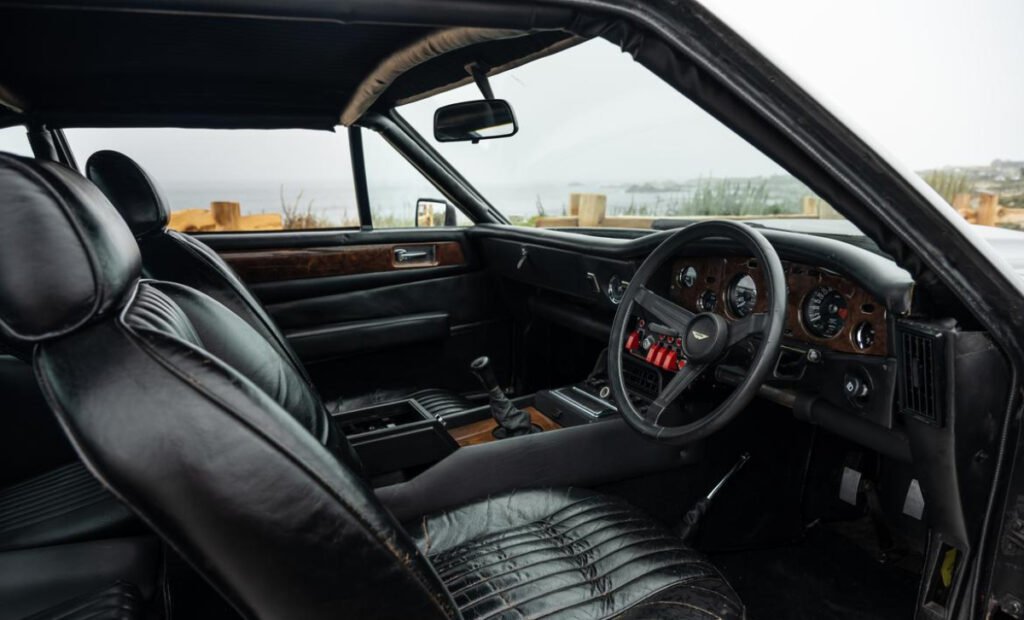
The sequence culminates in one of the franchise’s most memorable improvisations, with Bond and Kara Milovy escaping using a cello case.
Beyond the gadgets, the Aston Martin V8 has become increasingly appreciated as a significant British grand tourer.
Its combination of muscular styling, traditional construction and powerful engine gives it a distinctive place in Aston Martin’s history.
The model’s association with Bond would be celebrated again decades later when the V8 returned in No Time to Die.
Why it matters: The Aston Martin V8 restored the marque’s central role in the Bond universe and delivered one of the franchise’s most memorable winter driving sequences.
9. BMW 750iL — Tomorrow Never Dies (1997)
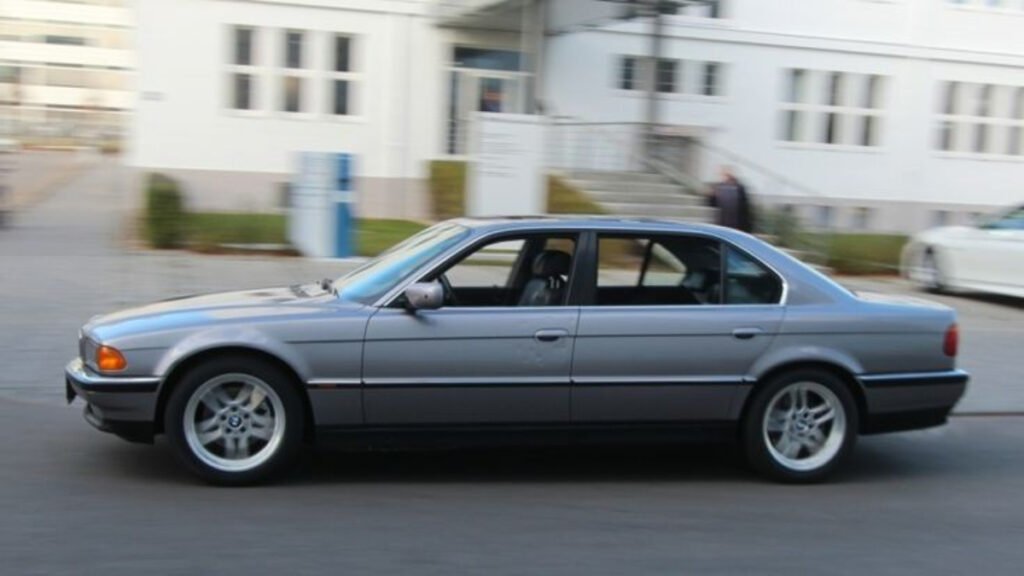
When a luxury limousine became a remotely controlled escape vehicle.
The arrival of BMW in the Bond franchise represented a significant departure from the traditional Aston Martin relationship.
One of the most memorable examples was the BMW 750iL featured in Tomorrow Never Dies.
At first glance, the large executive sedan appeared to be an unusual choice for a secret agent.
Its imposing proportions, luxurious interior and sophisticated V12 engine emphasized comfort and refinement rather than the compact agility of a traditional sports car.
Yet Q Branch transformed the BMW into an extraordinary technological showcase.
Equipped with bullet-resistant protection, defensive systems and an array of concealed equipment, the car’s defining innovation was its remote-control capability.
Bond could operate the vehicle through a specially modified mobile telephone.
During a spectacular chase inside a multi-storey car park in Hamburg, Pierce Brosnan’s Bond controls the 750iL from the rear seat, using its electronic systems to escape pursuing enemies.
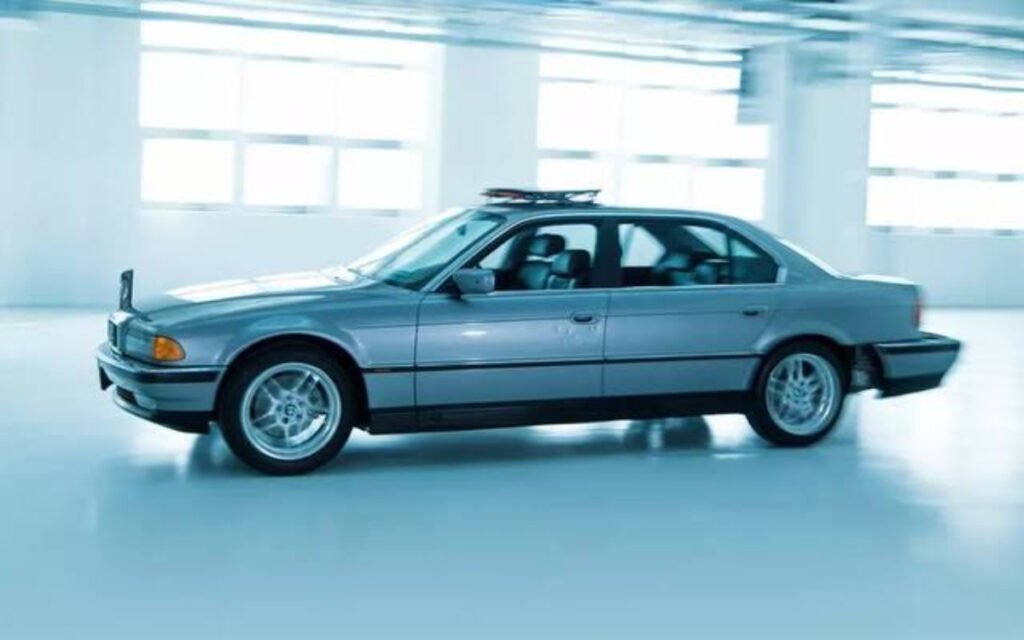
The sequence combined physical stunt driving with an increasingly digital interpretation of automotive technology.
At a time when mobile phones were becoming central to everyday life, the remote-controlled BMW appeared remarkably futuristic.
Today, it also provides an entertaining glimpse into how cinema anticipated developments in vehicle connectivity and automated driving.
Why it matters: The BMW 750iL transformed the traditional executive limousine into one of Bond’s most ingenious technological vehicles.
10. BMW Z8 — The World Is Not Enough (1999)
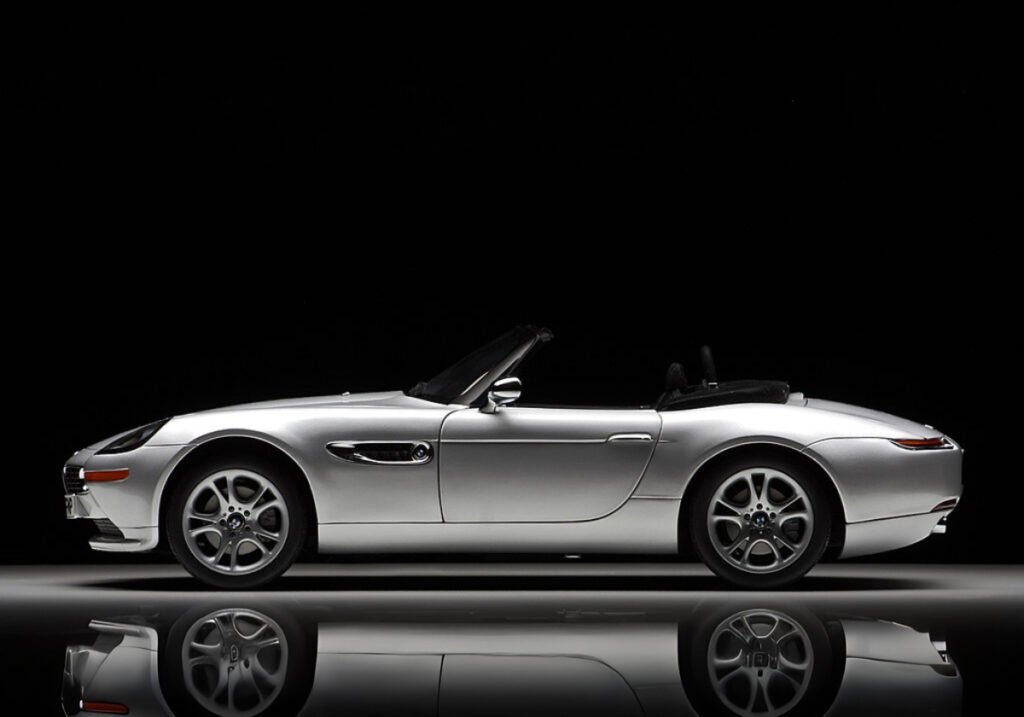
A modern roadster inspired by BMW’s sporting heritage.
The BMW Z8 represented a very different side of the German manufacturer’s relationship with James Bond.
Designed under the direction of Chris Bangle, with exterior styling by Henrik Fisker, the elegant roadster drew inspiration from the celebrated BMW 507 of the 1950s.
Its long bonnet, compact passenger compartment and distinctive side vents created a sophisticated modern interpretation of classic roadster proportions.
Beneath the aluminium bodywork sat a naturally aspirated 4.9-litre V8 producing approximately 400 horsepower.
The engine was paired with a six-speed manual transmission, providing a traditional and engaging driving experience.
In The World Is Not Enough, Pierce Brosnan’s Bond receives the Z8 from Q Branch, complete with concealed defensive equipment.
Unfortunately, the car’s cinematic career is remarkably brief.
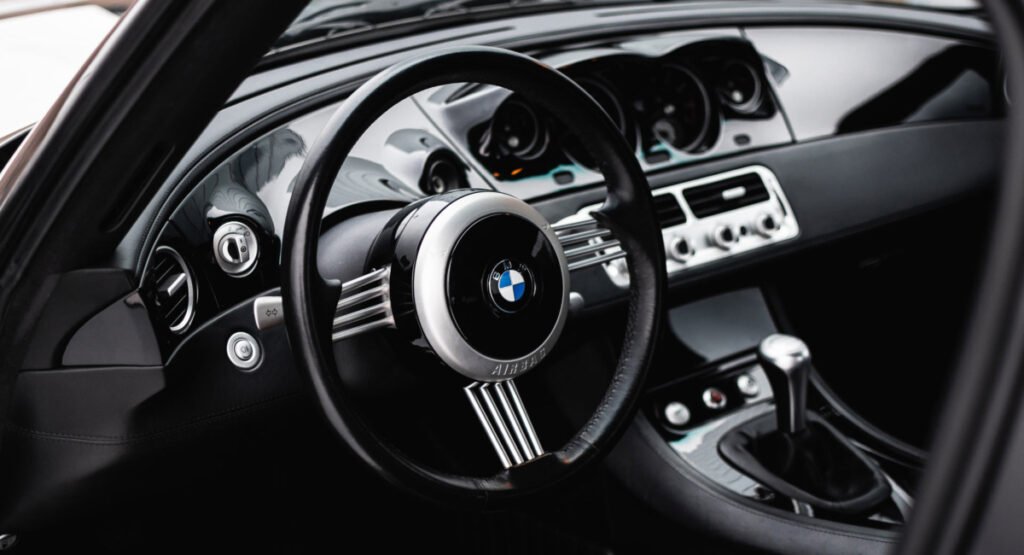
During a confrontation at a caviar-processing facility, the Z8 is dramatically destroyed by a helicopter equipped with cutting blades.
The scene remains one of the franchise’s most memorable examples of sacrificing an extraordinary automobile for cinematic spectacle.
Despite its limited screen time, the BMW Z8 has become a highly desirable modern classic.
Produced in relatively small numbers, it combines distinctive design with a celebrated BMW M-developed V8.
Why it matters: The Z8 introduced a modern interpretation of classic roadster elegance to the Bond franchise and remains among BMW’s most collectible contemporary automobiles.
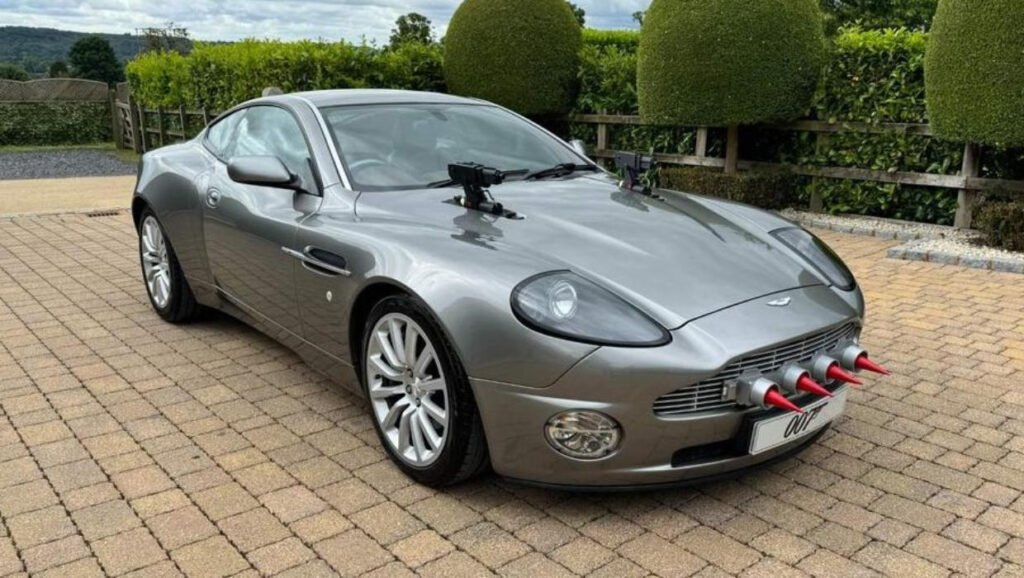
11. Aston Martin V12 Vanquish — Die Another Day (2002)
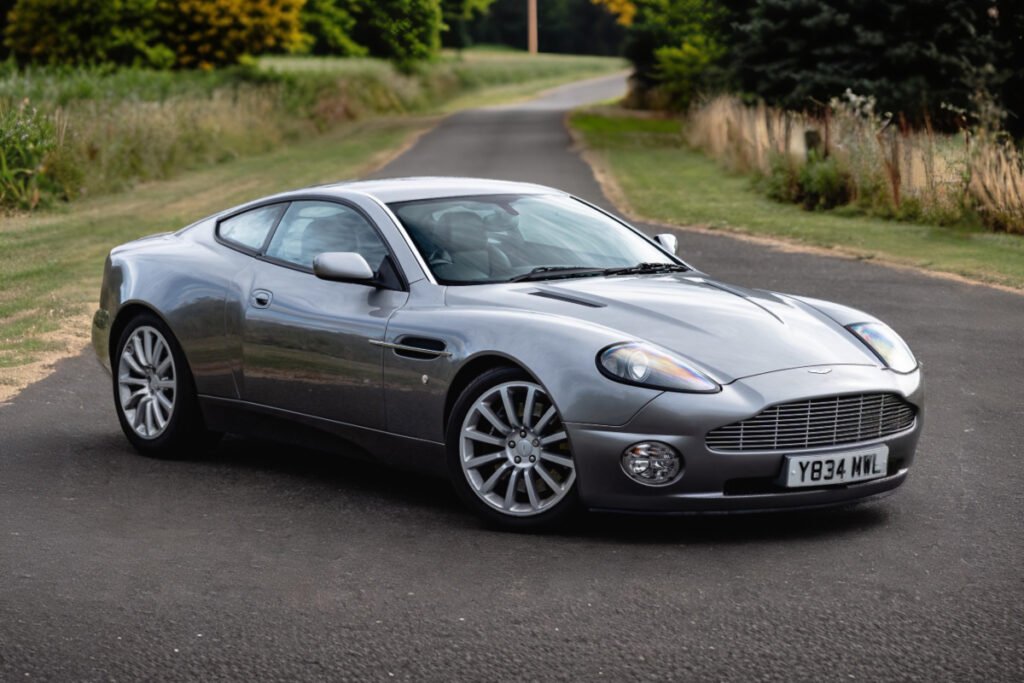
A new flagship Aston Martin enters the world of 007.
For Die Another Day, Aston Martin returned as Bond’s principal automotive partner with the spectacular V12 Vanquish.
Designed by Ian Callum, the Vanquish represented the beginning of a new era for the British marque.
Its sculpted bodywork, muscular proportions and naturally aspirated 5.9-litre V12 created a powerful interpretation of the modern grand tourer.
Aston Martin Vanquish 25: Celebrating a Quarter Century of Britain’s Ultimate Grand Tourer
Producing approximately 460 horsepower, the original Vanquish combined exceptional performance with a sophisticated luxury interior.
In the film, however, Q Branch adds a particularly imaginative feature: adaptive camouflage capable of making the vehicle virtually invisible.
The technology becomes central to a spectacular confrontation on a frozen lake in Iceland.
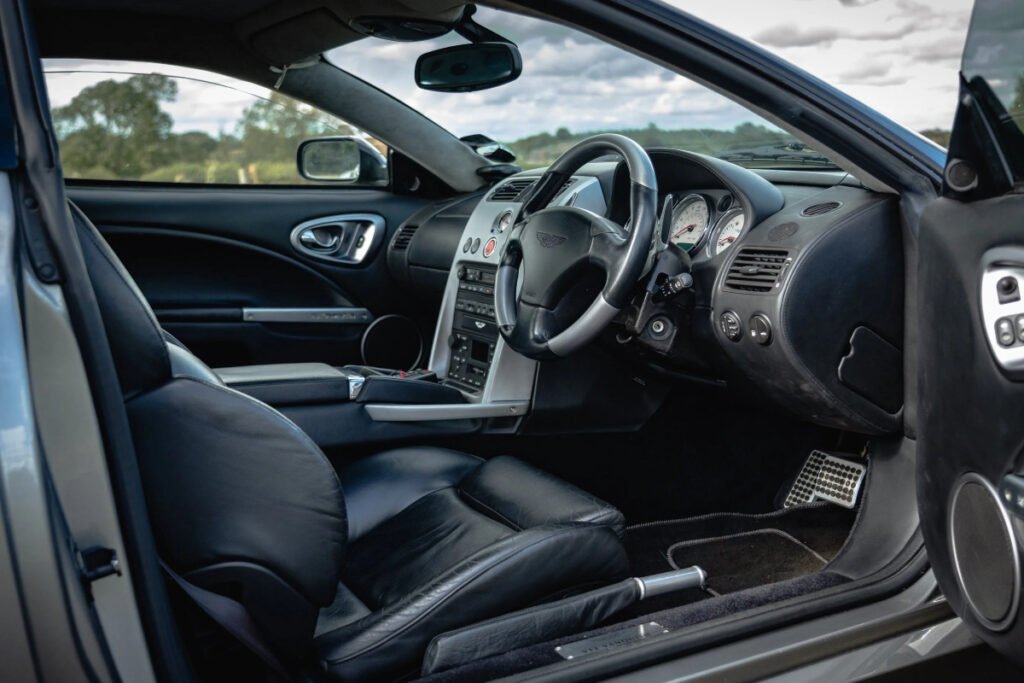
Armed with concealed weapons and various defensive systems, Bond’s Aston Martin engages in an extraordinary pursuit against a Jaguar XKR driven by the antagonist Zao.
The sequence became one of the most ambitious vehicle chases of the Pierce Brosnan era.
The Vanquish also helped establish Aston Martin’s contemporary design language, influencing several models that followed.
Today, the original V12 Vanquish enjoys growing recognition among enthusiasts of modern British grand tourers.
Why it matters: The Vanquish restored Aston Martin’s flagship status within the franchise while introducing a new generation of British V12 design.
12. Jaguar XKR Convertible — Die Another Day (2002)
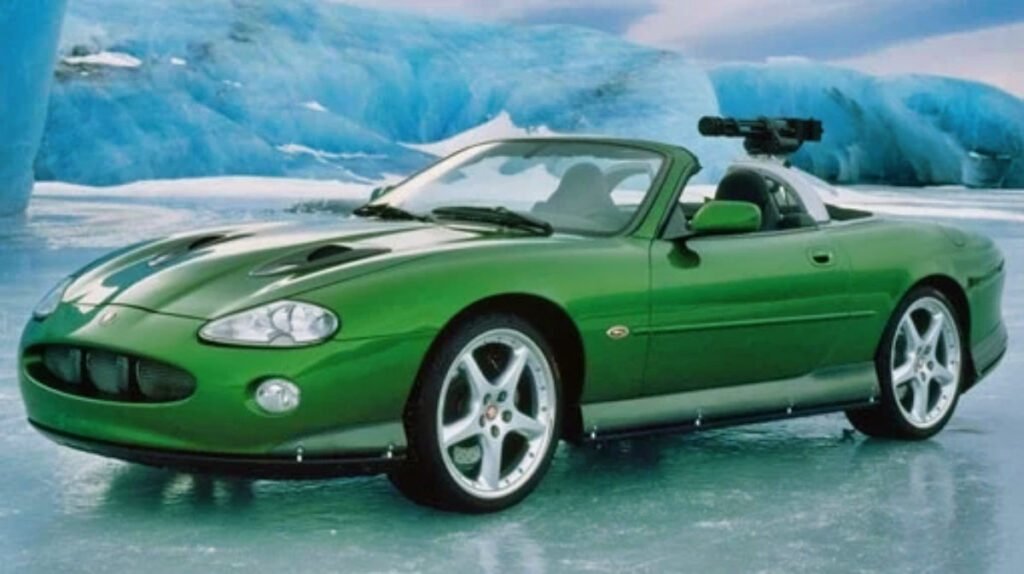
The perfect British rival to Bond’s Aston Martin.
The frozen-lake sequence in Die Another Day would not have been nearly as memorable without the spectacular Jaguar XKR Convertible.
Driven by Zao, the heavily modified Jaguar serves as the principal automotive adversary to Bond’s Aston Martin Vanquish.
Based on the elegant XK8 generation, the XKR combined traditional Jaguar grand touring design with a supercharged V8 engine.
Its flowing bodywork, long bonnet and luxurious interior reflected Jaguar’s distinctive approach to British performance motoring.
For the film, the car was transformed into an aggressive weapons platform.
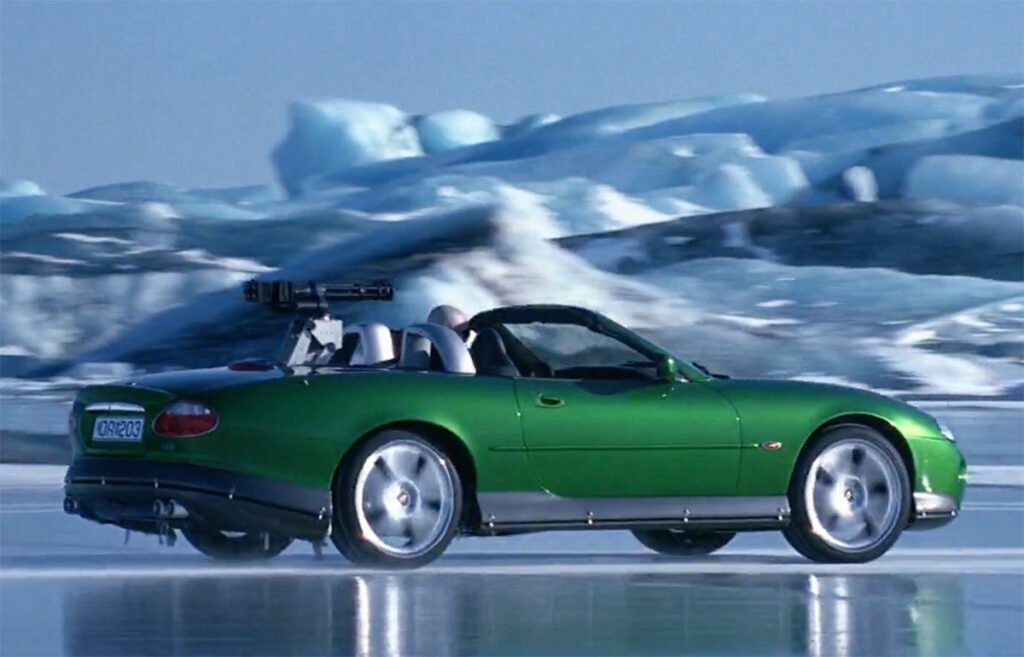
Equipped with concealed weaponry and extensive modifications, the Jaguar becomes a formidable opponent during the spectacular chase across the Icelandic ice.
The production required substantial mechanical adaptation.
Both the Jaguar and Aston Martin stunt vehicles were modified to provide the traction necessary for driving on frozen surfaces.
The resulting sequence offered an unusual confrontation between two prestigious British marques, each representing a different interpretation of the luxury performance automobile.
While Bond’s Vanquish embodied the traditional elegance of Aston Martin, the Jaguar provided a more openly aggressive presence.
The XKR’s appearance also demonstrated that vehicles driven by Bond’s adversaries could become just as memorable as those associated with 007 himself.
Why it matters: The Jaguar XKR created one of cinema’s most spectacular British grand tourer rivalries and gave the Bond universe a compelling automotive antagonist.
13. Aston Martin DBS V12 — Casino Royale (2006)
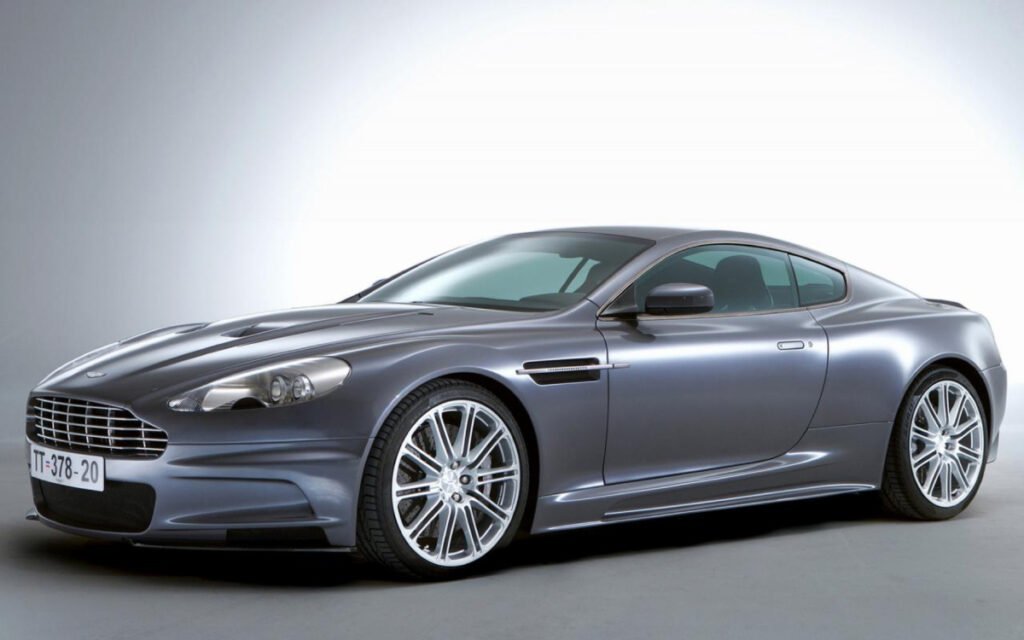
A more serious Aston Martin for a new interpretation of Bond.
When Daniel Craig made his debut as James Bond in Casino Royale, the franchise adopted a more grounded and physically intense approach.
The accompanying automobile reflected that transformation.
The Aston Martin DBS V12 was a more aggressive interpretation of the DB9 grand tourer, combining a muscular design with a powerful naturally aspirated twelve-cylinder engine.
The production DBS would eventually develop approximately 510 bhp, delivering performance appropriate for Aston Martin’s flagship sports grand tourer.
In Casino Royale, the car initially appears as an elegant and formidable machine, without the elaborate gadgetry associated with earlier Bond adventures.
Its equipment is comparatively restrained, including a concealed firearms compartment and an emergency medical system.
However, the DBS becomes central to one of the most extraordinary stunts in the history of the franchise.
When Bond swerves to avoid Vesper Lynd, the Aston Martin overturns violently.
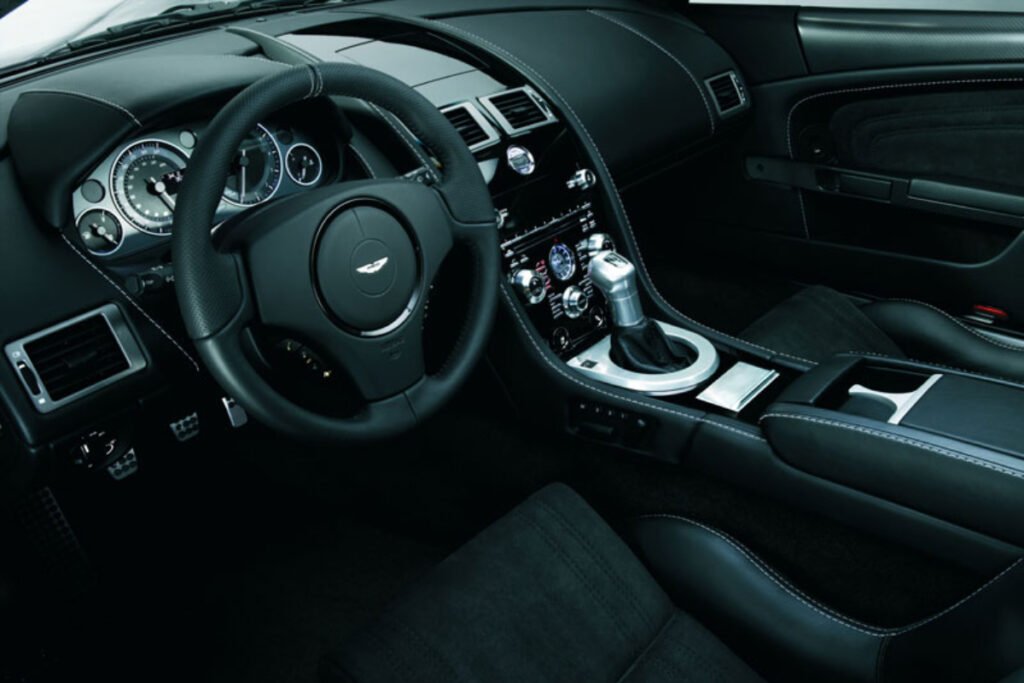
The resulting stunt achieved seven complete barrel rolls, establishing a Guinness World Record at the time.
To accomplish the sequence, the filmmakers used specially prepared vehicles and a sophisticated pneumatic mechanism designed to initiate the roll.
The scene became an unforgettable demonstration of the franchise’s renewed commitment to practical action.
It also helped establish the DBS as one of Aston Martin’s most recognizable modern models.
Why it matters: The DBS represented the more physical, emotionally complex Daniel Craig era while producing one of the greatest automotive stunts ever filmed.
14. Aston Martin DB10 — Spectre (2015)
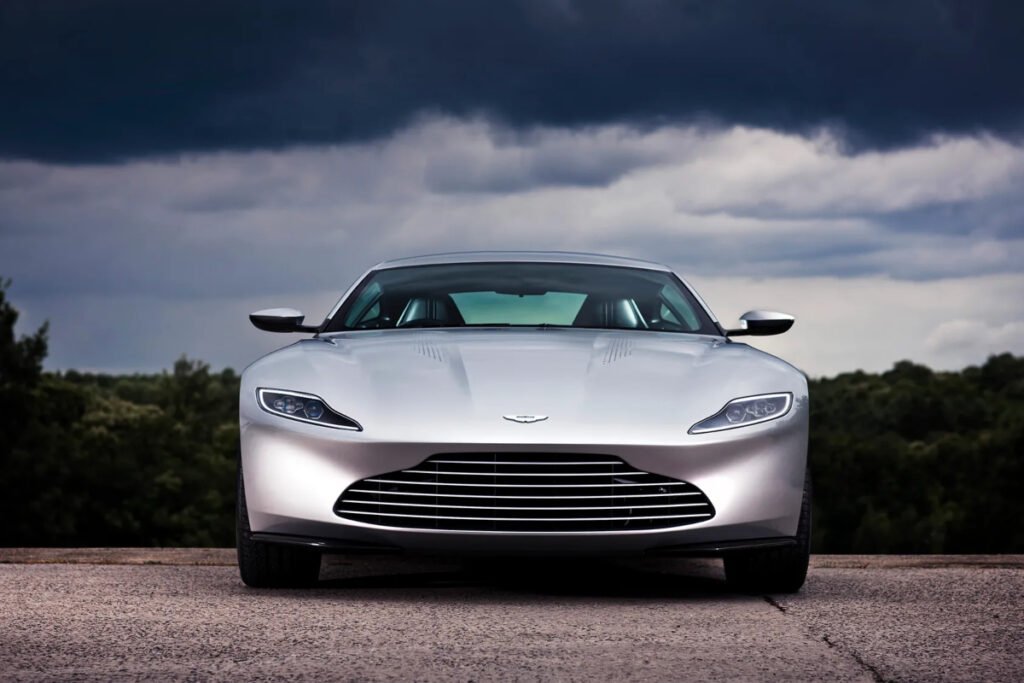
Aston Martin creates a sports car exclusively for James Bond.
Few automotive collaborations have been as direct as the creation of the Aston Martin DB10 for Spectre.
Unlike the production models previously featured in Bond films, the DB10 was developed specifically for the movie.
Created by Aston Martin’s design team under Marek Reichman, the car introduced a sophisticated, forward-looking interpretation of the brand’s design identity.
Its long bonnet, sculpted side surfaces and elegant fastback proportions combined recognizable Aston Martin characteristics with a more contemporary aesthetic.
Beneath its distinctive bodywork, the DB10 used engineering associated with Aston Martin’s V8 Vantage architecture.
Only ten examples were constructed for the film, with different vehicles serving specific filming and stunt requirements.
In Spectre, the DB10 becomes the centrepiece of a spectacular nighttime pursuit through Rome.
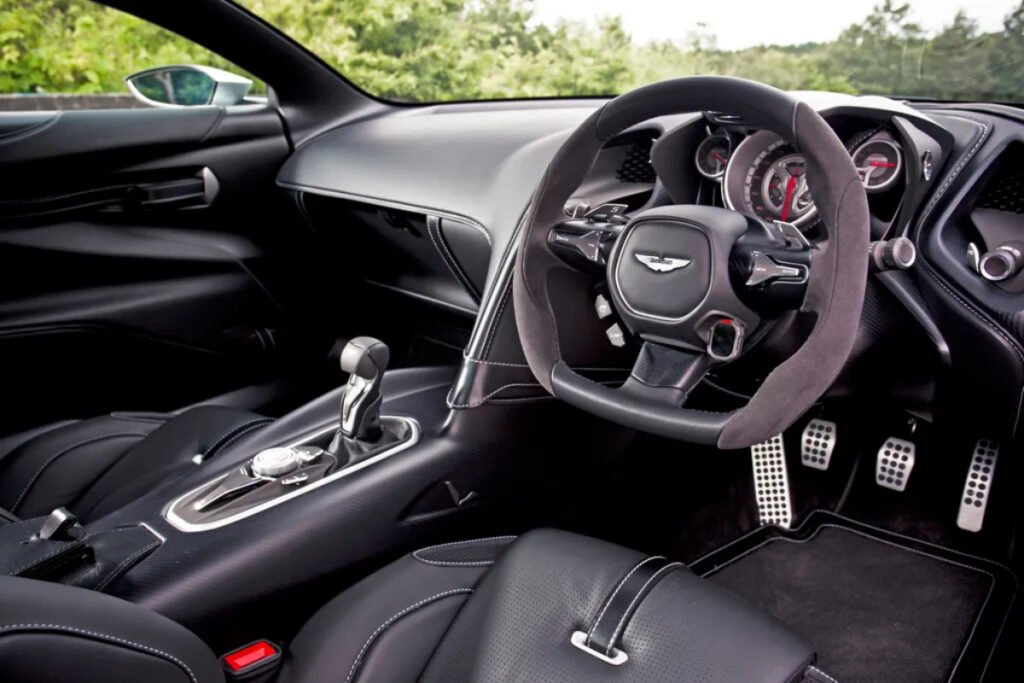
Driven by Daniel Craig’s Bond, the silver Aston Martin races through the city’s historic streets while being pursued by a Jaguar C-X75.
The chase offers a particularly striking visual contrast between classical Italian architecture and two extraordinary examples of contemporary automotive design.
Beyond its cinematic appearance, the DB10 proved influential in communicating the direction of Aston Martin’s subsequent design evolution.
Although it was never intended as a conventional production model, its proportions and styling ideas anticipated elements of the next generation of Aston Martin sports cars.
Why it matters: The DB10 represents one of the closest creative collaborations between an automotive manufacturer and the Bond franchise, resulting in a purpose-built cinematic grand tourer.
15. Jaguar C-X75 — Spectre (2015)
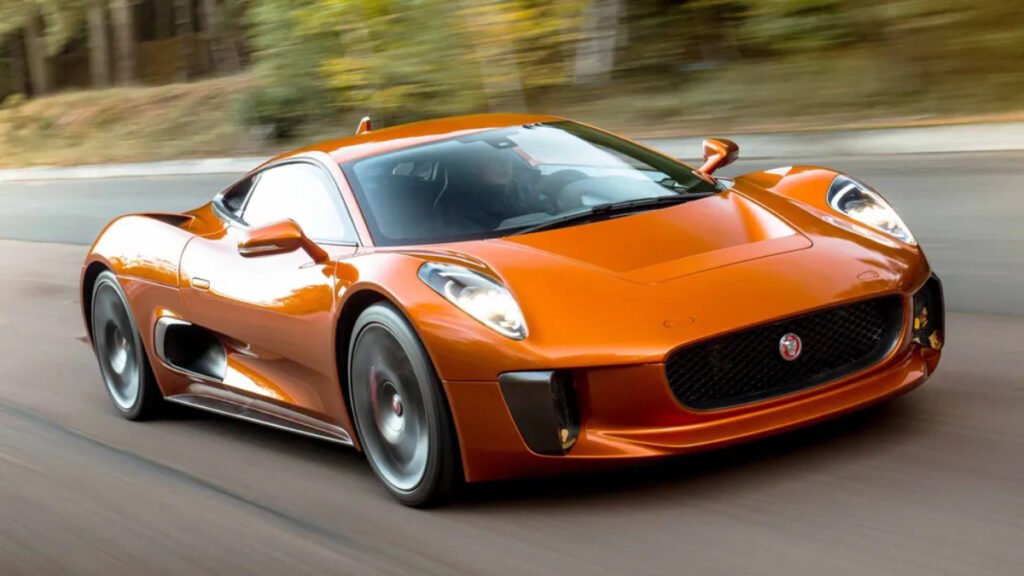
The extraordinary Jaguar hypercar that found its destiny on screen.
The final automobile in our selection is also one of the most fascinating.
The Jaguar C-X75 began life as an ambitious concept car unveiled in 2010.
Created to celebrate Jaguar’s 75th anniversary, the original concept explored a remarkable combination of electric propulsion and advanced turbine-based range-extension technology.
The Ultimate Jaguar C-X75: How CALLUM Finished the Hypercar That Never Was
Its dramatic proportions, low silhouette and sophisticated aerodynamic surfaces established it as one of the most visually compelling Jaguar concepts of the modern era.
A subsequent development programme explored a highly advanced hybrid powertrain, but plans for series production were ultimately cancelled.
For many enthusiasts, the C-X75 appeared destined to remain an extraordinary demonstration of what might have been.
Then came Spectre.
The filmmakers selected the Jaguar to serve as the principal automotive rival to Bond’s specially developed Aston Martin DB10.
Driven by the formidable Mr Hinx, played by Dave Bautista, the C-X75 appears during the spectacular nighttime pursuit through Rome.
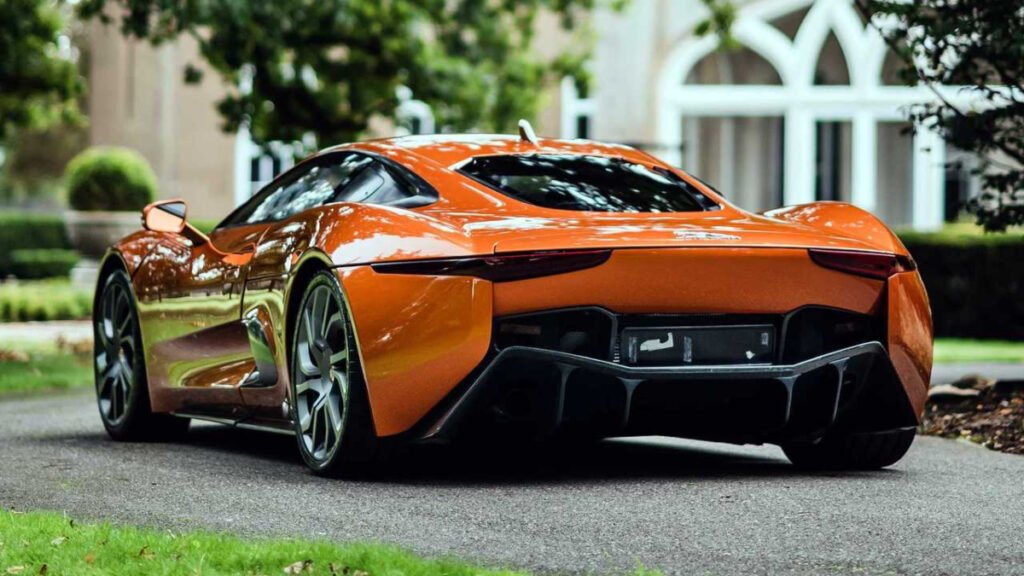
The orange Jaguar provides a dramatic contrast to the silver Aston Martin, combining a futuristic appearance with formidable visual presence.
For filming, specially prepared stunt vehicles used conventional combustion-engine powertrains rather than the original concept’s experimental hybrid technology.
The result was a memorable demonstration of the C-X75’s extraordinary design.
Unlike most cinematic supercars, the Jaguar carried the additional fascination of being a model that never achieved conventional series production.
Its appearance in Bond helped preserve the legacy of a remarkable automotive project.
Why it matters: The Jaguar C-X75 transformed an unrealized hypercar ambition into a lasting cinematic icon, proving that an automobile does not need a conventional production career to become legendary.
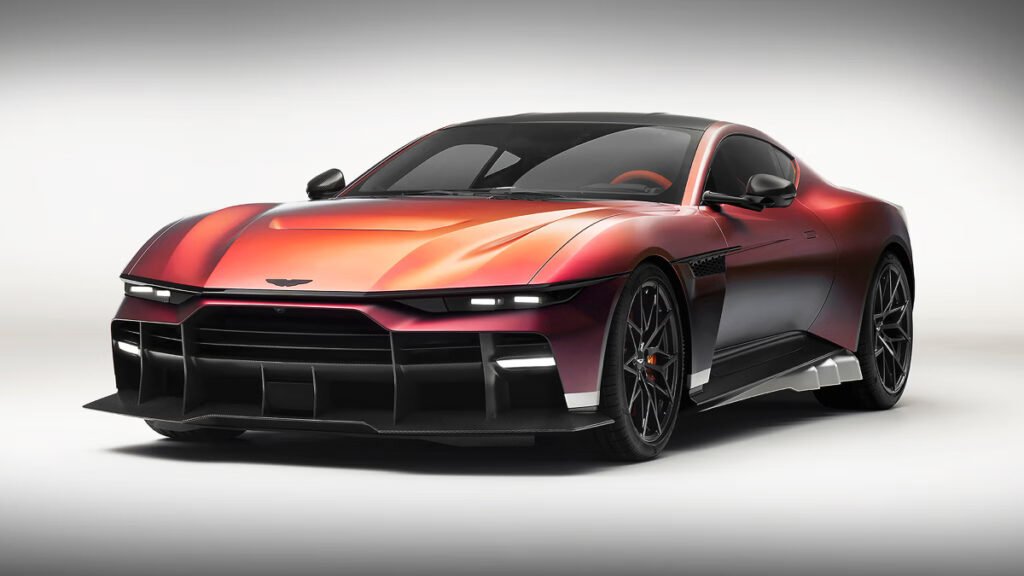
Aston Martin Valen: The 850 PS V12 Supercar Redefining the Front-Engine Formula
Why James Bond Cars Continue to Fascinate Collectors
The relationship between James Bond and exceptional automobiles extends far beyond entertainment.
Over the decades, the franchise has contributed to the cultural recognition of some of the world’s most desirable vehicles.
The Aston Martin DB5 is perhaps the clearest example.
Its association with Bond helped establish a legacy that now extends into the international collector-car market, where original vehicles, historically significant examples and carefully documented film cars attract extraordinary interest.
But Bond’s influence can also be found in the appreciation of models such as the Toyota 2000GT, Lotus Esprit, BMW Z8 and Aston Martin V12 Vanquish.
These automobiles are desirable for their design, engineering and historical importance independently of their cinematic appearances.
Yet their association with 007 adds another dimension to their stories.
The distinction between a production car and a genuine screen-used vehicle remains particularly important.
Authentic movie cars can carry exceptional provenance, while replicas and film-inspired specifications occupy different positions within the collector market.
Originality, documentation, condition and historical significance all influence desirability.
What is undeniable is that the Bond franchise has helped transform selected automobiles into recognizable cultural symbols.
Their appeal now reaches far beyond the traditional world of automotive enthusiasts.
Aston Martin and James Bond: An Extraordinary Automotive Legacy
Although many manufacturers have contributed memorable vehicles to the franchise, Aston Martin remains its defining automotive partner.
From the legendary DB5 and original DBS to the muscular V8, sophisticated Vanquish and purpose-built DB10, the British marque has evolved alongside Bond himself.
Each generation reflects the design and technological ambitions of its period.
The DB5 represented classical British elegance combined with imaginative engineering.
The V8 introduced a more muscular and mechanical character.
The Vanquish marked the arrival of Aston Martin’s modern design era.
The DBS brought a more physical and serious identity to Daniel Craig’s interpretation.
And the DB10 demonstrated how automotive design could be developed specifically around the visual demands of cinema.
Together, these vehicles form an extraordinary history of British grand touring.
Yet the success of the relationship also lies in its flexibility.
The franchise has repeatedly embraced different automotive identities, allowing Lotus, BMW, Toyota, Jaguar and Rolls-Royce to contribute their own distinctive chapters.
That diversity is one of the reasons the cars of James Bond remain so fascinating.
The Next James Bond: Which Car Will Define a New Generation?
With Robert Pattinson preparing to take on the role of 007 and Denis Villeneuve directing the next film, attention will inevitably turn toward the automobile chosen for this new interpretation.
Will Aston Martin continue its longstanding association with Bond?
Could the franchise introduce an entirely new performance model, a bespoke creation developed specifically for the screen, or perhaps a more technologically advanced approach to the traditional grand tourer?
For now, the identity of Bond’s next principal automobile remains unannounced.
But the history of the franchise offers an important lesson.
The most memorable Bond cars are not necessarily the fastest, most expensive or most technologically advanced machines of their respective eras.
They are the automobiles that perfectly capture a particular interpretation of the character.
The DB5 embodied sophistication and ingenuity.
The Lotus Esprit captured the imagination of a generation fascinated by futuristic technology.
The Aston Martin V8 reflected the more serious atmosphere of the late Cold War.
And the DBS brought a rawer, more emotionally grounded dimension to modern Bond cinema.
Whatever automobile accompanies the next 007, it will inherit an extraordinary legacy.
A Timeless Legacy of Luxury, Engineering and Cinema
More than six decades after James Bond first appeared on screen, the relationship between the world’s most famous secret agent and the automobile remains one of cinema’s most enduring traditions.
From handcrafted British classics to Japanese sports cars, revolutionary mid-engined machines and extraordinary modern hypercars, the vehicles of the Bond franchise reflect the evolution of automotive design itself.
Some were created to communicate elegance.
Others existed to demonstrate the possibilities of technology.
And a select few were developed specifically to bring impossible cinematic ideas to life.
Yet all fifteen automobiles share one defining characteristic.
Each has contributed to making the world of James Bond instantly recognizable.
The cars of 007 are more than cinematic accessories. They are expressions of their respective eras, combining luxury, performance, design and imagination in ways that continue to inspire automotive enthusiasts and collectors around the world.
And as a new generation of James Bond approaches, one question remains as intriguing as ever:
What will 007 drive next?