
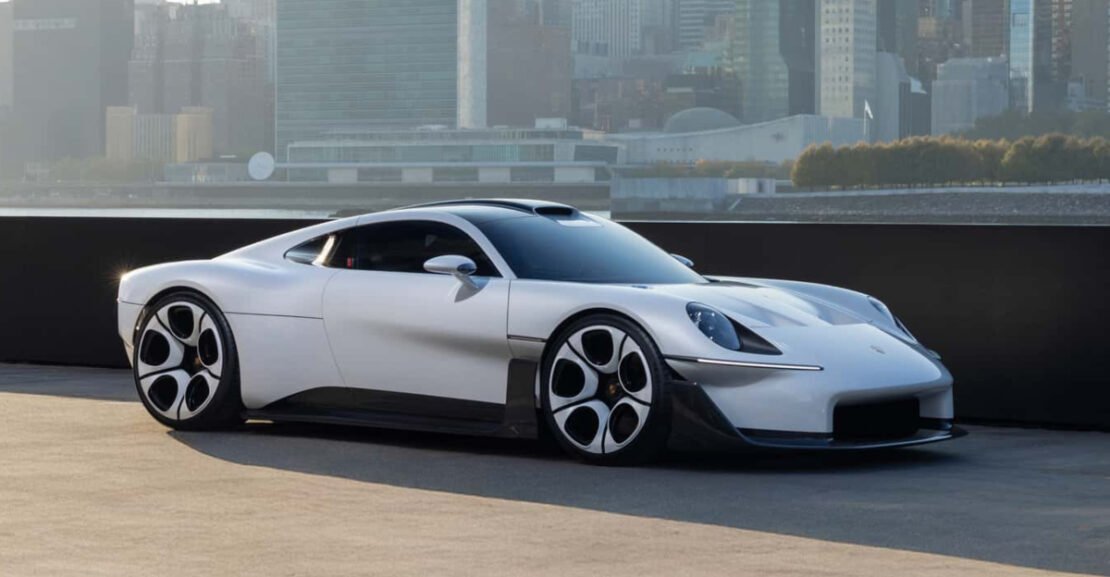
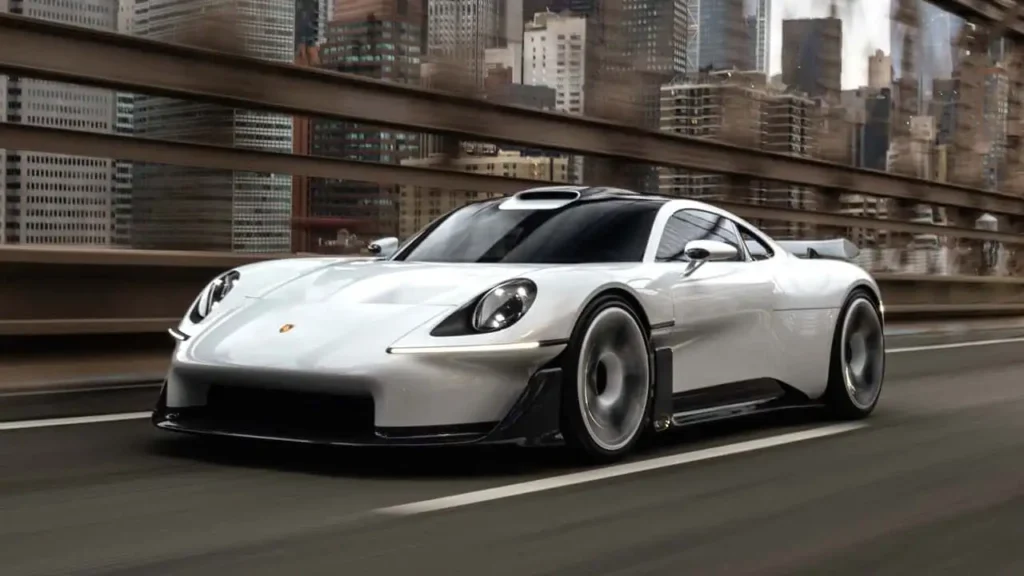
Unveiled in New York, the Porsche Mission S signals a bold new chapter for the German sports car manufacturer. With a mid-engine architecture, a remarkably purist interior and design inspired by the legendary 550 Spyder, 917 and 959, this extraordinary concept previews a new generation of Porsche super sports cars positioned above the iconic 911.
For more than seven decades, Porsche has built its reputation around an exceptionally clear philosophy: the driving experience should always remain at the centre of automotive engineering.
From the lightweight 550 Spyder to the legendary 911, the extraordinary Carrera GT and the technologically ambitious 918 Spyder, the German manufacturer has repeatedly demonstrated that performance is about much more than horsepower.
It is about balance, precision, responsiveness and the connection between driver and machine.
Now, Porsche is preparing to explore that philosophy from an entirely new perspective.
Unveiled on October 15, 2026, in New York, the Porsche Mission S is a remarkable concept car that previews not simply a future design direction, but an entirely new generation of mid-engined super sports cars.
Positioned above the Porsche 911, the Mission S introduces a design language that combines historic inspiration with contemporary engineering, while embracing an unusually purist approach to the driving environment.
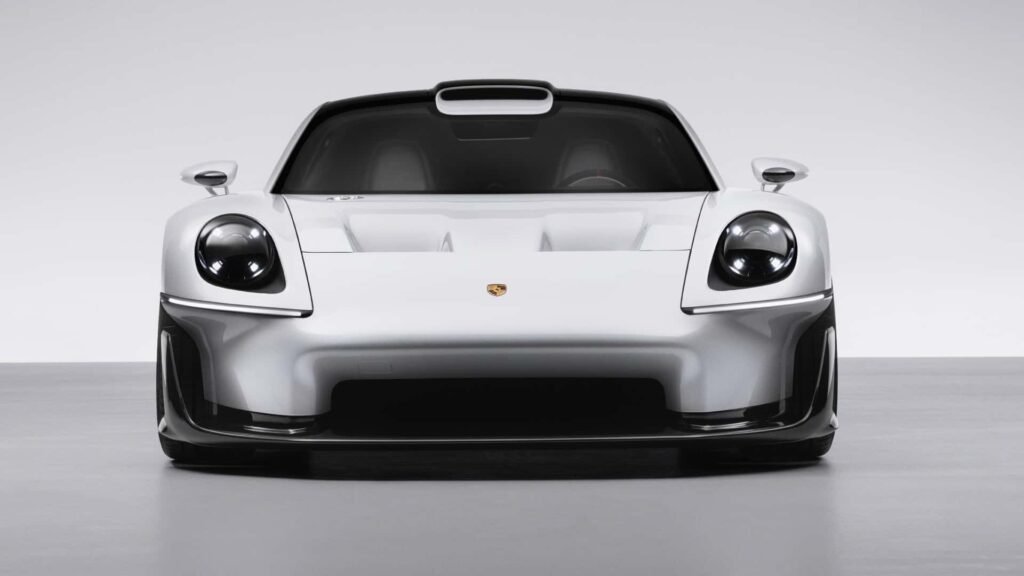
Perhaps most significantly, Porsche has confirmed that the underlying architecture is being developed for a permanent addition to its model range, rather than another isolated, extremely limited-production hypercar.
The Mission S therefore represents something considerably more important than a conventional design study.
It offers an early vision of how Porsche intends to redefine the relationship between performance, technology and driving emotion in the years ahead.
A New Porsche Supercar Positioned Above the 911
The Porsche 911 has occupied a unique position within the automotive world since its introduction in 1963.
Through successive generations, it has evolved into one of the most technically sophisticated and versatile sports cars ever created.
From the elegant Carrera to the formidable Turbo S and track-focused GT3 RS, the 911 family covers an extraordinary range of performance capabilities.
Yet Porsche has periodically explored territory beyond its most celebrated model.
The 959 demonstrated the possibilities of advanced all-wheel-drive technology during the 1980s.
The Carrera GT introduced an extraordinary mid-engined V10 supercar in the early 2000s.
And the 918 Spyder demonstrated how hybrid technology could transform the definition of high-performance motoring.
These automobiles became defining chapters in Porsche’s history.
However, each belonged to an exclusive, limited-production programme.
The Mission S introduces a different ambition.
According to Porsche CEO Michael Leiters, the company intends to establish a permanently available family of mid-engined super sports cars positioned above the 911.
This distinction is fundamental.
Rather than creating another exceptional machine intended for a relatively small number of collectors, Porsche is developing a more versatile architecture capable of supporting different interpretations of the supercar concept.
The Mission S is the first visible expression of that ambition.
Its final production form remains to be confirmed, but its strategic importance is already clear.
Porsche Flachbau RS: The 911 GT2 RS Reimagined in the Spirit of Moby Dick
New York, 1953: The Inspiration Behind the Mission S Premiere
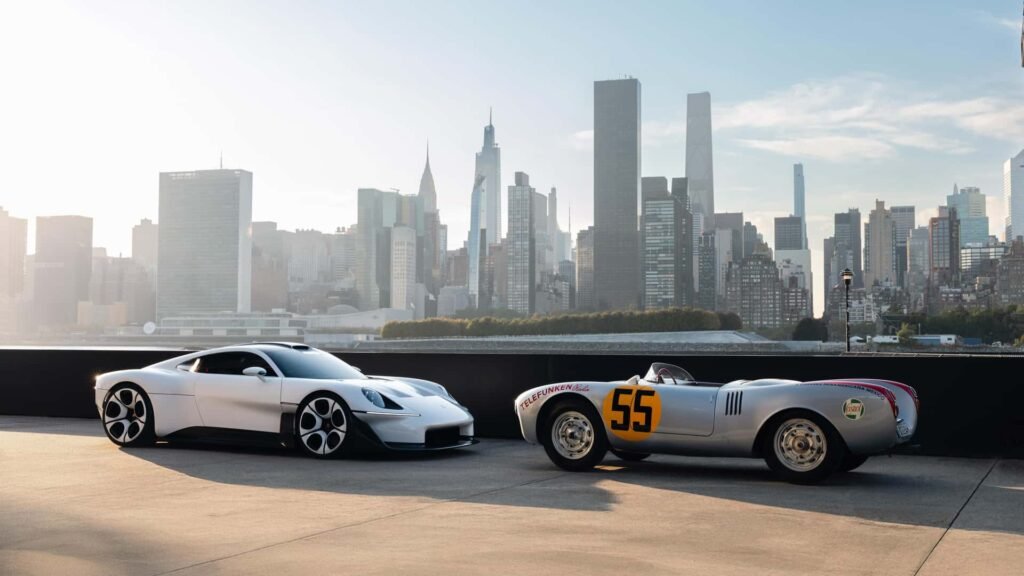
Porsche selected an unusually meaningful location for the Mission S’s world premiere.
The unveiling took place on a pier in Queens, New York, overlooking the Manhattan skyline.
The location was not chosen by coincidence.
In 1953, the legendary Porsche 550 Spyder was photographed at the same site, producing images that helped introduce the young German sports car manufacturer to an international audience.
At the time, the 550 represented a fundamentally different approach to high-performance motoring.
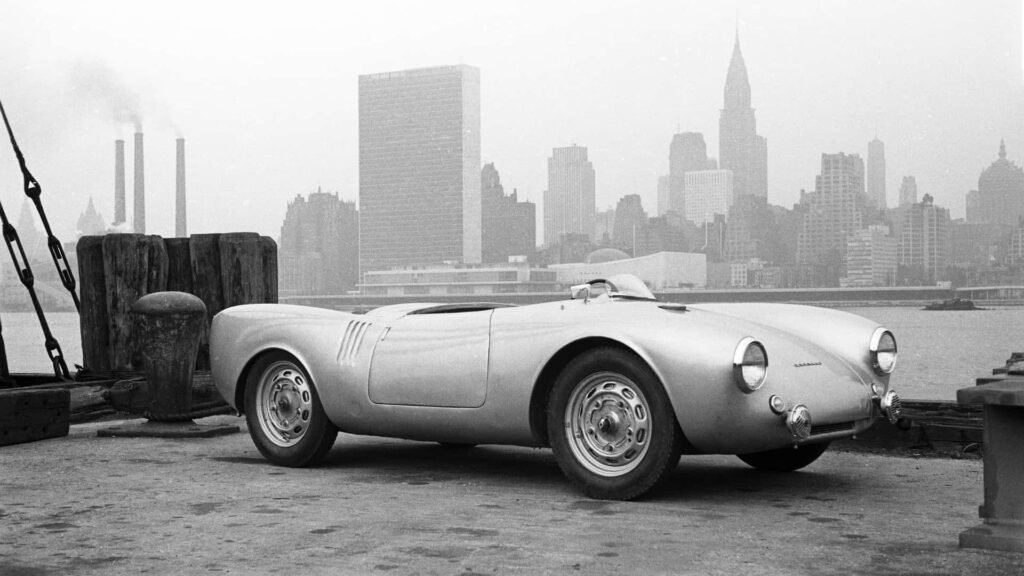
Compact, lightweight and exceptionally agile, its mid-engine architecture prioritized balance and mechanical efficiency.
Rather than relying on enormous engines or extravagant luxury, Porsche pursued performance through intelligent engineering.
The 550 would become one of the most significant competition cars in the company’s early history, helping establish principles that continue to influence its sports cars.
Seventy-three years later, the Mission S returns to that same location.
The symbolism is particularly powerful.
Both automobiles represent important moments in Porsche’s development.
Both embrace a mid-engine architecture.
And both reflect the manufacturer’s conviction that exceptional sports cars should prioritize the relationship between driver, machine and road.
For Porsche, the Mission S is therefore not simply a glimpse into the future.
It is a continuation of an engineering philosophy established more than seven decades earlier.
A New Design Language Rooted in Porsche Heritage
The Mission S has been developed under the direction of Tobias Sühlmann, Vice President Style Porsche.
Its exterior introduces a more sculptural interpretation of the brand’s established design language while preserving the characteristics that make a Porsche immediately recognizable.
The concept is particularly notable for its proportions.
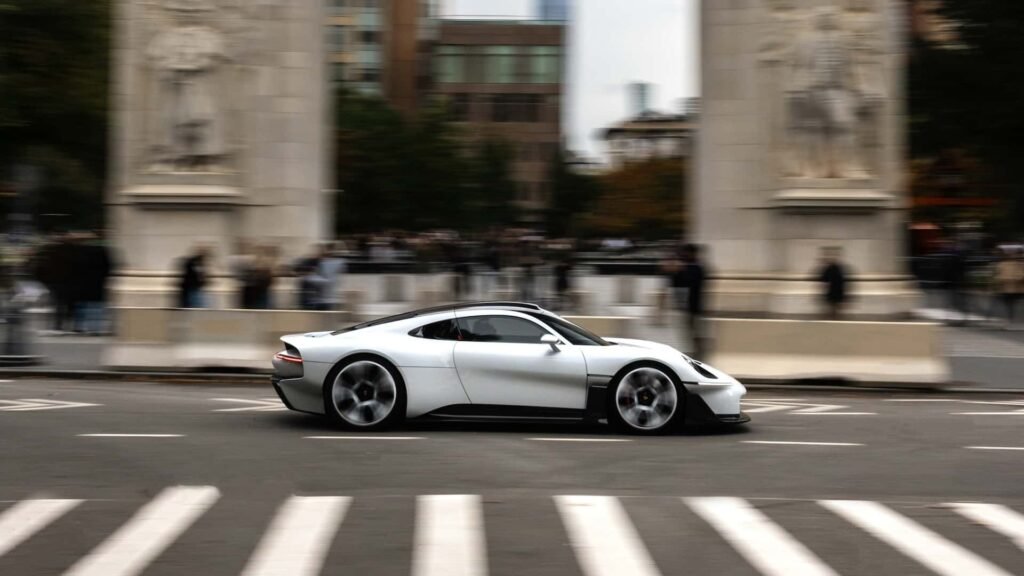
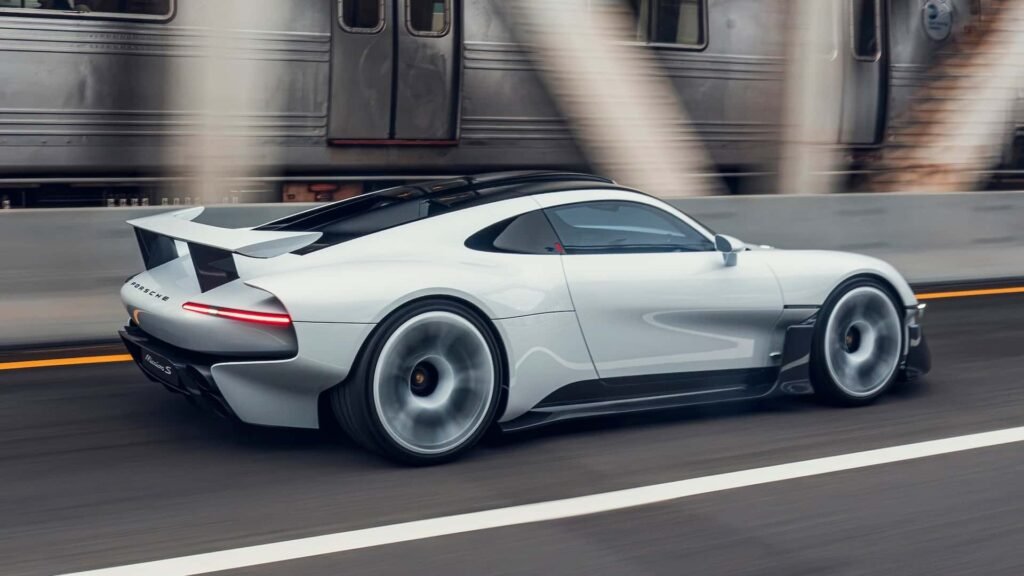
Its low roofline, substantial width and pronounced wheel arches create an unmistakable mid-engined silhouette.
Porsche describes the relationship between its surfaces through the concept of floating volumes.
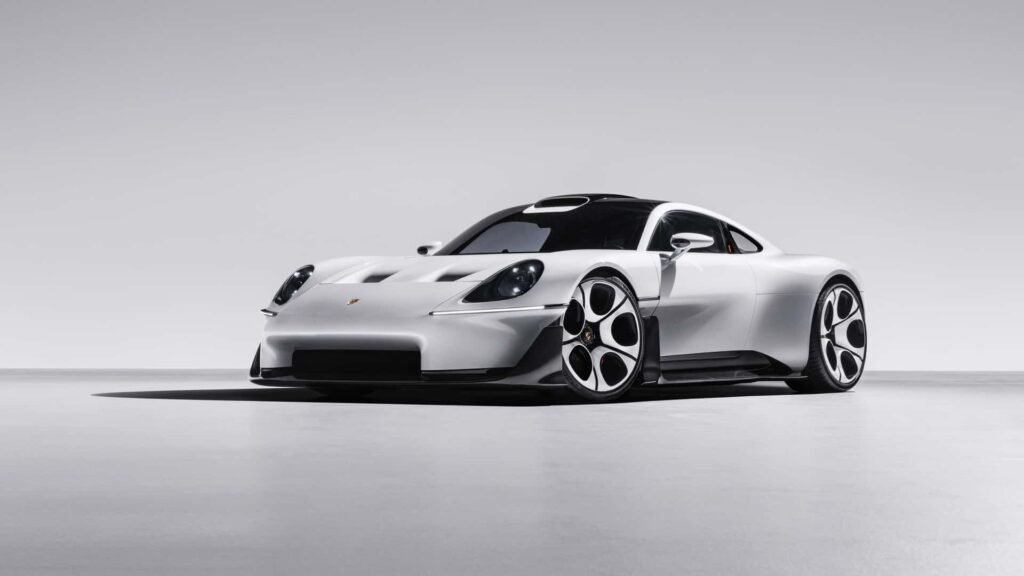
Rather than appearing as a collection of separate panels and aerodynamic additions, the bodywork has been designed to create the impression of interconnected sculptural forms.
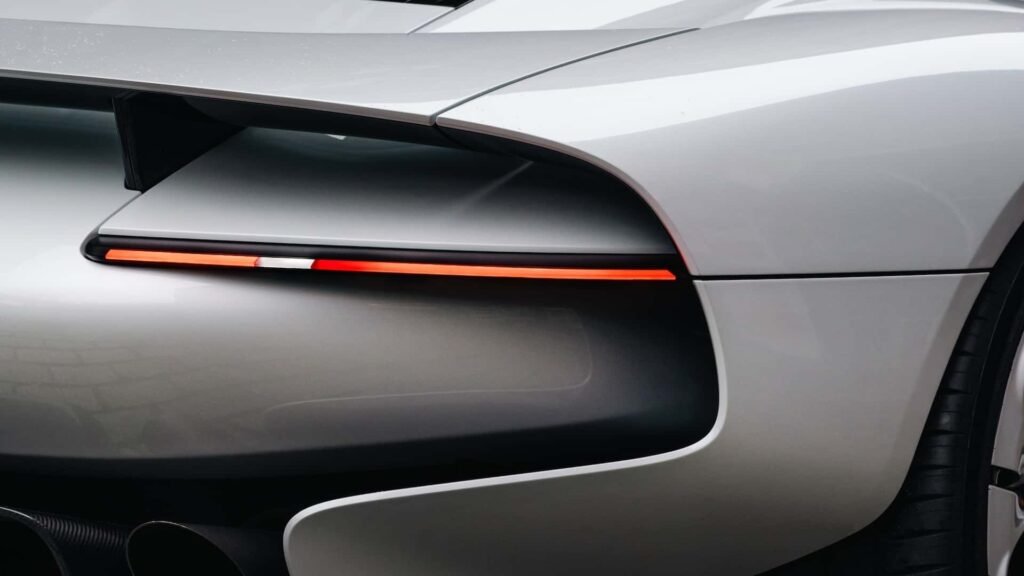
A continuous visual line connects the front and rear lighting signatures.
Above this line, muscular body surfaces emphasize power and movement.
Below it, the technical elements of the vehicle become increasingly visible, reinforcing the concept’s lightweight engineering philosophy.
The design draws inspiration from several important Porsche models.
The prominent front fenders and distinctive headlights recall the legendary 911.
The flattened front section references the racing-derived 911 GT1.
The flowing roofline incorporates elements associated with the celebrated 959.
And the rear introduces a composition inspired by Porsche’s historic endurance-racing machinery.
The result is a fascinating combination of familiarity and innovation.
The Mission S looks unmistakably like a Porsche, yet its proportions communicate that it belongs to a different category from the traditional rear-engined 911.
The Return of the Classic Porsche Flyline
One of Porsche’s most recognizable design characteristics is its distinctive roofline, commonly referred to as the flyline.
This flowing silhouette has remained central to the visual identity of the 911 for generations.
In the Mission S, Porsche has reinterpreted the concept around an entirely different mechanical architecture.
The mid-engine layout allows the cabin, roofline and rear bodywork to form a particularly dramatic composition.
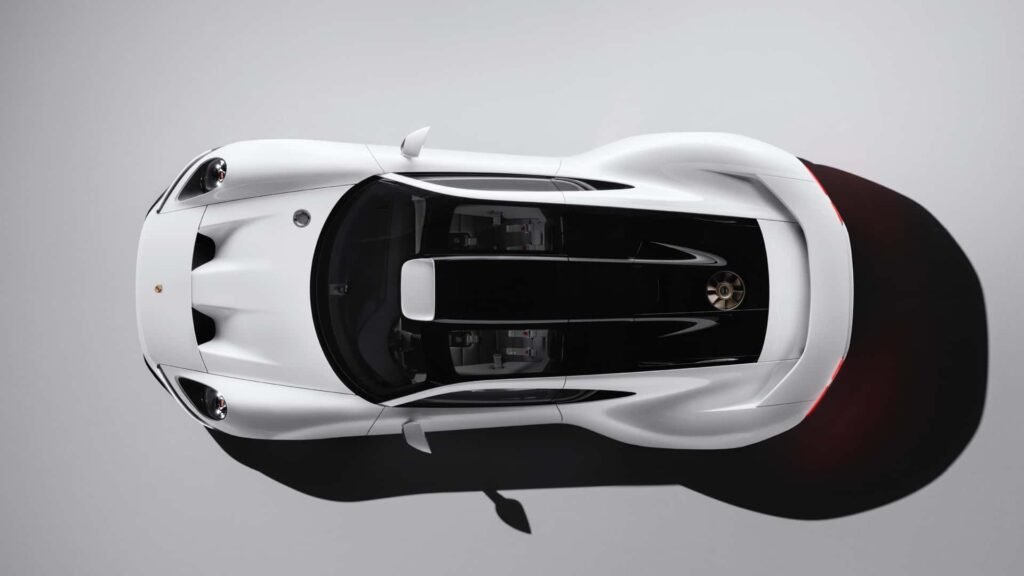
The roof descends toward the rear, visually connecting the passenger compartment with the engine cover and aerodynamic structures.
The result feels both contemporary and historically familiar.
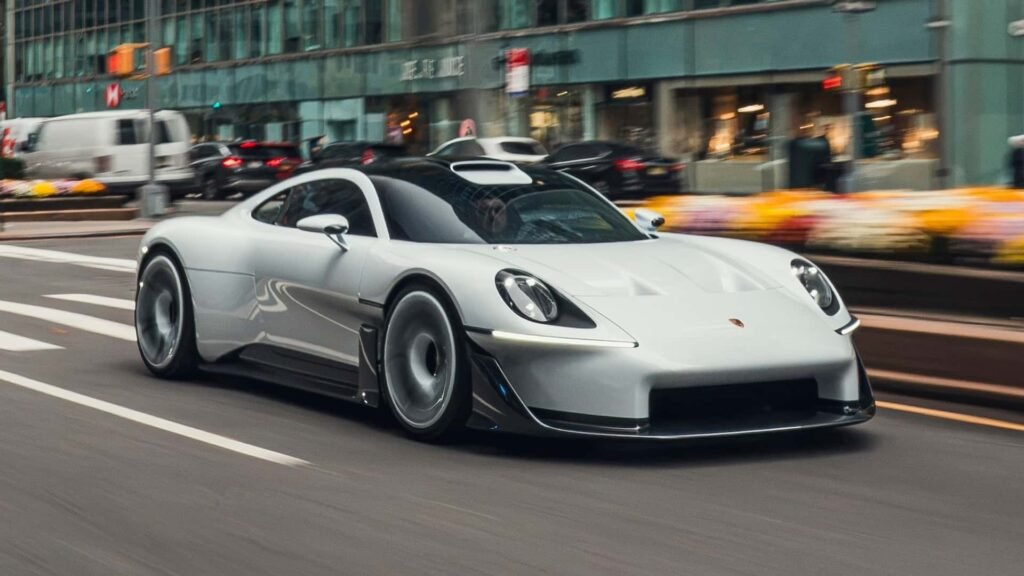
Rather than introducing unnecessarily complicated surfaces, Porsche has concentrated on proportions and the relationship between individual volumes.
This approach reflects a broader design philosophy.
Exceptional automotive design does not necessarily require aggressive decoration or excessive complexity.
Sometimes, the most memorable automobiles are those whose essential forms appear almost inevitable.
The Mission S attempts to achieve precisely that balance.
Porsche 917 Inspiration and Active Aerodynamics
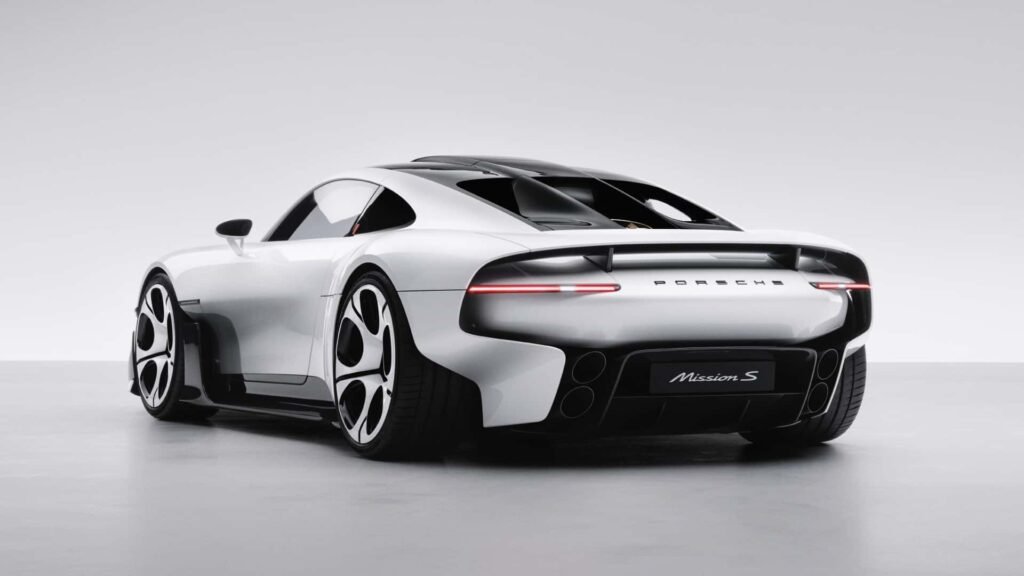
The rear of the Mission S is particularly significant.
A prominent cooling-fan element draws inspiration from the legendary Porsche 917, one of the most celebrated racing cars in motorsport history.
The reference is more than an ornamental tribute.
Porsche has incorporated the fan-inspired feature into the vehicle’s technical design, demonstrating how historic engineering elements can be reinterpreted through contemporary manufacturing techniques.
An integrated active rear wing adds another dimension.
Rather than appearing as an isolated aerodynamic accessory, the wing forms part of the overall body composition.
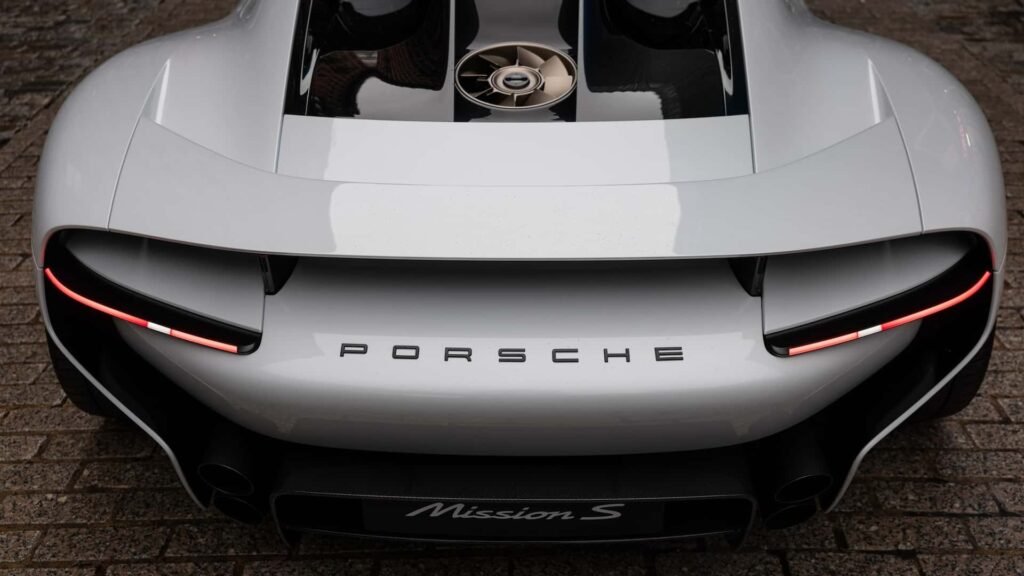
Its design reinforces the relationship between technical function and sculptural appearance.
The concept also incorporates a distinctive rear treatment inspired by the 911 GT1, creating a visual impression of an additional technical structure integrated within the principal body.
These details give the Mission S a particularly interesting character.
It does not attempt to replicate a historic racing car.
Instead, it uses Porsche’s motorsport heritage as the foundation for a new visual and engineering identity.
Wheels Inspired by the Porsche 928
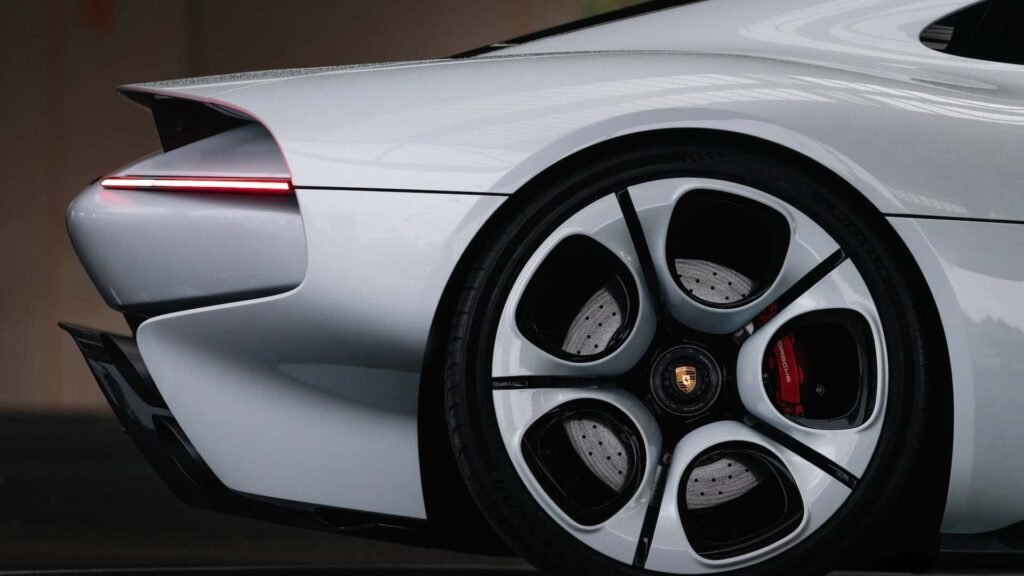
Another subtle reference appears in the Mission S’s wheels.
Their design draws inspiration from the distinctive disc-style wheels associated with the Porsche 928, one of the manufacturer’s most unconventional grand tourers.
Originally introduced in 1977, the 928 combined front-mounted V8 performance with a sophisticated interpretation of long-distance luxury.
Its innovative engineering and distinctive design established an identity separate from the traditional 911.
For the Mission S, Porsche has reinterpreted the 928’s recognizable wheel design through a more contemporary lightweight construction philosophy.
The resulting wheels combine broad sculptural surfaces with technical detailing intended to reinforce the concept’s performance character.
It is a small but revealing decision.
Porsche is not drawing exclusively from its most celebrated racing cars.
The Mission S also celebrates less conventional chapters of the company’s design history, connecting different eras through a coherent visual language.
Gunther Werks McKenna Commission: A Porsche 911 Reimagined Through Personal Heritage
A Driver-Focused Interior That Rejects Digital Excess
Perhaps the most surprising aspect of the Porsche Mission S is its interior.
At a time when many contemporary performance automobiles feature increasingly elaborate infotainment systems and enormous digital displays, Porsche has deliberately moved in the opposite direction.
The Mission S adopts a cabin philosophy inspired by the 550 Spyder and Porsche 356.
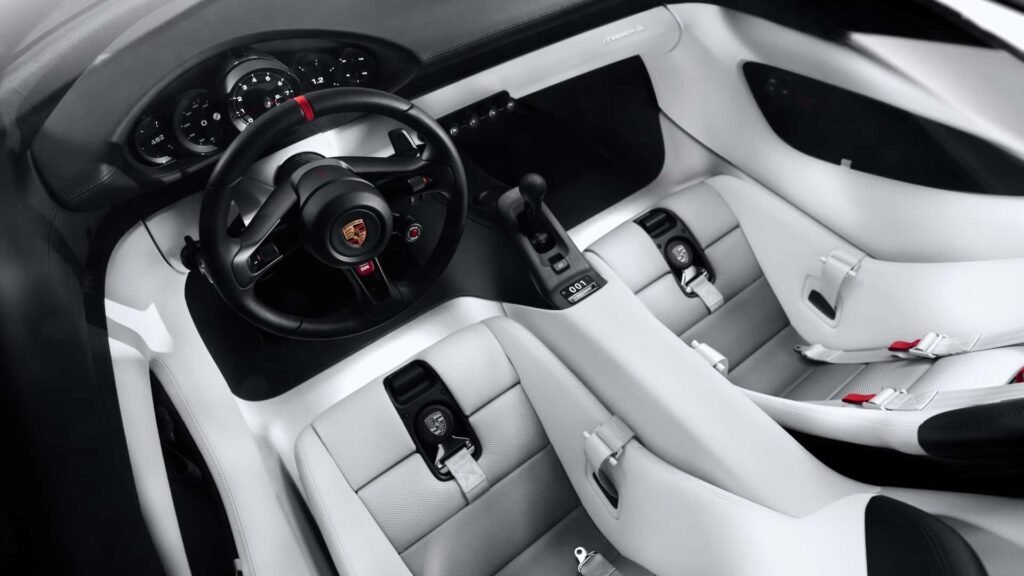
Its architecture is defined by simplicity, carefully considered ergonomics and a particularly strong focus on the driver.
Two principal design lines extend through the dashboard and doors, creating the impression that the occupants sit deeply within the structure of the car.
The driving position is low and purposeful.
Physical controls remain an important part of the environment.
Rather than allowing digital technology to dominate the cabin, Porsche has attempted to integrate it discreetly around the fundamental requirements of driving.
This approach creates a particularly refreshing interpretation of modern sports car luxury.
The objective is not to provide the greatest possible number of functions or the largest available displays.
It is to make every important interaction feel immediate, intuitive and deliberate.
Five Circular Instruments and a Moving Tachometer
The most striking interior feature is the instrument cluster.
The Mission S incorporates five circular instruments, recalling the traditional dashboard architecture of historic Porsche sports cars.
At the centre sits a tachometer combining an analogue needle with a digital display.
The instrument is not completely static.
Depending on the selected driving mode, the central tachometer can move closer to the driver.
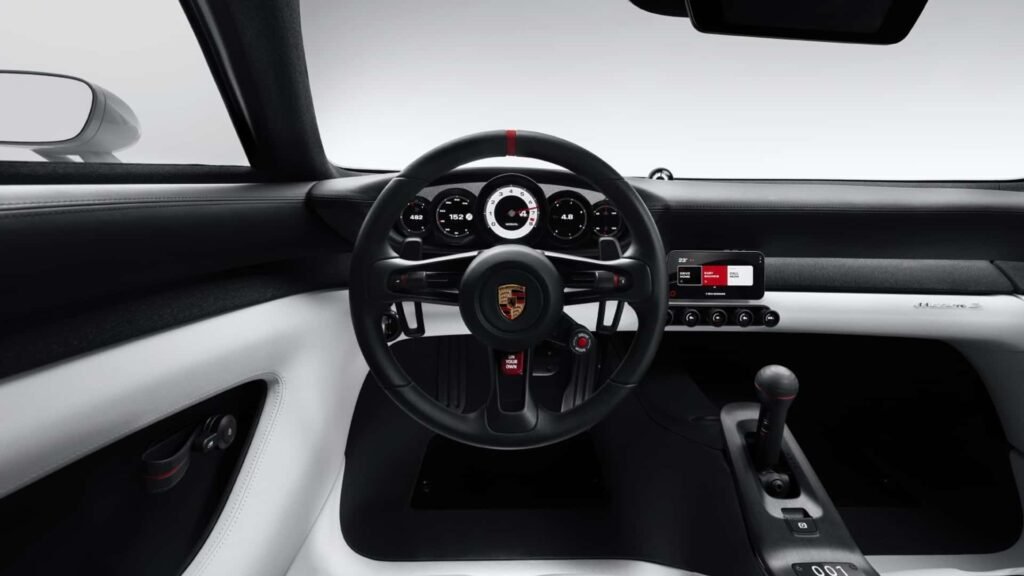
The surrounding instruments can also change their arrangement, adapting the information presented to the requirements of the driving situation.
This is a particularly interesting example of how analogue and digital technology can complement one another.
The physical character of the instruments creates a connection with Porsche’s past.
Their adaptability introduces functionality that would have been impossible in a conventional mechanical dashboard.
A redesigned Sport Chrono element follows the same philosophy.
Rather than presenting technology as an end in itself, the Mission S uses it to reinforce the driving experience.
The result is a modern interpretation of a classic Porsche cockpit, with the driver remaining the unmistakable centre of attention.
No Permanent Central Screen: A Different Approach to Connectivity
Another distinctive decision is the absence of a permanently integrated central infotainment display.
The Mission S does not feature the large dashboard screen that has become almost universal in contemporary luxury and performance vehicles.
Instead, Porsche has developed a retractable smartphone mounting system compatible with MagSafe technology.
When required, the driver’s phone can serve as a navigation or information interface.
When it is not needed, the device can be stored away, allowing the dashboard to retain its remarkably clean appearance.
The system is complemented by a revised My Porsche application, providing access to digital functions and customizable instrument graphics.
This approach reflects a broader question facing contemporary automotive designers.
How much technology does a driver actually need within immediate view?
For the Mission S, Porsche’s answer is deliberately restrained.
Digital systems remain available, but their presence does not define the driving environment.
It is an intriguing expression of luxury through simplicity rather than technological excess.
An Adjustable Gear Selector and the Appeal of Mechanical Interaction
The Mission S also introduces an unusual approach to transmission controls.
A specially developed gear selector can be adjusted vertically, allowing the driver to position it according to personal preference.
The design emphasizes the physical act of changing gear, reinforcing the connection between human movement and mechanical response.
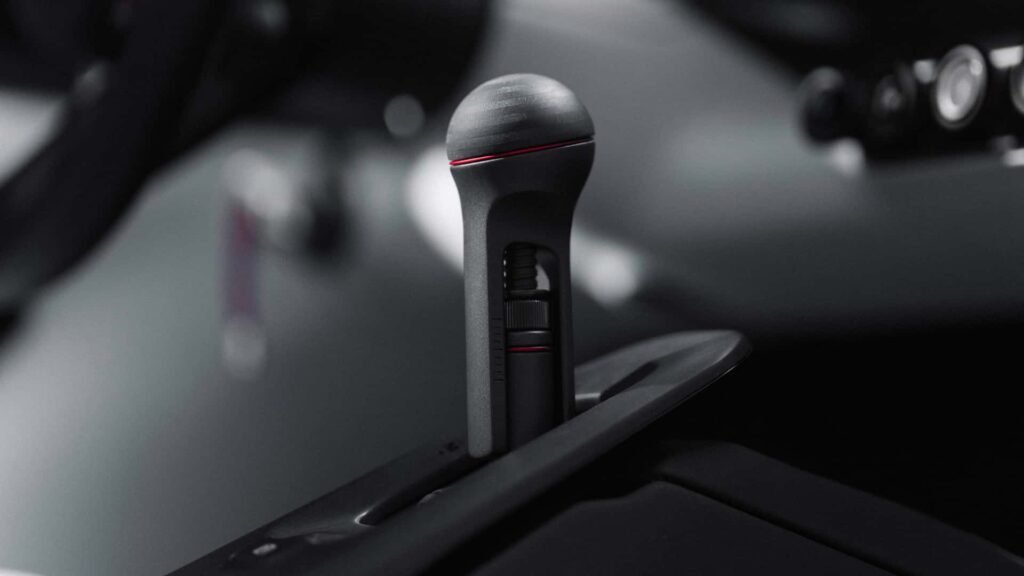
However, the presence of this selector should not be interpreted as confirmation that the concept uses a conventional manual gearbox.
Porsche has not published a complete technical specification for the Mission S’s transmission.
What makes the project particularly interesting is the flexibility of its future platform.
Michael Leiters has indicated that the architecture could accommodate different transmission configurations, including a traditional manual gearbox or a PDK dual-clutch automatic.
Whether a manual transmission ultimately reaches production will depend on customer demand and future development decisions.
For enthusiasts, the possibility is particularly compelling.
As many high-performance manufacturers move toward increasingly automated drivetrains, Porsche continues to recognize the emotional appeal of mechanical engagement.
The Mission S therefore leaves open the possibility of a future flagship sports car designed around traditional driver involvement.
Combustion or Hybrid: What Will Power the Mission S?
Porsche has deliberately avoided revealing detailed powertrain specifications for the concept.
No official horsepower figure, displacement, acceleration time or maximum speed has been announced.
Nevertheless, the company has confirmed that its new mid-engine super sports car platform is being developed with considerable mechanical flexibility.
According to statements made during the launch, the architecture could support conventional internal-combustion engines or hybrid powertrains.
This creates several intriguing possibilities.
A lightweight combustion-powered supercar could emphasize direct response, reduced complexity and traditional driving sensations.
A performance-oriented hybrid could combine an exceptional combustion engine with electric assistance, delivering more immediate torque and sophisticated dynamic control.
Both interpretations would fit naturally within Porsche’s history.
The Carrera GT demonstrated the appeal of a high-revving, naturally aspirated engine paired with a manual transmission.
The 918 Spyder later showed how hybrid technology could contribute to extraordinary performance without eliminating the involvement of a combustion engine.
The Mission S may ultimately provide the foundation for a new interpretation of these philosophies.
For now, however, any claim concerning a specific engine configuration, cylinder count or power output would remain speculative.
Porsche’s most important announcement concerns the architecture itself, not the definitive specifications of an individual production model.
Porsche 911 GT3 RS Sonderwunsch Macadamia Metallic
A New Philosophy of Sports Car Engineering
The Mission S forms part of Porsche’s wider strategic programme, known as Sportwagenschmiede ’35.
This initiative places particular emphasis on the brand’s sporting identity, technological expertise and the development of increasingly desirable performance automobiles.
The new mid-engined platform represents one of the most significant elements of that strategy.
Rather than relying exclusively on the continuing evolution of the 911, Porsche intends to establish another distinctly positioned sports car family.
This approach creates new opportunities.
A dedicated architecture can be developed around the requirements of mid-engine balance, packaging and aerodynamic performance from the beginning.
It can also support a different relationship between driver position, powertrain and chassis dynamics.
For Porsche, whose engineering history includes both rear-engined and mid-engined icons, such flexibility represents a logical extension of its heritage.
But the Mission S also communicates an important philosophical direction.
Driving involvement remains central, even as the technologies used to achieve it continue to evolve.
The deliberate reduction of digital distractions, emphasis on tactile controls and attention to classic proportions all reinforce this objective.
From the 550 Spyder to the Carrera GT and 918 Spyder
The Mission S occupies a fascinating position within Porsche’s historical narrative.
The 550 Spyder established the benefits of lightweight mid-engine competition architecture during the 1950s.
The Carrera GT, introduced half a century later, translated a motorsport-inspired V10 into one of the most extraordinary road-going supercars of its generation.
The 918 Spyder subsequently demonstrated the possibilities of hybrid performance, combining electrification with a sophisticated naturally aspirated engine and advanced all-wheel drive.
Each represented a different response to the technical opportunities of its era.
The Mission S draws from these traditions but introduces a fundamentally different commercial ambition.
Rather than functioning exclusively as a limited-production flagship, the new platform is intended to support an ongoing family of super sports cars.
This could allow Porsche to develop different versions around a common mechanical foundation.
However, the number of future models, their exact positioning and their production specifications have not yet been confirmed.
The Mission S is therefore best understood as the first chapter of a new programme, rather than a finalized successor to any single historic Porsche.
Porsche Mission S Price and Production: What Is Confirmed?
The Porsche Mission S remains a concept vehicle.
As of its October 2026 presentation, Porsche has not announced an official selling price, a confirmed production specification or an individual model designation for the first road-going derivative.
The company has confirmed its intention to develop a permanent mid-engined super sports car offering positioned above the 911.
That position suggests a substantial premium over Porsche’s established sports car range.
However, assigning a specific price would be premature.
Likewise, no definitive production quantities or customer delivery dates have been announced specifically for the Mission S.
The concept’s importance lies in the design and engineering philosophy it reveals, together with the strategic commitment to a new vehicle architecture.
For collectors and enthusiasts, these early announcements provide an unusually compelling glimpse into Porsche’s long-term ambitions.
Could the Mission S Become a Future Collector Icon?
Historically, Porsche’s most exceptional sports cars have often developed particularly strong followings among enthusiasts and collectors.
The 959, Carrera GT and 918 Spyder are all significant examples, although their collectability reflects many factors beyond production numbers.
Engineering significance, driving character, condition, provenance and historical context all contribute to long-term desirability.
The Mission S has the potential to establish a similarly important chapter in Porsche’s history.
However, its future significance will depend on the automobiles ultimately developed from the platform.
A production model combining a distinctive mid-engine architecture with compelling mechanical performance and exceptional design could attract considerable enthusiast interest.
An available manual transmission, if Porsche eventually chooses to offer one, might further differentiate certain configurations.
Yet these remain possibilities rather than confirmed outcomes.
What can already be appreciated is the strength of the original vision.
The Mission S presents a coherent interpretation of modern sports car values, one that places driver involvement and design integrity above unnecessary complexity.
Porsche 911 GT3 S/C — Open-Air Precision Meets Pure Motorsport DNA
The Future of Porsche Beyond the 911
The Porsche Mission S arrives at a particularly important moment in automotive history.
The performance-car industry is increasingly influenced by electrification, digital technology, aerodynamic complexity and extraordinary power outputs.
Yet the fundamental qualities that create an exceptional driving experience remain remarkably consistent.
Balance matters.
Steering response matters.
Driving position, mechanical feedback and the way an automobile communicates with its driver remain essential.
The Mission S explores these principles through an intriguing combination of historic inspiration and contemporary engineering.
Its mid-engine architecture creates the foundation for a new family of Porsche sports cars.
Its exterior design references decades of motorsport and road-car development without becoming a nostalgic exercise.
And its interior suggests that the future of high-performance luxury may involve fewer distractions rather than more technology.
The Porsche Mission S is not simply another concept car designed to attract attention. It represents an ambitious attempt to redefine what a modern Porsche super sports car should be, while remaining faithful to the principles that made the marque extraordinary.
Seventy-three years after the 550 Spyder appeared beside the Manhattan skyline, Porsche has returned to the same setting with a new vision.
The engineering has evolved. The design language has changed. The possibilities are greater than ever.
But the underlying ambition remains remarkably familiar.
To create a sports car in which the driver, above everything else, comes first.