
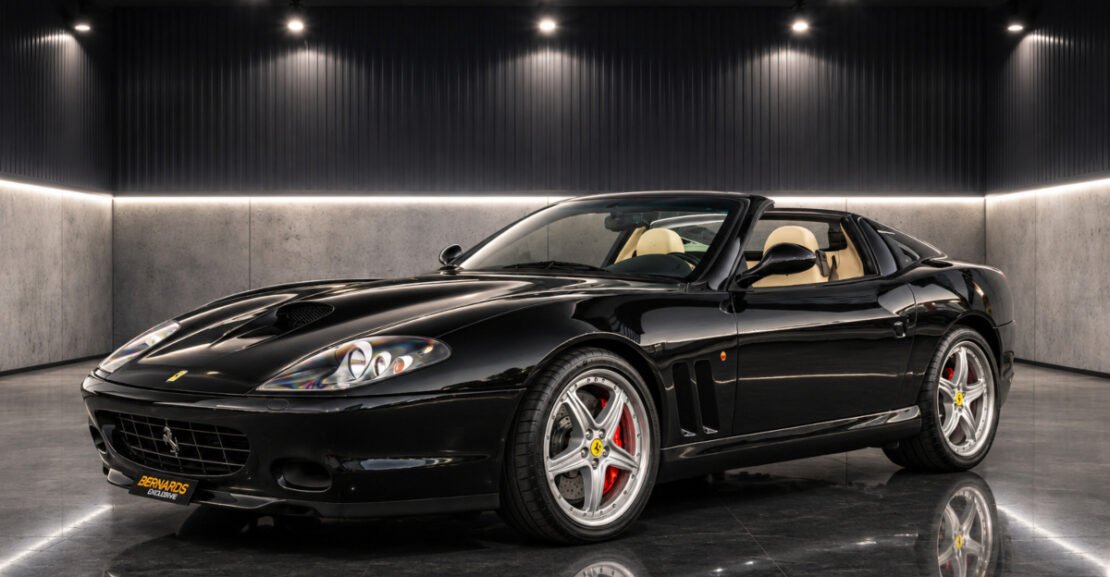
An exceptional 2006 Ferrari V12 grand tourer in Nero DS and Crema, featuring the revolutionary Revocromico glass roof, Ferrari Classiche certification and just 36,022 kilometres.
There was a time when Ferrari’s most exclusive grand tourers were defined not by hybrid technology or extreme aerodynamic appendages, but by the elegance of their proportions, the character of a naturally aspirated V12 and the ingenuity of their engineering.
The Ferrari 575 Superamerica belongs to that remarkable era.
Introduced in 2005, the Superamerica transformed the already accomplished 575M Maranello into one of the most distinctive open-top Ferraris ever produced. Its defining feature was a revolutionary rotating glass roof, an engineering solution that allowed the car to change from a closed grand tourer into an open-air V12 sports car in approximately seven seconds.
Production was limited to just 559 examples worldwide, securing its position among Ferrari’s most exclusive front-engined grand tourers of the modern era.
This particular 2006 Ferrari 575 Superamerica F1, offered by Bernards Exclusives in the Netherlands, combines several highly desirable characteristics.
Finished in Nero DS with a Crema leather interior, it features the sought-after HGTC Handling Gran Turismo Competizione package, Ferrari Classiche certification dating from 2021 and an odometer reading of just 36,022 kilometres.
Originally delivered in Germany through official Ferrari dealer Gohm, the car is advertised at €399,950.
Its appeal lies in a particularly compelling combination: limited production, elegant Italian design, naturally aspirated V12 performance and one of the most innovative roof mechanisms ever fitted to a production Ferrari.
The Superamerica Name: A Ferrari Tradition Reimagined
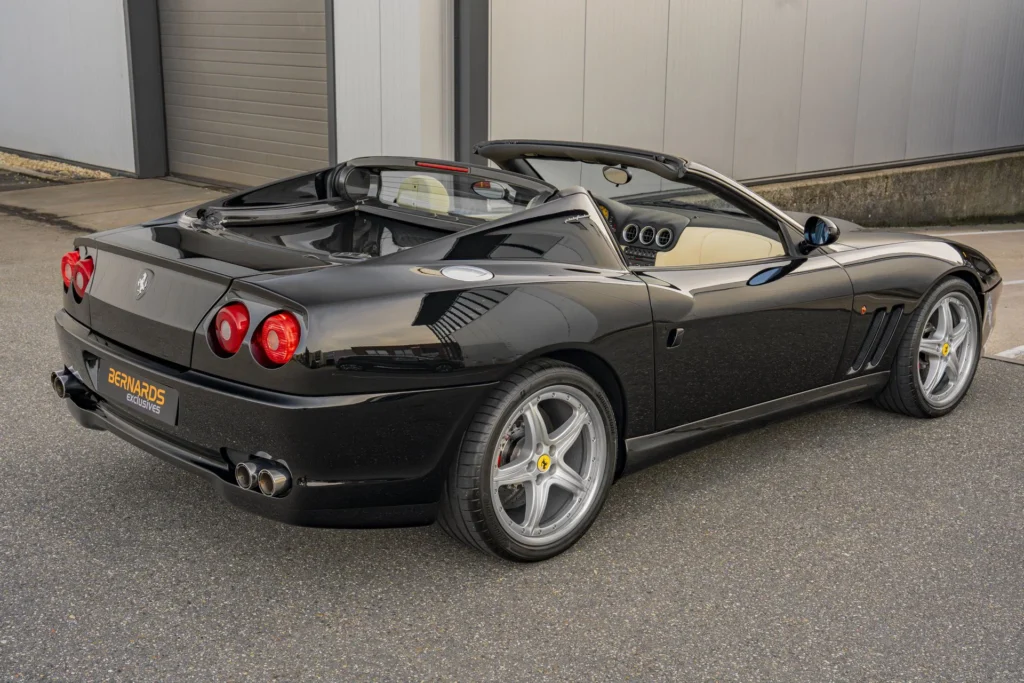
The Superamerica name carries considerable historical significance within Ferrari’s grand touring heritage.
During the 1950s and 1960s, Ferrari used the America and Superamerica designations for some of its most exclusive and luxurious automobiles.
Models such as the 410 Superamerica and 400 Superamerica were created for an exceptionally wealthy international clientele, often featuring distinctive coachbuilt bodies and powerful twelve-cylinder engines.
These were not conventional sports cars.
They represented Ferrari’s ability to combine extraordinary performance with elegance, craftsmanship and long-distance comfort.
When Ferrari revived the Superamerica name in 2005, it chose an automobile that reflected those same principles.
Based on the 575M Maranello, the new Superamerica retained the long-bonnet proportions, front-mounted V12 and sophisticated grand touring character of its underlying platform.
However, it introduced a roof design unlike anything previously offered by the manufacturer.
The result was a modern interpretation of a historic Ferrari philosophy: exceptional performance combined with exclusivity and technical innovation.
From the 550 Maranello to the 575 Superamerica
The foundations of the 575 Superamerica can be traced to Ferrari’s return to front-engined V12 grand touring in the 1990s.
The 550 Maranello, introduced in 1996, marked an important change in the company’s flagship road-car philosophy.
After years of mid-engined twelve-cylinder models such as the Testarossa and F512 M, Ferrari returned to the classic front-engine, rear-wheel-drive configuration.


The 550 Maranello combined traditional Ferrari proportions with modern chassis engineering and a powerful naturally aspirated V12.
In 2002, the model evolved into the 575M Maranello.
The updated car introduced a larger 5.75-litre engine, revised suspension, improved aerodynamics and the availability of Ferrari’s F1 automated manual transmission.
The 575M became one of the defining Ferrari grand tourers of its generation.
The Superamerica took that platform and introduced an entirely new interpretation of open-top motoring.
Unlike the earlier 550 Barchetta Pininfarina, which emphasized an uncompromising open-air experience, the Superamerica was designed to provide the versatility of a closed coupe and the emotional appeal of a convertible.
Its innovative roof made that combination possible.
Revocromico: One of Ferrari’s Most Ingenious Roof Designs
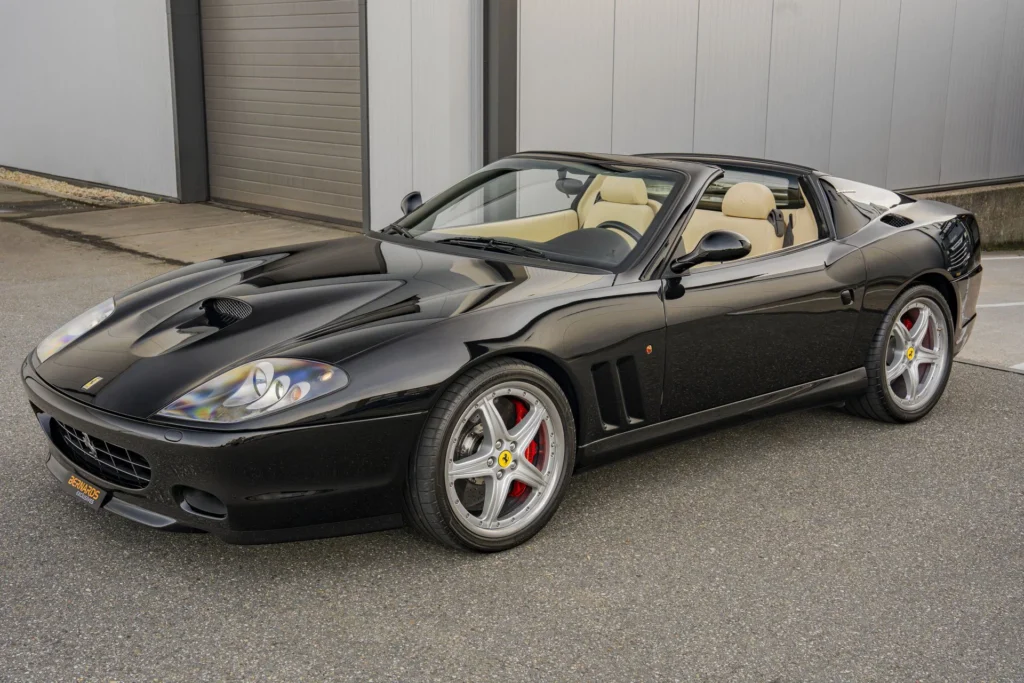
The defining feature of the Ferrari 575 Superamerica is its extraordinary Revocromico rotating glass roof.
Developed through the work of Italian designer and engineer Leonardo Fioravanti, the system represents one of the most unconventional solutions ever applied to a production convertible.
Instead of folding into a conventional storage compartment, the roof rotates through approximately 180 degrees around a transverse axis behind the passenger compartment.
The transformation takes around seven seconds.
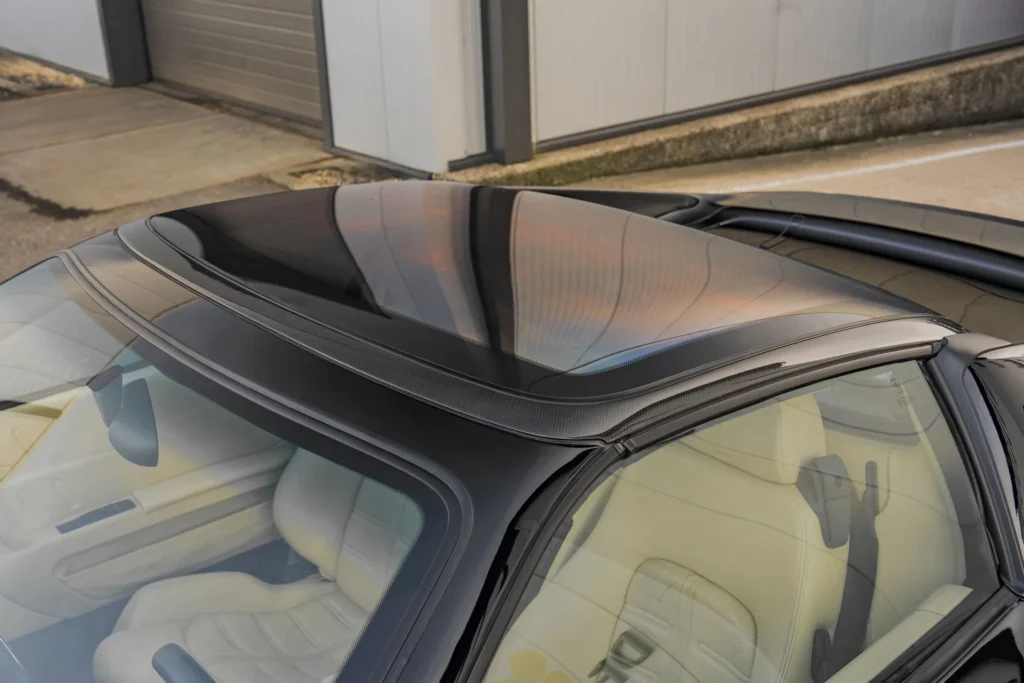
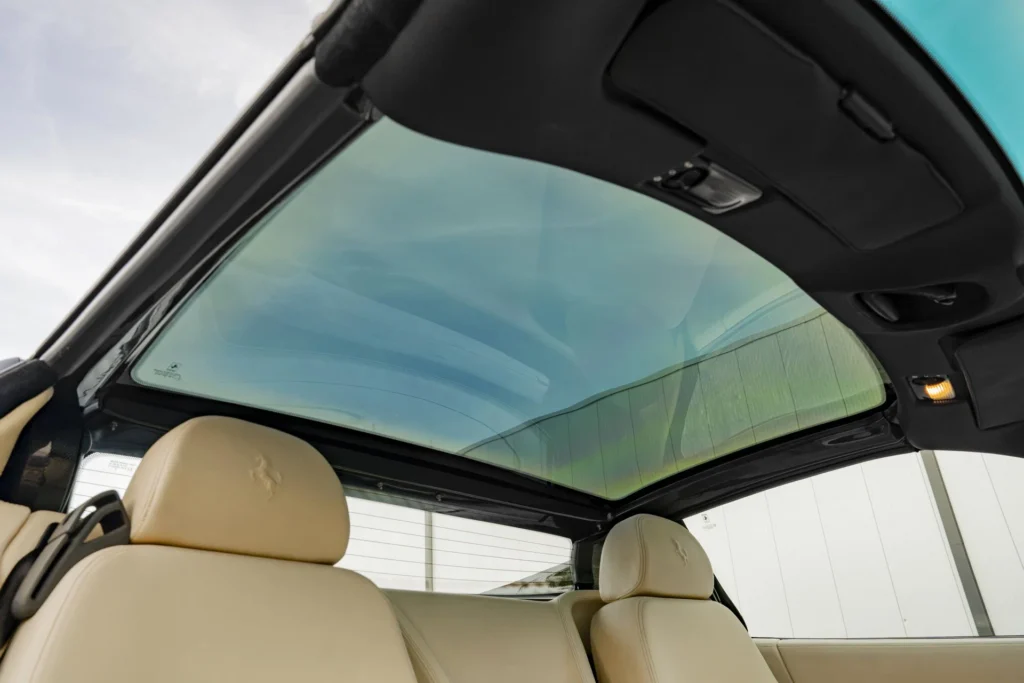
With the roof closed, the Superamerica retains the elegant proportions and weather protection of a conventional grand tourer.
When opened, the glass panel rotates backwards and rests over the rear deck, leaving the cabin exposed to the sky.
The mechanism is remarkable for its simplicity of concept.
Rather than using a complex arrangement of folding metal panels or a traditional fabric roof, Ferrari adopted a single rotating structure.
The result is visually dramatic and mechanically distinctive.
Even two decades after its introduction, the Revocromico system remains one of the most memorable features of any modern Ferrari.
Electrochromic Glass: Controlling the Light
The roof’s innovation extends beyond its unusual movement.
The Revocromico panel incorporates electrochromic glass, allowing occupants to adjust the amount of light entering the cabin.
With the roof closed, the transparency can be varied electronically to create different levels of shading.
This gives the Superamerica an additional dimension of comfort and versatility.
In bright sunlight, the glass can be darkened to reduce the amount of light entering the interior.
Under different conditions, a more transparent setting allows the cabin to feel open and illuminated.
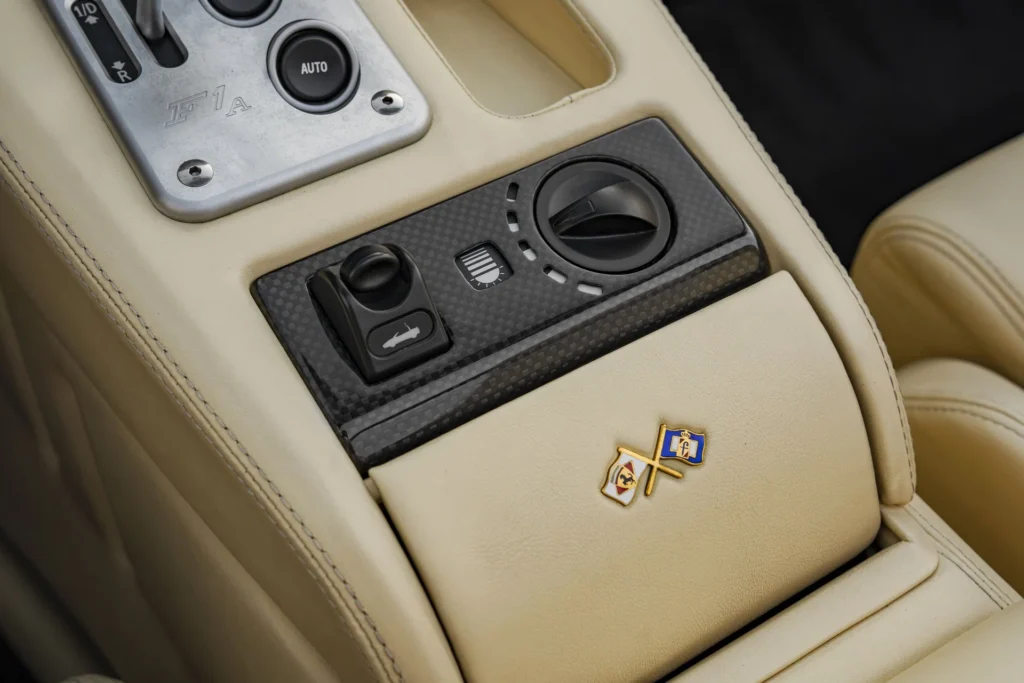

The technology was particularly advanced for a production grand tourer of the mid-2000s.
It also demonstrates Ferrari’s willingness to experiment with unconventional engineering solutions in limited-production models.
Unlike many traditional convertibles, the Superamerica preserves its luggage compartment when the roof is opened.
That characteristic reinforces its identity as a genuine grand tourer rather than simply a weekend sports car.
Why the Condition of the Roof Matters
For collectors considering a Ferrari 575 Superamerica, the Revocromico roof is one of the most important elements to examine.
Its unusual design and specialized components distinguish it from conventional convertible systems.
The mechanism, seals, glass and electrochromic functionality all deserve particular attention during a pre-purchase inspection.
This is especially relevant because the Superamerica was produced in relatively small numbers.
Replacement components and specialist knowledge may be more difficult to obtain than for a conventional Ferrari convertible.
According to Bernards Exclusives, the roof on this particular example is in excellent condition.
That is an important aspect of the vehicle’s advertised presentation.
For a prospective buyer, verifying the operation and condition of the complete roof system would be a sensible part of the acquisition process.
A fully functioning Revocromico roof is central to the Superamerica experience and one of the characteristics that makes the model so desirable.
A 5.75-Litre Naturally Aspirated V12
Beneath the Superamerica’s elegant bonnet lies Ferrari’s magnificent 5.75-litre naturally aspirated V12.
The engine represents one of the final developments of Ferrari’s traditional front-engined twelve-cylinder grand touring philosophy before the arrival of the 599 GTB Fiorano.
For the Superamerica, Ferrari increased output to approximately 540 PS, around 25 PS more than the standard 575M Maranello.
The additional performance gave the limited-production model a mechanical distinction to complement its innovative roof.
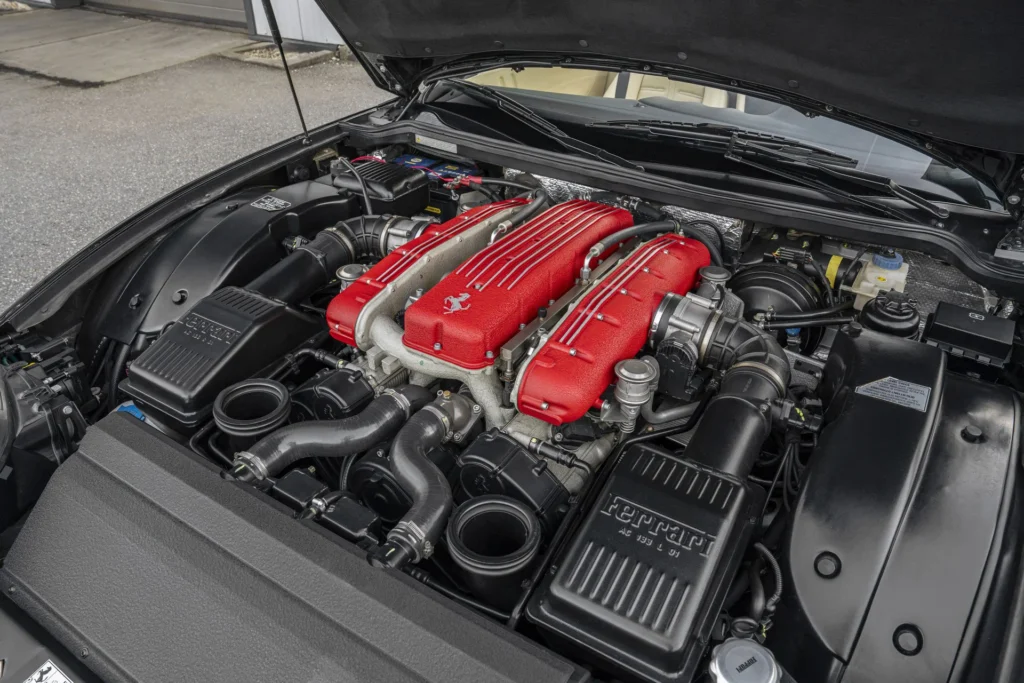
Unlike modern turbocharged engines, the V12 delivers its power through naturally aspirated response and a progressive increase in engine speed.
Its character is defined by smoothness, flexibility and the distinctive sound of twelve cylinders.
The engine is equally suited to relaxed long-distance driving and more enthusiastic use.
That duality is fundamental to the Superamerica’s appeal.
It is a car capable of covering substantial distances in comfort while retaining the emotional intensity expected from a Ferrari V12.
540 PS and the Ferrari F1 Transmission
This particular example features Ferrari’s F1 automated manual transmission.
Developed from the company’s experience with electronically controlled gear changes, the system allows the driver to select gears using paddles mounted behind the steering wheel.
Unlike a modern dual-clutch transmission, the F1 gearbox uses a conventional mechanical transmission architecture with an electronically actuated clutch and gear-selection system.
The driving experience is therefore distinctly characteristic of its era.
At lower speeds, the system requires a different approach from a modern automatic transmission.

During more enthusiastic driving, however, the paddle-operated gearbox creates a strong connection with Ferrari’s Formula 1-inspired technology of the period.
With approximately 540 PS, the Superamerica accelerates from 0–100 km/h in around 4.2 seconds.
Its advertised maximum speed is approximately 320 km/h.
Those figures remain impressive for a luxury-oriented open-top grand tourer introduced more than twenty years ago.
Yet outright acceleration is not the principal attraction.
The Superamerica’s defining quality is the combination of V12 performance, elegant design and an unusually engaging open-air driving experience.
HGTC: Handling Gran Turismo Competizione
One of the most desirable aspects of this particular Superamerica is its HGTC Handling Gran Turismo Competizione package.
Developed to enhance the sporting characteristics of the 575M platform, HGTC introduced a more focused interpretation of Ferrari’s front-engined V12 grand tourer.
The package was intended to improve chassis response, braking performance and the overall connection between driver and machine.
Among its defining elements were a more sporting suspension setup and carbon-ceramic brakes.
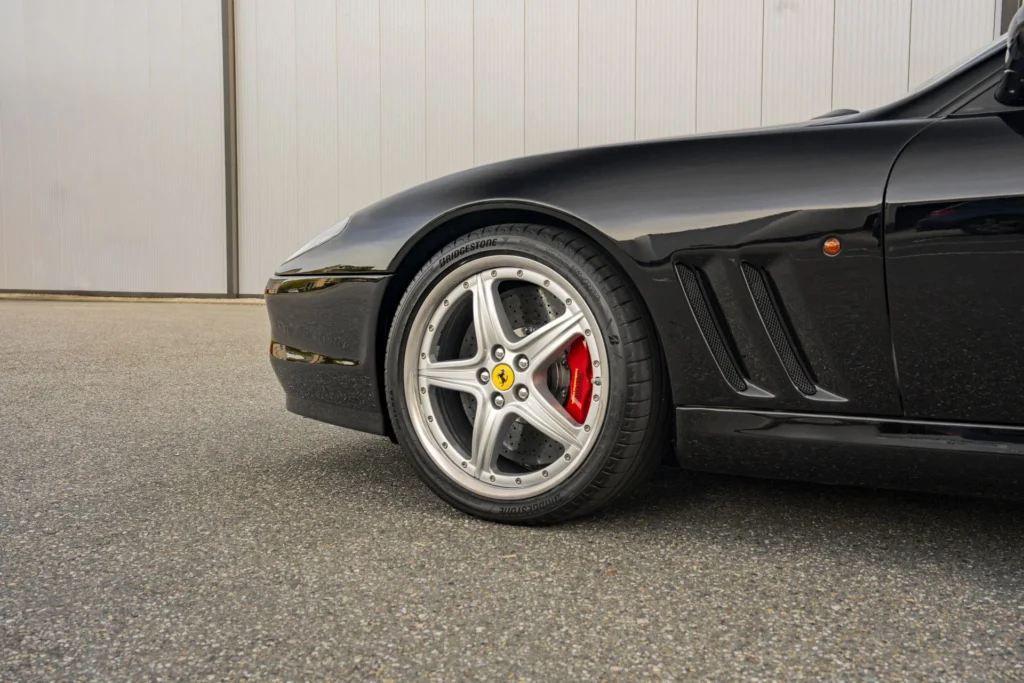
These upgrades gave the 575 platform greater capability during demanding driving while retaining the refinement necessary for long-distance touring.
The HGTC philosophy was not about transforming the car into a stripped-out racing machine.
Instead, it aimed to create a sharper and more responsive grand tourer.
That distinction is particularly important for the Superamerica.
The model’s character depends on its ability to combine extraordinary performance with comfort and elegance.
The HGTC package adds a more focused dynamic dimension without abandoning that essential identity.
Carbon-Ceramic Brakes and Greater Driving Precision
The carbon-ceramic braking system associated with the HGTC package was an especially advanced feature for Ferrari road cars of this generation.
Compared with conventional steel braking systems, carbon-ceramic technology offers advantages in resistance to heat-related performance degradation during repeated demanding use.
It can also reduce unsprung mass, contributing to suspension responsiveness.
For a front-engined V12 grand tourer capable of reaching approximately 320 km/h, braking performance is an essential part of the overall engineering package.
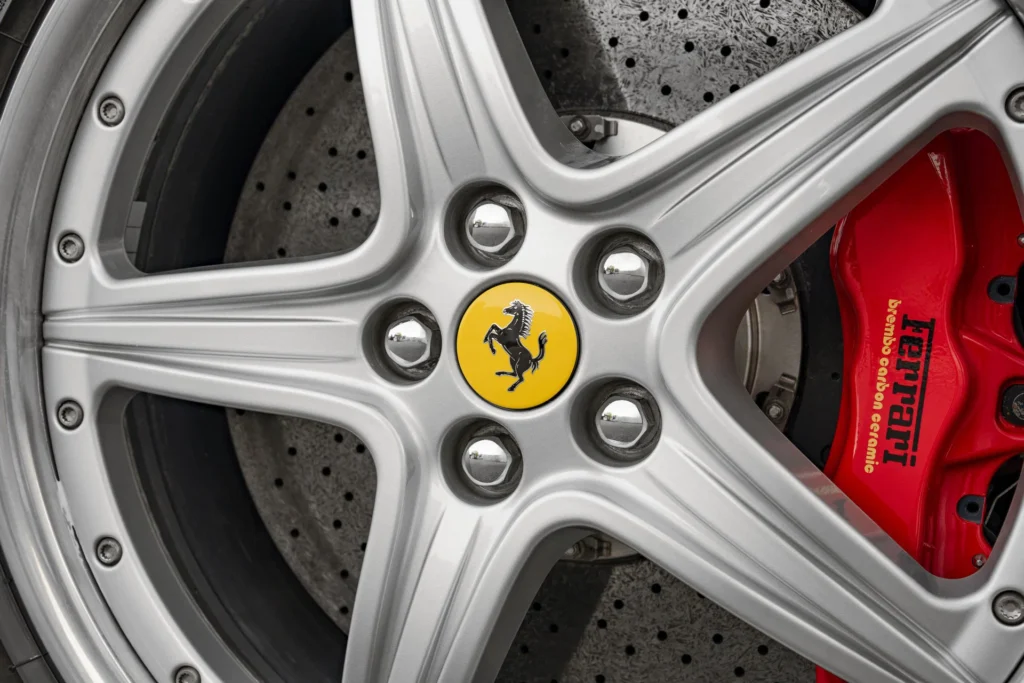
The HGTC suspension modifications complement the braking system by providing a more controlled and responsive driving character.
Together, these refinements create a vehicle that feels more focused than a conventional 575M-derived grand tourer.
For collectors, the presence of HGTC equipment is an important specification detail.
It represents a desirable connection with Ferrari’s performance-oriented engineering philosophy during the final years of the 575 platform.
Nero DS: Understated Ferrari Elegance
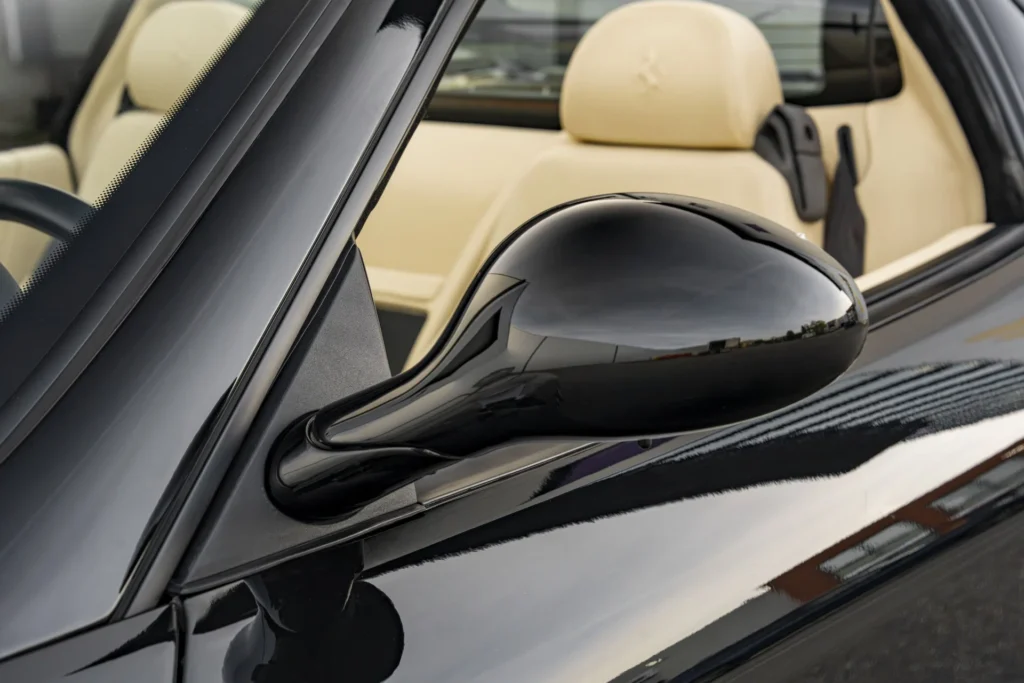
This example is finished in Nero DS, a sophisticated black exterior colour that suits the Superamerica’s proportions exceptionally well.
The 575’s design belongs to a period when Ferrari emphasized flowing surfaces, balanced proportions and understated aerodynamic integration.
Unlike contemporary hypercars with aggressive wings and complex external aerodynamic elements, the Superamerica relies on the elegance of its silhouette.
The long bonnet, compact passenger compartment and muscular rear shoulders create a timeless grand touring profile.
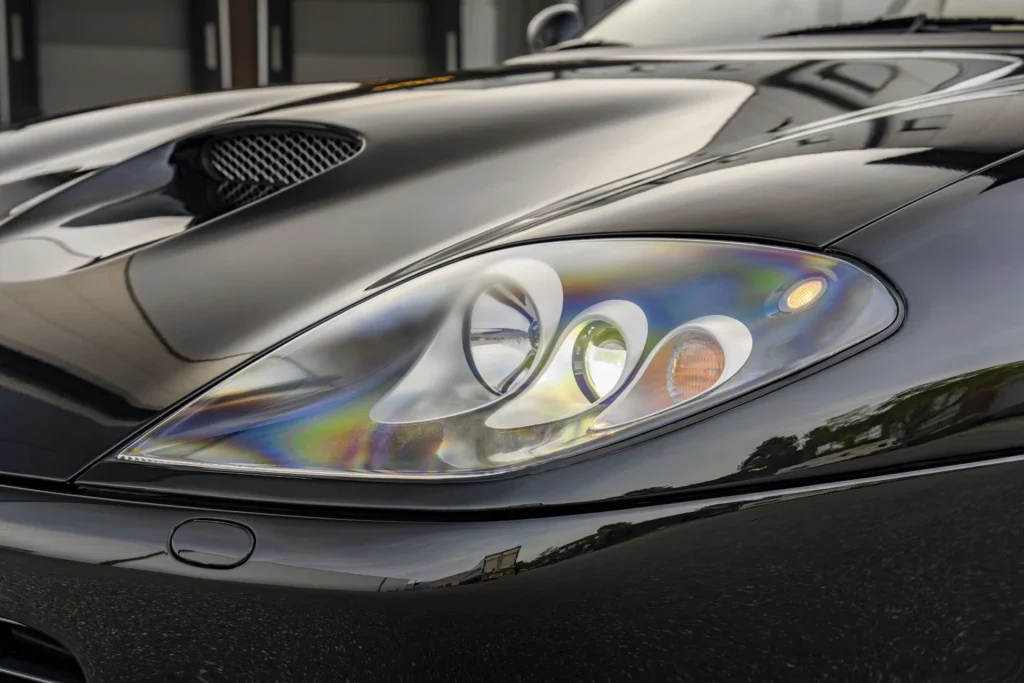

In Nero DS, those proportions become especially apparent.
The dark paintwork emphasizes the car’s sculptural surfaces without overwhelming its design.
It also provides a particularly elegant contrast with the lighter interior.
The overall effect is more restrained than the traditional red exterior frequently associated with Ferrari.
For a limited-production V12 grand tourer, that understated character is especially appropriate.
Crema Leather: A Classic Italian Grand Touring Interior
Inside, the Superamerica features a luxurious Crema leather interior.
The combination of black exterior paintwork and light leather upholstery is among the most elegant specifications available for a traditional Ferrari grand tourer.

Crema introduces warmth and visual contrast, creating a cabin that feels open and sophisticated.
The interior architecture reflects Ferrari’s approach to luxury sports cars during the early 2000s.
Rather than adopting the highly digital environments found in contemporary models, the 575 generation emphasizes physical controls, traditional instrumentation and carefully finished materials.
The seating position is designed around the driver, but the overall atmosphere remains comfortable and refined.
This is not the minimalist cockpit of a dedicated racing car.
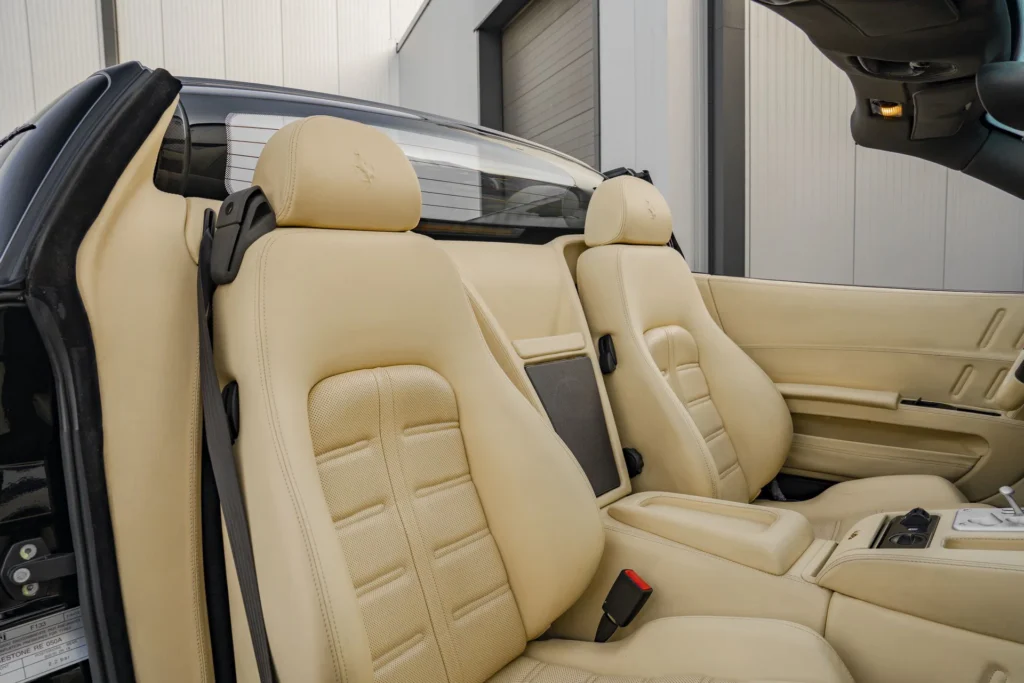
It is an environment intended for travelling considerable distances at high speed.
The combination of Crema leather, naturally aspirated V12 performance and the extraordinary glass roof creates a particularly distinctive grand touring experience.
The Design Legacy of Pininfarina
The Superamerica’s bodywork is rooted in the elegant design language of the Ferrari 550 and 575M Maranello, developed by Pininfarina.
The proportions reflect a long Ferrari tradition of front-engined grand tourers.
A long bonnet accommodates the V12, while the passenger compartment is positioned towards the rear of the vehicle.
The design avoids unnecessary ornamentation.
Its character is established through carefully balanced surfaces, integrated air intakes and a distinctive rear profile.

The Superamerica’s rotating roof introduces a unique architectural element without fundamentally compromising those proportions.
With the roof closed, the car retains the visual coherence of a traditional coupe.
With it open, the Superamerica becomes a dramatically different automobile.
That transformation is one of the reasons the model remains so visually interesting today.
Originally Delivered by Ferrari Gohm in Germany
Provenance is an important consideration for any limited-production Ferrari.
According to Bernards Exclusives, this particular 575 Superamerica was originally delivered new in Germany by official Ferrari dealer Gohm.
The German delivery history forms part of the vehicle’s documented background.
For collectors, original delivery information can help establish a car’s history and provide context for its subsequent ownership and maintenance.

It can also be useful when reviewing the vehicle’s original specification and factory records.
The seller advertises the car with 36,022 kilometres.
That mileage suggests a vehicle that has been driven and enjoyed while remaining relatively lightly used for its age.
As with any specialist Ferrari, the service history, maintenance documentation and condition of major mechanical components remain important considerations.
The combination of original dealer provenance and Ferrari Classiche certification provides an interesting foundation for evaluating the car’s history.
Ferrari Classiche Certification Since 2021
Another important feature of this Superamerica is its Ferrari Classiche certification, which the dealer states has been held since 2021.
Ferrari Classiche was established to support the authentication, preservation and documentation of historic Ferrari automobiles.
Its certification programme examines a vehicle’s identity and relevant technical characteristics against the manufacturer’s available records.
For collectors, this documentation can provide valuable reassurance regarding a Ferrari’s historical and mechanical authenticity.

In the case of a limited-production model such as the 575 Superamerica, the certification is particularly relevant.
The model combines unusual engineering with specialized components that distinguish it from the conventional 575M.
The Ferrari Classiche documentation therefore represents an important part of this example’s advertised collector credentials.
Prospective buyers should review the certificate and its supporting records to understand precisely what has been verified.
Front-End Paint Protection Film
Bernards Exclusives also states that the front of this Superamerica has been protected with Paint Protection Film (PPF).
This transparent protective material is intended to reduce the risk of stone chips and minor surface damage to the underlying paintwork.
On a dark-coloured automobile such as this Nero DS example, maintaining the condition of the exterior finish is particularly important.
Black paint can reveal imperfections more readily than lighter colours, making careful preservation a worthwhile consideration.
The presence of PPF suggests attention to protecting the vehicle’s appearance.
For a prospective buyer, the condition, age and coverage of the film should be assessed alongside the paintwork itself.
It is a relatively discreet feature, but one that contributes to the overall presentation of a collectible Ferrari.

One of 559: The Importance of Limited Production
With just 559 examples produced worldwide, the Ferrari 575 Superamerica occupies a particularly exclusive position within Ferrari’s modern V12 history.
Its production volume is substantially smaller than that of the conventional 575M Maranello.
The model also differs significantly from its mechanical relative through its distinctive roof design and increased engine output.
These characteristics make it more than a limited-edition cosmetic variation.
The Superamerica represents a separate interpretation of the 575 platform, created around a unique engineering concept.
Its rarity is therefore supported by a genuinely distinctive technical identity.
For collectors, that combination is particularly appealing.
Limited production alone does not guarantee future appreciation, but rarity becomes more meaningful when accompanied by unusual engineering, historical relevance and recognizable design.
The Superamerica possesses all three characteristics.
The Appeal of Ferrari’s Naturally Aspirated V12 Era

The Ferrari 575 Superamerica belongs to a period of automotive history that has become increasingly interesting to enthusiasts.
Its 5.75-litre V12 is naturally aspirated.
The transmission reflects Ferrari’s early adoption of Formula 1-inspired paddle shifting.
Its chassis combines traditional grand touring proportions with increasingly sophisticated electronic and mechanical systems.
And its design remains relatively restrained compared with modern high-performance Ferraris.
These characteristics give the car a distinctive identity.
It represents a transitional period between Ferrari’s more traditional analogue grand tourers and the increasingly technologically complex models that followed.
The 599 GTB Fiorano would subsequently introduce a new generation of front-engined V12 performance.
Later models would continue to push the boundaries of power, aerodynamics and electronic control.
The Superamerica remains connected to an earlier philosophy.
It celebrates the naturally aspirated V12 as the defining element of the grand touring experience.
An Exceptional Expression of Ferrari Grand Touring
The Ferrari 575 Superamerica remains one of the most fascinating open-top grand tourers ever produced in Maranello.
Its Revocromico roof was an extraordinary technical achievement, allowing the car to combine the elegance of a coupe with the sensory experience of an open-top Ferrari.

Its naturally aspirated V12 provides the mechanical character that defines the marque’s traditional grand touring heritage.
And its limited production of just 559 examples ensures that it remains an uncommon sight, even among important Ferrari collections.
This particular 2006 example adds an especially attractive specification.
Finished in Nero DS with Crema leather, equipped with the HGTC Handling Package, certified by Ferrari Classiche and originally delivered through Ferrari Gohm in Germany, it brings together several characteristics valued by discerning enthusiasts.
The seller’s description of the roof’s excellent condition adds another important consideration.
At a time when many contemporary performance cars emphasize electrification, extreme aerodynamics and increasingly complex digital systems, the 575 Superamerica offers a different interpretation of automotive excellence.
It is a Ferrari defined by elegance, mechanical character and engineering ingenuity.
And more than twenty years after its introduction, its remarkable rotating glass roof remains as fascinating as ever.
Key Features
- One of only 559 Ferrari 575 Superamerica examples
- 2006 model year
- Nero DS exterior
- Crema leather interior
- 5.75-litre naturally aspirated V12
- 540 PS
- Ferrari F1 automated manual transmission
- HGTC Handling Gran Turismo Competizione package
- Carbon-ceramic braking system
- Sport-oriented HGTC suspension setup
- Revocromico rotating glass roof
- Electrochromic adjustable roof transparency
- Approximately seven-second roof operation
- Open-top grand touring configuration
- Preserved luggage compartment with roof open
- Ferrari Classiche certification since 2021
- Originally delivered by Ferrari Gohm in Germany
- 36,022 km
- Excellent roof condition, according to seller
- Front-end Paint Protection Film
- Limited-production Ferrari V12
- €399,950 asking price
Dealer Information
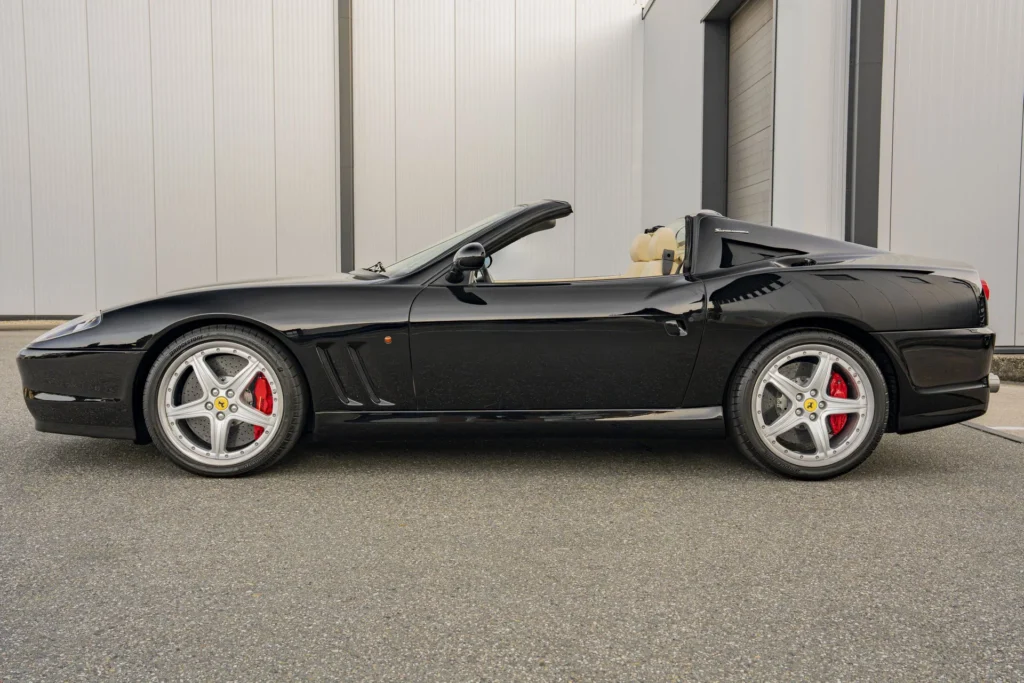
This 2006 Ferrari 575 Superamerica F1 HGTC is offered by Bernards Exclusives, a specialist dealer in exclusive and collector automobiles based in Woerden, the Netherlands.
The car is finished in Nero DS with Crema leather and features the highly desirable HGTC Handling Package.
According to the dealer, the Revocromico roof is in excellent condition, and the vehicle has held Ferrari Classiche certification since 2021.
Originally delivered in Germany by Ferrari Gohm, it has covered 36,022 kilometres.
Asking Price: €399,950
VAT Status: Margin Scheme
Location: Woerden, Netherlands
Dealer: Bernards Exclusives
For additional information regarding its history, factory specification, roof condition, service documentation and availability, contact Bernards Exclusives directly.
LuxeonCars independently features exceptional luxury, performance and collector automobiles offered by specialist dealers worldwide.