
For decades, the recipe for building a supercar remained remarkably consistent.
Keep it as low as possible.
Fit the widest performance tyres available.
Optimize every aerodynamic surface for smooth asphalt.
And ensure that leaving the road was something to avoid at all costs.
Today, that philosophy is changing.
A new generation of high-performance machines has begun exploring terrain once reserved for rally cars, off-road vehicles and endurance racers. They combine extraordinary horsepower with raised suspension, all-terrain tyres and sophisticated four-wheel-drive systems capable of venturing far beyond perfectly paved roads.
Some were inspired by the Dakar Rally.
Others by Baja competition.
A few simply asked an intriguing question:
What if the world’s greatest supercars weren’t limited by the road?
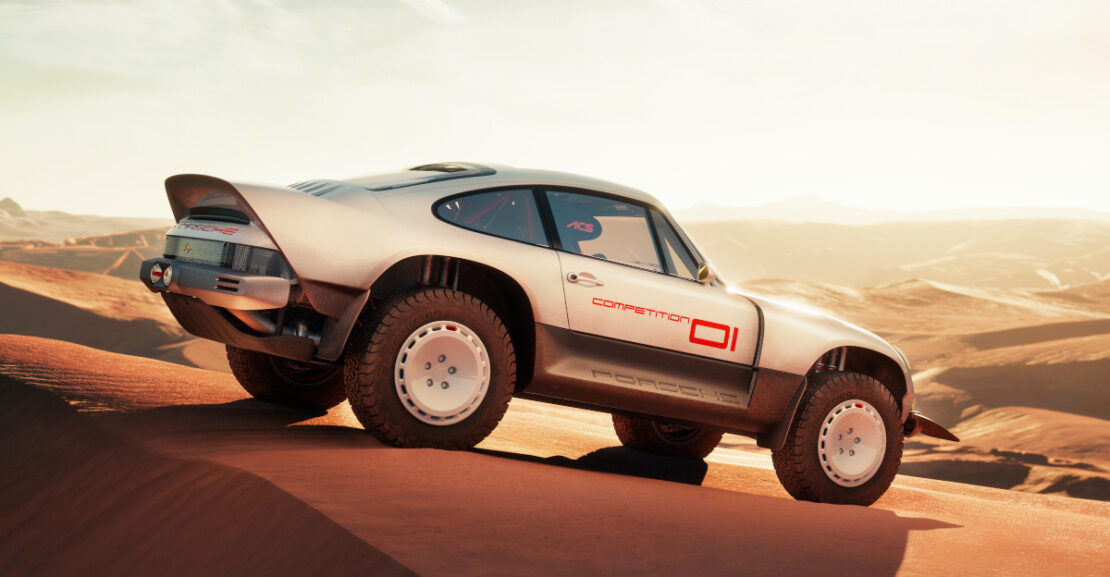
From the Porsche 911 Dakar and Lamborghini Huracán Sterrato to the Singer ACS and Marc Philipp Gemballa Marsien, an entirely new category has emerged.
Welcome to the world of the off-road supercar.
Why Off-Road Supercars Are Becoming the Next Luxury Trend
The rise of the luxury SUV fundamentally changed how wealthy enthusiasts use their cars.
Owners who once alternated between a supercar and a Range Rover suddenly discovered they wanted both experiences in a single vehicle.
But even SUVs have limitations.
For collectors fortunate enough to own multiple Ferraris, Lamborghinis or McLarens, another low-slung supercar no longer feels particularly special.
Instead, many now seek something different.
A car capable of driving across mountain passes.
Crossing gravel roads.
Exploring deserts.
Conquering snow-covered Alpine routes.
Or simply enjoying roads that would normally terrify the owner of a conventional exotic car.
This shift has given birth to what many enthusiasts now describe as Adventure Supercars or Off-Road Supercars.
Rather than sacrificing performance, these cars expand where performance can be enjoyed.
They preserve the excitement of a supercar while removing many of the practical limitations that have traditionally defined the segment.
The idea may sound revolutionary.
In reality, it has existed for far longer than most people realize.
The Forgotten Pioneer: Aixam Mega Track
Long before Porsche introduced the 911 Dakar or Lamborghini unveiled the Sterrato, one manufacturer attempted something almost unbelievable.
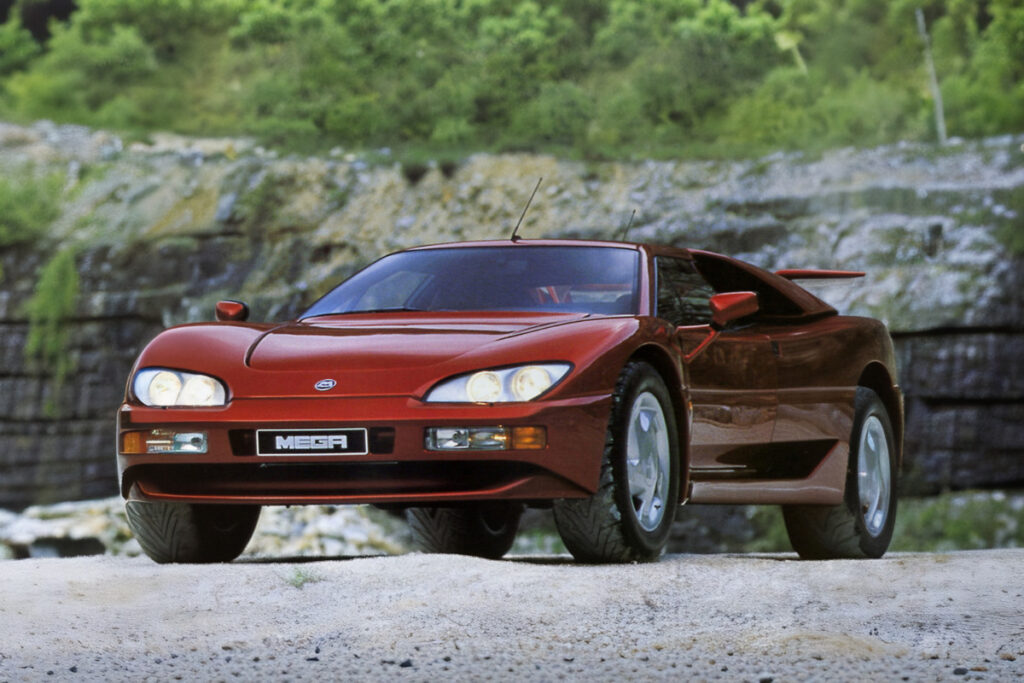
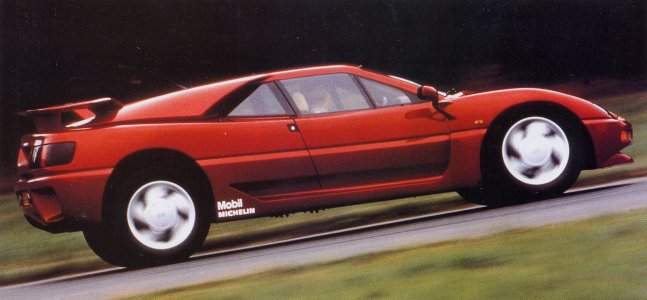
In 1992, French company Aixam revealed the Mega Track.
At first glance it looked like an ordinary supercar.
Until you noticed the ride height.
The Mega Track featured adjustable hydraulic suspension capable of raising the body dramatically, allowing it to tackle rough terrain in a way no contemporary exotic car could match. Combined with permanent four-wheel drive and enormous ground clearance, it effectively became the world’s first true off-road supercar.
Even today, its specifications remain remarkable.
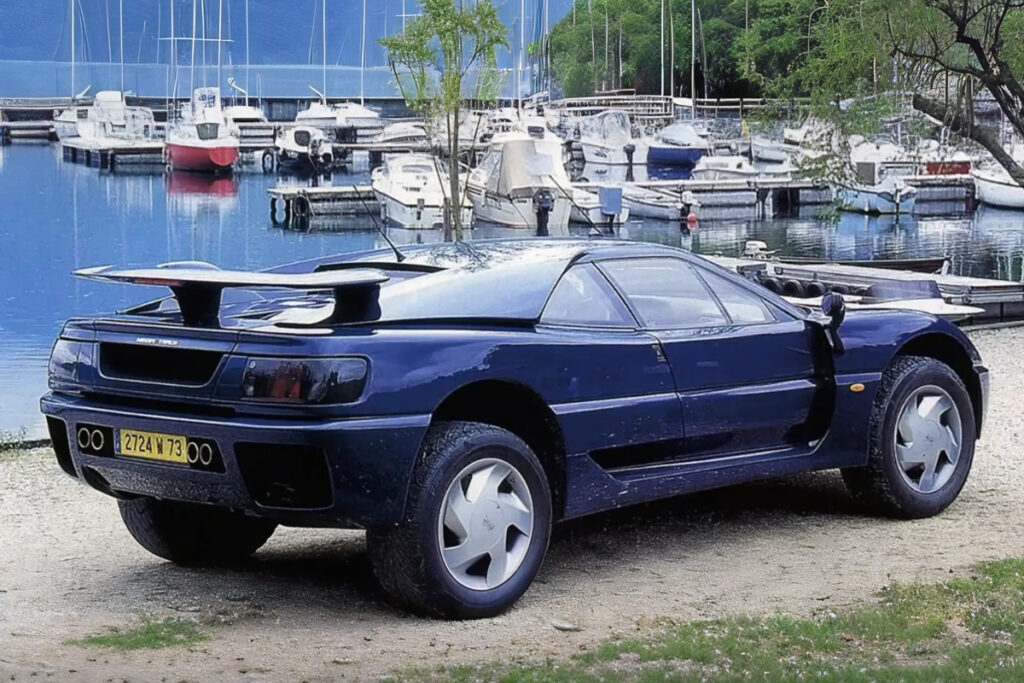
Power came from a naturally aspirated 6.0-litre Mercedes-Benz V12 producing approximately 400 horsepower, enough to propel the futuristic machine well beyond 250 km/h. While those numbers no longer dominate headlines, they were extraordinary in the early 1990s, especially for a vehicle capable of leaving the asphalt behind.
Visually, the Mega Track appeared decades ahead of its time.
Its broad proportions, massive wheel arches and elevated stance resembled a concept car from the future rather than a production automobile. Many observers struggled to understand its purpose.
Was it a luxury GT?
A rally car?
An SUV?
Or something entirely new?
The answer, quite simply, was yes.
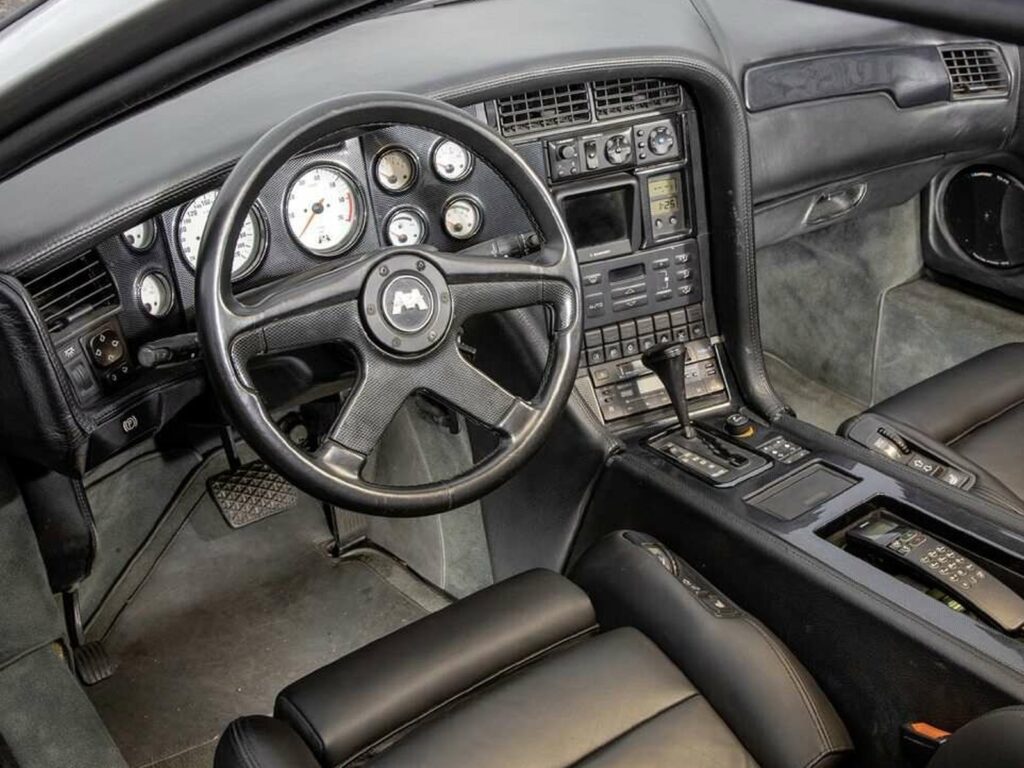
Commercially, the Mega Track remained an extremely rare curiosity, with only a handful of examples produced. Yet history has been remarkably kind to the project.
Looking back today, it becomes obvious that Aixam anticipated an automotive trend that would not truly emerge until more than thirty years later.
The Mega Track wasn’t simply unusual.
It was visionary.
Audi Nanuk quattro Concept
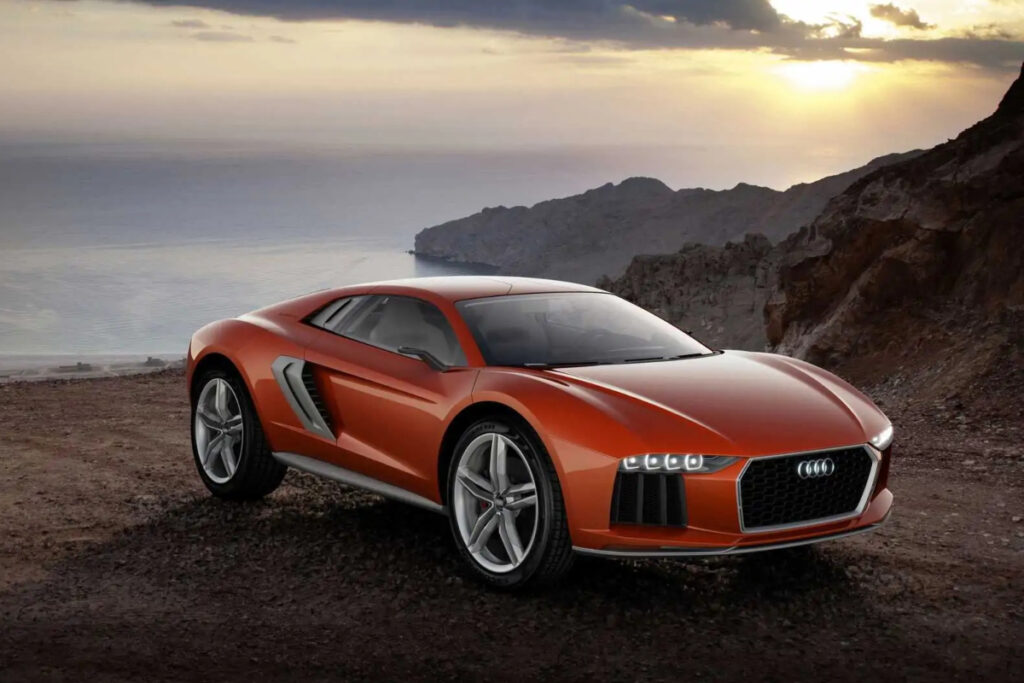
If the Mega Track represented the forgotten pioneer, Audi’s Nanuk quattro Concept demonstrated what the idea could become with twenty-first century technology.
Presented in 2013 and designed in collaboration with Italdesign Giugiaro, the Nanuk blurred the boundaries between supercar, crossover and off-road explorer.
Everything about the concept challenged expectations.
Its proportions were unmistakably those of a mid-engined supercar.
Yet it featured enormous ground clearance.
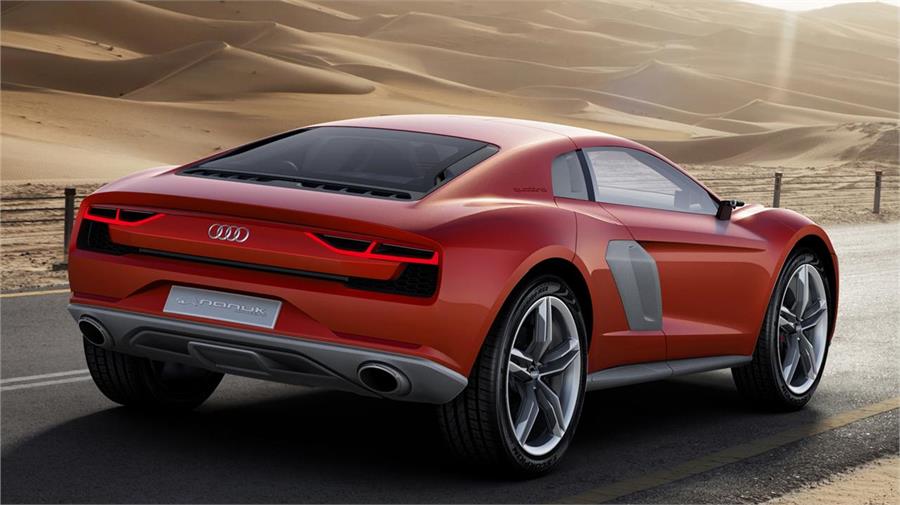
Large off-road tyres.
Adjustable air suspension.
And Audi’s legendary quattro all-wheel-drive system.
Unlike traditional concept cars that relied primarily on dramatic styling, the Nanuk proposed genuine engineering solutions. The adaptive suspension could automatically lower the vehicle at high speed for improved aerodynamics before raising it again when rough terrain demanded additional clearance.
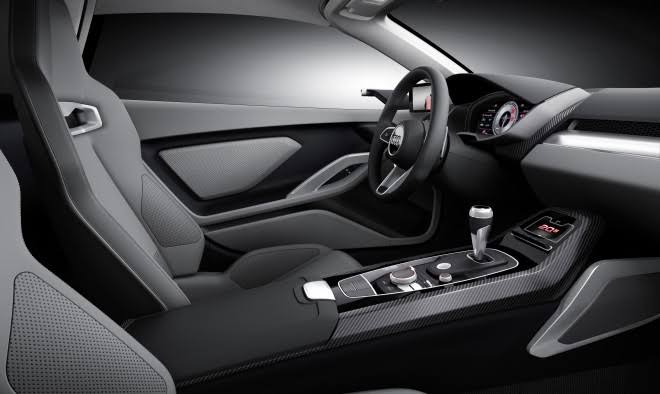
Power came from a V10 TDI engine producing extraordinary torque, perfectly suited to both high-speed touring and challenging off-road environments.
Although the Nanuk never entered production, many of its ideas would later appear in production vehicles from several manufacturers.
More importantly, it demonstrated that combining exotic performance with genuine all-terrain capability was no longer a fantasy.
It was becoming a realistic engineering direction.
A New Automotive Category
For many years, projects like the Mega Track and Nanuk were viewed as fascinating anomalies.
Brilliant ideas.
Interesting experiments.
But ultimately isolated concepts unlikely to influence the broader market.
That assumption proved incorrect.
As customer tastes evolved, manufacturers began recognizing that there was genuine demand for high-performance cars capable of venturing beyond perfectly maintained roads.
The result was the birth of an entirely new automotive category.
The Complete Lamborghini V12 Legacy: From Miura to Revuelto
Not an SUV, or a rally car. Not is a conventional supercar.
But something that combined elements of all three.
The true breakthrough, however, would not come from an obscure French manufacturer or a visionary concept car.
It would arrive wearing one of the most recognizable silhouettes in automotive history.
The Porsche 911.
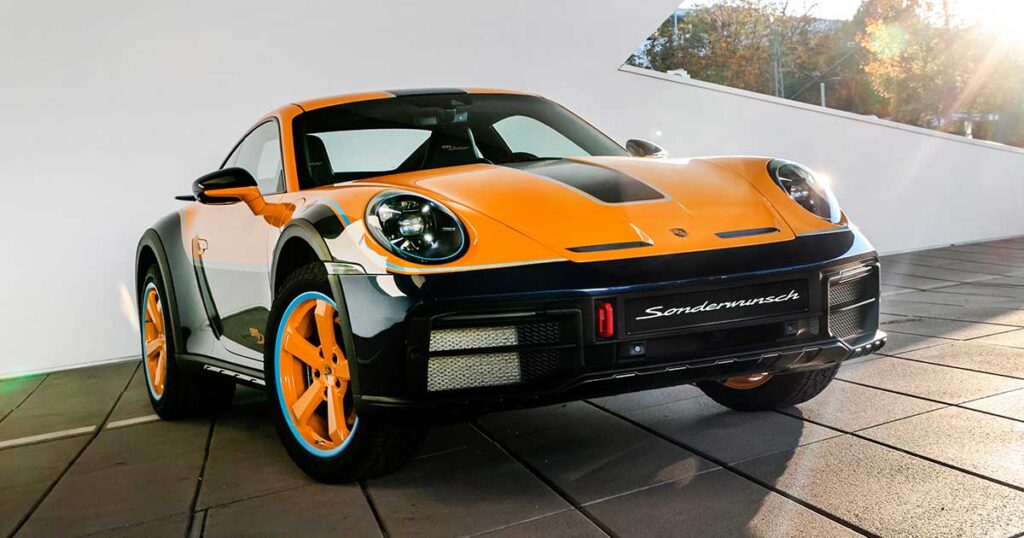
Porsche 911 Dakar: The Car That Started a Movement
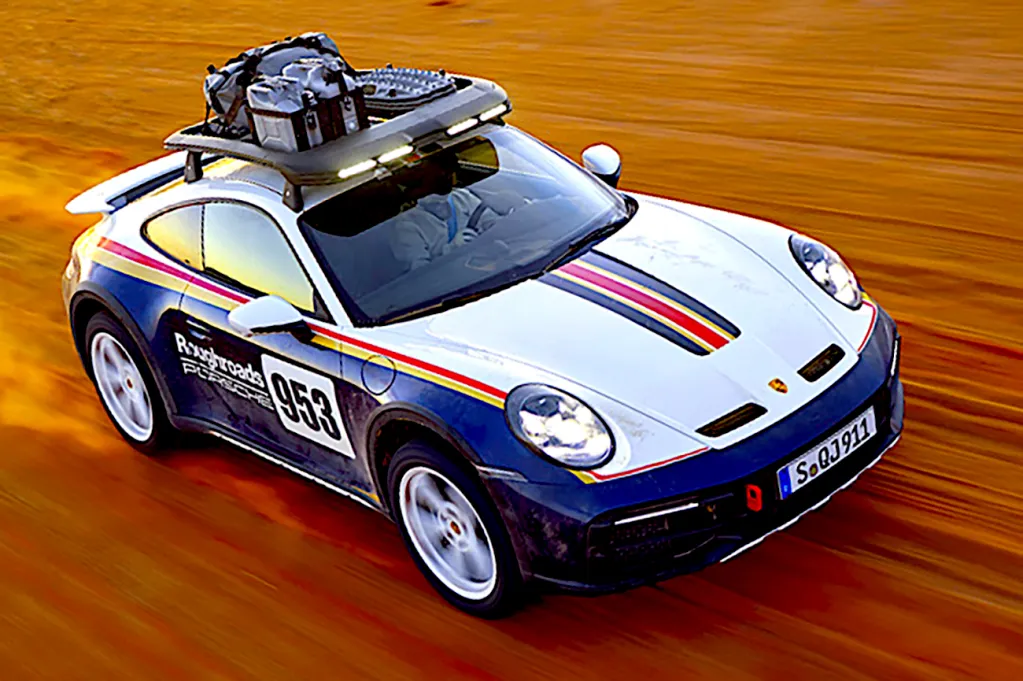
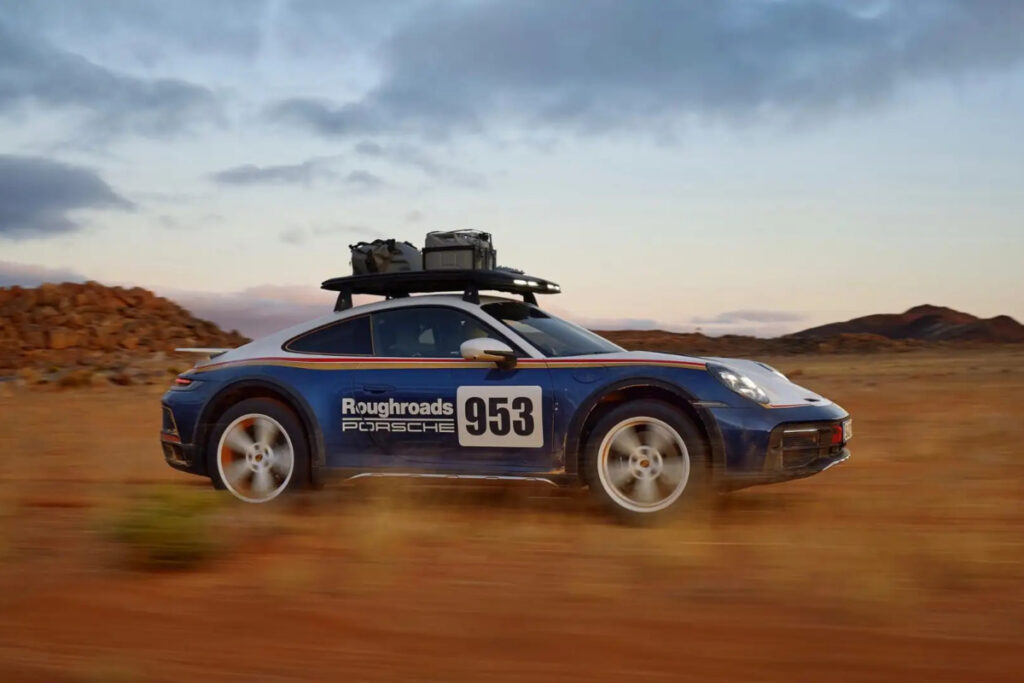
If one model can be credited with bringing the off-road supercar into the mainstream, it is undoubtedly the Porsche 911 Dakar.
For decades, enthusiasts had imagined what a raised 911 capable of tackling dirt roads might look like. Porsche itself had occasionally experimented with safari-inspired concepts and one-off builds, while independent specialists transformed classic 911s into rally-inspired machines. Yet no official production model had ever fully embraced that philosophy.
The 911 Dakar changed everything.
Inspired by Porsche’s unforgettable victory in the 1984 Paris-Dakar Rally with the groundbreaking 953, the model celebrated one of the company’s most important motorsport achievements while introducing an entirely new interpretation of the modern 911.
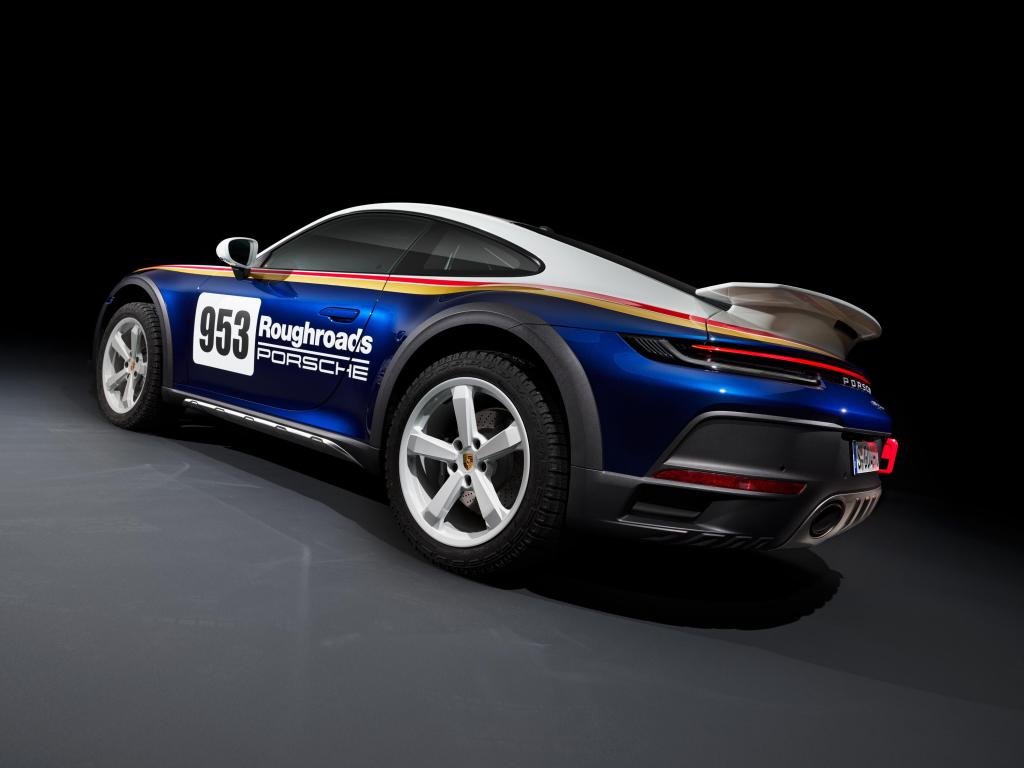
Unlike traditional sports cars that prioritize minimal ride height, the Dakar sits approximately 50 mm higher than a Carrera with standard suspension, while an integrated hydraulic lift system can raise the vehicle by an additional 30 mm when required. Combined with specially developed Pirelli Scorpion All Terrain Plus tyres, reinforced underbody protection and revised cooling systems, the car is genuinely capable of tackling gravel tracks, sand and snow.
Perhaps most importantly, Porsche ensured that capability did not come at the expense of performance.
Powered by the familiar 3.0-litre twin-turbocharged flat-six producing 480 horsepower, the Dakar accelerates from 0-100 km/h in around 3.4 seconds while retaining the remarkable balance that has defined the 911 for generations.
Driving modes such as Rallye and Offroad further reinforce its unique character. The Rallye mode shifts the all-wheel-drive system towards a more rear-biased setup, allowing controlled slides across loose surfaces, while Offroad mode optimizes traction and suspension settings for more demanding terrain.
Visually, the Dakar perfectly balances heritage and modernity.
The wider stance.
Protective cladding.
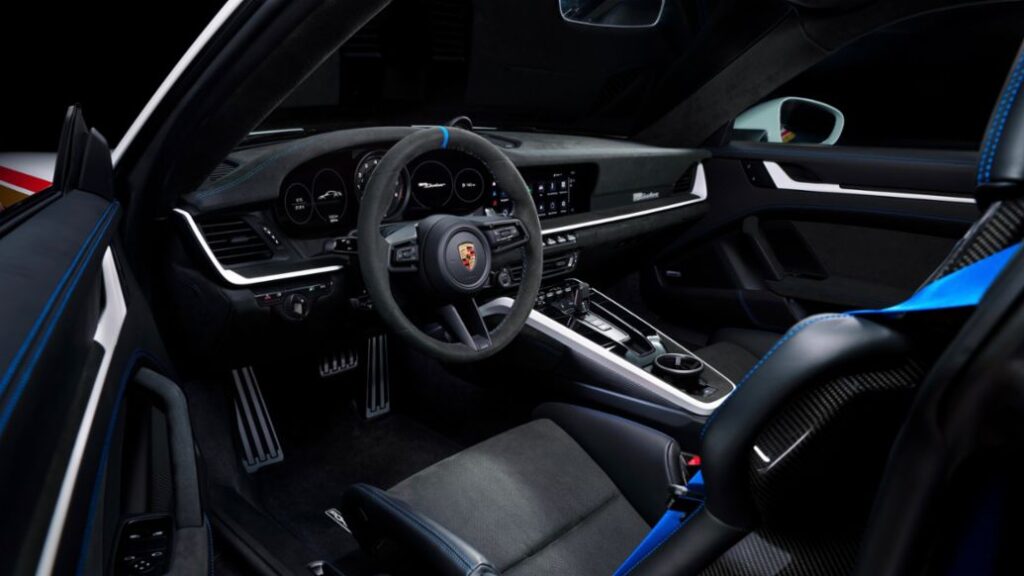
Forged recovery hooks.
Optional Rally Design Package inspired by the 1984 Rothmans-winning car.
Every detail reminds drivers that this is not simply a cosmetic exercise.
It is a genuine reinterpretation of one of the world’s greatest sports cars.
Production was limited to just 2,500 examples, and demand immediately exceeded supply.
Almost overnight, Porsche proved there was a global market for adventure-focused supercars.
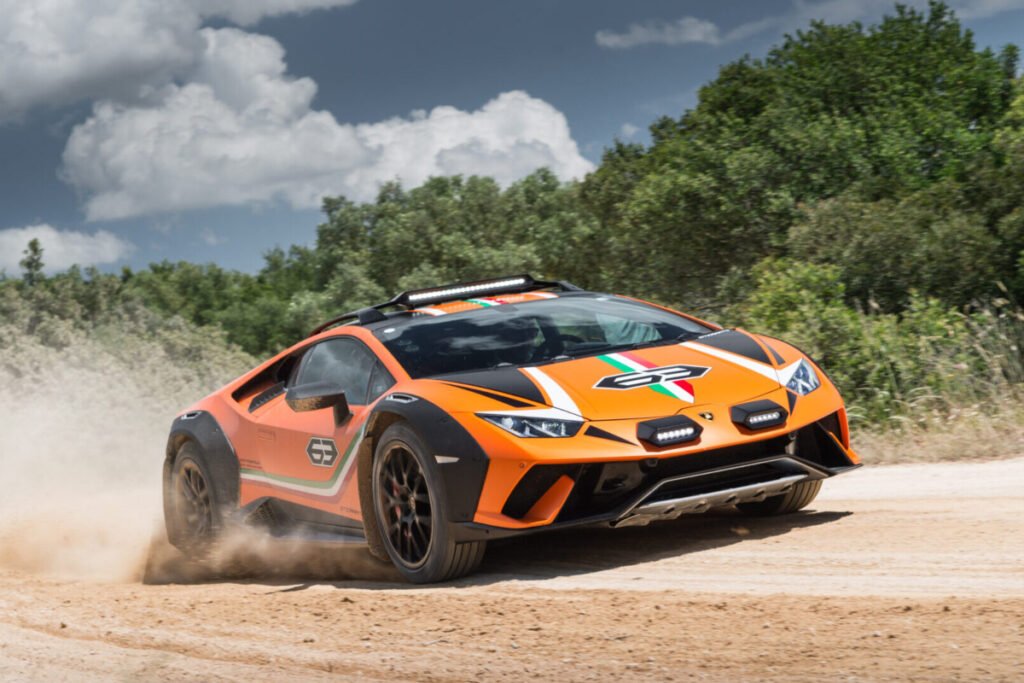
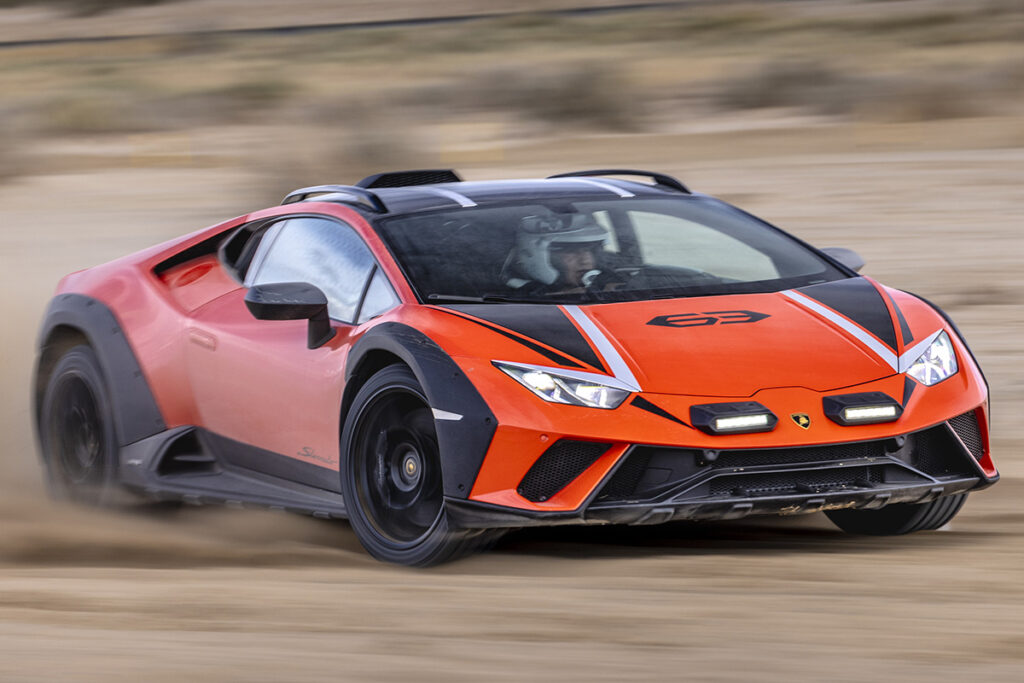
Lamborghini Huracán Sterrato: The Wild Side of Sant’Agata
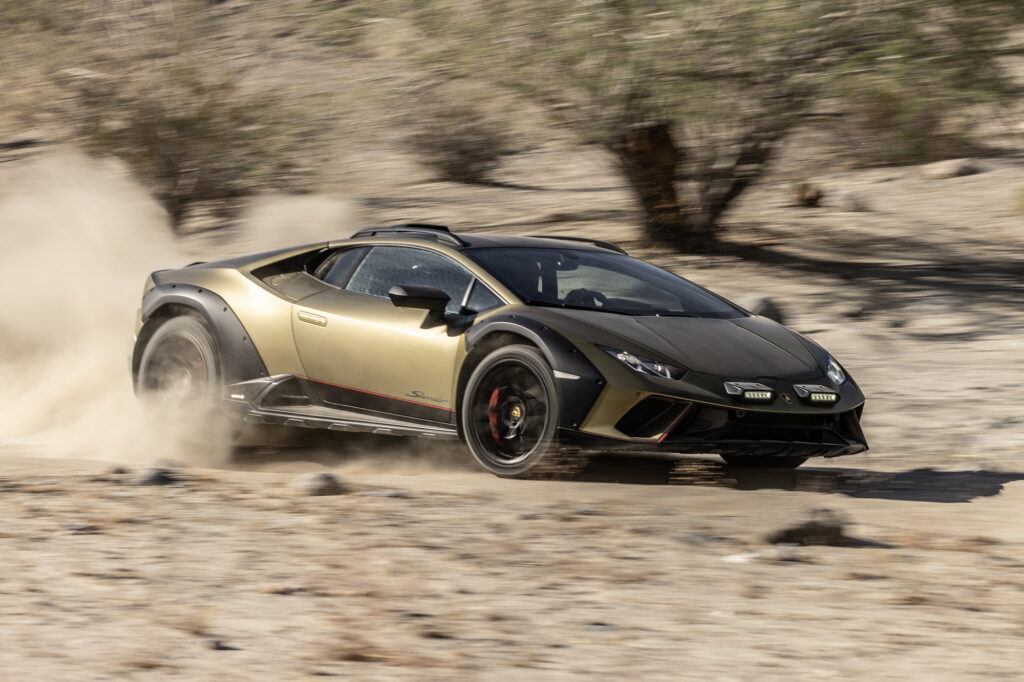
If Porsche approached the concept with motorsport heritage, Lamborghini embraced it with characteristic theatricality.
The Huracán Sterrato feels almost rebellious.
Taking what many consider the ultimate naturally aspirated V10 supercar and deliberately preparing it for gravel roads would once have seemed unthinkable.
Yet that is exactly what Lamborghini did.
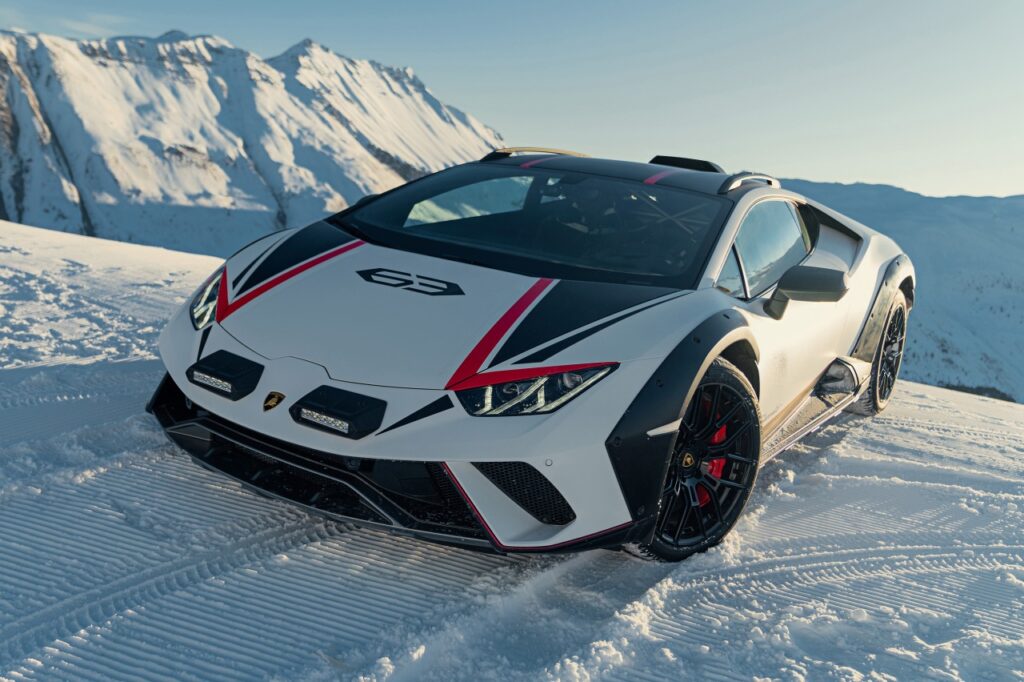
The Sterrato retains the glorious 5.2-litre naturally aspirated V10 producing 610 horsepower, but combines it with a significantly revised chassis engineered specifically for challenging surfaces.
Ground clearance increases by 44 millimetres.
The track width grows.
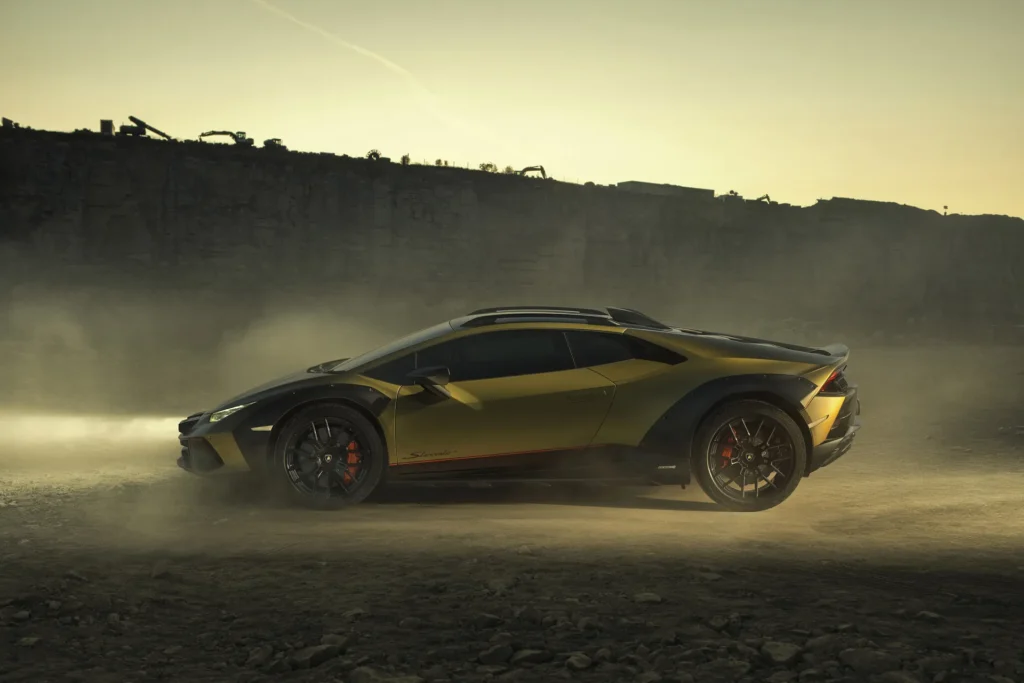
Suspension travel is extended.
Special Bridgestone Dueler all-terrain tyres are fitted.
Additional aluminium underbody protection shields vital mechanical components.
The result is unlike anything Lamborghini had previously produced.
Unlike the track-focused STO or the brutally fast Tecnica, the Sterrato encourages drivers to leave perfect tarmac behind. Gravel roads become playgrounds rather than hazards. Snow-covered mountain passes become invitations rather than obstacles.
Even the design reflects this philosophy.
Black protective cladding surrounds the wheel arches.
Roof rails add unexpected practicality.
Auxiliary driving lights mounted at the front evoke classic rally machines.
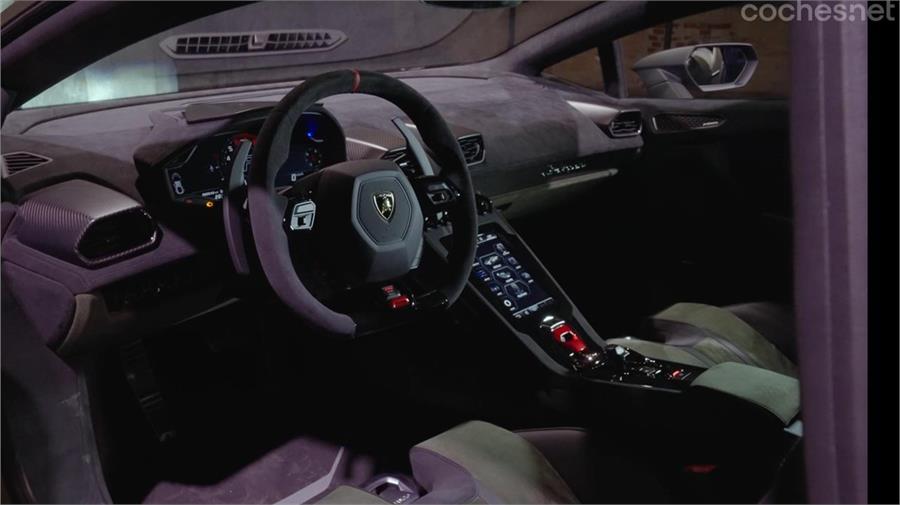
Large air intakes ensure sufficient cooling even in demanding environments.
It is unmistakably a Lamborghini.
Yet unlike any Lamborghini before it.
Equally significant is the timing.
The Sterrato represents the final production Huracán powered exclusively by Lamborghini’s naturally aspirated V10.
That alone guarantees its future collectability.
Combined with its extraordinary concept, limited production and unique driving experience, the Sterrato has already become one of the defining Lamborghinis of the modern era.
It proves that performance is not defined solely by lap times.
Sometimes the greatest adventure begins where the asphalt ends.
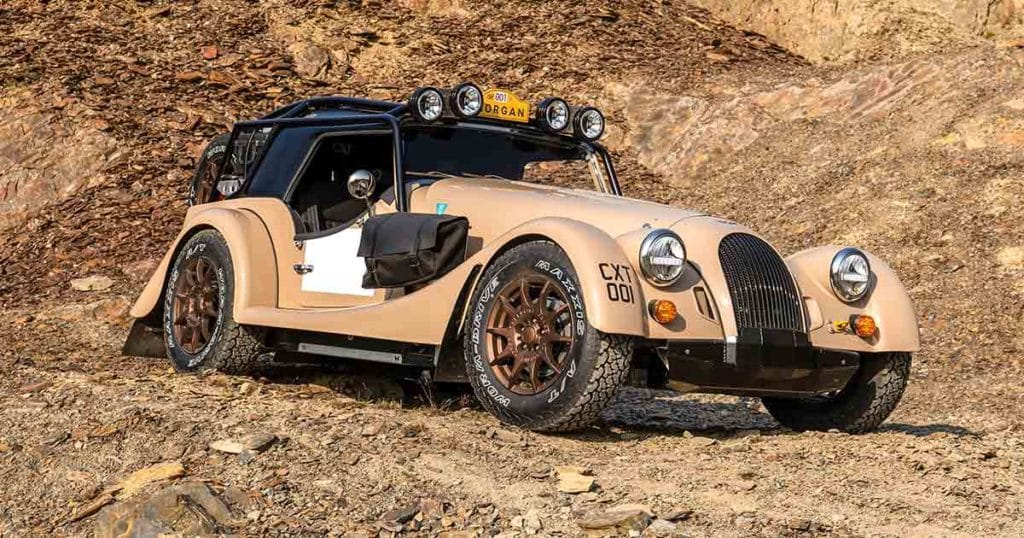
Morgan Plus Four CX-T: The Gentleman Explorer
Not every off-road sports car needs 600 horsepower.
Some simply require imagination.
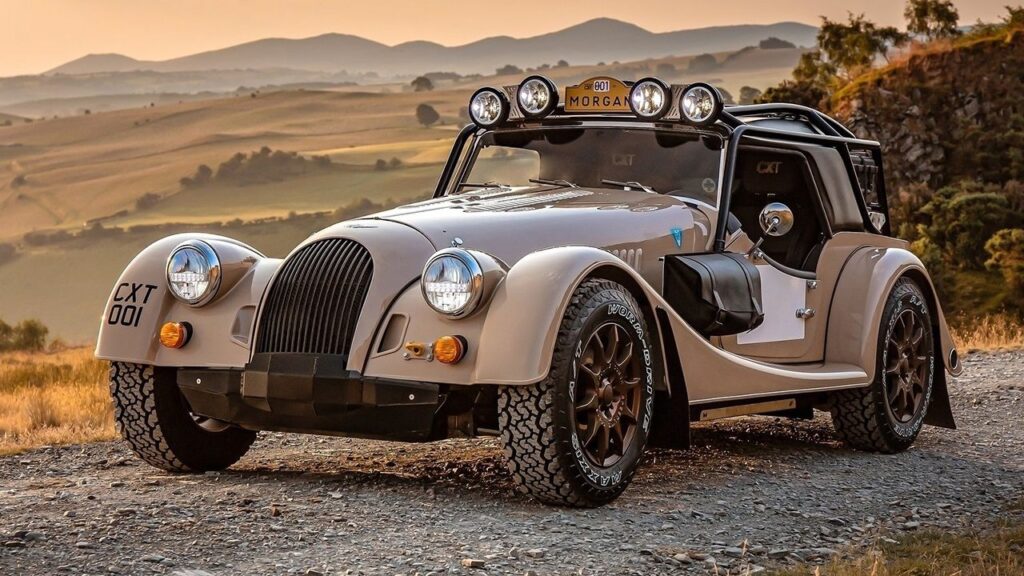
The Morgan Plus Four CX-T may be the most charming interpretation of the entire category.
Developed in collaboration with Rally Raid UK, the company responsible for multiple Dakar Rally victories, the CX-T transformed Morgan’s elegant Plus Four into a genuine long-distance expedition vehicle.
At first glance, it appears almost playful.
Then the details begin to reveal themselves.
Long-travel EXE-TC suspension dramatically increases wheel articulation.
Underbody protection safeguards the aluminium chassis.
All-terrain tyres replace conventional road rubber.
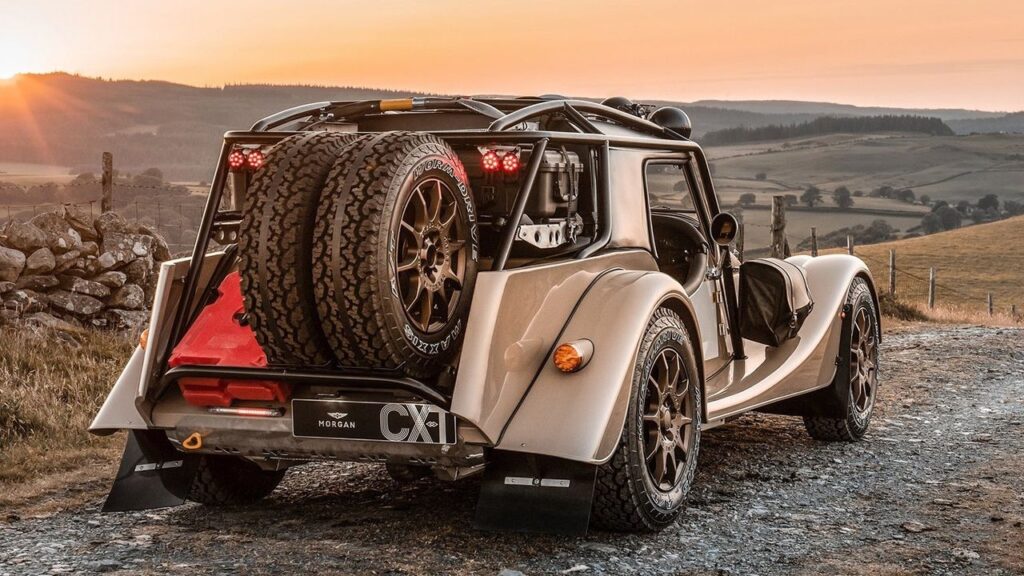
Recovery points, skid plates and reinforced bodywork hint at genuine off-road capability rather than simple styling.
Perhaps the most delightful feature is the rear luggage system.
Instead of traditional storage compartments, Morgan fitted beautifully engineered aluminium panniers capable of carrying expedition equipment, spare wheels, camping gear or recovery tools.
A pair of bespoke storage boxes sits neatly behind the cabin, while integrated mounting systems allow additional accessories to be secured without compromising the car’s timeless proportions.
It feels less like a modified sports car and more like a handcrafted expedition companion.
Power comes from BMW’s turbocharged 2.0-litre four-cylinder engine producing just over 250 horsepower.
On paper, that may seem modest compared with the other cars featured here.
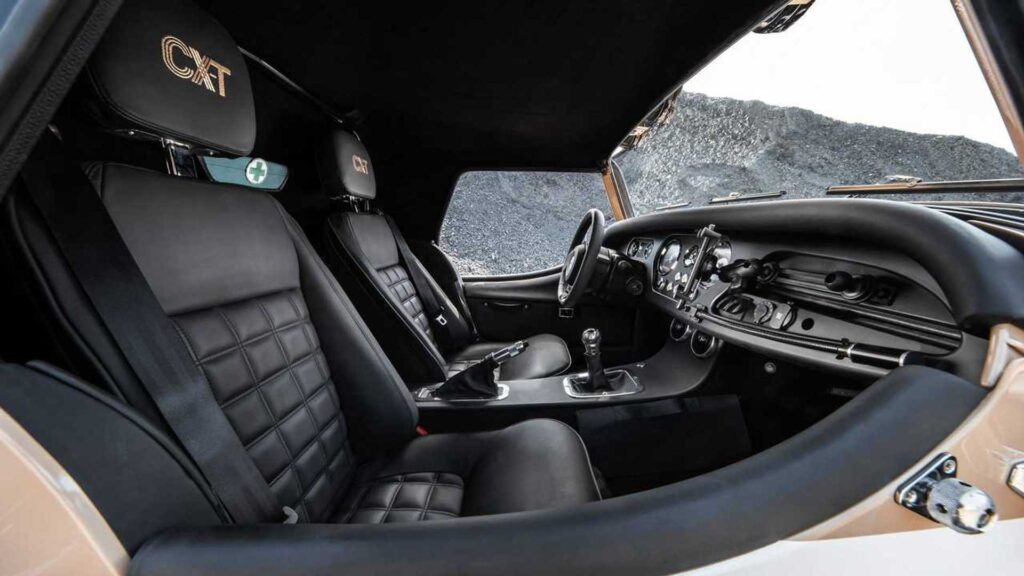
On gravel roads and remote mountain passes, however, outright power matters far less than balance, lightness and driver confidence.
The CX-T weighs barely over one tonne.
That lightweight philosophy allows it to dance across rough terrain in a way few heavier performance cars could ever hope to replicate.
More importantly, the Morgan demonstrates that adventure comes in many forms.
Not every journey requires 800 horsepower.
Sometimes the greatest luxury is simply reaching places where no conventional sports car could ever follow.
From Curiosity to Reality
With the arrival of the Porsche 911 Dakar, Lamborghini Huracán Sterrato and Morgan CX-T, the off-road supercar ceased to be an experimental curiosity.
It became a legitimate segment.
Three manufacturers.
Three completely different interpretations.
One common philosophy.
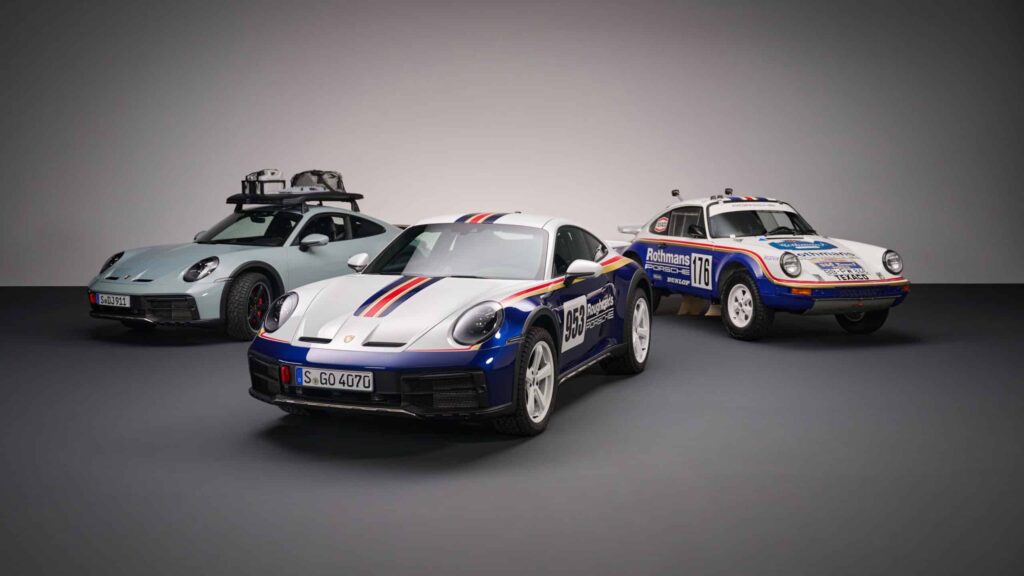
Performance should never be limited by the quality of the road beneath your wheels.
And yet, even these remarkable machines would soon be eclipsed by a handful of projects that pushed the concept even further.
Some were created by independent specialists.
Others by legendary Porsche restorers.
One even imagined what a GT2 RS could become if the Dakar Rally had replaced the Nürburgring as its natural habitat.
That is where the story becomes truly extraordinary.
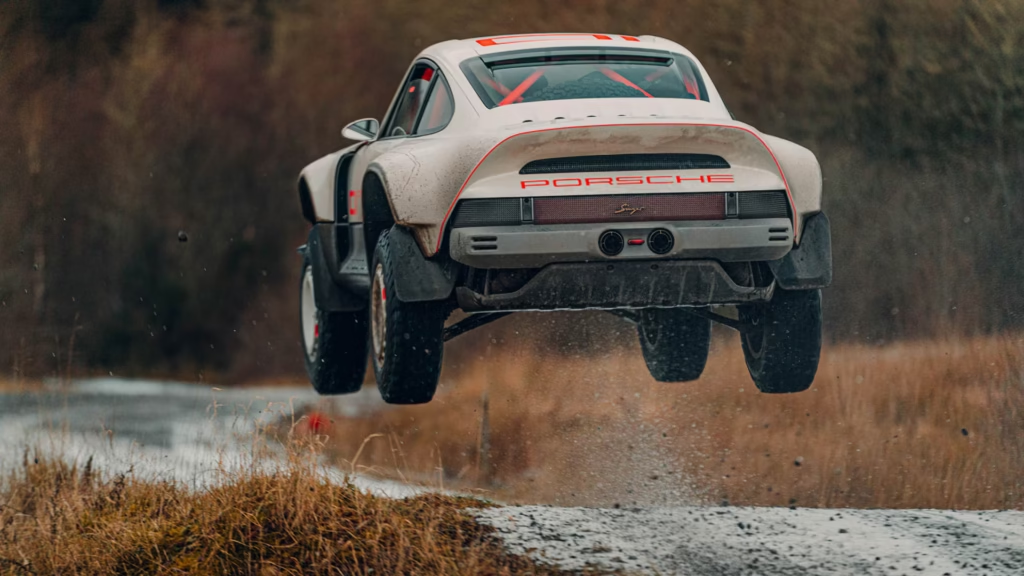
Singer ACS: The Ultimate Safari 911
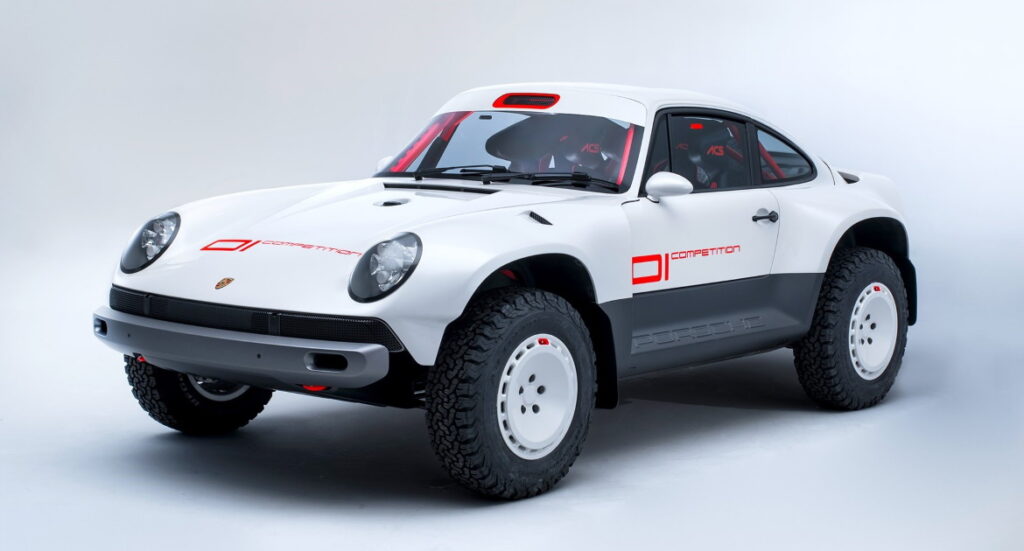
If Porsche introduced the off-road 911 to the world, Singer Vehicle Design proved just how extraordinary the concept could become.
The All-Terrain Competition Study, better known simply as the Singer ACS, is not a production model in the traditional sense. Instead, it began as a commission from a private client who wanted two Porsche 911s unlike anything that had ever existed.
One would be optimized for high-speed desert running.
The other for snow, ice and rough mountain terrain.
Singer accepted the challenge.
The result was arguably the most sophisticated off-road Porsche ever created.
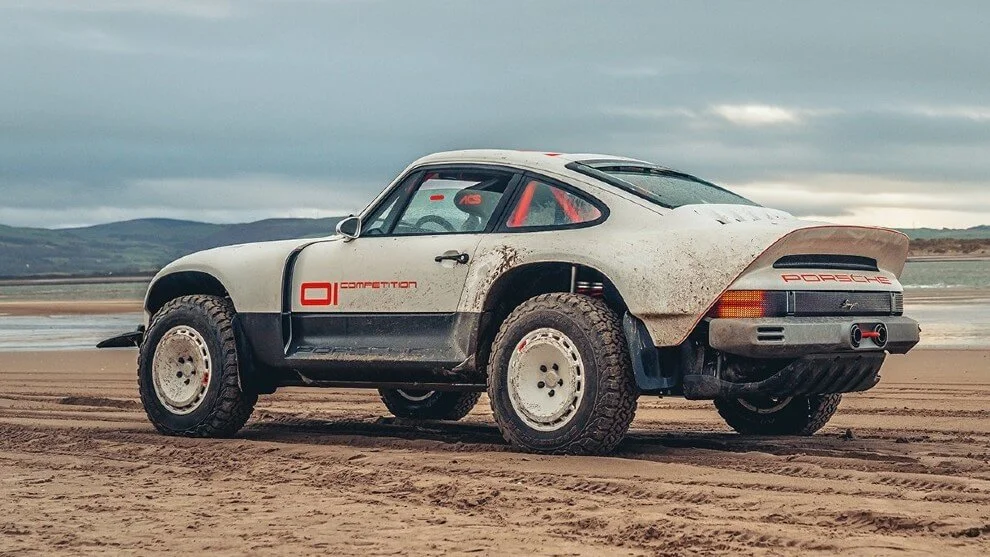
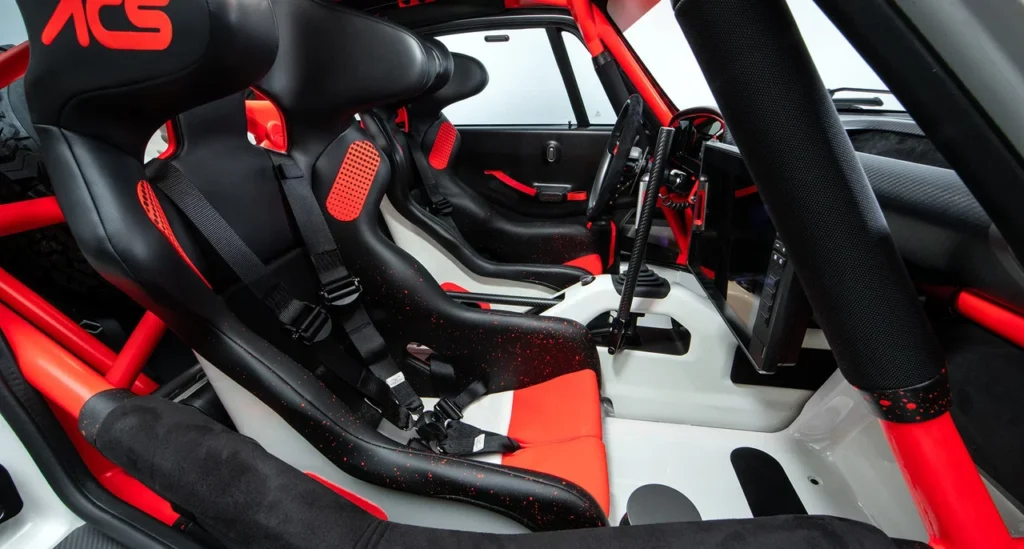
Although inspired by the classic Type 964-generation 911, almost every component was redesigned from scratch. The bodywork became entirely carbon fibre, dramatically wider and significantly more robust than any conventional Singer restoration. Massive wheel travel, long-travel suspension, reinforced chassis components and advanced all-wheel drive transformed the elegant 911 silhouette into something capable of competing in the world’s harshest environments.
Power came from a twin-turbocharged 3.6-litre flat-six producing approximately 450 horsepower, delivered through a sequential gearbox designed specifically for competition use. Unlike most safari-inspired builds, the ACS was engineered with genuine motorsport capability in mind.
Its purpose was not appearance.
It was performance.
Visually, it looked spectacular.
The broad wheel arches.
The roof-mounted air intake.
The integrated spare wheels.
The massive suspension travel.
Every detail suggested a Porsche that had evolved not on European racetracks but across the dunes of Saudi Arabia and the rocky landscapes of Baja.
Many enthusiasts immediately described it as the Porsche that Stuttgart should have built itself.
Whether or not that is true, the ACS demonstrated that an off-road supercar could be every bit as technically advanced as the world’s greatest circuit-focused machines.
Ruf Rodeo: A Different Kind of 911
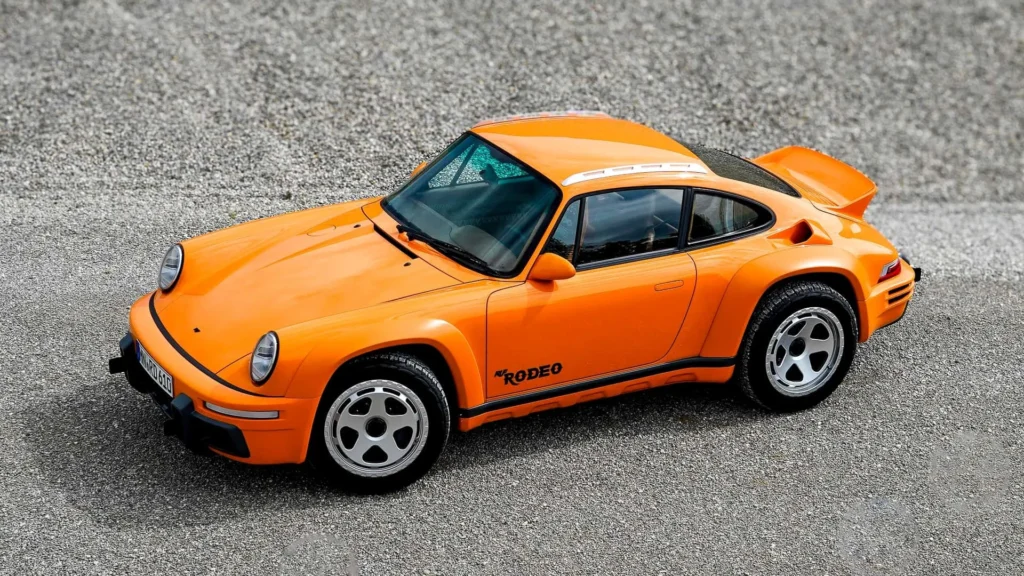
Few names command as much respect within the Porsche community as Ruf.
For decades, the German manufacturer has created some of the fastest and most technically sophisticated 911-based automobiles ever built.
The Rodeo, however, follows an entirely different philosophy.
Rather than chasing Nürburgring lap records, Ruf imagined a grand touring sports car capable of crossing continents.
Inspired by classic American western landscapes and long-distance adventure, the Rodeo combines the company’s beautifully engineered CTR Anniversary platform with genuine off-road capability.
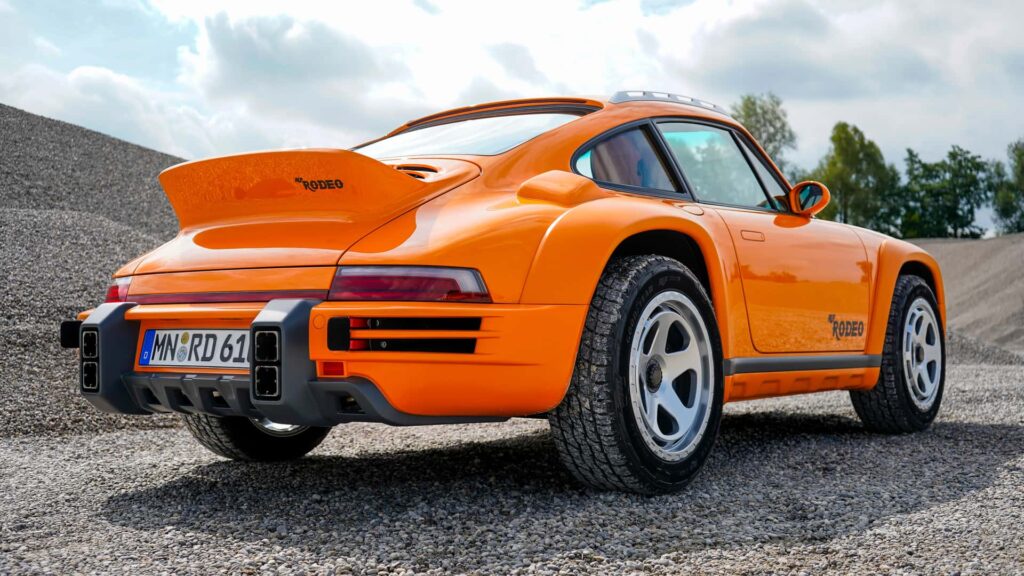
Ground clearance is increased.
Suspension travel is extended.
Special all-terrain tyres replace conventional performance rubber.
Bespoke dampers allow the car to remain composed whether crossing gravel roads or sweeping mountain highways.
The exterior immediately captures attention.
Painted in rich greens, earthy browns and cream accents, it evokes classic expedition vehicles rather than contemporary supercars.
Leather straps.
Retro-inspired graphics.
Unique lighting elements.
Every detail reinforces the idea that this is a car built for exploration rather than exhibition.
Inside, the Rodeo may be even more impressive.
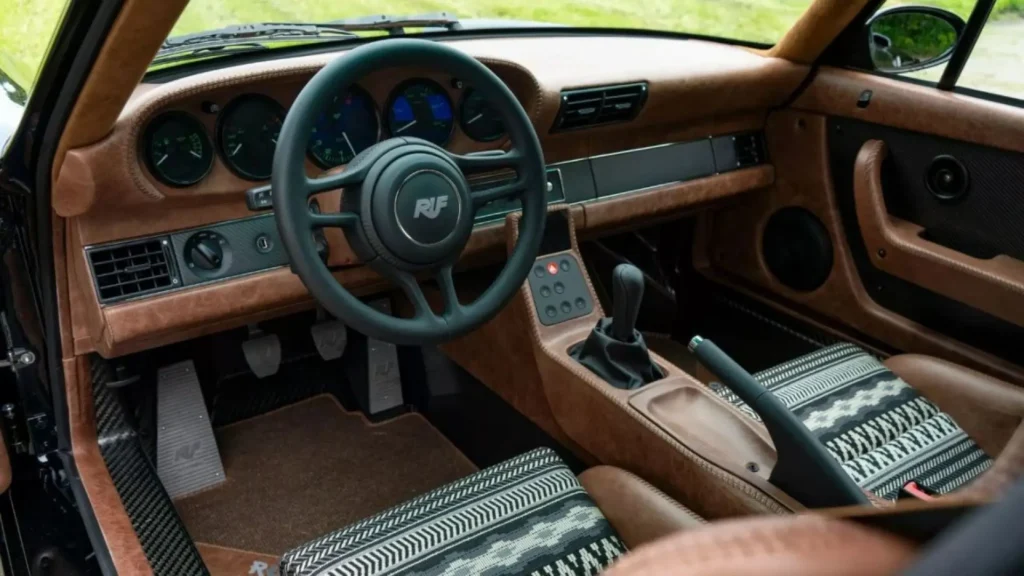
The cabin combines handcrafted leather, woven textiles and western-inspired materials in a way few modern performance cars would dare attempt.
Instead of feeling aggressive, it feels welcoming.
Warm.
Authentic.
Comfortable enough to drive for thousands of kilometres.
The Rodeo reminds us that adventure is not always about driving faster.
Sometimes it is simply about driving further.
Marc Philipp Gemballa Marsien: The Ultimate Desert Porsche
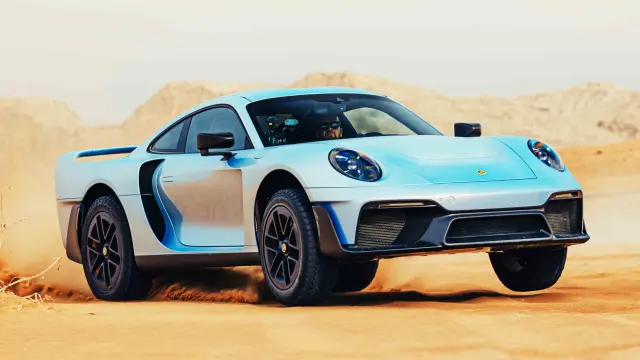
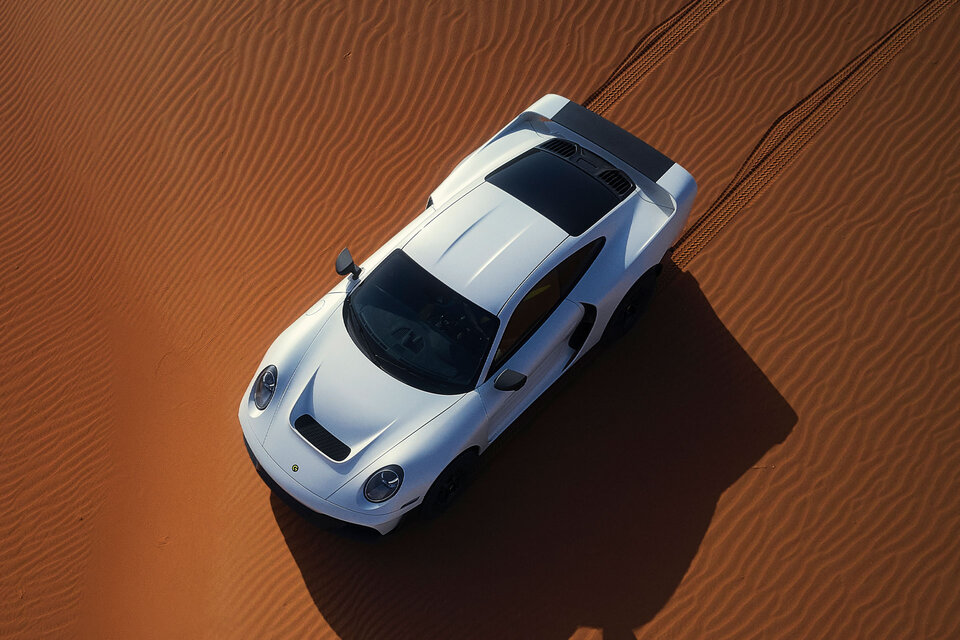
If the Singer ACS is the ultimate rally-inspired 911, the Marc Philipp Gemballa Marsien is unquestionably its desert counterpart.
Created by Marc Philipp Gemballa, son of the legendary Uwe Gemballa, the Marsien represents one of the most ambitious reinterpretations of the modern Porsche 911 ever undertaken.
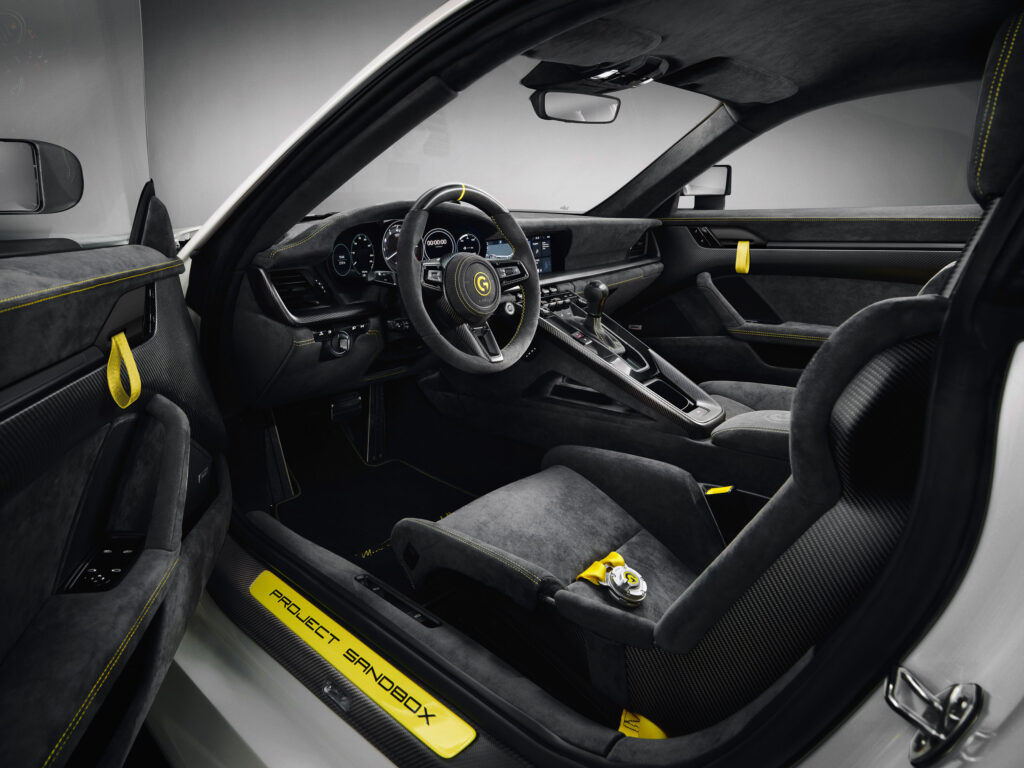
Its foundation is the Porsche 911 Turbo S, inspiration comes directly from the Dakar Rally.
Designed in collaboration with renowned designer Alan Derosier and featuring suspension developed by KW Automotive, the Marsien was engineered to perform at extraordinary speeds across rough terrain without sacrificing the refinement expected from a road-going Porsche.
The suspension alone offers almost 250 millimetres of travel in its highest setting, allowing the Marsien to tackle landscapes that would immediately destroy an ordinary supercar.
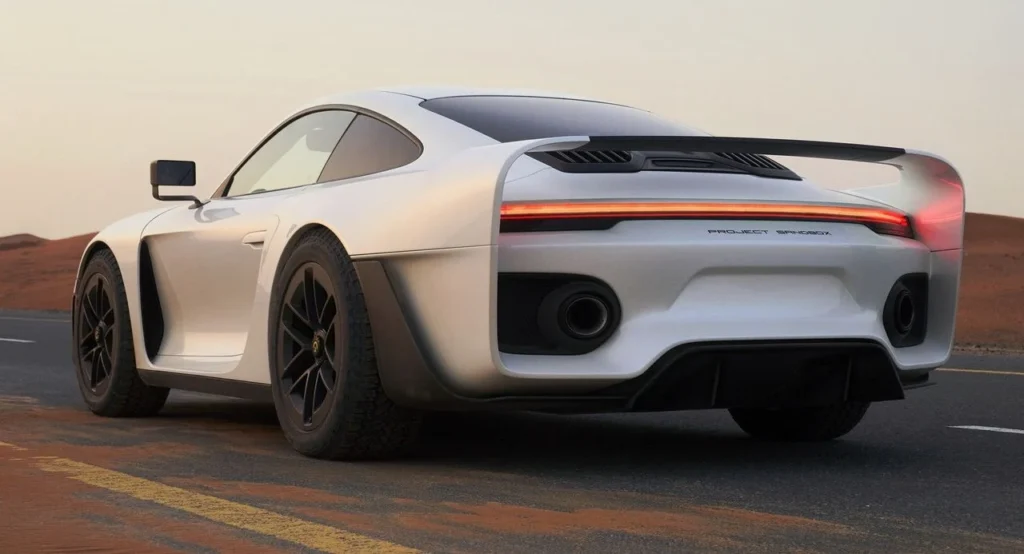
Power is equally extraordinary.
Customers can choose outputs ranging from approximately 750 horsepower to well over 830 horsepower thanks to extensive engine development by Ruf Automobile.
Those figures make the Marsien not only one of the fastest off-road supercars ever created, but also one of the most powerful Porsche-based vehicles available anywhere in the world.
Its carbon-fibre bodywork completely transforms the familiar 911 silhouette.
Wide arches.
Huge air intakes.
Functional aerodynamic elements.
Integrated roof scoop.
Massive ground clearance.
Everything serves a purpose.
Yet despite its aggressive appearance, the Marsien retains a surprising level of elegance.
Rather than resembling a competition car adapted for the road, it feels like a luxury grand tourer specifically engineered for the desert.
Production is extremely limited.
Each example is individually commissioned.
Each owner collaborates directly with the company to create a highly personalised specification.
In many ways, the Marsien represents the pinnacle of the modern adventure supercar.
It is luxurious.
Incredibly fast.
Technically fascinating.
And capable of reaching places no conventional hypercar could ever hope to explore.
Laffite Atrax: Reinventing the Hypercar
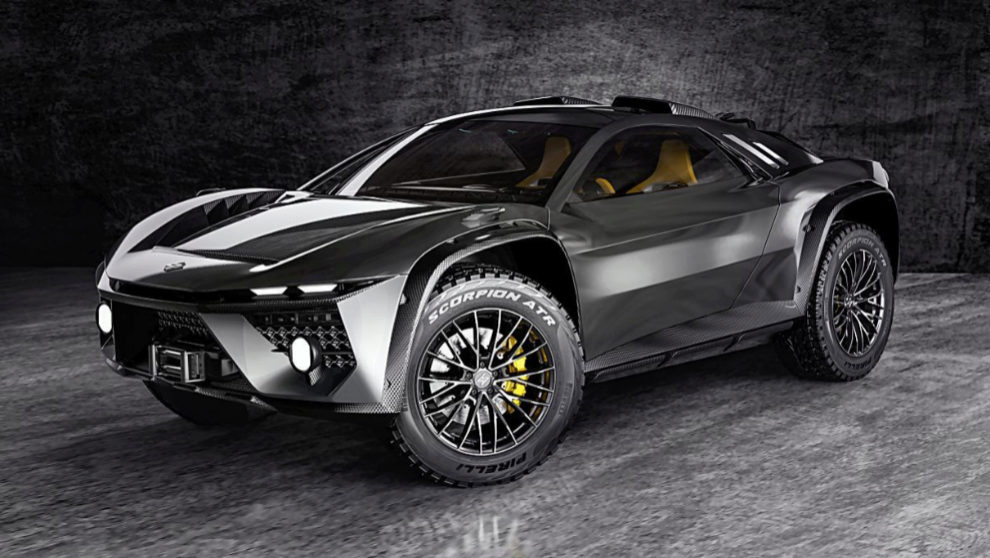
While most off-road supercars reinterpret existing sports cars, the Laffite Atrax begins with an entirely different philosophy.
It was conceived from the outset as an off-road hypercar.
Its proportions immediately reveal this ambition.
Low.
Extremely wide.
Almost prototype-like.
Yet sitting dramatically higher than any Le Mans racer.
Designed by the Italian-founded Laffite Automobili, the Atrax combines hypercar styling with long-travel suspension, advanced four-wheel drive and serious off-road capability.
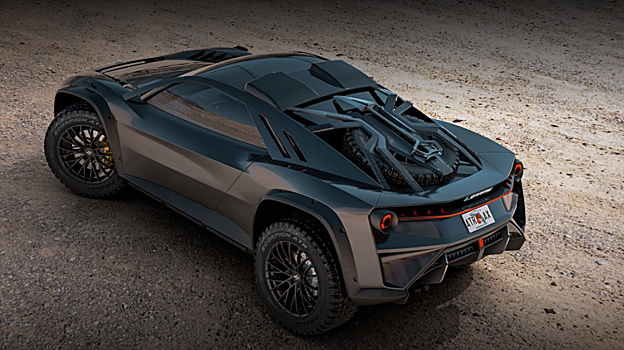
Rather than adapting a road car for rough terrain, the company designed a purpose-built platform capable of operating across deserts, gravel and demanding landscapes while retaining the visual drama expected from an exotic Italian machine.
Power comes from a naturally aspirated V8 producing around 720 horsepower, allowing the Atrax to deliver breathtaking performance while avoiding unnecessary complexity.
The emphasis remains on lightweight engineering, mechanical purity and driver engagement.
Visually, it may be the boldest car featured in this category.
Its exposed suspension components, dramatic wheel arches and futuristic bodywork make it appear closer to a Dakar prototype than a conventional production vehicle.
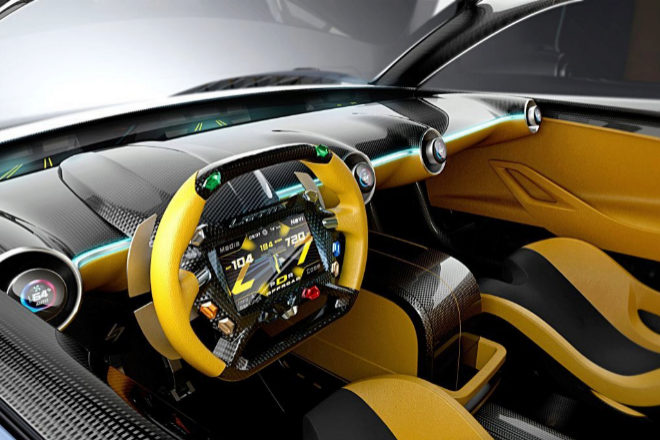
It is unapologetically extreme.
Yet that is precisely the point.
The Atrax demonstrates how far the adventure supercar concept can evolve when designers begin with a completely blank sheet of paper rather than adapting an existing sports car.
It is less a crossover.
More an entirely new species of hypercar.
From Zonda to Utopia: The Complete Evolution of Pagani
Beyond Asphalt, Beyond Expectations
The Singer ACS.
The Ruf Rodeo.
The Gemballa Marsien.
The Laffite Atrax.
Four radically different interpretations of the same idea.
Each demonstrates that performance is no longer measured solely by lap times or maximum speed.
Increasingly, it is measured by freedom.
Freedom to leave the circuit, to leave the highway or to drive where conventional supercars simply cannot follow.
It is a philosophy that is reshaping one of the most exclusive corners of the automotive world.
And remarkably, it may only be the beginning.
Why Luxury Manufacturers Are Looking Beyond Asphalt
The emergence of off-road supercars is not simply another design trend.
It reflects a much broader shift in the way collectors use their automobiles.
Twenty years ago, the ultimate dream garage might have consisted of a Ferrari for weekends, a Porsche for daily driving and a Range Rover for winter holidays.
Today, many collectors already own all three.
The challenge is no longer adding another supercar to the collection.
It is finding an experience they have never had before.
Driving through the dunes of the Middle East.
Crossing Icelandic volcanic landscapes.
Exploring Alpine gravel passes.
Following old military roads through the Dolomites.
Traversing the American Southwest.
The destination has become just as important as the car itself.
Luxury is increasingly defined by experience rather than possession.
This is precisely why vehicles such as the Porsche 911 Dakar and Lamborghini Sterrato have been so successful.
They offer something even many hypercars cannot.
Freedom.
Rather than asking owners to search for perfect roads, they encourage them to leave those roads behind.
Why This Segment Makes Perfect Sense
On paper, an off-road supercar sounds contradictory.
Supercars belong on race circuits.
Off-road vehicles belong in the wilderness.
Yet the two concepts complement one another surprisingly well.
Modern suspension technology allows significant increases in wheel travel without sacrificing on-road dynamics.
Carbon fibre keeps weight remarkably low despite reinforced chassis components.
Sophisticated all-wheel-drive systems provide extraordinary traction across virtually every surface.
Perhaps most importantly, today’s buyers value versatility more than ever.
Many luxury cars now serve multiple purposes.
A Bentley can be a daily driver.
A Rolls-Royce can travel across continents.
A Ferrari Purosangue can comfortably accommodate a family.
The off-road supercar follows exactly the same philosophy.
Not replacing traditional sports cars.
Expanding what they can do.
What Could Come Next?
The success of these projects inevitably raises an intriguing question.
Who will be next?
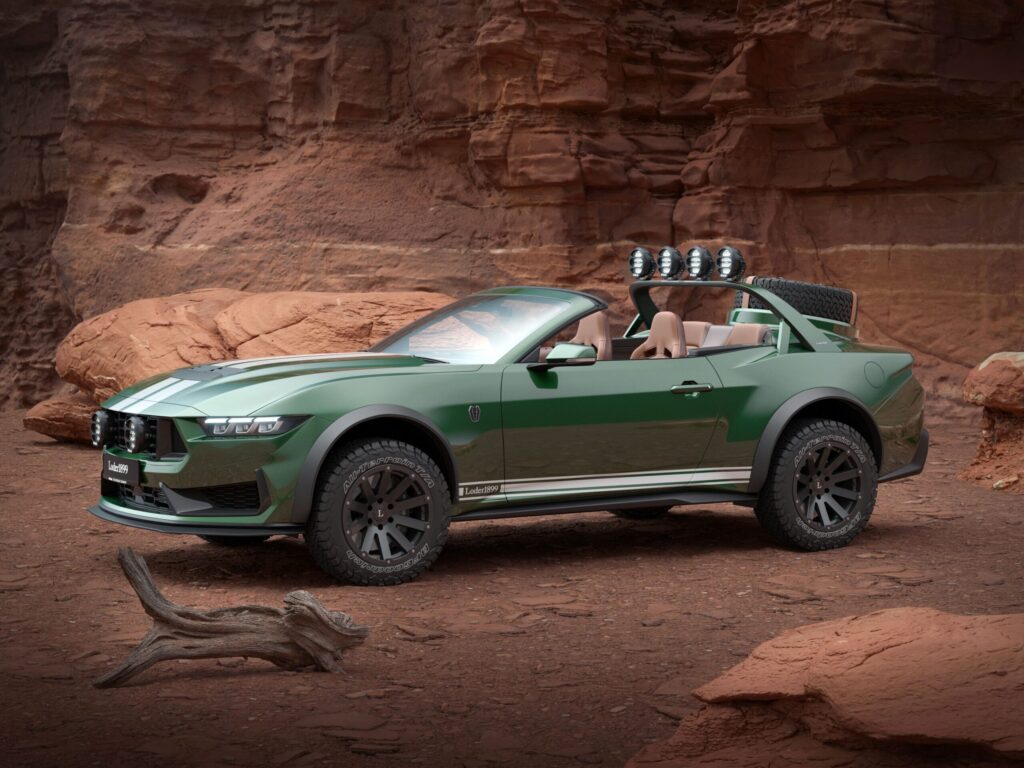
Ferrari has already demonstrated its willingness to challenge convention with the Purosangue, while its Tailor Made programme continues to push the boundaries of personalization.
Could Maranello eventually build a limited-production rally-inspired berlinetta?
McLaren has the lightweight expertise.
Pagani possesses the craftsmanship.
Koenigsegg has repeatedly demonstrated that unconventional ideas often become extraordinary automobiles.
Even Aston Martin’s long history of endurance racing could provide the perfect foundation for a modern grand touring adventure car.
Whether these manufacturers ultimately enter the segment remains uncertain.
What seems far more certain is that customer demand continues to grow.
Collectors increasingly seek automobiles that create memories rather than simply numbers.
Cars that invite exploration rather than careful preservation.
More Than a Marketing Exercise
It would be easy to dismiss raised supercars as little more than fashionable special editions.
The evidence suggests otherwise.
Every model featured in this article was developed with genuine engineering intent.
The Porsche 911 Dakar required extensive chassis development.
The Huracán Sterrato underwent thousands of kilometres of testing on gravel and dirt.
Singer engineered the ACS to genuine competition standards.
The Marsien features suspension unlike anything found on a conventional Porsche.
Even the Morgan CX-T was developed alongside Dakar-winning engineers.
These are not styling packages.
They are purpose-built automobiles.
That distinction matters.
Because authenticity always matters.
Especially in the luxury world.
The Return of Adventure
Perhaps the greatest achievement of this new category is not technical.
It is emotional.
For decades, many supercars became almost intimidating.
Owners worried about steep driveways.
Speed bumps.
Loose gravel.
Unexpected rain.
The constant pursuit of perfection made them increasingly fragile.
Off-road supercars reverse that philosophy.
They invite owners to drive.
To explore. discover roads that rarely appear on postcards and enjoy the journey rather than merely the destination.
In doing so, they reconnect with something that has always defined the greatest automobiles.
Adventure.
Beyond the Asphalt
The off-road supercar is no longer an experiment.
It is no longer a curiosity.
It has become one of the most fascinating new categories in the automotive world.
From the visionary Aixam Mega Track, decades ahead of its time, to the groundbreaking Porsche 911 Dakar, the theatrical Lamborghini Huracán Sterrato, the expedition-ready Morgan Plus Four CX-T, the extraordinary Singer ACS, the handcrafted Ruf Rodeo, the desert-conquering Marc Philipp Gemballa Marsien and the futuristic Laffite Atrax, each model tells a different chapter of the same story.
They prove that ultimate performance is no longer confined to perfect asphalt.
Instead, it can be found on gravel roads winding through the Alps.
Across endless desert landscapes.
Along remote coastal trails.
Or anywhere curiosity leads.
Perhaps that is why this segment feels so compelling.
It reminds us that the automobile was never simply about speed.
It has always been about freedom.
And these remarkable machines expand that freedom further than ever before.