
There are few automobiles in the world that require less modification than a Bugatti.
Their performance is already extraordinary and engineering already borders on the obsessive.
Their production numbers are already tiny.
And yet, for a certain type of collector, rarity alone is not enough.
That is where Mansory enters the conversation.
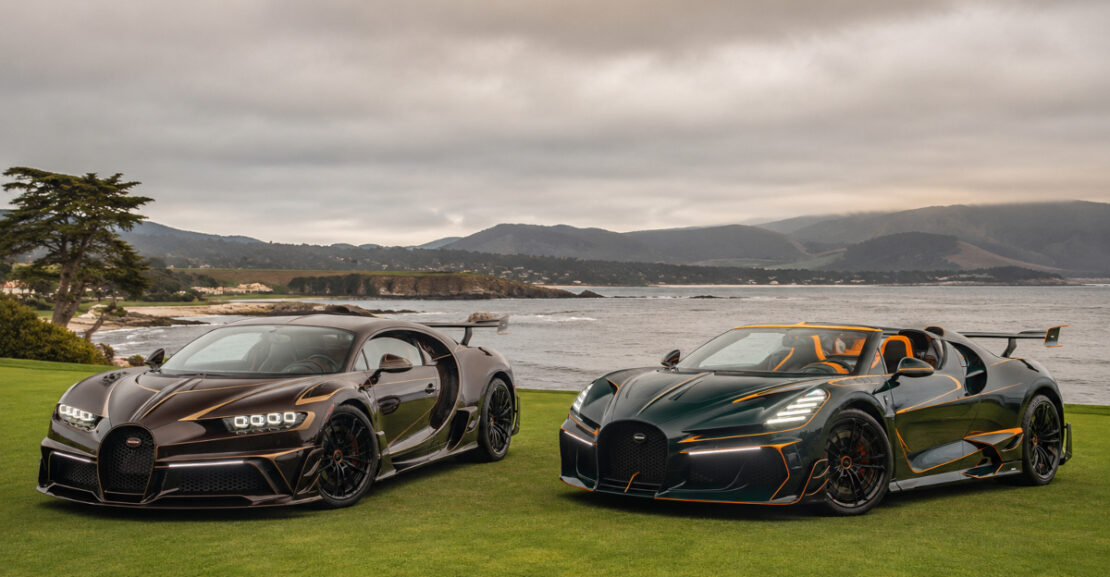
For the 2026 Pebble Beach Concours d’Elegance, the German specialist has created two extraordinary one-off Bugattis: the Mansory Vincerò, based on the W16 Mistral, and the Mansory Vivere, based on the Chiron.
Both names carry history within Mansory’s relationship with Bugatti.
Both have appeared before on highly exclusive Veyron projects.
And both return now in completely new forms, representing the company’s most ambitious interpretation yet of two of Molsheim’s greatest modern hypercars.
One is an open-top farewell to the W16 era.
The other reimagines the Chiron through a new generation of carbon-fibre craftsmanship.
Neither exists to become faster.
They exist to become impossible to duplicate.
Mansory and Bugatti: A Relationship Built on Extremes
Mansory’s connection with Bugatti stretches back well into the Veyron era.
Long before today’s hypercar market became crowded with bespoke divisions and factory personalization programmes, Mansory was already experimenting with how far one of the world’s most expensive production automobiles could be transformed.
The Linea Vincerò became one of the best-known results.
Based on the Veyron 16.4, it introduced extensive exposed carbon fibre, revised aerodynamic elements, bespoke wheels and a completely redesigned interior. Its name came from the famous line in Puccini’s Nessun Dorma: “Vincerò” — “I will win.”
The Linea Vivere followed a similarly ambitious philosophy, again transforming the Veyron through extensive carbon work, handcrafted materials and a distinctive visual identity.
Those projects established a theme that Mansory now revisits almost two decades later.
The names remain.
The cars beneath them have changed completely.
Why Revive Vincerò and Vivere Now?
The timing is significant.
Bugatti is closing the chapter on its legendary quad-turbocharged W16 architecture as the company transitions towards the new V16-powered Tourbillon era.
The Mistral represents the final open-top road car powered by the W16.
Bugatti W16 Mistral Blanc Éternel: A One-Off Where Art, Porcelain and the W16 Become One
The Chiron, meanwhile, became the defining Bugatti of the post-Veyron generation.
For Mansory, revisiting Vincerò and Vivere therefore feels less like nostalgia and more like continuity.
The original projects were created around the Veyron.
The new cars take those ideas into the final years of the W16 era.
Two generations.
Two Bugatti icons.
Two one-off interpretations.
Mansory Vincerò: The W16 Mistral Transformed
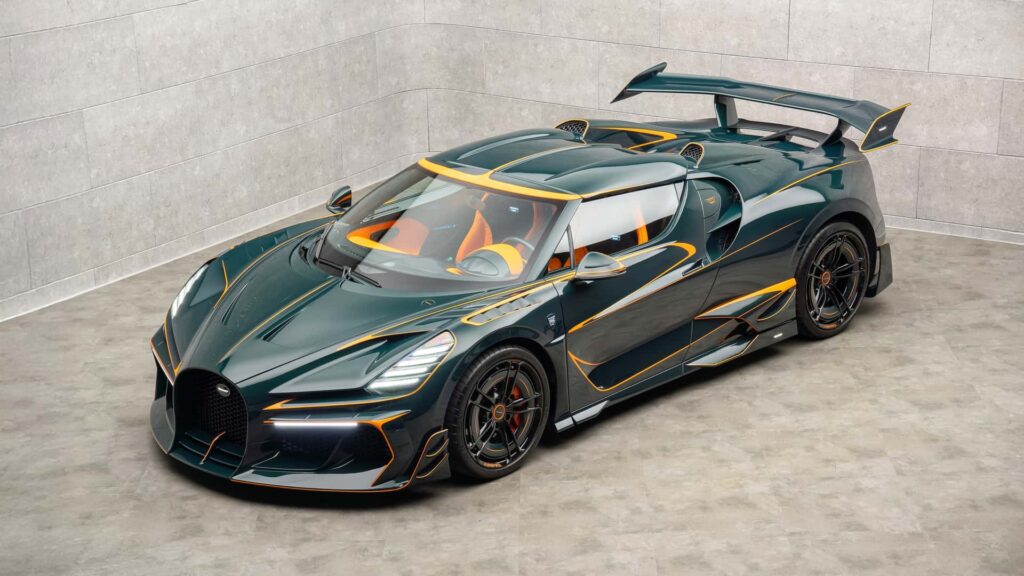
Of the two cars, the Mansory Vincerò is perhaps the more historically significant.
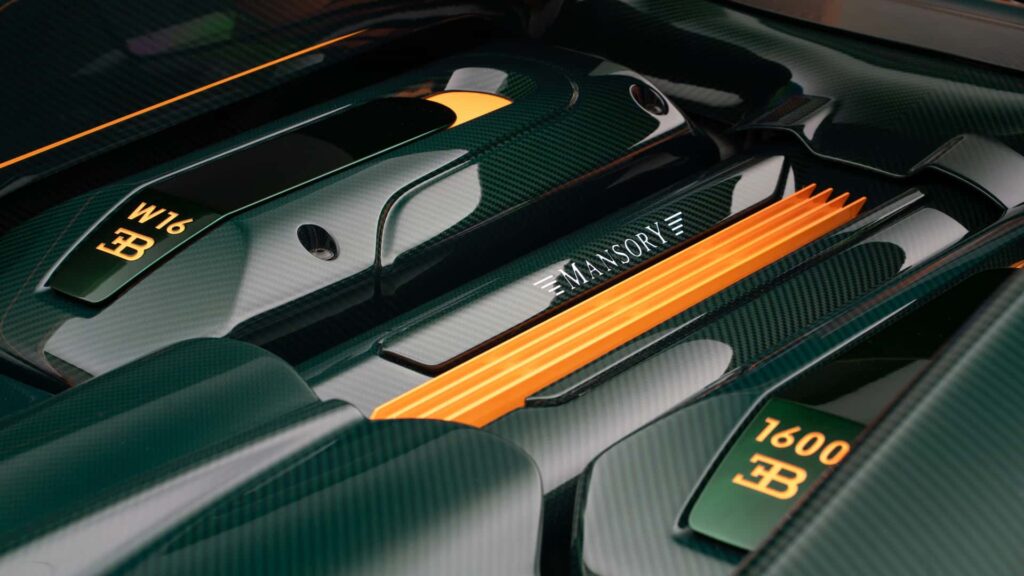
Its foundation is the Bugatti W16 Mistral, one of only 99 examples produced and the final road-going Bugatti created around the legendary 8.0-litre quad-turbocharged W16.
Even in factory form, the Mistral hardly lacks presence.
Mansory nevertheless reworks its character considerably.
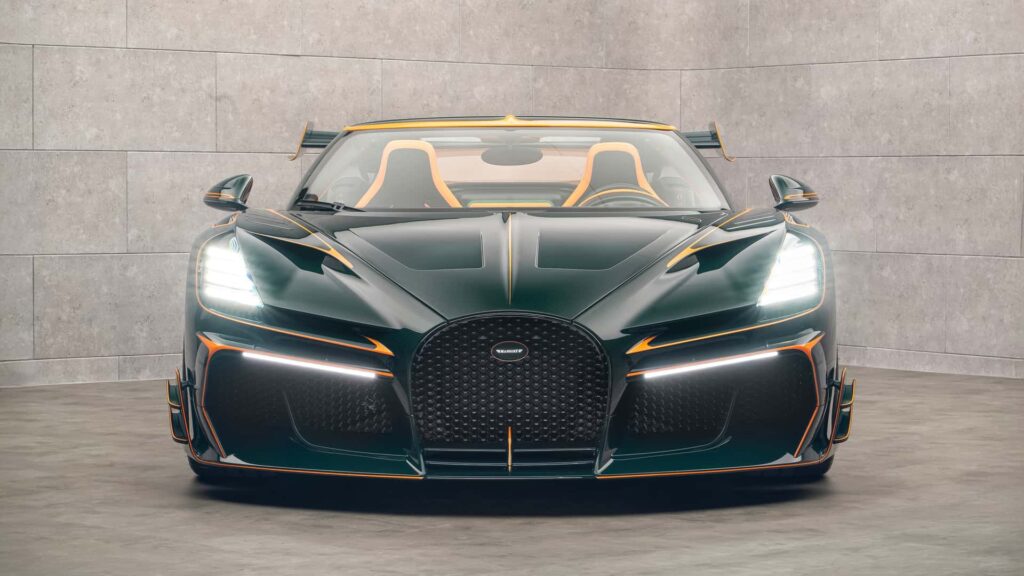
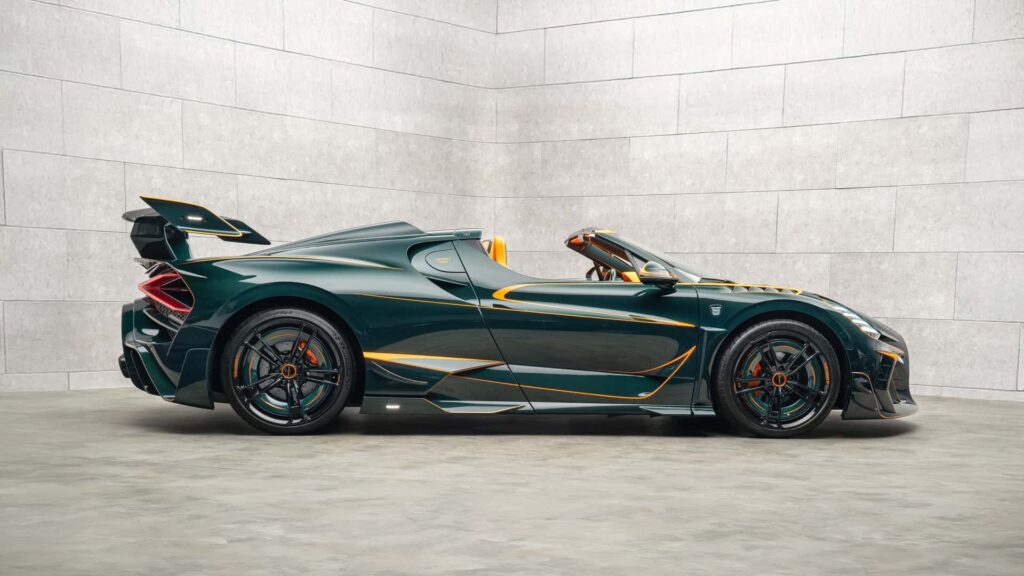
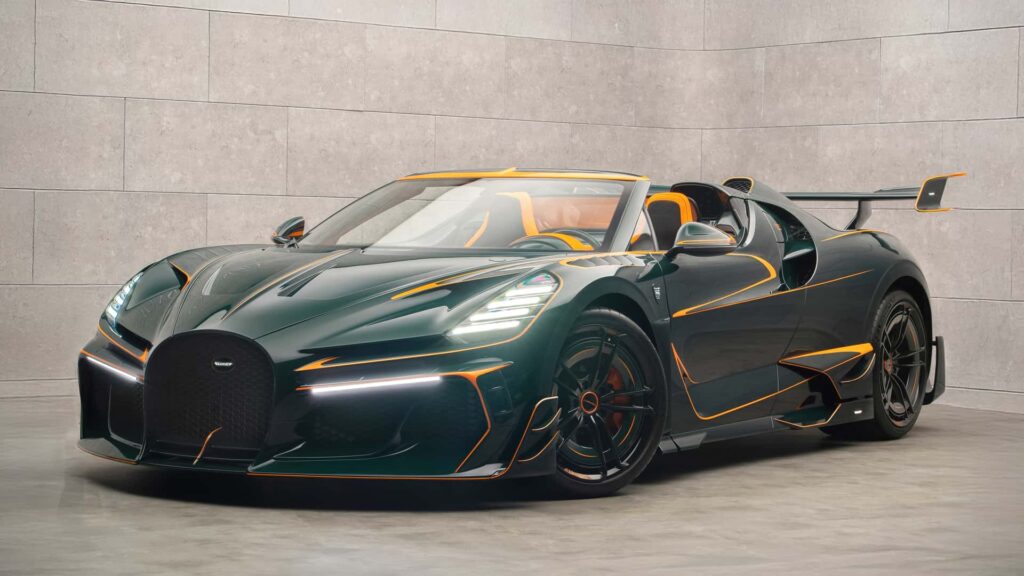
The fundamental silhouette remains recognisable, but numerous new exterior elements have been developed from coloured exposed carbon fibre, altering both the visual texture and aerodynamic treatment of the car.
The objective is not to disguise the Mistral.
It is to intensify it.
Coloured Carbon Instead of Conventional Paint
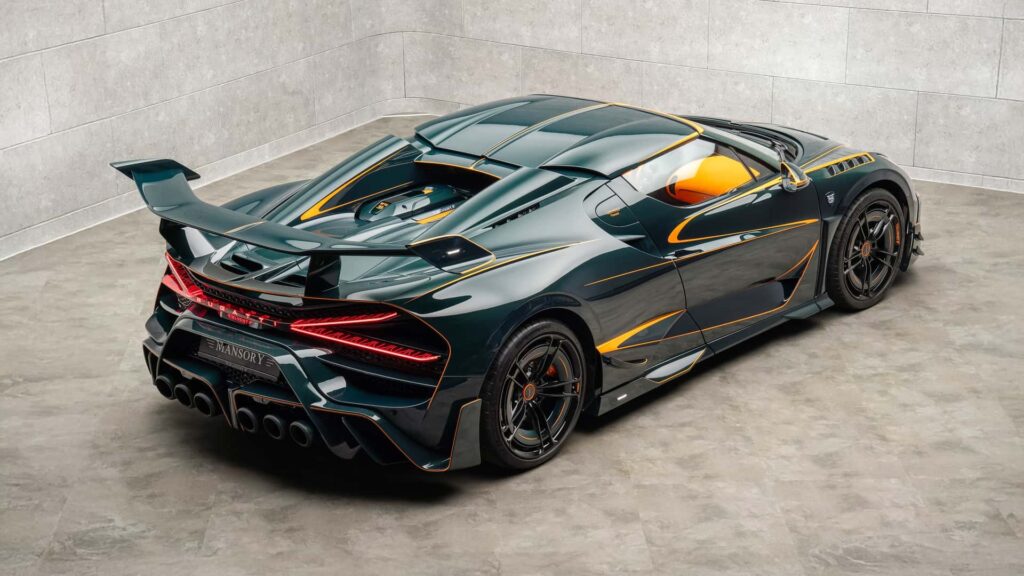
Carbon fibre has long been one of Mansory’s preferred materials.
On the Vincerò, however, the material becomes more than a lightweight structural or aerodynamic component.
It becomes the principal visual language of the car.
Rather than hiding the weave beneath paint, Mansory uses coloured exposed carbon throughout the exterior.
That allows the structure of the material to remain visible while introducing a richer, more distinctive finish.
Under changing light, the body reveals two layers simultaneously.
Colour.
And construction.
This approach gives the Vincerò a particularly technical appearance while avoiding the flat visual character of conventional painted panels.
Aerodynamics Developed Around the Existing Mistral
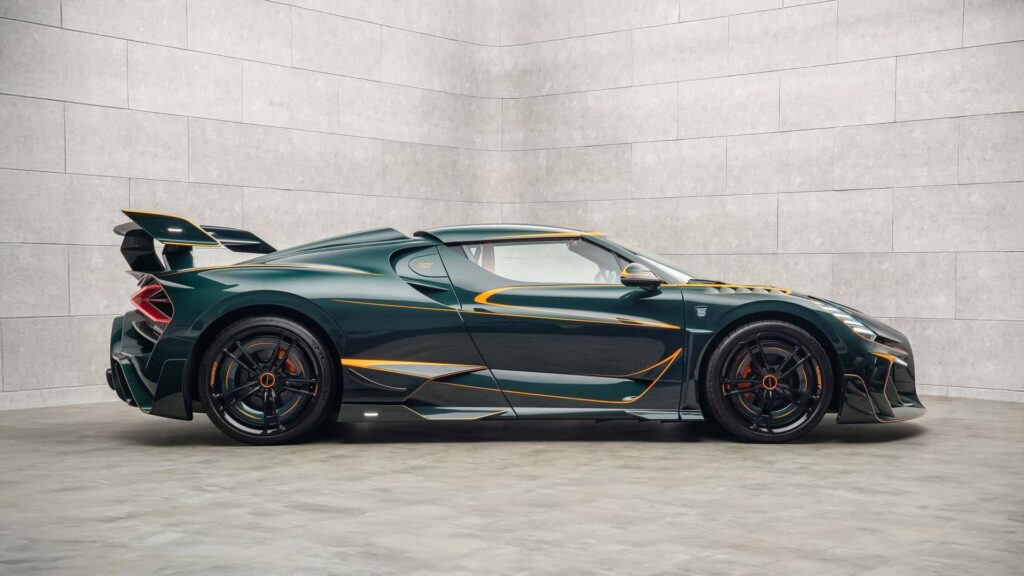
The Mistral’s body was originally shaped around an extraordinarily demanding aerodynamic brief.
That makes modifying it considerably more complicated than simply attaching larger spoilers.
Mansory has therefore developed new aerodynamic elements specifically around the existing architecture, ensuring that every added component follows the fundamental proportions of the original roadster.
The front receives revised aero surfaces.
Side elements are reworked.
The rear becomes more visually aggressive.
Yet the unmistakable X-shaped Mistral lighting architecture and open-top proportions remain central to the composition.
This is still clearly a Bugatti.
Just one interpreted through Mansory’s considerably more extroverted design language.
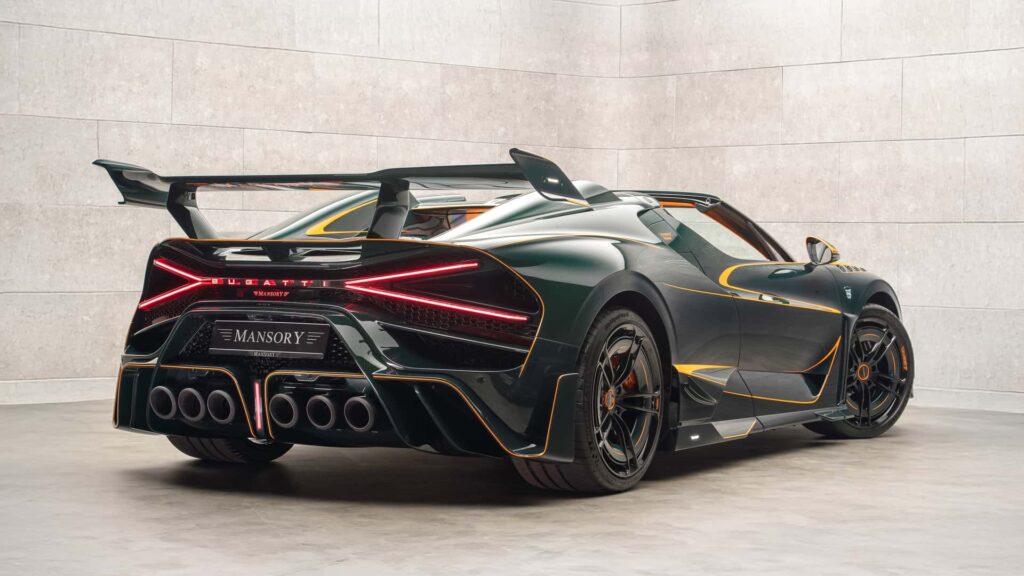
A New Generation of Forged Wheels
The transformation continues with a completely bespoke wheel package.
Mansory has developed a new generation of forged alloy wheels for the project, combining lightweight construction with the structural strength required by a car capable of extreme speed.
That engineering requirement matters.
A Bugatti wheel does not simply need to look dramatic.
It must tolerate enormous longitudinal and lateral loads at velocities far beyond those experienced by conventional supercars.
The wheels therefore become both styling elements and highly stressed engineering components.
Their design also helps distinguish the Vincerò from the original Mistral without overwhelming the bodywork surrounding them.
1,600 PS Remain Untouched
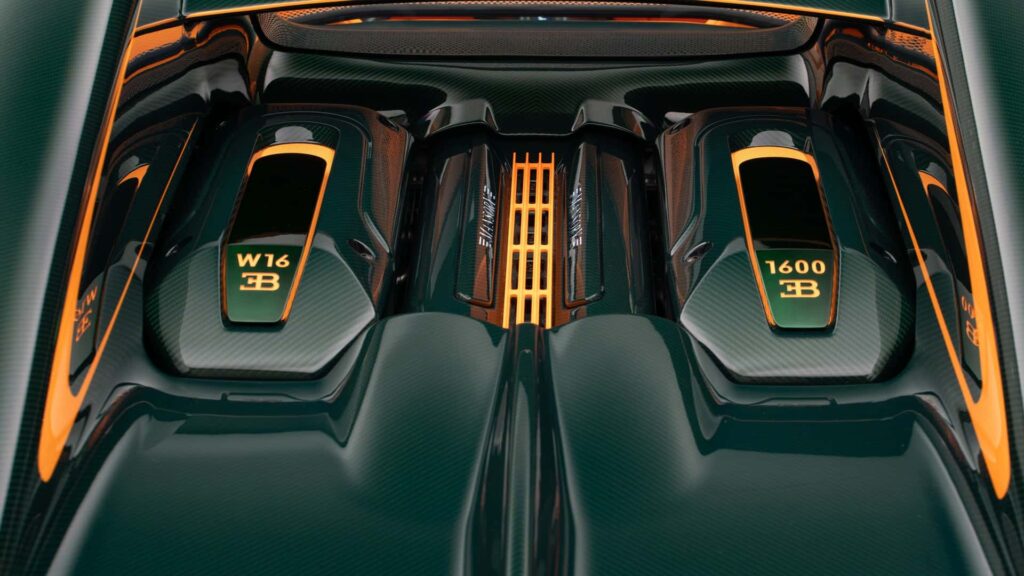
Perhaps the most interesting decision is what Mansory has not changed.
The powertrain.
The W16 Mistral already produces 1,600 PS from its 8.0-litre quad-turbocharged sixteen-cylinder engine, transmitted through a seven-speed dual-clutch gearbox and permanent all-wheel drive.
Mansory has not announced an increase in output for the Vincerò.
Bugatti W16 Mistral — The Final Masterpieces of the W16 Era
That restraint makes sense.
At this level, another hundred horsepower would add little to the car’s identity.
The Mistral is already one of the most powerful open-top production automobiles ever created.
More importantly, it achieved a verified top-speed record of 453.91 km/h, becoming the fastest open-top production car ever recorded.
Performance is not the problem that requires solving.
Individuality is.
The Final W16 Roadster Becomes Even Rarer
The significance of transforming a Mistral should not be underestimated.
Bugatti produced only 99 examples.
Every one was allocated long before production concluded.
And the model represents the final open-top road-going expression of an engine architecture that defined Bugatti for two decades.
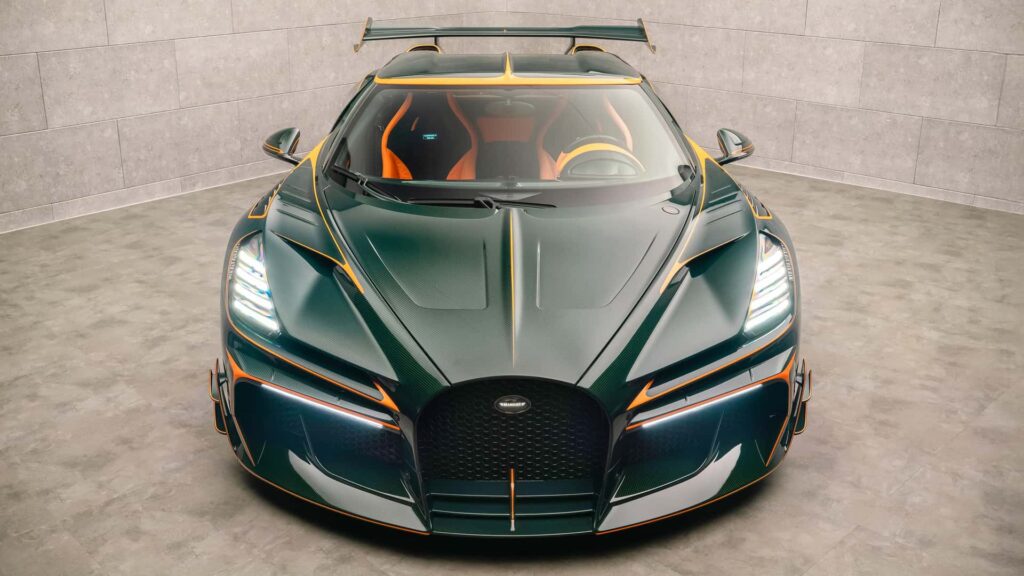
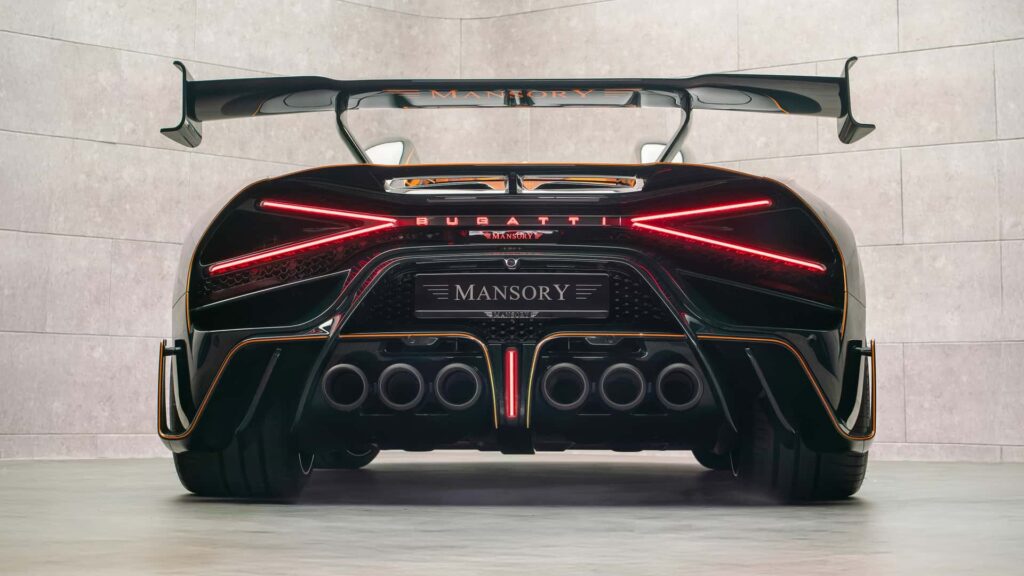
Mansory has now taken one of those already rare automobiles and transformed it into a genuine one-off.
From a collector’s perspective, that creates an unusual hierarchy of exclusivity.
Rare base car.
Historic powertrain.
Unique commission.
Only one Vincerò exists.
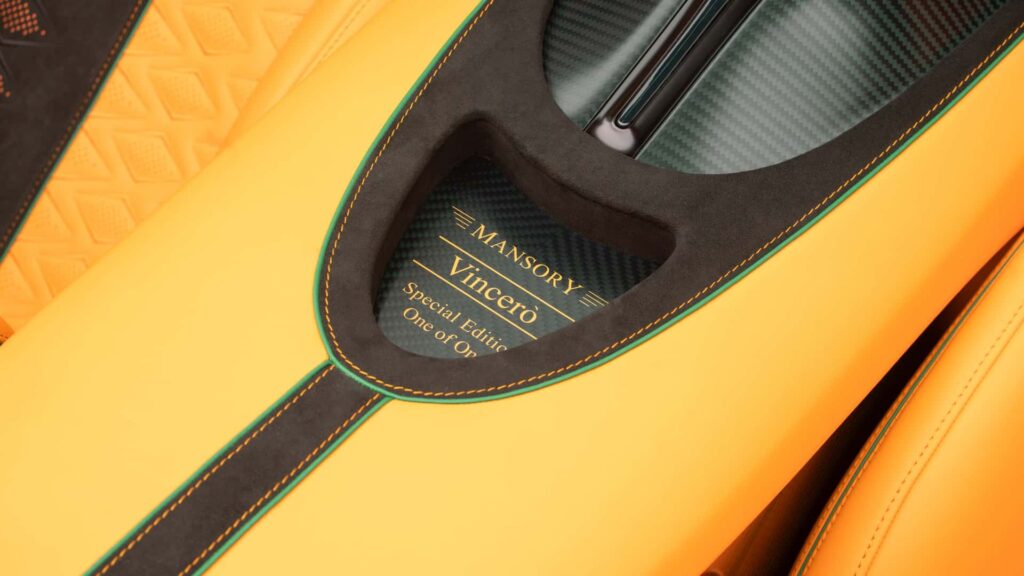
A Completely Reworked Interior
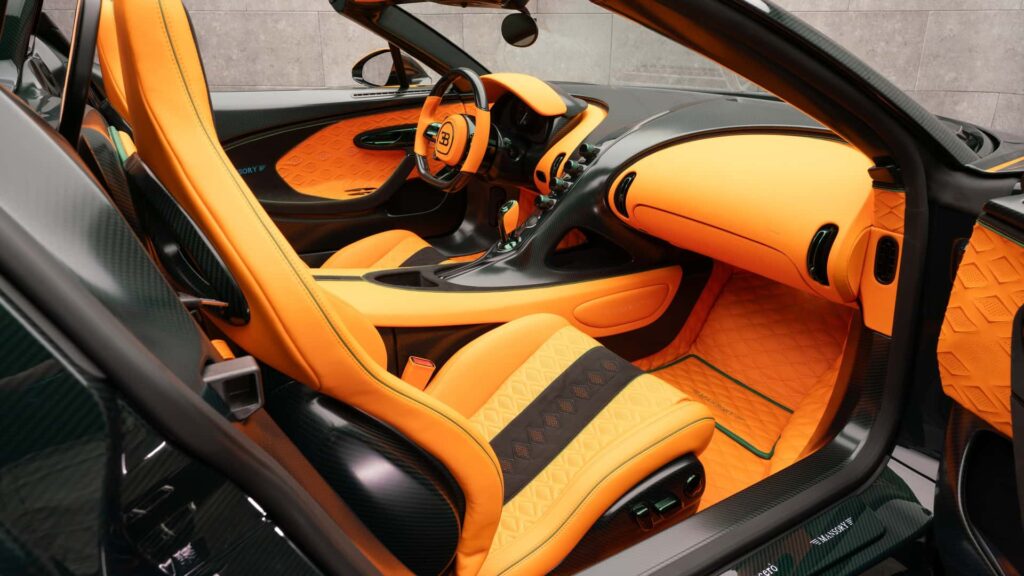
The interior receives the same level of attention.
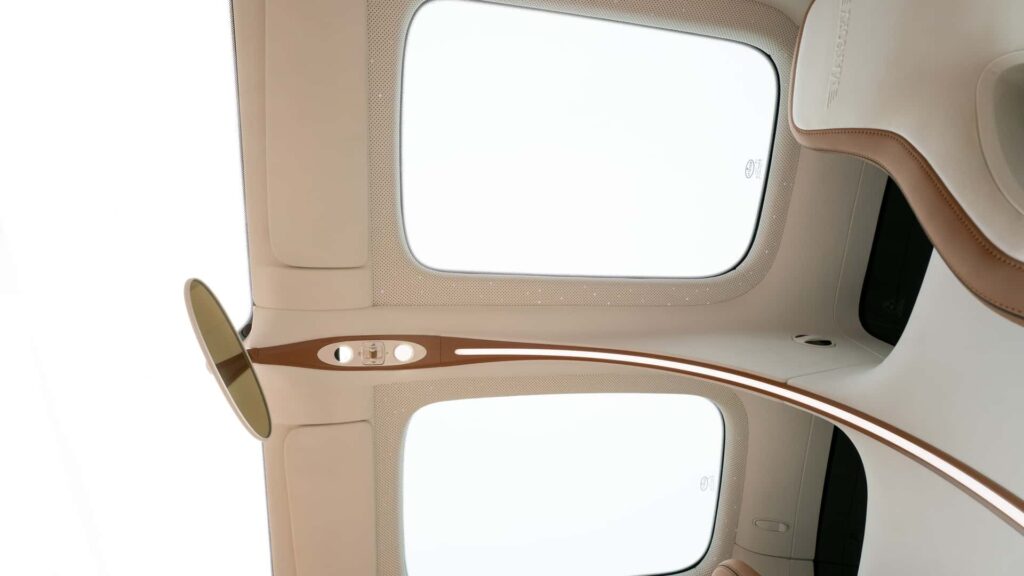
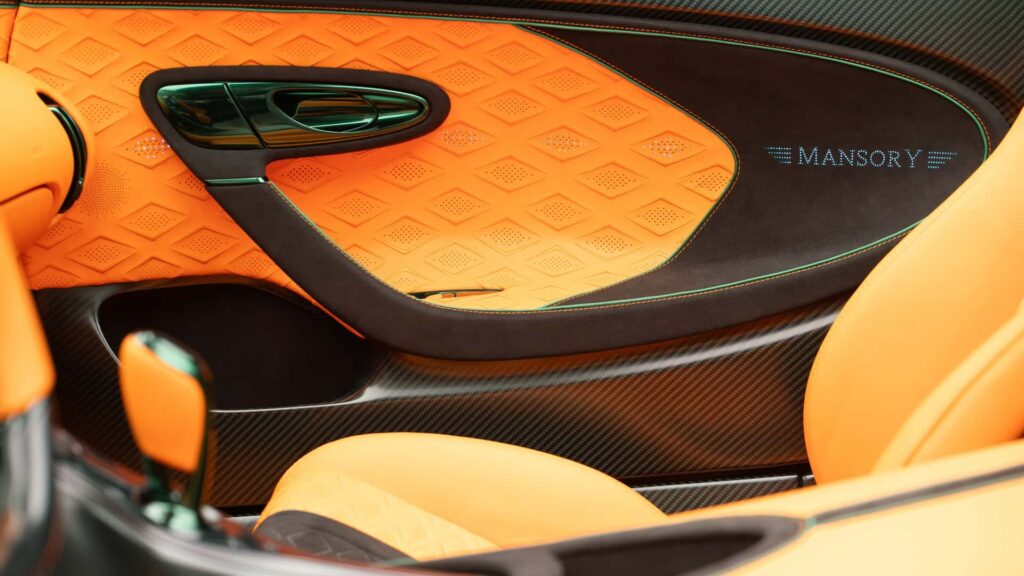
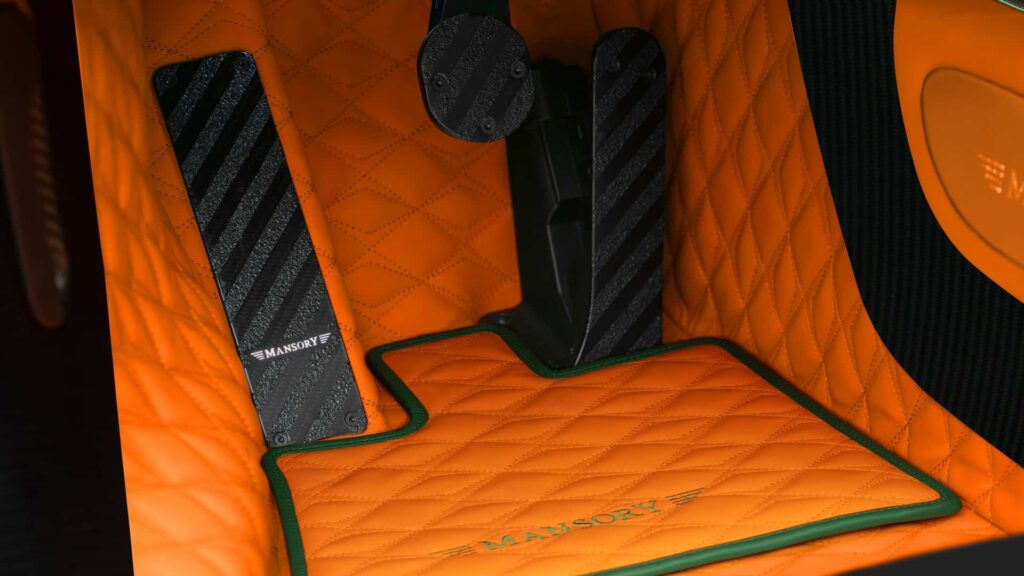
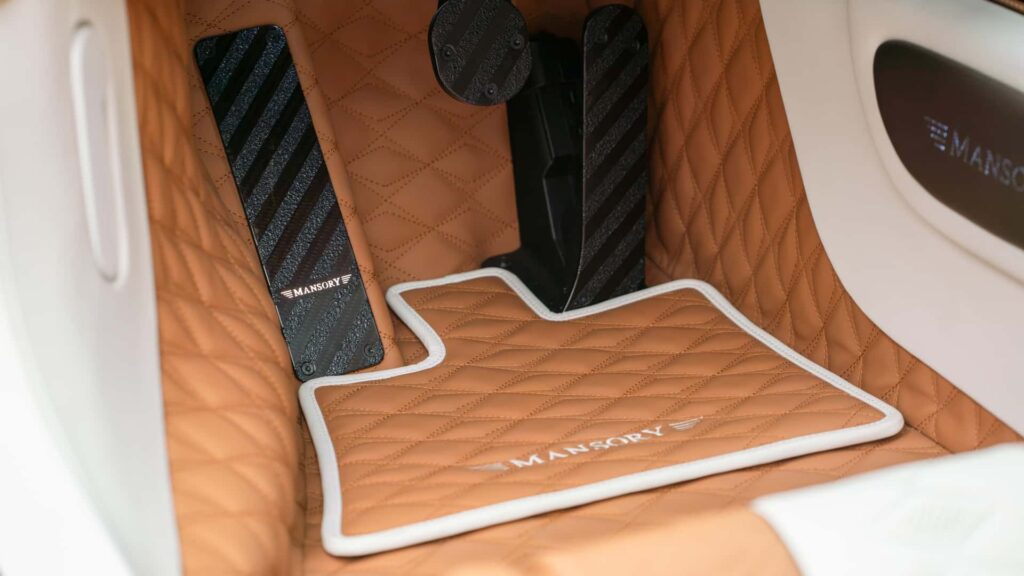
Mansory replaces significant sections of the standard specification with bespoke leather treatments, exposed carbon-fibre surfaces and individually manufactured decorative components.
Rather than applying a handful of colour changes, the cabin is reconsidered as an integrated commission.
Leather tones.
Stitching.
Carbon finish.
Trim.
Badging.
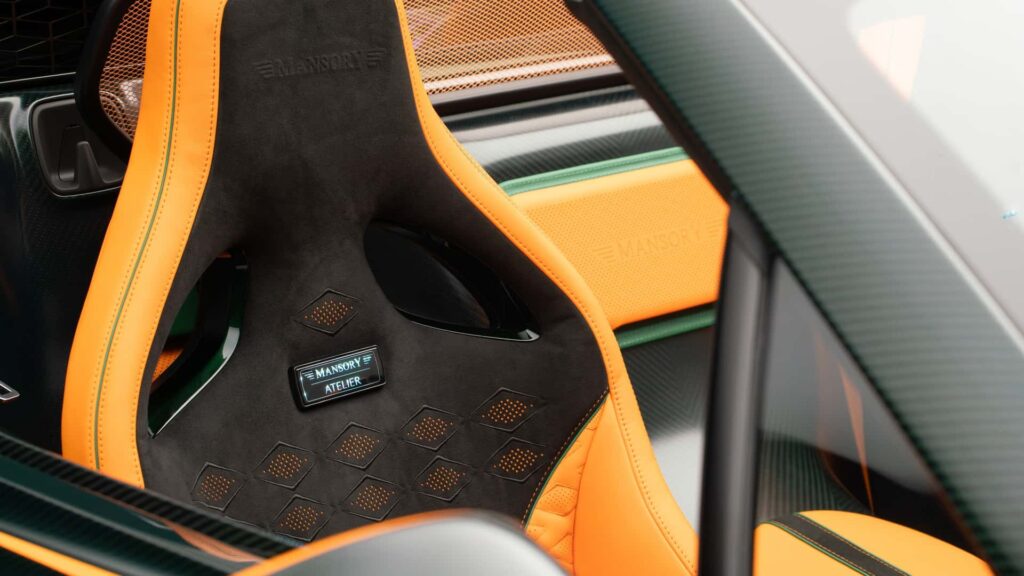
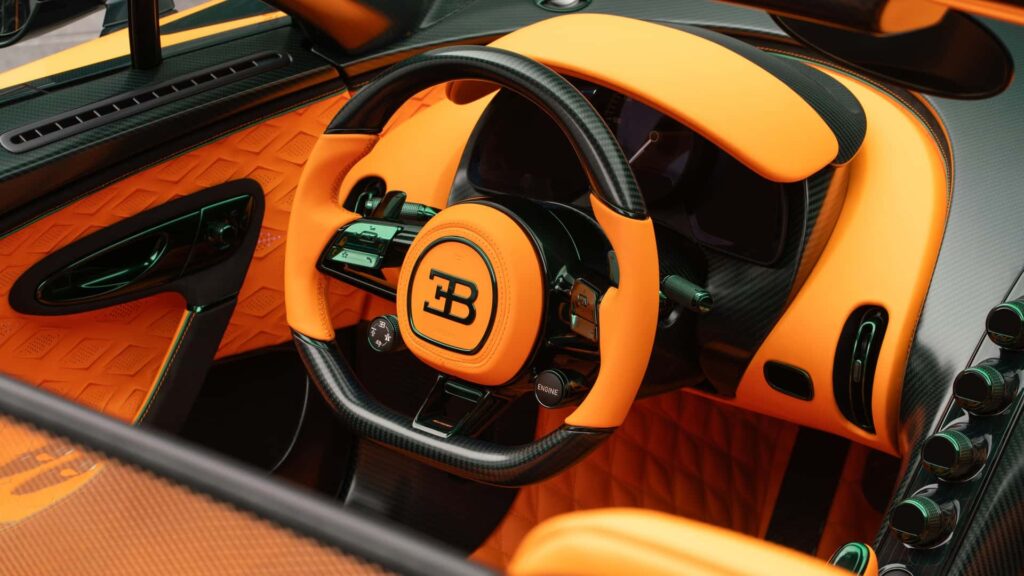
Every element can be aligned around the owner’s preferences.
For a car already built around exceptional craftsmanship, achieving a clearly different identity requires an unusually high level of detail.
That is precisely what Mansory attempts.
Mansory Vivere: Reimagining the Chiron
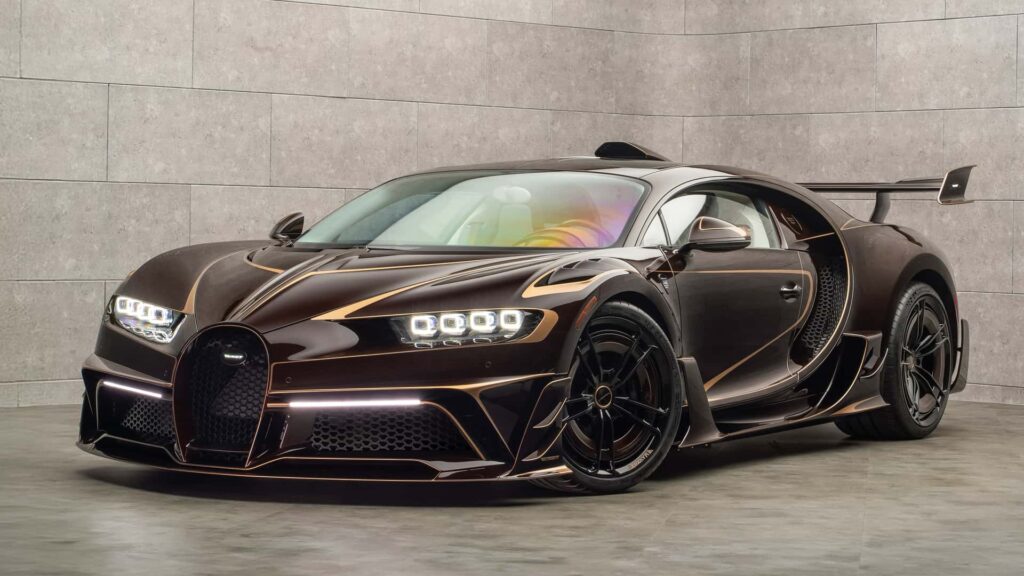
Alongside the Vincerò sits the Mansory Vivere.
If the Mistral-based car represents the final chapter of Bugatti’s W16 roadster story, the Vivere focuses on the automobile that defined the marque’s second modern era.
The Bugatti Chiron.
Introduced as the successor to the Veyron, the Chiron pushed almost every measurable aspect of the original formula further.
More power.
Greater refinement.
More sophisticated aerodynamics.
And a design that became instantly recognisable through its enormous C-shaped side graphic and sculptural body volumes.
Mansory has now transformed that architecture into another one-of-one project.
The Return of the Vivere Name
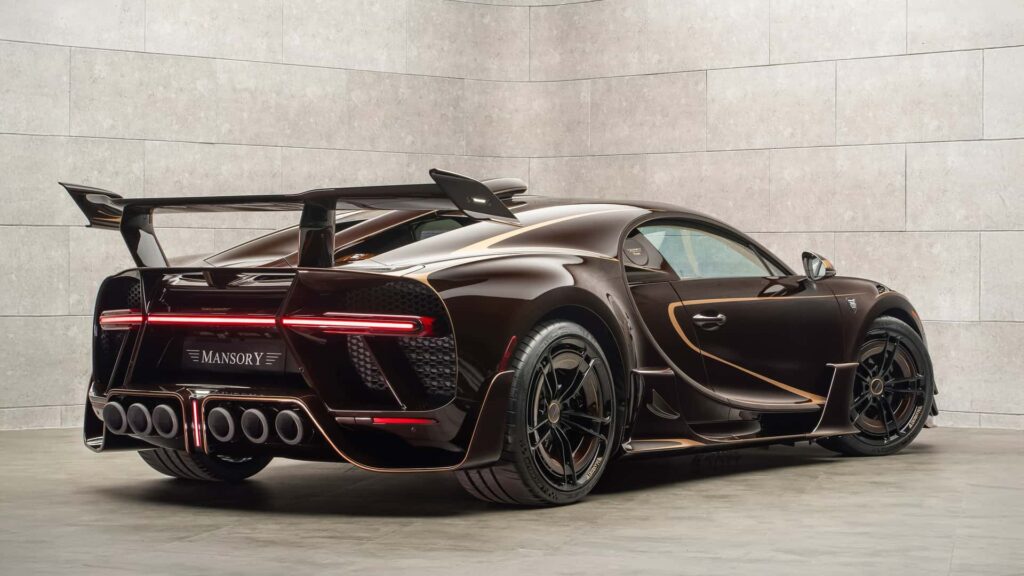
The name Vivere is not new within Mansory’s Bugatti history.
The original Linea Vivere was developed around the Veyron and became one of the company’s most recognisable Bugatti conversions.
For 2026, the designation moves to a completely different generation.
This is important because the new Vivere is not intended as a retro tribute to the Veyron-based project.
Instead, it continues its philosophy.
Take one of Bugatti’s most exclusive production cars.
Rework almost every visible surface.
Create something immediately identifiable as Mansory.
And ensure that the result exists only once.
The idea survives even though the architecture changes.
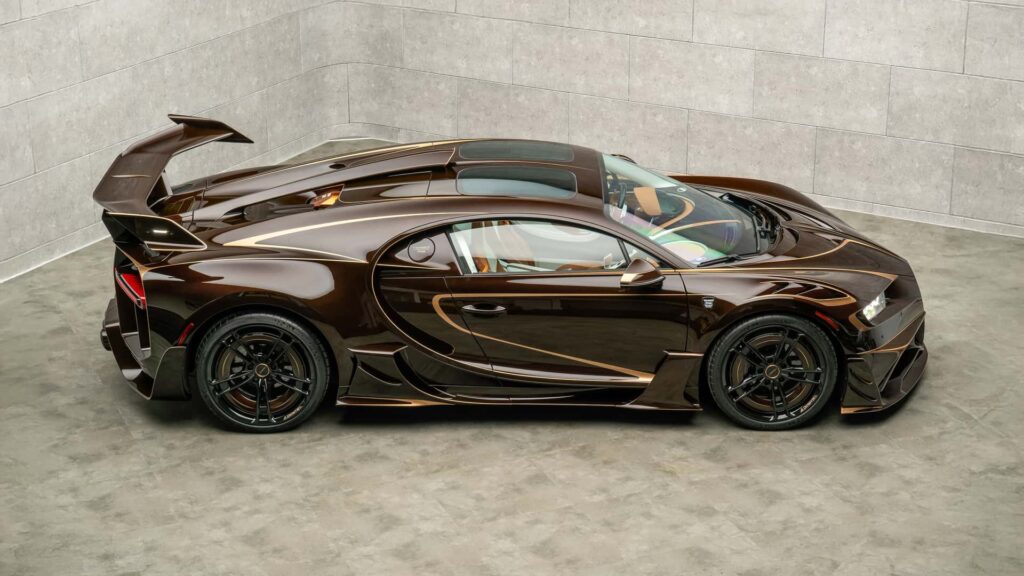
Coloured Exposed Carbon Again Takes Centre Stage
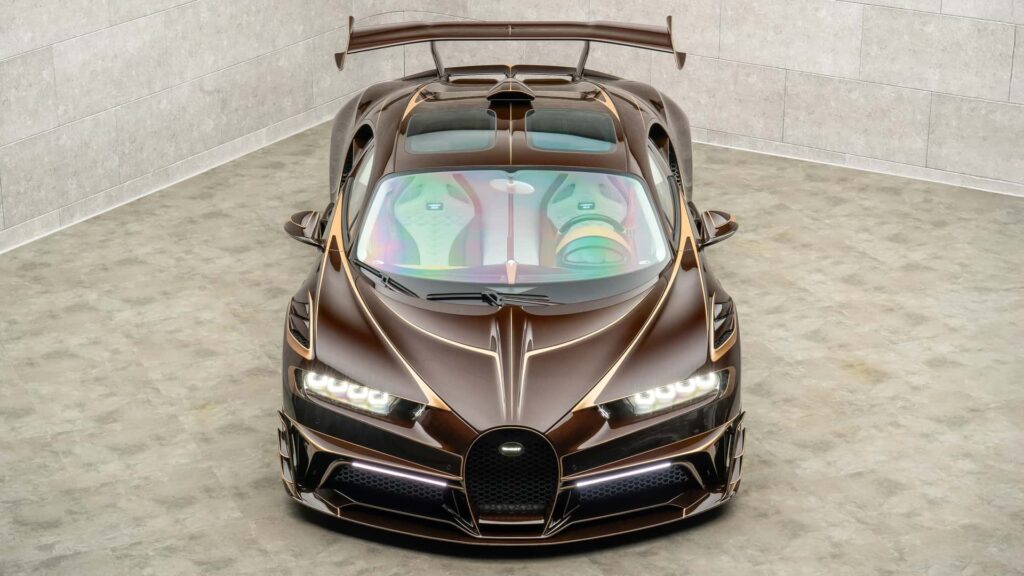
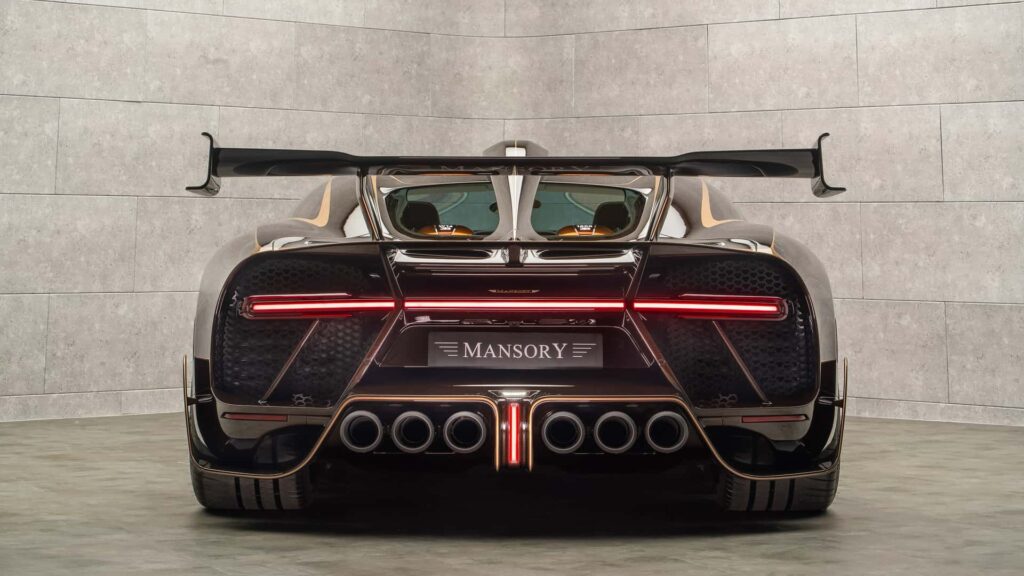
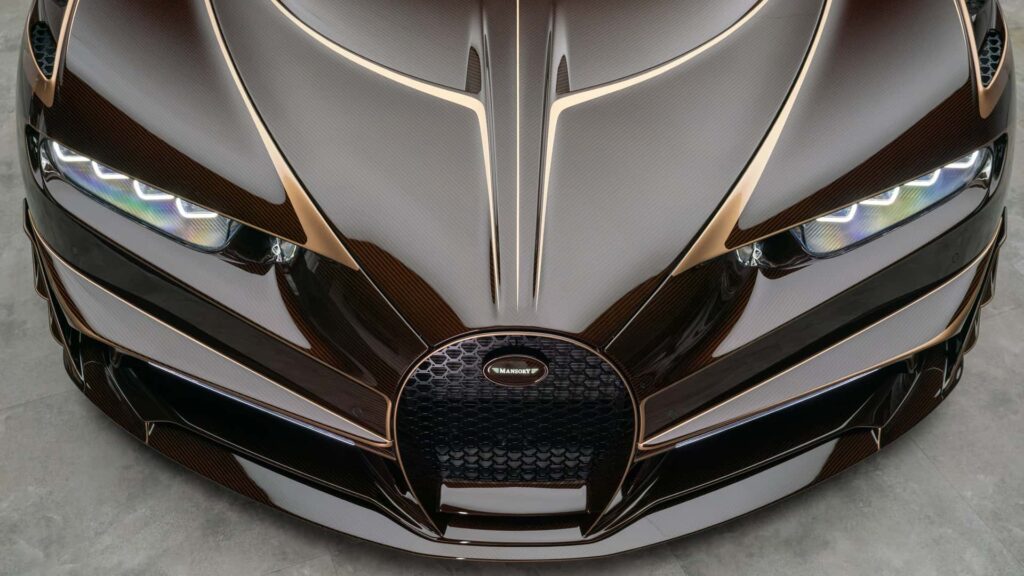
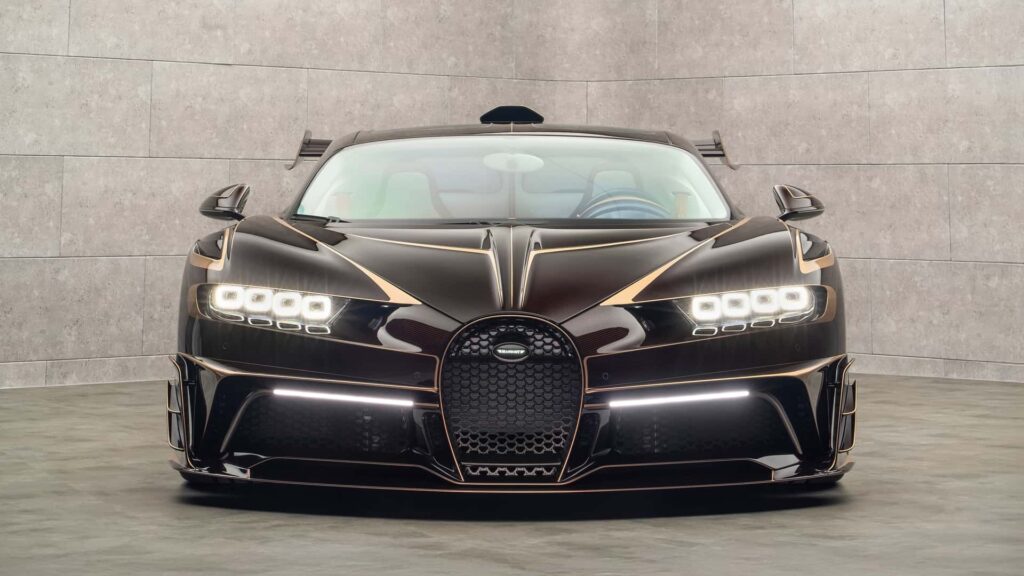
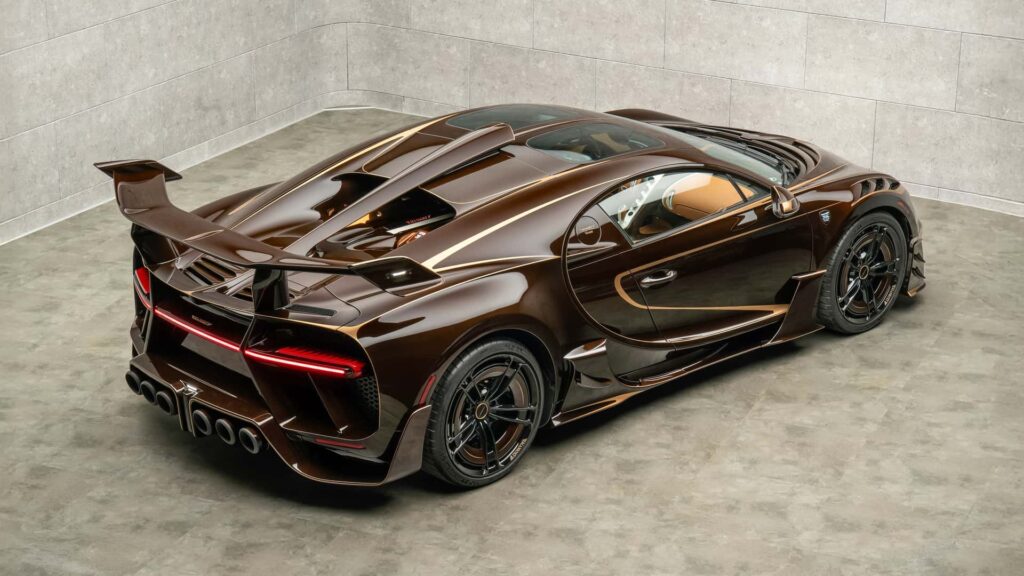
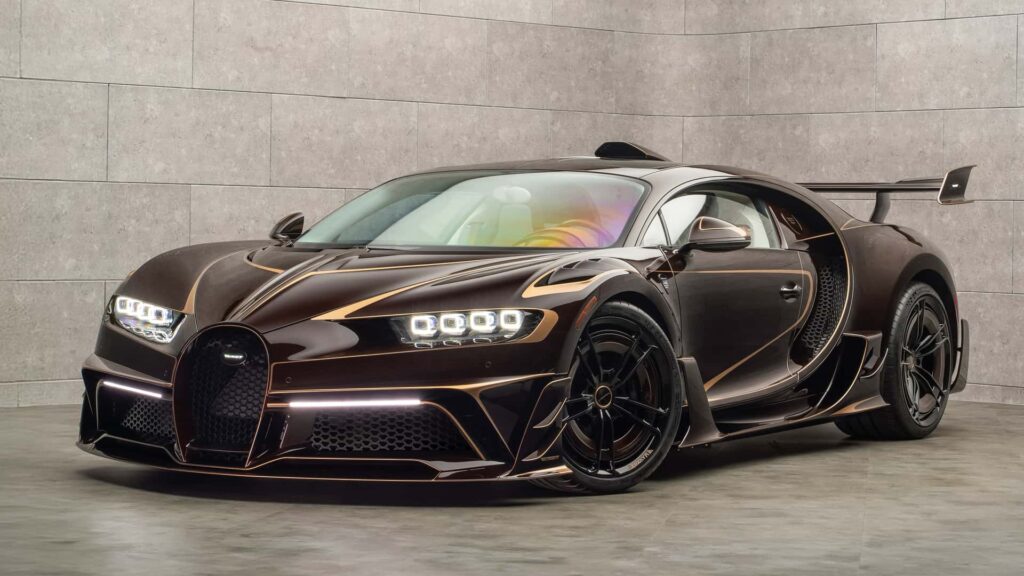
Like the Vincerò, the new Vivere uses coloured exposed carbon fibre extensively throughout its bodywork.
Newly developed panels alter the Chiron’s appearance without eliminating the key design features that made the original recognizable.
The dramatic C-line remains.
The low, cab-forward proportions remain.
Lamborghini Carbonado X — Forged Carbon Extremism
The overall relationship between cockpit and rear body volume remains.
But surface detailing becomes considerably more expressive.
New aerodynamic additions give the front a sharper character.
The side treatment becomes more technical.
The rear receives additional visual complexity.
The result feels unmistakably Mansory.
FB.5C Forged Wheels
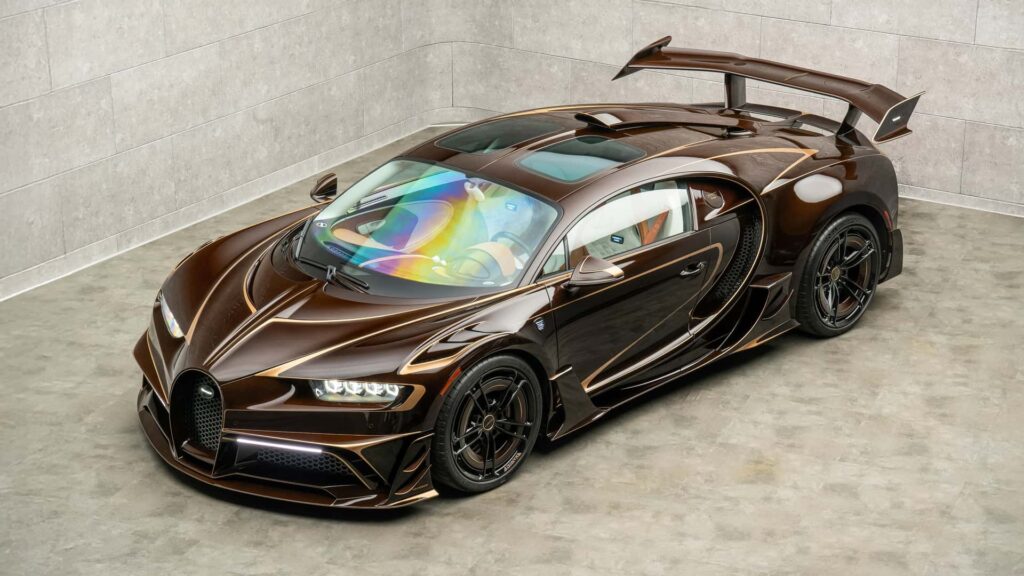
The Vivere also debuts Mansory’s new FB.5C forged wheel design.
The company has engineered the wheels around two primary objectives.
Low mass.
High structural strength.
That combination is essential on a Chiron-based hypercar, where wheel performance must remain stable under exceptionally high loads and speeds.
Visually, the intricate spoke structure complements the exposed carbon surrounding it, adding another layer of technical detail without breaking the fundamental proportions of the car.
At this level, wheels are not accessories.
They are part of the architecture.
No Need to Chase Another Power Number
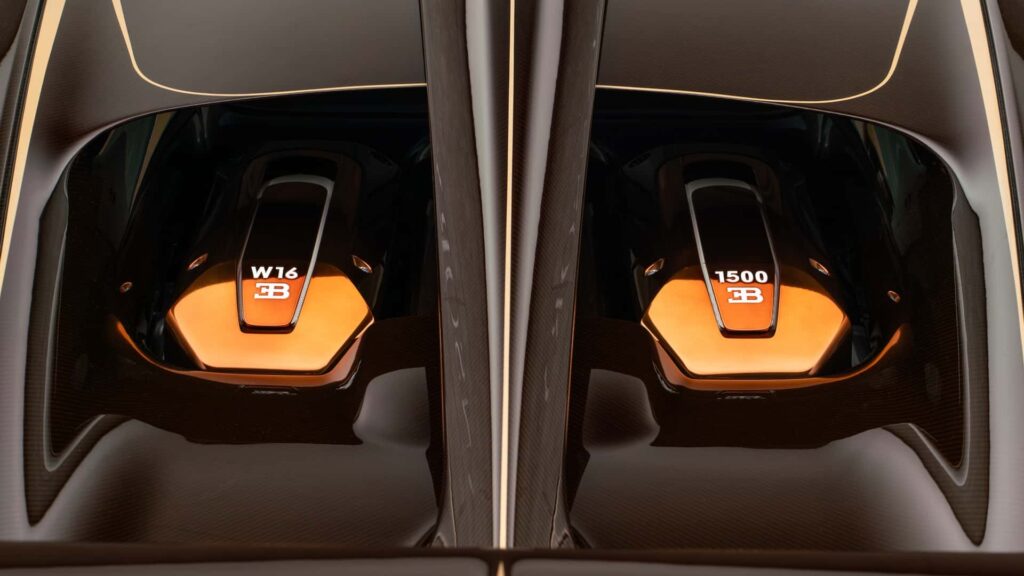
As with the Vincerò, Mansory has not made engine output the central story.
That is arguably the correct decision.
The Chiron platform already belongs to a performance category where conventional tuning logic becomes almost irrelevant.
A quad-turbocharged W16.
All-wheel drive.
Enormous torque.
A dual-clutch transmission designed to manage forces beyond those experienced by almost any normal production vehicle.
Rather than turning the Vivere into a horsepower competition, Mansory focuses on areas where it can make the car genuinely different.
Bodywork.
Materials.
Interior craftsmanship.
Individual specification.
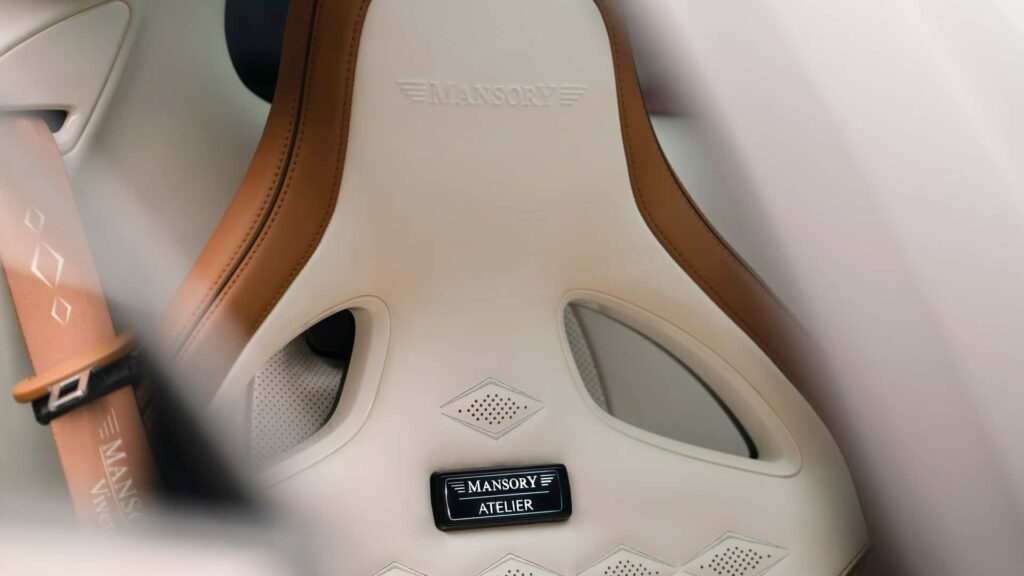
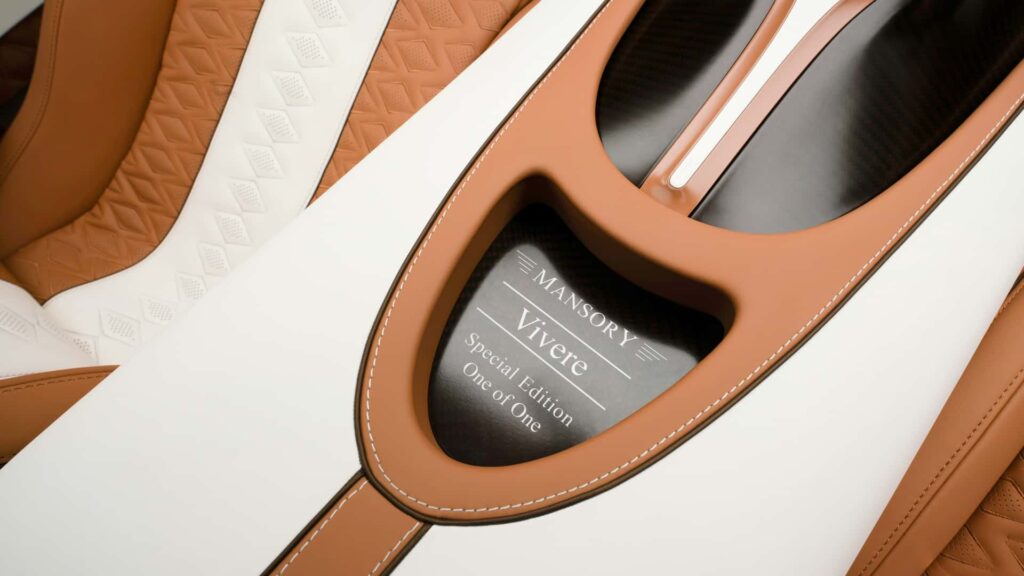
The Interior as a Second Exterior
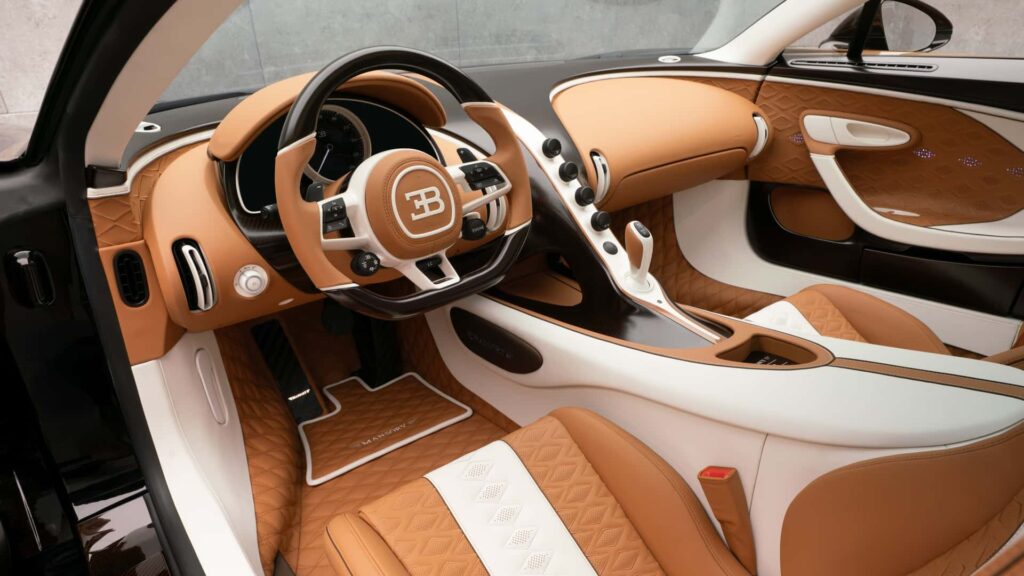
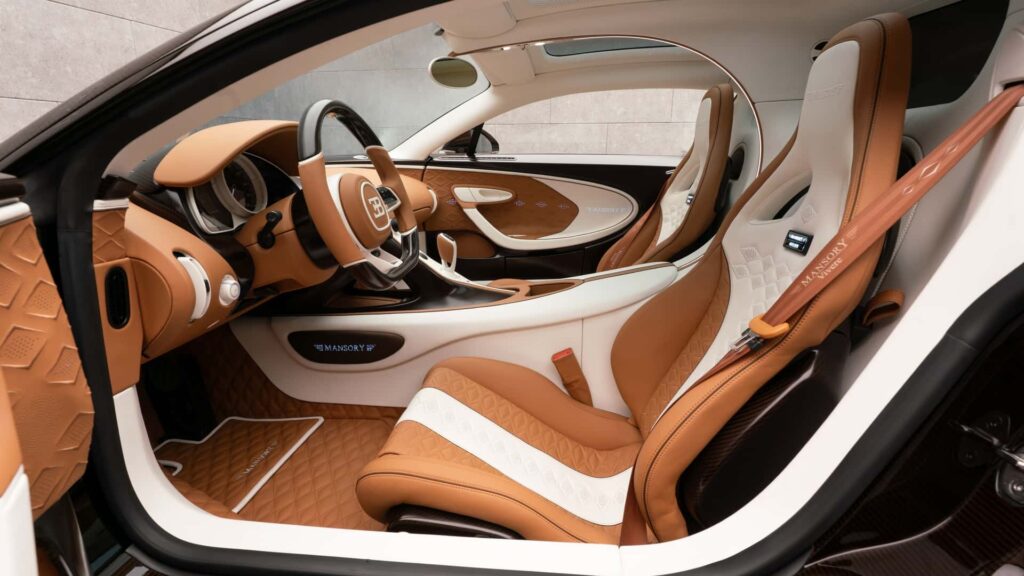
Mansory’s work on the Vivere extends deeply into the cabin.
Premium leather replaces or complements the factory materials.
Exposed carbon fibre appears throughout.
Individual trim components are manufactured specifically for the commission.
The objective is to create the same visual identity inside that exists outside.
This is important because modern bespoke hypercars are increasingly judged not simply by exterior drama but by the coherence of the complete specification.
A one-off should feel unique before the door opens.
And remain unique after the owner sits inside.
One of One Means Exactly That
Both the Vincerò and Vivere belong to Mansory’s One of One philosophy.
This is more significant than calling them limited editions.
There is no planned series.
No second car in another colour.
No production allocation waiting for another buyer.
Each project represents a singular interpretation.
That changes how these automobiles should be understood.
They are not catalogue packages applied to Bugattis.
They are collector commissions.
The distinction matters enormously at this end of the market.
Mansory at Pebble Beach
The venue for their debut is equally interesting.
Pebble Beach Concours d’Elegance traditionally represents one of the most prestigious gatherings of historic automobiles in the world.
Coachbuilt pre-war cars.
Rare Ferraris.
Unique Bugattis.
Historic prototypes.
And some of the world’s most valuable collector automobiles.
Abstract Art in Luxury Garages — When Automotive Spaces Become Private Galleries
In 2026, Mansory appears at Pebble Beach for the first time, bringing the Vincerò and Vivere as its statement pieces.
The decision says something about how Mansory wants these cars to be perceived.
Not simply as tuning projects.
But as contemporary expressions of bespoke automotive craftsmanship.
From Tuning to Modern Coachbuilding
The definition of tuning has changed considerably.
At one end of the market, tuning can mean software upgrades, exhaust systems or aftermarket wheels.
At the opposite extreme, companies such as Mansory now replace major sections of bodywork, develop bespoke aerodynamics, manufacture forged components and reconstruct interiors around individual clients.
That level, the line between tuner and coachbuilder becomes increasingly difficult to define.
The Vincerò and Vivere sit precisely within that territory.
The engineering foundation comes from Bugatti.
The finished visual identity comes from Mansory.
That model is remarkably similar in principle to the coachbuilding tradition that produced many of history’s greatest collector cars.
The techniques are different.
The philosophy is familiar.
Two Different Interpretations of the W16 Era
The two projects also represent different stages of Bugatti’s modern history.
The Vivere is based on the Chiron, the car that developed the Veyron formula into one of the defining hypercars of the twenty-first century.
The Vincerò uses the W16 Mistral, the automobile created as the final roadster powered by that extraordinary sixteen-cylinder architecture.
One represents maturity.
The other represents farewell.
Mansory connects both through its own design language.
Coloured carbon.
Bespoke aerodynamics.
Forged wheels.
Highly individual interiors.
And production numbers reduced to the absolute minimum.
One.
When a Bugatti Still Isn’t Exclusive Enough
There is an obvious contradiction at the heart of both cars.
A standard Chiron is already extraordinarily rare.
A W16 Mistral is rarer still.
Why modify either?
The answer lies in how the highest end of the collector market has evolved.
For some owners, acquiring an exclusive model is only the beginning.
The next level is ensuring that no other owner has exactly the same automobile.
Not another colour combination.
Not another similar specification.
A genuinely unique car.
The Vincerò and Vivere exist for precisely that client.
Vincerò and Vivere: Two Names, Two Eras, Two Unique Bugattis
Mansory has worked with Bugatti for many years, but the 2026 Vincerò and Vivere feel particularly significant.
They resurrect two names associated with the company’s earliest Bugatti projects while applying them to automobiles from an entirely different generation.
The Vincerò transforms one of only 99 W16 Mistrals into a singular open-top statement, preserving its extraordinary 1,600 PS mechanical foundation while introducing new coloured carbon bodywork, aerodynamics, forged wheels and an entirely bespoke interior.
The Vivere takes the Chiron and applies the same philosophy from another direction, creating a one-off interpretation centred around craftsmanship and visual individuality rather than chasing another performance statistic.
Both demonstrate something increasingly important in the hypercar world.
At a certain level, power stops being the rarest commodity.
Individuality becomes more valuable.
Bugatti created two extraordinary foundations.
Mansory ensured that these two examples will never have twins.