
Most convertibles begin with compromise.
Remove the roof and structural rigidity becomes harder to maintain.
Aerodynamic efficiency suffers.
Weight increases.
High-speed stability becomes more difficult to manage.
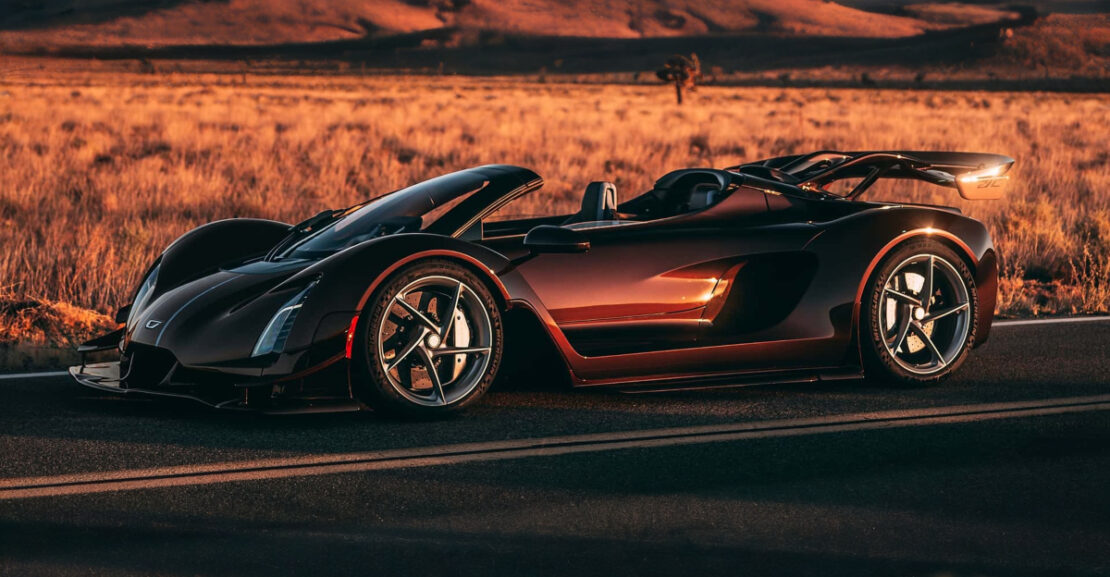
The Czinger 21C Spyder approaches the problem differently.
Rather than transforming an existing hypercar into a softer open-top derivative, the Los Angeles manufacturer has used the Spyder as another opportunity to demonstrate its radically different approach to automotive engineering.
The result combines a 1,250-horsepower hybrid powertrain, an 11,000-rpm twin-turbocharged V8, tandem seating, extraordinary levels of downforce and some of the most advanced additively manufactured components ever installed in a road car.
Only 30 examples will be produced.
And with a starting price of approximately $2.75 million, the 21C Spyder sits firmly among the rarest and most technologically ambitious open-top hypercars of its generation.
The Third Expression of the 21C
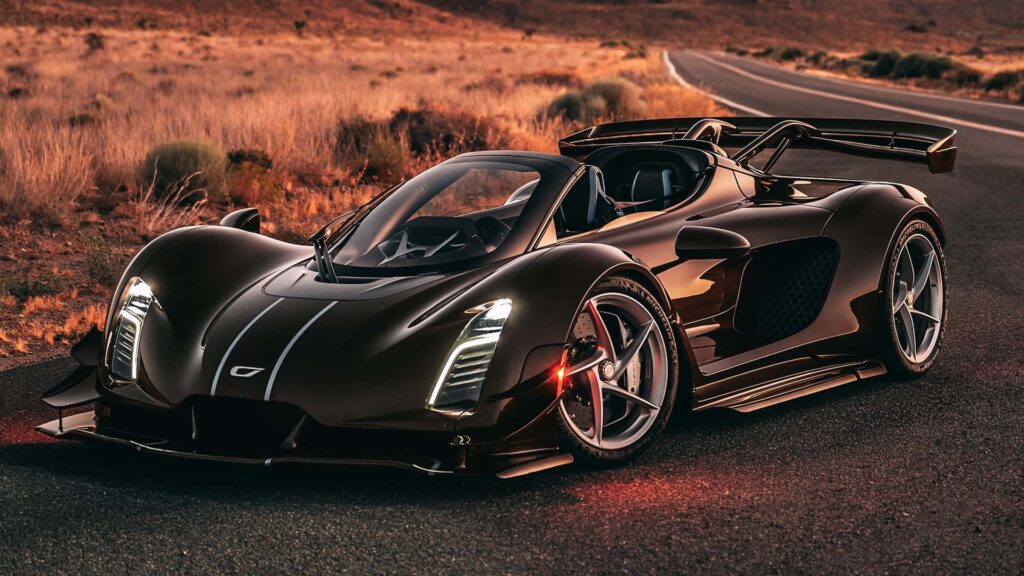
The Spyder becomes the third major interpretation of Czinger’s 21C architecture.
The original 21C HDF was developed around maximum aerodynamic performance and circuit capability.
The 21C V Max took the opposite direction, reducing drag and extending the body for extraordinary high-speed performance.
The new Spyder explores something different again.
Open-air driving.
But Czinger has not abandoned the engineering principles that define the 21C.
The central driving position remains.
The tandem passenger layout remains.
The bespoke hybrid drivetrain remains.
And the extensive use of computational engineering and additive manufacturing remains fundamental to the vehicle’s structure.
In that sense, the Spyder is not a simplified version of the 21C.
It is another specialised application of the same platform.
An 11,000-RPM V8 at the Centre of the Experience
The mechanical heart remains one of the most unusual combustion engines fitted to any contemporary road car.
A 2.88-litre twin-turbocharged V8 developed in-house by Czinger.
Its displacement is remarkably small for the performance involved.
Its character is anything but.
The engine revs to approximately 11,000 rpm, delivering around 750 horsepower from internal combustion alone.
That is an extraordinary specific output.
Two electric motors drive the front wheels, while another electric machine is integrated into the powertrain architecture, creating an all-wheel-drive hybrid system with total output of approximately 1,250 horsepower.
Combined torque reaches around 691 lb-ft.
Rather than using electrification simply to create a higher headline figure, the electric motors provide immediate response, front-axle torque vectoring and traction that would be virtually impossible to achieve through the combustion engine alone.
The result is a powertrain that combines two very different personalities.
A highly strung racing-style V8.
And instantaneous electric torque.
Bugatti Destrier: When the Bolide Becomes a Rolling Sculpture
0–60 MPH in 1.9 Seconds
Performance is appropriately dramatic.
Czinger claims the 21C Spyder can accelerate from 0 to 60 mph in approximately 1.9 seconds.
The quarter mile is expected to disappear in around 8.7 seconds.
Maximum speed is quoted at approximately 205 mph, or around 330 km/h, depending on configuration.
These figures are remarkable.
Yet acceleration is arguably no longer the most interesting aspect of the 21C.
Many contemporary hypercars can produce extraordinary straight-line numbers.
Far fewer generate the aerodynamic performance Czinger claims for the Spyder.
More Than 3,200 Pounds of Downforce
The Spyder produces approximately 3,267 pounds of downforce at 150 mph.
That is around 1,482 kilograms.
For an open-top, road-legal automobile, the figure is extraordinary.
With its removable carbon roof fitted, the number increases slightly further.
Czinger claims this represents the highest level of downforce generated by any road-legal open car.
More importantly, it demonstrates that removing the roof did not force the company to abandon the aerodynamic philosophy of the 21C HDF.
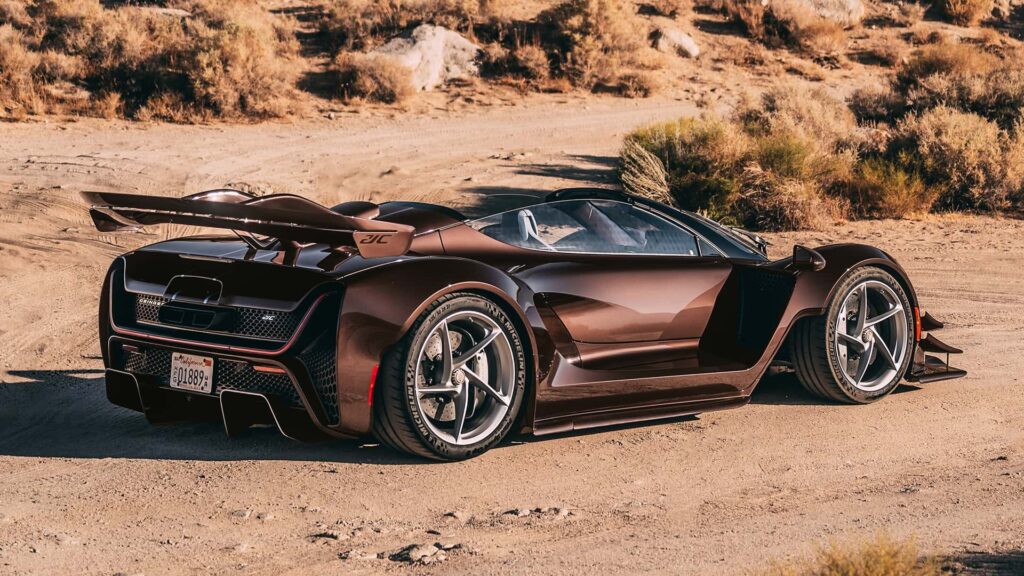
The enormous rear wing.
Front aerodynamic surfaces.
Underbody tunnels.
Diffuser architecture.
And carefully controlled airflow through and around the body all continue working as a complete aerodynamic system.
The Spyder may expose its occupants to the sky.
It remains very firmly attached to the road.
Hennessey Blackbird: The Return of the Pure Driver’s Hypercar
Removing the Roof Without Losing the 21C
The roof itself is a removable carbon-fibre structure rather than a conventional folding mechanism.
That choice saves weight and avoids the packaging complexity associated with electrically operated convertible roofs.
More importantly, Czinger engineered the underlying structure so that removing the panel does not fundamentally compromise chassis behaviour.
The weight penalty compared with the corresponding coupé configuration is remarkably small — approximately 22 pounds.
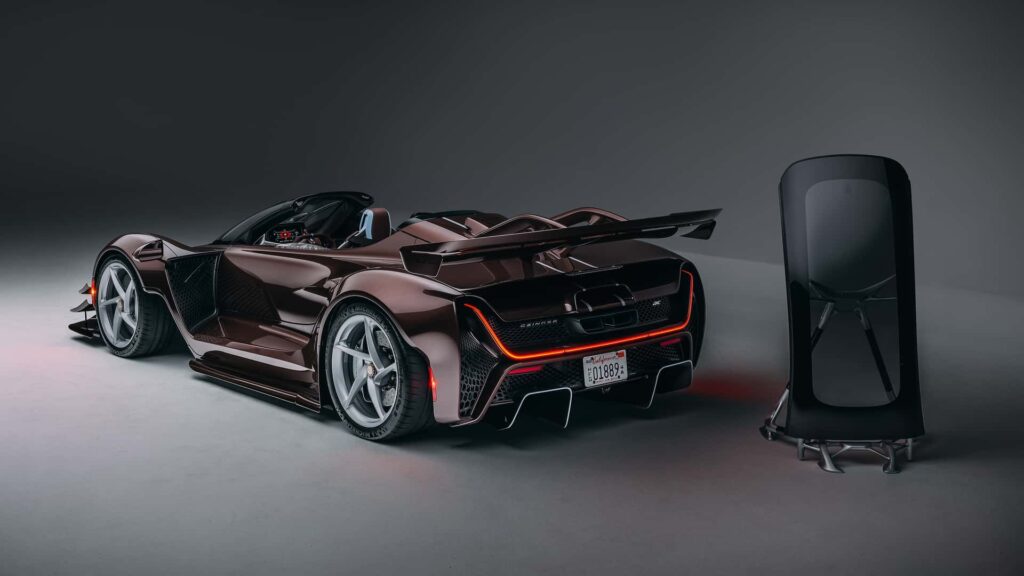
That figure illustrates the advantage of designing the 21C architecture around computational engineering from the beginning.
Instead of reinforcing an existing chassis after removing the roof, Czinger can optimise structural pathways around the loads the Spyder will actually experience.
The difference is subtle in concept.
Enormous in engineering consequence.
The Central Driving Position Remains
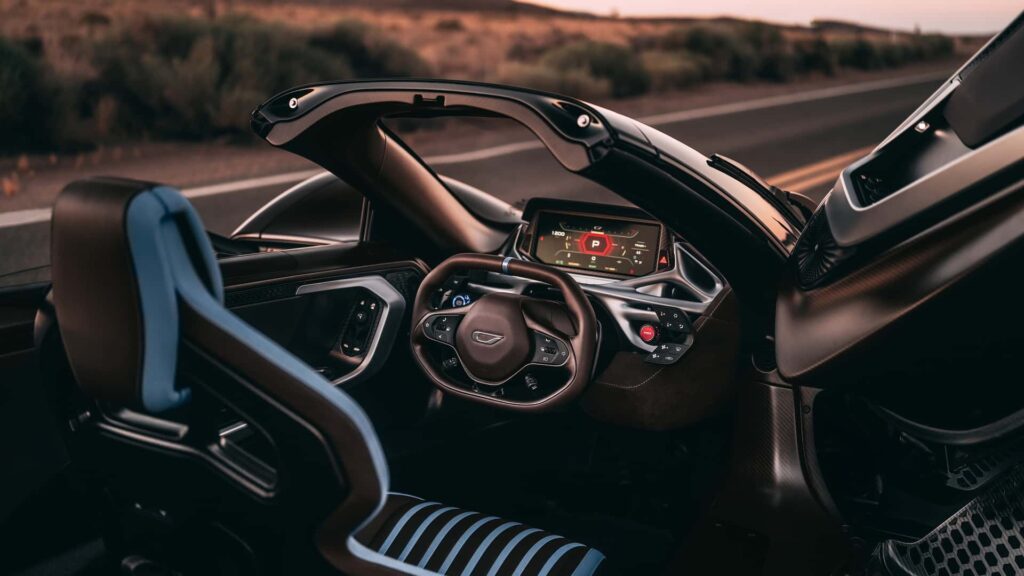
One of the 21C’s defining features survives completely intact.
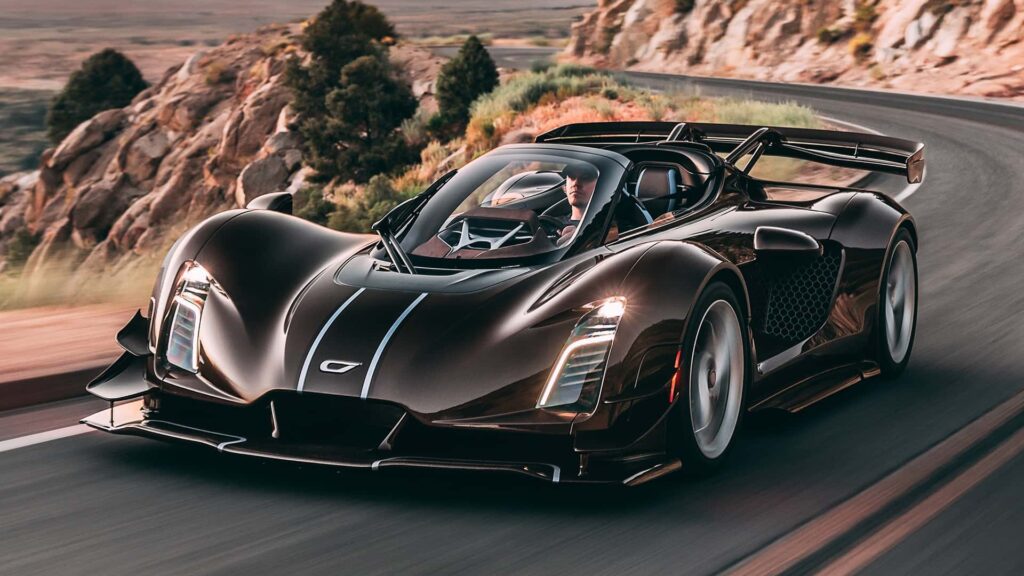
The driver sits on the centreline of the car.
The passenger sits directly behind.
It is one of the most unusual seating configurations offered in a modern production automobile and contributes significantly to the 21C’s fighter-jet character.
The arrangement provides the driver with symmetrical visibility around the cockpit and allows the body to remain exceptionally narrow.
It also improves aerodynamic packaging because the cabin does not need to accommodate two occupants side by side.
In the Spyder, the experience becomes even more theatrical.
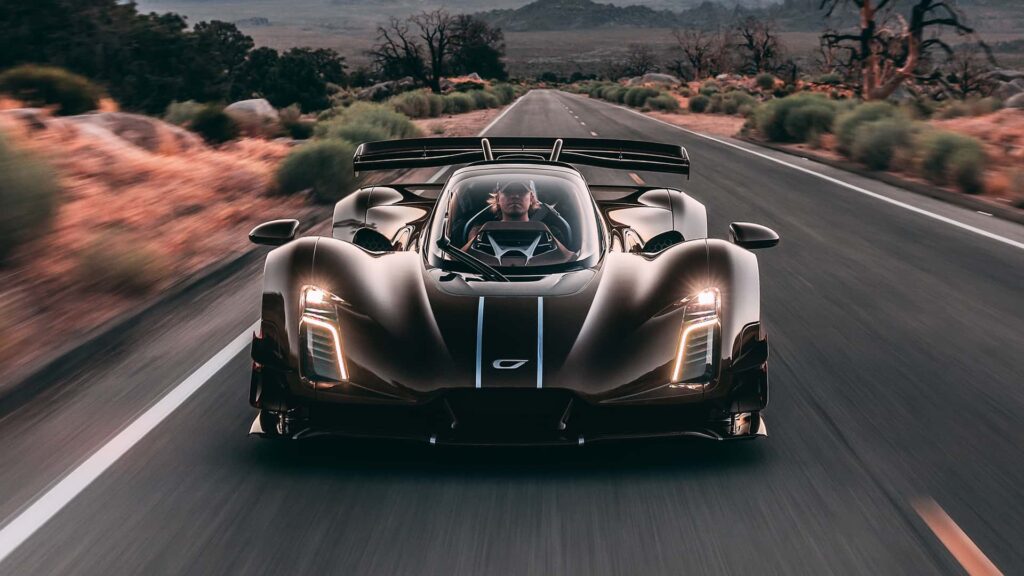
With the roof removed, the driver sits at the centre of an extraordinarily narrow hypercar with an 11,000-rpm V8 behind and uninterrupted sky above.
There are few comparable driving environments.
BioLogic Engineering
Czinger frequently describes its development philosophy using the term BioLogic Engineering.
The name reflects the way components are designed.
Rather than beginning with conventional automotive shapes and gradually removing material, Czinger uses computational optimisation to determine where structural material is actually required.
The resulting components often resemble organic forms.
Bones.
Branches.
Natural lattice structures.
That appearance is not decorative.
Nature itself optimises structures around strength and weight, and Czinger applies a similar principle through digital engineering.
The result is components that often look almost impossible to manufacture through traditional casting or machining.
Which is precisely why additive manufacturing becomes so important.
BrakeNode: Rethinking the Brake Assembly
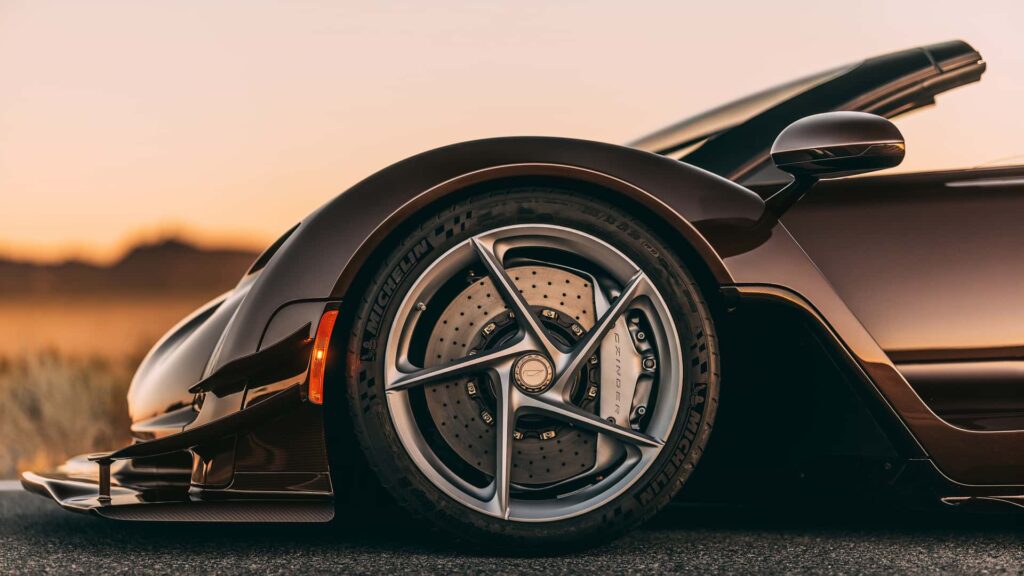
One of the Spyder’s most fascinating innovations is the new BrakeNode architecture.
Conventional performance cars use several separate components around each wheel.
Suspension upright.
Brake caliper.
Hydraulic channels.
Mounting structures.
Fasteners connecting everything together.
Czinger asks whether those parts need to exist independently at all.
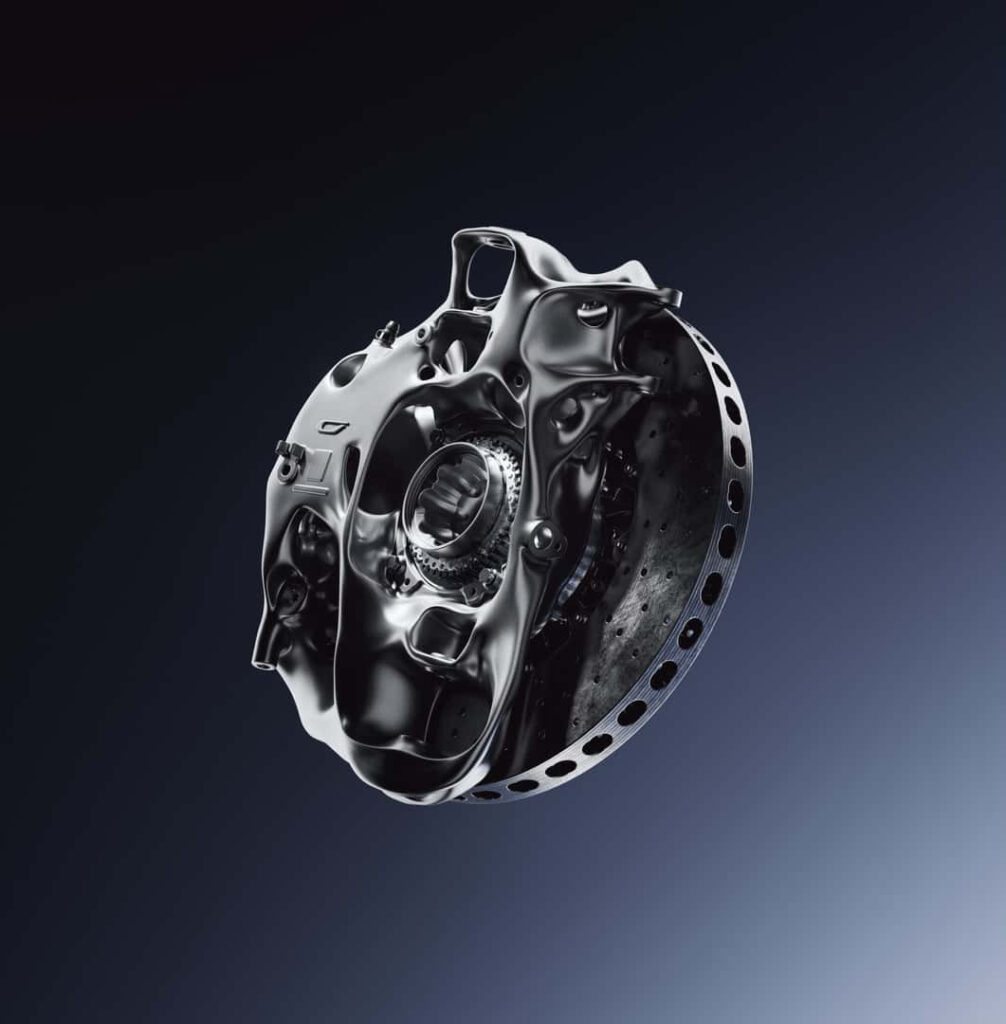
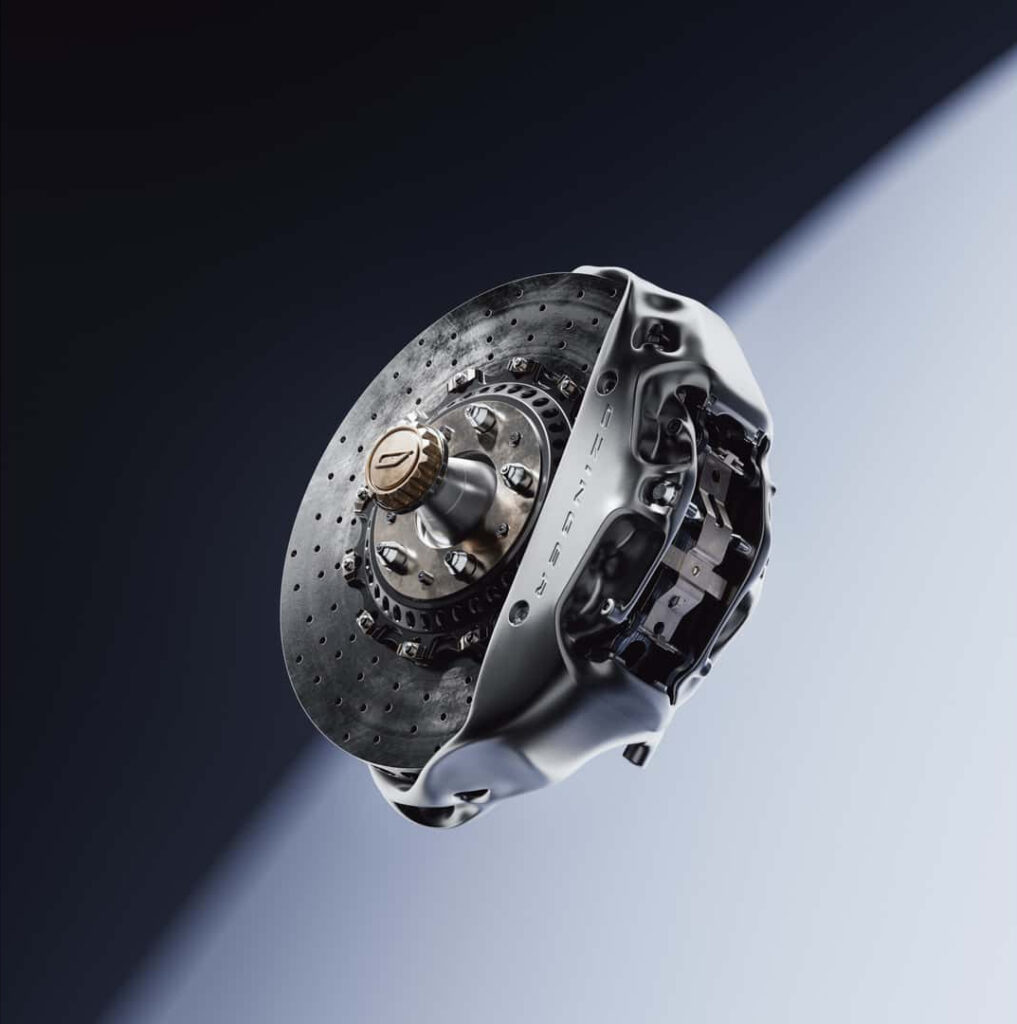
BrakeNode combines several of those functions into a single additively manufactured aluminium structure.
The suspension upright and braking architecture become part of the same optimised component, with hydraulic pathways integrated directly into the printed structure.
The advantages are significant.
Fewer components.
Fewer joints.
Lower weight.
Greater rigidity.
More precise brake-pedal feel.
And fewer potential sources of tolerance variation.
It is a particularly good example of why additive manufacturing can fundamentally alter automotive engineering rather than merely replace one manufacturing process with another.
NeuralNode: The Dashboard Becomes Structure
The same philosophy continues inside.
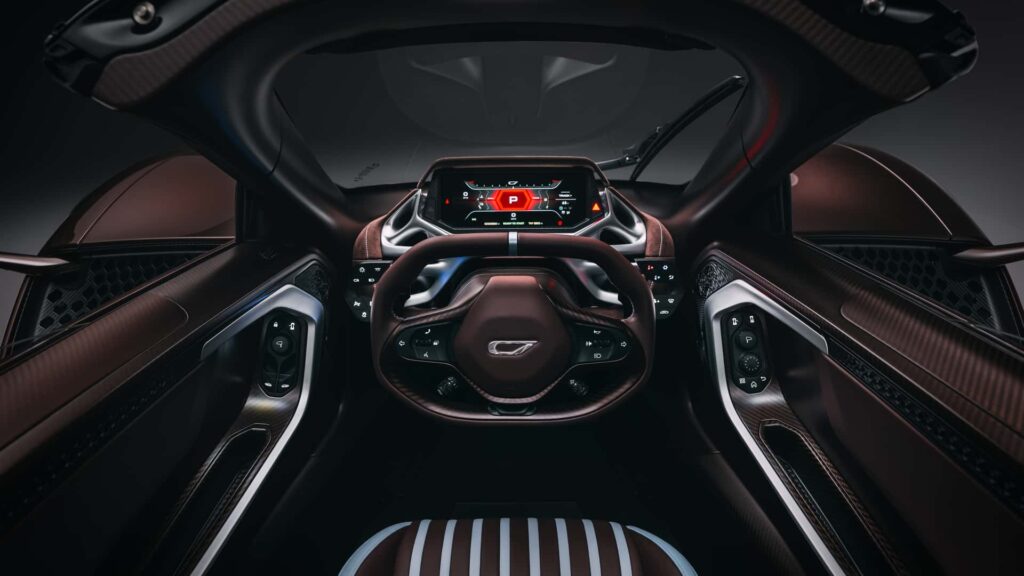
Czinger calls its new dashboard architecture NeuralNode.
Rather than assembling a conventional dashboard from numerous individual brackets, frames and trim pieces, the system uses an intricately optimised additively manufactured structure that integrates multiple functions.
The result resembles a lightweight skeleton running across the cockpit.
Controls.
Mounting points.
Structural pathways.
And visual design become part of the same object.
It creates an interior that feels unlike almost anything produced through conventional automotive manufacturing.
Traditional luxury hides complexity.
Czinger celebrates it.
Apollo EVO ‘Caribbean Dragon’: The First Customer Car Brings Apollo’s Vision to Life
Divergent and the Future of Manufacturing
To understand why the 21C looks and works this way, it is necessary to understand Czinger’s relationship with Divergent Technologies.
The two companies share founder Kevin Czinger, and the 21C effectively serves as the highest-performance demonstration of Divergent’s digital manufacturing philosophy.
The process combines computational design, industrial-scale additive manufacturing and automated assembly.
Instead of requiring enormous stamping presses, extensive tooling and conventional production lines, highly complex components can be digitally optimised and then manufactured directly.
That fundamentally changes what low-volume vehicle manufacturers can create.
Traditional manufacturing often forces small manufacturers to compromise because producing complex tooling for tiny production runs is prohibitively expensive.
Czinger’s approach removes many of those constraints.
Complexity becomes digital rather than mechanical.
A Hypercar Built in Los Angeles
There is also something distinctly different about the 21C’s origins.
It is designed, engineered, manufactured and hand-assembled in Los Angeles, California.
American hypercars have historically followed several different philosophies.
The Hennessey Venom F5 celebrates enormous combustion performance.
The SSC Tuatara pursues extreme speed.
The Ford GT translated endurance racing into a production supercar.
Czinger approaches the problem through manufacturing technology.
The 21C is as much a demonstration of how automobiles might be built in the future as it is an attempt to create extraordinary performance today.
The Spyder continues that mission.
Aerodynamics Without Conventional Beauty
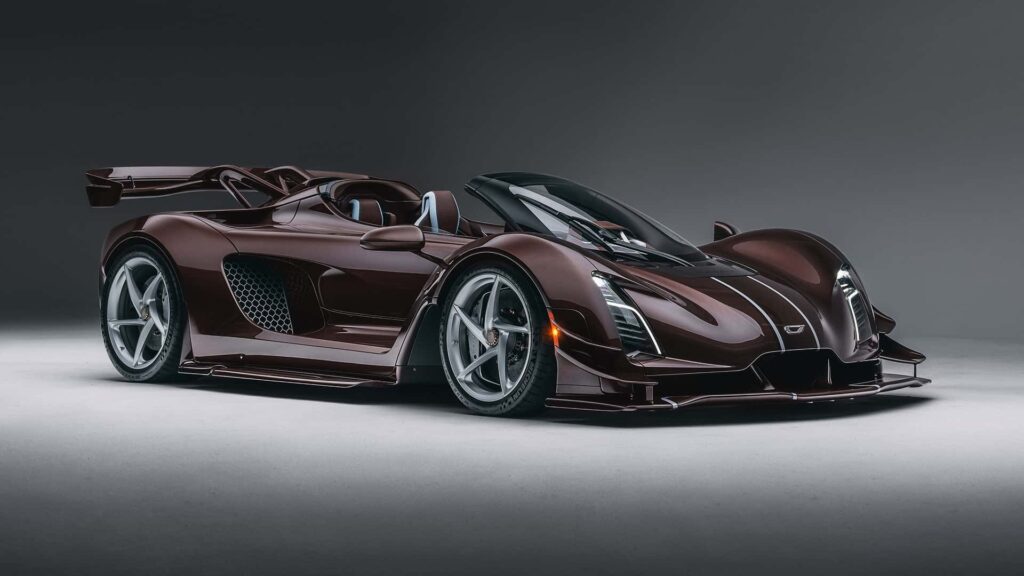
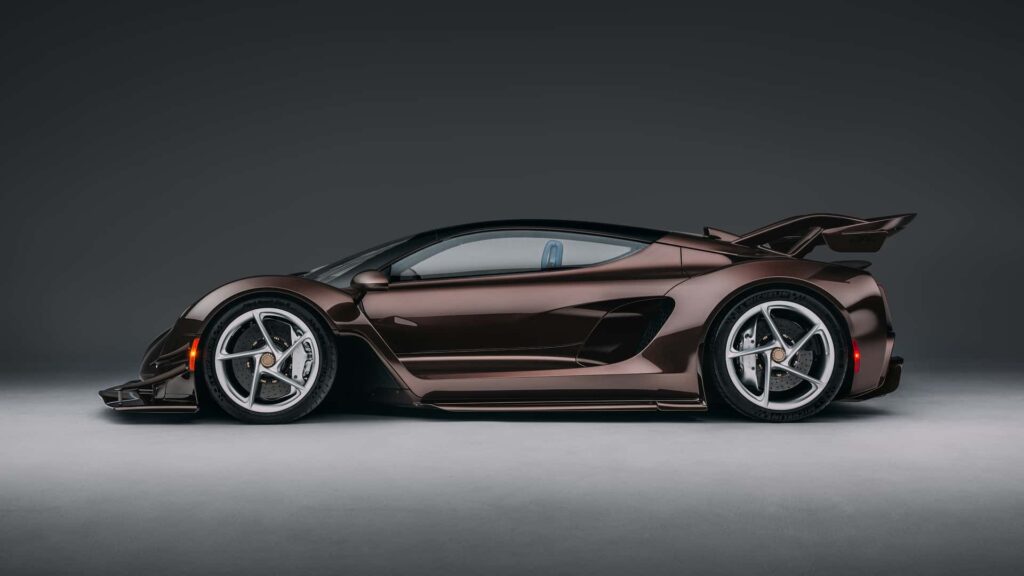
The 21C has never attempted to become traditionally beautiful.
Its appearance follows engineering requirements.
The narrow cockpit.
Enormous aerodynamic channels.
Exposed structural thinking.
Vertical surfaces.
Dramatic rear wing.
Everything communicates function.
Removing the roof intensifies that impression.
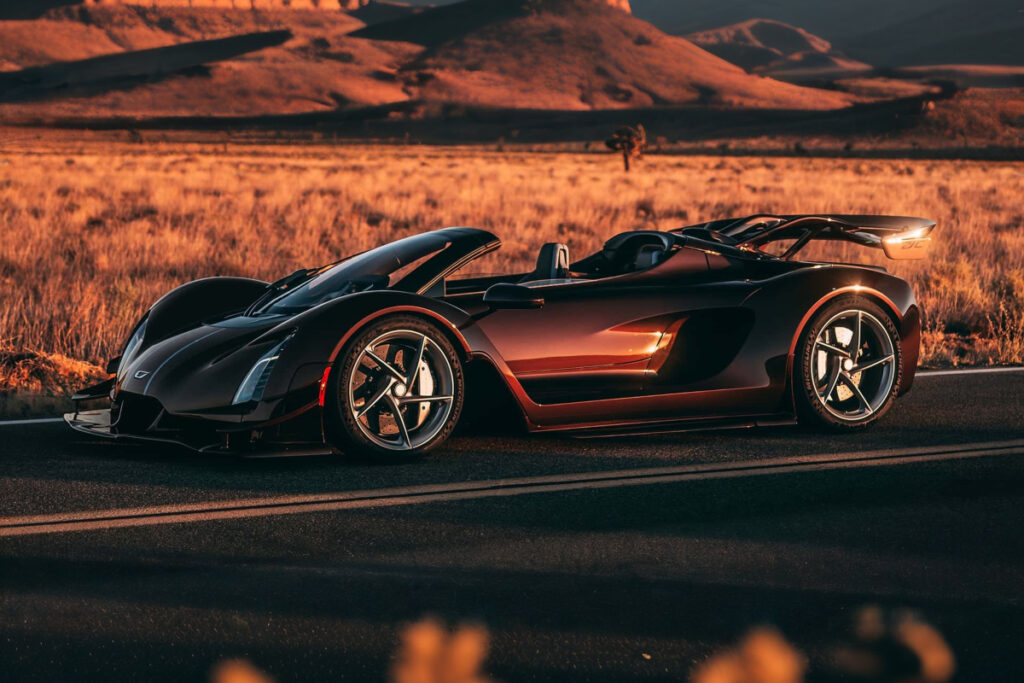
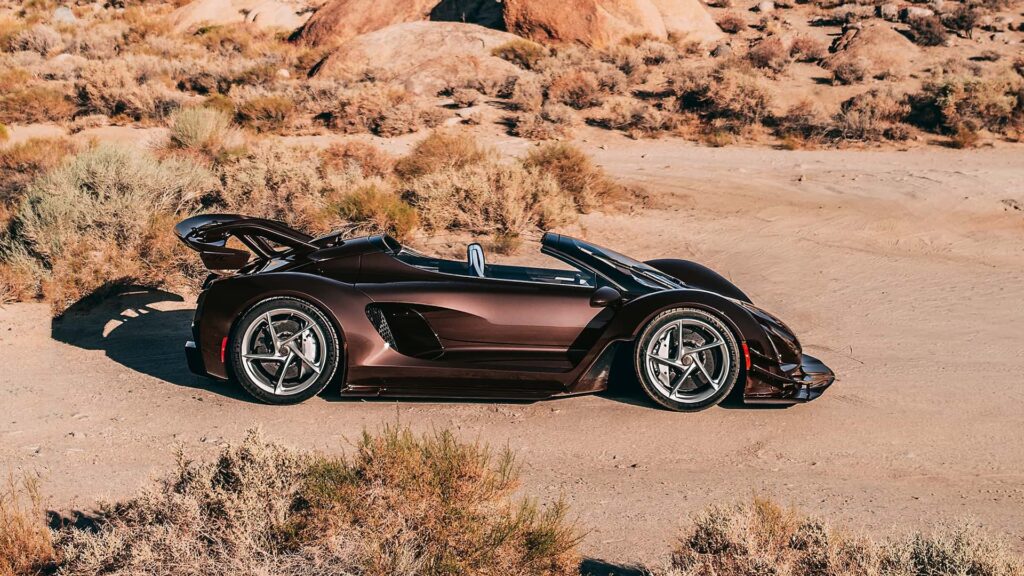
Viewed from above, the narrow tandem cockpit appears almost like the fuselage of a fighter aircraft surrounded by aerodynamic surfaces.
The comparison with aviation may be overused in automotive design.
Here it feels appropriate.
The body is less a conventional sports-car shape than a structure built around occupant packaging and airflow.
The Removable Roof Creates Two Personalities
With the carbon roof installed, the Spyder retains much of the visual continuity of the 21C coupé.
Remove it and the character changes immediately.
The central cockpit becomes exposed.
The driver’s helmet-like seating environment suddenly feels far more dramatic.
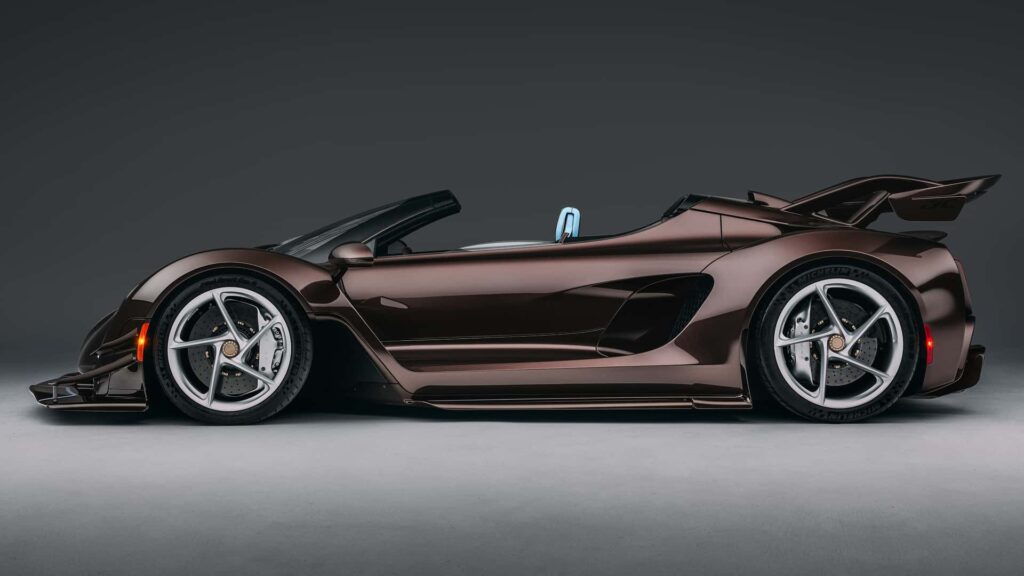
And the mechanical soundtrack becomes considerably more immediate.
For an engine capable of reaching approximately 11,000 rpm, that matters enormously.
One of the inevitable compromises of modern high-performance cars is that extraordinary powertrains increasingly exist behind sophisticated sound insulation, emissions equipment and closed cabins.
The Spyder removes one of those barriers.
It Remains a Road Car
Despite its appearance and extraordinary aerodynamic figures, the 21C Spyder is road legal.
That distinction is important.
Many cars capable of generating this level of downforce exist only for circuit use.
The Czinger can theoretically be driven on public roads before arriving at a track.
That duality is central to the appeal.
It possesses performance figures associated with competition machinery while retaining the homologation required for conventional road use.
The practicality may be limited.
The possibility remains.
Only 30 Examples
Production will be restricted to 30 cars.
That makes the Spyder even rarer than many multimillion-dollar hypercars from considerably more established manufacturers.
Each example will be hand assembled in Los Angeles and extensively configurable.
At this level, individualisation becomes expected.
Colours.
Materials.
Carbon finishes.
Interior treatments.
Every customer can create something recognisably 21C while ensuring their car remains distinct.
Zenvo Aurora Tur: Redefining the Modern Grand Touring Hypercar
The tiny production volume also suits Czinger’s manufacturing philosophy perfectly.
Its technology is specifically designed to make highly complex, low-volume engineering economically possible without requiring the infrastructure of a mass-market manufacturer.
$2.75 Million
Pricing begins at approximately $2.75 million.
That places the 21C Spyder directly within the most exclusive hypercar market.
At this level, buyers can choose from extraordinary alternatives.

Bugatti.
Pagani.
Koenigsegg.
Gordon Murray.
Hennessey.
Limited-production Ferraris and McLarens.
Czinger therefore cannot compete simply through horsepower.
It needs something fundamentally different.
Its answer is technology.
Few automobiles at any price are created through such an unconventional manufacturing process.
And fewer still combine that technology with an engine capable of 11,000 rpm and almost 1.5 tonnes of aerodynamic load.
A Different Definition of Craftsmanship
Craftsmanship traditionally evokes leather.
Wood.
Hand-polished metal.
Artisans working slowly with physical materials.
Czinger offers another interpretation.
Algorithms.
Topology optimisation.
Laser-sintered aluminium.
Robotic assembly.
Digital simulation.
Yet the objective is remarkably similar.
Create something that would be extraordinarily difficult to reproduce through conventional methods.
The technology is different.
The exclusivity remains.
Why the Spyder Matters
The Czinger 21C Spyder is interesting because it could easily have been a superficial derivative.
Remove roof.
Add structural reinforcement.
Sell a more expensive version.
Instead, Czinger used the project to introduce new engineering concepts.
BrakeNode.
NeuralNode.
Further development of its BioLogic design philosophy.
The Spyder therefore becomes another step in the evolution of the company’s manufacturing technology rather than simply another body style.
That approach feels consistent with everything the 21C has represented since its introduction.
More Than an Open-Top 21C
The 21C Spyder does not reinvent Czinger’s hypercar.
It exposes its philosophy more clearly.
The extraordinary V8.
The hybrid architecture.
The central driving position.
The digitally optimised structures.
The obsession with reducing components rather than simply reducing weight.
And the belief that manufacturing itself can become a competitive advantage.
Remove the roof and all of those ingredients become more visible.
More audible.
More immediate.
The 21C has always felt like a road-legal engineering experiment from the future.
The Spyder simply removes the ceiling.