
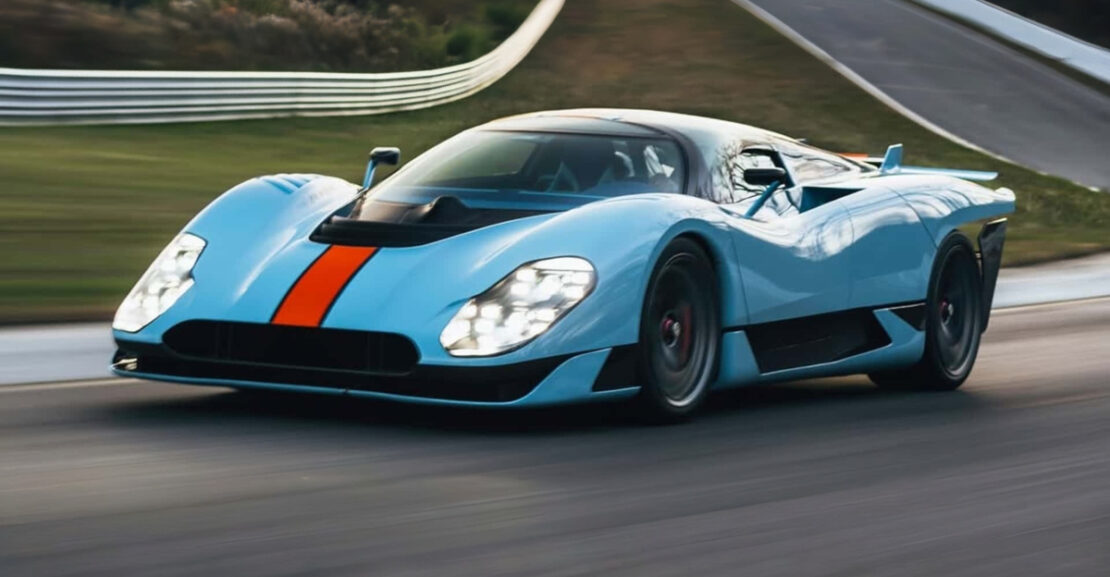
In an era dominated by electrification, digital interfaces, and increasingly complex performance cars, the arrival of the Miller Motorcars JC9 feels almost rebellious. It is not a hybrid hypercar. not electric. It does not rely on artificial driving experiences or autonomous technology.
Instead, the JC9 celebrates something that many enthusiasts feared was disappearing forever: a naturally aspirated V10 engine, a six-speed manual gearbox, and a pure connection between driver and machine.
Created by renowned automotive designer Jason Castriota and commissioned through Miller Motorcars, the JC9 is one of the most fascinating coachbuilt supercars unveiled in recent years. More importantly, it may represent the ultimate evolution of one of the greatest driver’s cars ever created—the Porsche Carrera GT.
A Modern Coachbuilt Masterpiece
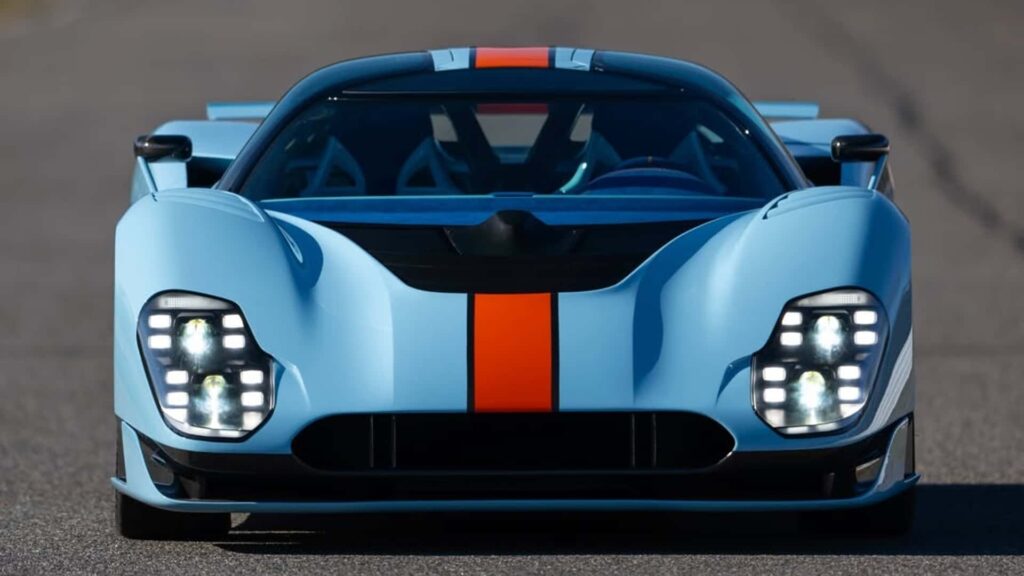
The JC9 is not a completely new car developed from the ground up. Beneath its dramatic bodywork lies the legendary Porsche Carrera GT platform, a machine already considered by many collectors to be among the finest analog supercars ever produced.
However, describing the JC9 as a simple restomod would be a significant understatement.
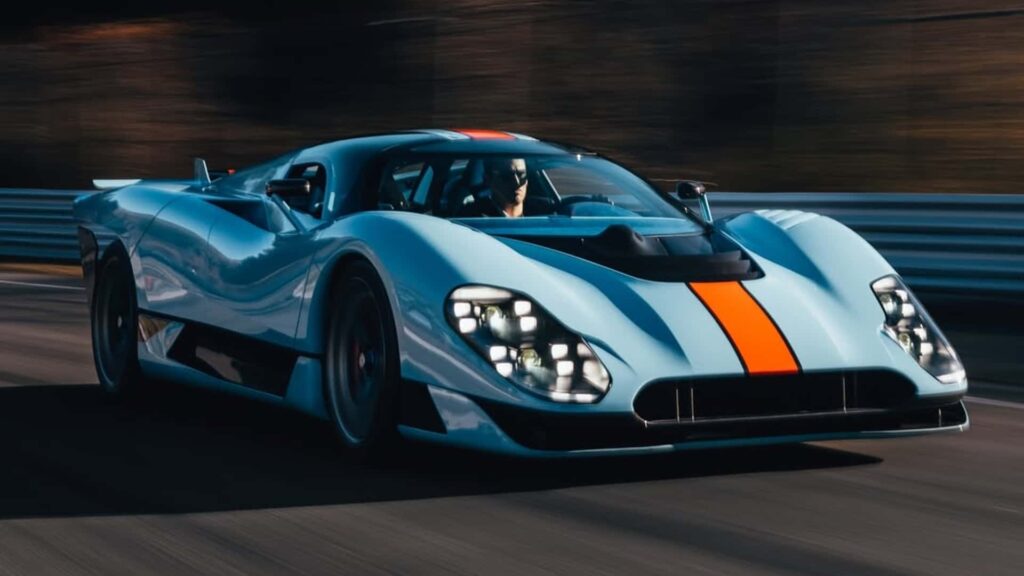
Jason Castriota has completely reimagined the visual identity of the Carrera GT, creating a car that looks less like a modern Porsche and more like a contemporary endurance racing prototype adapted for the road.
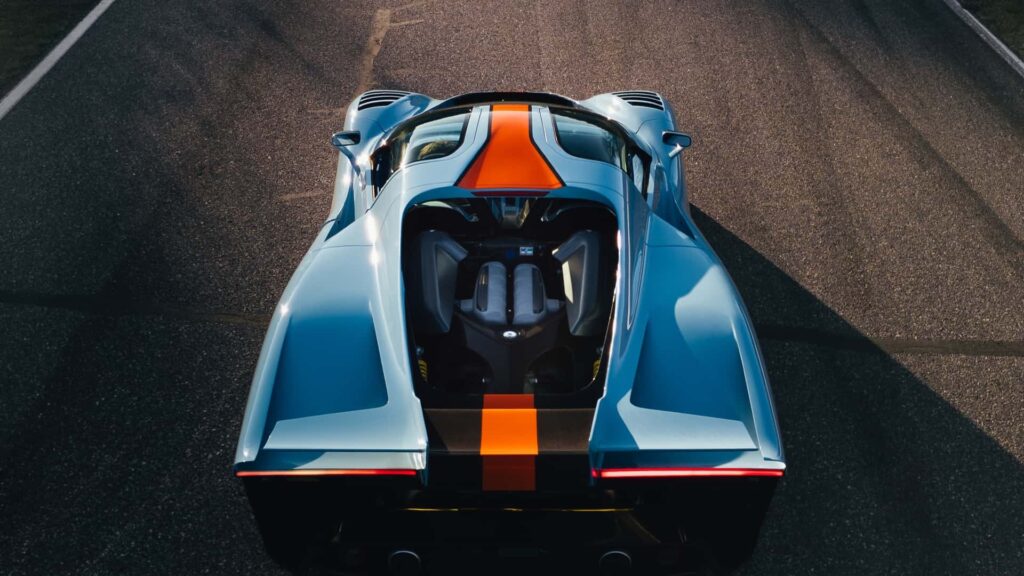
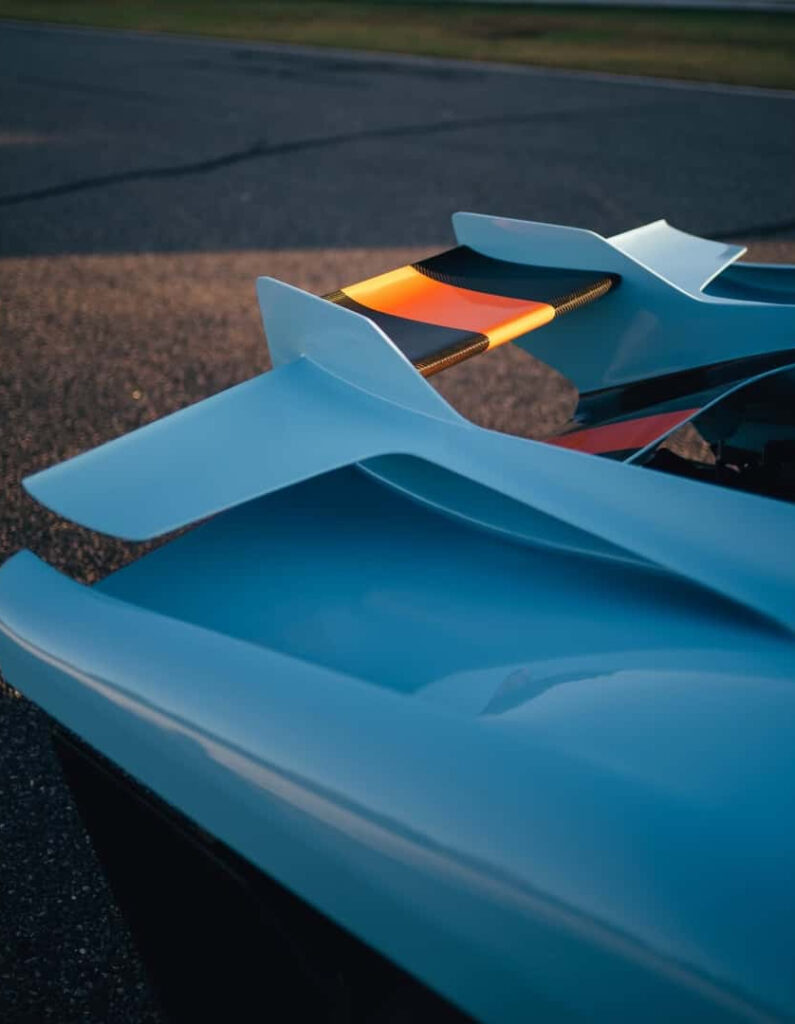
The design draws inspiration from the golden era of Le Mans competition, particularly the long-tail racing machines that dominated endurance events during the 1960s and 1970s. Every surface appears shaped by airflow, with dramatically sculpted fenders, a low-slung greenhouse, muscular rear haunches, and a distinctive aerodynamic tail section.
Finished in a striking Gulf Blue livery, the JC9 instantly evokes motorsport heritage while maintaining an unmistakably modern presence.
Jason Castriota’s Return to Automotive Art
For enthusiasts familiar with automotive design history, Jason Castriota’s involvement is particularly significant.
Castriota is responsible for some of the most memorable exotic car designs of the modern era, including projects associated with Ferrari, Maserati, Pininfarina, and Bertone. His portfolio includes vehicles that blended emotional styling with aerodynamic purpose, often pushing beyond conventional design boundaries.
The JC9 feels like a return to that philosophy.
Rather than chasing aggressive styling trends or excessive visual drama, the design focuses on proportion, elegance, and functional beauty. It is a car that rewards observation, revealing new details from every angle.
In many ways, the JC9 feels closer to a handcrafted automotive sculpture than a traditional production supercar.
The Heart of a Legend
While the exterior receives a complete transformation, the mechanical soul remains one of the greatest ever engineered.
At the center of the JC9 sits Porsche’s legendary 5.7-liter naturally aspirated V10 engine. Originally developed from motorsport technology, this powerplant remains one of the most celebrated engines in automotive history.
Its defining characteristics are exactly what modern performance cars increasingly lack:
- Instant throttle response
- High-revving character
- Mechanical sound purity
- Linear power delivery
- No turbochargers
- No electrification
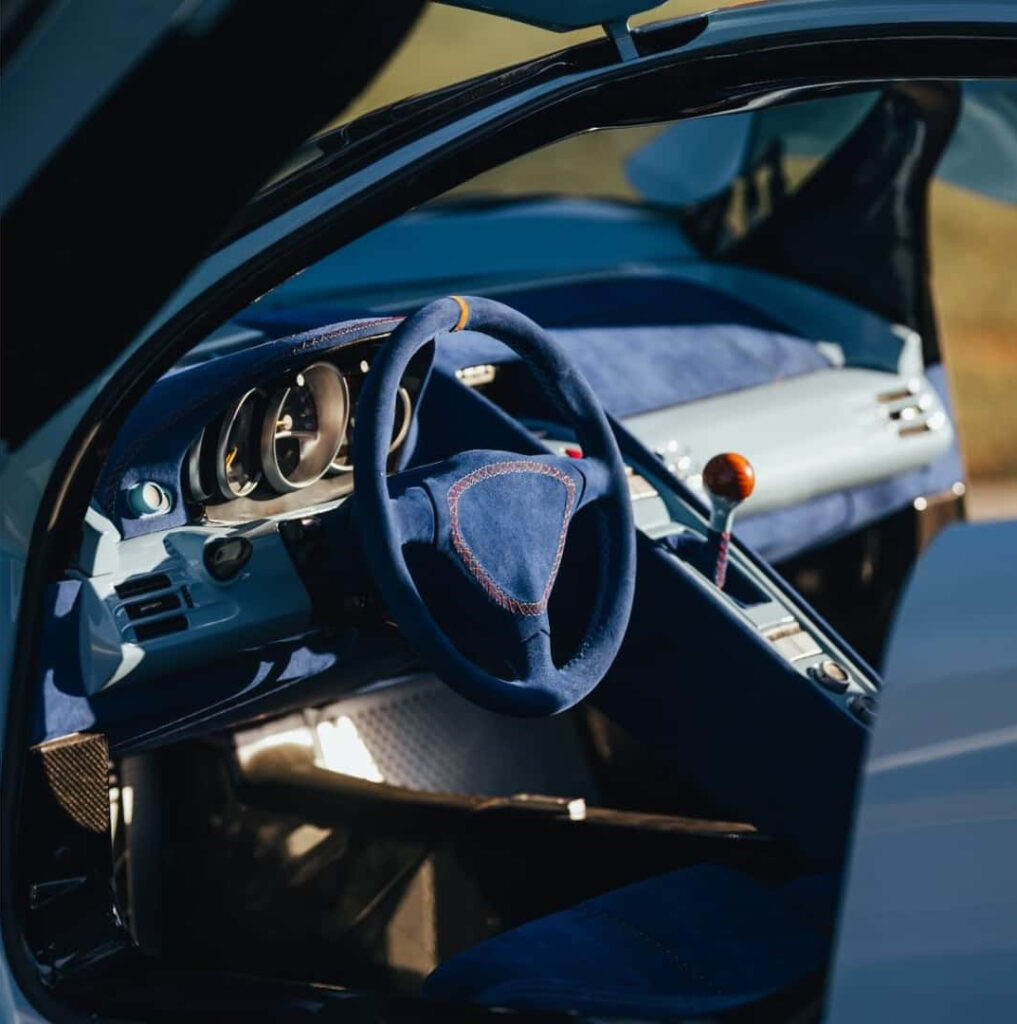
Even more importantly, the engine remains paired to a traditional six-speed manual transmission.
In today’s hypercar market, where dual-clutch gearboxes and hybrid systems dominate nearly every segment, the JC9 offers something genuinely rare: total driver involvement.
Every gear change, every throttle input, and every corner entry demands participation from the driver. The JC9 is not designed to make driving easier. It is designed to make driving unforgettable.
A Hypercar for Enthusiasts, Not Algorithms
One of the most compelling aspects of the JC9 is what it represents philosophically.
Modern performance cars continue to chase measurable improvements in acceleration, lap times, and technological sophistication. Yet many enthusiasts argue that some emotional connection has been lost along the way.
The JC9 takes the opposite approach.
Rather than pursuing record-breaking specifications, it focuses on sensation, engagement, and craftsmanship. It embraces imperfections that create character. It celebrates mechanical interaction rather than replacing it with software.
This makes the JC9 less of a traditional hypercar competitor and more of a collector’s statement piece—an automotive time capsule built for those who believe the golden age of driving should not be forgotten.
Exclusivity Beyond Production Numbers
Coachbuilt automobiles have always occupied a unique position within automotive culture.
Unlike limited-production supercars manufactured in dozens or hundreds of units, coachbuilt projects often exist in extremely small numbers, sometimes as one-off commissions. Their value comes not only from rarity but from individuality.
The JC9 embodies this philosophy perfectly.
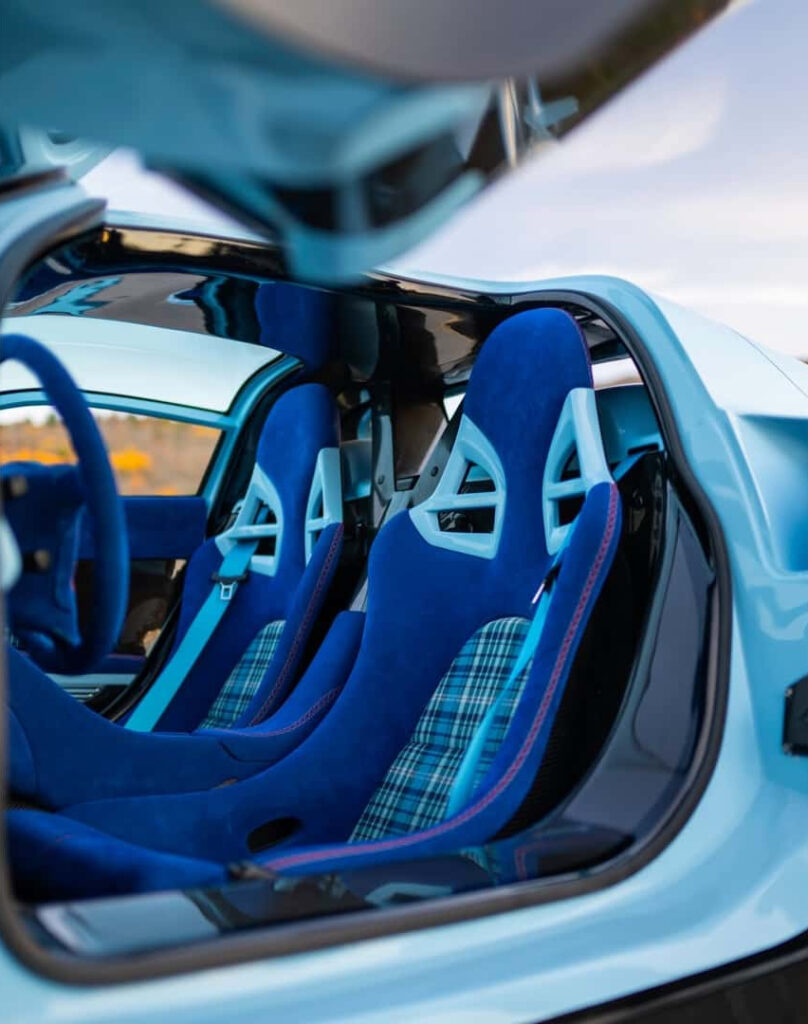
Each detail reflects a bespoke approach rarely seen in the modern automotive industry. From the bodywork and aerodynamic surfaces to the carefully curated specification, the car feels tailored to the desires of enthusiasts who appreciate automotive artistry as much as outright performance.
In a market increasingly filled with hypercars chasing similar formulas, the JC9 stands apart by offering something genuinely personal.
The Carrera GT Reimagined for a New Generation
The Porsche Carrera GT already occupies a mythical position among collectors. Many consider it the final great analog supercar, arriving just before the digital revolution transformed the performance car landscape.
The Miller Motorcars JC9 does not attempt to replace that legacy.
Instead, it builds upon it.
By combining one of the greatest driver-focused platforms ever created with Jason Castriota’s contemporary design vision, the JC9 becomes something extraordinarily rare: a modern supercar that looks toward the future while preserving the soul of the past.
For collectors, it is a work of automotive art.
For enthusiasts, it is a reminder of why driving matters.
And for the automotive world, the JC9 may ultimately be remembered as the supercar that proved emotion remains the most valuable performance metric of all.