
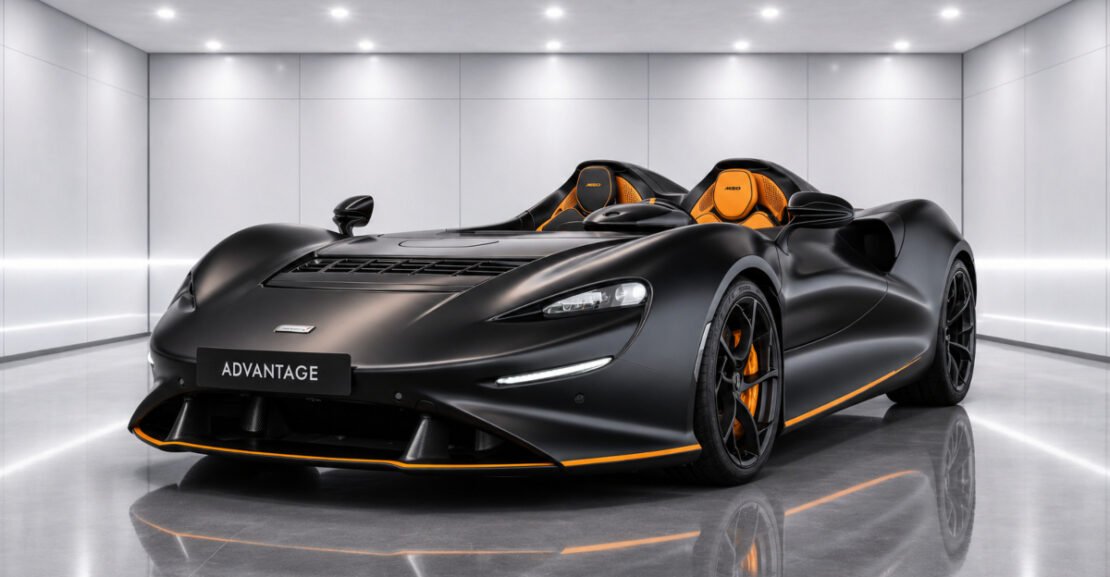
One of McLaren’s most extraordinary Ultimate Series creations, this 2021 Elva combines a twin-turbocharged V8, radical open-cockpit design and exceptional rarity with an almost unused odometer reading.
The Purest Expression of McLaren’s Ultimate Series Philosophy
Some hypercars are developed to achieve extraordinary acceleration figures. Others pursue maximum aerodynamic efficiency, advanced hybrid technology or record-breaking circuit performance.
The McLaren Elva was created around a different philosophy.
Its purpose was to deliver an exceptionally direct connection between the driver, the road and the surrounding environment.
Without a conventional windscreen, roof or side windows in its original configuration, the Elva represents one of the most radical road-going automobiles ever developed by McLaren Automotive.
It is a modern interpretation of the lightweight open-cockpit racing cars that helped establish McLaren’s reputation during the 1960s.
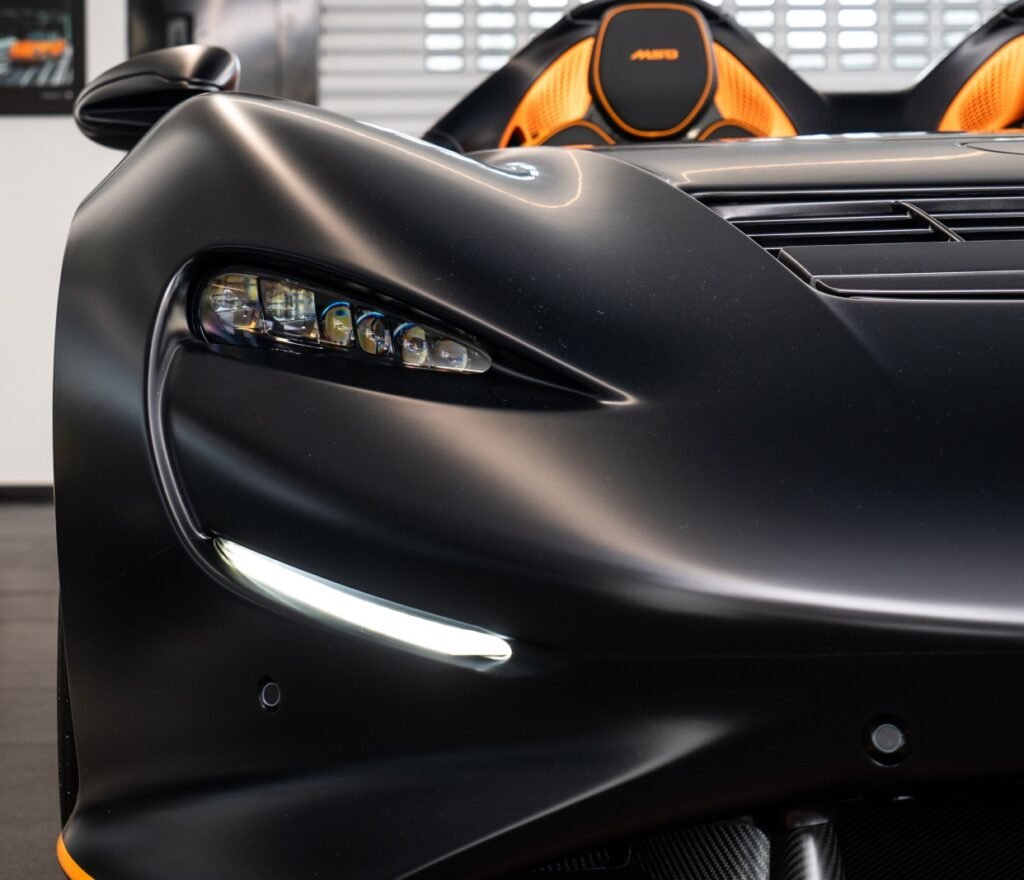
Powered by a 4.0-litre twin-turbocharged V8 producing 815 PS in McLaren’s official specification, the Elva combines extraordinary performance with an uncompromising approach to weight reduction and aerodynamic engineering.
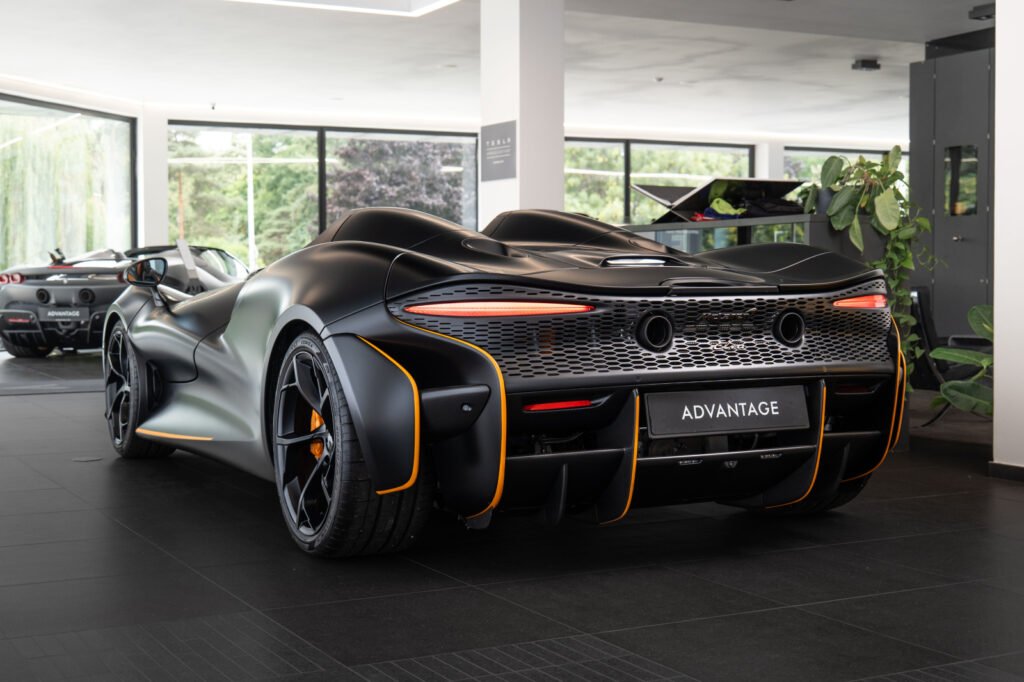
This particular 2021 McLaren Elva, offered by Advantage Cars in the Czech Republic, is an especially remarkable example.
Finished in Black, equipped with carbon-fibre elements and a front-axle lift system, it has covered just 13 kilometres.
The dealer describes the car as one of 149 examples, reflecting the exceptionally limited nature of the Elva programme.
With an advertised price exceeding €1.5 million including VAT, it represents an opportunity to acquire one of the most unconventional and exclusive modern McLaren road cars.
The Elva Name: A Connection to McLaren’s Racing Origins
The name Elva is deeply connected to McLaren’s early motorsport history.
During the 1960s, Bruce McLaren developed lightweight sports racing cars that combined compact dimensions, powerful engines and innovative chassis construction.
Among the most significant were the McLaren-Elva sports racers, created during the company’s formative years.
These machines reflected a philosophy built around simplicity, low weight and exceptional driver involvement.
They were designed for competition rather than comfort.
Their open cockpits, minimalist bodywork and direct mechanical character established many of the principles that would later define McLaren’s engineering identity.
When McLaren Automotive introduced the modern Elva in 2019, it deliberately returned to those origins.
Rather than creating another conventional mid-engined supercar, the company developed an open-cockpit speedster that celebrated the sensations of driving.
The result was an automobile that connected McLaren’s earliest racing history with some of its most advanced contemporary engineering.
A Hypercar Without a Conventional Windscreen
The Elva’s most immediately recognizable feature is its extraordinary open-cockpit architecture.
In its original configuration, the car was designed without a conventional windscreen or roof.
There are no traditional side windows separating the occupants from the surrounding environment.
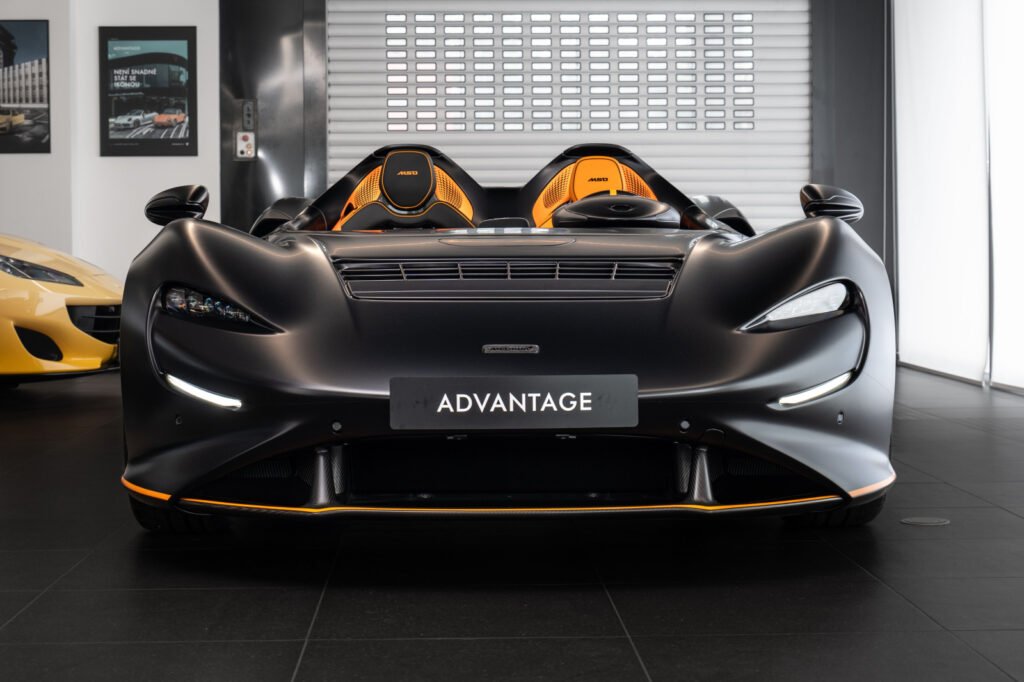
Instead, the driver and passenger sit within a carefully sculpted carbon-fibre body designed to manage airflow at speed.
This creates a driving experience fundamentally different from that of a conventional convertible.
The absence of a windscreen removes one of the principal barriers between the occupants and the road.
The sound of the engine, movement of the air and changing environment become central elements of the experience.
The concept is deliberately uncompromising.
It is not intended to provide the same comfort or weather protection as a conventional grand tourer.
Instead, it celebrates the sensory experience of high-performance driving.
McLaren subsequently developed a windscreen-equipped version for certain markets, but the original windscreen-free concept remains central to the Elva’s identity.
The exact windscreen configuration of this particular vehicle should be confirmed through its photographs and factory specification.
Active Air Management: An Invisible Windscreen
One of the most fascinating technical innovations developed for the McLaren Elva is its Active Air Management System, commonly abbreviated as AAMS.
The system was created to address one of the principal challenges of an open-cockpit automobile: managing airflow around the occupants at high speeds.
Rather than relying entirely on a conventional windscreen, McLaren developed a sophisticated aerodynamic solution.
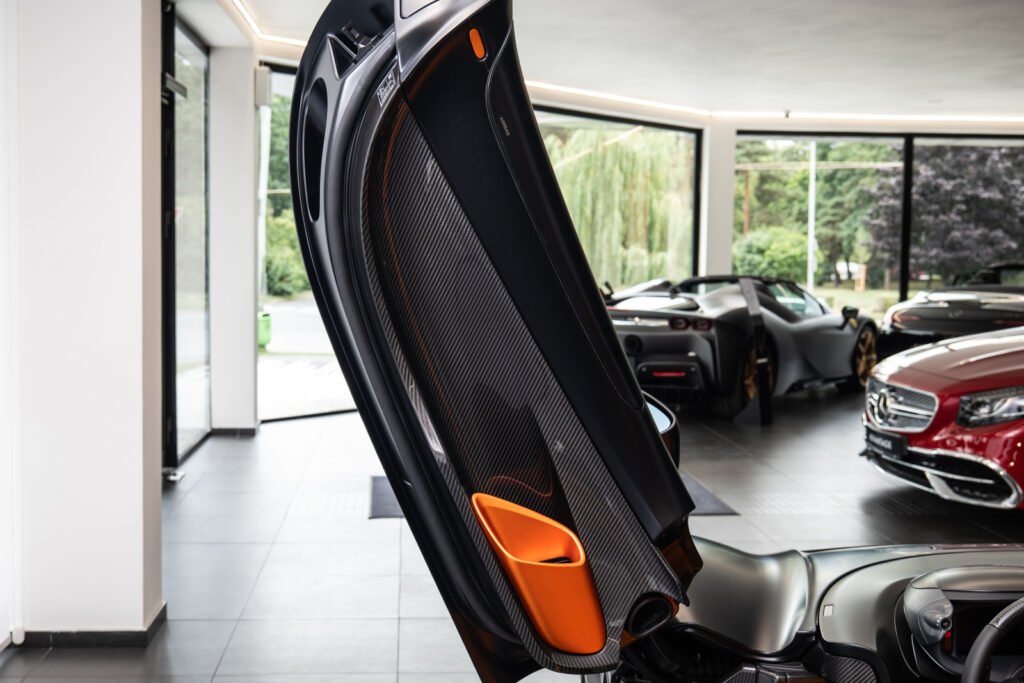
Air enters through an opening at the front of the vehicle and is channelled through the bodywork.
It is then directed upwards ahead of the passenger compartment, helping to guide the oncoming airflow over the occupants.
The result is an aerodynamic effect often described as an invisible windscreen.
An active deflector helps control the airflow according to driving conditions.
This technology illustrates the Elva’s unusual engineering philosophy.
Instead of accepting a conventional design solution, McLaren developed an entirely different approach to the relationship between aerodynamics and occupant comfort.
The system does not eliminate exposure to wind or weather, but it demonstrates the remarkable level of engineering required to make the Elva concept possible.
An Extraordinary Carbon-Fibre Architecture
Weight reduction was one of the central objectives of the Elva programme.
McLaren developed the car around a lightweight carbon-fibre structure, incorporating extensive composite materials throughout the body.
The exterior panels were designed to minimize mass while maintaining the structural integrity required for an exceptionally powerful road car.
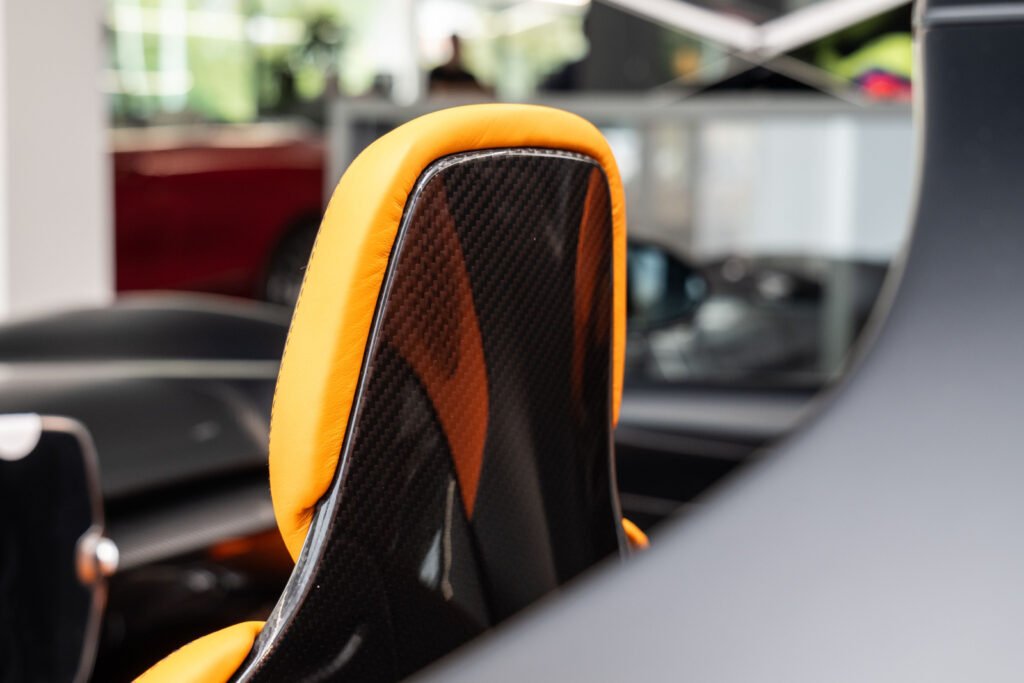
The absence of a conventional roof and windscreen also contributes to the vehicle’s distinctive construction philosophy.
However, removing these elements requires careful attention to the remaining structure.
The body must maintain the rigidity necessary for precise handling and high-performance driving.
The Elva’s carbon-fibre architecture therefore reflects a sophisticated balance between weight reduction, strength and aerodynamic efficiency.
This particular example is advertised with carbon-fibre equipment, although the dealer’s abbreviated specification does not identify every individual carbon-fibre option.
Its Black exterior finish creates a particularly dramatic visual relationship with the car’s exposed technical surfaces.
The 4.0-Litre Twin-Turbocharged V8
At the heart of the McLaren Elva lies a remarkable 3,994 cc twin-turbocharged V8.
Derived from McLaren’s highly developed M840T engine family, the powerplant delivers extraordinary performance in an exceptionally lightweight vehicle.
McLaren’s official specification quotes 815 PS, equivalent to approximately 804 bhp.
The dealer lists this example at 600 kW / 816 horsepower, a closely corresponding figure expressed using its own measurement conventions.
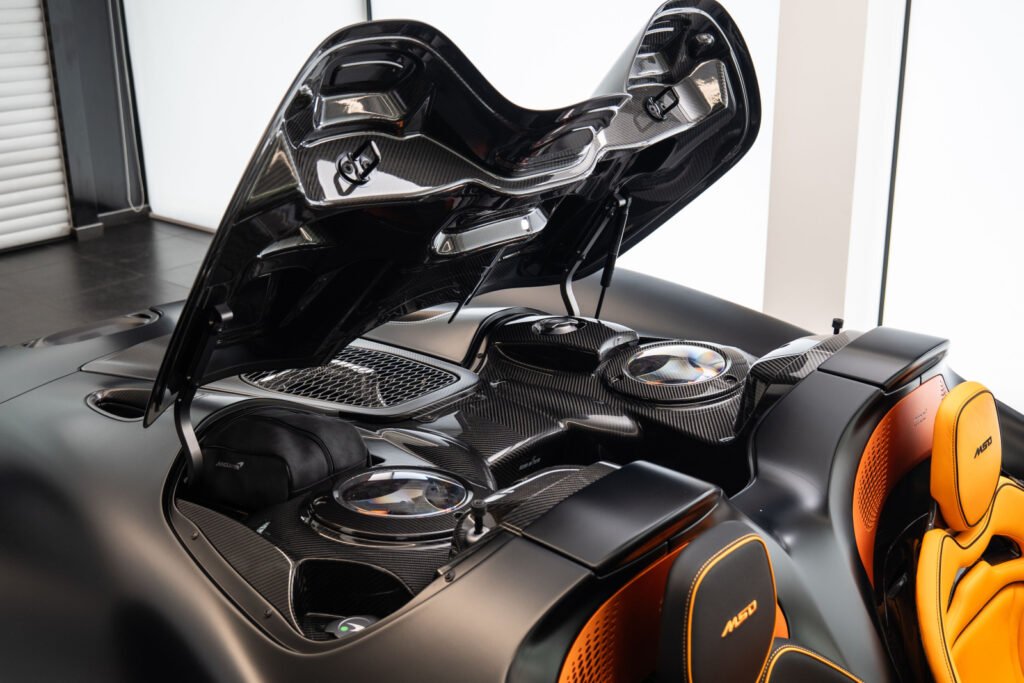
The engine is mounted behind the passenger compartment, creating the mid-engined layout that has become synonymous with McLaren’s modern supercars.
Its twin-turbocharged configuration provides enormous power and torque while maintaining the responsiveness expected from a high-performance McLaren powertrain.
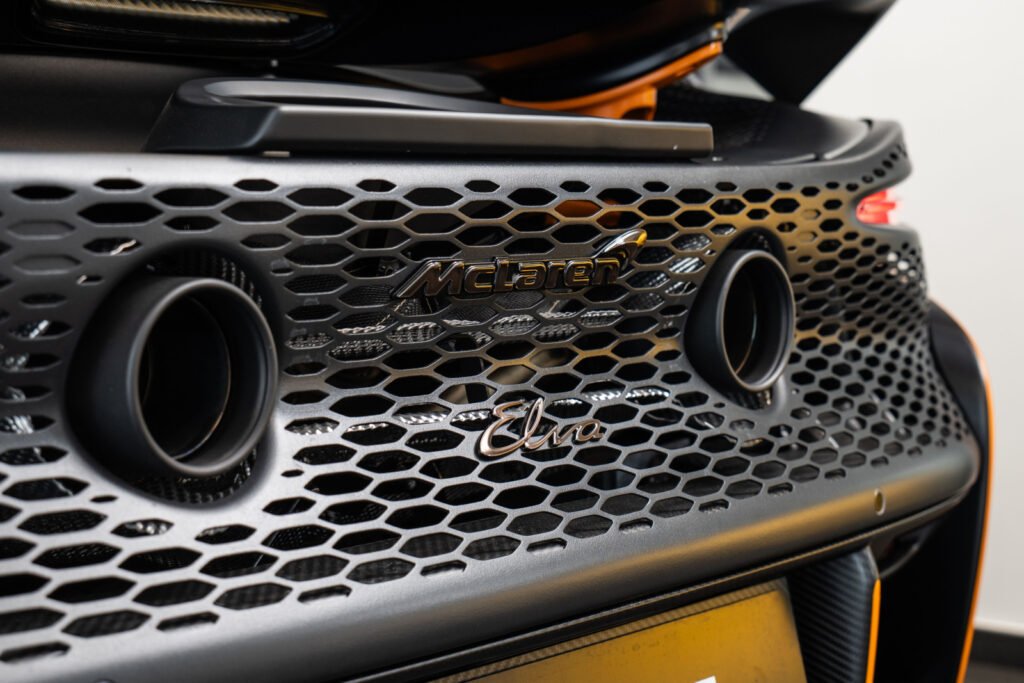
The Elva also features a specially developed exhaust system intended to enhance the engine’s distinctive character.
Without a conventional roof separating the occupants from the surrounding environment, the V8 soundtrack becomes an essential part of the experience.
The result is a powertrain whose appeal extends beyond acceleration figures.
It provides the mechanical soundtrack to one of the most unusual driving environments ever created by McLaren.
815 PS and Extraordinary Acceleration
The Elva’s combination of immense power and low weight produces exceptional performance.
In McLaren’s published specifications, the model can accelerate from 0–100 km/h in less than three seconds.
More remarkably, it can reach 200 km/h in approximately 6.7 seconds.
These figures place the Elva among the most formidable open-cockpit road cars ever produced.
Power is delivered to the rear wheels through a seven-speed dual-clutch transmission.

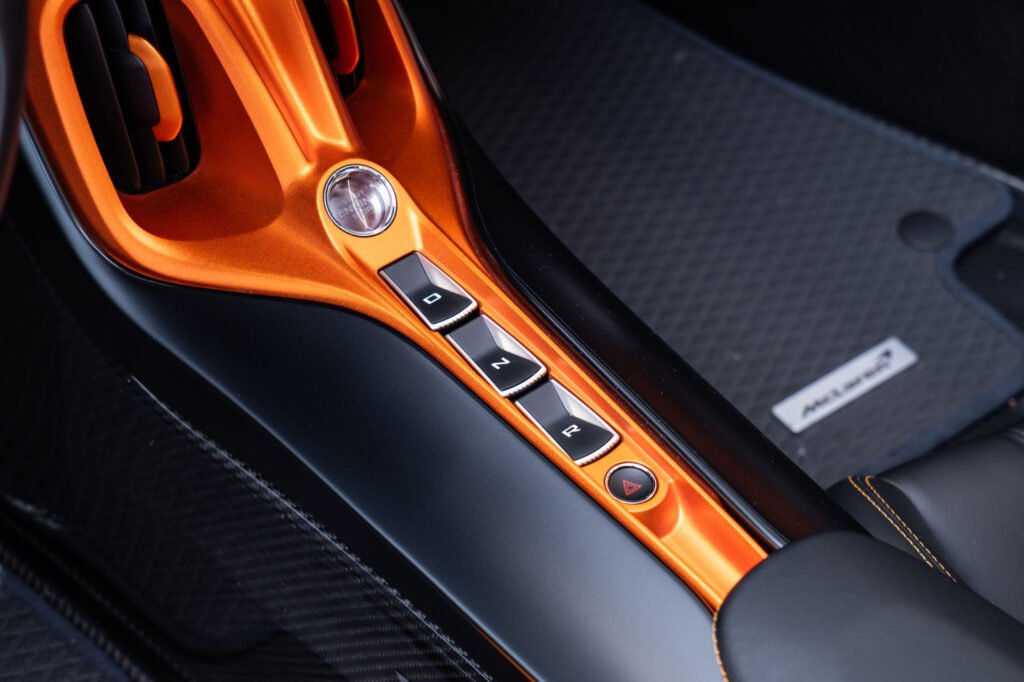
The transmission allows rapid gear changes through steering-wheel-mounted paddles, giving the driver precise control over the V8’s performance.
The rear-wheel-drive configuration reinforces the car’s traditional McLaren character.
Unlike some contemporary hypercars that rely on all-wheel drive or hybrid assistance, the Elva delivers its power through a comparatively direct mechanical arrangement.
Its extraordinary acceleration is therefore achieved through a combination of low weight, sophisticated traction management and an exceptionally powerful combustion engine.
Rear-Wheel Drive and a Focused Driving Experience
The McLaren Elva was conceived as a driver’s car in the most literal sense.
Its steering, suspension and powertrain were developed to create an exceptionally direct relationship between the driver and the road.
The rear-wheel-drive layout plays an important role in that character.
With the engine positioned behind the passenger compartment, the car benefits from the weight distribution and dynamic characteristics associated with a mid-engined supercar.
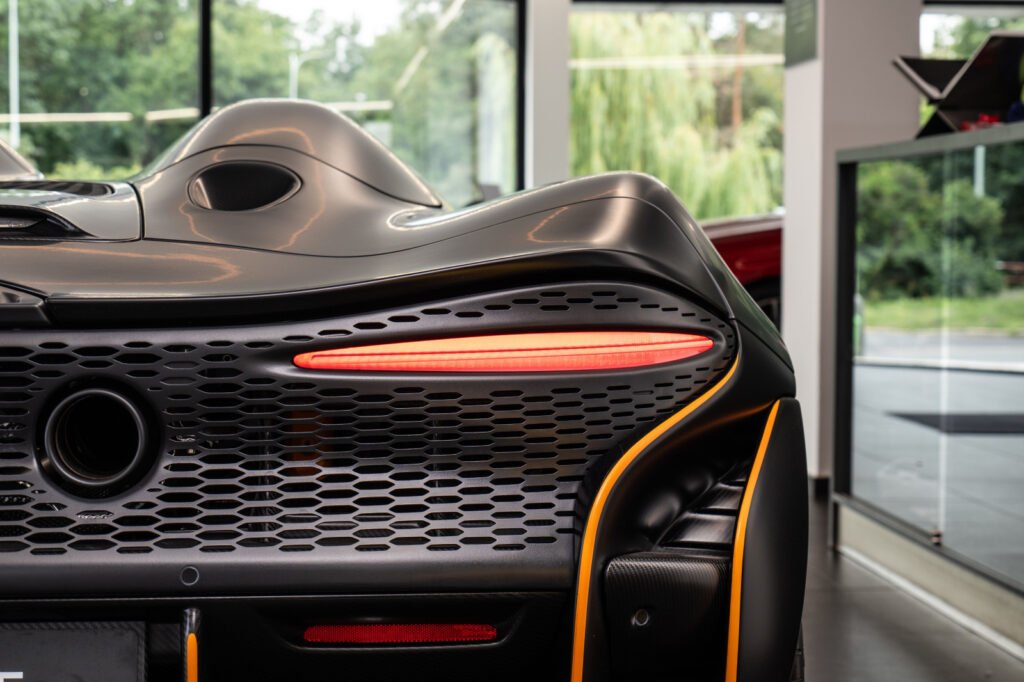
Its lightweight structure allows rapid responses to steering and throttle inputs.
The suspension system is designed to provide the precision necessary for high-performance driving while maintaining sufficient compliance for public roads.
The result is a car intended to feel immediate and responsive.
Unlike a luxury grand tourer, the Elva does not attempt to isolate its occupants from the driving environment.
It deliberately brings them closer to it.
Sculptural Design with a Functional Purpose
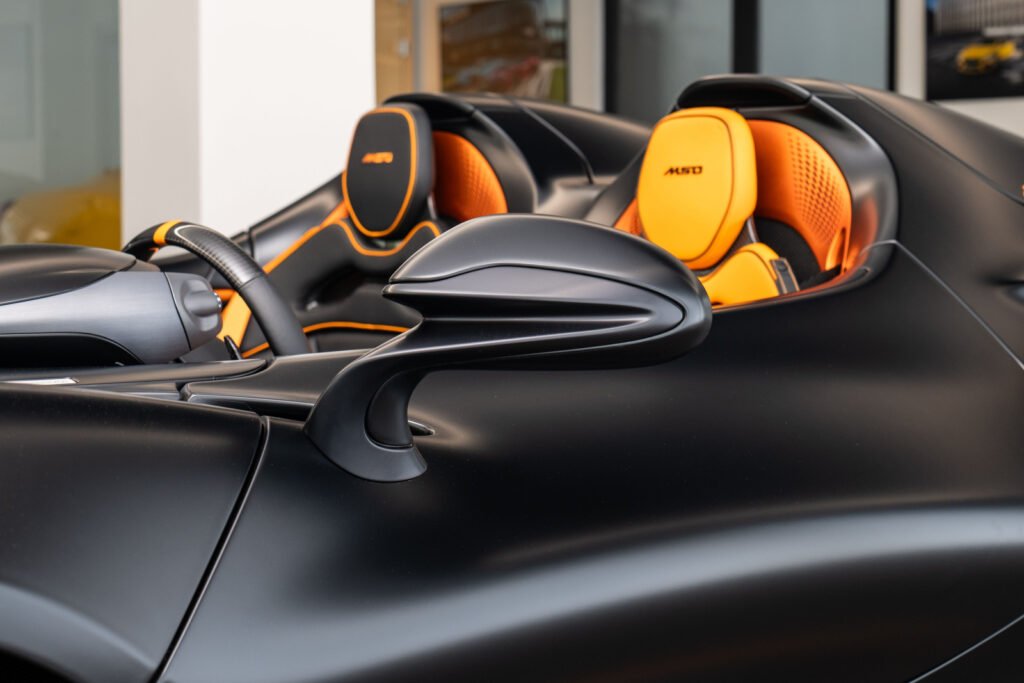
The Elva’s exterior design is among the most distinctive in McLaren’s history.
Its low front bodywork, deeply sculpted surfaces and exposed cockpit create proportions rarely encountered in contemporary road cars.
The design avoids the conventional visual architecture of a supercar.
There is no traditional roofline flowing towards the rear of the vehicle.
Instead, the body appears to wrap around the passenger compartment, creating a continuous sculptural form.
The aerodynamic surfaces are carefully integrated into the exterior.
Large air channels and distinctive body contours help manage airflow while reinforcing the car’s lightweight philosophy.
The result is an automobile that feels closer in spirit to a racing prototype than a conventional road-going supercar.
Yet the execution retains the refinement expected from McLaren’s Ultimate Series.
Every major design element serves a purpose.
Black: A Dramatic Specification for an Extreme McLaren
This particular example is finished in Black, a colour that gives the Elva an especially dramatic presence.
While brighter finishes emphasize the car’s unusual surfaces, black creates a more architectural appearance.
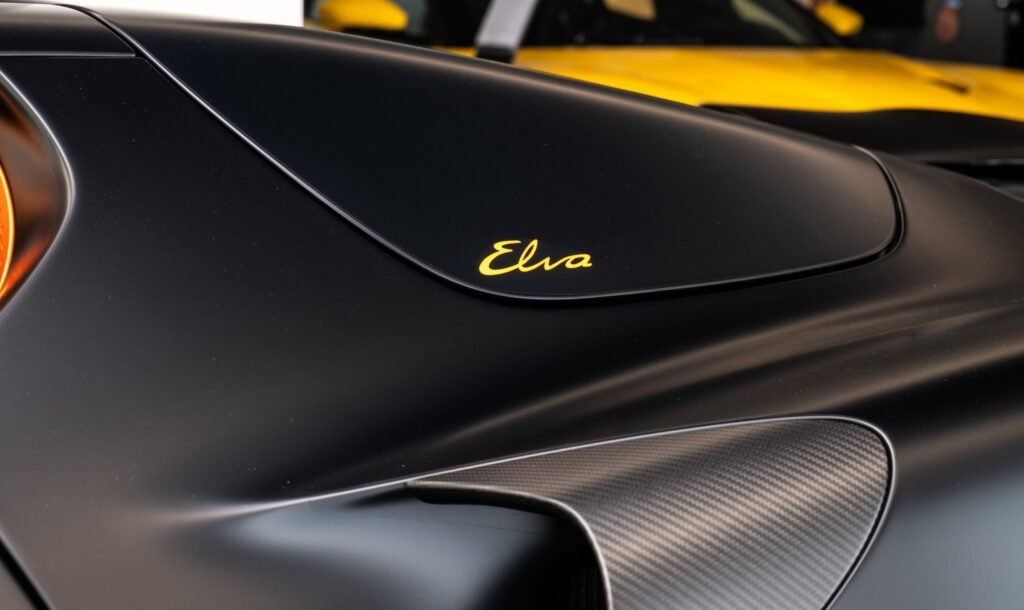
The absence of a conventional roof becomes particularly striking.
The cockpit appears almost carved into the bodywork, while the surrounding aerodynamic elements create a complex interplay of reflections and shadows.
Carbon-fibre detailing reinforces the technical character of the design.
The result is a specification that feels both restrained and uncompromising.
It allows the Elva’s unusual proportions to become the principal visual statement.
For a vehicle whose design is already so extraordinary, that restraint can be particularly effective.
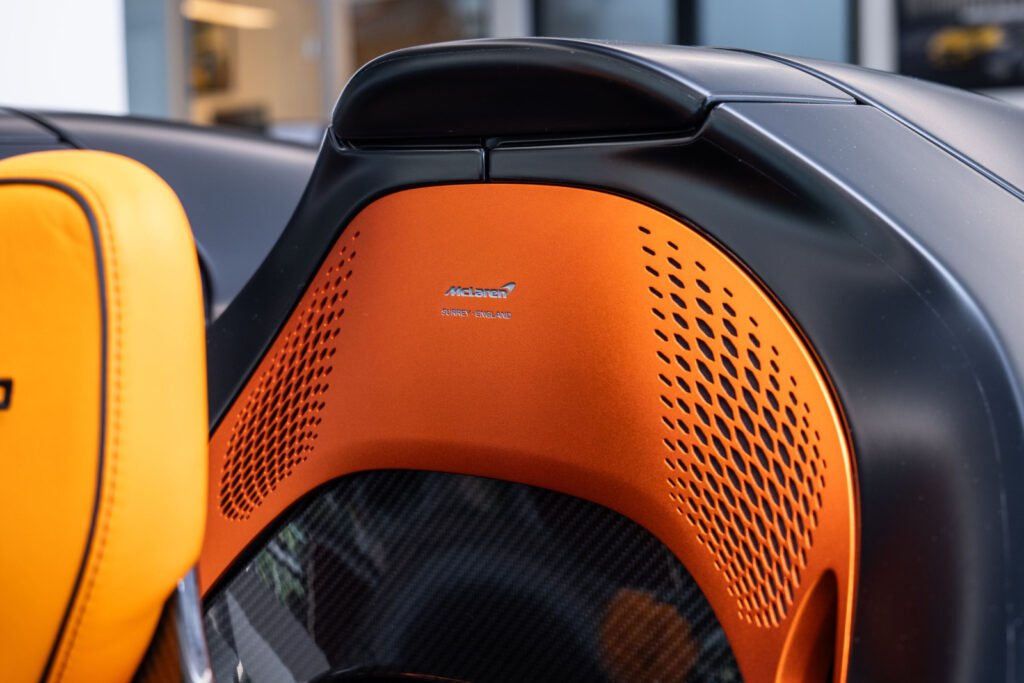
A Minimalist Two-Seat Cockpit
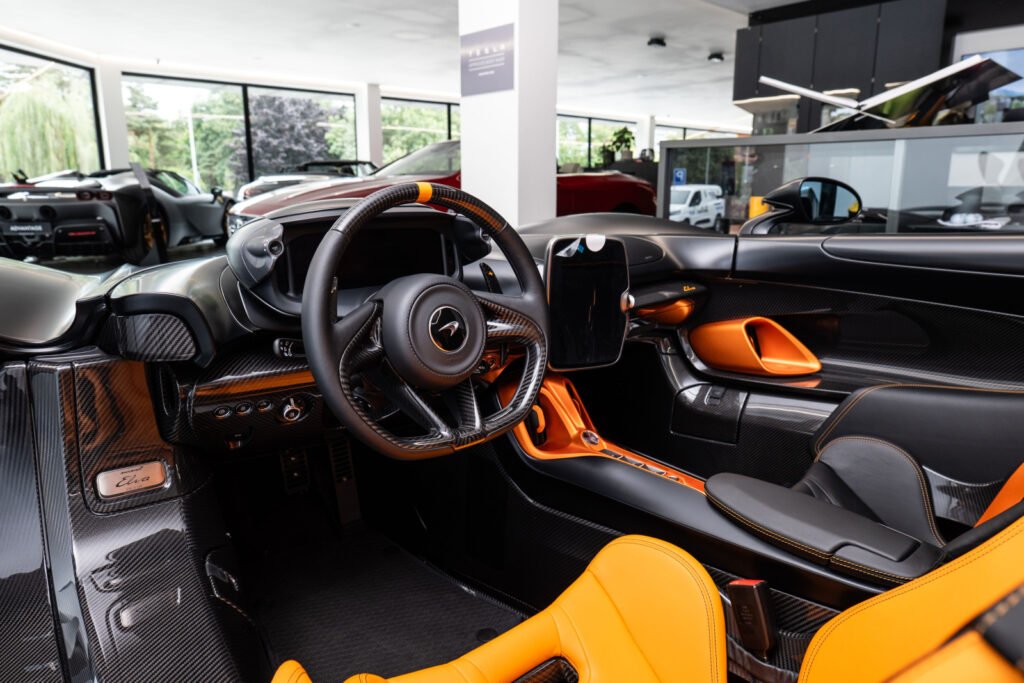
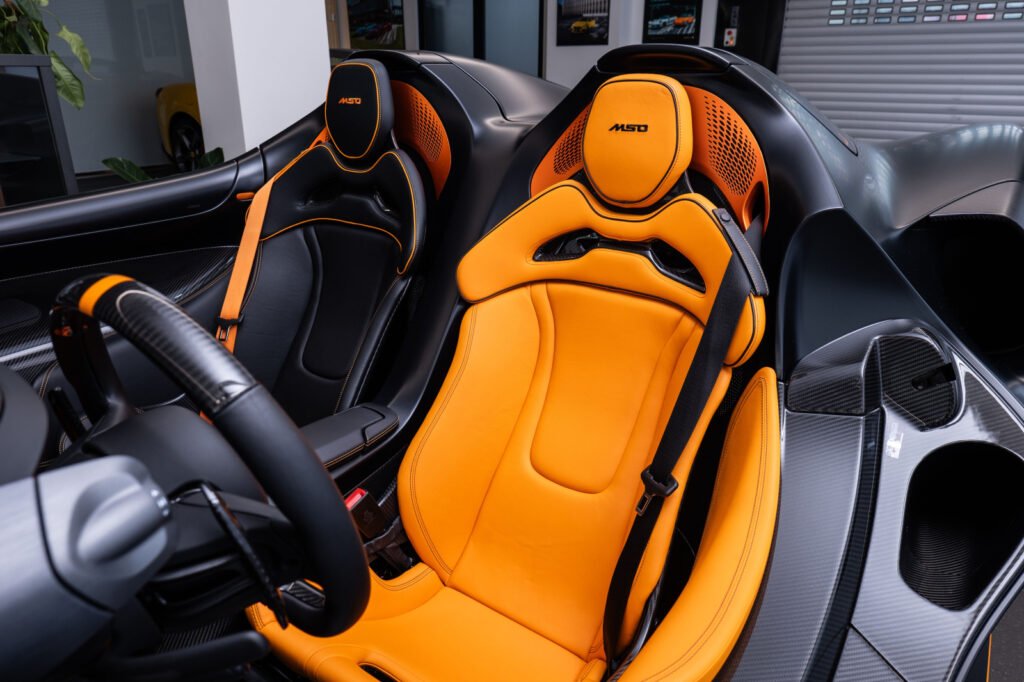
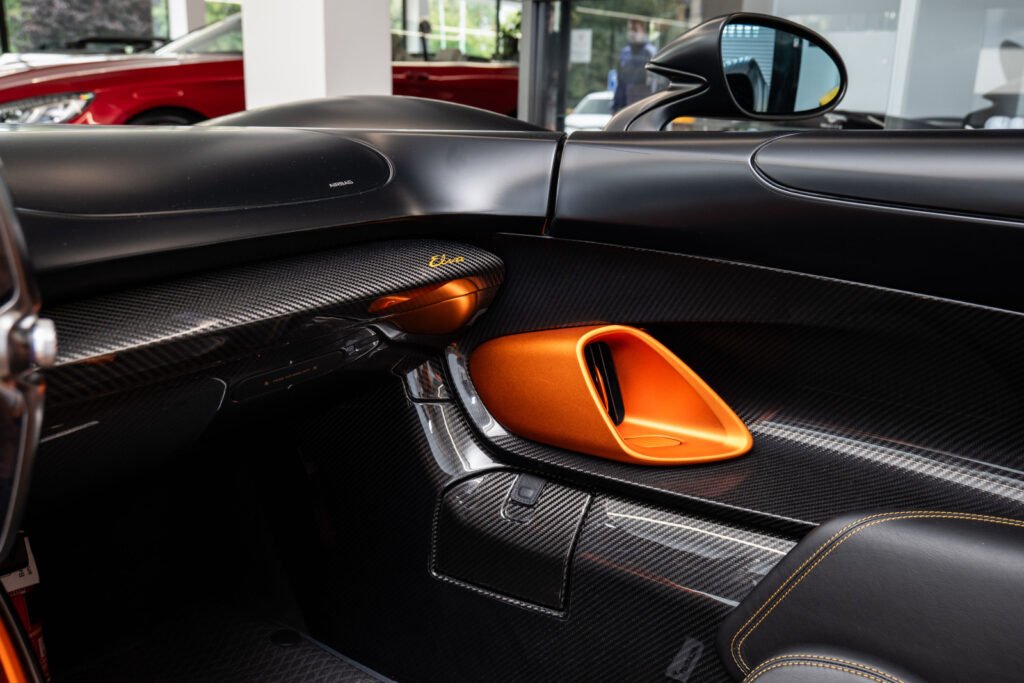
Inside, the McLaren Elva adopts a deliberately minimalist philosophy.
The cabin is designed around the essential elements required for high-performance driving.
Two occupants sit within a compact passenger compartment, surrounded by carefully sculpted bodywork.
The seats are developed to provide support during demanding driving while contributing to the vehicle’s lightweight construction.
The steering wheel, instrumentation and controls are positioned to prioritize the driver.
Unlike a conventional luxury car, the Elva does not rely on an extensive collection of comfort features to establish its identity.
Instead, the interior emphasizes materials, ergonomics and direct interaction with the vehicle.
The absence of a conventional windscreen creates an extraordinary sense of openness.
The surrounding landscape becomes part of the driving experience.
It is a cockpit conceived around movement, sound and sensation.
Front-Axle Lift: Practicality in an Extreme Speedster
One of the highlighted features of this particular Elva is its front-axle lift system.
This is an especially useful option for a vehicle with such low ground clearance and aggressive aerodynamic bodywork.
The lift system allows the front of the car to be raised when approaching obstacles such as steep driveways, ramps or uneven road surfaces.
For an automobile designed around aerodynamic efficiency and low weight, even relatively ordinary road conditions can present challenges.
The ability to increase front clearance therefore introduces a valuable element of practicality.
It does not transform the Elva into an everyday sports car.
However, it makes the vehicle more manageable when navigating environments beyond smooth racing circuits and carefully maintained roads.
For collectors intending to drive their cars rather than preserve them exclusively in a showroom, such equipment can be particularly desirable.
Selected Comfort and Convenience Equipment
Despite its extreme philosophy, the Elva offered by Advantage Cars includes several modern convenience features.
The dealer lists automatic dual-zone climate control, Bluetooth connectivity, an adjustable steering wheel and a parking camera.
The car is also advertised with LED headlights, LED rear lights, paddle shifters and sports seats.
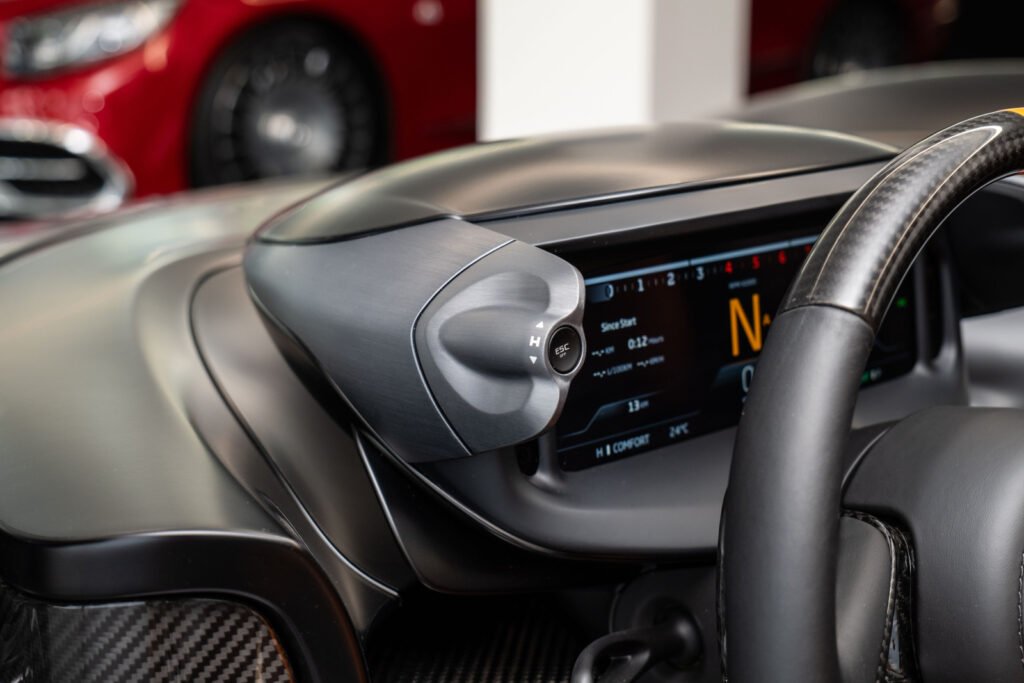
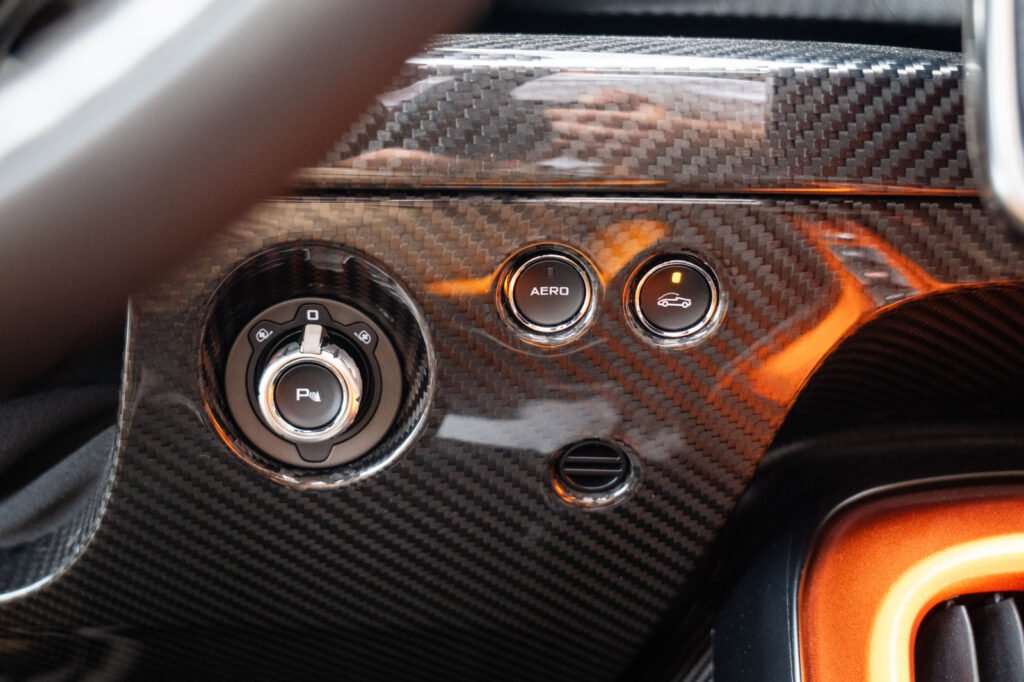
These features demonstrate that the Elva remains a modern road-going McLaren rather than a dedicated racing prototype.
The parking camera is particularly useful given the car’s unusual bodywork and low seating position.
The steering-wheel-mounted paddle shifters provide direct control over the seven-speed transmission.
Meanwhile, the climate-control system introduces a degree of comfort within the otherwise exposed cockpit environment.
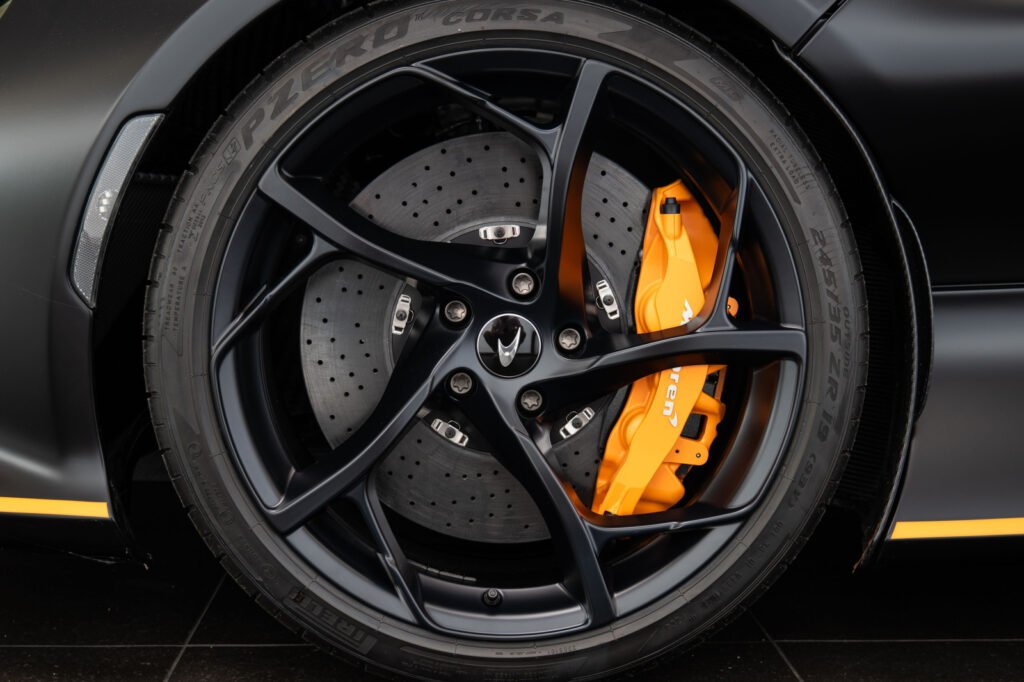
The dealer also lists 19-inch wheels, although the complete wheel and tyre specification should be confirmed against the vehicle’s factory equipment record.
One of 149: An Exceptionally Rare McLaren
Rarity is central to the Elva’s collector appeal.
When the model was first announced, McLaren initially planned a production run of 399 examples.
That figure was subsequently reduced as the programme evolved.
The final production allocation was significantly smaller than originally anticipated.
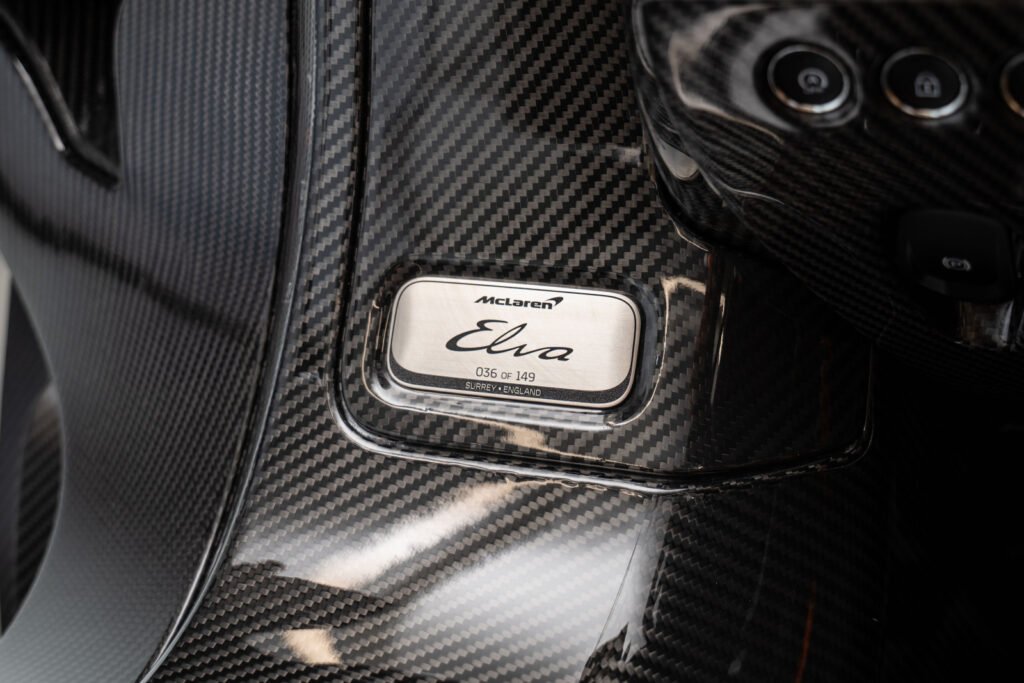
Advantage Cars advertises this particular example as one of 149.

The precise number of completed production cars is a subject that should be distinguished from earlier announced production limits.
Nevertheless, the Elva remains one of the rarest modern McLaren Ultimate Series models.
Its limited production is particularly meaningful because the car is fundamentally different from the manufacturer’s conventional supercar range.
The absence of a traditional windscreen, its specialized aerodynamic technology and its lightweight construction give it a distinct identity.
It is not simply a limited-edition version of an existing model.
It represents a separate engineering concept.
The Elva Within McLaren’s Ultimate Series
The McLaren Ultimate Series has produced some of the most remarkable high-performance automobiles of the modern era.
The McLaren P1 introduced advanced hybrid hypercar technology.
The Senna pursued extraordinary circuit performance through aerodynamic downforce and reduced weight.
The Speedtail explored high-speed efficiency and long-distance hypercar performance.
The Elva followed a different philosophy.
Its objective was not to combine every available technology into a single vehicle.
Instead, it focused on reducing the barriers between the driver and the surrounding environment.
Its lightweight construction, open cockpit and powerful V8 created an unusually direct interpretation of the modern hypercar.
This gives the Elva a distinctive place within the Ultimate Series.
Each model represents a different engineering philosophy, but the Elva is arguably the most unconventional.
It demonstrates what McLaren can achieve when driving sensation becomes the primary objective.
Just 13 Kilometres: An Almost Unused Example
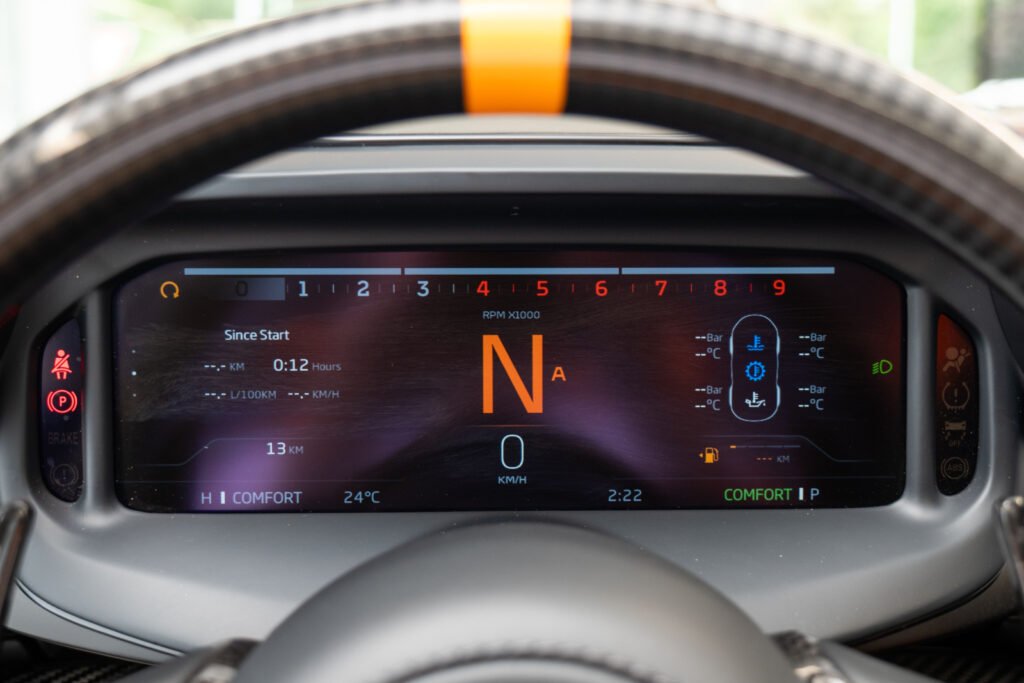
Perhaps the most remarkable characteristic of this particular McLaren Elva is its mileage.
According to Advantage Cars, the vehicle has covered just 13 kilometres.
First registered in June 2021, it has accumulated virtually no recorded road use.
Such an exceptionally low odometer reading is unusual even among limited-production hypercars.
It suggests that the vehicle has spent most of its life in storage or collection rather than being used regularly.
For collectors, extremely low mileage can be an important consideration.
However, it should always be evaluated alongside service documentation, storage conditions and the condition of mechanical components.
A vehicle that has seen minimal use may still require maintenance related to age, fluids, tyres and other components.
The Elva’s specialized engineering makes a detailed inspection particularly important.
Nevertheless, a 2021 example with only 13 kilometres represents an exceptionally unusual opportunity within the modern McLaren collector market.
The Collector Appeal of McLaren’s Most Radical Speedster
Modern hypercar collecting increasingly encompasses vehicles with distinctive technological and historical identities.
The McLaren Elva possesses several characteristics that make it particularly interesting.
Its design connects directly with the company’s earliest racing heritage.
Active Air Management System represents an unusual aerodynamic solution.
Its lightweight construction and twin-turbocharged V8 deliver exceptional performance.
And its production volume is extraordinarily limited.
This particular example adds an almost unused odometer reading, a dramatic Black specification and desirable carbon-fibre and front-lift equipment.
The combination creates a compelling collector proposition.
Future market performance cannot be predicted, but the Elva’s place within McLaren’s Ultimate Series is already distinctive.
It represents one of the most radical interpretations of the road-going speedster concept ever produced by a major supercar manufacturer.
A McLaren Designed to Remove the Boundaries
The McLaren Elva is not a conventional hypercar.
It does not attempt to combine maximum comfort, everyday practicality and extraordinary performance into a single compromise.
Instead, it pursues a more focused objective.
It removes the conventional barriers between driver and environment while using sophisticated aerodynamic engineering to make the concept possible.
Its twin-turbocharged V8 delivers extraordinary acceleration.
Its lightweight carbon-fibre construction emphasizes agility and responsiveness.
And its open cockpit creates an experience unlike that of almost any other modern road car.
This particular 2021 example is especially remarkable.
With just 13 kilometres, a Black exterior finish, carbon-fibre equipment and front-axle lift, it combines the Elva’s extraordinary engineering concept with a highly desirable collector specification.
For enthusiasts seeking one of McLaren’s most unconventional creations, the Elva represents an automobile that challenges the traditional definition of a supercar.
It is not simply designed to be driven quickly.
It is designed to make every moment of driving feel extraordinary.
Key Features
- 2021 McLaren Elva
- Only 13 km recorded
- One of 149, according to dealer
- 4.0-litre twin-turbocharged V8
- 600 kW / 816 hp, dealer listed
- Rear-wheel drive
- Seven-speed dual-clutch transmission
- Open-cockpit speedster design
- Lightweight carbon-fibre architecture
- Carbon-fibre equipment
- Front-axle lift system
- McLaren Active Air Management technology
- Black exterior finish
- Two-seat configuration
- Sports seats
- Paddle shifters
- Adjustable steering wheel
- Leather steering wheel
- Automatic dual-zone climate control
- Bluetooth connectivity
- Parking camera
- LED headlights
- LED rear lights
- Daytime running lights
- 19-inch wheels, dealer listed
- June 2021 first registration
- McLaren Ultimate Series model
- Exceptional low-mileage collector example
Dealer Information
This 2021 McLaren Elva is offered by Advantage Cars, a specialist dealer based in Prague, Czech Republic.
The vehicle is finished in Black and advertised with carbon-fibre equipment, front-axle lift and just 13 kilometres.
Advertised Price: €1,553,620 including VAT, as supplied
Net Price: €1,283,983 excluding VAT, as supplied
Mileage: 13 km
First Registration: June 2021
Location: Prague, Czech Republic
Dealer: Advantage Cars
For the complete factory specification, service documentation, condition and current availability, contact Advantage Cars directly.
LuxeonCars independently features exceptional luxury, performance and collector automobiles offered by specialist dealers worldwide.