
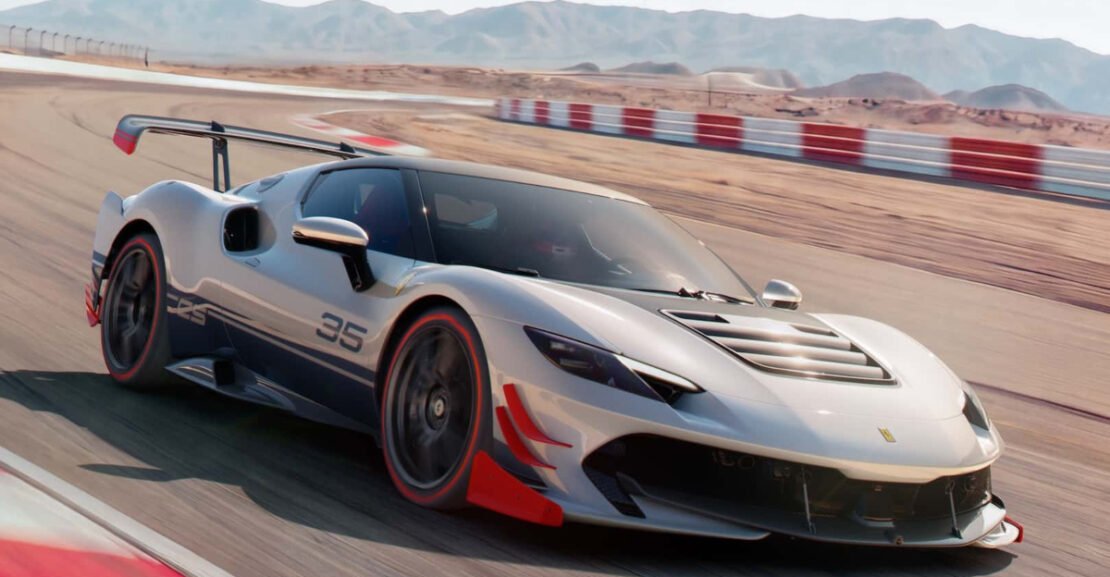
Ferrari revives the legendary Challenge Stradale name with its most uncompromising road-going 296. Developed alongside the new 296 Challenge Evo race car, this extraordinary creation abandons hybrid technology in favour of lighter construction, extreme aerodynamics and an exceptionally direct driving experience.
For decades, Ferrari has pursued an extraordinary balance between racing technology and road-going performance. From the legendary 250 GTO to the uncompromising F40 and the celebrated Challenge Stradale models, the relationship between competition and production cars has remained central to the identity of Maranello.
Now, that philosophy enters a fascinating new chapter.
Unveiled on November 21, 2026, during the Ferrari Finali Mondiali at the Circuit de Barcelona-Catalunya, the Ferrari 296 Challenge Stradale represents a remarkable departure from the direction followed by most contemporary supercars.
Rather than increasing horsepower through additional electrification, Ferrari has deliberately removed the hybrid system from its acclaimed 296 platform.
The result is a lighter, more focused machine powered exclusively by a 670-horsepower twin-turbocharged V6, developed alongside the new 296 Challenge Evo competition car.
With a dry weight of approximately 1,330 kilograms, substantial aerodynamic downforce and an exceptionally aggressive design, the Challenge Stradale brings the atmosphere of Ferrari’s one-make racing championship closer to public roads than almost any previous production model.
Yet its significance extends beyond technical specifications.
It marks the return of one of Ferrari’s most evocative names and introduces a different interpretation of modern supercar performance: less complexity, greater driver involvement and a deliberate emphasis on the physical experience of driving.
The Return of the Challenge Stradale Legend
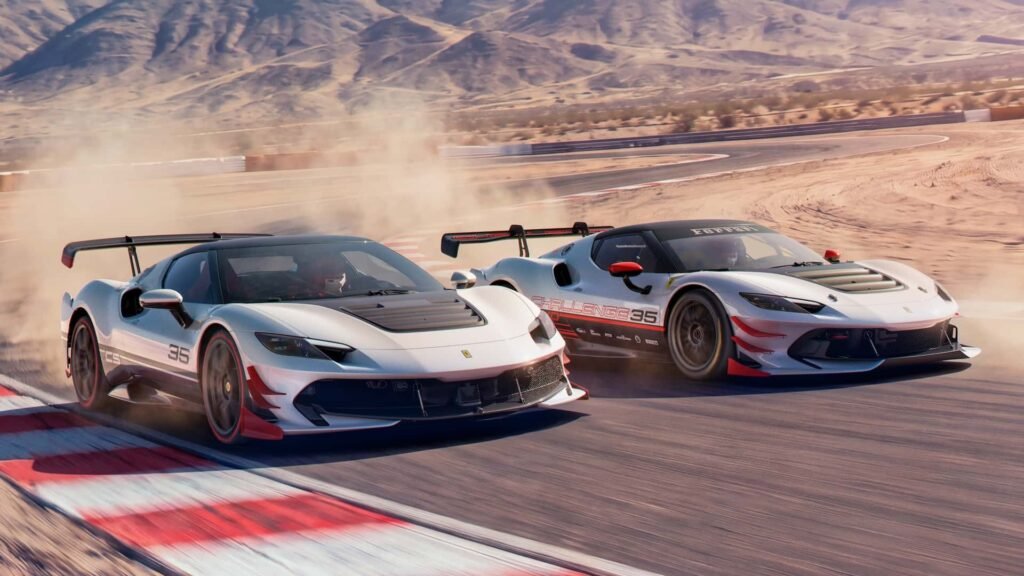
The Challenge Stradale name occupies a particularly important position in modern Ferrari history.
Introduced in 2003, the Ferrari 360 Challenge Stradale transformed the already exceptional 360 Modena into a much more focused performance machine.
Inspired by Ferrari’s one-make racing championship, the car combined extensive weight reduction, revised aerodynamics, a sharper suspension setup and a more expressive naturally aspirated V8.
It became celebrated not simply for its performance figures, but for its mechanical immediacy and distinctive character.
Although Ferrari continued developing increasingly sophisticated track-focused road cars, subsequent models adopted different names.
The F430 Scuderia, 458 Speciale and 488 Pista each carried forward the philosophy of translating motorsport expertise into road-going performance.
More than two decades later, the Challenge Stradale name has returned.
And its revival is particularly appropriate.
The new 296 Challenge Stradale is not merely a more aggressive version of an existing Ferrari. It has been developed in close collaboration with the company’s latest one-make racing programme.
Its relationship with the 296 Challenge Evo is fundamental to its identity.
Where many contemporary supercars pursue greater performance primarily through power and electronic sophistication, the Challenge Stradale revisits a more traditional Ferrari principle.
Reduce unnecessary weight, improve aerodynamic efficiency and place the driver at the centre of the experience.
Ferrari LaFerrari Aperta for Sale: Luca di Montezemolo’s Extraordinary Non-Hybrid V12
Developed Alongside the Ferrari 296 Challenge Evo
The Challenge Stradale’s development is closely connected with the new Ferrari 296 Challenge Evo, introduced during the same Finali Mondiali event.
The Evo will compete in the Ferrari Challenge championship beginning in 2027, continuing one of the most established customer-racing programmes in international motorsport.
The two cars share a common engineering philosophy.
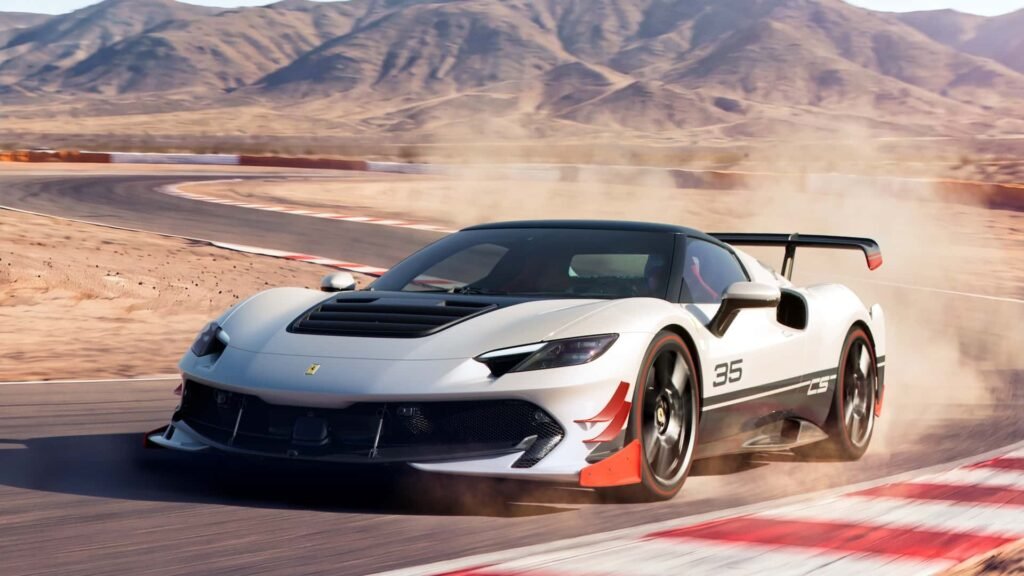
Both place particular emphasis on aerodynamic performance, reduced weight and the mechanical character of Ferrari’s twin-turbocharged V6.
However, the Challenge Stradale has been developed for public roads.
Unlike the competition-only Evo, it retains the equipment and adaptations necessary for road-going use, including more accommodating suspension calibration and selected comfort features.
This creates an interesting distinction within Ferrari’s current range.
The 296 GTB represents a sophisticated hybrid supercar designed for exceptional all-round performance.
The 296 Speciale takes that formula further, combining electrification with enhanced aerodynamics and chassis engineering.
The Challenge Stradale follows a different path.
It draws directly from the racing programme, sacrificing some outright power to create a lighter and more physically demanding automobile.
For enthusiasts who value the connection between racing and road-car engineering, that distinction may be its greatest attraction.
A Ferrari 296 Without Hybrid Technology
Perhaps the most surprising feature of the new Challenge Stradale is what Ferrari has removed.
The conventional 296 GTB combines a 3.0-litre twin-turbocharged V6 with an electric motor and rechargeable battery, delivering extraordinary combined performance.
The 296 Challenge Stradale eliminates the electric propulsion system entirely.
There is no hybrid motor assisting acceleration, no high-voltage battery contributing additional power and no electric torque filling the gaps in the combustion engine’s response.
Instead, the car relies exclusively on its 2,992 cc, 120-degree twin-turbocharged V6.
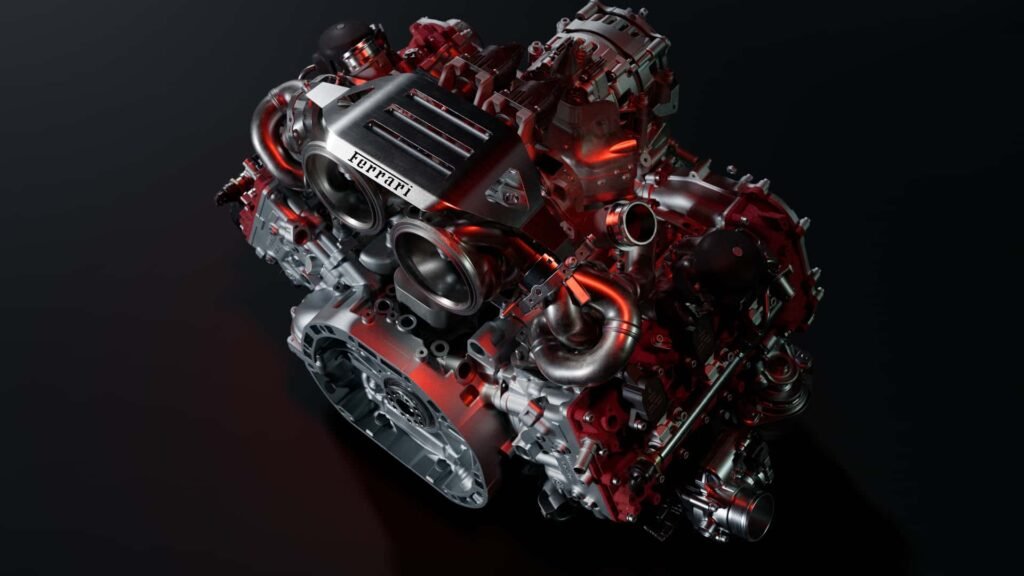
The engine develops approximately 670 horsepower and 740 Nm of torque, with a maximum operating speed of 8,500 rpm.
Although the overall power output is lower than that of the hybrid 296 GTB, the character of its delivery is fundamentally different.
Ferrari has extensively revised the engine’s calibration, boost management and associated components to create a more responsive, direct relationship between the accelerator and the rear wheels.
The result is intended to demand greater involvement from the driver.
Without electric assistance compensating for changes in engine response, throttle control and mechanical feedback become more prominent parts of the experience.
In an industry increasingly focused on delivering ever-greater power figures, this represents an unusually deliberate decision.
Ferrari has chosen driving character over numerical supremacy.
A Lighter Supercar With a Different Performance Philosophy
Removing the hybrid system contributes substantially to the Challenge Stradale’s weight reduction.
Ferrari announces a dry weight of approximately 1,330 kilograms, depending on specification and optional lightweight equipment.
That represents a saving of around 140 kilograms compared with the conventional 296 GTB.
The elimination of the hybrid battery and electric motor accounts for a significant proportion of the reduction.
However, Ferrari has pursued additional weight savings throughout the vehicle.
The transmission incorporates lighter components, while extensive use of carbon fibre reduces the mass of exterior and interior elements.
The cabin has also been simplified, removing features considered unnecessary for the car’s intended character.
The significance of this work becomes particularly apparent in the relationship between power and weight.
Although the Challenge Stradale produces less horsepower than the hybrid 296 variants, it carries substantially less mass.
Reduced weight can improve braking performance, steering response, directional changes and the way a vehicle behaves through demanding corners.
It also changes the subjective experience.
A lighter automobile can communicate its movements more directly, requiring less intervention from the systems that manage its dynamic behaviour.
For Ferrari, this is the essential philosophy behind the Challenge Stradale.
Ferrari CZ26: The SF90 Stradale Reimagined as a One-Off
An Aerodynamic Design Inspired by Competition
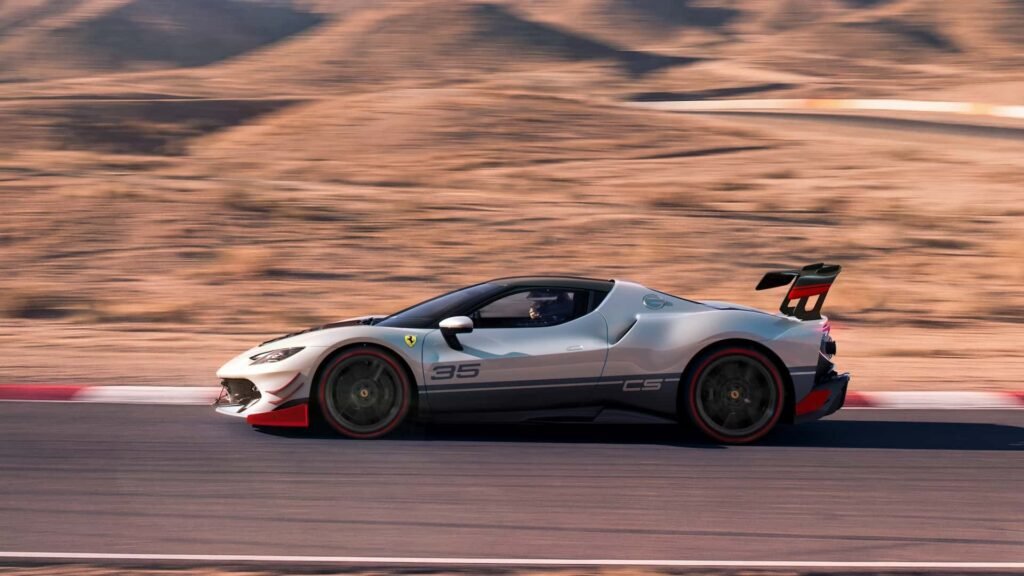
Visually, the 296 Challenge Stradale makes little attempt to conceal its racing inspiration.
While the standard 296 GTB combines elegant proportions with relatively discreet aerodynamic solutions, the Challenge Stradale places its technical components directly on display.
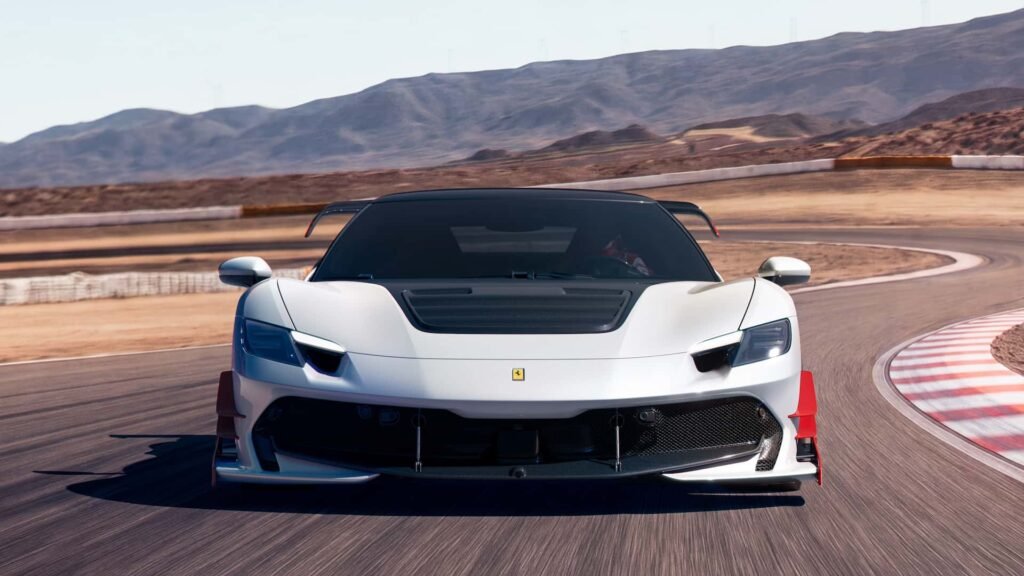
The front features a substantially revised splitter, accompanied by prominent aerodynamic vanes positioned ahead of the front wheels.
Large ventilation openings in the bonnet manage the flow of heated air from the cooling system.
The surfaces have been designed to make the function of each component immediately apparent.
Along the sides, the bodywork retains the recognizable architecture of the 296 while introducing more aggressive aerodynamic detailing.
The rear is even more dramatic.
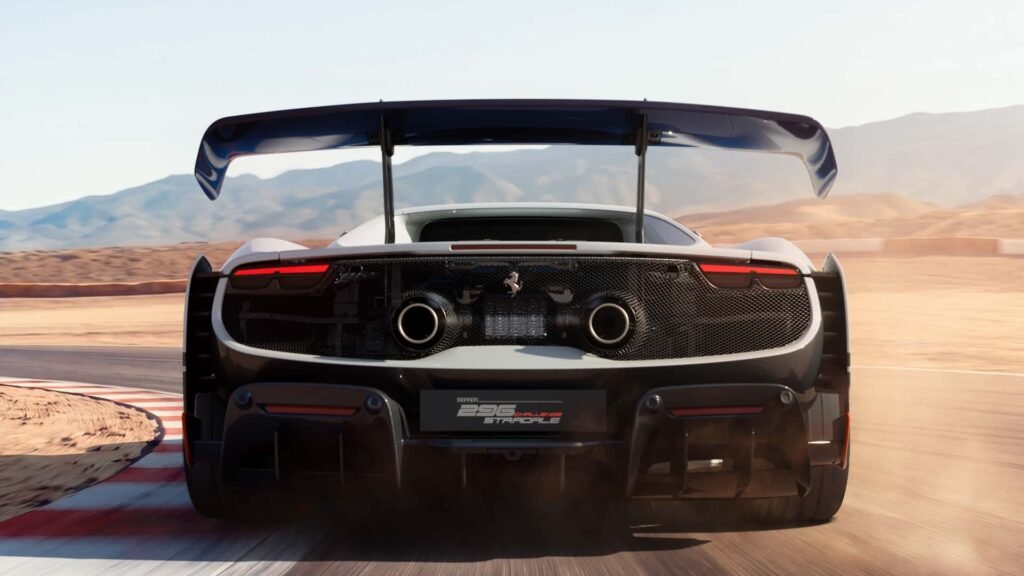
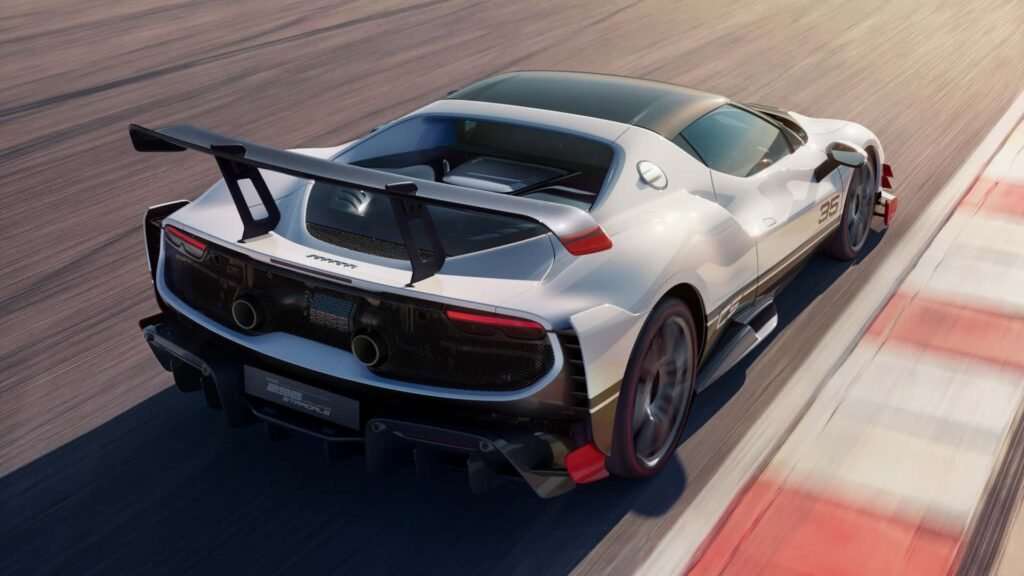
A substantial fixed wing dominates the silhouette, visually connecting the road-going car with the 296 Challenge Evo.
Below it, a redesigned diffuser and extensive underbody management systems contribute to aerodynamic stability.
The combination produces an imposing visual identity.
This is not a Ferrari designed primarily around understated elegance.
Its proportions and details communicate a much more uncompromising purpose.
Every major surface appears to serve the relationship between airflow, stability and performance.
617 Kilograms of Downforce at 250 km/h
The Challenge Stradale’s aerodynamic capabilities are among its most remarkable characteristics.
Ferrari announces 617 kilograms of downforce at 250 km/h, approximately 72 percent more than the standard 296 GTB at the same speed.
This figure is exceptional for a road-legal production supercar.
The substantial rear wing is responsible for a significant proportion of the total aerodynamic load.
However, the complete package is considerably more sophisticated than a large wing and aggressive bodywork.
The front splitter, aerodynamic vanes, fully developed underbody and rear diffuser work together to control airflow around and beneath the automobile.
Specially developed channels and vortex-generating elements contribute to maintaining aerodynamic performance under changing driving conditions.
The objective is not simply to maximize downforce in ideal circumstances.
Ferrari has also sought to preserve stability as the vehicle moves under braking, acceleration and cornering loads.
For a car intended to provide a particularly direct driving experience, predictable aerodynamic behaviour is essential.
The combination of reduced weight and substantial downforce gives the Challenge Stradale a character closely connected to modern racing machinery.
A More Radical Chassis Derived From the Challenge Evo
The suspension has undergone extensive development to complement the aerodynamic package and reduced weight.
Ferrari has incorporated technology derived from the 296 Challenge Evo, including a revised spring arrangement and specially calibrated semi-active dampers.
The suspension system is considerably firmer than that of the standard 296 GTB.
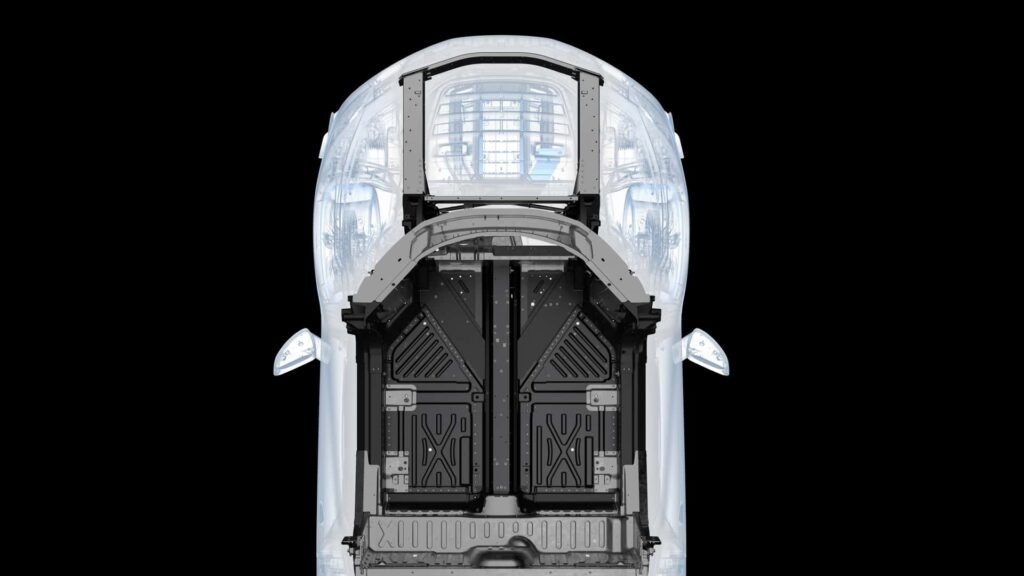
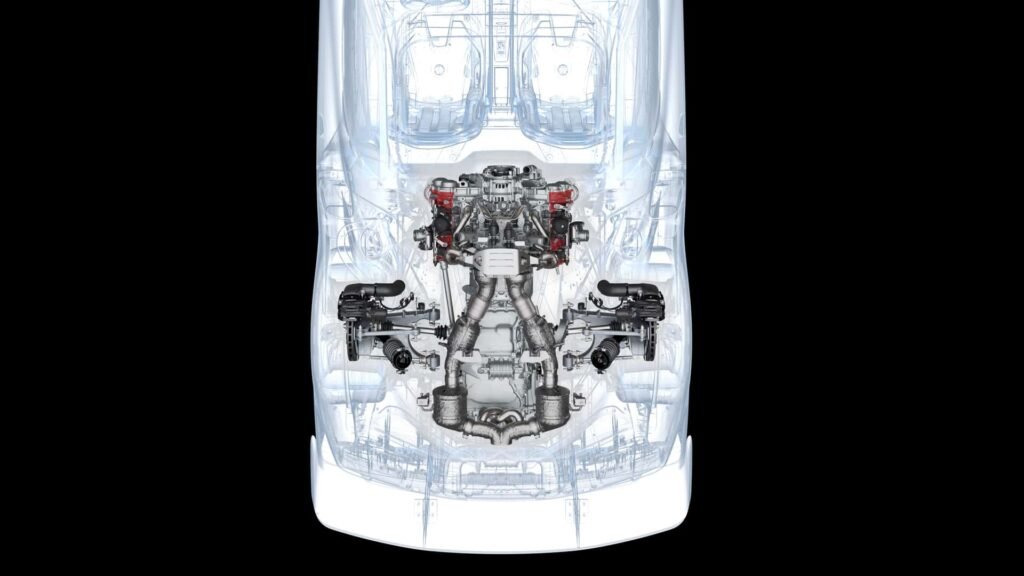
Ferrari reports a substantial reduction in body roll, together with improvements in lateral performance and dynamic stability.
The objective is to provide more precise control during rapid changes of direction and sustained high-speed cornering.
However, Ferrari has not simply transferred a competition suspension directly to the road car.
The semi-active damping system introduces additional calibration possibilities to preserve a degree of comfort and compliance on public roads.
This balance is particularly important.
A genuine road-going Challenge Stradale must remain usable outside a circuit environment, even if its primary appeal lies in an exceptionally focused driving character.
The vehicle is therefore intended to occupy a distinctive position between a traditional high-performance road car and a dedicated competition machine.
Pirelli Tyres and Carbon-Ceramic Braking
Tyre development has played an important role in the Challenge Stradale’s engineering programme.
Ferrari worked with Pirelli to develop a dedicated specification of the P Zero R, providing a balance between road usability and high-performance grip.
For customers seeking greater circuit capability, the more track-focused P Zero Trofeo RS is available.
The braking system also requires a different approach from that of the hybrid 296.
Without regenerative braking assistance, the Challenge Stradale relies entirely on its conventional braking hardware to decelerate the vehicle.
Ferrari has therefore revised the carbon-ceramic braking system, including larger rear discs and improved cooling.
The objective is to provide consistent stopping performance under repeated heavy braking.
These changes reflect the broader engineering philosophy of the car.
Eliminating the hybrid powertrain creates opportunities for weight reduction and mechanical simplicity, but it also requires the development of alternative solutions for systems previously supported by electrification.
The result is a more specialized automobile whose individual components have been designed to work together around a fundamentally different performance objective.
Ferrari Brings the Manual Back: Why the 12Cilindri Marks a New Chapter for Driver Engagement
An Eight-Speed Dual-Clutch Transmission With Racing Character
The Challenge Stradale retains an eight-speed dual-clutch transmission, but its calibration has been extensively revised.
Under demanding driving conditions, the gearbox adopts shift strategies derived from the 296 Challenge competition car.
Gear changes can be completed in approximately 170 milliseconds, emphasizing rapid response and uninterrupted acceleration.
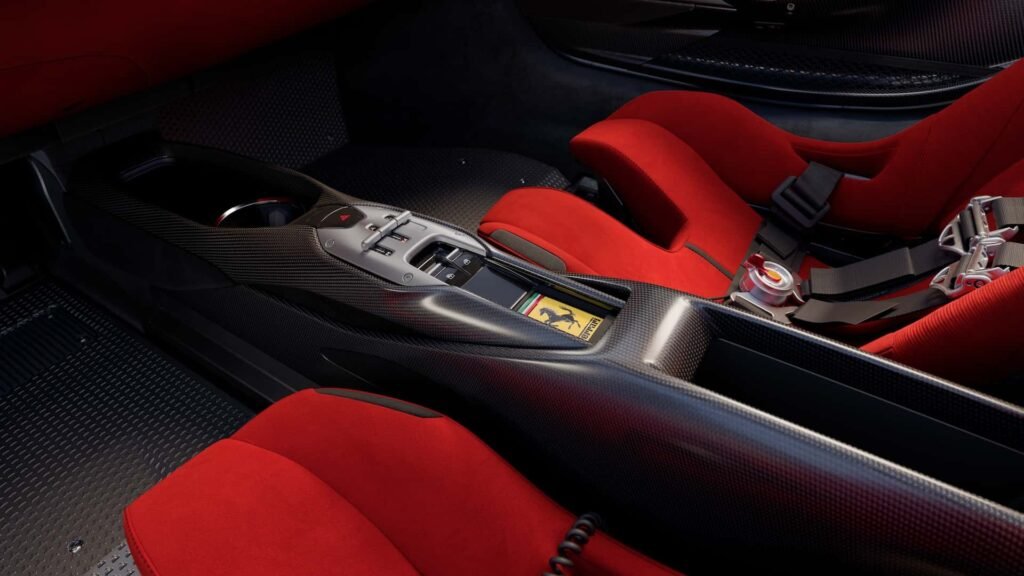
During more relaxed driving, the transmission uses a smoother calibration related to the system developed for the SF90 XX Stradale.
This dual character is important.
Although the Challenge Stradale is deliberately focused, Ferrari has not abandoned the possibility of driving it on public roads.
The transmission therefore adapts to different operating conditions.
Its behavior can emphasize mechanical immediacy during spirited driving while remaining sufficiently refined for less demanding journeys.
A More Expressive V6 Soundtrack
The removal of hybrid technology also changes the way the Challenge Stradale communicates through sound.
Ferrari has revised the exhaust system, incorporating twin outlets inspired by the competition car.
The system is designed to reduce back pressure while emphasizing the distinctive higher-frequency characteristics of the V6.
The acoustic calibration has also been modified to alter the relationship between intake and exhaust sound inside the cabin.
As engine speed rises toward 8,500 rpm, the soundtrack becomes progressively more intense.
Although the 296’s V6 architecture differs fundamentally from the naturally aspirated V8 engines associated with earlier Challenge Stradale-inspired Ferraris, the objective remains familiar.
Mechanical sound should form an essential part of the driving experience.
For enthusiasts, the soundtrack is not simply a secondary characteristic.
It contributes to the sense of connection between the driver and the engine, particularly when driving near the upper limits of the powertrain’s operating range.
A Stripped-Back Interior Designed Around the Driver
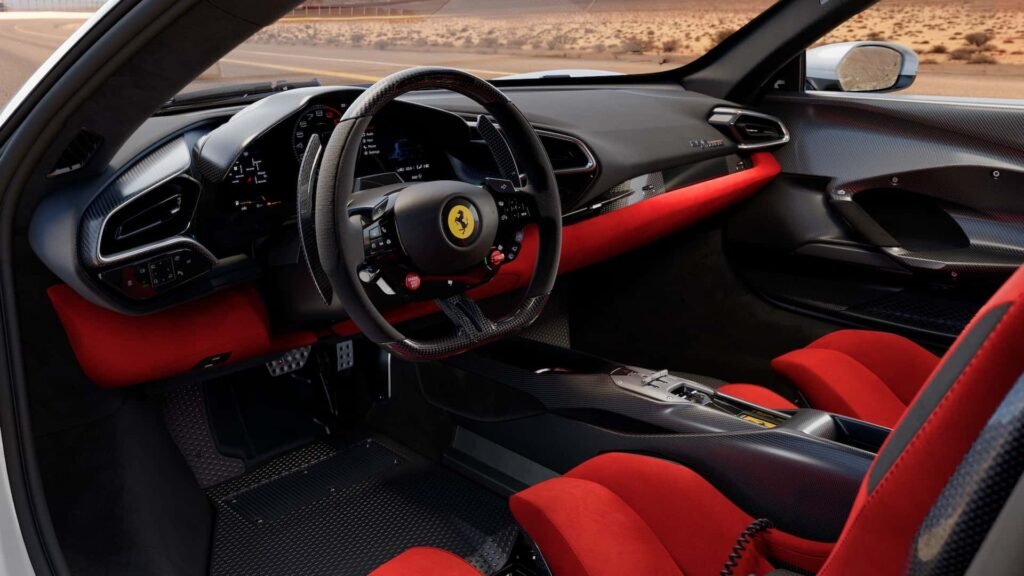
Inside, Ferrari has adopted a deliberately minimalist approach.
The dashboard retains the fundamental architecture of the 296 family, but many secondary elements have been removed or simplified.
The door panels are constructed from carbon fibre, eliminating conventional armrests and storage compartments.
Additional trim has been removed from selected areas of the cabin.
In more focused configurations, portions of the underlying vehicle structure remain visible, emphasizing the car’s technical character.
Optional lightweight carbon-fibre seats provide further weight savings.
Despite this emphasis on reduction, the Challenge Stradale is not an entirely stripped-out competition vehicle.
Air conditioning and essential road-car equipment remain available, preserving a degree of everyday functionality.
This distinction reflects the philosophy established by the original 360 Challenge Stradale.
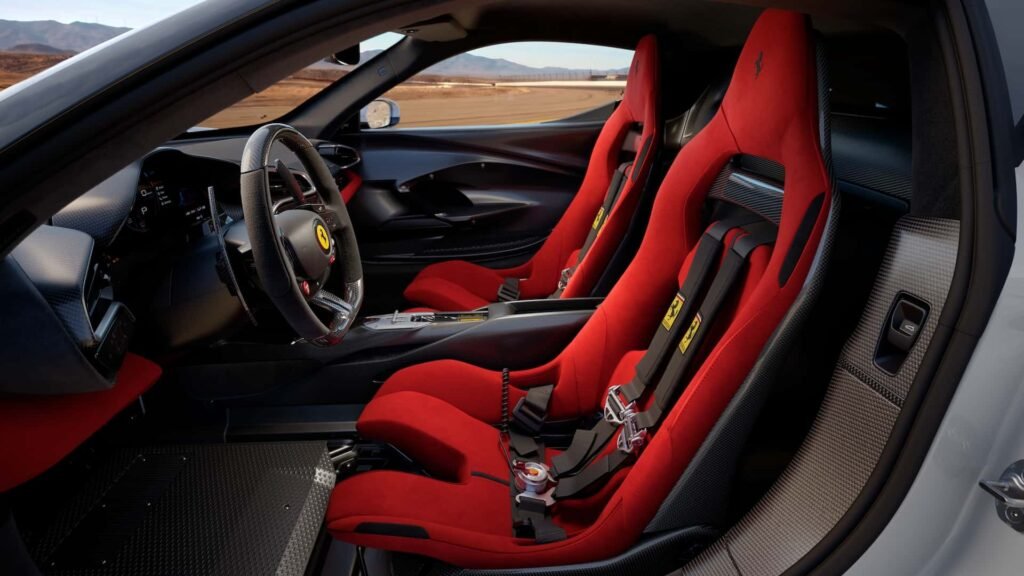
A road-going Ferrari should remain usable beyond the circuit, but its interior should communicate that driving is its principal purpose.
The result is an environment where craftsmanship is expressed through precision, materials and mechanical honesty rather than conventional luxury decoration.
Fiorano: Faster Than the Ferrari 296 Speciale
One of the most revealing comparisons concerns Ferrari’s own Fiorano test circuit.
Despite producing substantially less power than the hybrid 296 Speciale, the Challenge Stradale records an announced lap time of 1 minute and 18.5 seconds.
That is approximately half a second quicker than the 296 Speciale.
The result demonstrates the importance of weight, aerodynamics and chassis balance when evaluating high-performance automobiles.
A more powerful car is not necessarily faster through every type of circuit.
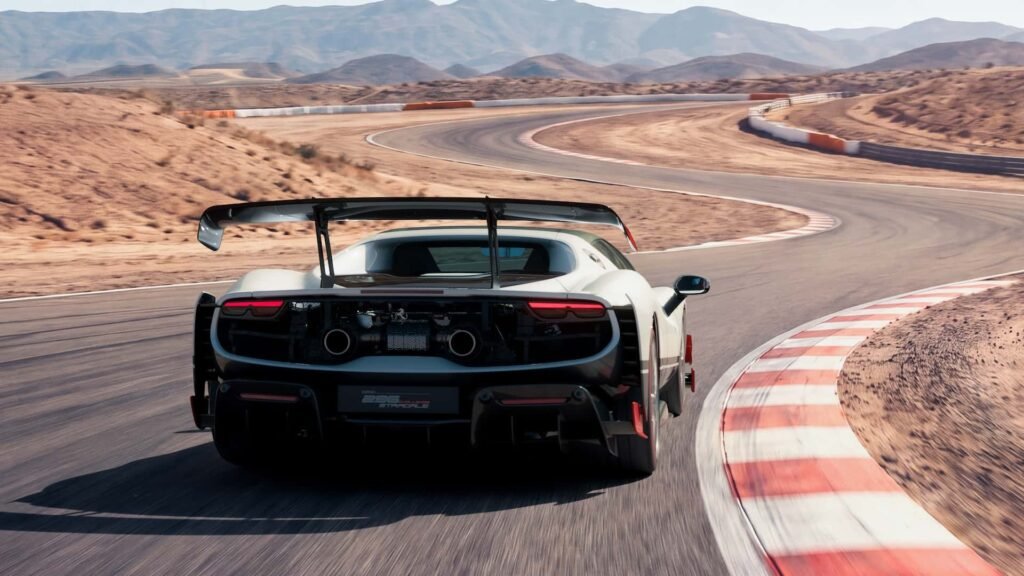
On technical tracks, reduced mass and high downforce can compensate for a substantial difference in engine output.
At faster circuits, where straight-line acceleration plays a greater role, the more powerful hybrid Speciale may retain an advantage.
This distinction is fundamental to understanding the Challenge Stradale.
It is not intended to replace the Speciale or render it obsolete.
Instead, the two cars represent different interpretations of Ferrari performance.
One emphasizes the extraordinary capabilities of a sophisticated hybrid system.
The other seeks a more direct relationship between the driver and a lightweight, competition-inspired machine.
Ferrari 296 Challenge Stradale vs 296 Speciale
The existence of both models within the same Ferrari family is particularly interesting.
The 296 Speciale represents the evolution of the 296’s hybrid architecture, using additional power, advanced electronic systems and aerodynamic development to achieve exceptional performance.
The Challenge Stradale takes a different approach.
It removes the electric drivetrain, reduces weight and adopts a more aggressive aerodynamic package inspired directly by Ferrari’s racing programme.
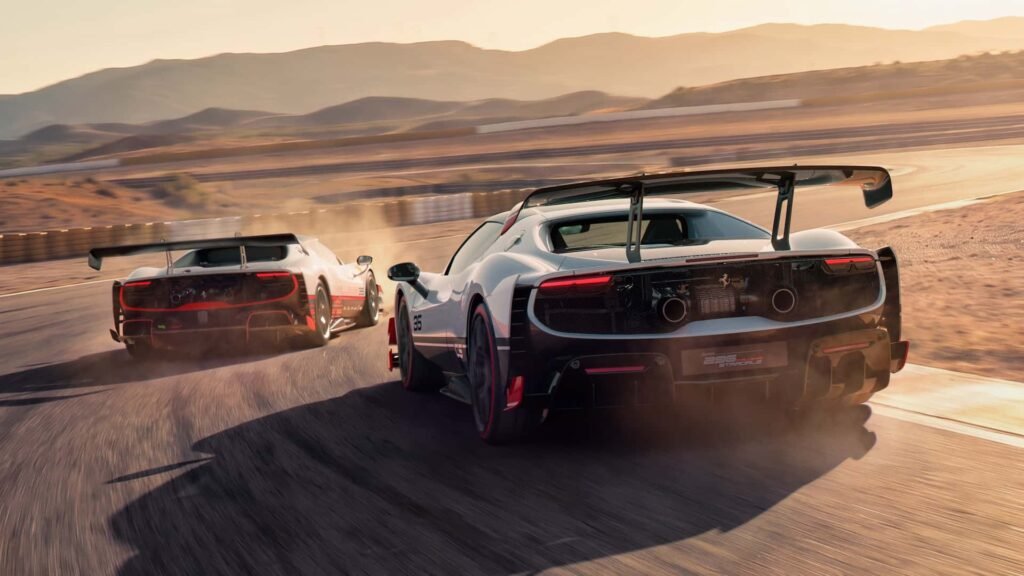
The result is a less powerful but more specialized automobile.
Its driving character is deliberately less filtered, with greater emphasis on throttle control, mechanical response and chassis feedback.
The Speciale remains an extraordinary road-going supercar with exceptional all-round performance.
The Challenge Stradale is intended for customers who prioritize a more demanding and immersive experience.
Rather than representing a conventional hierarchy, the two models demonstrate how Ferrari can explore different engineering philosophies using the same fundamental architecture.
Ferrari 296 Challenge Stradale Price and Availability
The 296 Challenge Stradale is expected to enter customer production during 2027.
Early reports place its anticipated price in the region of $307,000–$320,000 in the United States, although final market-specific pricing and equipment configurations should be confirmed with Ferrari.
Importantly, the Challenge Stradale has not been announced as a numerically limited-production model.
Unlike certain exclusive Ferrari programmes restricted to a predetermined number of vehicles, it is intended to form part of the marque’s broader performance offering.
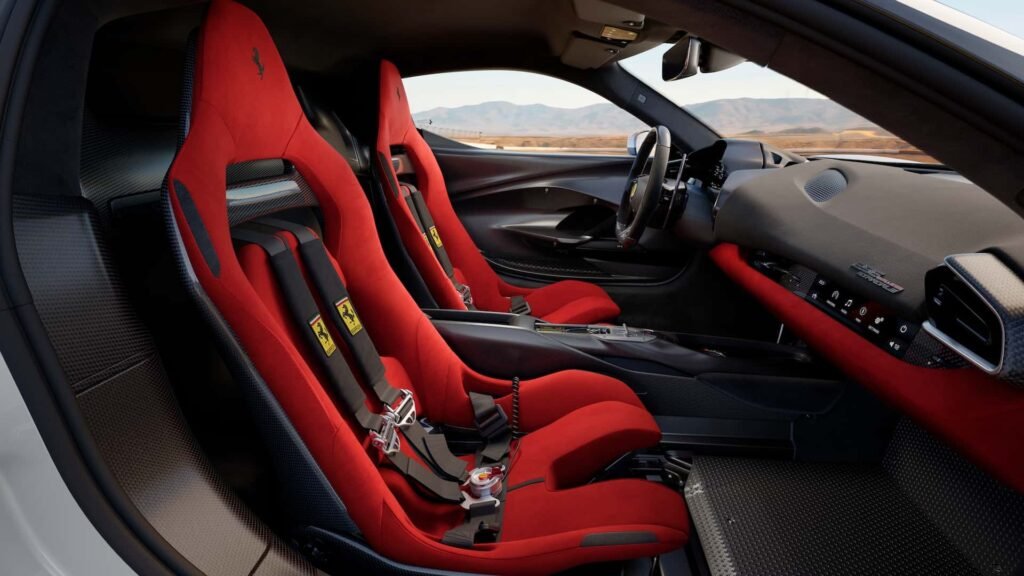
Its appeal therefore does not depend exclusively on production rarity.
Instead, Ferrari is emphasizing the technical connection with its racing programme, the distinctive mechanical configuration and the unusual character of a non-hybrid 296.
For prospective buyers, the car offers a particularly interesting alternative to the growing number of electrified high-performance supercars.
Ferrari SF90 XX Stradale Verde Volterra: When Tailor Made Becomes Art
What the Challenge Stradale Means for Ferrari’s Future
The arrival of the 296 Challenge Stradale raises an interesting question about the future of automotive performance.
In recent years, electrification has allowed manufacturers to achieve extraordinary acceleration figures and increasingly sophisticated torque management.
Ferrari itself has demonstrated the possibilities of hybrid technology through models including the SF90 Stradale, 296 GTB and F80.
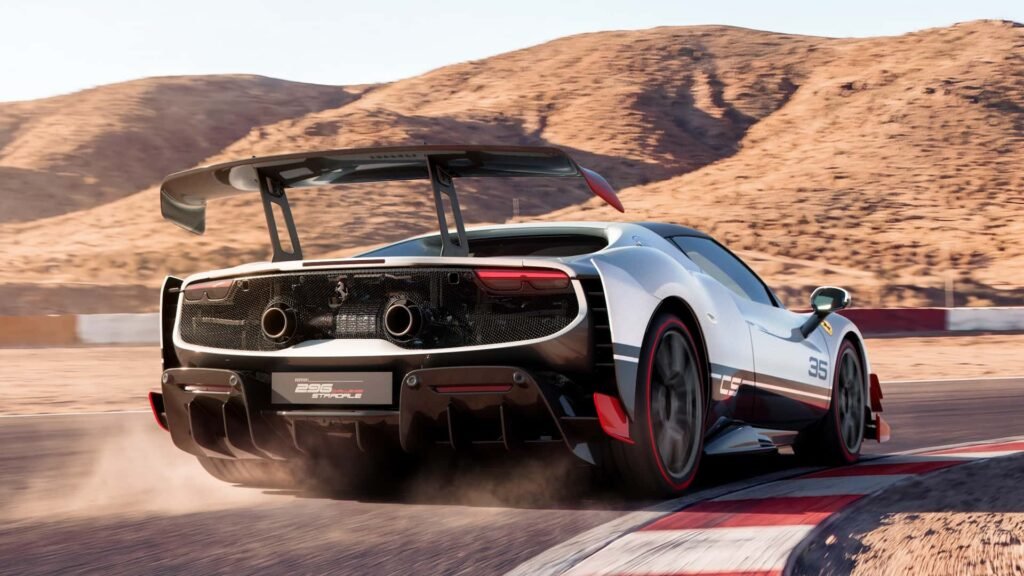
Yet the Challenge Stradale demonstrates that the company continues to recognize the importance of alternative approaches.
Reducing weight, simplifying the powertrain and emphasizing mechanical response can create a compelling experience even when overall horsepower decreases.
This does not necessarily represent a rejection of electrification.
Instead, it illustrates Ferrari’s ability to develop different performance philosophies for different types of customers.
For drivers seeking the most advanced combination of combustion and electric power, the company’s hybrid models remain central to its portfolio.
For enthusiasts who value a more direct connection with competition machinery, the Challenge Stradale offers a different proposition.
A New Chapter in Ferrari’s Racing Heritage
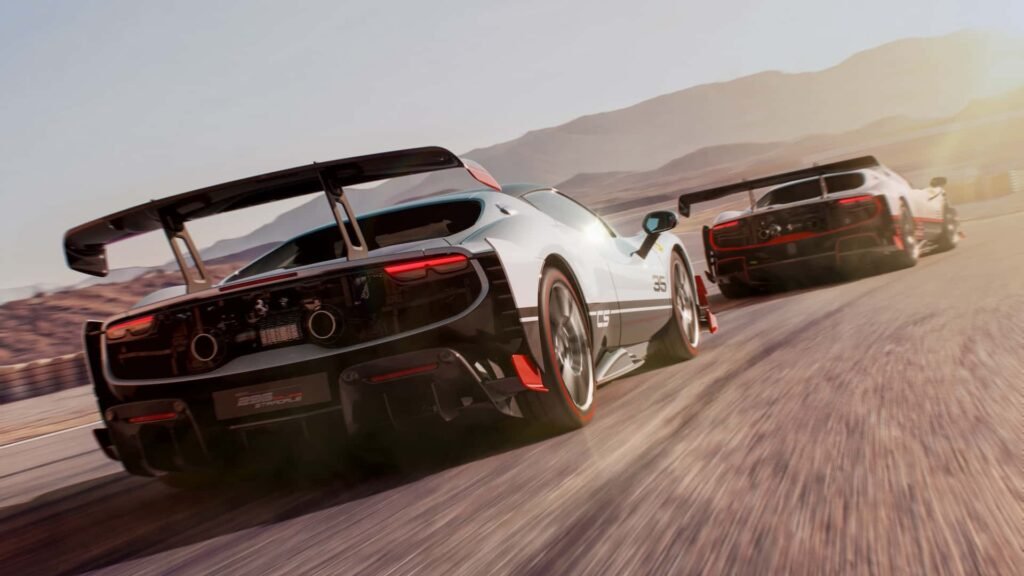
The Ferrari 296 Challenge Stradale is more than another high-performance version of an established supercar.
Its development alongside the 296 Challenge Evo, extensive aerodynamic package, reduced mass and deliberately simplified powertrain make it one of the most distinctive Ferraris introduced in recent years.
The revival of the Challenge Stradale name also creates a powerful connection with one of the most celebrated road-going Ferraris of the early 2000s.
But the new model is not simply an exercise in nostalgia.
It applies the same underlying philosophy to contemporary technology.
The result is a road-legal supercar that emphasizes precision, aerodynamic performance and the relationship between driver and machine.
In an era increasingly defined by extraordinary horsepower and technological complexity, the Ferrari 296 Challenge Stradale delivers a compelling alternative: less weight, more aerodynamic performance and a driving experience shaped by the principles of competition.
It is a reminder that the character of a great Ferrari cannot be measured through power figures alone.
Sometimes, the most extraordinary performance comes from knowing what to remove.
LuxeonCars — Exploring exceptional automobiles, racing heritage and the art of automotive engineering.