

Nearly three decades after its original conception, the Lamborghini Gallardo returns through the vision of Fabrizio Giugiaro. Limited to just 25 examples, the CAVËN Atelier HOMMAGE 26 combines bespoke carbon-fibre coachwork, a naturally aspirated V10 and a six-speed manual gearbox in an extraordinary celebration of automotive design.
There are automobiles that become icons through their performance. Others achieve lasting recognition through their design. But few are given the opportunity to be reimagined by the very people who helped create them.
The CAVËN Atelier HOMMAGE 26 represents precisely that exceptional opportunity.
Developed in collaboration with Italian design house GFG Style and renowned automotive designer Fabrizio Giugiaro, this remarkable project revisits one of the most recognizable supercars of the early 21st century: the Lamborghini Gallardo.
More than two decades after the Gallardo entered production in 2003, Giugiaro returns to the original design philosophy with the benefit of experience, contemporary engineering and modern manufacturing capabilities.
The result is neither a conventional restoration nor a simple modernization.
It is a deeply considered reinterpretation of an automotive icon, combining an extensively redesigned carbon-fibre body with a reworked naturally aspirated V10 engine, a traditional manual transmission and production limited to just 25 individually commissioned automobiles.
With conversion prices beginning at €900,000, excluding the donor vehicle, the HOMMAGE 26 also enters the increasingly exclusive world of collector-focused automotive craftsmanship.
The Return of an Original Vision
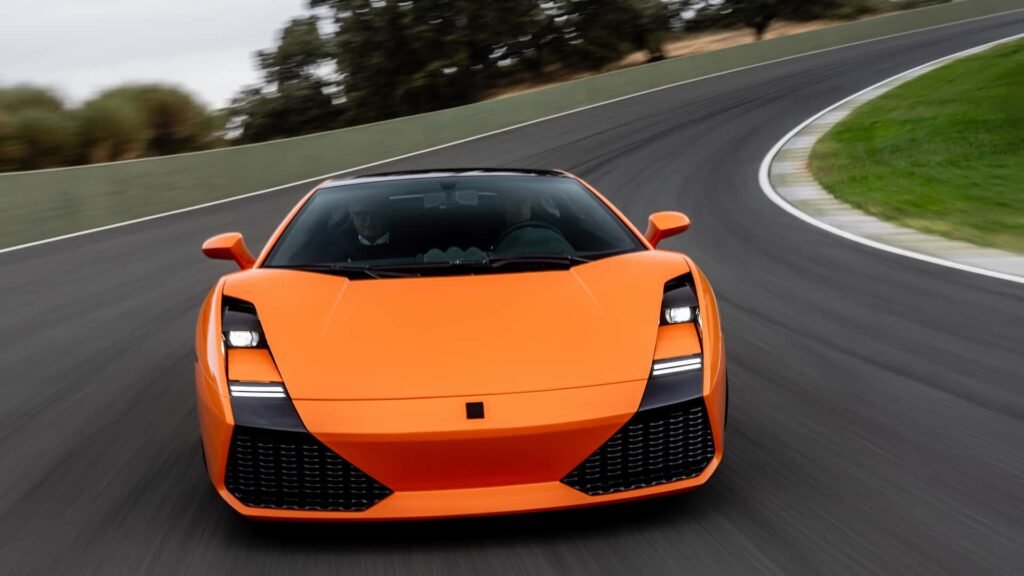
To understand the significance of the HOMMAGE 26, it is necessary to return to the late 1990s.
In 1998, while working at Italdesign, Fabrizio Giugiaro developed an early design proposal for the project that would eventually become the Lamborghini Gallardo.
The production Gallardo, introduced in 2003, would go on to become one of Lamborghini’s most commercially significant models.
Its sharp proportions, compact mid-engine architecture and naturally aspirated V10 established a distinctive identity that helped define a new generation of Italian supercars.
Yet the transition from initial design proposal to production vehicle inevitably involved compromises.
Technical limitations, manufacturing requirements and the realities of industrial development meant that certain original ideas could not be fully realized.
Aston Martin Vanquish 25: Celebrating a Quarter Century of Britain’s Ultimate Grand Tourer
Almost three decades later, CAVËN Atelier has provided Giugiaro with an unusual opportunity: to return to that original project without the same constraints.
Working through GFG Style, the design company founded by Giorgetto and Fabrizio Giugiaro, he has reconsidered the Gallardo’s proportions, surfaces and details through a contemporary lens.
The objective is not to erase the original automobile’s identity.
Instead, it is to explore what that identity might have become if its designer had enjoyed greater creative freedom and access to today’s technologies.
Design Authorship: Beyond the Traditional Restomod
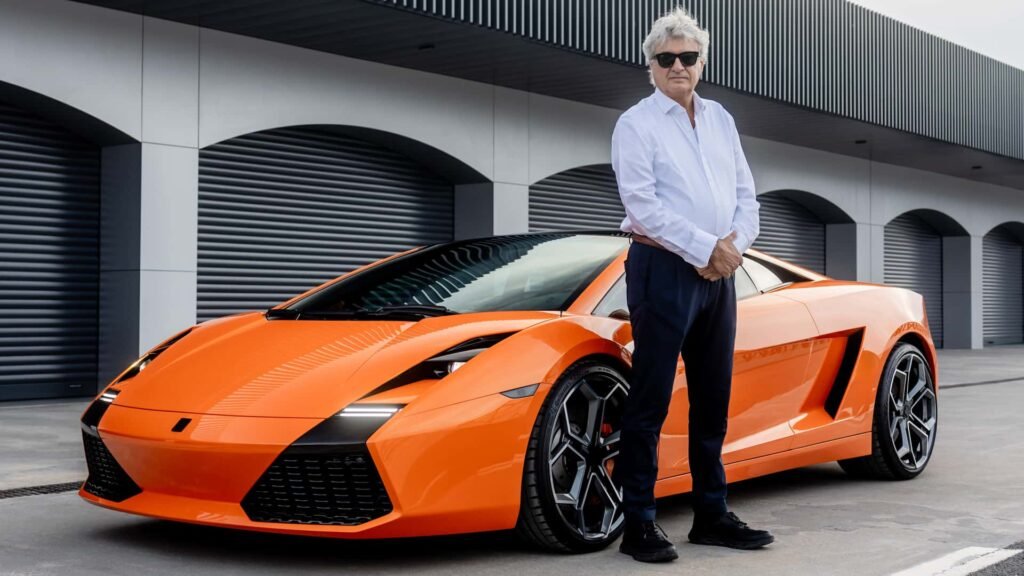
The philosophy behind the HOMMAGE 26 is described by CAVËN Atelier as Design Authorship.
It is an approach that distinguishes the project from many conventional restomods.
While traditional restomod specialists typically combine classic automotive architecture with contemporary mechanical components, the HOMMAGE programme places particular emphasis on the original designer’s involvement.
The idea is to return creative authority to the person responsible for the initial vision.
For the HOMMAGE 26, this means allowing Fabrizio Giugiaro to revisit the Gallardo’s design language while preserving the qualities that made the original car immediately recognizable.
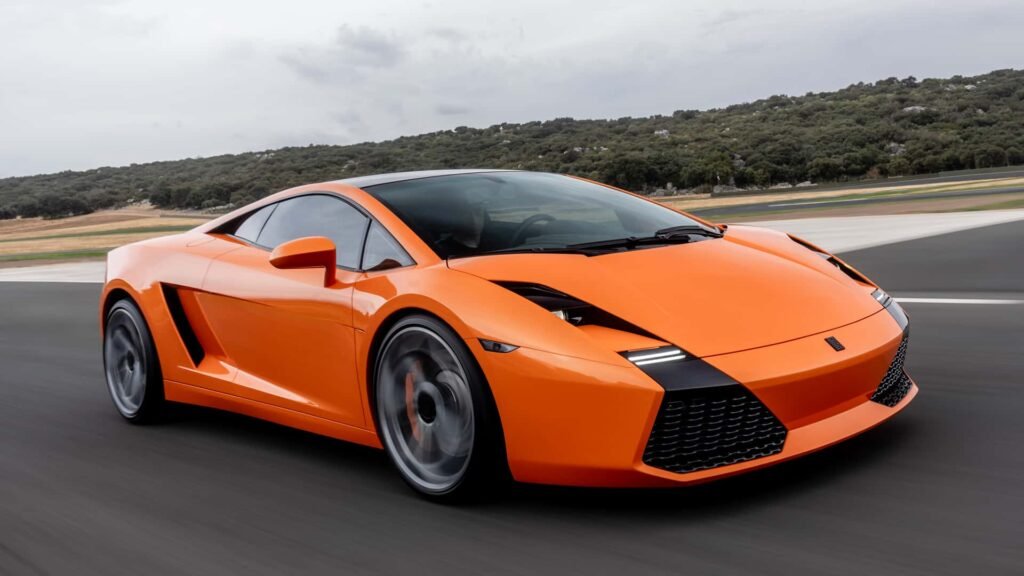
The resulting automobile retains the unmistakable low, wide silhouette of Lamborghini’s early V10 supercar.
However, almost every major exterior surface has been reconsidered.
Modern materials allow more intricate detailing, while advanced manufacturing techniques make it possible to execute solutions that were difficult or impractical during the original development process.
The result is an automobile that feels familiar at first glance, yet reveals increasingly substantial differences upon closer inspection.
An Almost Entirely New Carbon-Fibre Body
The visual transformation of the HOMMAGE 26 is extensive.
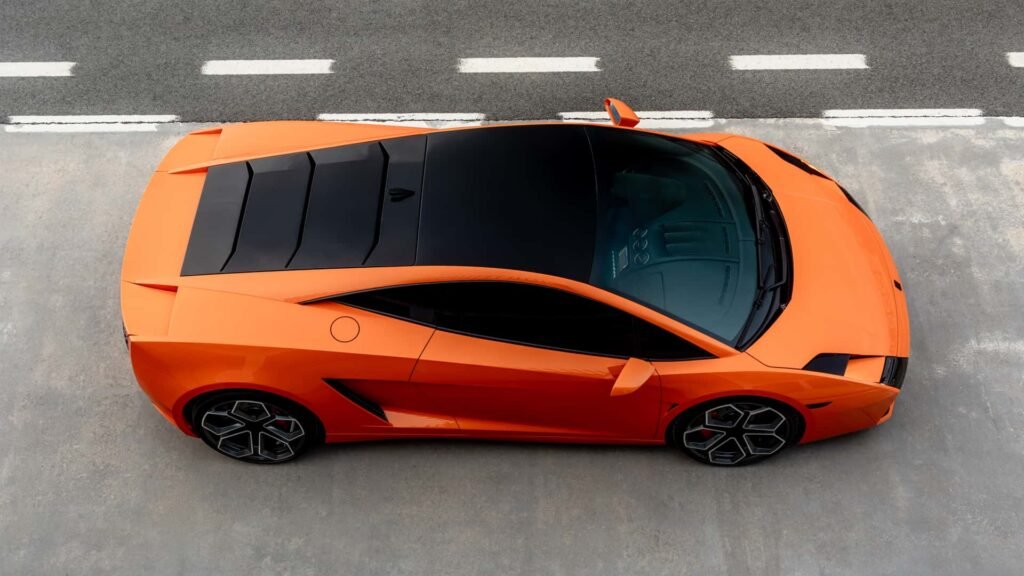
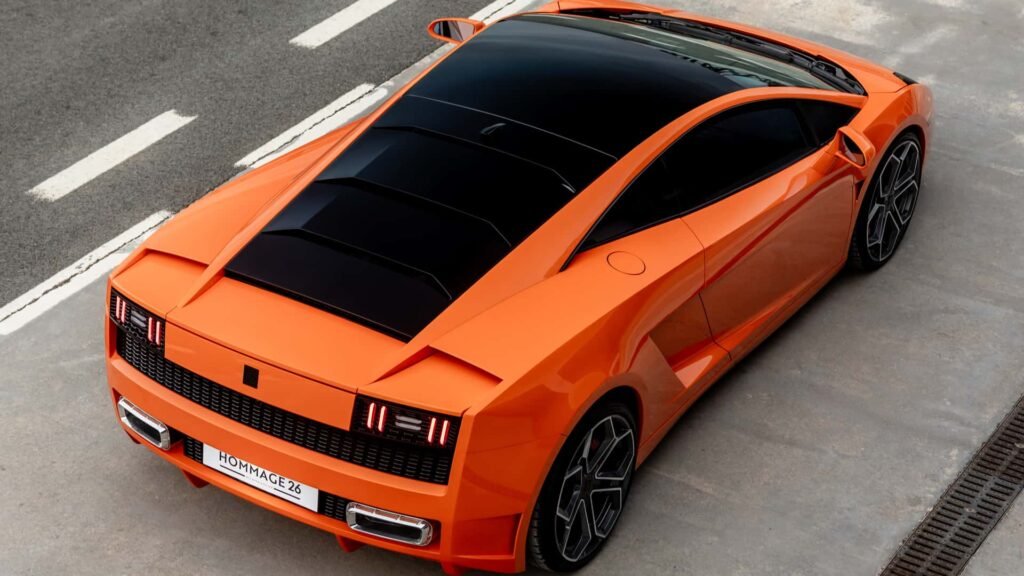
Although the car is based on a first-generation Lamborghini Gallardo, only a handful of original exterior elements remain.
These include the central roof section, windscreen, side windows, exterior mirrors and their mounting structures.
The remaining bodywork has been redesigned and reconstructed using carbon fibre.
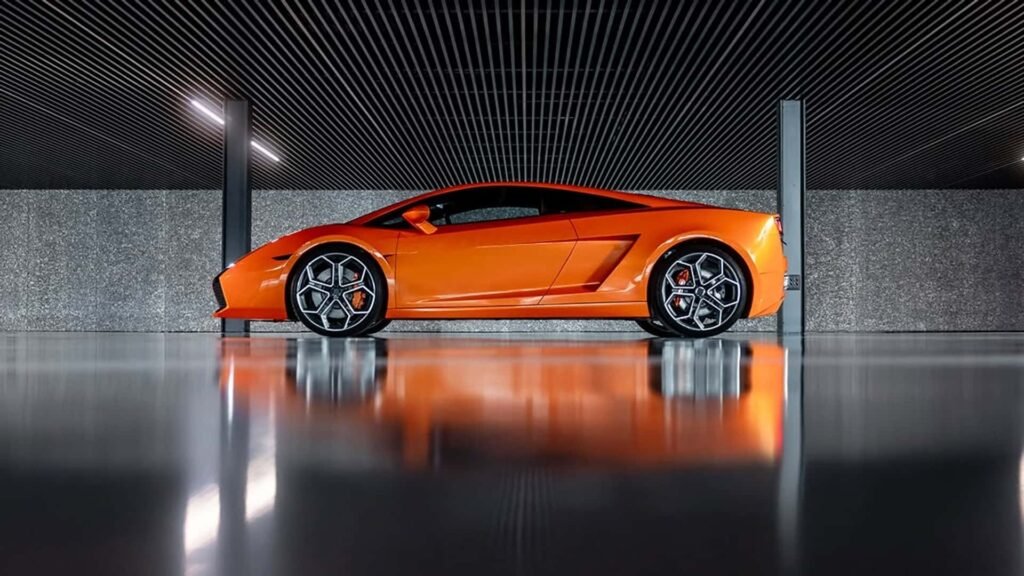
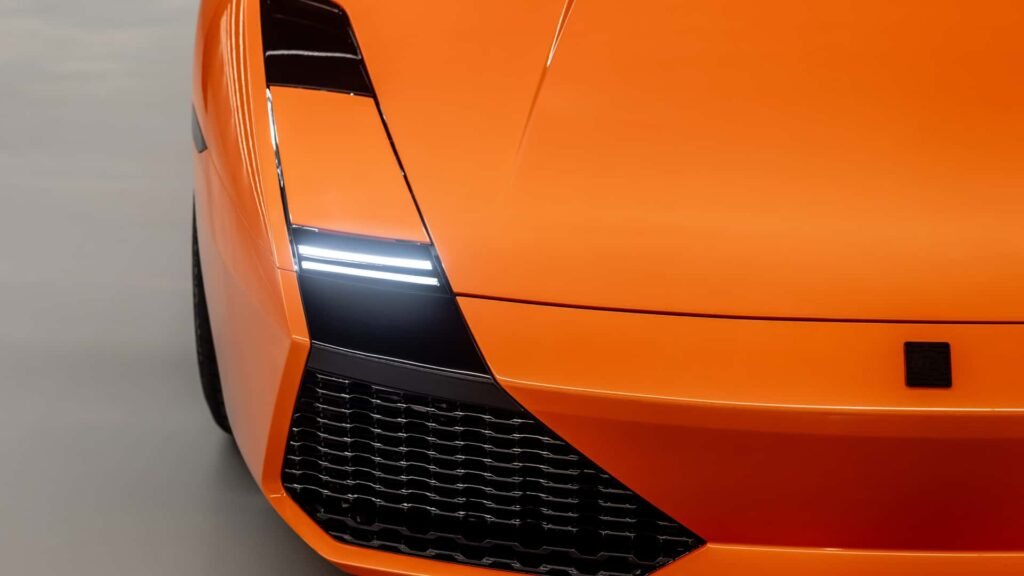
At the front, Giugiaro has preserved the Gallardo’s distinctive geometric identity while introducing a particularly interesting lighting solution.
The original 1998 design included an ambitious idea to visually integrate the front lighting elements with the air intakes.
At the time, technical limitations prevented the concept from being implemented as intended.
The HOMMAGE 26 finally explores that original ambition through an innovative hidden lighting arrangement.
Its headlights are concealed behind movable bodywork elements, creating a cleaner visual composition when not illuminated.
The side profile is equally carefully resolved.
Subtle modifications to the surfaces and air intakes preserve the Gallardo’s recognizable architecture while introducing a more cohesive and contemporary appearance.
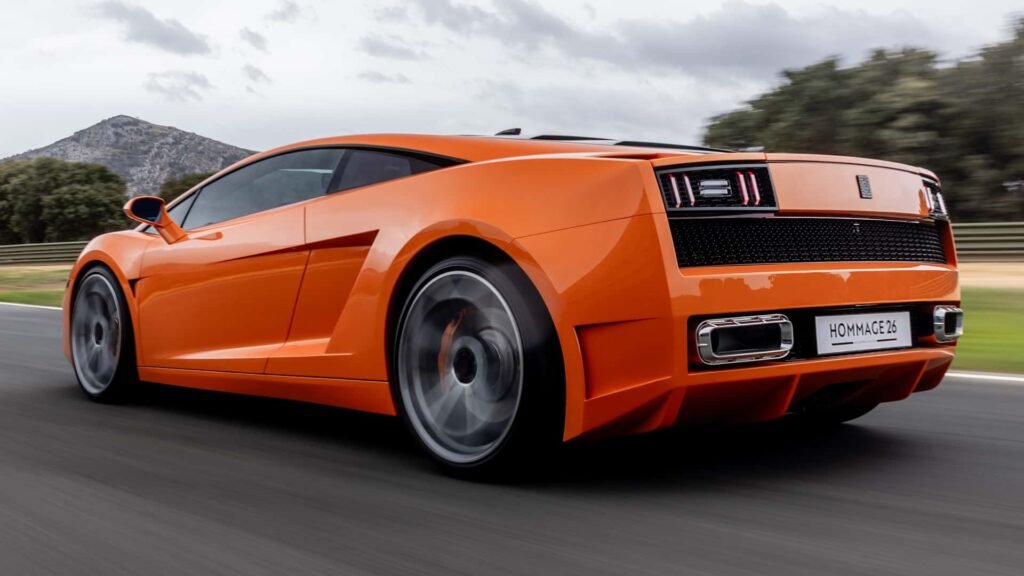
The rear receives an even more dramatic transformation.
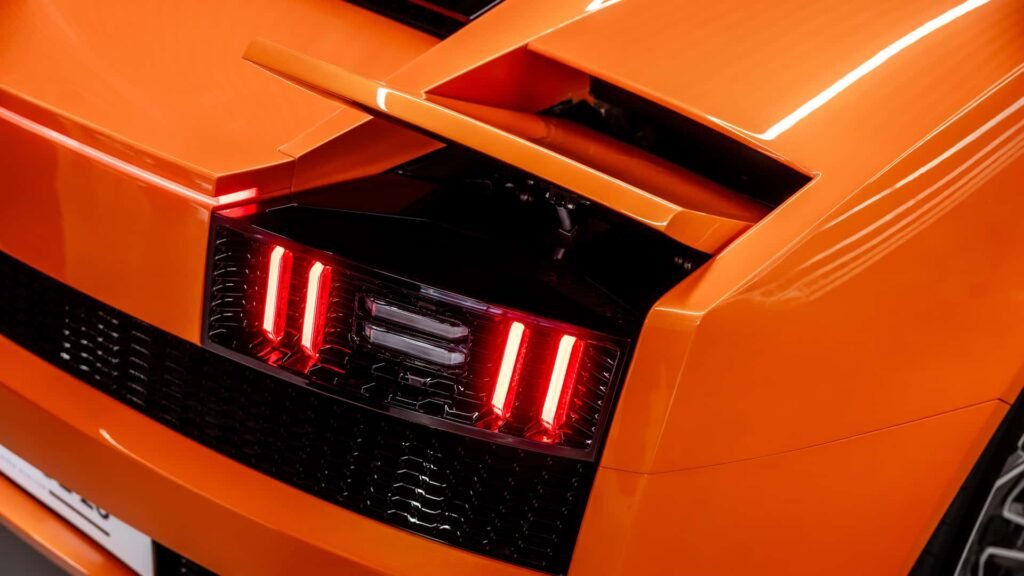
New lighting elements, redesigned ventilation openings and a substantially revised diffuser establish a distinctive identity.
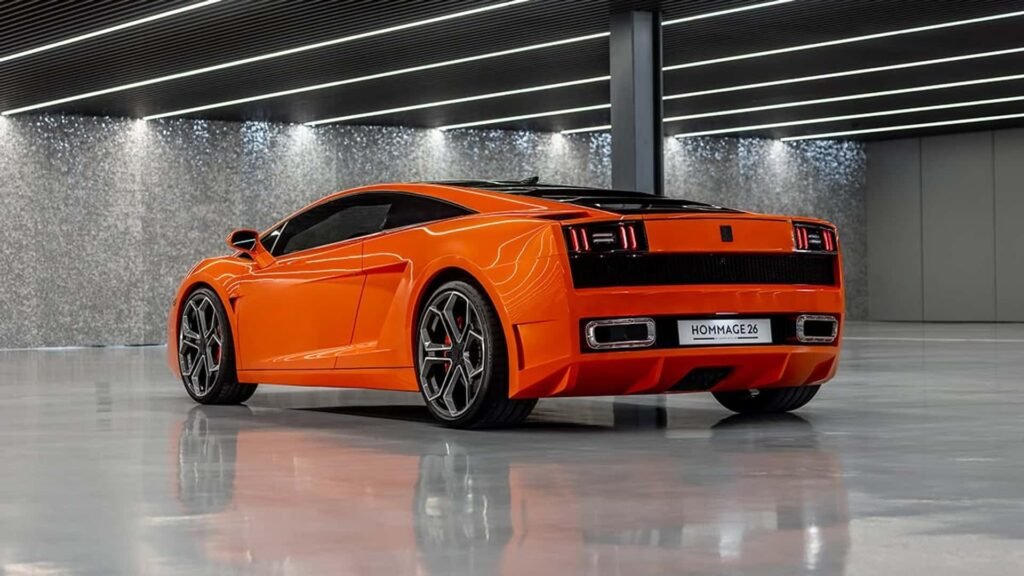
Active aerodynamic flaps further emphasize the project’s combination of design and functional engineering.
An opening rear window provides another unusual feature, offering a more direct connection between the passenger compartment and the mechanical character of the V10 engine.
Rather than disguising the Gallardo’s origins, every modification attempts to refine its original personality.
A Naturally Aspirated V10 That Reaches 8,500 RPM
Beneath the redesigned carbon-fibre bodywork lies one of the HOMMAGE 26’s most compelling characteristics.
The project retains the original Gallardo’s 5.0-litre naturally aspirated V10 engine.
At a time when contemporary supercars increasingly depend on turbocharging, electrification and complex powertrain systems, CAVËN Atelier has chosen to preserve the distinctive character of a high-revving, naturally aspirated engine.
The V10 has been extensively reworked by Italian engineering specialist Italtecnica.
The modifications allow the engine to reach 8,500 rpm while delivering increased output in two configurations.
The HOMMAGE 26 GT develops 540 PS, while the more performance-focused HOMMAGE 26 Performance produces 560 PS.
Although these figures are relatively modest compared with the extraordinary outputs of today’s hybrid hypercars, outright power is not the defining objective.
Instead, the project emphasizes throttle response, mechanical engagement and the emotional qualities associated with traditional Italian supercars.
The appeal of a naturally aspirated V10 lies not simply in its power delivery, but in the way it responds as engine speed rises.
Its mechanical soundtrack and immediate character are central to an experience that modern performance engineering increasingly struggles to replicate.
For enthusiasts who value interaction over numerical supremacy, this philosophy may be considerably more appealing than another pursuit of maximum horsepower.
Eccentrica V12 Roadster: The Lamborghini Diablo Reimagined Without a Roof
Six-Speed Manual Transmission: A Deliberately Analog Experience
Perhaps the most important decision concerns the transmission.
Every HOMMAGE 26 is intended to feature a six-speed manual gearbox.
There is no automated dual-clutch alternative.
This is particularly significant given the evolution of the supercar market.
During the Gallardo’s original production period, manual transmissions were still associated with the traditional driving experience, although automated systems were becoming increasingly popular.
Today, manual supercars have become considerably rarer.
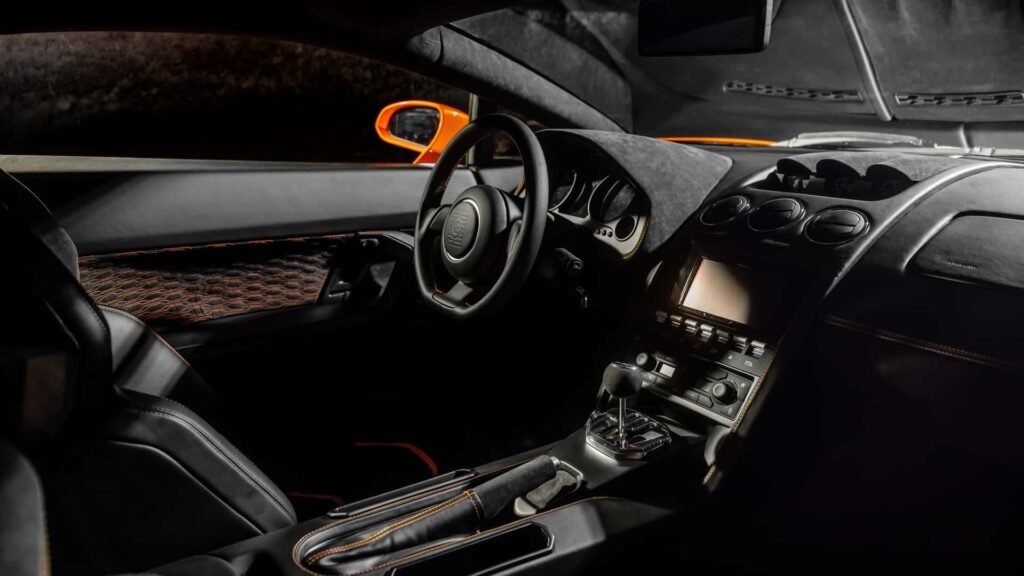
Their appeal has consequently shifted from everyday functionality toward emotional engagement and mechanical involvement.
For the HOMMAGE 26, the manual gearbox is not merely a nostalgic addition.
It represents an essential component of the car’s overall identity.
The driver remains directly involved in controlling the powertrain, with every gear change contributing to the experience.
In combination with the naturally aspirated V10, the manual transmission reinforces the connection between driver and machine.
The result is a deliberate departure from the increasingly automated nature of contemporary high-performance automobiles.
Modern Chassis Engineering Beneath a Classic Silhouette
Although the HOMMAGE 26 celebrates analog driving, its engineering is not restricted to the technologies available in 2003.
CAVËN Atelier has introduced a substantially revised suspension system with two selectable configurations: Comfort and Sport.
The system is intended to provide greater versatility, combining more accommodating road manners with a more focused setup for enthusiastic driving.
The braking system has also been upgraded to complement the revised performance characteristics.
Exclusively designed 20-inch alloy wheels complete the transformation, combining a contemporary appearance with the vehicle’s broader engineering objectives.
These modifications reflect an important principle behind the HOMMAGE programme.
Modern technology is incorporated where it improves the driving experience, rather than simply because it is available.
The objective is to preserve the character of the original Gallardo while refining the elements that contemporary engineering can meaningfully improve.
Official acceleration figures, top speed and detailed vehicle weight specifications have not yet been published.
However, the project’s character is already clear.
This is a vehicle developed around driving involvement rather than the pursuit of record-breaking performance figures.
A Bespoke Interior With a Familiar Identity
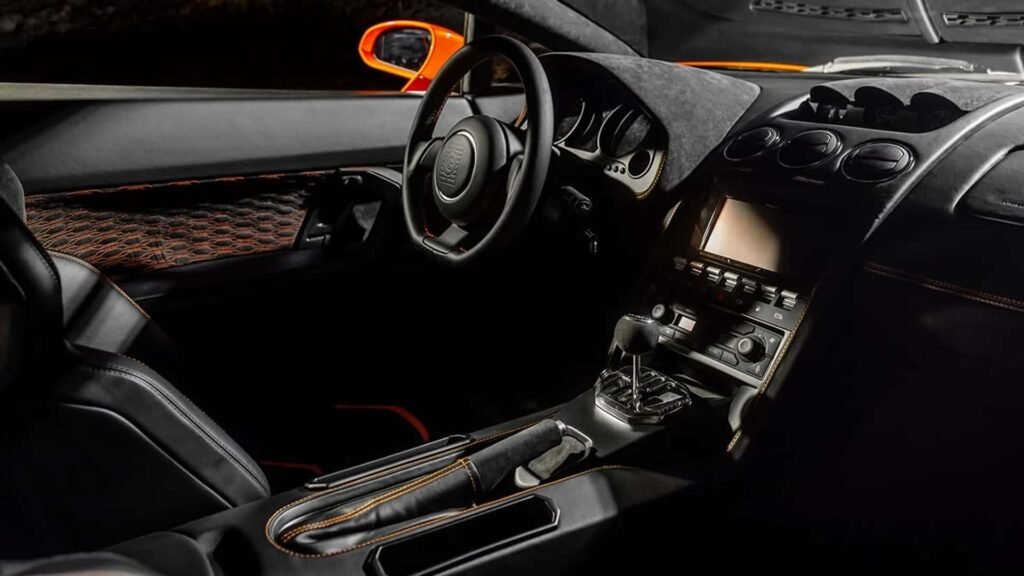
Inside the HOMMAGE 26, the transformation is more restrained.
The original Gallardo’s cabin architecture has been preserved to a greater extent than its exterior design.
This decision reflects the enduring relevance of the original interior concept.
Rather than replacing the cabin with an entirely contemporary digital environment, Giugiaro and CAVËN Atelier have concentrated on refining its essential qualities.
Redesigned seats improve comfort and ergonomics, while revised graphics and carefully considered detailing introduce a more contemporary atmosphere.
The overall objective remains consistent with the rest of the project: evolution rather than reinvention.
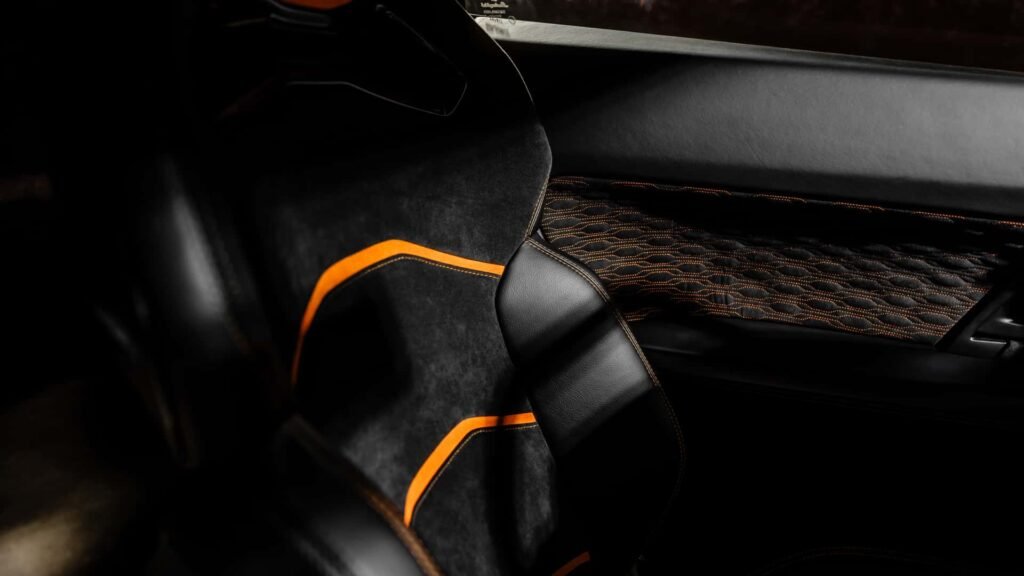
The interior also preserves the essential mechanical connection provided by the manual transmission.
For collectors who appreciate traditional supercar interiors, this balance between modern refinement and analog functionality represents an important part of the car’s appeal.
Hennessey Blackbird: The Return of the Pure Driver’s Hypercar
CAVËN Atelier HOMMAGE 26 Price: €900,000 Before the Donor Car
The HOMMAGE 26 occupies an exceptionally exclusive position in the contemporary restomod market.
CAVËN Atelier plans to produce just 25 examples worldwide, with the transformation priced from approximately €900,000.
Crucially, this figure does not include the Lamborghini Gallardo required as the foundation for the project.
Customers must provide a suitable first-generation donor vehicle or arrange for one to be sourced.
Individual customization may also increase the final cost.
Consequently, the total investment can exceed €1 million once the donor automobile and additional requirements are considered.
This pricing places the HOMMAGE 26 well beyond conventional Lamborghini restoration projects.
However, its positioning is fundamentally different.
The substantial cost reflects the development of an extensively redesigned automobile, the use of bespoke carbon-fibre bodywork, specialized mechanical engineering and the involvement of the original designer.
For potential buyers, the appeal is not simply ownership of an exceptionally expensive Gallardo.
It is the opportunity to commission one of 25 automobiles directly connected to the evolution of a significant automotive design.
Touring Superleggera at 100: A Century of Italian Coachbuilding Excellence
Why the HOMMAGE 26 Matters to Collectors
The market for highly individualized collector cars has evolved considerably in recent years.
Projects that preserve iconic mechanical architectures while introducing modern craftsmanship have become increasingly prominent.
However, the HOMMAGE 26 introduces an additional element of provenance.
Its design is not merely inspired by an established automotive classic.

It has been developed in direct collaboration with one of the people responsible for the original concept.
That distinction gives the project a particularly compelling narrative.
The combination of limited production, designer involvement, naturally aspirated V10 power and manual transmission may appeal to enthusiasts who value historical continuity and mechanical authenticity.
Nevertheless, scarcity alone does not guarantee future appreciation.
The long-term desirability of the HOMMAGE 26 will depend on factors including build quality, customer reception, provenance, driving characteristics and the broader collector market.
Its historical significance, however, is already established by the nature of the project itself.
Few automobiles offer their original designers the opportunity to reconsider decades-old work with such creative freedom.
The First Chapter of a New Designer Series
Perhaps the most intriguing aspect of the HOMMAGE 26 is that it represents only the beginning.
CAVËN Atelier has confirmed that the project inaugurates its Designer Series, a programme conceived around revisiting significant automobiles through the involvement of their original designers.
The wider ambition is to create a new form of automotive authorship, bringing together established design heritage, modern engineering and highly individualized production.
If successfully developed, the concept could introduce an interesting alternative to the conventional restomod industry.
Rather than simply updating historic vehicles, the programme seeks to explore what happens when a designer is allowed to continue an original creative journey.
The HOMMAGE 26 therefore serves as both an exceptional automobile and a statement of intent.
A Lamborghini Gallardo Reborn Through Its Creator’s Vision
The CAVËN Atelier HOMMAGE 26 demonstrates that automotive progress does not always require abandoning the past.
Sometimes, the most compelling creations emerge when designers return to ideas that were never fully realized.
By combining Fabrizio Giugiaro’s original vision with modern carbon-fibre construction, revised chassis engineering and a beautifully traditional V10 manual powertrain, the HOMMAGE 26 presents a different interpretation of contemporary supercar exclusivity.
It is not intended to challenge the performance figures of the latest hybrid hypercars.
Nor does it attempt to disguise its origins.
Instead, it celebrates the qualities that made the original Lamborghini Gallardo extraordinary while exploring possibilities that were unavailable during its original development.
With only 25 examples planned, the HOMMAGE 26 is more than a rare reinterpretation of an Italian supercar. It is an opportunity for automotive design to continue a conversation that began almost three decades ago.
And in an industry increasingly defined by technological transformation, that may be its greatest achievement.