
The original Marsien was built around an unusual idea.
Take the architecture of one of the world’s most capable modern sports cars and reinterpret it through the spirit of the legendary Porsche 959 rally machines that crossed the deserts of the Paris-Dakar.
The result was neither a conventional supercar nor simply another lifted 911.
It was an adventure machine.
Five years later, Marc Philipp Gemballa is taking the Marsien philosophy in the opposite direction.
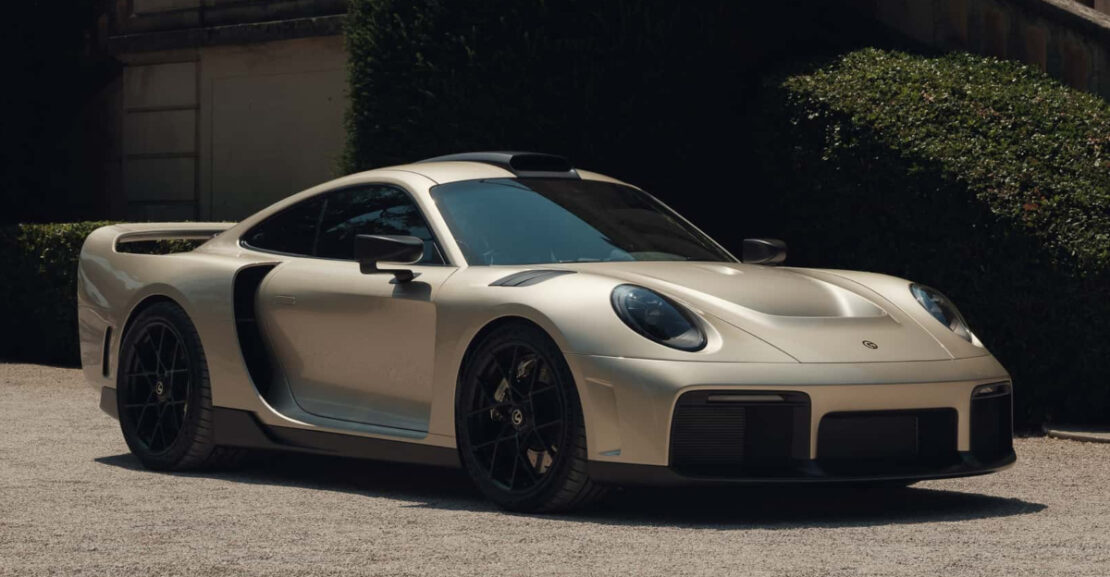
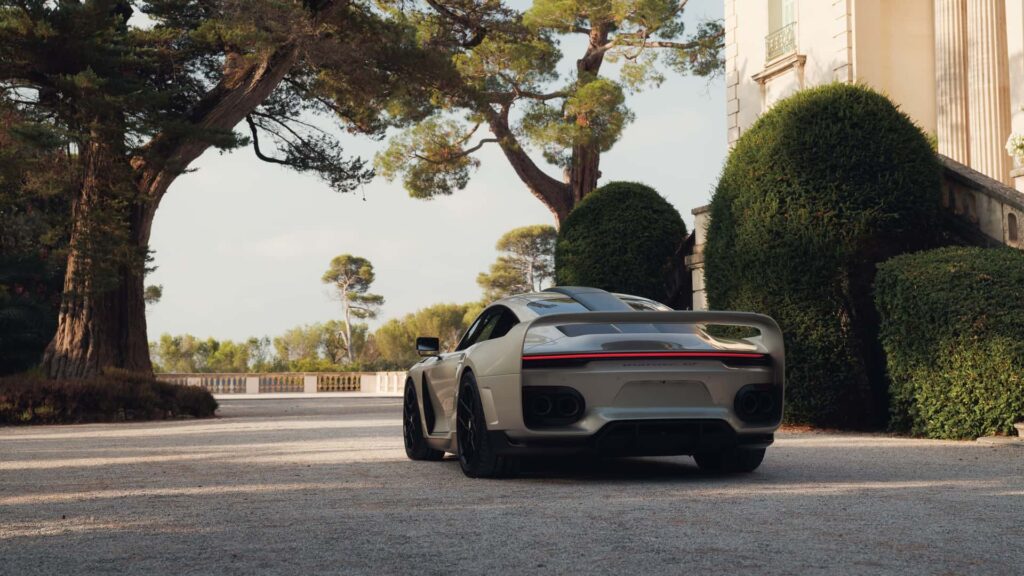
The new Marsien GT abandons the original car’s all-terrain mission and concentrates everything on asphalt. Lower, lighter and considerably more aerodynamically sophisticated, it transforms the Marsien into a road-focused grand tourer capable of combining more than 830 horsepower with the craftsmanship and individuality expected from an extremely limited collector automobile.
Only 30 examples will be created.
And beneath the dramatic carbon-fibre body lies something considerably more ambitious than another modified Porsche 911.
Approximately 1,500 components have been newly engineered or manufactured specifically for the project.
The Marsien GT is therefore less a tuning programme than an attempt to create an entirely different automobile around one of the finest mechanical foundations available.
The Second Chapter of the Marsien Story
Marc Philipp Gemballa introduced the original Marsien at Pebble Beach in 2021.
Its inspiration was unmistakable.
The Porsche 959 remains one of the most important technological supercars ever produced, but its competition history also included something far removed from polished European roads.
The Paris-Dakar.
That extraordinary combination of supercar engineering and genuine off-road ability provided the conceptual foundation for the Marsien.
Built from the Porsche 992-generation 911 Turbo S architecture, the original car received a completely redesigned carbon-fibre body, substantially increased ground clearance and bespoke suspension capable of transitioning between high-speed road driving and demanding off-road terrain.
The Marsien GT preserves the visual identity established by that project but changes its purpose completely.
No desert or gravel.
No need for 250 millimetres of ground clearance.
This time, the road is everything.
From All-Terrain Supercar to Road-Focused GT
Calling the new car a lowered Marsien would significantly underestimate the engineering involved.
The GT has been developed from the fully homologated Marsien platform, but virtually every important dynamic element has been reconsidered for high-performance road driving.
Its standard ground clearance drops to approximately 100 mm.
The suspension architecture changes.
Aerodynamics become considerably more sophisticated.
Weight is reduced.
Cooling is improved.
And the powertrain receives another substantial increase in performance.
What remains is the philosophy behind the original project: taking a familiar 911 Turbo S foundation and transforming it so comprehensively that the donor automobile becomes increasingly difficult to recognise.
Around 1,500 Bespoke Components
Every Marsien GT begins with a Porsche 992 Turbo S platform before undergoing an extensive reconstruction.
Approximately 1,500 newly engineered and manufactured components are involved in the transformation.
That figure illustrates the depth of the project better than almost any horsepower number.
The carbon-fibre body.
Suspension.
Titanium exhaust.
Door handles.
Lighting.
Wiring.
Aerodynamic systems.
Interior components.
Cooling architecture.
Numerous chassis and technical assemblies.
Rather than selecting aftermarket components from an existing catalogue, Marc Philipp Gemballa has created an integrated vehicle programme involving specialist engineering partners from across Germany and Europe.
It is an approach closer to low-volume automobile manufacturing than conventional tuning.
More Than 100 Carbon-Fibre Components
The exterior represents one of the most extensive transformations.
Every external panel has been redesigned.
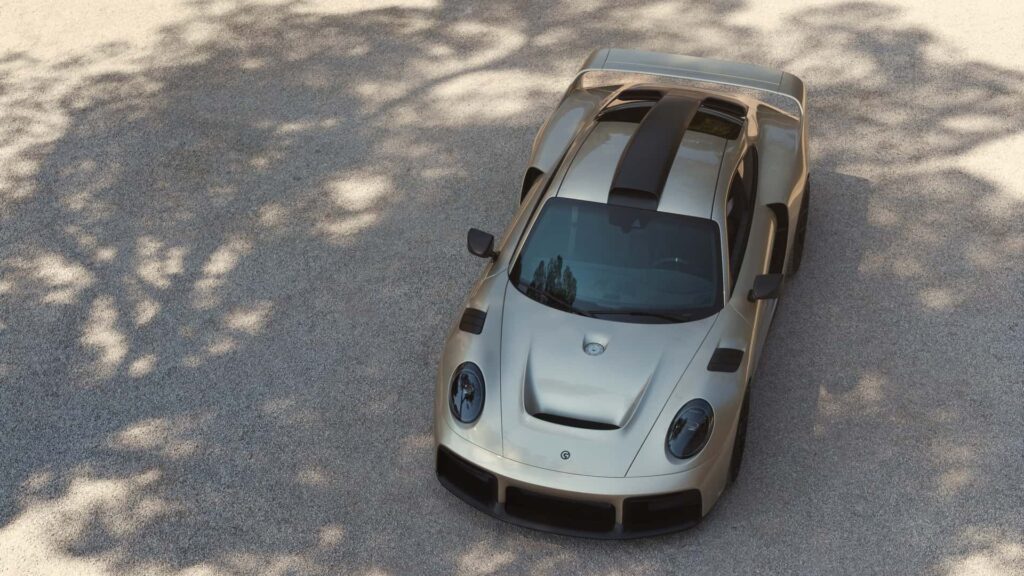
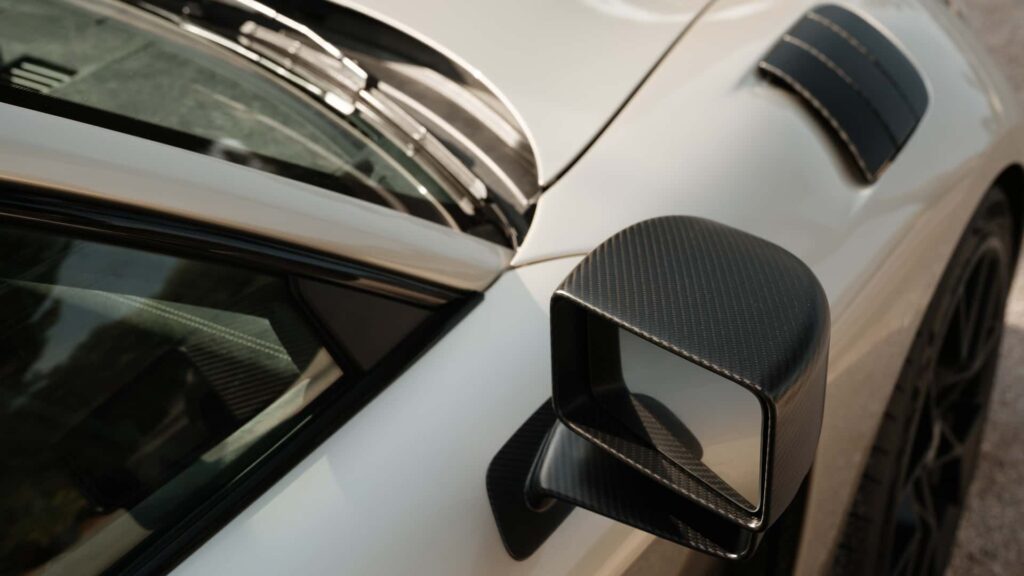
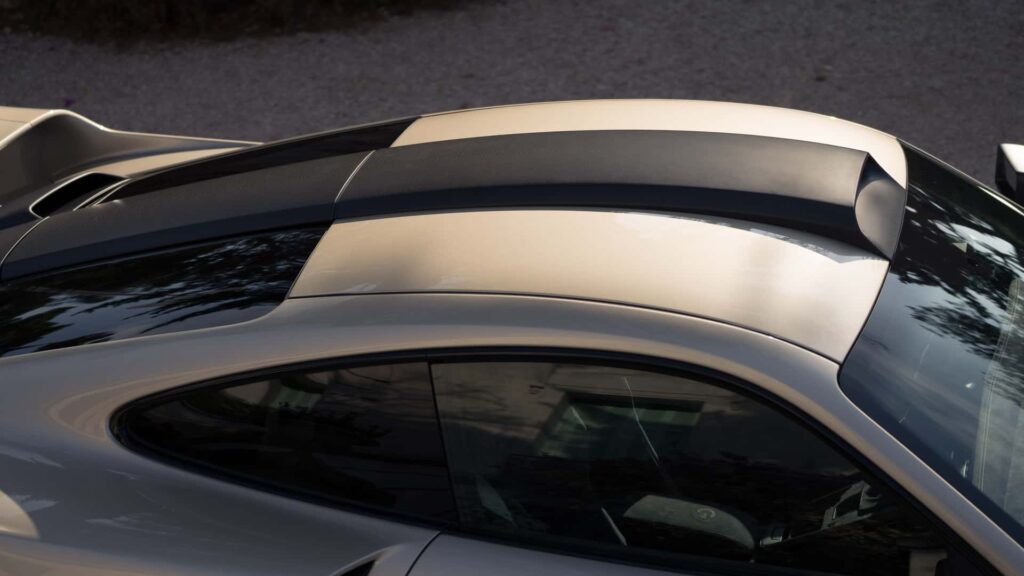
More than 100 individual carbon-fibre components form the new body, extending far beyond the visible exterior panels to include air channels, mirrors, wheel-arch liners and an enormous rear section stretching from the A-pillar towards the rear wing.
The complete transformation saves approximately 75 kilograms compared with the standard Porsche 992 Turbo S base vehicle.
But lightweight construction is only part of the objective.
The GT’s carbon architecture has been developed simultaneously around cooling, airflow and high-speed stability.
This is where the Marsien GT begins to separate itself most clearly from its predecessor.
Alan Derosier Returns to the Marsien
The design is once again the work of Alan Derosier, the automotive designer responsible for the original Marsien.
That continuity matters.
Rather than creating an unrelated second model, Derosier has evolved the visual language established by the first car.
The references to Porsche history remain deliberately subtle.
There is still something of the 959 in its proportions and surface treatment, yet the Marsien GT does not attempt to become a retro recreation.
Its body is wider, more technical and considerably more aggressive.
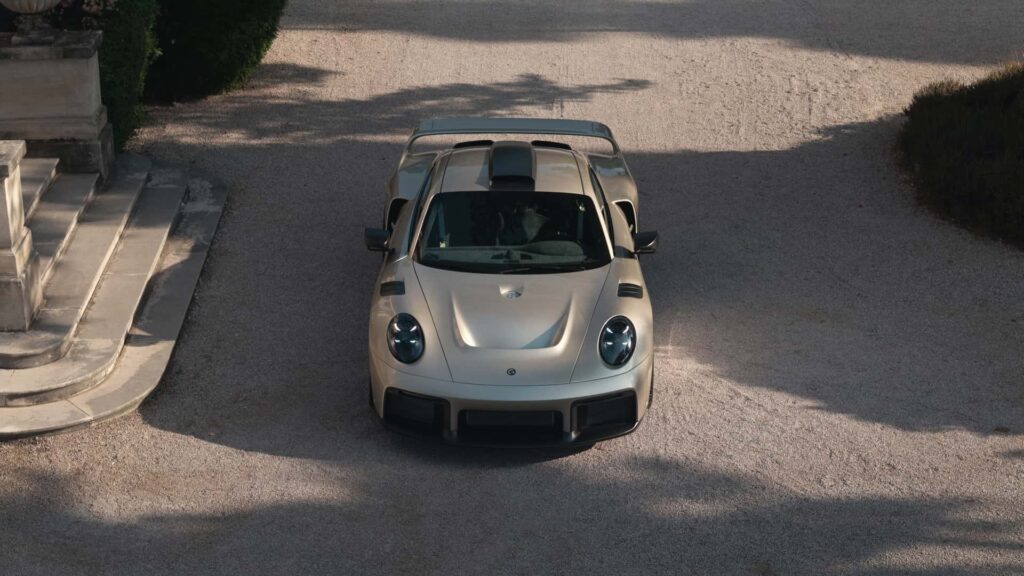
The front incorporates dramatically enlarged cooling openings.
The roof gains a prominent scoop.
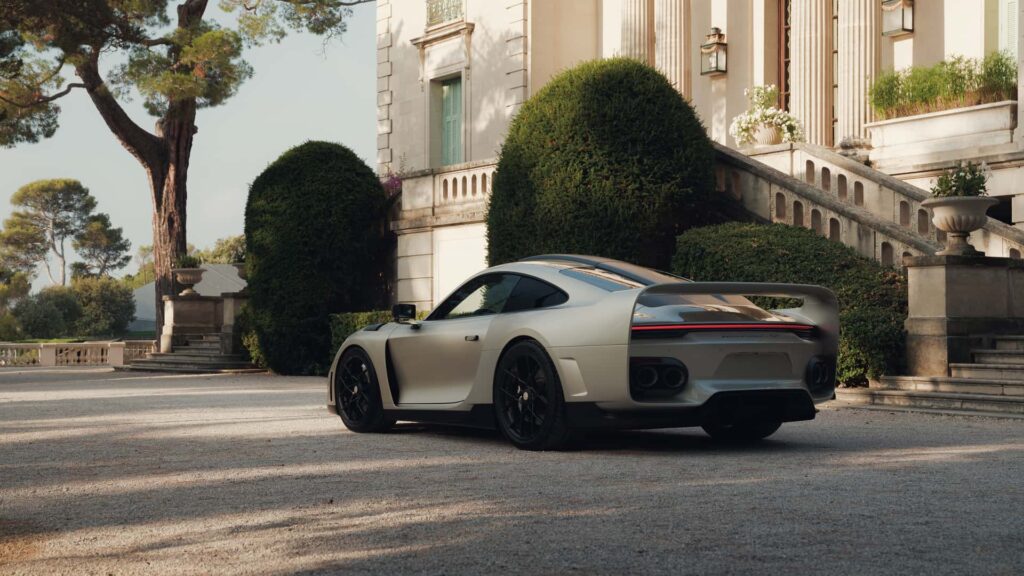
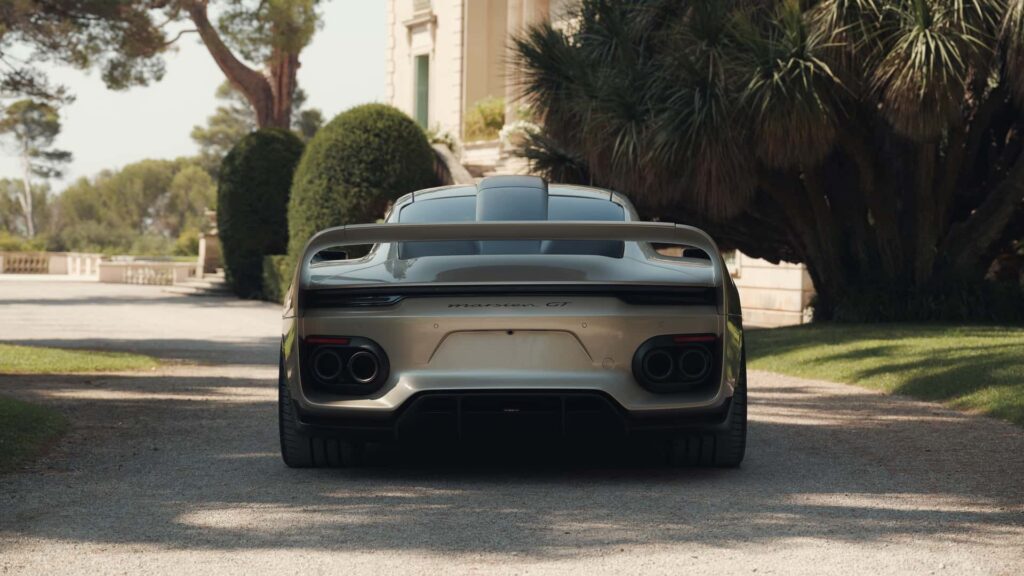
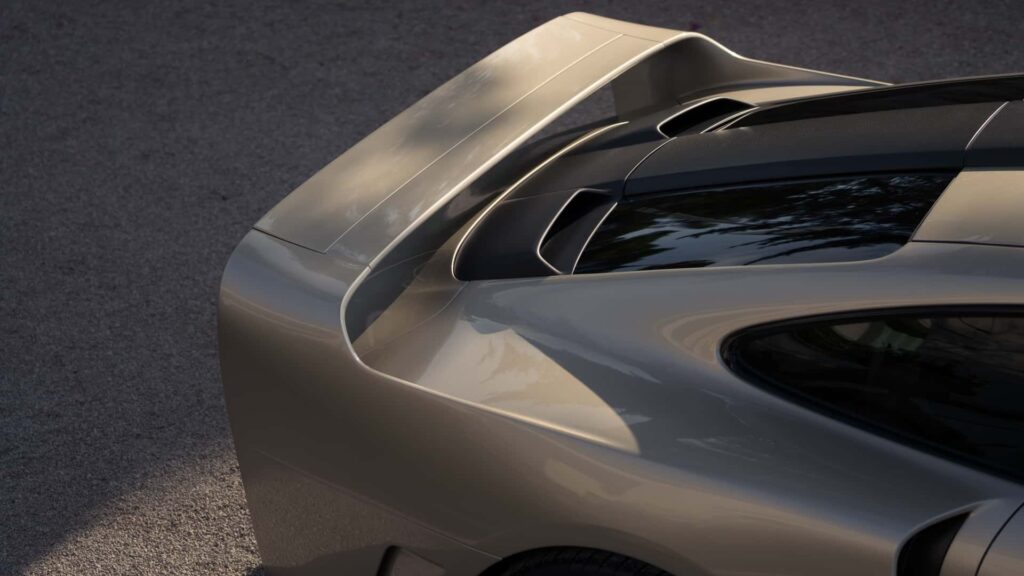
The rear becomes dominated by a wraparound aerodynamic treatment and active wing.
The familiar 911 silhouette remains somewhere beneath everything.
But it has been comprehensively transformed.
Active Aerodynamics Arrive
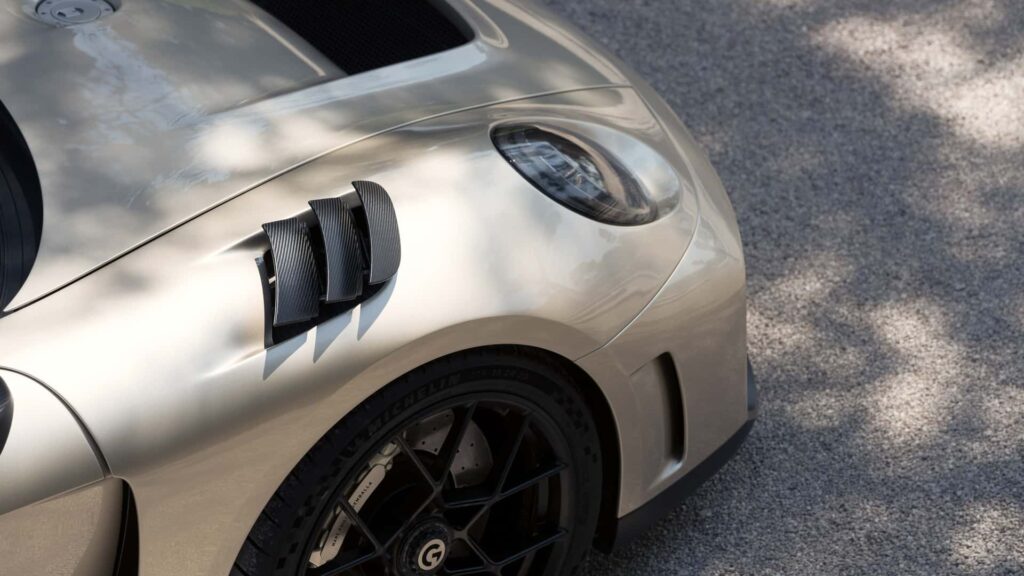
One of the greatest technical differences between the original Marsien and the GT is its new active aerodynamic system.
Active louvres positioned within the front fenders manage pressure around the wheel arches, opening when required to influence airflow.
At the rear, the active wing can raise and alter its angle according to driving conditions, generating additional aerodynamic load when required while also functioning as an air brake.
Larger front intakes increase cooling capacity.
A roof scoop incorporates ram-air intakes.
Additional openings appear within the side skirts.
And underneath the vehicle sits a complete carbon-fibre underbody designed to manage airflow towards the rear diffuser.
The result is not simply greater visual aggression.
The entire car has been reconsidered as an aerodynamic system.
The Rise of Off-Road Supercars: When Hypercars Leave the Asphalt
A Central Fuel Filler
Even relatively small details reveal how extensively the project has been reconsidered.
The Marsien GT relocates its fuel filler to a central position.
It is an unusual solution for a road-going grand tourer but one designed partly around improving weight distribution while simultaneously reinforcing the car’s motorsport-inspired character.
These are the details that distinguish a comprehensive engineering project from a cosmetic conversion.
Nothing is considered in isolation.
RUF Power: More Than 830 Horsepower
The collaboration with RUF Automobile continues for the Marsien GT.
There is historical significance behind the partnership.
RUF worked with Marc Philipp’s father, Uwe Gemballa, on powertrains for several projects during the 1980s. Decades later, the relationship between the two families continues.
For the Marsien GT, the familiar twin-turbocharged six-cylinder boxer receives extensively revised variable-turbine-geometry turbochargers, new ECU calibration and modified transmission settings.
Output rises to more than 830 horsepower, accompanied by 930 Nm of torque.
That already places the GT considerably beyond the performance of the standard donor vehicle.
Yet Marc Philipp Gemballa and RUF are not finished.
A second-stage power package producing more than 900 horsepower is already under development.
0–60 MPH in 2.4 Seconds
Despite the transformation, the Marsien GT retains the fundamental advantages of the Turbo S architecture, including all-wheel drive and an extraordinarily effective dual-clutch transmission.
The combination of more than 830 horsepower, reduced weight and enormous traction allows the GT to accelerate from 0–60 mph in approximately 2.4 seconds.
Maximum speed is quoted at approximately 205 mph, or around 330 km/h.
These are serious supercar figures.
But unlike many limited-production machines chasing increasingly abstract performance records, the Marsien GT has been developed around something broader.
It is supposed to be usable.
Fast enough to deliver extraordinary performance, but sufficiently refined to cover substantial distances.
That distinction explains the GT designation.
A Completely New Double-Wishbone Suspension
Perhaps the most interesting engineering work lies underneath the body.
Marc Philipp Gemballa has again collaborated with KW Automotive, but the GT receives a suspension developed specifically around its new road-focused mission.
At the front sits an entirely new double-wishbone arrangement.
It is paired with a bespoke damper system based around KW’s latest DDC V5 technology.
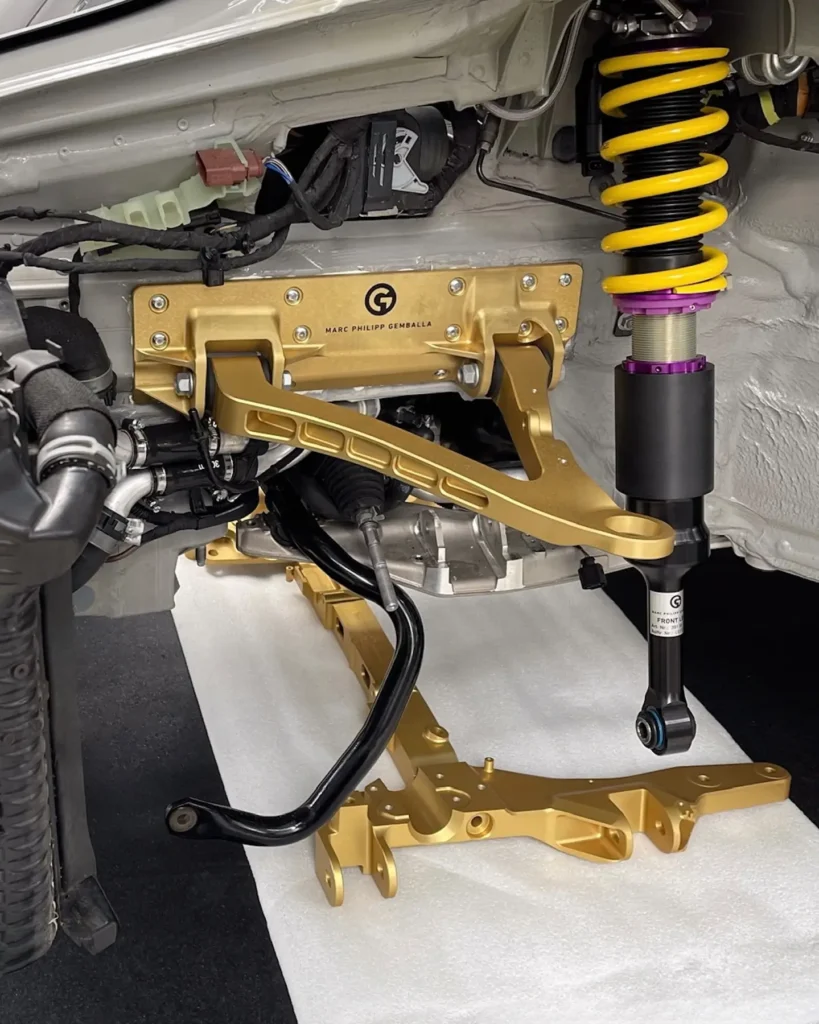
Electronically controlled dampers continuously alter both compression and rebound forces according to road conditions and driver inputs.
Two electromagnetic proportional valves within each damper allow those forces to be controlled independently.
Response takes as little as 20 milliseconds.
The objective is not simply maximum stiffness.
The system must provide the body control required during aggressive driving while retaining the compliance expected from a genuine grand tourer.
That balance may ultimately prove more important to the Marsien GT than its headline horsepower figure.
Gunther Werks McKenna Commission: A Porsche 911 Reimagined Through Personal Heritage
Low Enough for Performance, Practical Enough for the Road
The original Marsien could raise itself to approximately 250 mm of ground clearance for off-road use.
The GT needs nothing remotely similar.
Its normal ride height is approximately 100 mm, giving the car the low centre of gravity and visual stance expected from a road-focused supercar.
Yet Marc Philipp Gemballa has retained a degree of practicality.
A front-axle lift system can raise the nose by approximately 60 mm, making steep ramps, underground garages and speed bumps considerably less intimidating.
Different driving modes are selected through the steering wheel and automatically adjust suspension behaviour, transmission settings and engine mapping.
It is a small reminder that GT stands for more than appearance.
Akrapovič Creates a New Voice
The exhaust system receives equally serious attention.
Akrapovič has developed a completely bespoke full titanium quad-exhaust system specifically for the Marsien GT.
Four exhaust outlets fundamentally change the appearance of the rear while providing a distinct acoustic character for the RUF-developed flat-six.
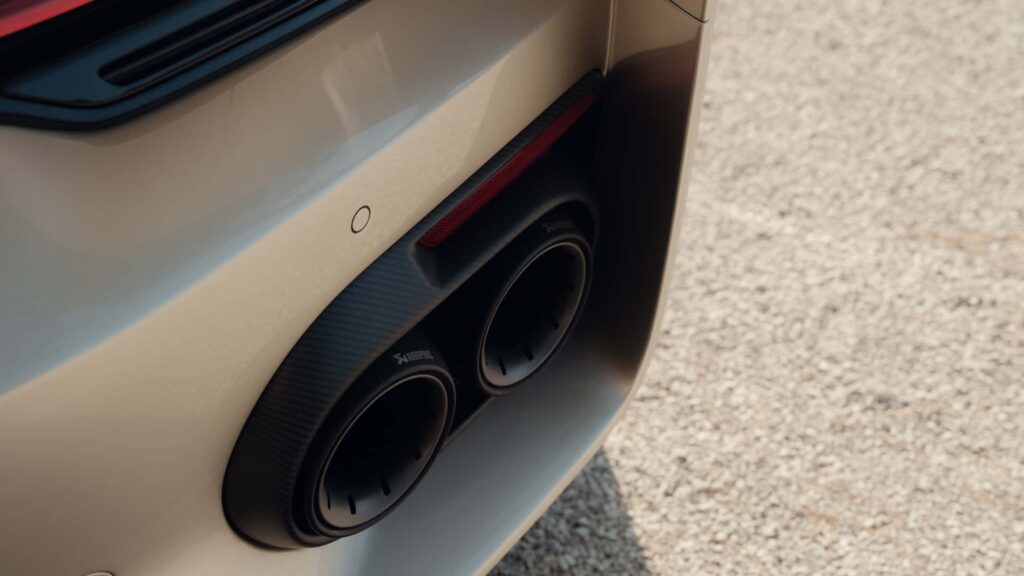
Titanium also reduces weight compared with conventional stainless-steel construction while tolerating the extreme temperatures generated during sustained high-performance driving.
For a vehicle where mechanical engineering is intended to be part of the ownership experience, sound becomes another carefully designed element rather than a by-product of combustion.
Forged Wheels and Michelin Cup 2 Tyres
The road-focused transformation naturally eliminates the original Marsien’s dedicated all-terrain wheel and tyre configuration.
In its place are bespoke five-spoke forged aluminium wheels using centre-locking hubs.
They measure 20 inches at the front and 21 inches at the rear and are wrapped in Michelin Pilot Sport Cup 2 tyres.
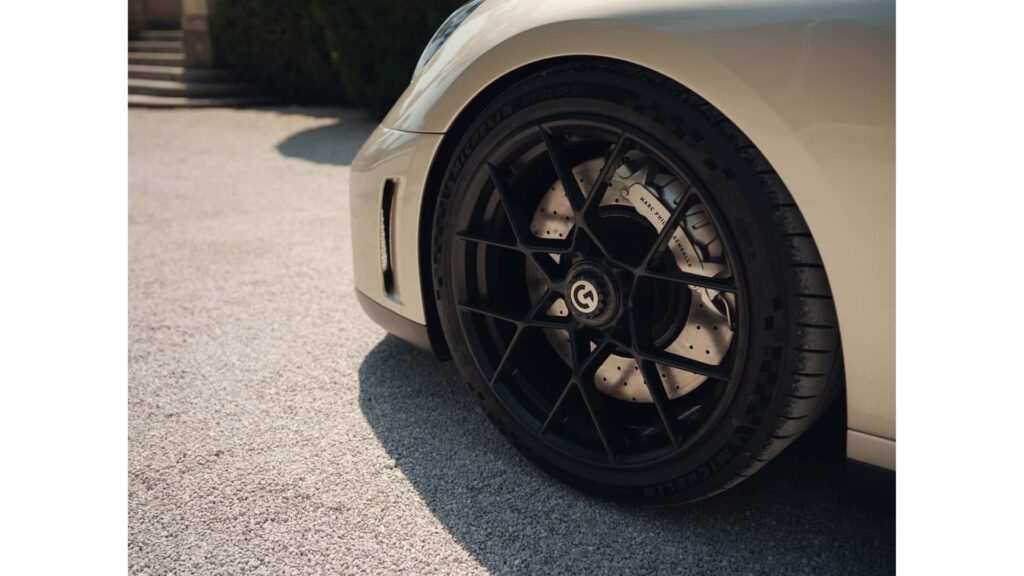
The tyre widths are equally serious: 275/35 at the front and 335/30 at the rear.
The visual effect is significant.
Where the original Marsien’s tall sidewalls and increased ride height communicated adventure, the GT sits tightly over its wheels, emphasising width and high-speed intent.
Same family.
Completely different mission.
A Carrera GT-Inspired Interior Detail
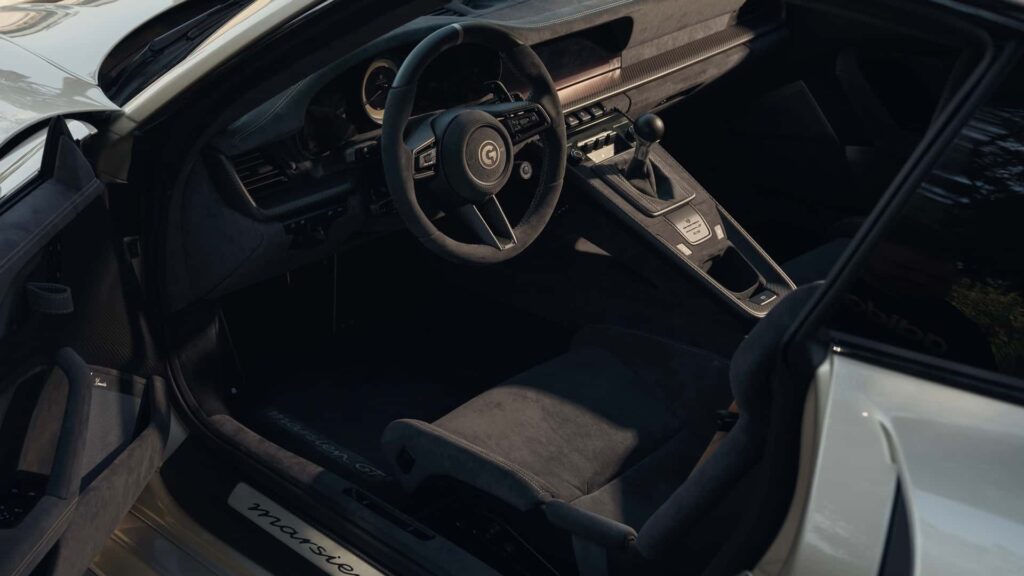
The interior contains one particularly interesting reference to another legendary Porsche.
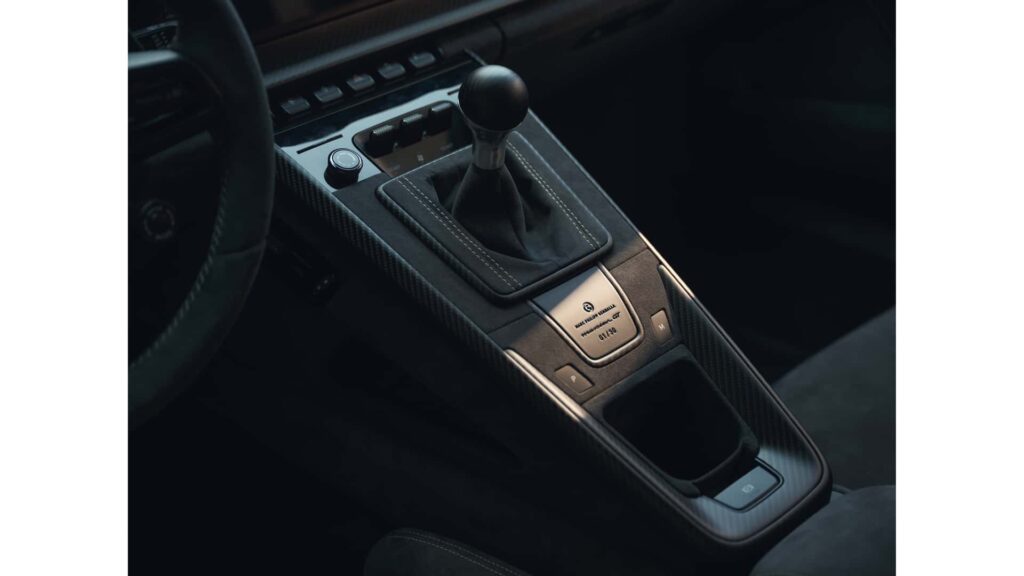
The centre console has been raised and incorporates an aluminium gear selector inspired by the Carrera GT.
Owners can replace the conventional leather or Alcantara finish with exposed carbon fibre or even mahogany, introducing an unusual element of traditional craftsmanship into an otherwise highly technical cabin.
Importantly, the GT retains paddle controls for manual shifting.
The Carrera GT reference is therefore visual and tactile rather than an attempt to disguise the underlying dual-clutch transmission as a conventional manual gearbox.
Elsewhere, extensive Alcantara, carbon fibre and bespoke stitching reinforce the limited-production character.
A Clubsport-style roll bar can also be specified and finished in paint, leather, Alcantara or exposed carbon fibre.
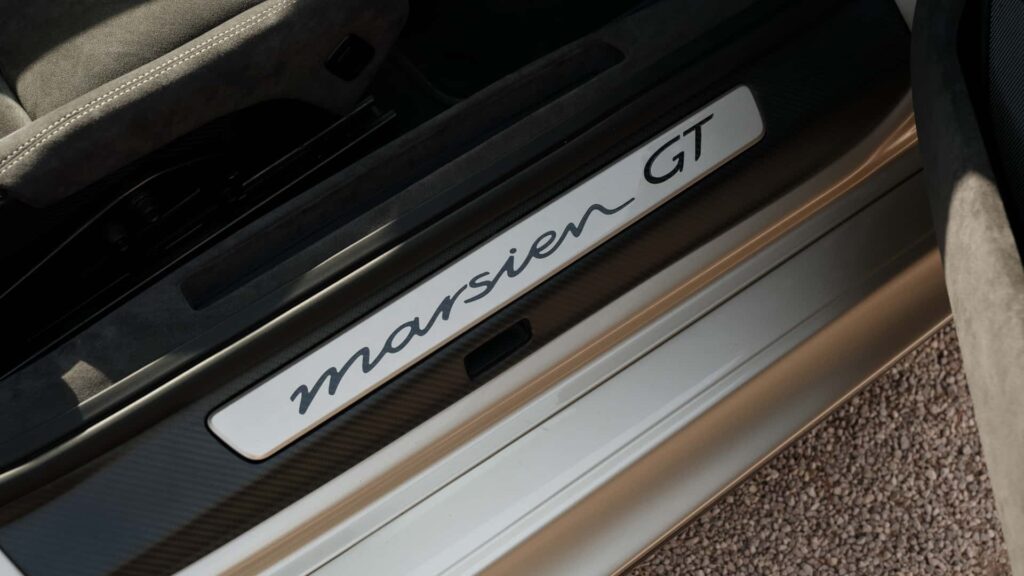
Each vehicle receives its own numbered plaque.
Anniversary Liquid Champagne Gold
The launch car introduces another important element of the Marsien GT story.
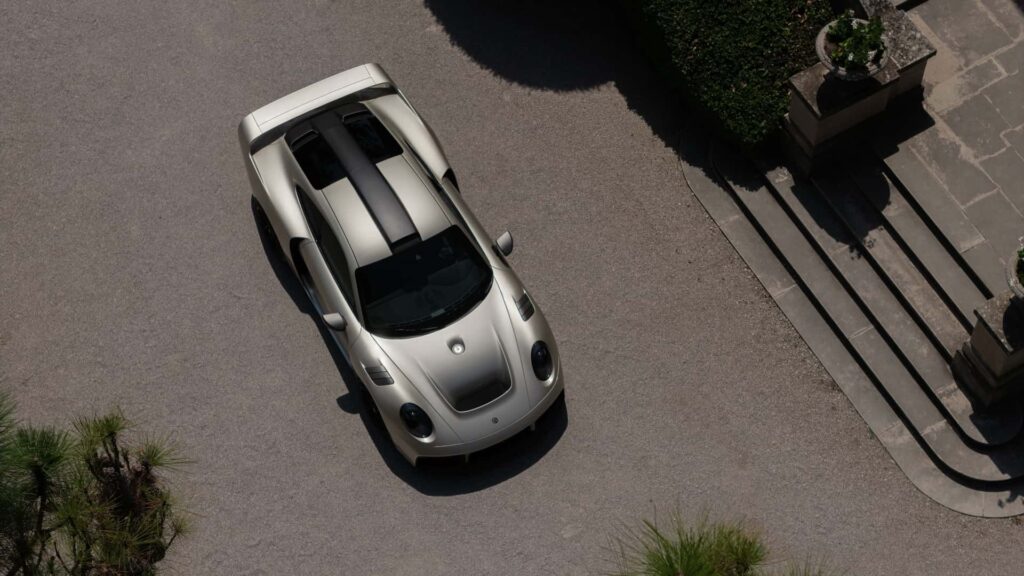
Its exterior is finished in Anniversary Liquid Champagne Gold, a bespoke four-layer metallic paint developed specifically for the project.
The colour incorporates pearlescent metallic particles and subtly references the pearl-white finish used when the original Marsien was unveiled.
But the reason behind the colour goes considerably deeper.
The Marsien GT has been created during the year in which Marc Philipp’s father, automotive entrepreneur Uwe Gemballa, would celebrate his 70th birthday.
The launch specification becomes a personal tribute.
And the production numbers continue that story.
40 Marsiens + 30 Marsien GTs = 70
The original Marsien was limited to 40 examples.
The Marsien GT will be even rarer.
Only 30 cars are planned.
Together, the two projects create a total production run of exactly 70 Marsien automobiles worldwide.
The number has been deliberately chosen in recognition of Uwe Gemballa’s 70th anniversary.
It gives the project a significance beyond exclusivity.
Marc Philipp is building his own company and his own design language rather than simply recreating his father’s work, yet the family history remains an unmistakable part of the story.
That distinction is important.
Marc Philipp Gemballa GmbH is an independent company and is not associated with the current Gemballa GmbH.
The connection is familial and historical, not corporate.
From the 959 to a New Kind of GT
There is also an interesting evolution taking place across the two Marsien models.
The original car looked backwards towards one of Porsche’s most fascinating motorsport chapters.
The 959 proved that supercar technology did not necessarily belong exclusively on smooth asphalt.
Marc Philipp Gemballa translated that philosophy into the modern era with the Marsien.
The GT now asks another question.
What happens when the same design identity is liberated from its off-road requirements?
Lower suspension.
More power.
Less weight.
Active aerodynamics.
Cup 2 tyres.
Road-specific chassis calibration.
The answer is a considerably more focused automobile.
And perhaps a more conventional one in purpose, even if almost nothing about its execution is conventional.
TECHART Tsport R: A Purist 911 Reimagined for the Driver
The Seven-Figure 911 Alternative
Pricing begins at €770,000 before taxes, duties and additional costs.
Crucially, that figure does not include the donor Porsche 911 Turbo S.
Once the base vehicle, taxes, options and bespoke specification are considered, the completed Marsien GT can comfortably become a seven-figure automobile.
That places it in fascinating territory.
At this level, the comparison is no longer simply with another tuned Porsche.
The buyer could choose from an extraordinary range of modern supercars, limited-production hypercars and highly desirable collector automobiles.
The Marsien GT therefore needs to offer something horsepower alone cannot provide.
Individuality.
Only thirty people can commission one.
And every example can be extensively personalised.
Not Another Modified 911
The Porsche 911 has become one of the world’s favourite foundations for bespoke automotive projects.
Singer has reinterpreted earlier generations through craftsmanship and analogue purity.
RUF has spent decades transforming Porsche-derived architecture into automobiles carrying its own identity.
Manthey has concentrated on extracting extraordinary circuit performance.
Numerous other specialists have explored everything from safari conversions to carbon-bodied restomods.
The Marsien GT occupies its own territory.
It begins with a contemporary 992 Turbo S rather than a classic chassis.
It retains modern all-wheel-drive performance and usability.
Yet approximately 1,500 bespoke components, a complete carbon-fibre body, new suspension architecture, RUF-developed powertrain and active aerodynamics push the transformation far beyond conventional modification.
The donor provides the foundation.
The finished automobile provides the identity.
From Desert Adventure to Continental Express
The original Marsien was fascinating because it refused to accept the conventional boundaries of a supercar.
The Marsien GT is fascinating for a different reason.
It takes that same identity and concentrates it.
Instead, everything has been redirected towards the road: more than 830 horsepower, reduced weight, sophisticated active aerodynamics, a bespoke KW chassis and a full titanium Akrapovič exhaust.
Yet it remains a GT rather than becoming an uncompromising track special.
That may ultimately be the most appealing part of the project.
A machine capable of extraordinary speed without abandoning the idea that a great automobile should also be something its owner genuinely wants to drive.
The Marsien conquered the desert.
The Marsien GT was created for the road beyond the horizon.