
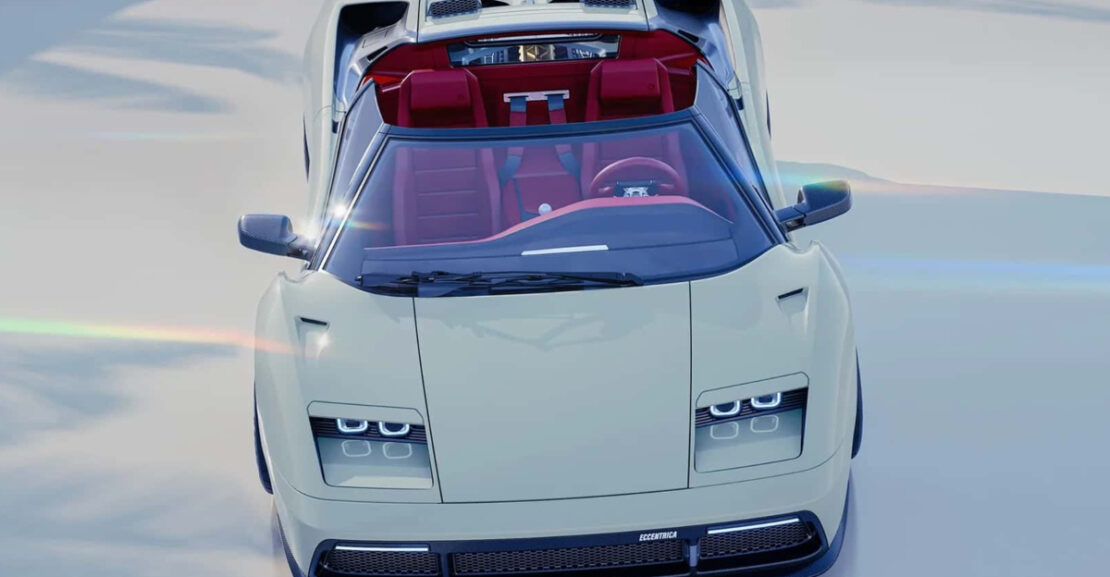
But very few modern creations combine a naturally aspirated V12, a gated manual transmission, hydraulic steering and an open cockpit.
The Eccentrica V12 Roadster exists precisely because those ingredients are disappearing.
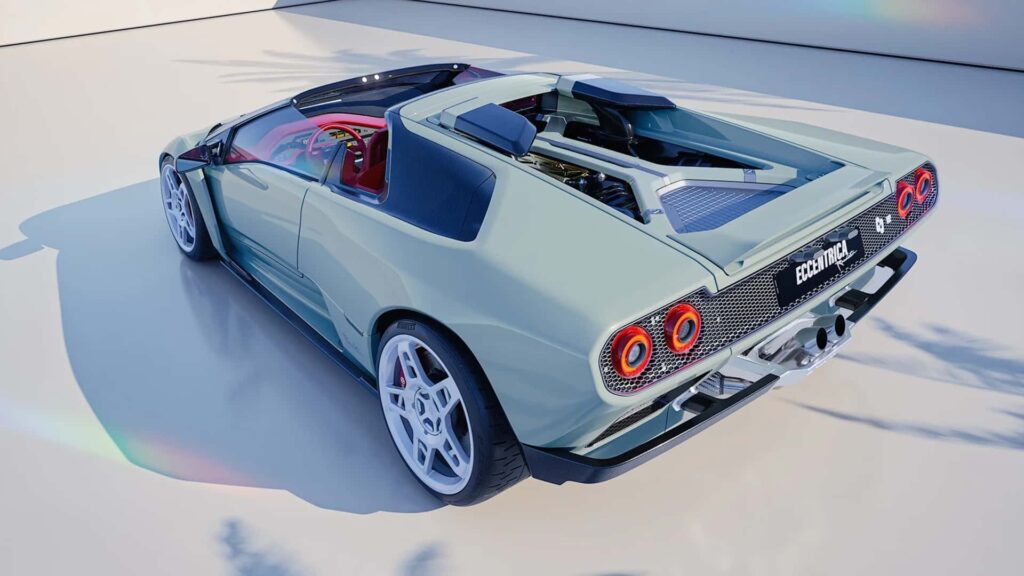
Following the remarkable Eccentrica V12 Coupé, the Italian company has returned to one of the most evocative supercar shapes of the 1990s and removed the final barrier between its occupants and the mechanical experience beneath them.
Based on the first-generation Lamborghini Diablo, the Roadster is not intended as a faithful restoration. Nor is it simply a roofless version of Eccentrica’s existing project.
It is a comprehensive reinterpretation of the analogue supercar for a world that has largely moved beyond it.
A naturally aspirated twelve-cylinder engine.
Six manually selected gears.
Hydraulic steering.
No roof.
And only 19 examples destined to exist.
Sometimes progress means adding more.
The Eccentrica V12 Roadster makes a convincing argument for taking something away.
From Diablo to Eccentrica
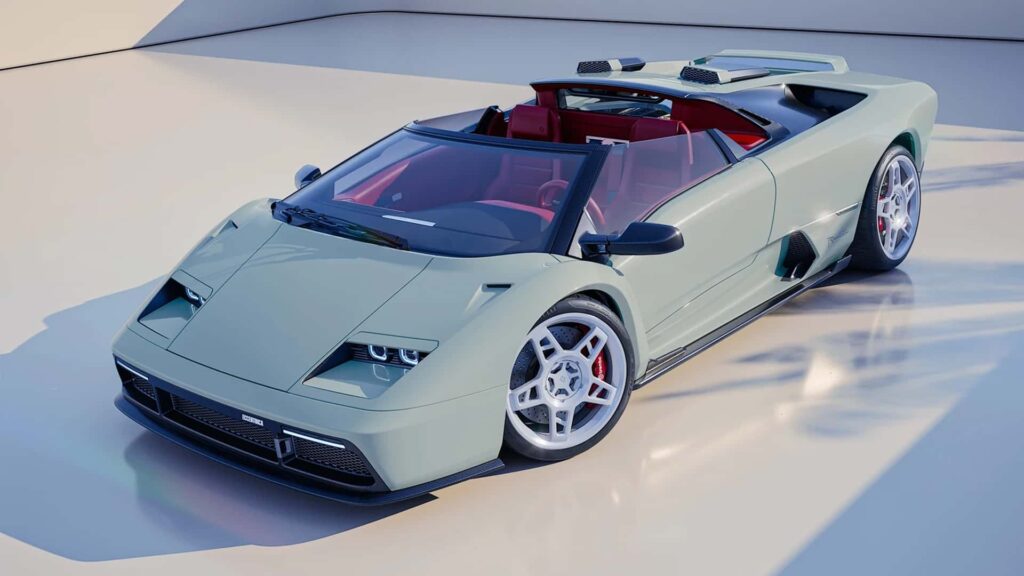
The original Lamborghini Diablo occupies a special position in supercar history.
Introduced in 1990 as the successor to the Countach, it arrived at a fascinating moment. Supercars were becoming more sophisticated, but they had not yet entered the era of comprehensive electronic intervention that would eventually transform the way extraordinary performance was delivered.
The Diablo remained physical.
Wide.
Heavy in its controls.
Dramatic in its proportions.
And dominated by a naturally aspirated V12 sitting immediately behind its occupants.
Those characteristics fascinated Eccentrica founder Emanuel Colombini, a collector and racing driver whose ambition was not to modernise the Diablo beyond recognition, but to extract more from the qualities that made it extraordinary in the first place.
The original Eccentrica V12 became the company’s answer.
Now the Roadster takes that philosophy somewhere even more visceral.
Eccentrica Cars and the Rebirth of the Lamborghini Diablo
Removing the Roof Changes Everything
Creating the Roadster required considerably more engineering than simply removing the upper section of the Coupé.
A roof forms an important structural element within any automobile, and its absence becomes particularly significant in a high-performance car capable of exceeding 300 km/h.
Eccentrica therefore reinforced the structure with carbon-fibre elements, compensating for the loss of rigidity while preserving the precise chassis behaviour demanded by the project.
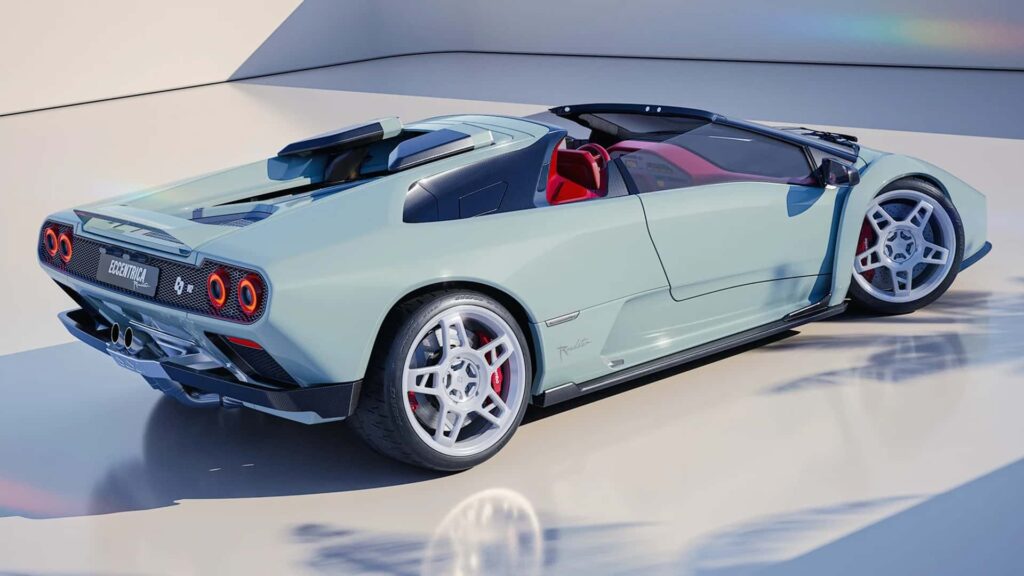
Aerodynamics presented another challenge.
Airflow that previously travelled cleanly over the roof now encounters an open cockpit, potentially generating turbulence, noise and instability at speed. A dedicated aerodynamic development programme was therefore undertaken specifically for the Roadster.
The objective was not simply to make an existing design roofless.
It was to make the open architecture an integral part of the car.
The 5.7-Litre V12 Remains the Heart of Everything
At its centre remains the component without which an Eccentrica would make considerably less sense.
The 5.7-litre naturally aspirated V12.
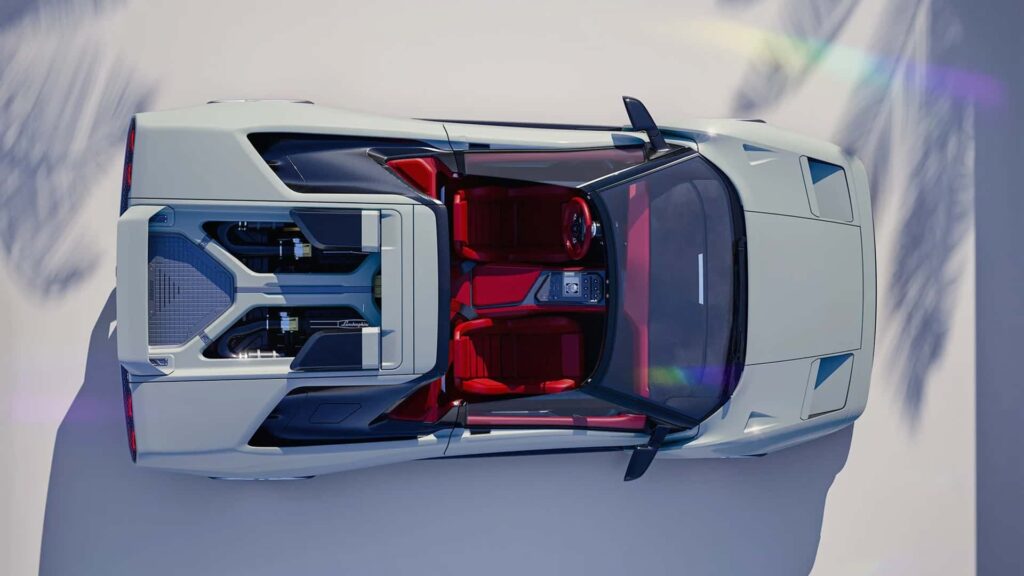
Eccentrica extensively re-engineers the original powerplant to produce 550 horsepower at 7,000 rpm, accompanied by 443 lb-ft of torque.
Those numbers might appear almost modest beside today’s 1,000- and 2,000-horsepower hypercars.
That misses the point completely.
The objective is not to overwhelm the chassis with output.
It is to make every horsepower accessible, progressive and emotionally engaging.
Without turbochargers interrupting the relationship between throttle and combustion, response remains immediate. Engine speed builds naturally, accompanied by the mechanical soundtrack that made twelve-cylinder Italian supercars so intoxicating in the first place.
With the roof removed, that soundtrack no longer needs to pass through glass, insulation and bodywork before reaching the occupants.
The V12 becomes part of the cabin.
Six Gears. Three Pedals.
Then there is the transmission.
The Roadster retains a six-speed gated manual gearbox.
In 2026, that specification feels almost exotic in itself.
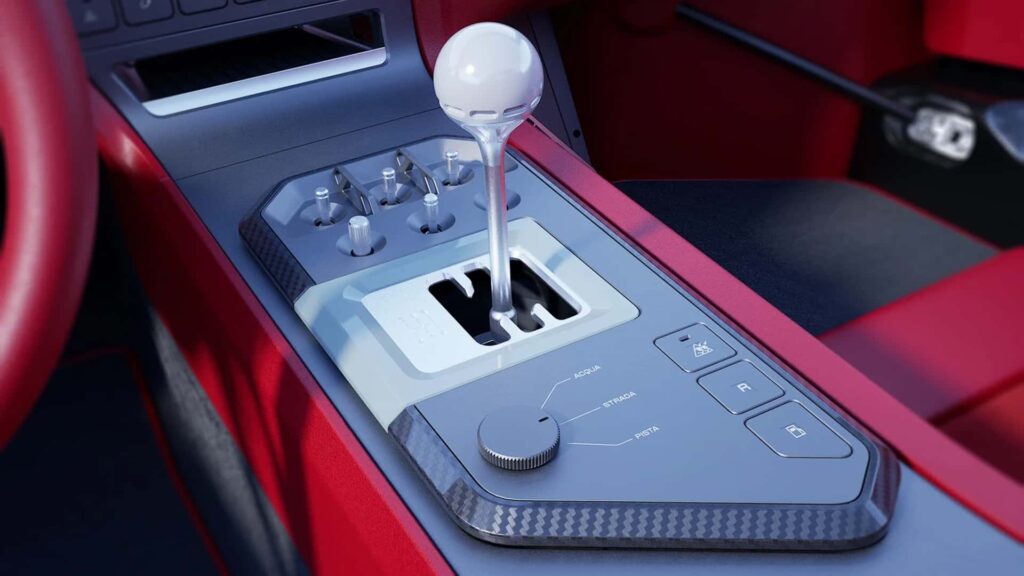
Modern supercars have become objectively faster thanks to dual-clutch transmissions capable of changing ratios in milliseconds. Yet efficiency came at the expense of one of the most satisfying interactions between driver and automobile.
Eccentrica deliberately gives it back.
Every acceleration requires participation, and every corner asks the driver to become part of the process rather than simply requesting another gear through a paddle.
Three selectable driving modes provide a degree of adaptability, but the fundamental relationship remains resolutely mechanical.
The Roadster is not attempting to protect its driver from involvement.
Involvement is the reason it exists.
De Tomaso P72 Aurelian Night: A Rolling Tribute to the Beauty of Fleeting Moments
0–100 km/h in 3.8 Seconds
Analogue does not mean slow.
Eccentrica quotes 0–100 km/h in approximately 3.8 seconds, while maximum speed reaches 208 mph — approximately 335 km/h.
Its curb weight stands at around 3,395 lb, or approximately 1,540 kg.
Again, these numbers require context.
A modern all-wheel-drive hybrid supercar will accelerate considerably faster.
But acceleration figures cannot measure steering feedback.
They cannot quantify the satisfaction of selecting a gear manually.
And they certainly cannot describe the sensation of accelerating beyond 300 km/h with a naturally aspirated V12 immediately behind you and nothing above your head but the sky.
Eccentrica is pursuing a different metric.
Experience.
Hydraulic Steering and a Reworked Chassis
The analogue philosophy extends far beyond the drivetrain.
The Roadster retains hydraulic power steering, a deliberate choice at a time when electrically assisted systems have become almost universal.
The track has been widened, suspension geometry revised and semi-active dampers introduced to give the chassis greater precision without eliminating the communication expected from a car of this nature.
Modern Brembo brakes provide the stopping performance required by the increased capabilities.
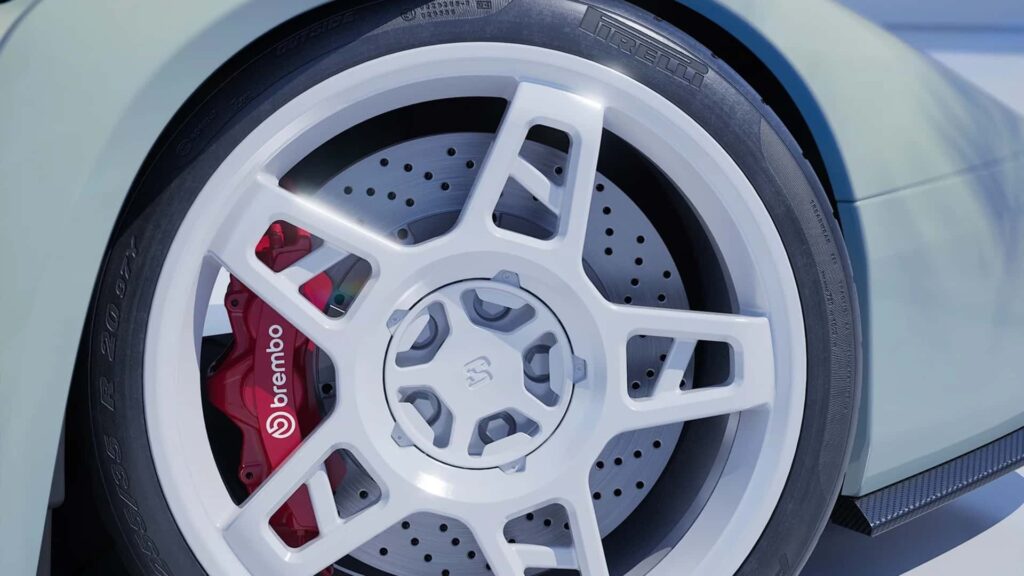
The combination is important.
Eccentrica is not recreating the way a Diablo drove three decades ago.
It is preserving the sensations that made the original memorable while addressing the areas where modern engineering can genuinely improve the experience.
That distinction defines the entire project.
More Than 3,500 Bespoke Components
The depth of the transformation becomes clearer when examining what lies beneath the surface.
More than 3,500 bespoke components are involved in Eccentrica’s re-engineering process.
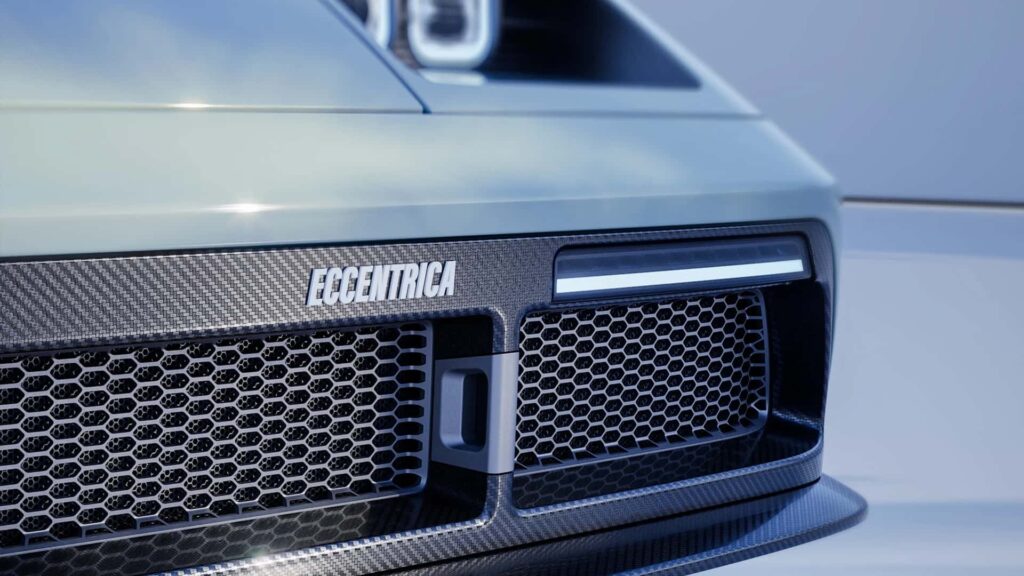
The body combines steel and carbon fibre, preserving the unmistakable wedge-shaped proportions of the Diablo while sharpening its surfaces and improving their functionality.
The familiar architecture remains visible.
The low nose.
The enormous rear haunches.
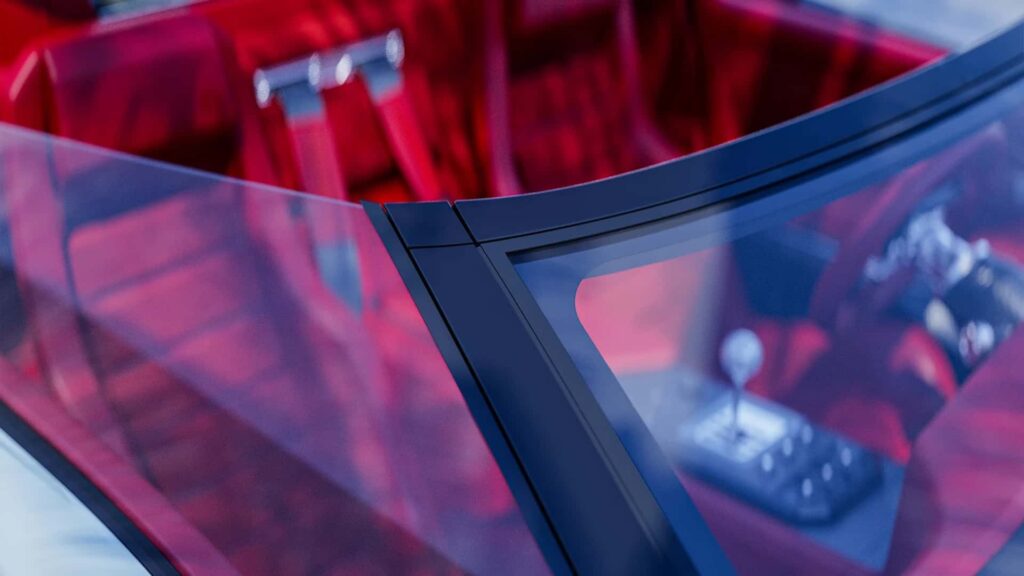
The cab-forward profile.
The dramatic relationship between glasshouse and body.
Yet almost everything has been reconsidered.
The result occupies an interesting space between restoration, restomod and coachbuilding.
You immediately understand where it came from.
But you would never mistake it for the car that left Sant’Agata decades earlier.
Borromeo De Silva and Maurizio Reggiani
Two names behind the project help explain its credibility.
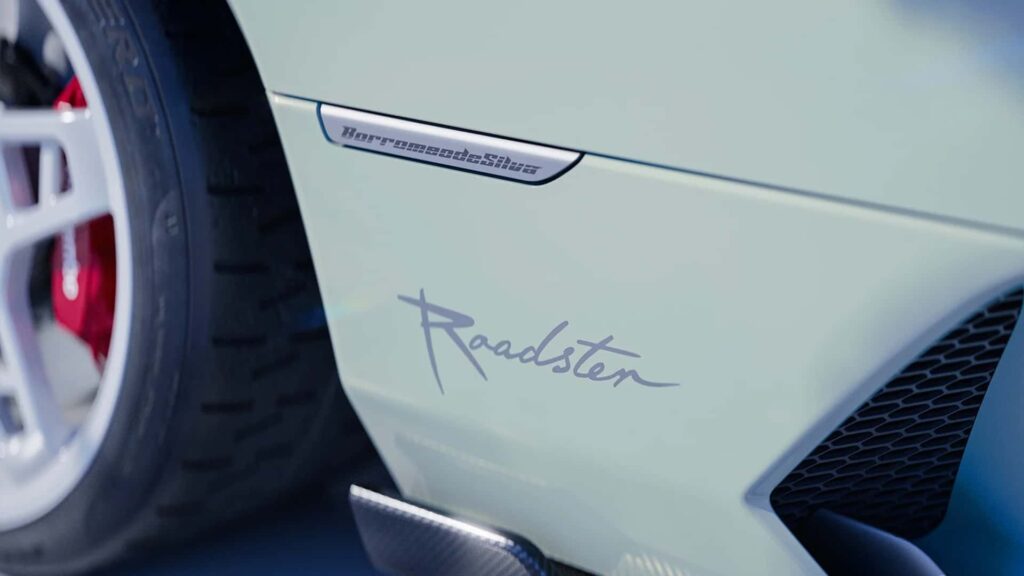
Design development has been carried out alongside Milan-based Borromeo De Silva, preserving the visual drama of the original while establishing a distinctive identity for Eccentrica.
Engineering development has been led by Maurizio Reggiani.
His résumé hardly requires introduction among Lamborghini enthusiasts.
During his career at Sant’Agata Bolognese, Reggiani played important roles in the development of generations of Lamborghini supercars, including the Murciélago, Gallardo, Aventador and Huracán, ultimately serving as the company’s Chief Technical Officer.
That experience matters enormously.
Reinterpreting an icon is relatively easy visually.
Understanding why it behaved the way it did — and knowing what should and should not be changed — is considerably more difficult.
An Interior Between 1990 and 2026
Inside, Eccentrica follows the same philosophy as the mechanical package.
Modernise what improves the experience.
Preserve what creates emotion.
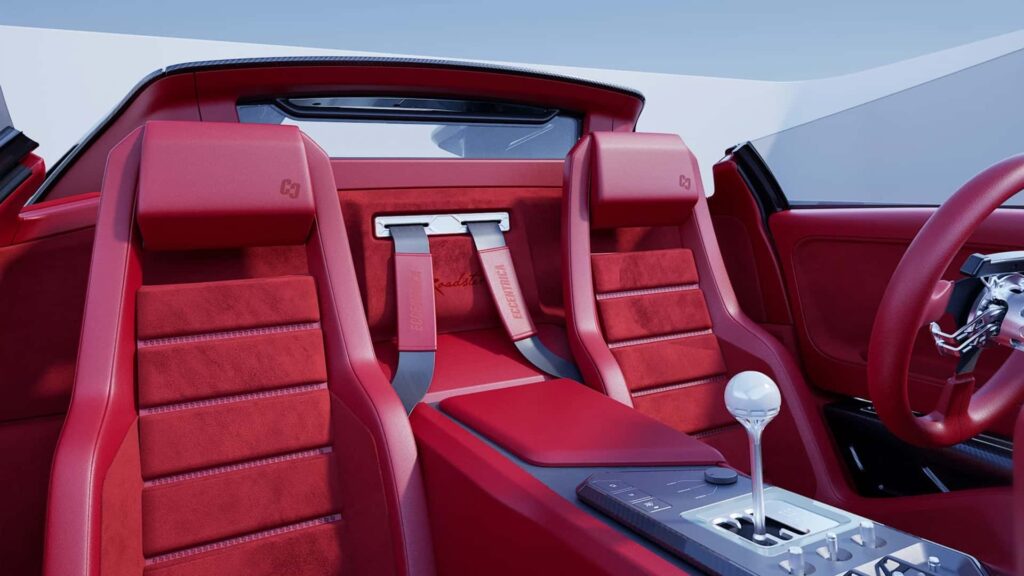
Connolly leather, Alcantara, exposed carbon fibre and anodized materials transform the cabin without turning it into another screen-dominated contemporary supercar interior.
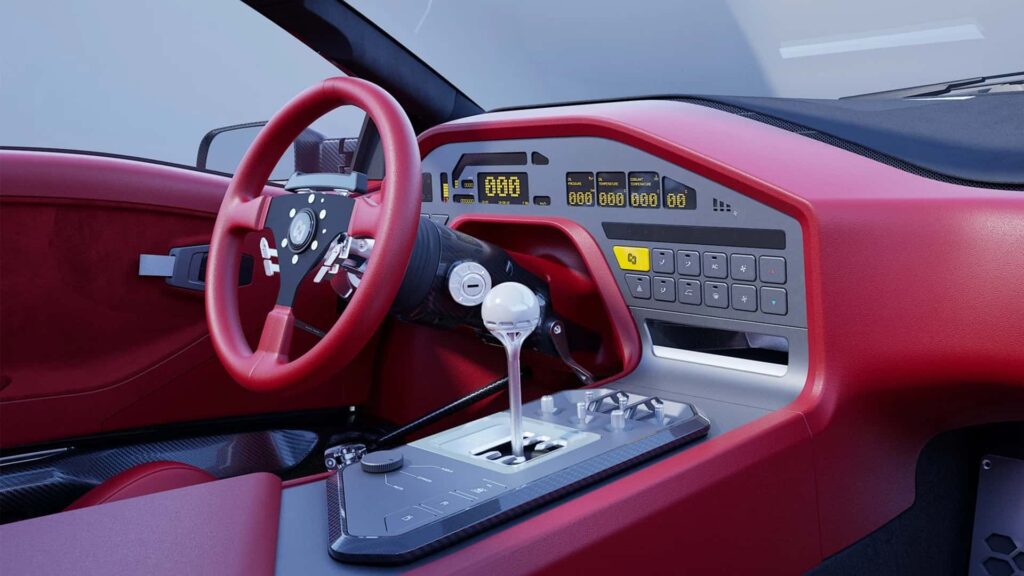
The architecture retains an unmistakably analogue character.
Physical interaction remains important.
Materials matter.
Controls have weight and purpose.
The open cockpit makes those details even more significant because the cabin becomes visually integrated with the exterior rather than existing as a separate enclosed environment.
And naturally, virtually everything can be personalised.
Nineteen Individual Cars
Only 19 Eccentrica V12 Roadsters are planned.
Each will be individually configured around its owner, with bespoke colours, materials, trim combinations and detailing allowing considerable freedom.
That approach is increasingly important within the upper reaches of the collector market.
Rarity alone is no longer enough.
Clients buying automobiles at this level increasingly expect individuality.
The Roadster therefore becomes less a defined production specification and more a foundation from which nineteen distinct cars can emerge.
Each recognisably Eccentrica.
None necessarily identical.
The Roadster in Three Personalities
Eccentrica also presents three distinct interpretations around the Roadster philosophy.
Sport places greater emphasis on purity and performance, sharpening the car for drivers who want an even more focused experience.
Eccentric represents the most expressive interpretation, embracing stronger visual individuality and a deliberately more extroverted personality.
Heritage, by contrast, looks more directly towards the analogue character and visual atmosphere of the original icon.
Rather than forcing every client into the same aesthetic direction, these personalities illustrate the breadth of what can be created from the underlying Roadster.
And given the bespoke nature of the programme, they are better understood as starting points than rigid specifications.
Miller Motorcars JC9: The Spiritual Successor to the Carrera GT That Porsche Never Built
Why 550 Horsepower May Be More Interesting Than 1,500
The Eccentrica V12 Roadster arrives during an extraordinary period for performance automobiles.
Production cars now comfortably exceed 1,000 horsepower.
Electric hypercars can deliver twice that.
Computer-controlled all-wheel-drive systems make acceleration figures once associated with drag racing accessible to almost anyone.
Against that background, 550 horsepower might appear strangely conservative.
In reality, it may be one of the Roadster’s greatest strengths.
There is enough performance to make the car extraordinarily fast without making its abilities almost impossible to explore.
The driver can work through the gears.
Use the engine.
Feel the chassis moving beneath them.
Participate.
Eccentrica is not trying to win the horsepower race because the horsepower race is no longer particularly difficult to understand.
More is simply more.
Creating emotion is harder.
An Analogue Supercar for the Modern Collector
This is ultimately what separates the Eccentrica V12 Roadster from many contemporary restomods.
Nostalgia provides the starting point, but it is not the final objective.
The company is not attempting to recreate 1990.
It is asking which elements of that era deserve to survive in 2026.
The naturally aspirated V12 certainly does.
The manual gearbox does.
Hydraulic steering does.
Mechanical feedback does.
Dramatic proportions do.
Structural rigidity, braking, suspension control, materials and manufacturing can all benefit from three decades of progress.
That combination creates something arguably more interesting than either a perfectly preserved classic or an entirely modern supercar.
Above the Clouds, Closer to the Machine
The Eccentrica V12 Roadster demonstrates why the current restomod movement has become so significant.
At its best, restomod culture is not about nostalgia.
It is about selection.
Taking the elements automotive history got spectacularly right and combining them with technologies that genuinely make them better.
The Roadster does precisely that.
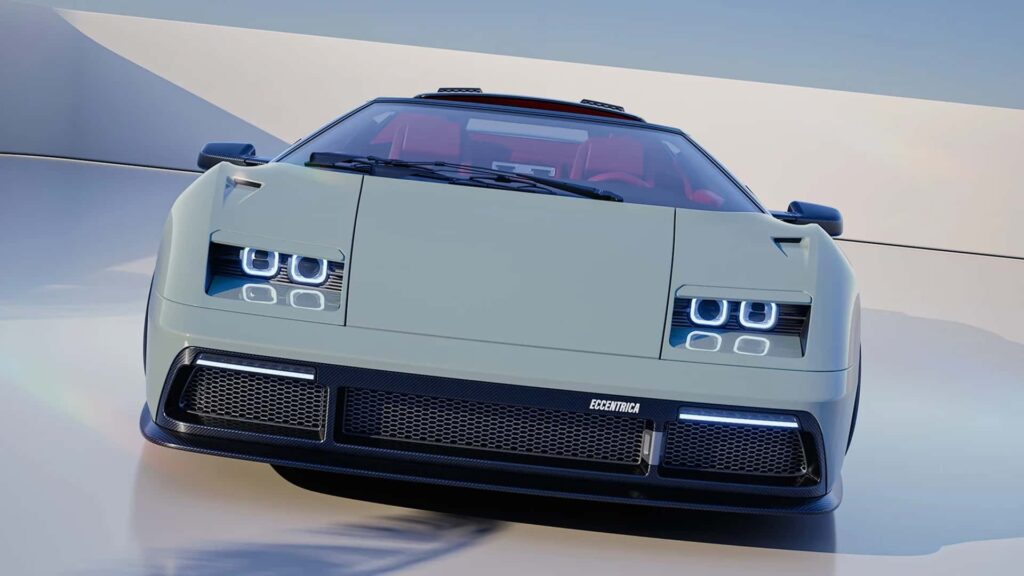
It takes one of the most dramatic supercars of the 1990s, retains its naturally aspirated twelve-cylinder heart, preserves the manual transmission and hydraulic steering, then surrounds those ingredients with modern structural engineering, aerodynamics, suspension and craftsmanship.
Removing the roof completes the idea.
Nothing between the driver and the sound.
Nothing unnecessary between human and machine.
In an era obsessed with adding technology, the Eccentrica V12 Roadster reminds us that sometimes the most desirable thing a supercar can offer is less.