
For years, Lotus built its reputation on one simple idea:
add lightness.
Not excessive horsepower or digital complexity.
Just purity, balance, and driver connection.
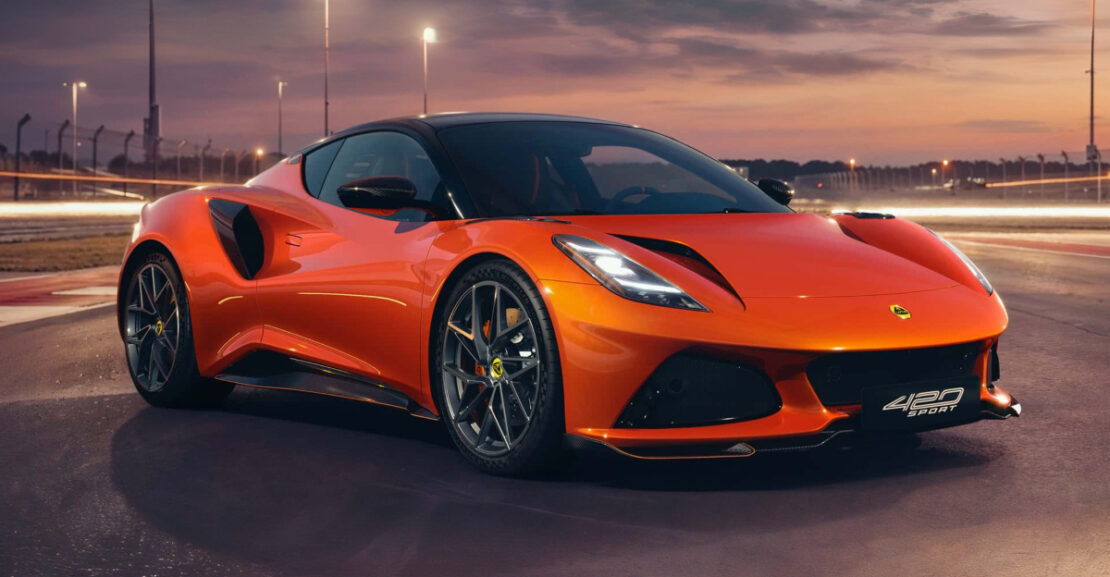
The new Lotus Emira 420 Sport brings that philosophy back into focus — and perhaps more importantly, it may represent one of the final great combustion-powered Lotus sports cars before the brand moves deeper into electrification and hybridization.
And that gives the Emira 420 Sport far greater significance than a simple performance upgrade.
The Most Focused Emira Yet
Lotus describes the 420 Sport as the lightest and most aerodynamically advanced Emira created so far.
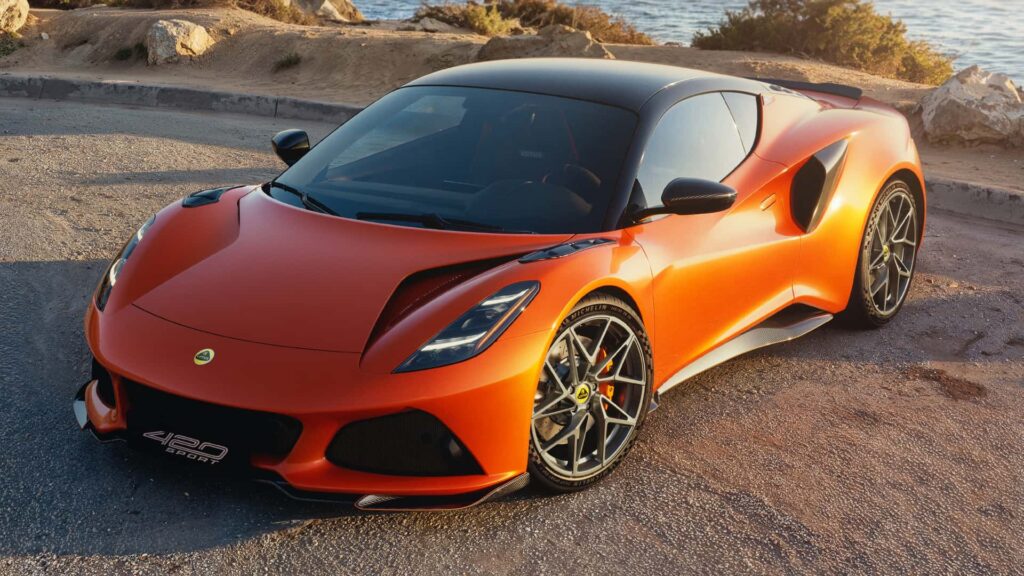
The formula sounds wonderfully traditional:
- lower weight
- sharper aerodynamics
- improved cooling
- more focused chassis tuning
- increased driver engagement
In an era increasingly dominated by heavy electrified performance cars, the Emira 420 Sport feels refreshingly mechanical and analog.
And that alone makes it special.
AMG Power With Lotus Character
The Emira 420 Sport uses the now-familiar AMG-sourced 2.0-liter turbocharged four-cylinder engine paired with an eight-speed dual-clutch transmission.
But Lotus has pushed the powertrain further than before.
Output rises to:
- 420 PS (approximately 414 hp)
- 368 lb-ft of torque
Performance figures are seriously impressive for a lightweight mid-engine sports car:
- 0–100 km/h in approximately 3.9 seconds
- top speed around 290–300 km/h
Yet the real story is not outright speed.
It is how Lotus achieves it.
Lightweight Handling Package
The optional Lightweight Handling Pack transforms the Emira 420 Sport into something far more focused than the standard Emira Turbo.
The package introduces:
- carbon-fiber aerodynamic components
- titanium exhaust system
- lithium-ion battery
- revised suspension calibration
- adjustable dampers
- lower ride height
Lotus claims meaningful weight reduction combined with additional aerodynamic downforce.
That combination reflects the exact engineering philosophy Colin Chapman championed decades ago.
Not brute force.
Efficiency through balance.
Aerodynamics With Purpose
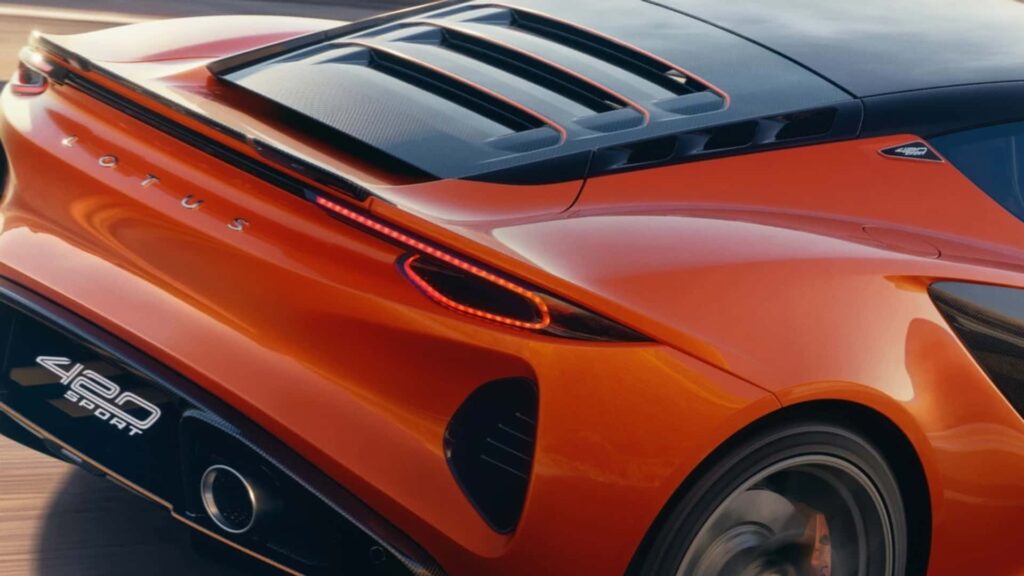
Unlike many modern sports cars that add aggressive aerodynamic elements largely for visual effect, the Emira 420 Sport’s changes appear deeply functional.
The revised bodywork includes:
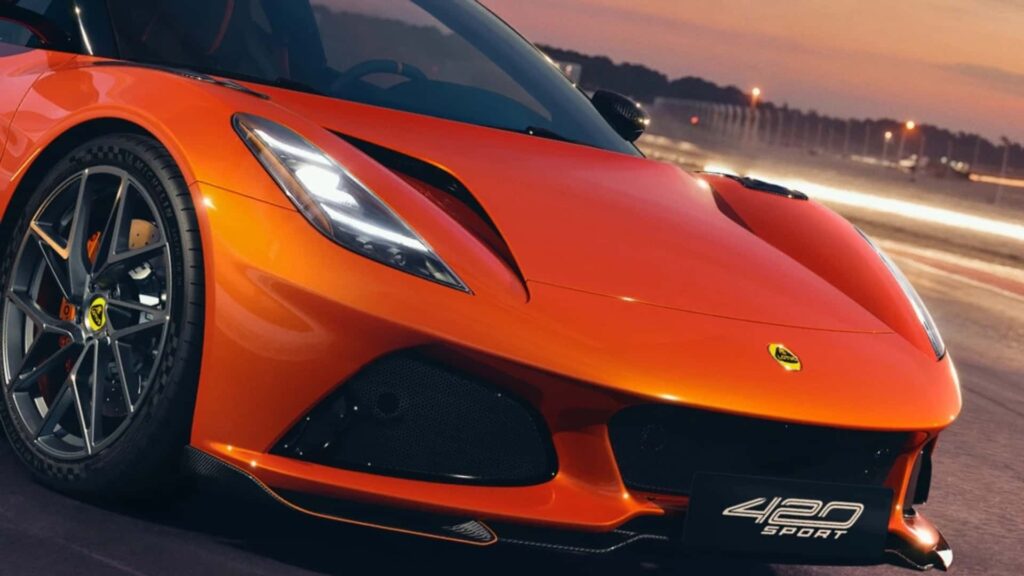
- new front splitter
- redesigned air intakes
- side sill extensions
- fender vents
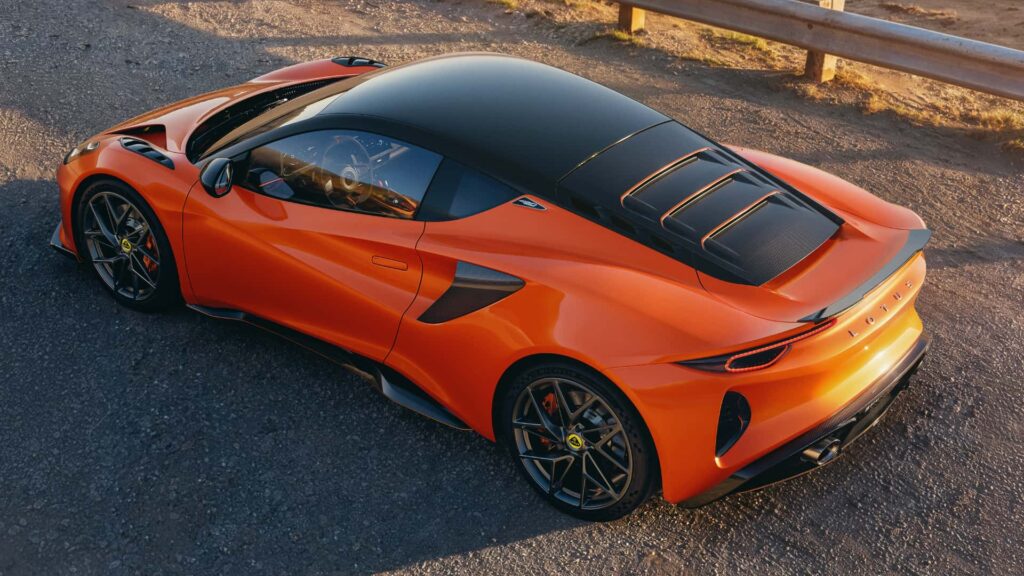
- revised rear spoiler
- louvered engine cover
These changes reportedly improve:
- brake cooling
- radiator airflow
- engine ventilation
- high-speed stability
And visually, they give the Emira a noticeably more aggressive stance without losing the elegance that already made the standard car one of the best-looking sports cars on sale.
The Last Great Combustion Lotus?
The Emira already occupies an important place in Lotus history.
It replaced:
- Elise
- Exige
- Evora
while serving as the company’s final major internal-combustion sports car platform before electrification.
That context changes how the 420 Sport feels emotionally.
Because this is not simply another Emira variant.
It may ultimately become:
- the purest Emira
- the lightest Emira
- the most driver-focused Emira
and potentially one of the final truly analog Lotus road cars ever produced.
Mid-Engine Balance Still Matters
The Emira remains fundamentally different from many modern high-performance cars because of its layout and philosophy.
It retains:
- transverse mid-engine architecture
- rear-wheel drive
- compact proportions
- hydraulic-feeling steering calibration
- strong chassis communication
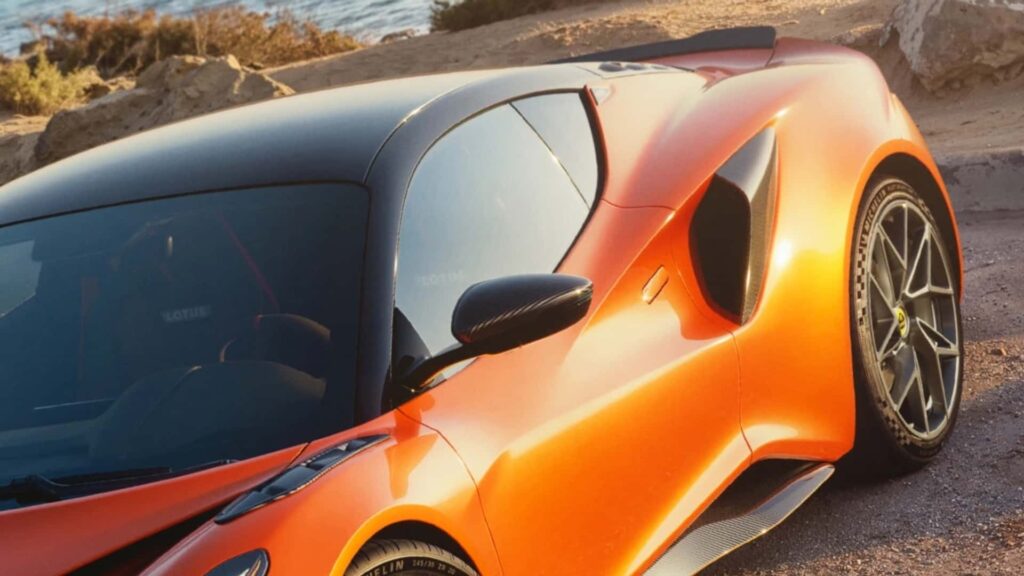
Lotus continues prioritizing handling feel over raw specification-sheet dominance.
And that creates something increasingly rare:
a sports car designed primarily around driving sensation rather than acceleration statistics.
The Interior Evolves Without Losing Focus
Compared to older Lotus models, the Emira represents a massive leap in quality and usability.
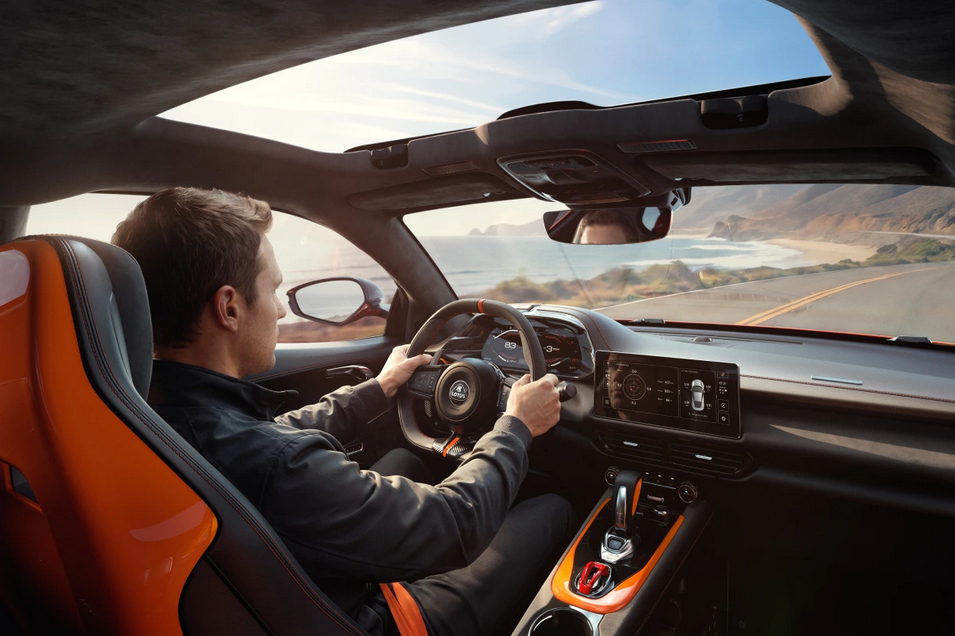
The 420 Sport retains:
- digital instrumentation
- premium materials
- modern infotainment
- improved ergonomics
- better sound insulation
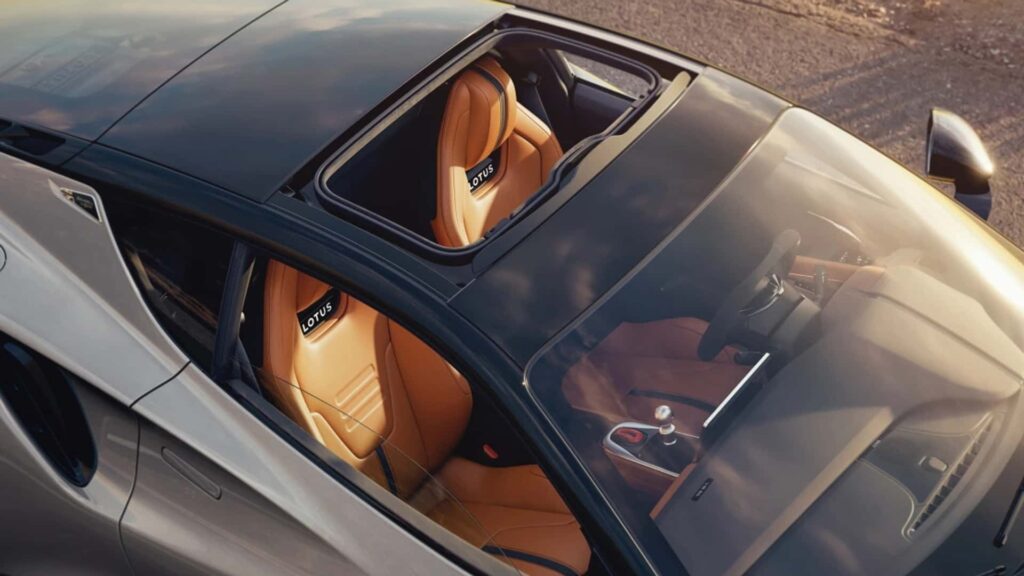
while still preserving a low-slung cockpit atmosphere that feels purpose-built for driving.
This balance is important.
The Emira finally gave Lotus a sports car capable of competing emotionally and visually with Porsche, Alpine, and Aston Martin — while remaining unmistakably Lotus underneath.
Why the Emira 420 Sport Matters
Modern sports cars are becoming:
- heavier
- more electrified
- more software-controlled
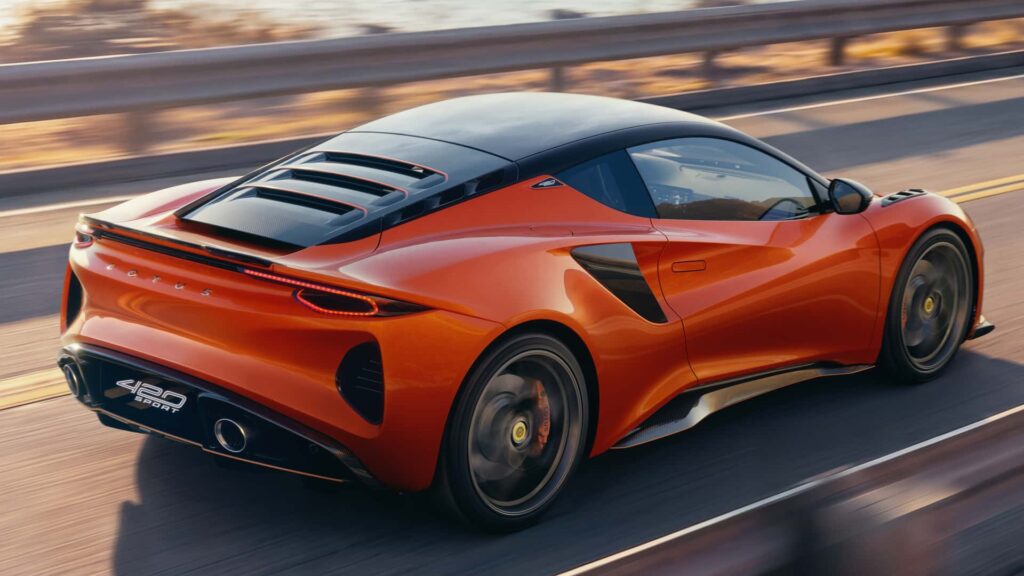
The Emira 420 Sport moves in the opposite direction.
It embraces:
- reduced mass
- driver feedback
- mechanical engagement
- aerodynamic efficiency
- compact dimensions
And because of that, it may become one of the defining enthusiast cars of its generation.
Lotus Reconnecting With Its Identity
In recent years, Lotus expanded aggressively into:
- electric SUVs
- luxury EVs
- high-tech hypercars
Cars like the Eletre and Emeya introduced an entirely new side of the brand.
The Emira 420 Sport serves as a reminder of Lotus’s original soul.
Small.
Focused.
Lightweight.
Driver obsessed.
And perhaps that emotional connection matters now more than ever.
A Future Collector?
There is a strong possibility the Emira 420 Sport becomes highly collectible in the future.
Why?
Because it combines several disappearing characteristics:
- internal combustion power
- lightweight engineering
- compact sports-car proportions
- Lotus chassis philosophy
- mid-engine layout
- emotional simplicity
In a decade dominated by electrification, cars like this may feel increasingly special.
The Spirit of Hethel Lives On
The Lotus Emira 420 Sport does not attempt to overpower its rivals through absurd numbers or digital spectacle.
Instead, it refines the principles Lotus has championed for generations:
- balance
- agility
- communication
- lightweight engineering
And in doing so, it may become one of the purest modern Lotus sports cars ever built.
A final combustion-powered reminder that true performance is not only measured in horsepower…
…but in how a car makes you feel.