
In the pantheon of British motorsport engineering, few names resonate with the same historic gravitas as Tom Walkinshaw Racing.
Today, that legacy is reborn through TWR Performance — and its inaugural statement arrives in ferocious form: the Supercat.
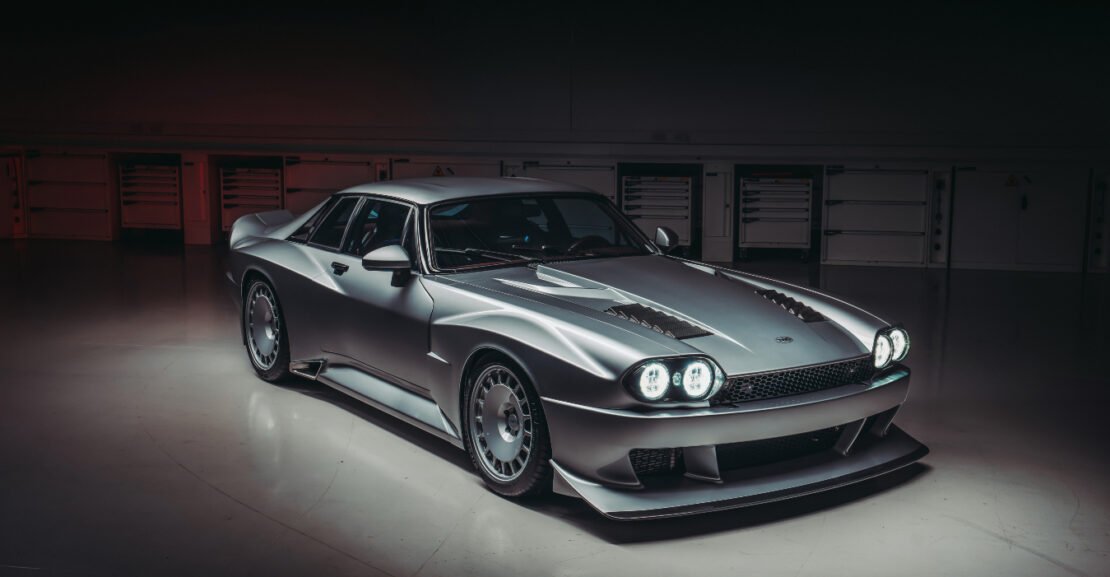
Based on the Jaguar XJS yet reengineered beyond recognition, the Supercat is not a restoration.
It is a reinvention — a carbon-bodied, V12-powered grand tourer forged in the image of endurance racing heritage.
Racing Legacy Reawakened
Tom Walkinshaw Racing built its reputation dominating touring car championships and securing Jaguar’s legendary Le Mans victories in the late 1980s.
The Supercat channels that DNA directly.
Rather than replicate a race car, TWR envisioned what a modern road-going XJS evolution might look like had competition development never ceased.
The result is heritage filtered through contemporary engineering.
Carbon Fiber Reconstruction
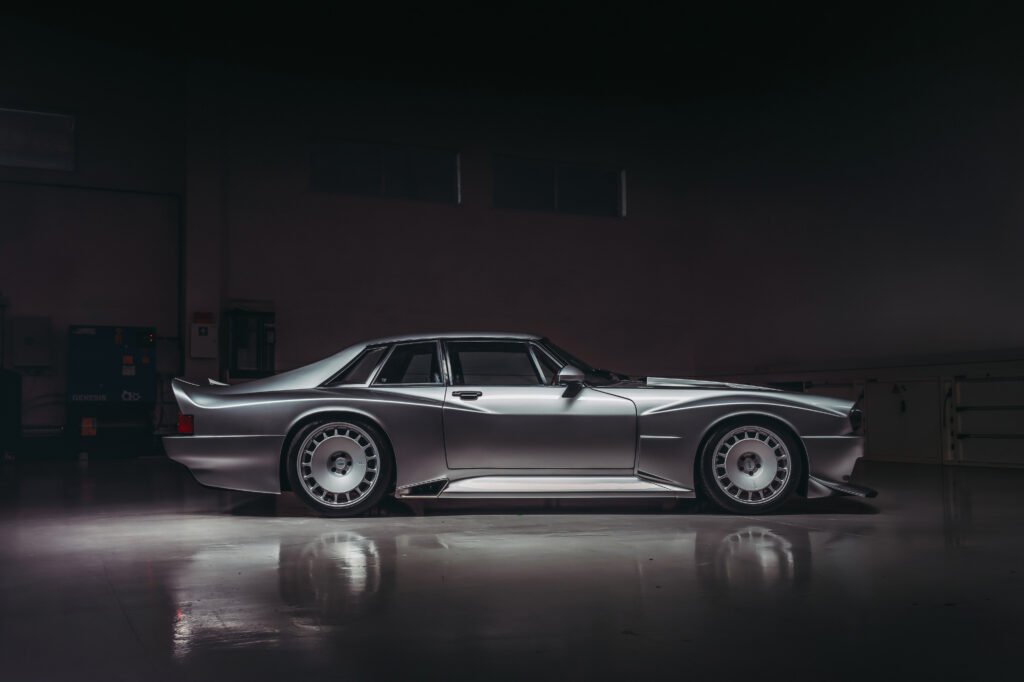
The Supercat’s transformation begins with a full carbon-fiber body conversion.
Key structural and aerodynamic revisions include:
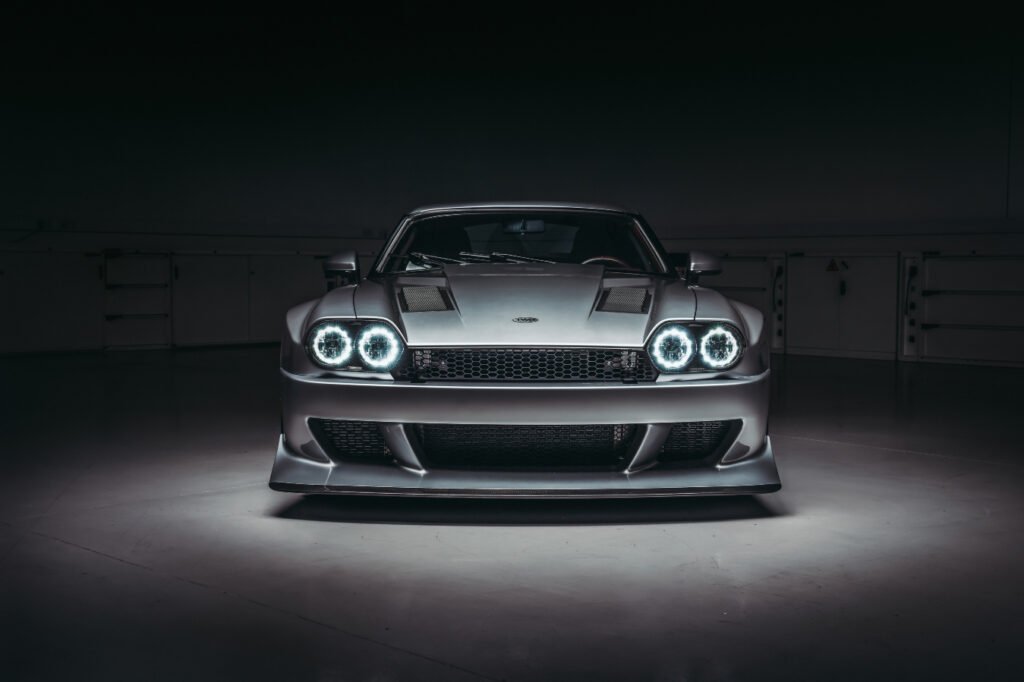
- Widebody architecture
- Deep front splitter
- Ventilated hood structures
- Sculpted side channels
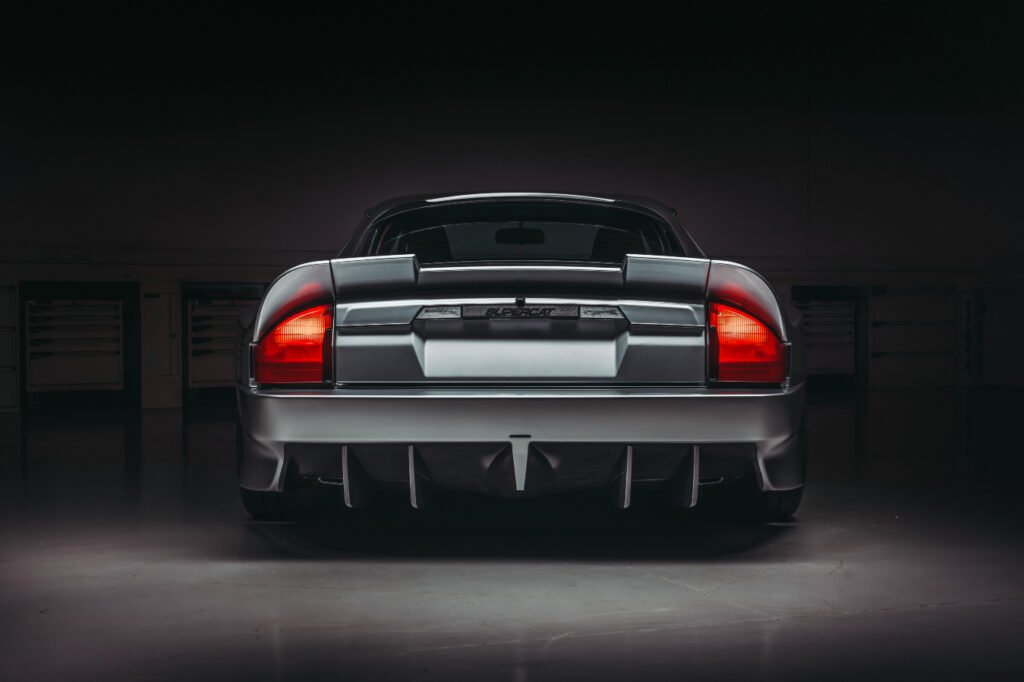
- Massive rear diffuser
- Fixed rear wing assembly
The design amplifies the XJS silhouette into something far more aggressive — bridging classic GT proportions with modern track intent.
Supercharged V12 — Grand Touring Violence
At its heart remains a Jaguar-derived V12 — but extensively reengineered.
Forced induction elevates the engine into supercar territory, producing output figures exceeding 650 horsepower.
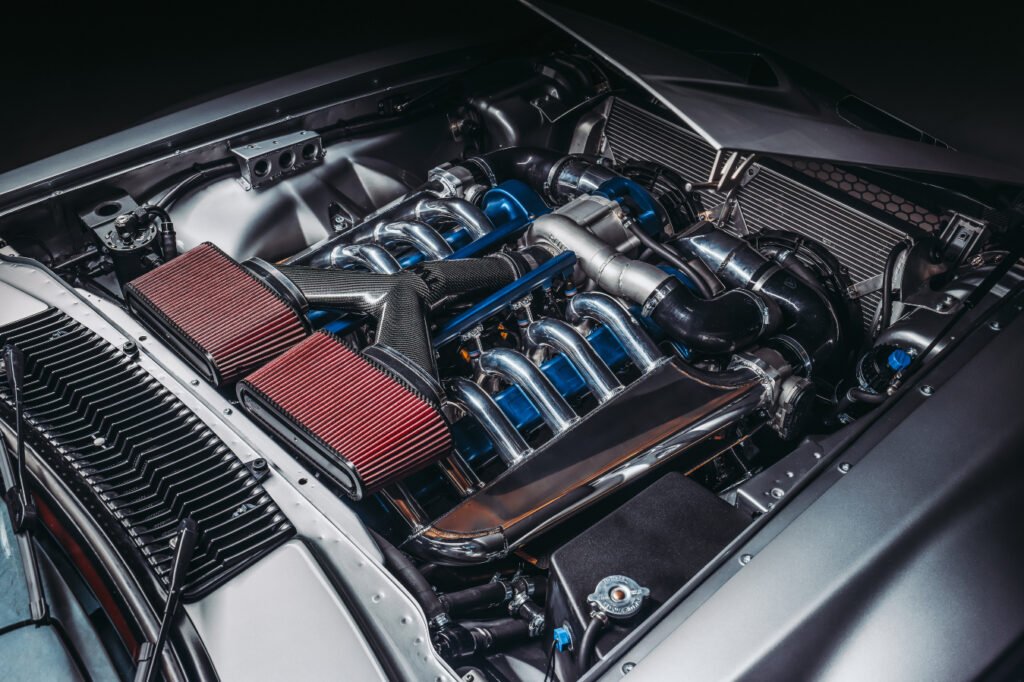
Performance characteristics include:
- Massive torque delivery
- Linear supercharged response
- Endurance-inspired cooling systems
- Reinforced drivetrain architecture
It transforms the once-refined grand tourer into a muscle-infused GT predator.
Chassis & Dynamics — Motorsport Foundations
The Supercat is engineered to handle its elevated output through comprehensive chassis redevelopment.
Enhancements include:
- Reinforced structural rigidity
- Modern suspension geometry
- Performance braking systems
- Track-focused handling calibration
The objective is balance — preserving grand touring usability while unlocking circuit capability.
Interior — Heritage Meets Bespoke Craft
Inside, the cabin merges classic Jaguar architecture with contemporary luxury execution.
Features include:
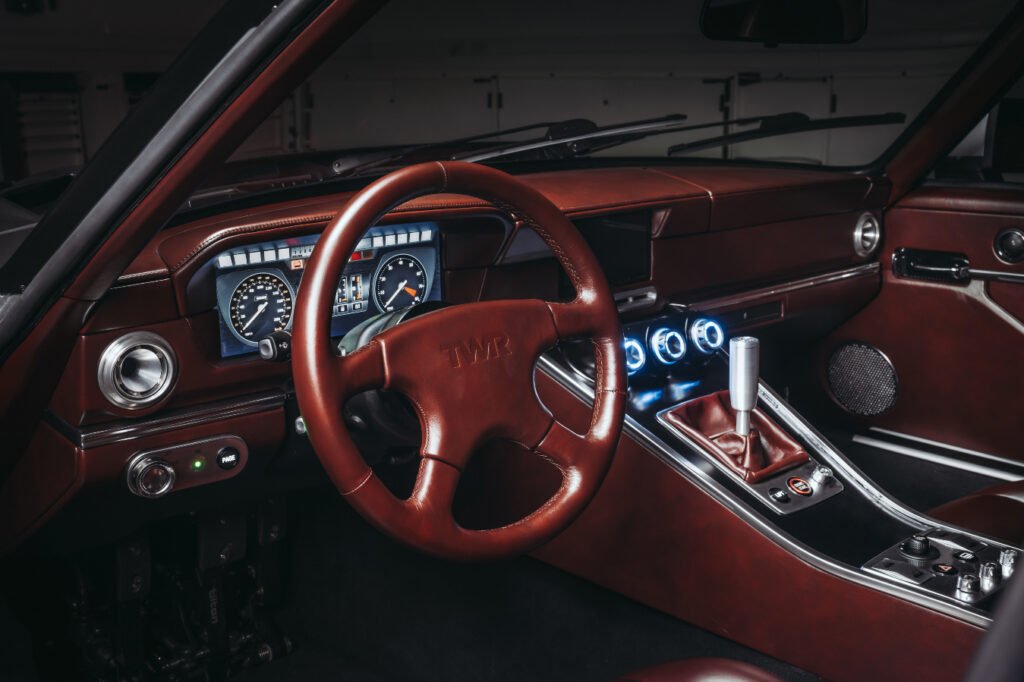
- Hand-trimmed leather upholstery
- Bespoke seat designs
- Machined metal switchgear
- Carbon fiber detailing
- Commission-based customization
Each Supercat interior is curated to client specification — reinforcing its collector-grade exclusivity.
Porsche 911 Carrera Cabriolet Reimagined by Singer — Open-Air Perfection, Recrafted
Limited Production — Collector Rarity
The Supercat will be produced in extremely limited numbers, with each car built through a bespoke commission process.
No two examples are identical — positioning the model firmly within the elite restomod investment sphere.
Ownership becomes custodianship of racing heritage reborn.
Design Philosophy — Predator, Not Preservation
Where many restomods seek visual nostalgia, the Supercat pursues aggression.
It does not romanticize the XJS.
It weaponizes it.
Carbon fiber replaces steel.
Downforce replaces chrome.
Performance replaces restraint.
Endurance Spirit, Road-Born
The TWR Supercat stands as a modern continuation of Jaguar’s competition legacy — a machine shaped by Le Mans DNA, reinterpreted for contemporary collectors.
It is a grand tourer transformed into a racing sculpture.
Past glory reengineered…
Into carbon, boost, and British ferocity.
Discover More
To explore the Supercat and TWR Performance’s engineering philosophy — including detailed specifications, heritage insights, and the forthcoming digital configurator experience — visit the marque’s official platform. The configurator, coming soon, will allow prospective clients to curate materials, finishes, and bespoke elements as part of the commissioning journey: