
A Figure That Became an Icon
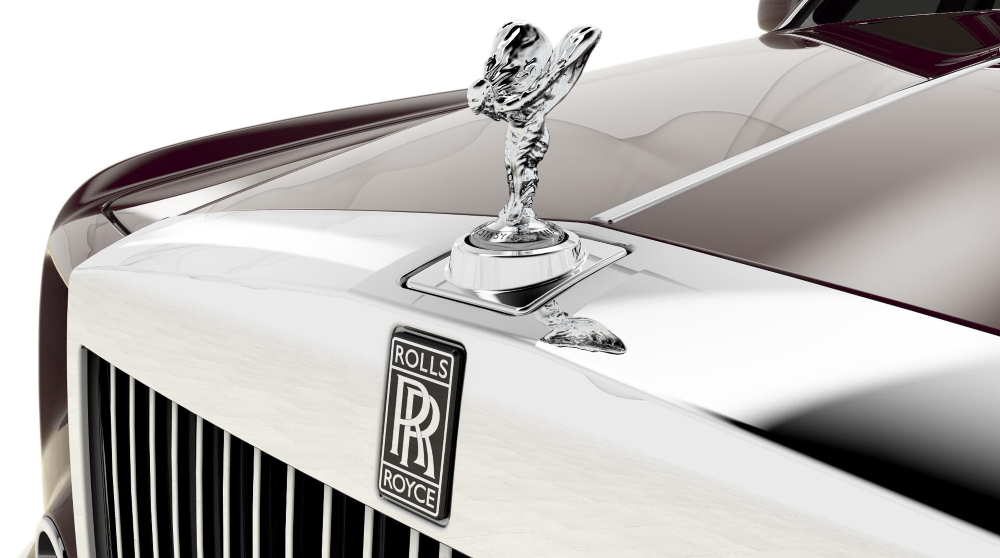
Few automotive emblems possess the timeless presence of the Spirit of Ecstasy. For more than a century, this elegant figure has stood at the front of every Rolls-Royce motor car, quietly symbolising the marque’s ideals of excellence, refinement, and ambition.
Since its official registration in 1911, the Spirit of Ecstasy has evolved into one of the most recognisable symbols in the world of luxury. Yet despite its universal fame, the story behind the sculpture is still surrounded by mystery, romance, and artistic inspiration.
More than a mascot, the Spirit of Ecstasy represents the essence of Rolls-Royce itself — a constant reminder that every motor car carrying the double-R badge must live up to the highest standards of craftsmanship and prestige.
The Birth of a Legendary Mascot
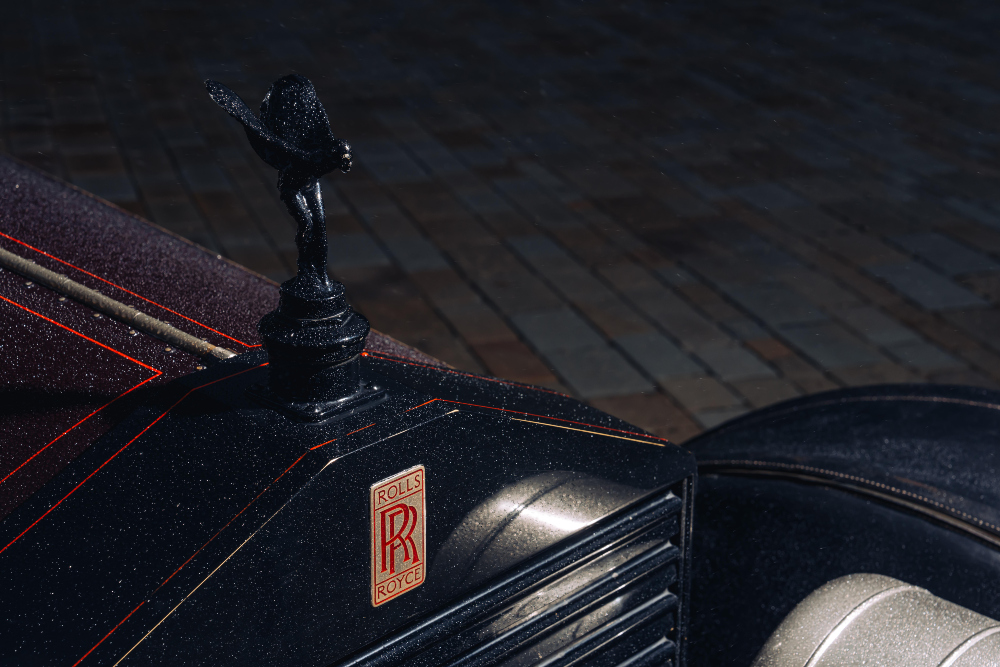
At the beginning of the twentieth century, Rolls-Royce owners often decorated their vehicles with personalised radiator mascots. Many of these additions were whimsical or decorative, something that concerned the company’s early leadership.
To protect the visual identity of the brand, Rolls-Royce commissioned an official emblem that would reflect the dignity and elegance of its motor cars.
The task was given to Charles Sykes, an accomplished illustrator and sculptor who had already created artistic designs within Britain’s motoring circles. His brief was clear: produce a figure that would embody speed, grace, and quiet power.
The result was a sculpture of a young woman leaning forward, her robes flowing behind her like wings in the wind. The design captured movement and elegance in a way that perfectly complemented the spirit of Rolls-Royce engineering.
This creation would soon become known as the Spirit of Ecstasy.
Inspiration Behind the Sculpture
The origins of the Spirit of Ecstasy remain part historical fact and part enduring legend.
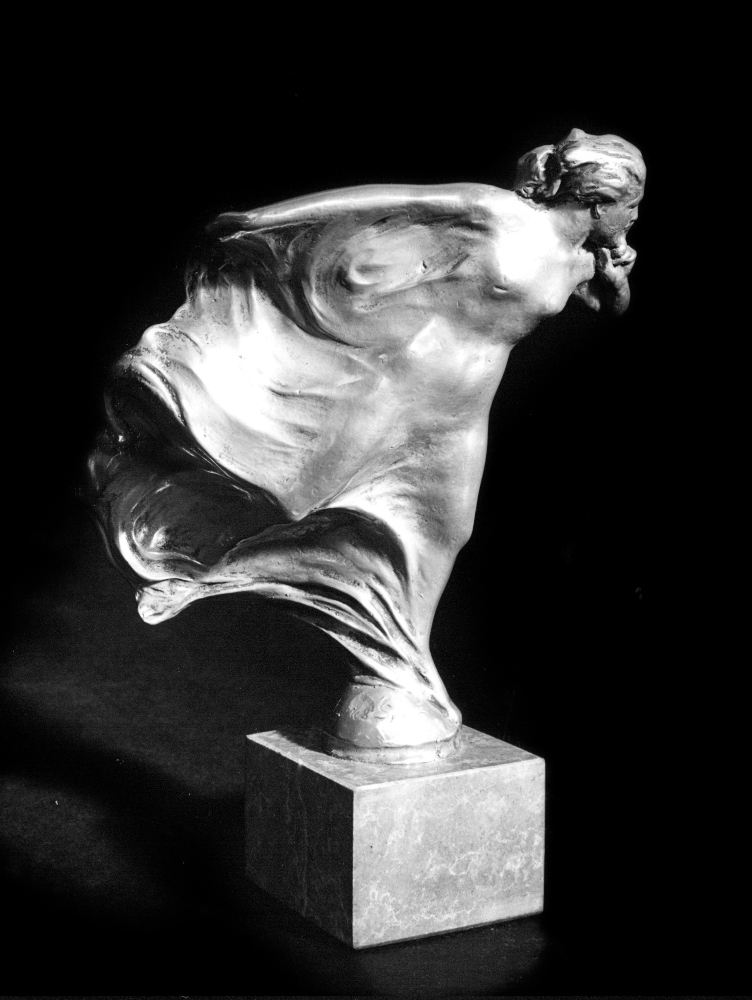
One theory suggests that Sykes reworked an earlier sculpture called “The Whisper,” originally created for a Rolls-Royce owned by motoring pioneer Lord Montagu of Beaulieu. That piece depicted a graceful female figure with a finger placed gently to her lips.
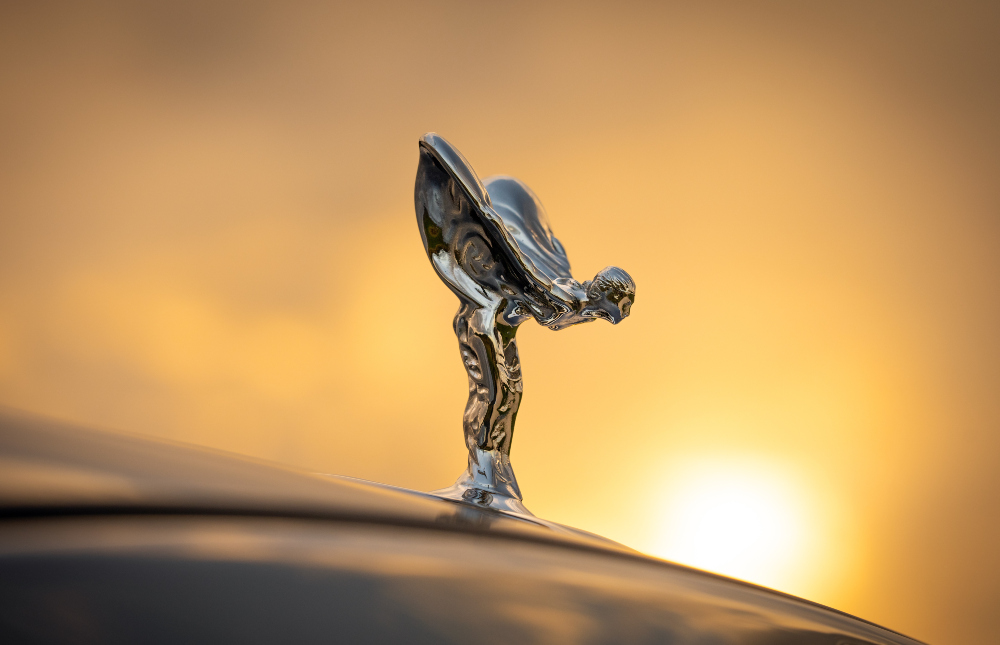
Another interpretation traces the inspiration to classical sculpture, particularly the ancient Greek statue Winged Victory of Samothrace, whose dynamic forward-leaning pose may have influenced the final design.
Both ideas share a common theme: movement, elegance, and the celebration of triumph.
In the final sculpture, the figure appears to glide through the air — arms extended behind her, garments flowing dramatically as if caught in a powerful slipstream.
Rolls-Royce Black Badge Spectre — The Alter Ego, Electrified and Amplified
The Human Story Behind the Icon
For decades, speculation surrounded whether the sculpture was based on a real person.
Historical research eventually confirmed that the inspiration for the original model was Eleanor Thornton, a young woman closely connected to early figures in the British motoring world.
Thornton served as an assistant within the automobile community and later became closely associated with Lord Montagu. During this period she posed for Charles Sykes on numerous occasions, becoming his favourite artistic muse.
Her personality — confident, energetic, and independent — seems to have strongly influenced the expressive posture that defines the Spirit of Ecstasy today.
This human story adds an emotional dimension to the sculpture, transforming it from a simple ornament into a symbol of passion, creativity, and ambition.
Recognition and Cultural Significance
Shortly after its introduction, the Spirit of Ecstasy became one of the defining features of Rolls-Royce motor cars.
The sculpture quickly earned international recognition, including early awards celebrating its artistic quality and design. Over time it became inseparable from the identity of the brand itself.
By the middle of the twentieth century, the figure had already achieved legendary status.
Despite changing tastes and evolving automotive design trends, the Spirit of Ecstasy remained a constant presence on Rolls-Royce vehicles — an emblem instantly recognised across the world.
Innovation Behind the Sculpture
While the appearance of the Spirit of Ecstasy has remained largely consistent, the way it is produced has evolved significantly over time.
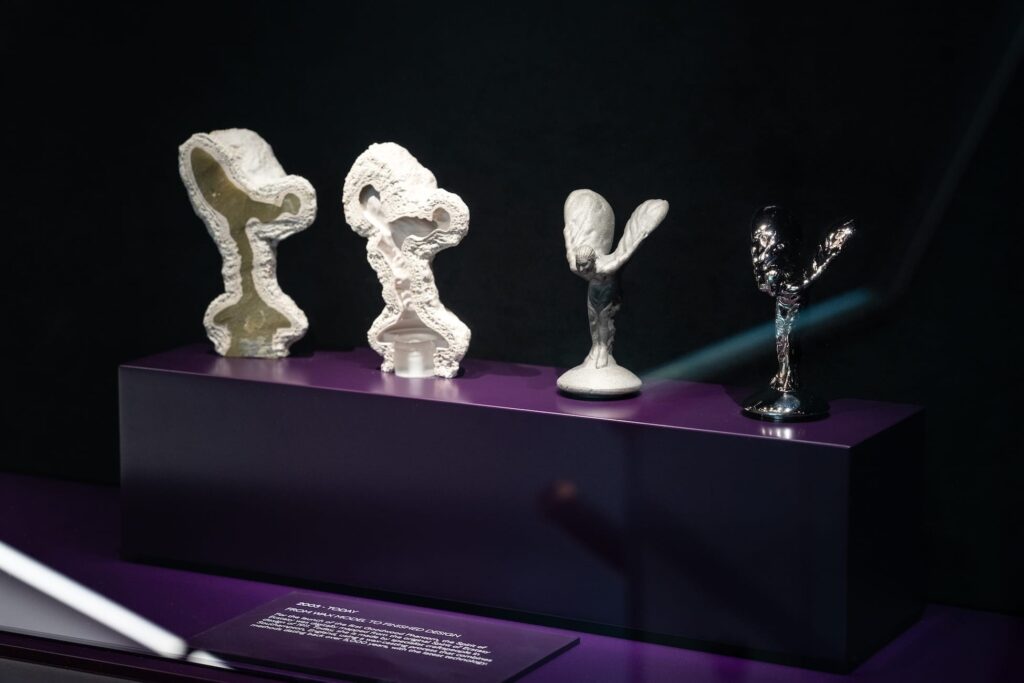
The figurine is traditionally created using a process known as lost-wax casting, a technique dating back thousands of years. This method allows craftsmen to reproduce extremely fine details while maintaining exceptional structural precision.
Today, modern production incorporates advanced digital mapping and highly precise tooling techniques. These technologies ensure that the smallest details of the sculpture are faithfully reproduced.
Molten stainless steel is poured into ceramic moulds at extremely high temperatures before the figurine undergoes a meticulous finishing process. Polishing and surface treatment reveal the smooth, mirror-like finish that characterises the final piece.
The result is a small sculpture produced with the same level of craftsmanship expected from the motor cars it adorns.
A Symbol That Adapts to Modern Engineering
Over time, safety regulations and engineering innovations required subtle adjustments to the Spirit of Ecstasy.
To address concerns regarding pedestrian safety, Rolls-Royce introduced a clever mechanism allowing the figurine to retract into the radiator grille when touched. Today, this motion has evolved into a graceful automated movement known as “the rise.”
When a Rolls-Royce is unlocked or started, the sculpture slowly emerges from the grille in a quiet and elegant motion — a theatrical gesture that reinforces the sense of occasion associated with the marque.
Rolls-Royce Phantom Arabesque — Laser-Etched Opulence Inspired by Middle Eastern Architecture
Reimagining the Spirit for the Electric Era
In recent years, Rolls-Royce has reinterpreted the Spirit of Ecstasy for the brand’s next generation of vehicles.
For the marque’s first fully electric model, Spectre, the sculpture was redesigned with a lower and more aerodynamic stance. The figure now leans further forward, with one leg slightly extended and her robes reshaped to flow more realistically in the wind.
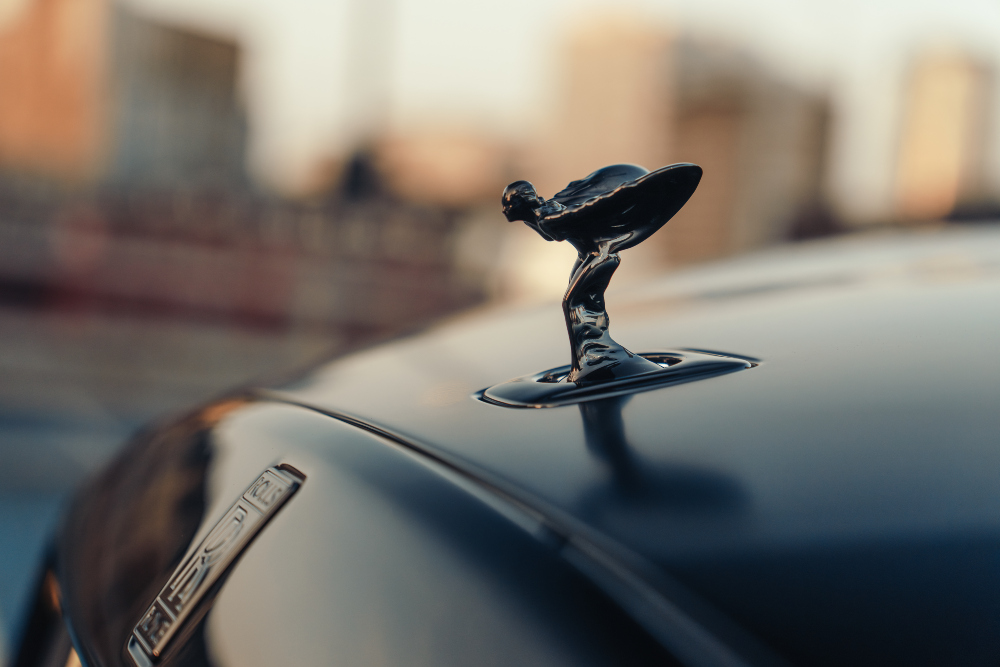
These changes were not purely aesthetic. The refined form contributes to the vehicle’s aerodynamic efficiency, helping achieve one of the lowest drag coefficients ever recorded for a Rolls-Royce.
Despite these adjustments, the design remains remarkably faithful to the original sketches created over a century ago.
Bespoke Interpretations and Private Collections
In the modern era, Rolls-Royce has continued to celebrate the Spirit of Ecstasy through bespoke commissions and limited-edition collections.
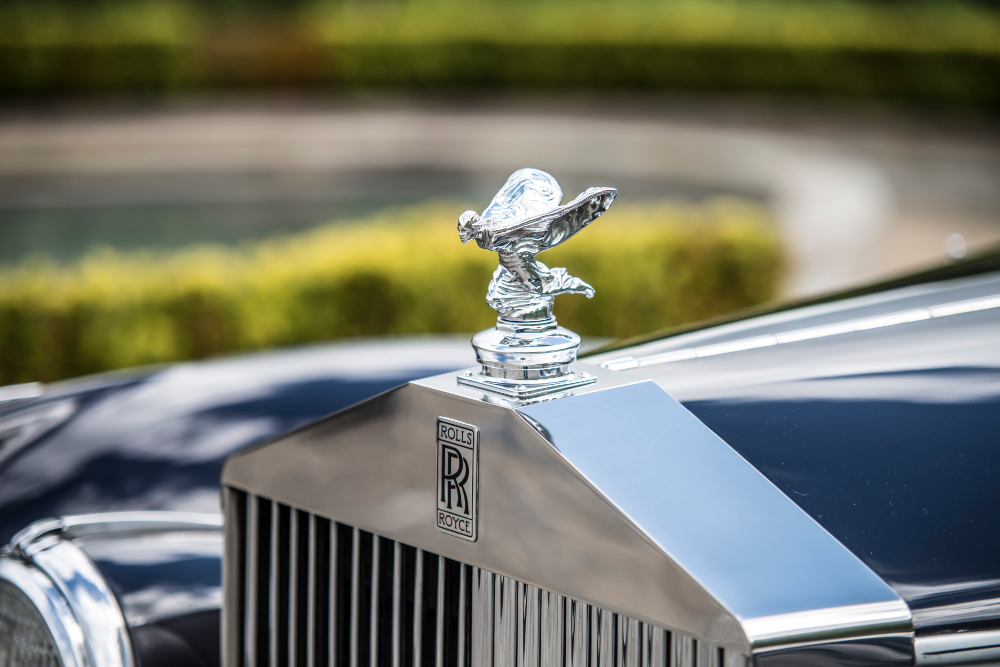
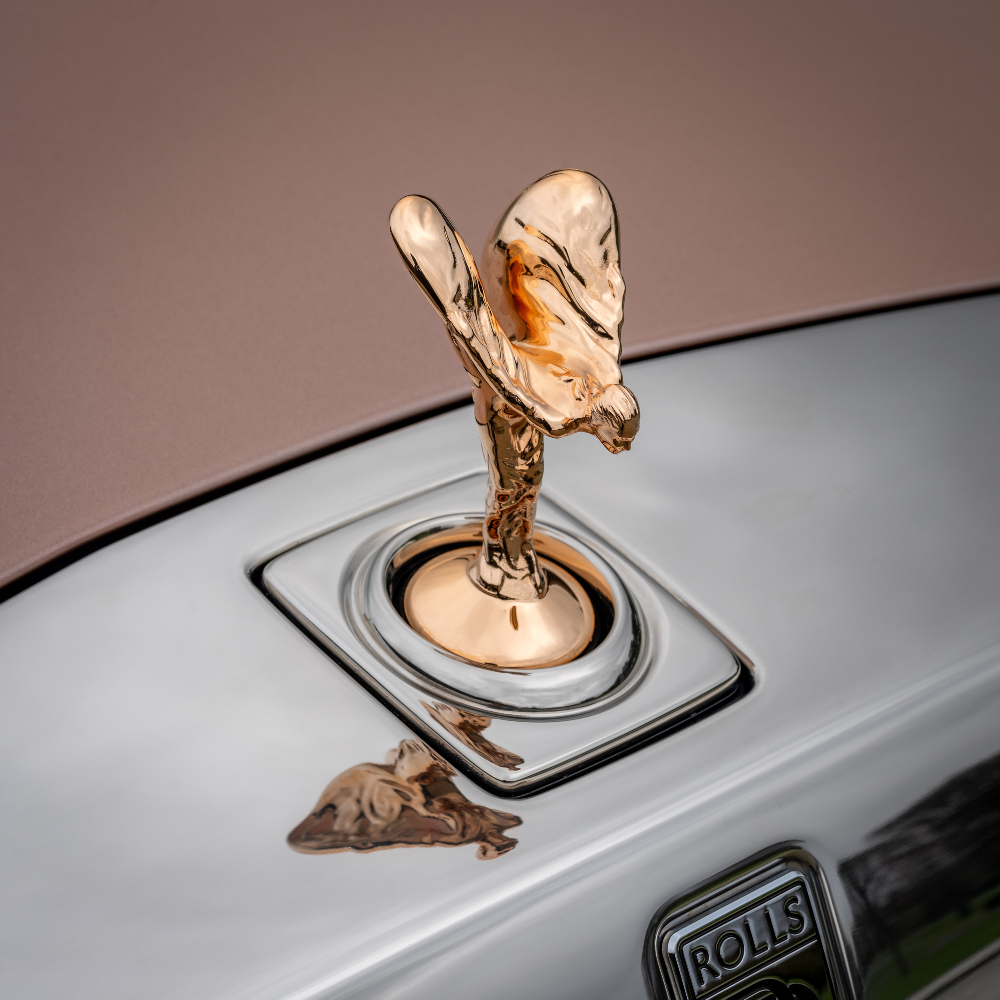
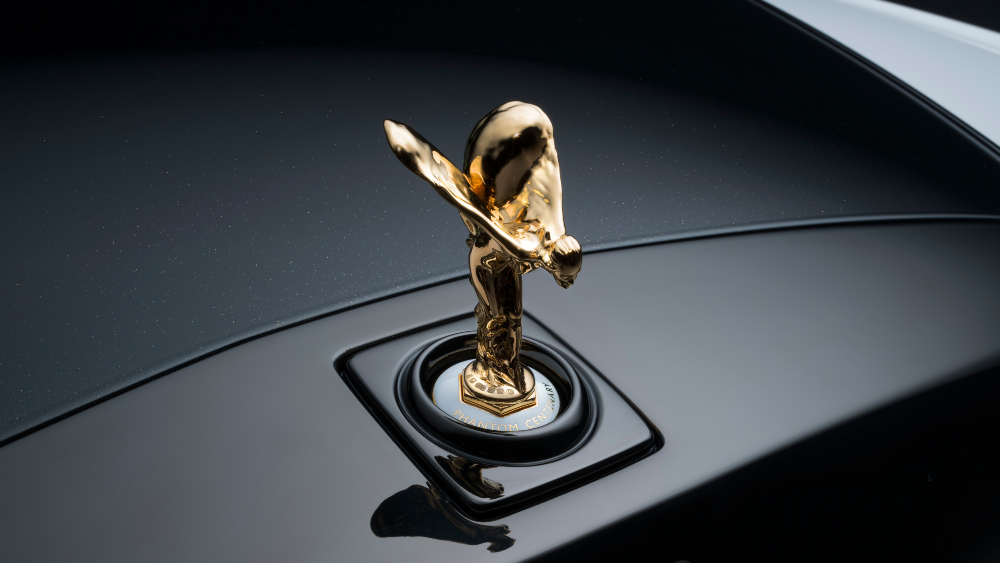
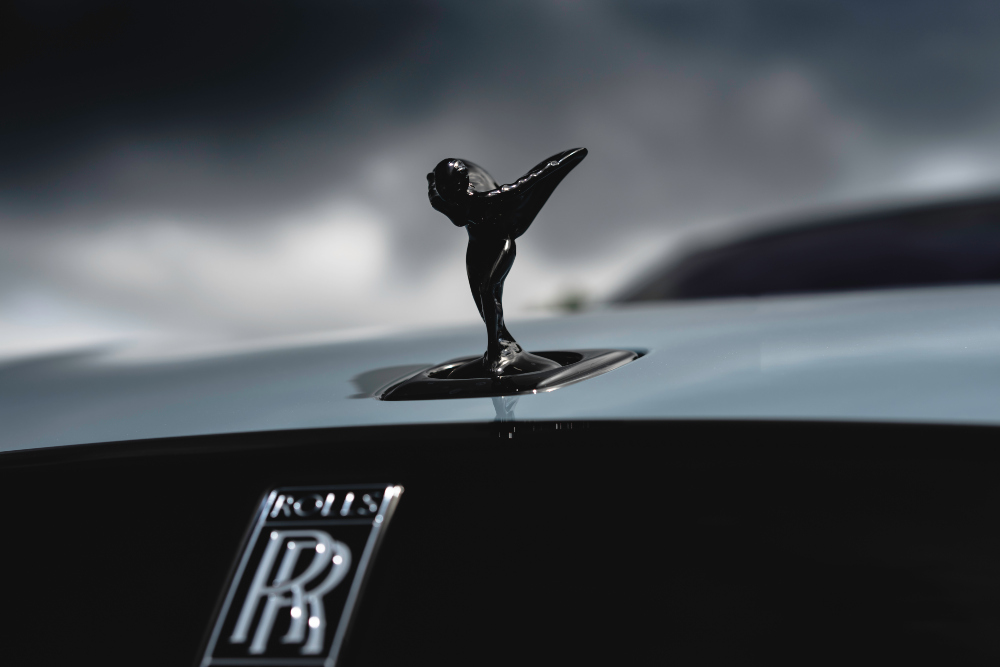
Special versions of the figurine have appeared in precious materials such as solid silver, gold plating, and even carbon fibre. In certain bespoke projects, the sculpture has been reimagined using ceramic finishes or custom artistic interpretations.
These variations demonstrate how the Spirit of Ecstasy continues to inspire new creative expressions while remaining firmly connected to its historic origins.
A Symbol That Transcends Generations
More than a century after its creation, the Spirit of Ecstasy remains one of the most enduring symbols in the automotive world.
It represents far more than a design element.
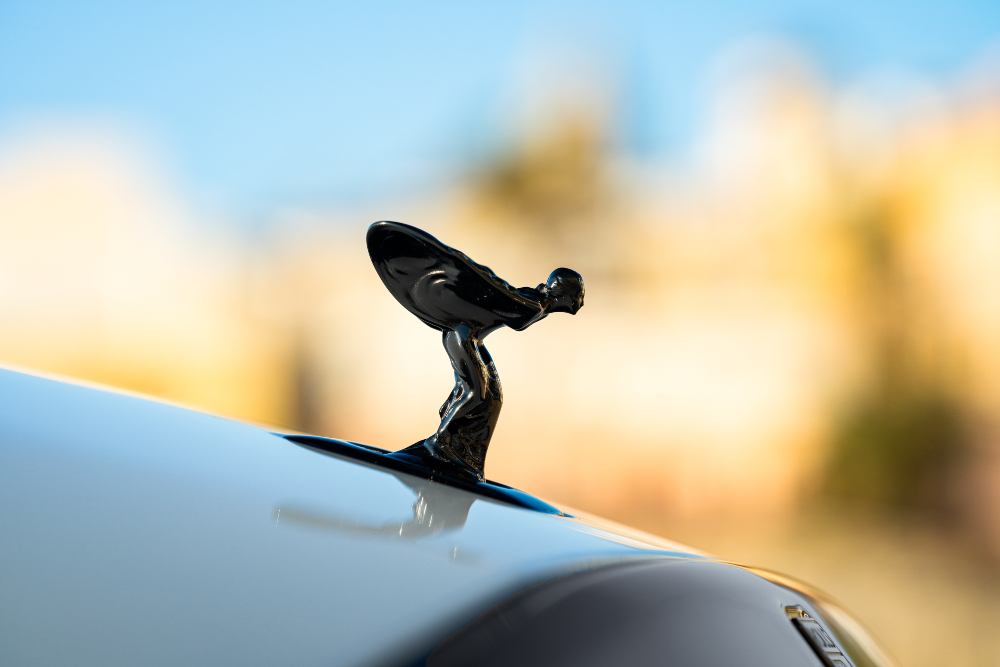
It embodies the values that have defined Rolls-Royce since its earliest days — elegance, engineering excellence, and the pursuit of perfection.
As automotive technology continues to evolve, the Spirit of Ecstasy remains unchanged in its purpose: guiding each Rolls-Royce into the future while honoring a legacy that began in 1911.
A small sculpture, perhaps.
But one carrying the weight of an entire century of automotive greatness.