
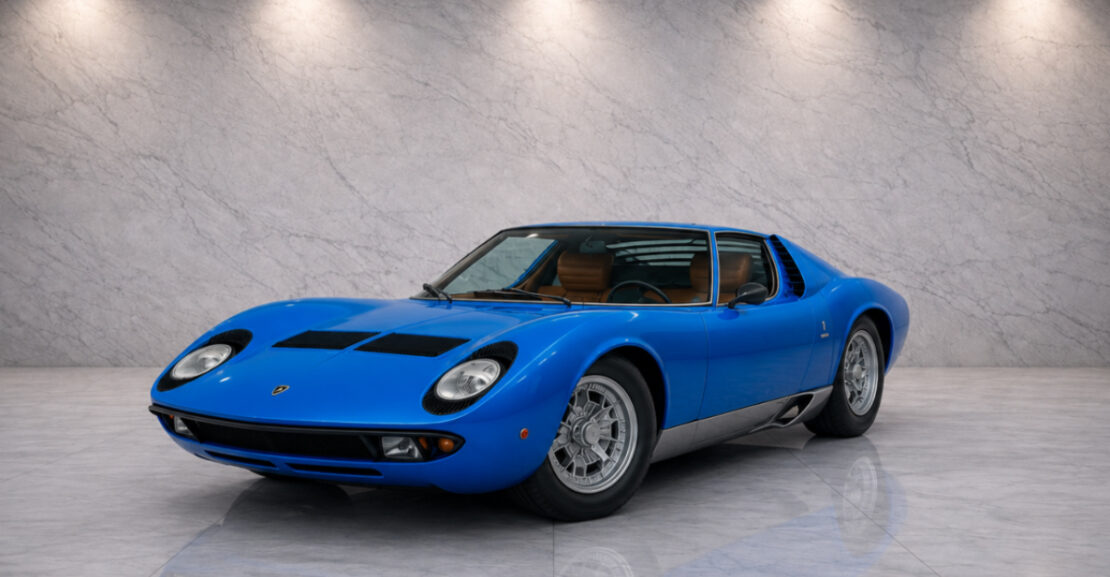
Every automotive era has its defining machine.
For the modern supercar, that car is the Lamborghini Miura.
Before the Miura arrived, high-performance grand touring cars typically placed their engines in the front. Ferrari, Aston Martin, Maserati, and Jaguar all followed a similar formula.
Then Lamborghini changed everything.
When the Miura debuted in the mid-1960s, it introduced a radical mid-engine layout wrapped in one of the most beautiful bodies ever created. The result was so revolutionary that many historians consider it the world’s first true supercar.
Nearly six decades later, the Miura remains one of the most important and desirable collector cars ever built.
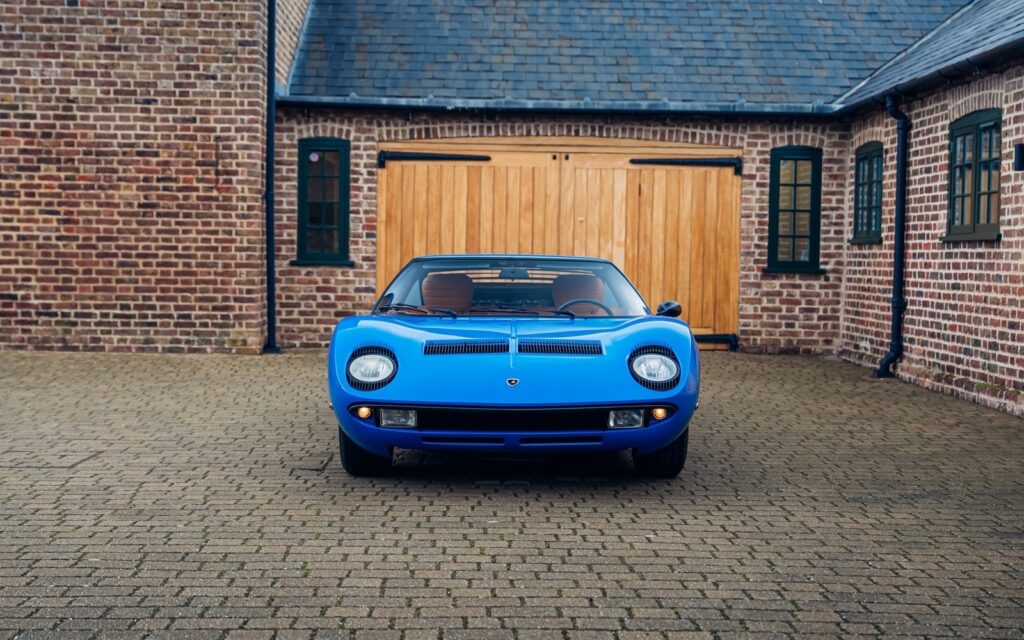
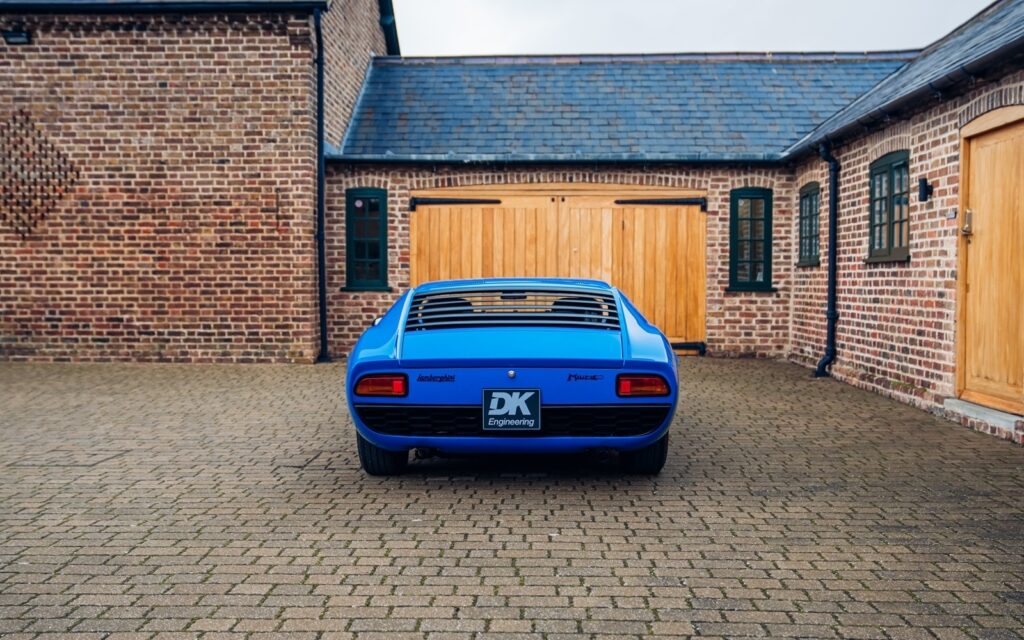
This exceptional 1968 Miura P400 elevates that significance even further.
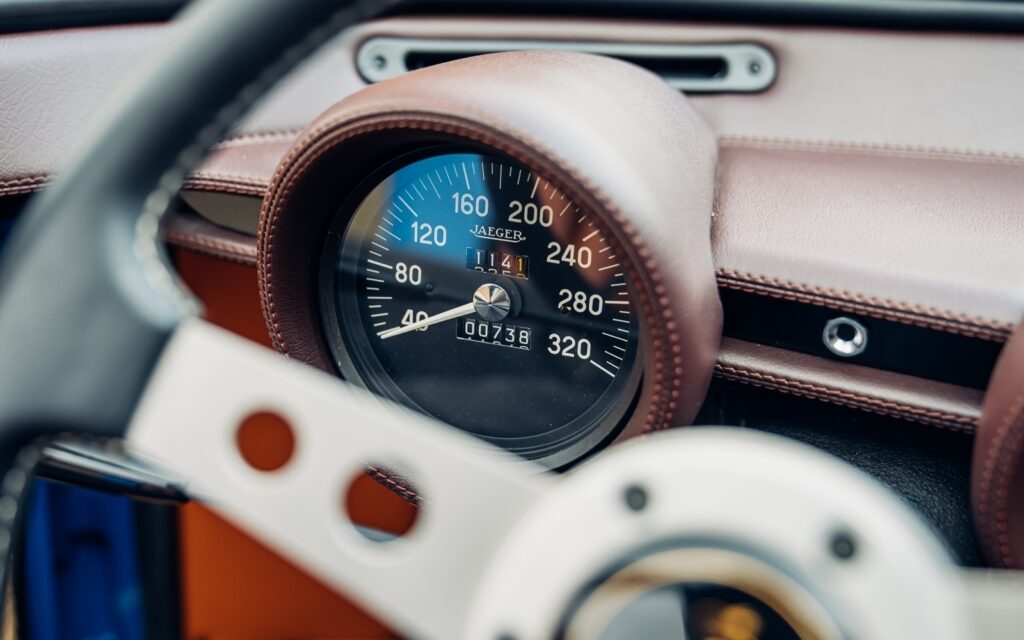
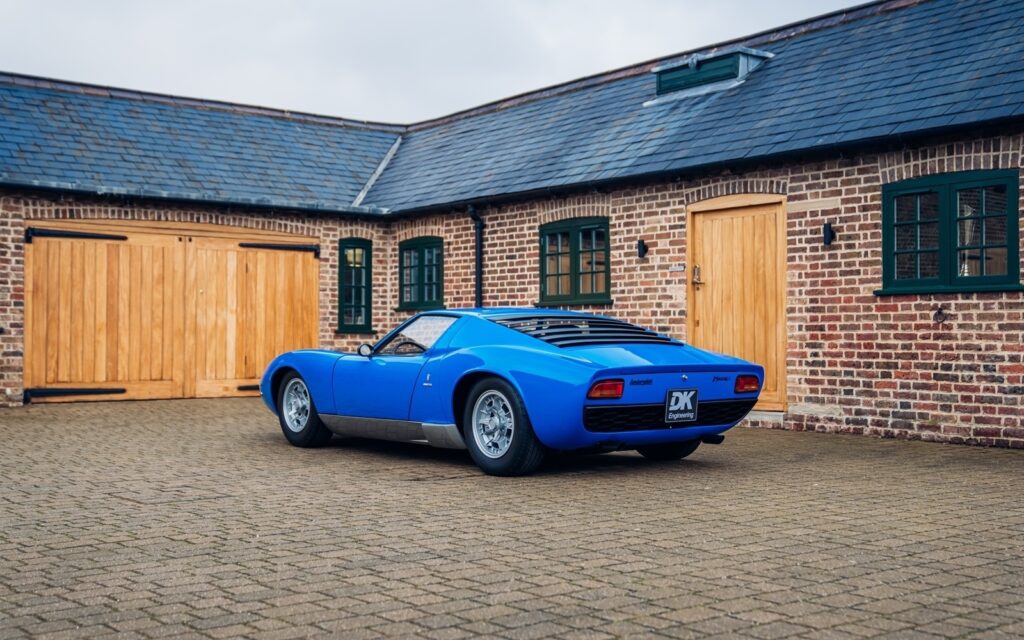
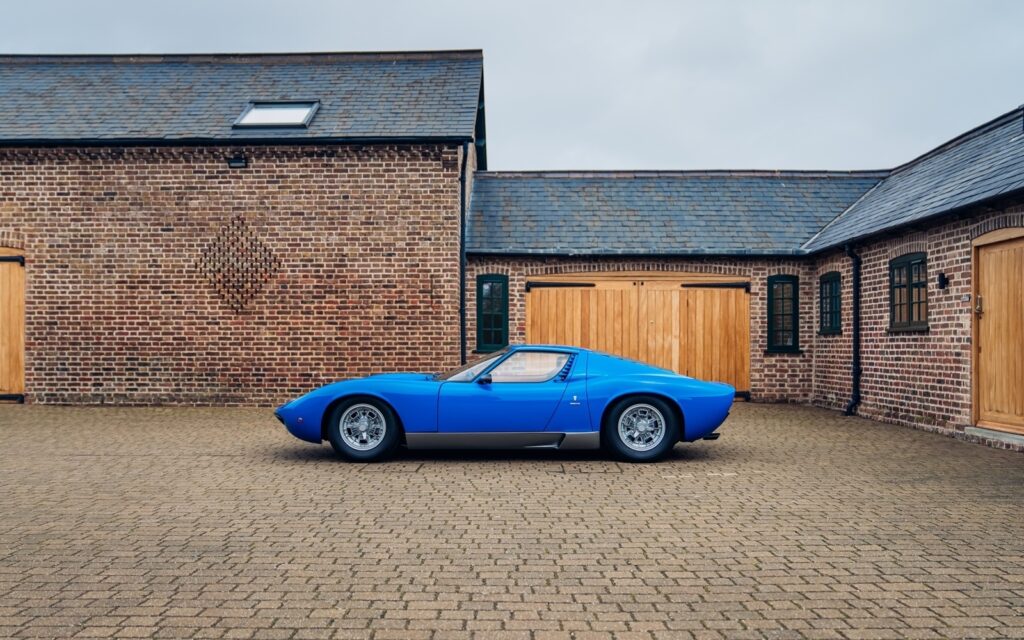
Finished in its original and highly exclusive Bleu Miura over Skay Senape specification, retaining its matching-numbers engine, and benefiting from a concours-level restoration completed in Italy, it represents one of the finest examples of Lamborghini’s most celebrated model.
The Birth of a Legend
The Miura was unlike anything the automotive world had seen before.
Its development began not as an official Lamborghini project, but as a passion project undertaken after hours by a group of young engineers determined to create something extraordinary.
The concept was radical.
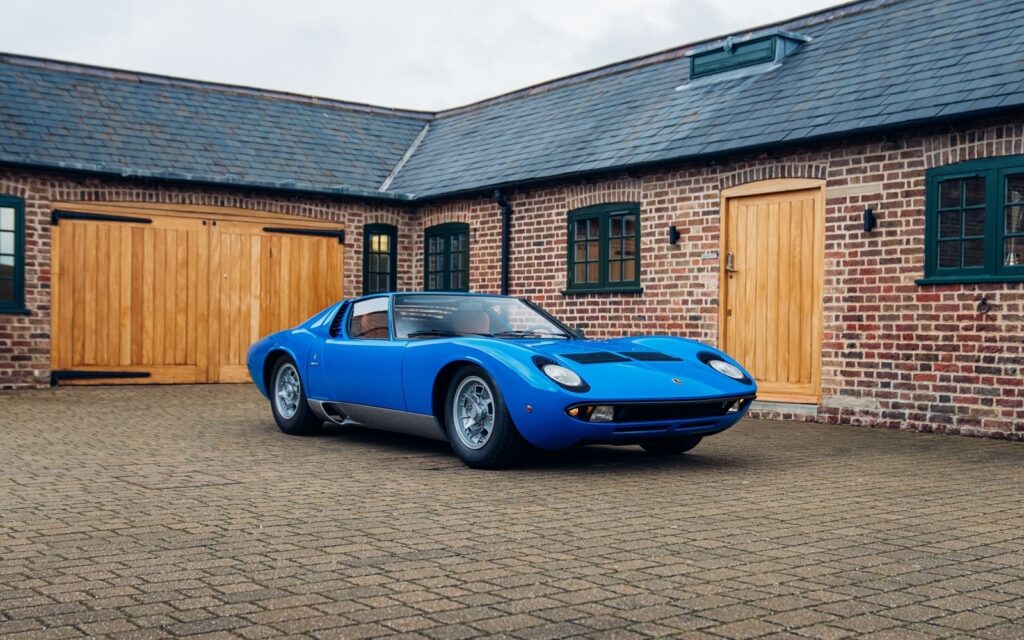
By mounting the V12 transversely behind the cockpit, engineers created a dramatically compact package that allowed for proportions unlike any contemporary sports car.
The body, designed by Marcello Gandini at Bertone when he was just twenty-seven years old, became an instant masterpiece.
The combination of muscular rear haunches, impossibly low profile, flowing curves, and distinctive “eyelash” headlight surrounds created a silhouette that remains breathtaking today.
Few automobiles have ever possessed such presence.
The Original P400
The earliest Miuras are often regarded by collectors as the purest expression of the concept.
Known as the P400, these first-generation cars introduced the formula that would forever define Lamborghini.
Power came from a naturally aspirated 4.0-liter V12 breathing through six Weber carburetors and producing approximately 350 horsepower.
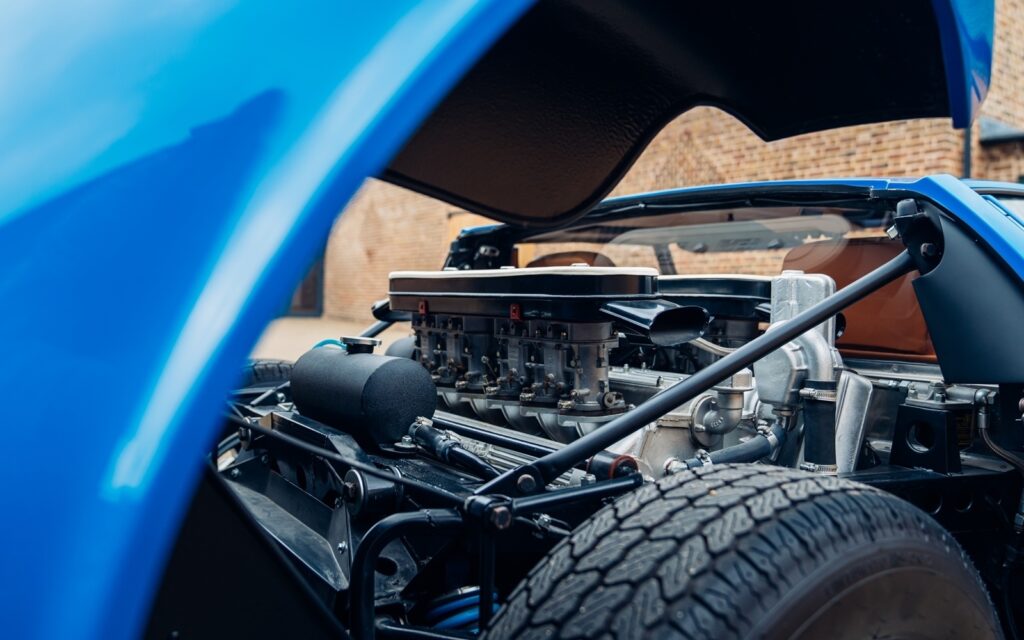
While those figures may appear modest by modern standards, they were extraordinary in the late 1960s.
Combined with lightweight construction, four-wheel independent suspension, and four-wheel disc brakes, the Miura delivered a level of performance that shocked the automotive establishment.
More importantly, it delivered an experience.
The sound, the responsiveness, the visibility from behind the steeply raked windshield, and the sensation of sitting ahead of a screaming V12 remain unlike anything produced today.
One of Just 37 Finished in Bleu Miura
The rarity of this example begins with its original factory specification.
Completed at Sant’Agata Bolognese in September 1968, chassis 3645 was delivered through Lamborghini’s Italian distributor SEA S.r.L. finished in the striking combination of Bleu Miura over Skay Senape.
Factory records confirm that only 37 Miura P400s were produced in this color.
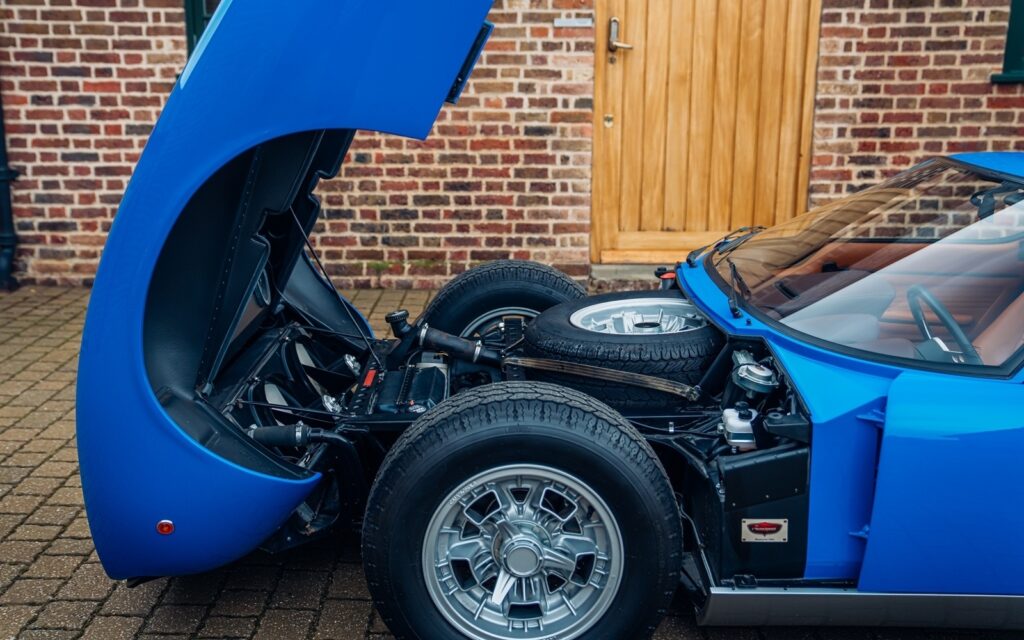
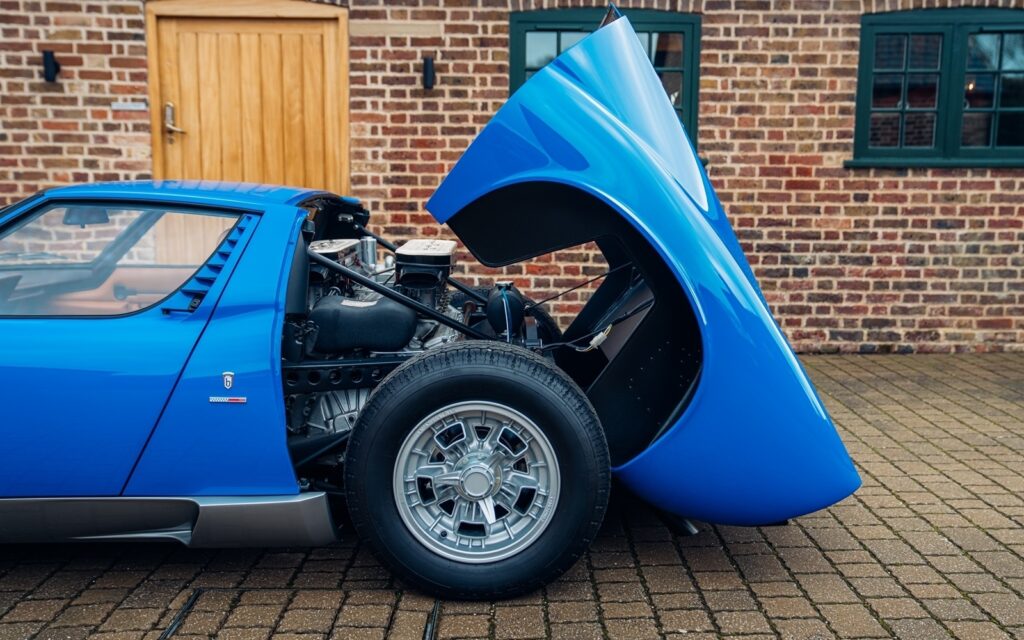
That fact alone places this car among the most desirable examples of the model.
While many Miuras were ordered in more familiar shades such as Rosso Miura, Giallo Fly, or Arancio Miura, Bleu Miura remains one of the most distinctive and elegant colors ever offered by the factory.
The contrast with the Senape interior perfectly captures the optimism and style of late-1960s Italian design.
Today, it is a specification that stands apart even among the world’s finest Miuras.
A Well-Documented Italian History
This Miura benefits from an exceptionally well-documented ownership history.
Its first owner was Gian Giacomo Paladino of Rome before the car passed through several Italian custodians during its early life.
Among them was Maria Monastero, who retained ownership for more than a decade.
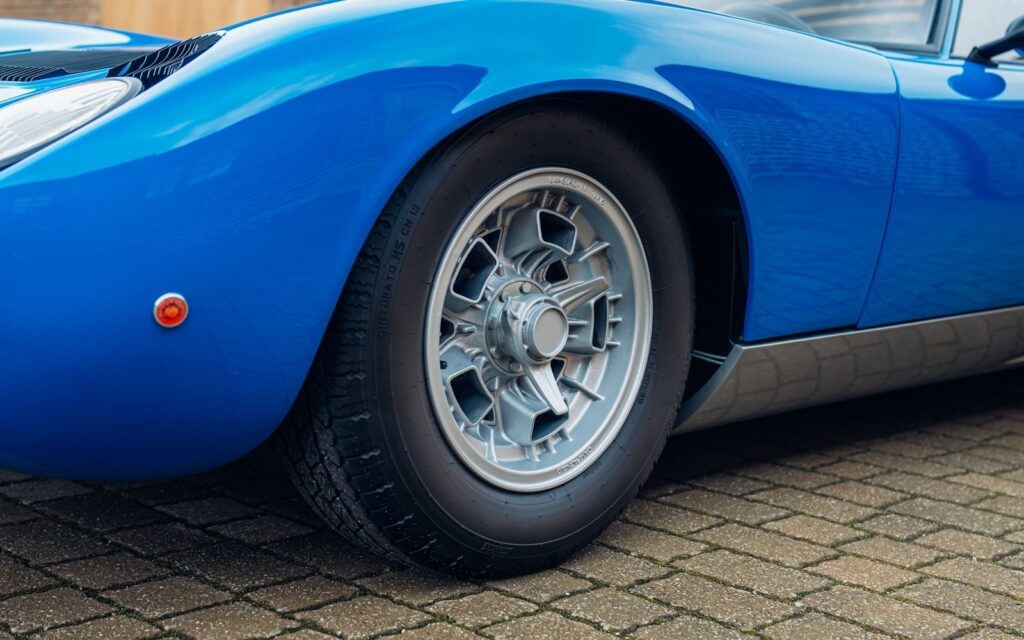
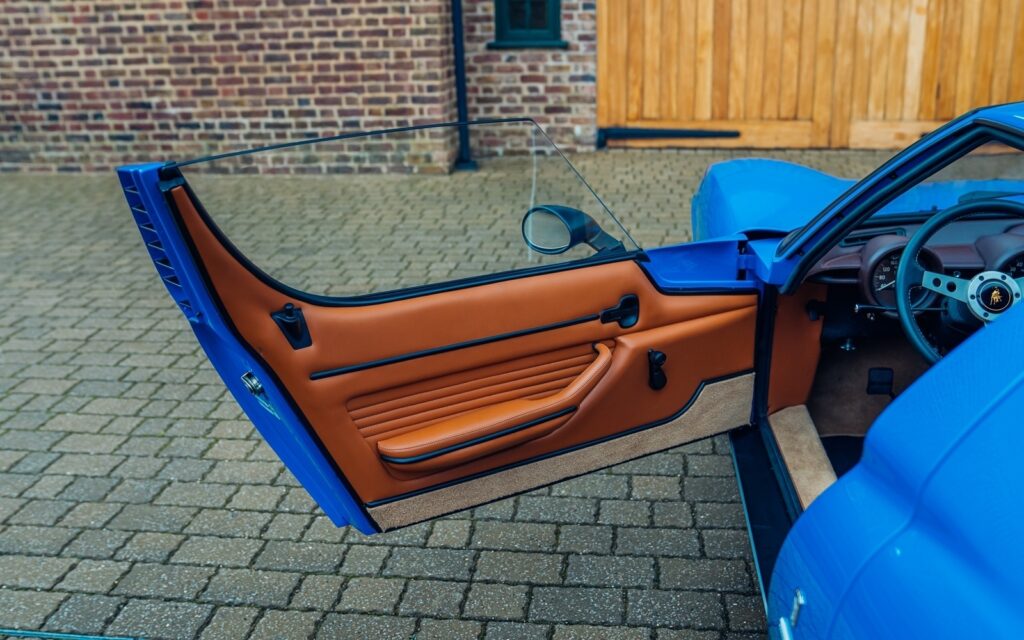
Over the years the car underwent various cosmetic changes, including repaints in alternative colors, a common occurrence among Miuras during the 1970s and 1980s.
By the time it was acquired by its current owner, the decision was made to return the car to its original factory-correct configuration.
That decision ultimately resulted in one of the most significant restorations completed on a Miura in recent years.
Concours-Level Restoration
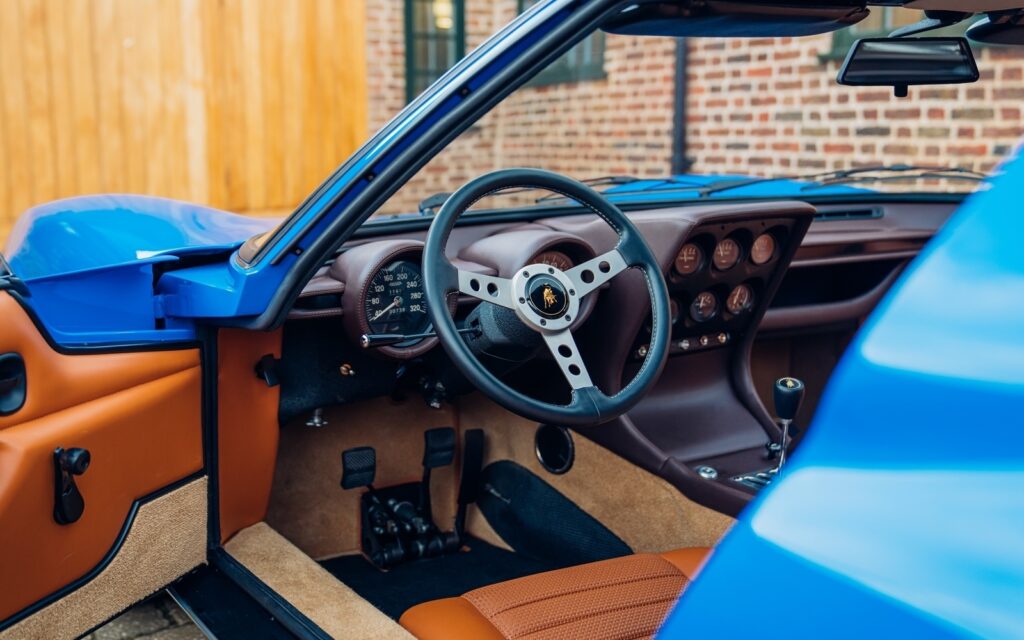
In 2018, the car was entrusted to renowned Italian restoration specialist Scartapatti.
The objective was uncompromising.
The Miura was stripped to bare metal and restored to concours standards while preserving authenticity throughout the process.
Every stage of the restoration was carefully documented.
The work included:
- Complete Bare-Metal Restoration
- Mechanical Rebuild
- Engine Overhaul
- Running Gear Restoration
- New Interior Trim
- Factory-Correct Bleu Miura Paintwork
- Period-Correct Details and Finishes
The restoration was completed in 2021 and returned the car to exactly the specification in which it left Sant’Agata in 1968.
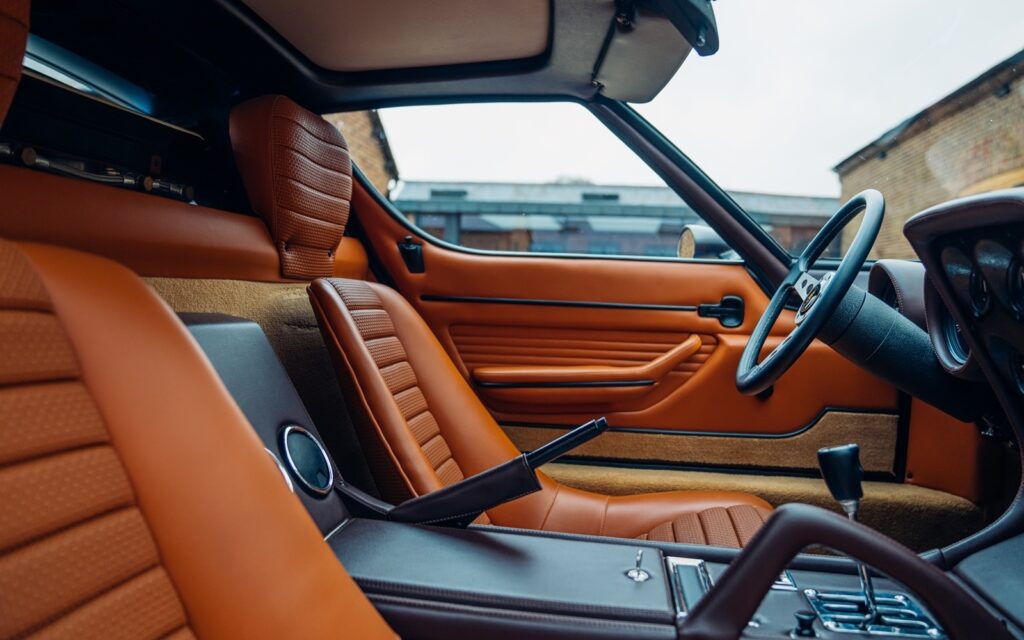
Today, the car presents at an extraordinary level.
The quality of the restoration is evident throughout and would satisfy even the most demanding Lamborghini collector.
Matching Numbers and Collector Quality
One of the most important attributes of this Miura is the retention of its matching-numbers engine.
For serious collectors, originality remains paramount.
Combined with the rare color combination, documented ownership history, and concours restoration, the matching-numbers status significantly enhances the desirability of the car.
The vehicle has covered approximately 1,150 kilometers since completion of the restoration, ensuring that it remains fresh while fully sorted and ready for continued enjoyment.
Few Miuras currently available can match this combination of provenance, originality, and presentation.
One of Lamborghini’s Greatest Achievements
Certain automobiles transcend their manufacturers and become part of broader automotive history.
The Miura belongs in that category.
Its influence can be seen in every mid-engine Lamborghini that followed, from the Countach and Diablo to the Murciélago and Revuelto.
More than a collector car, the Miura represents the moment the supercar was born.
For many enthusiasts, it remains the most beautiful Lamborghini ever created.
This example, restored to its original specification and presented in one of the rarest factory colors, stands among the finest representations of that legacy.
Looking for a Car Like This?
The Lamborghini Miura P400 combines groundbreaking engineering, timeless Italian design, and extraordinary collector significance in one of the most important automobiles ever produced.
Our Luxury Car Sourcing service provides access to historically significant Lamborghinis, concours-level collector cars, rare Italian exotics, and discreet off-market opportunities through trusted international automotive networks.
Whether you are searching for a Miura, Countach LP400, Lamborghini 350 GT, Ferrari 275 GTB, or another landmark collector automobile, we can assist in identifying exceptional opportunities worldwide.
Vehicle Specifications
Model: Lamborghini Miura P400
Year: 1968
Mileage: 1,150 km (Since Restoration)
Engine: 4.0-Liter Naturally Aspirated V12
Power: 350 hp
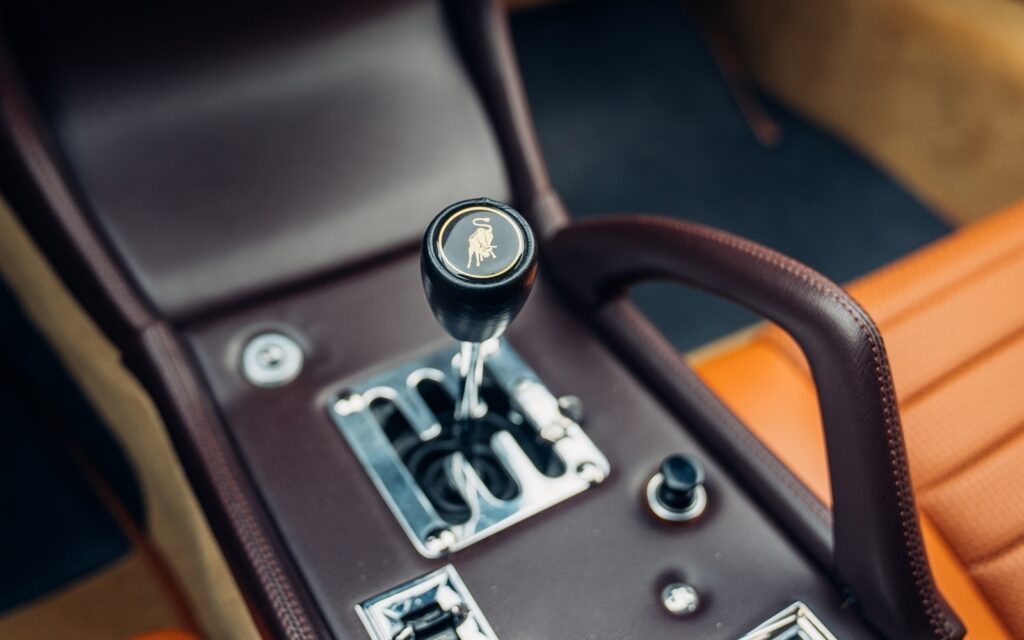
Transmission: 5-Speed Manual
Drivetrain: Rear-Wheel Drive
Exterior Color: Bleu Miura
Interior: Skay Senape
Configuration: Left-Hand Drive
Location: United Kingdom
Key Features
- Matching-Numbers Engine
- Factory-Correct Bleu Miura Specification
- One of Only 37 P400s Finished in Bleu Miura
- Concours-Level Restoration Completed in 2021
- Restoration by Scartapatti
- Comprehensive Restoration Documentation
- Italian-Supplied Example
- Four-Wheel Independent Suspension
- Four-Wheel Disc Brakes
- Six Weber Carburetors
- 4.0-Liter Lamborghini V12
- One of the Most Important Supercars Ever Built
- Exceptional Provenance and History
Dealer Information
This Lamborghini Miura P400 is offered by DK Engineering, one of the world’s most respected specialists in historically significant Ferraris, Lamborghinis, and blue-chip collector automobiles.