
Two Opposing Visions of the Modern V8 Hybrid Supercar
Electrification has transformed the supercar landscape, yet not every manufacturer has chosen the same path forward.
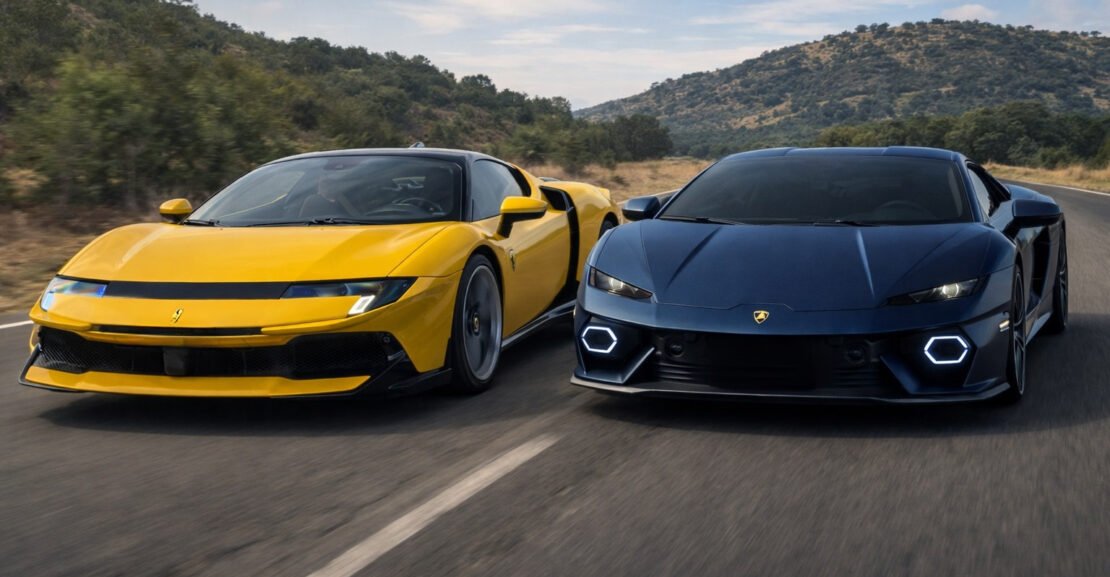
In this new era, Ferrari and Lamborghini once again stand face to face with two machines that represent far more than performance figures. They embody fundamentally different philosophies on how an icon should evolve in an electrified future.
The Ferrari 849 Testarossa looks to its past to project its future. The Lamborghini Temerario, by contrast, deliberately breaks from historical references to inaugurate an entirely new design and technological language.
Two interpretations of hybrid performance. Two visions of contemporary mechanical luxury.
Exterior Design — Restrained nostalgia vs radical futurism
The 849 Testarossa reinterprets one of Maranello’s most legendary names through a contemporary lens — though not without controversy among purists.
Rather than embracing a direct retro reinterpretation of the 1980s icon, Ferrari opted for a subtler conceptual homage. References to the original exist, but they are philosophical rather than literal.
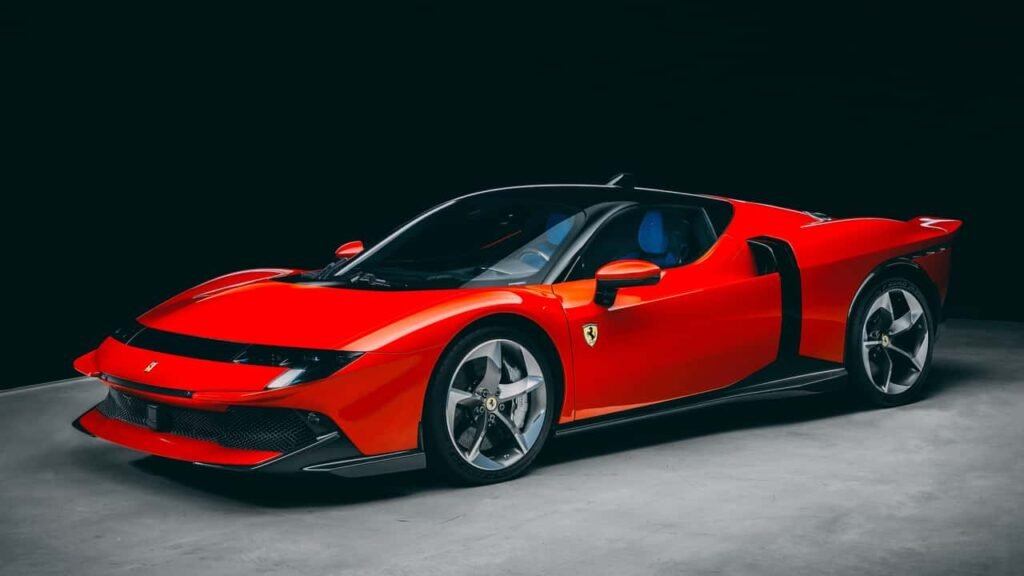
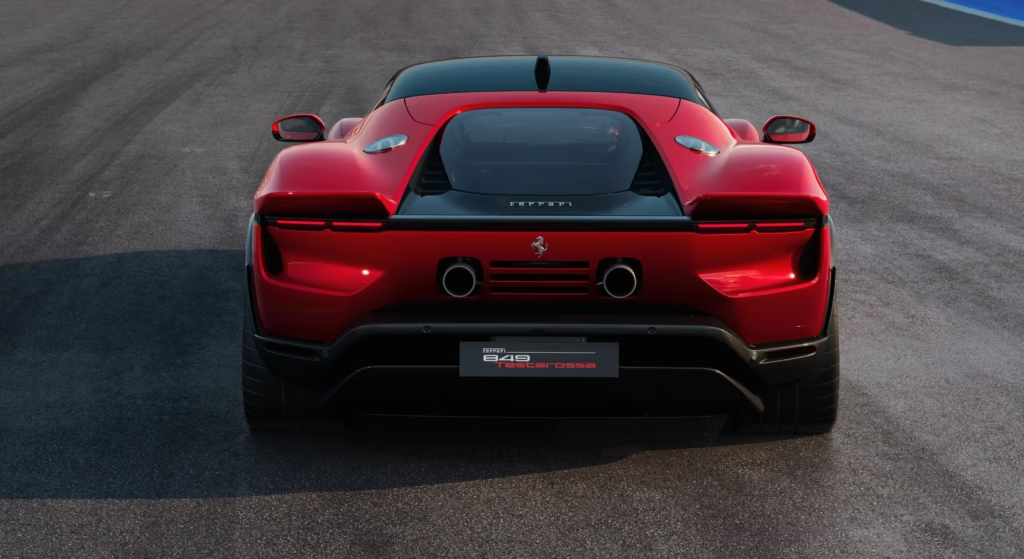
Hints can be seen in the reinterpretation of the side intakes — now far more integrated into the bodywork — as well as in certain horizontal proportions that evoke visual stability. The rear remains wide and dominant, yet avoids replicating the signature slatted grille that defined the classic Testarossa.
This restrained approach has divided opinion: some praise its clean, forward-looking aesthetic, while others would have preferred a more explicit visual link to the original.
The result is a modern Ferrari that honors its name through spirit rather than nostalgia.
The Lamborghini Temerario takes the opposite route.
Its design abandons historical continuity altogether in favor of an aggressively futuristic identity. Sharp geometric surfacing, oversized air intakes and hexagonal lighting signatures create an aesthetic that feels closer to advanced aerospace design than traditional automotive form.
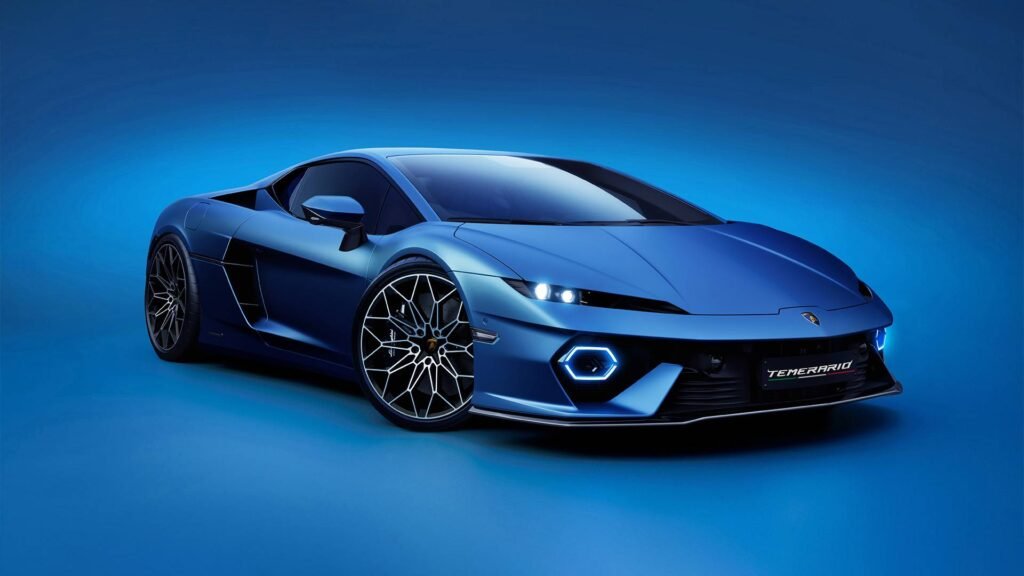
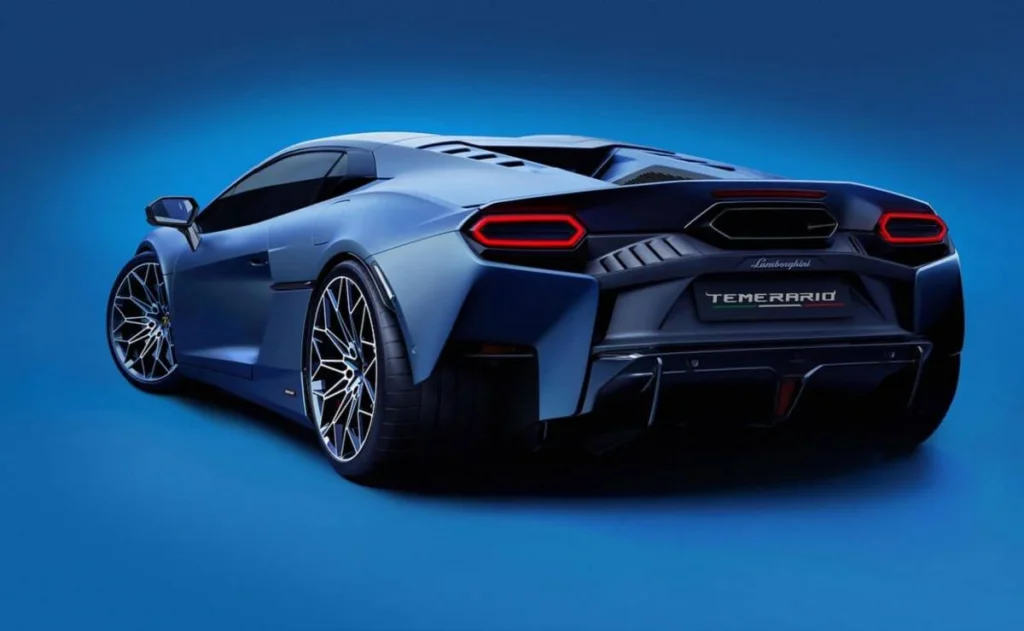
The Temerario does not seek lineage — it seeks impact. Its presence is theatrical, confrontational and unmistakably Lamborghini.
Where the Ferrari seduces through reinterpretation, the Lamborghini dominates through visual force.
Interior — Artisan luxury vs immersive technology
Inside the Ferrari, the brand’s driver-centric philosophy remains intact.
The cockpit wraps tightly around the driver, with most controls integrated into the steering wheel and a digital instrument cluster positioned within the natural line of sight.
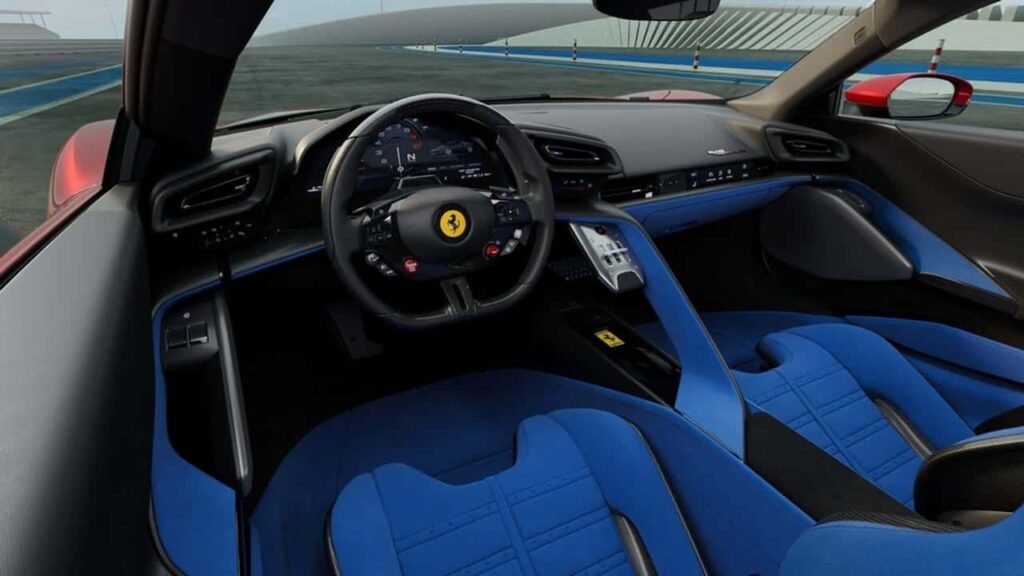
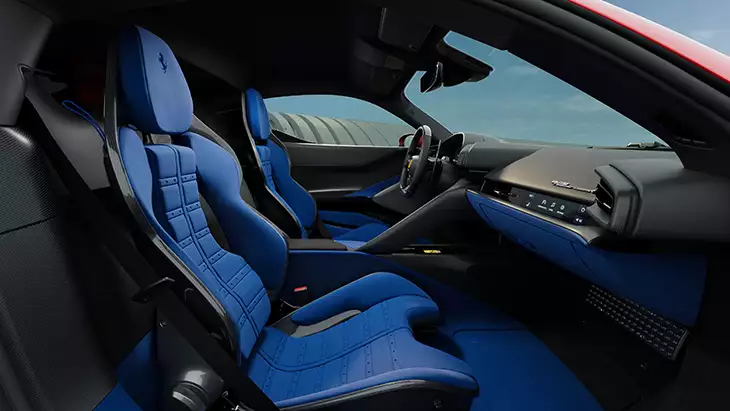
Premium leather, Alcantara and exposed carbon fiber create an environment that communicates craftsmanship and tactile luxury rather than digital spectacle.
Lamborghini adopts a more futuristic interior architecture.
The Temerario’s cabin resembles a high-performance aircraft cockpit, featuring multiple digital displays, fighter-jet-inspired switchgear and immersive graphical interfaces.
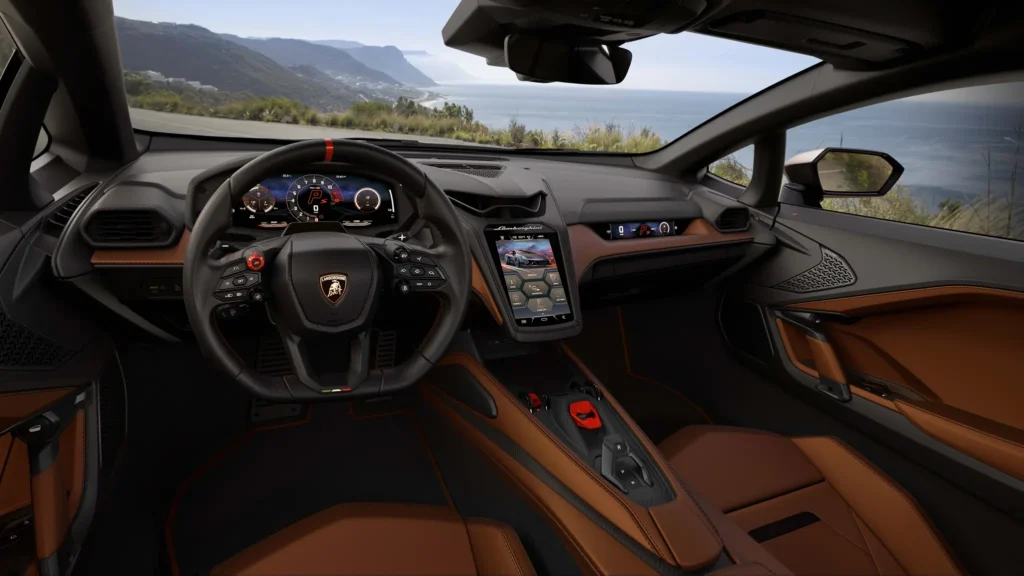
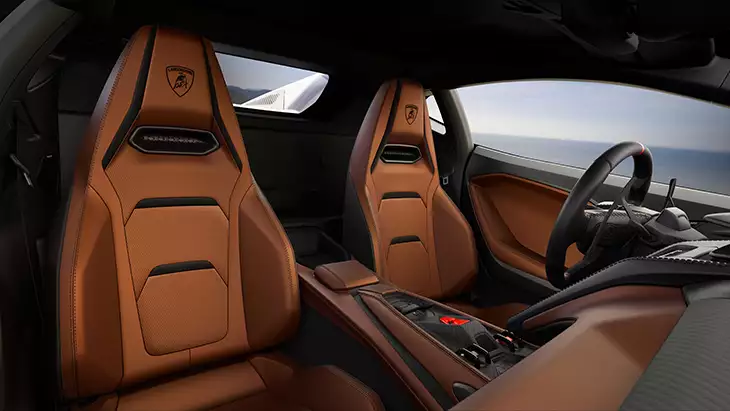
Configurable ambient lighting and advanced infotainment layers reinforce the sense of stepping into a technological flagship designed as much for visual drama as driving intensity.
Ferrari SC40: A One-Off Tribute to the Iconic F40 With Modern Hybrid Power
Hybrid Powertrain Architecture — Two interpretations of electrified performance
Ferrari remains deeply committed to emotionally driven combustion engines, integrating electrification as a performance enhancer rather than a replacement of identity.
In the 849 Testarossa, this philosophy materializes through a rear mid-mounted twin-turbo V8 paired with a high-performance hybrid system. Power delivery is engineered to feel progressive and layered, with electric torque filling response gaps while the combustion engine retains acoustic prominence.
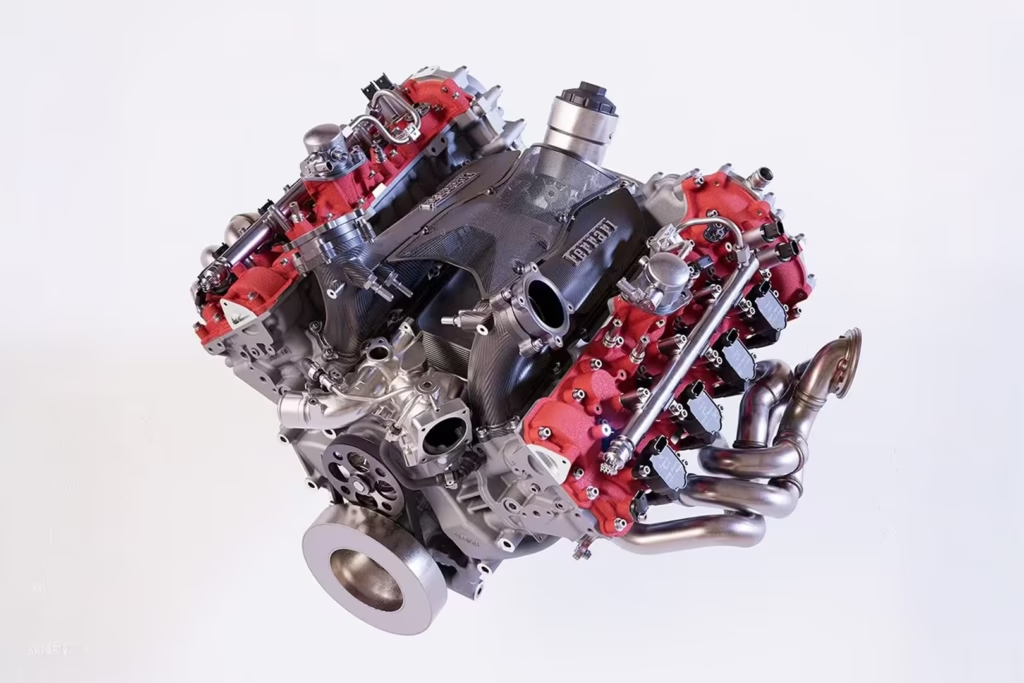
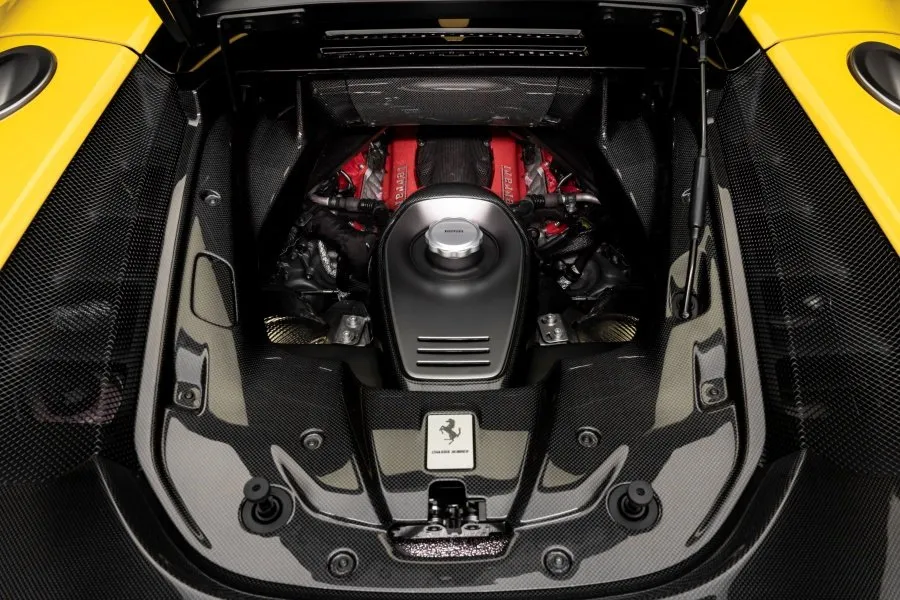
Electronically enhanced sound engineering ensures the car preserves Ferrari’s signature sensory DNA. The goal is not merely acceleration figures, but emotional continuity between driver and machine.
Lamborghini’s approach is fundamentally different.
The Temerario represents Sant’Agata’s new fully electrified performance philosophy. A newly developed twin-turbo V8 works in conjunction with three electric motors, creating a system where electrification forms the core of performance rather than its support layer.
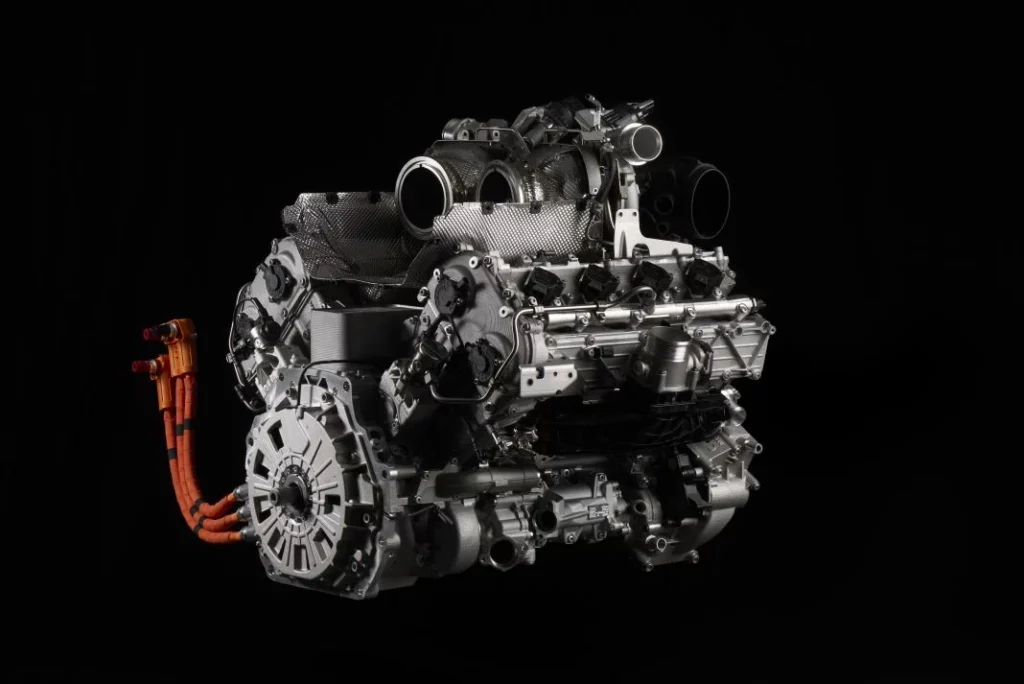
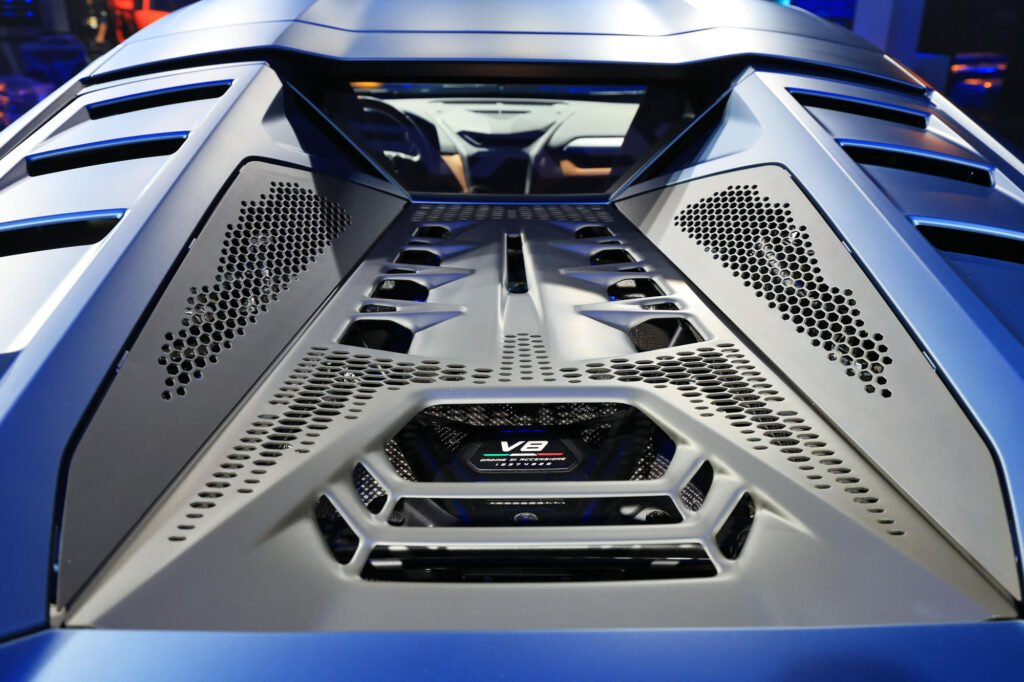
Advanced torque vectoring and an electrified all-wheel-drive architecture allow power distribution to be managed with surgical precision.
Here, electrification does not complement the supercar experience… it redefines it entirely.
Performance — Hybrid engineering pushed to extremes
Beyond philosophy, both machines assert dominance through raw engineering metrics.
The Ferrari 849 Testarossa is powered by a rear mid-mounted 3,990 cc twin-turbo V8 (internal code F154FC) producing 830 hp and 842 Nm of torque. This extensively reengineered unit features revised intercoolers, optimized intake chambers, upgraded turbochargers and Inconel exhaust manifolds designed to enhance both performance and acoustic character.
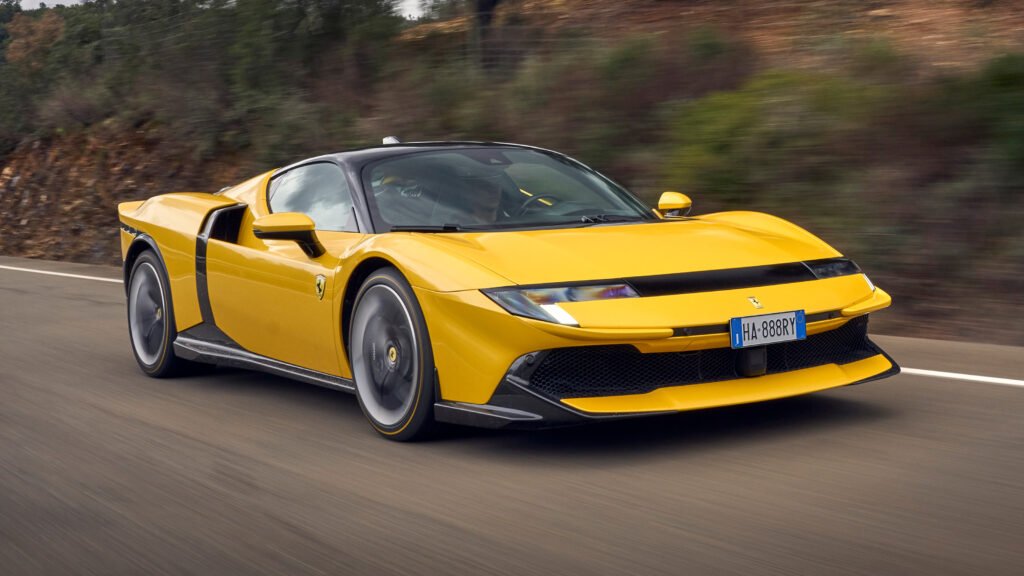
Hybrid assistance contributes an additional 220 hp via a rear MGU-K motor and two front-mounted RAC-e units, bringing total system output to an astonishing 1,050 hp.
Performance figures place it firmly in hypercar territory:
- 0–100 km/h: under 2.3 seconds
- 0–200 km/h: ~6.5 seconds
- Top speed: over 330 km/h
A 7.45 kWh battery enables up to 25 km of electric driving while maintaining a 45/55 weight distribution.
The Lamborghini employs a High Performance Electrified Vehicle (HPEV) system combining a 4.0-liter twin-turbo V8 with three electric motors, producing a total of 920 hp.
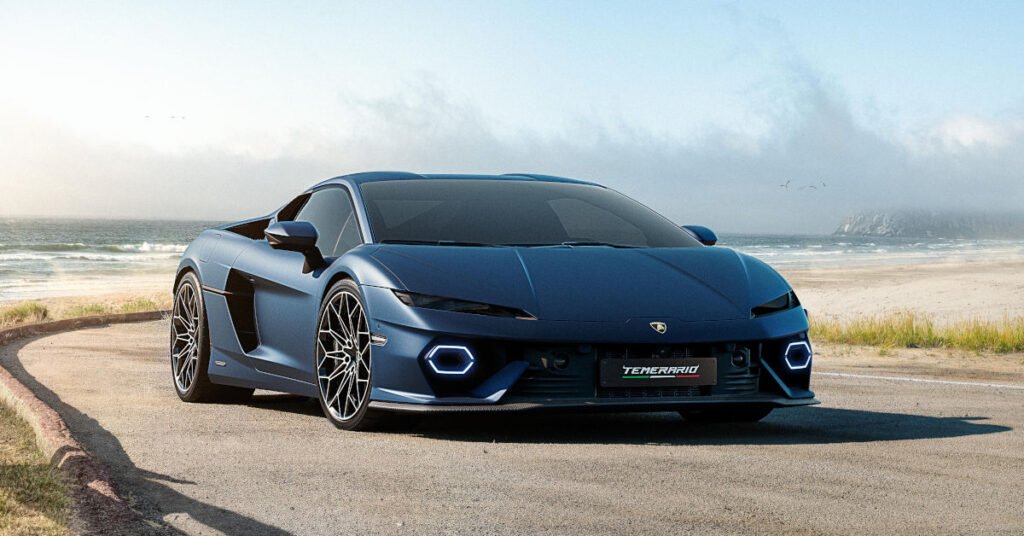
Its architecture includes electrified all-wheel drive (e-4WD), advanced torque vectoring and an eight-speed dual-clutch transmission.
Official performance data:
- 0–100 km/h: 2.7 seconds
- 0–200 km/h: 7.3 seconds
- Top speed: 343 km/h
Notably, the combustion engine is capable of revving to 10,000 rpm — an extraordinary figure in the hybrid turbo era — reinforcing its extreme mechanical character.
Usability — Extreme grand touring vs visceral focus
Ferrari continues to refine the balance between usability and performance. Adaptive suspension, ergonomic calibration and hybrid drivability allow the 849 Testarossa to function as an ultra-high-performance grand tourer when required.
While Lamborghini remains true to its theatrical DNA, the Temerario introduces a far broader dynamic range. In its most aggressive modes it delivers a raw, track-focused experience, yet hybrid drive settings and adaptive suspension allow for surprisingly refined everyday usability. This duality makes it both an extreme performance machine and a supercar capable of more versatile real-world driving.
Price & Market Positioning — Contemporary exclusivity
The 849 Testarossa is expected to enter the market within a base range of approximately €500,000 to €600,000 before personalization.
Ferrari’s Atelier and Tailor Made programs allow extensive customization, from heritage paintwork to bespoke interiors and exposed carbon packages — often adding six-figure increments to final pricing.
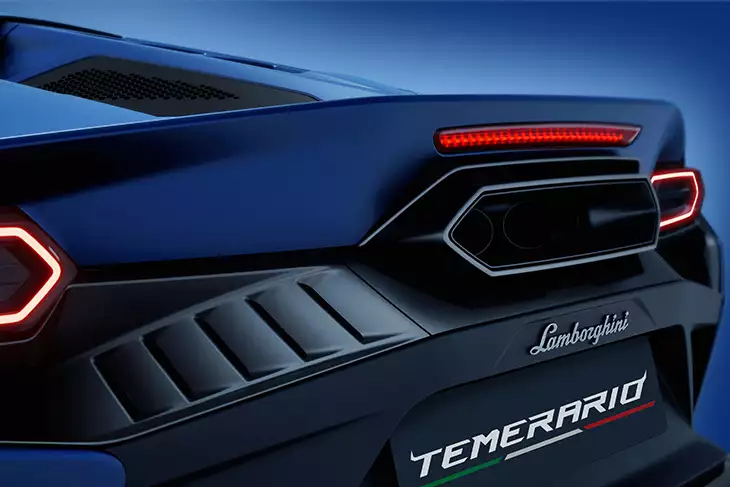
Temerario positions itself slightly lower at entry level, with an estimated base price between €400,000 and €500,000.
However, Lamborghini’s Ad Personam personalization program offers equally extensive bespoke options, meaning real-world transaction prices frequently rise well beyond base figures.
Two futures for the electrified supercar
The Ferrari 849 Testarossa and Lamborghini Temerario do not merely compete in performance — they represent opposing visions of how electrification should shape the supercar’s future.
Ferrari builds tomorrow through heritage, preserving emotional continuity. Lamborghini breaks entirely from the past to forge a radical hybrid identity.
Two distinct paths toward the same summit of modern performance… where tradition and revolution coexist at the pinnacle of automotive engineering.
Explore Ferrari & Lamborghini Supercars for Sale
Inspired by the next generation of hybrid performance? Discover Ferrari and Lamborghini supercars currently available through LuxeOnCars.
From cutting-edge hybrid models to rare collector specifications, explore a curated inventory offered by professional dealers worldwide — where engineering innovation meets automotive exclusivity.