
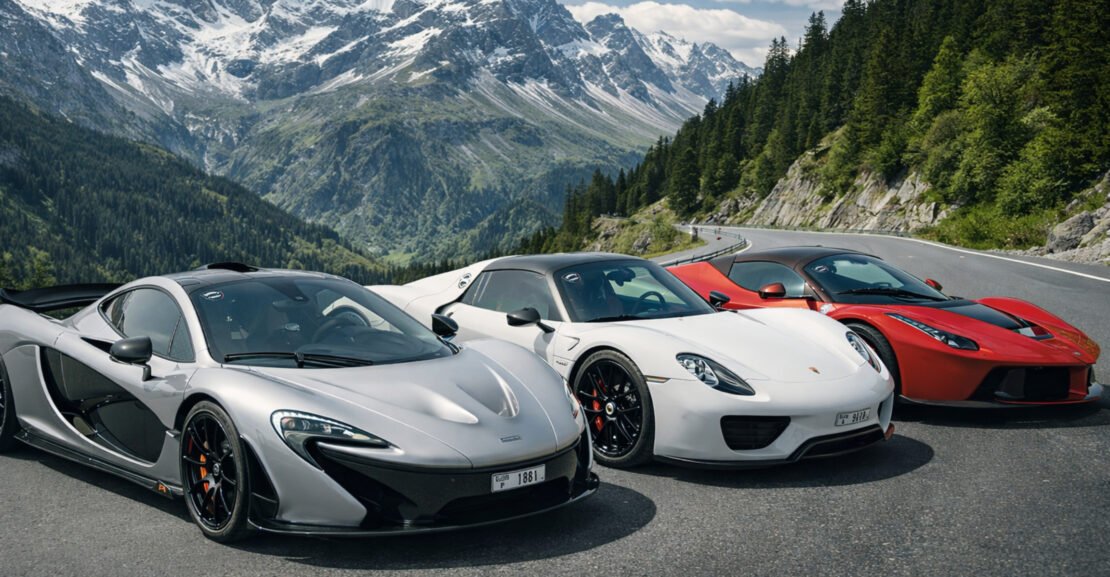
When engineering excellence became an investment class
Throughout automotive history, certain rivalries have transcended performance metrics to redefine the very meaning of the supercar. Few moments illustrate this better than the simultaneous arrival of the Ferrari LaFerrari, McLaren P1 and Porsche 918 Spyder between 2013 and 2015.
Quickly christened The Holy Trinity by the automotive press, these three hypercars did far more than compete for acceleration figures or lap times. They marked the dawn of a new technological paradigm — the fusion of electrification and extreme performance at the highest level of road-legal engineering.
Each manufacturer approached the challenge through its own philosophy:
- Ferrari elevated emotional combustion through hybrid assistance
- McLaren pursued aerodynamic extremity and track dominance
- Porsche engineered a technological ecosystem balancing speed and efficiency
More than a decade later, their legacy extends beyond innovation or design. They now represent one of the most fascinating investment case studies in modern automotive collecting.
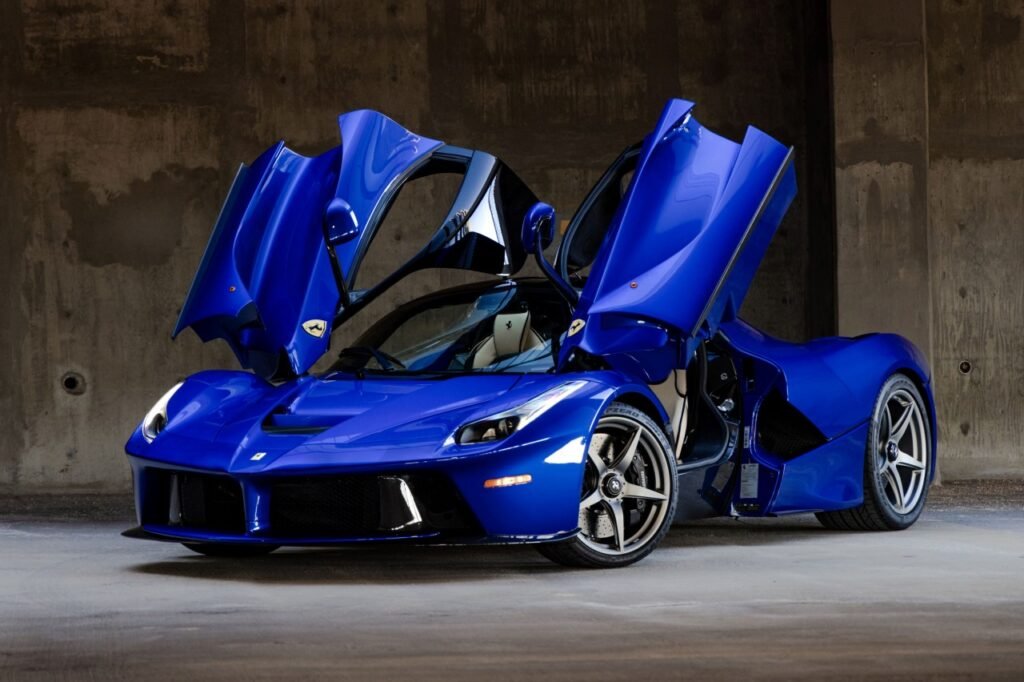
Ferrari LaFerrari — The emotional apex of hybrid performance
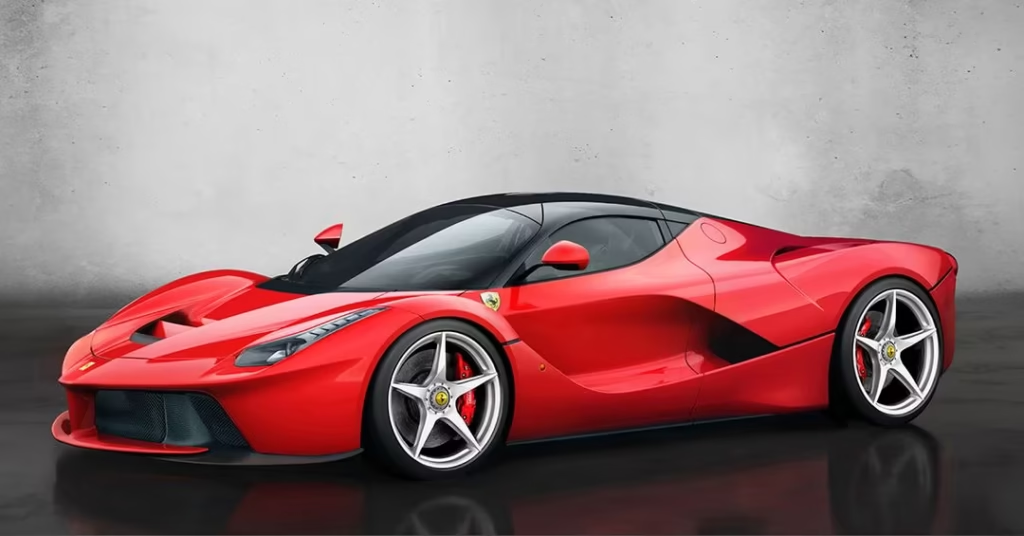
The LaFerrari was never intended to be merely a successor to the Enzo. It was conceived as Ferrari’s ultimate technological manifesto.
Powered by a naturally aspirated 6.3-liter V12 paired with the HY-KERS hybrid system derived from Formula 1, it produced a combined output approaching 963 horsepower.
Unlike many hybrid successors that would follow, the LaFerrari used electrification to amplify — not dilute — the visceral character of its combustion engine.
Production was strictly limited to 499 coupés, later complemented by 210 Aperta variants, all allocated to Ferrari’s most loyal clientele.
Market value evolution
- Original MSRP: ~1.3 M$
- Current coupé market: €3.5M – €4.5M
- Exceptional examples: up to ~€5M
- Aperta variants: typically higher
Forward-looking value bias
- Probability of appreciation: High
- Probability of stability: Medium
- Probability of correction: Low
Its naturally aspirated V12, limited production and historical lineage position it as the strongest emotional and financial asset of the Trinity.
McLaren P1 — Aerodynamic obsession and market volatility
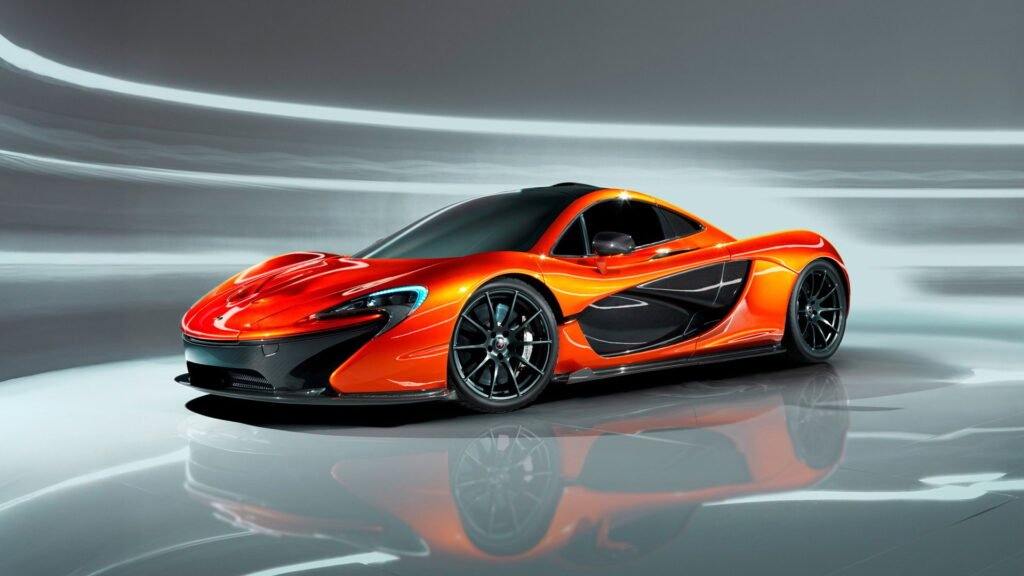
If the LaFerrari was emotional theatre, the P1 was engineering extremism.
Developed under the principle that every surface must generate performance, the P1 featured advanced active aerodynamics and a hybrid system engineered primarily for track capability.
Its twin-turbocharged V8 combined with electric assistance produced 916 horsepower, delivering acceleration figures among the most extreme of its era.
With only 375 units produced, the P1 remains the rarest numerically after Ferrari.
Market value evolution
- Original MSRP: ~1.15 M$
- Early peak valuations: ~2.2M – 2.4M$
- Current standard market: €1.4M – €1.8M
- MSO / bespoke examples: >€2M
Forward-looking value bias
- Probability of appreciation: Medium
- Probability of stability: High
- Probability of correction: Medium-low
Its value trajectory has been more volatile, though its rarity and technical radicalism could strengthen long-term collector interest.
Porsche 918 Spyder — The silent, engineering-led appreciation
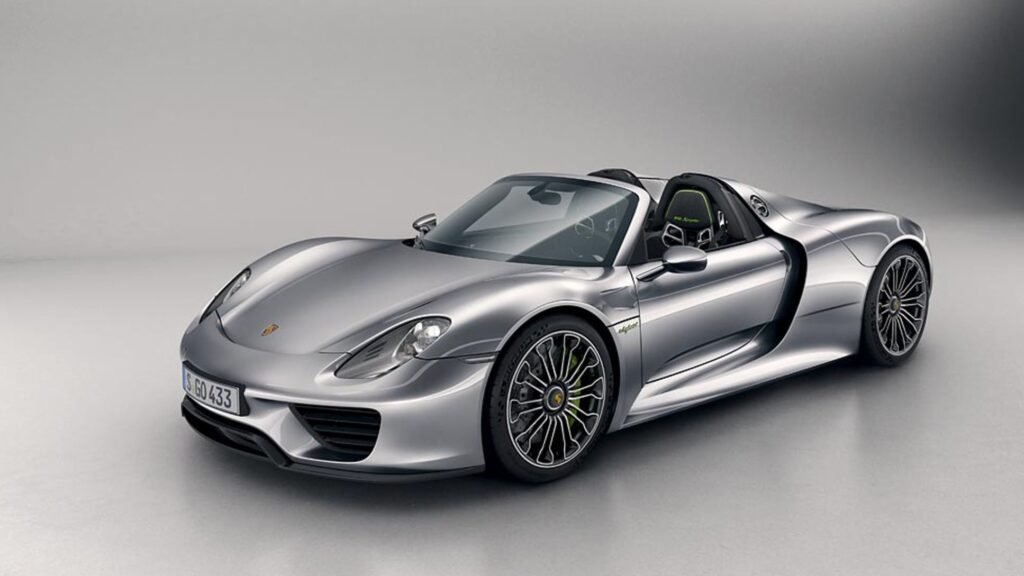
The 918 Spyder represented the most scientifically advanced interpretation of the Trinity.
Combining a naturally aspirated V8 with dual electric motors, it delivered approximately 887 horsepower while introducing partial electric driving capability — a revolutionary concept at the time.
Porsche’s objective was not solely performance, but the redefinition of efficiency within the hypercar segment.
With 918 units produced, it had the highest volume of the trio, yet also the broadest usability and collector accessibility.
Market value evolution
- Original MSRP: ~845,000 $
- Current standard market: €1.5M – €1.9M
- Weissach Package examples: up to ~€2.1M
- Exceptional low-mileage cars: >€2.3M
Forward-looking value bias
- Probability of appreciation: Medium-high
- Probability of stability: High
- Probability of correction: Low
Its value growth has been gradual but consistent, positioning it as the most stable financial asset of the Trinity.
Investment comparison — Three philosophies, three trajectories
When viewed as financial assets rather than engineering projects, the three members of the Holy Trinity have followed distinctly different value paths since their original release.

Ferrari LaFerrari
Limited to 499 coupés, the LaFerrari entered the market at an original price of approximately $1.3 million. Today, standard coupé examples typically trade between €3.5 million and €4.5 million, with exceptional specifications reaching close to €5 million. Its value trajectory remains strongly bullish, driven by emotional desirability and V12 legacy significance.
McLaren P1
With a production run of 375 units and an original MSRP near $1.15 million, the P1 initially surged in value before experiencing market corrections. Current standard examples generally range between €1.4 million and €1.8 million, while bespoke MSO-configured cars can exceed €2 million. Its valuation trend remains the most volatile of the trio.
Porsche 918 Spyder
Produced in 918 units and originally priced around $845,000, the 918 Spyder has demonstrated steady, measured appreciation. Standard market values currently sit between €1.5 million and €1.9 million, with Weissach Package cars approaching or exceeding €2.1 million. Its trajectory is widely regarded as stable with long-term upward potential.
Historical significance beyond valuation
Beyond financial metrics, these three hypercars share a unique historical convergence:
- First production hybrid hypercar trilogy
- Benchmark for electrified performance
- Transition point from analog to hybrid engineering
- Technological foundation for the modern hypercar era
Their long-term value is tied not only to scarcity but to their role as pioneers of a transformative technological chapter.
Engineering as legacy capital
More than a decade after their unveiling, the Holy Trinity stands as a defining milestone where innovation, rivalry and vision converged.
The LaFerrari dominates emotionally and financially, the Porsche 918 emerges as the most balanced long-term asset, and the McLaren P1 remains the most radical technological statement of its generation.
Three machines. Three philosophies. One shared destiny: to become cornerstone assets of 21st-century automotive collecting.
Timing the entry
Beyond performance or prestige, the trajectory of the Holy Trinity offers a crucial lesson in modern automotive investment: timing is as critical as the asset itself.
Acquiring hypercars at launch — before secondary market scarcity takes hold — has historically proven one of the most effective appreciation strategies within the luxury automotive sector.
It is not merely about purchasing an exceptional machine, but about entering its value curve at the earliest inflection point, when production closes and demand begins to exceed supply.
The LaFerrari exemplifies this phenomenon, while the more volatile trajectory of the McLaren P1 illustrates the risks of entering during speculative peaks.
Any investment analysis must also factor in ownership costs:
- Manufacturer servicing programs
- Specialist high-value insurance
- Climate-controlled storage
- Mileage preservation and originality
When properly managed — and when entry occurs at the right moment — hypercars from legacy marques such as Ferrari, McLaren and Porsche can balance emotional passion with long-term capital preservation.
At the summit of automotive collecting, certain machines are not simply driven… they are curated as financial legacy.
Explore Holy Trinity Hypercars for Sale
Inspired by the engineering legacy of the Holy Trinity? Discover Ferrari LaFerrari, McLaren P1 and Porsche 918 Spyder models currently available through LuxeOnCars.
From ultra-low-mileage collector examples to rare investment-grade specifications, explore a curated selection of hybrid hypercars offered by professional dealers worldwide.