
Some cars refuse to disappear.
No matter how many years pass, no matter how many successors arrive and no matter how radically the automotive world changes.
The Pagani Zonda continues to return.
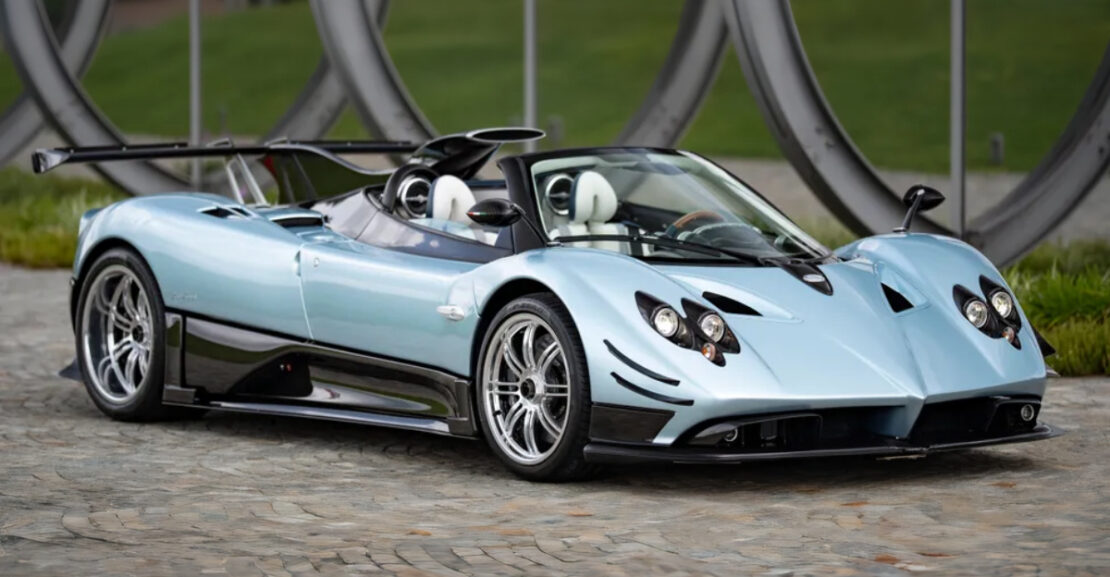
And now, against all expectations, the legend lives on once again through the extraordinary new Pagani Zonda Cervino — a one-off creation that proves the Zonda remains one of the most emotionally powerful hypercars ever built.
More than two decades after the original Zonda shocked the automotive world, Pagani has unveiled another completely reimagined interpretation of its defining masterpiece.
And somehow…
…it still feels timeless.
A One-Off Created Through Pagani Unico
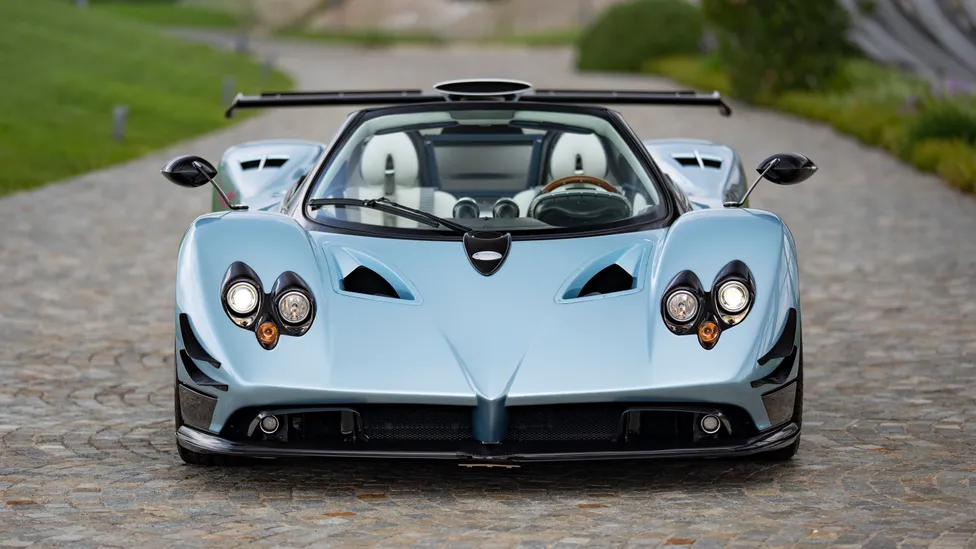
The Zonda Cervino was developed as an ultra-exclusive bespoke commission through Pagani’s Unico personalization programme — the division responsible for some of the most extraordinary one-off hypercars ever created.
Rather than building an entirely new car from scratch, Pagani transformed an existing Zonda chassis into something dramatically different:
- new aerodynamic elements
- revised proportions
- bespoke suspension development
- individualized detailing
- unique visual identity
The result is neither restoration nor simple update.
It is a complete reinterpretation of the Zonda philosophy for a new era.
Why the Name “Cervino” Matters
The name “Cervino” references the iconic Alpine peak known internationally as the Matterhorn — one of Europe’s most dramatic mountain landscapes.
That inspiration appears reflected throughout the project:
- sharper aerodynamic surfaces
- colder, more technical visual themes
- sculptural aggression
- a sense of elevated precision
Unlike some earlier Zonda one-offs inspired by racing or aviation, the Cervino feels almost architectural.
A machine shaped by altitude, wind, and motion.
The Zonda Refuses to Die
Officially, the Zonda ended production years ago.
Unofficially…
…it never truly disappeared.
Pagani has continuously revisited the platform through ultra-exclusive commissions, rebuilds, and evolving bespoke projects for some of the world’s most important collectors.
And that persistence says something profound about the Zonda itself.
Very few hypercars achieve this kind of immortality.
The automotive world has moved through multiple generations of:
- hybrid hypercars
- electric performance
- digital interfaces
- active aerodynamics
Yet the Zonda still captivates enthusiasts in a way many newer machines struggle to replicate.
Because it represents something increasingly rare:
Pure mechanical emotion.
Naturally Aspirated V12 Greatness
Although Pagani has not confirmed every technical detail publicly, the Cervino retains the defining heart of the Zonda experience:
A naturally aspirated AMG-derived 7.3-liter V12.
That engine has become almost mythical within automotive culture.
Its appeal goes far beyond horsepower figures.
The sound.
The immediacy.
The mechanical violence.
The operatic character.
In an era increasingly dominated by hybridization and turbocharged silence, the Zonda’s V12 feels almost rebellious.
And perhaps even more valuable because of it.
Aerodynamics Reimagined
The Cervino introduces several new aerodynamic details that separate it from previous Zonda variants.
Visible changes include:
- redesigned front aero appendages
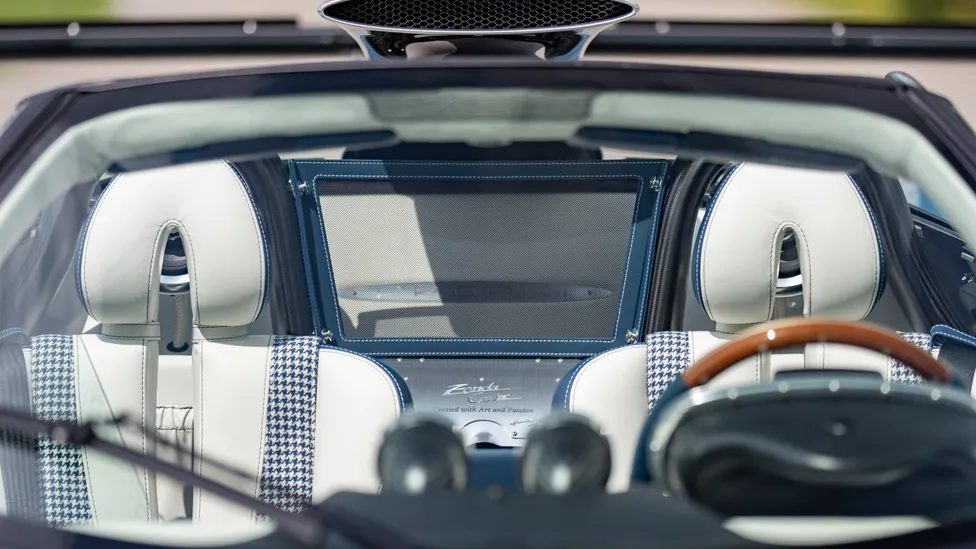
- aggressive roof-mounted air intake
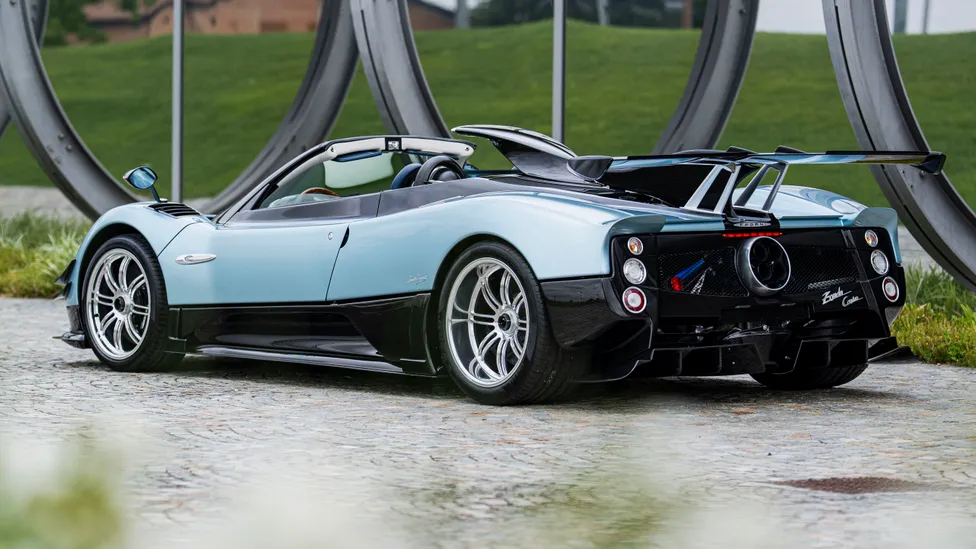
- fixed rear wing configuration
- revised rear bodywork
- updated aerodynamic balance
Yet despite these additions, the car still preserves the unmistakable purity of the original Zonda silhouette.
That balance is critical.
Too many modern hypercars become visually chaotic in pursuit of performance.
The Cervino remains dramatic without becoming excessive.
Analog Hypercar Philosophy
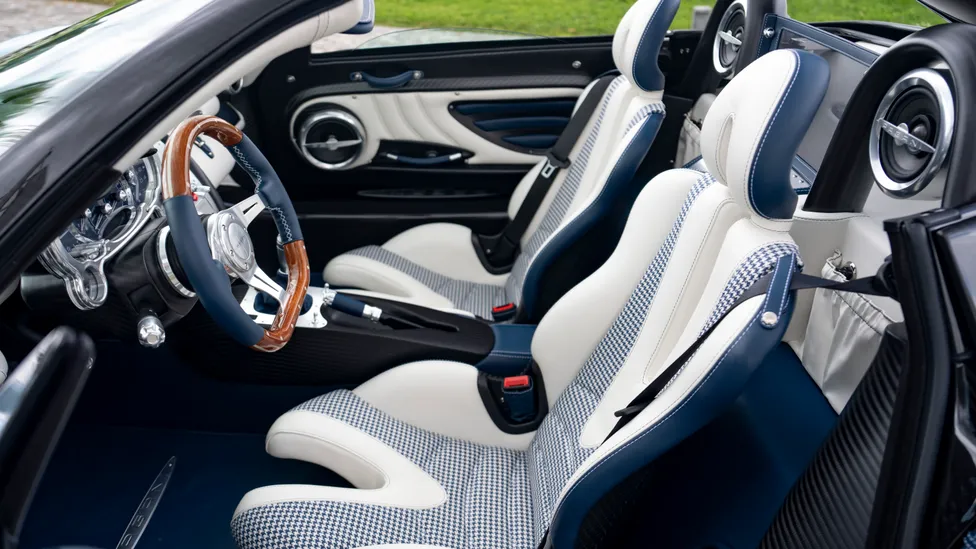
What continues to make the Zonda extraordinary is its analog nature.
Instead, the Cervino preserves the qualities that made the original Zonda legendary:
- exposed mechanical drama
- tactile engagement
- visible craftsmanship
- naturally aspirated character
- emotional intensity
Driving a Zonda has never been about isolated perfection.
It has always been about sensation.
And the Cervino appears to embrace that philosophy completely.
Villa d’Este and Automotive Art
The Zonda Cervino made its public debut during the Villa d’Este weekend on Lake Como — one of the most prestigious gatherings in the automotive world.
That setting feels entirely appropriate.
Because the Cervino is less a conventional hypercar launch…
…and more an unveiling of rolling automotive sculpture.
At Villa d’Este, the boundaries between engineering, design, and art become intentionally blurred.
Few modern cars embody that philosophy better than a bespoke Pagani.
Horacio Pagani’s Lasting Philosophy
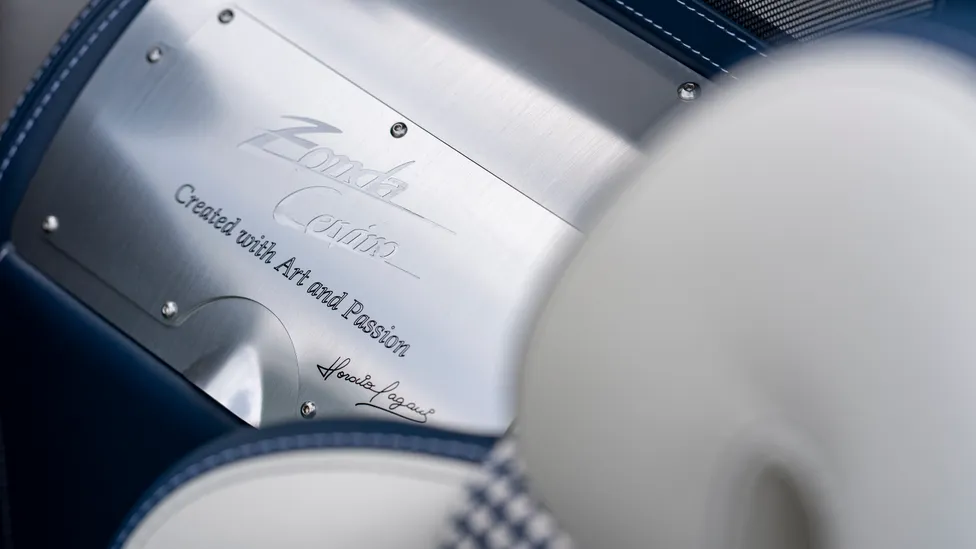
The Cervino also reinforces something Horacio Pagani has believed since the company’s earliest days:
A hypercar should be emotional before it is numerical.
That philosophy explains why Zondas continue to feel culturally important long after their original production ended.
They are not remembered simply because they were fast.
They are remembered because they made people feel something.
And the Cervino continues that lineage beautifully.
The Hypercar as Bespoke Artwork
Modern luxury collectors increasingly seek uniqueness over production rarity alone.
The Cervino embodies that evolution perfectly.
It is:
- a one-off commission
- a coachbuilt hypercar
- a rolling art piece
- a mechanical statement
- a personal vision realized in carbon fiber and aluminum
In many ways, projects like the Cervino resemble the great coachbuilt European cars of the 1930s more than conventional modern supercars.
And that may be exactly why Pagani remains so revered.
An Icon Beyond Time
The Pagani Zonda should no longer exist.
And yet…
it does.
Again.
The Cervino proves that some automotive icons transcend ordinary production cycles.
More than twenty-five years after the first Zonda debuted, Pagani continues refining the same core idea:
The hypercar not as transportation…
but as emotion made physical.
And the Zonda Cervino may be one of the purest expressions of that philosophy yet.