
For nearly eight decades, Ferrari has defined performance through combustion — the operatic crescendo of V12 engines, the mechanical violence of turbocharged torque, the visceral theater of analog speed.
But every legacy brand must eventually confront its future.
With the Ferrari Luce, Maranello enters the electric era — not cautiously, but philosophically. This is not merely Ferrari’s first electric car. It is its first attempt to reinterpret emotion without combustion.
And in doing so, it may redefine what an electric performance car can feel like.
Inside the Ferrari Luce — A New Interior Philosophy
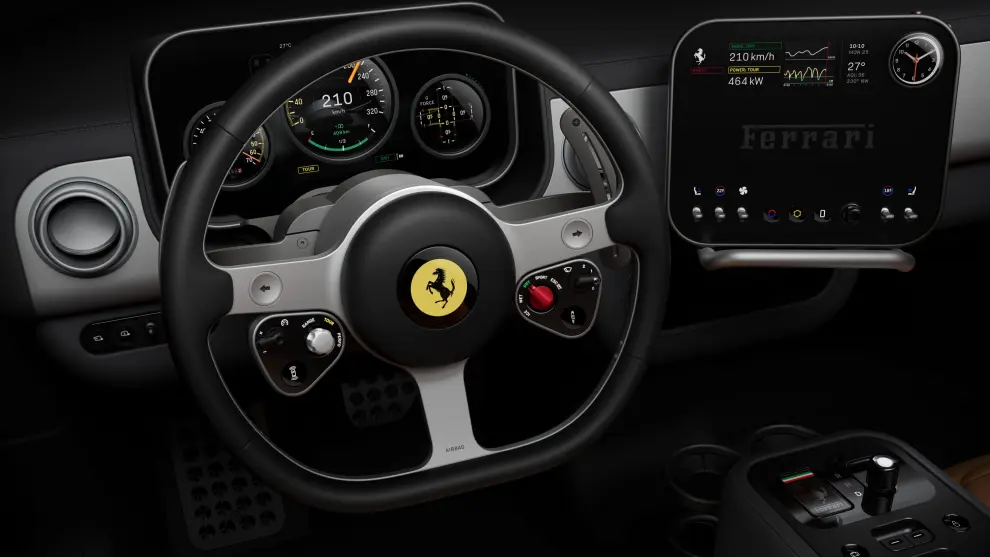
More than specifications or performance figures, the true revolution of the Ferrari Luce begins inside the cabin.
The interior represents Maranello’s most radical reinterpretation of driver interaction to date — a space where tactile craftsmanship, architectural materials, and digital minimalism converge.
Presented by Ferrari itself, this official preview offers an intimate look at the design language, material execution, and sensory philosophy shaping the brand’s first fully electric era
A Name That Signals Transformation
“Luce” — Italian for light — carries layered meaning.
It references electricity, illumination, and the symbolic idea of Ferrari lighting its path into a new technological age. The name itself reflects duality: heritage rooted in passion, future driven by innovation.
Rather than distancing itself from tradition, Ferrari positions the Luce as a continuation — an evolution rather than a rupture.
Designed Beyond Automotive Convention
Perhaps the most radical dimension of the Luce is not its powertrain — but its interior philosophy.
Ferrari partnered with renowned industrial designers from LoveFrom, the creative collective led by former Apple design chief Jony Ive. The collaboration sought to rethink how drivers interact with electric performance.
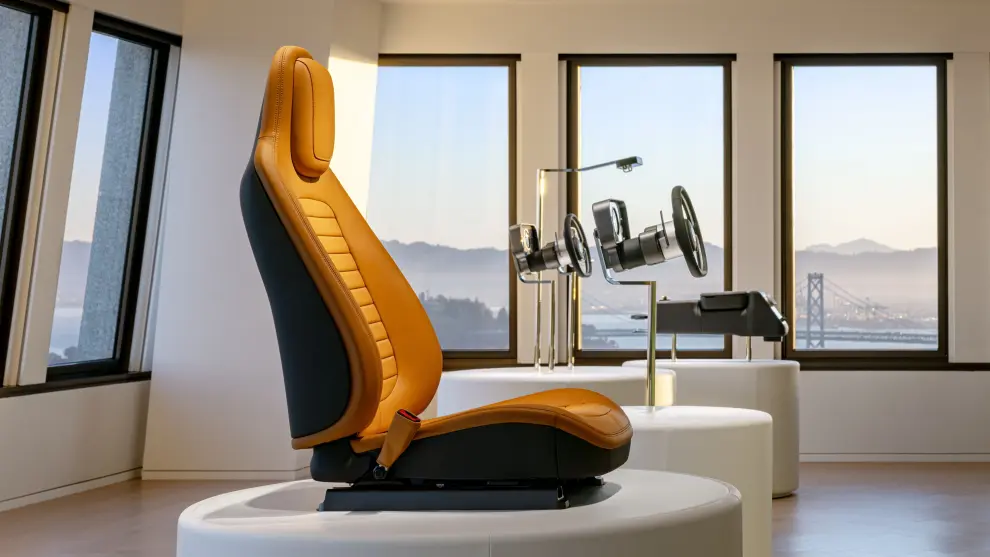
The result is a cabin that blends tactile craftsmanship with digital minimalism.
Interior highlights include:
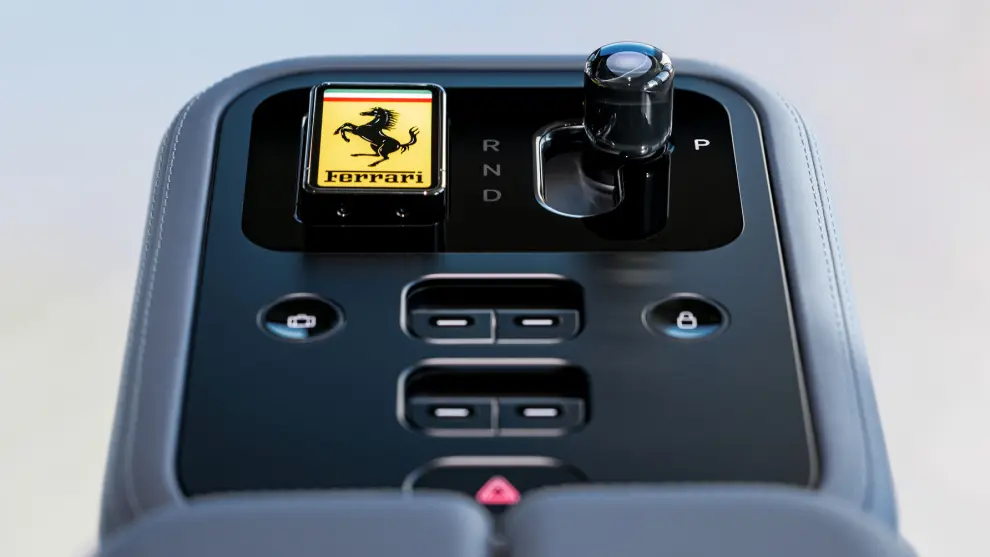
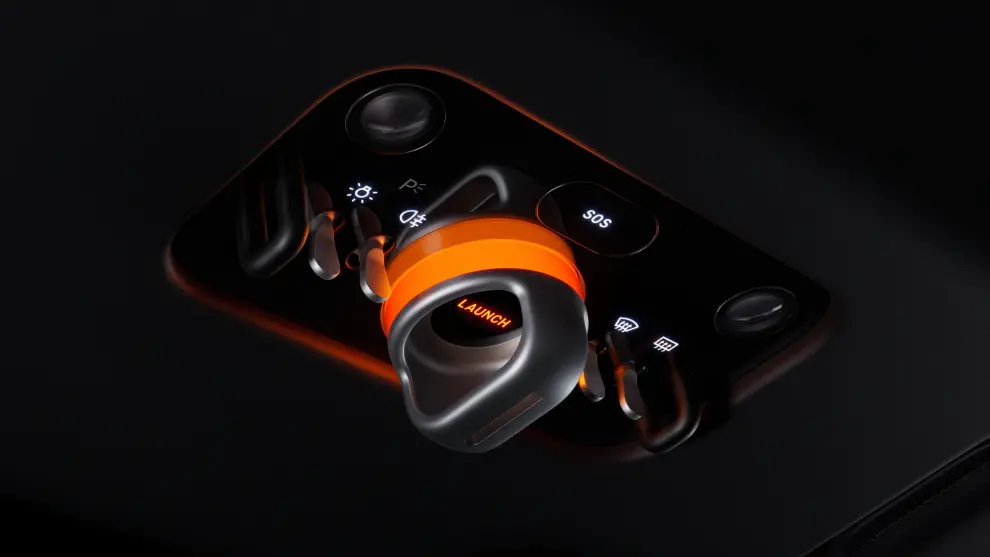
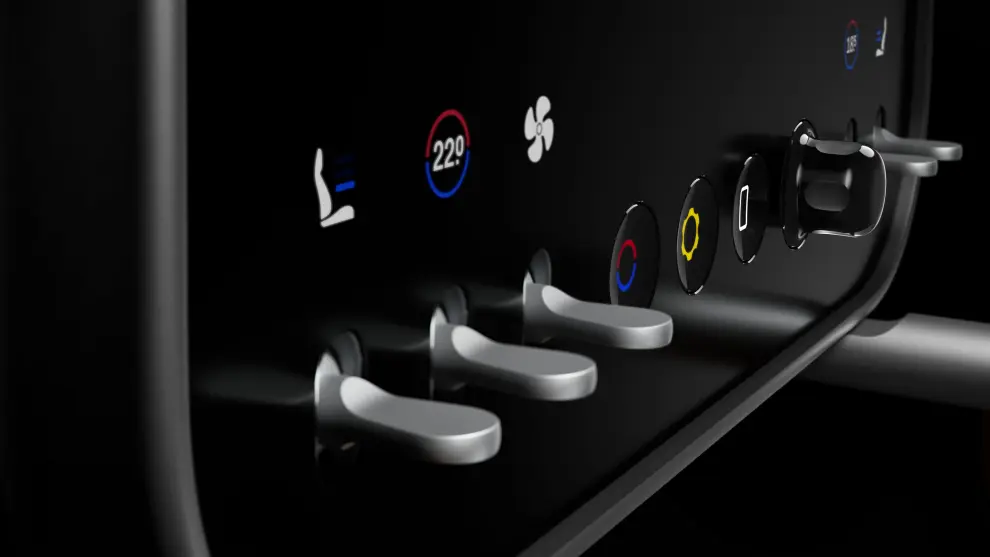
- Machined aluminum switchgear
- Glass control interfaces
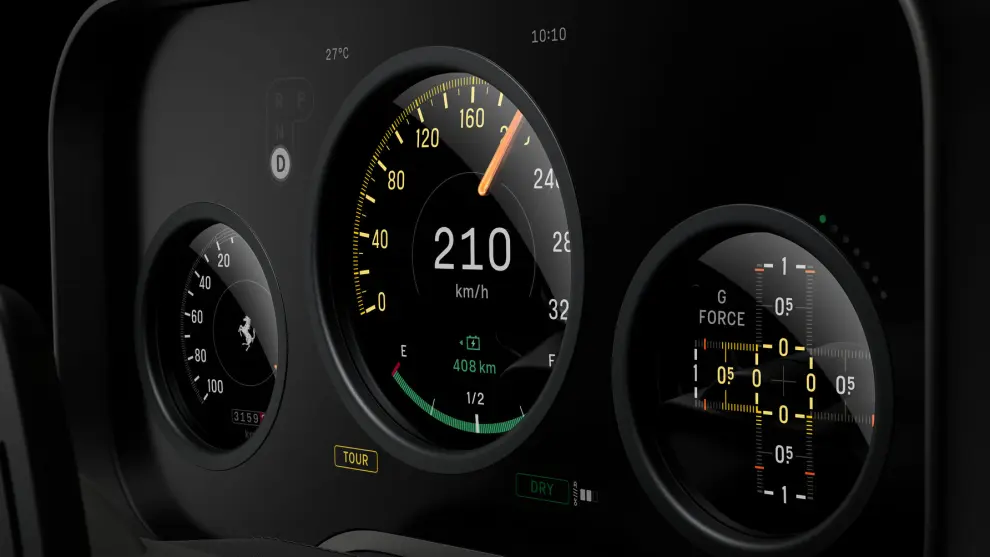
- Floating OLED display clusters
- Hybrid analog-digital instrumentation
- Extensive use of strengthened architectural glass
Rather than eliminating physical interaction, the Luce reintroduces tactility — buttons, toggles, and mechanical feedback remain central to the driving ritual.
It is electric, but not sterile.
The Steering Wheel as Emotional Interface
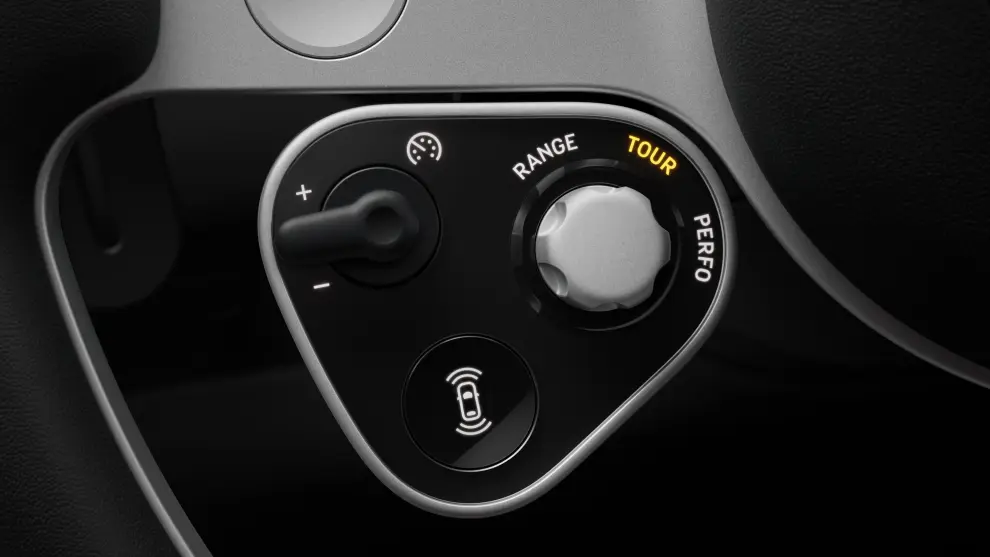
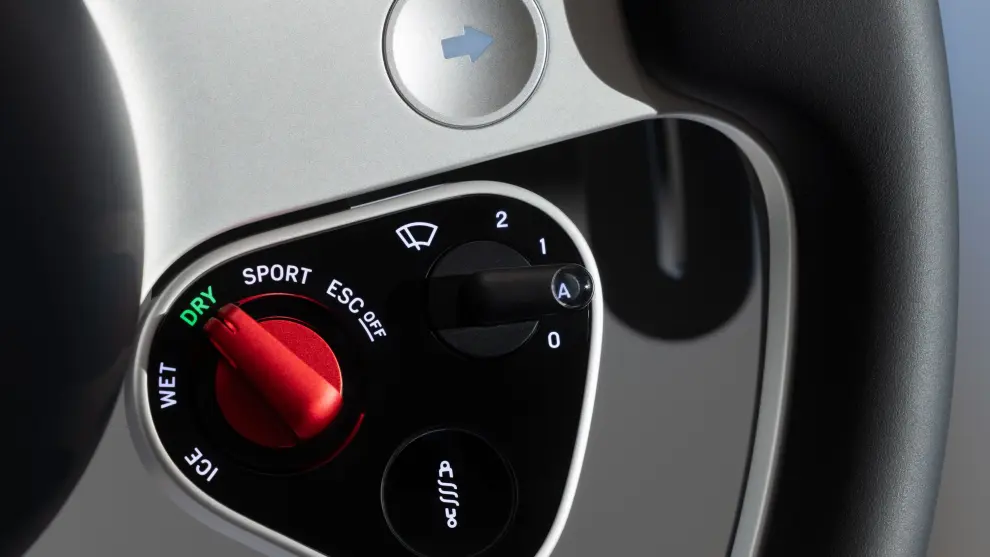
One of the most symbolic design elements is the three-spoke steering wheel — a form personally championed within Ferrari’s leadership to maintain brand heritage.
Crafted from leather and exposed aluminum, it merges retro inspiration with modern integration, housing drive controls, safety systems, and tactile inputs within an elegant minimalist structure.
In an electric Ferrari, the steering wheel becomes the new emotional anchor — replacing engine vibration with haptic connection.
Electric Performance — Ferrari Without Combustion
Beneath its sculptural design lies a powertrain engineered to preserve Ferrari’s performance credentials.
Expected technical architecture includes:
- Quad-motor all-wheel-drive configuration
- Power output exceeding 1,000 horsepower
- 0–100 km/h acceleration under 2.5 seconds
- High-capacity battery pack exceeding 120 kWh
- Ultra-fast charging capability
Performance, clearly, was never negotiable.
Even without combustion, the Luce aims to deliver the explosive acceleration and dynamic response expected of a Maranello flagship.
Sound, Emotion and the Electric Challenge
Perhaps the greatest philosophical challenge facing Ferrari was not speed — but sound.
The brand has explored innovative acoustic engineering solutions to amplify the natural harmonic frequencies of its electric motors rather than simulate artificial engine noise.
The goal is authenticity — ensuring the Luce produces an emotional soundtrack born from physics, not software imitation.
Architecture and Proportions
Early previews suggest the Luce adopts a four-door grand touring silhouette — blending hypercar performance with long-distance usability.
Its proportions sit somewhere between a luxury GT and a high-performance shooting brake, signaling Ferrari’s intent to expand its electric audience without abandoning exclusivity.
This is not a city EV.
It is an electric grand tourer built at hypercar standards.
Scuderia ’89 — The Pursuit for Paddle
Technology Meets Heritage
Despite its futuristic interface, Ferrari has deliberately avoided a fully screen-dominated cockpit.
Physical controls remain central. Materials remain authentic. The design language preserves Ferrari’s tradition of driver-centric architecture — even as propulsion transitions from fuel to electrons.
It is electrification filtered through heritage rather than disruption.
Market Position and Collector Outlook
The Luce occupies a unique position in Ferrari history:
- First fully electric production Ferrari
- First EV platform developed entirely in-house
- First Ferrari designed in collaboration with external industrial design visionaries
As such, early production examples are already being viewed as future collector milestones — vehicles marking the precise moment Ferrari crossed into electrification.
When Legacy Meets Electricity
The Ferrari Luce is not an abandonment of tradition.
It is Ferrari asking a profound question:
Can emotion survive electrification?
By focusing on tactility, sound authenticity, design purity, and extreme performance, the answer appears to be yes — albeit expressed through a new sensory language.
The Luce does not attempt to replicate combustion.
It attempts to replace it with something equally compelling.
And in doing so, it may become one of the most historically significant Ferraris ever built.
Official Brand Presentation
Discover the Ferrari Luce directly through the official Ferrari presentation