
Some manufacturers build automobiles.
Others build brands.
Pagani built a philosophy.
For more than twenty-five years, the company founded by Horacio Pagani has occupied a unique position within the automotive world. Neither a traditional supercar manufacturer nor a conventional luxury brand, Pagani exists somewhere between engineering company, design atelier and rolling art studio.
While Ferrari expanded its range and Lamborghini evolved through multiple generations of models, Pagani followed a remarkably different path.
Three families of cars.
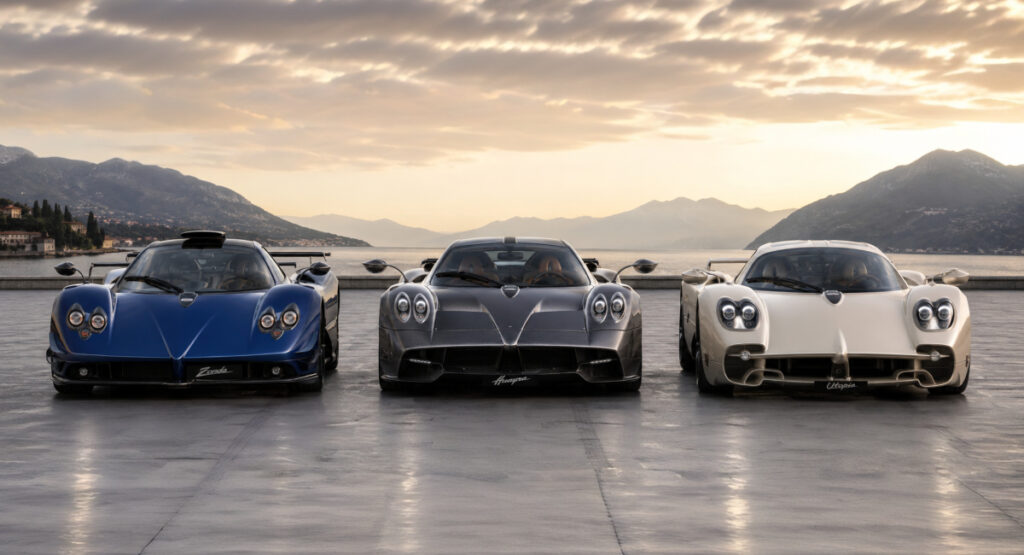
One vision.
An unwavering belief that automotive design should be guided by the same principle that inspired Leonardo da Vinci centuries ago:
Art and Science can walk together hand in hand.
This is the story of the automobiles that transformed a small company from Modena into one of the most respected names in automotive history.
The Dream of Horacio Pagani
Long before the Zonda, there was a young Argentine designer obsessed with speed, engineering and creativity.
Born in Casilda, Argentina, Horacio Pagani spent his early years building models and experimenting with materials, convinced that extraordinary automobiles could be both technically brilliant and visually beautiful.
His ambition eventually led him to Italy, where he joined Lamborghini during one of the most exciting periods in the company’s history.
While working on projects such as the Countach Evoluzione, Pagani became convinced that carbon fiber would play a critical role in the future of high-performance automobiles.
Many disagreed.
Horacio persisted.
Eventually, he founded Modena Design, a company specializing in advanced composite materials and engineering solutions.
The next step was inevitable.
In 1992, Pagani Automobili was born.
The dream was no longer to help build great cars.
It was to build the ultimate one.
The Zonda Era (1999–2022)
When the first Pagani debuted at the Geneva Motor Show in 1999, few people knew what to expect.
What they saw changed the automotive world forever.
Zonda C12
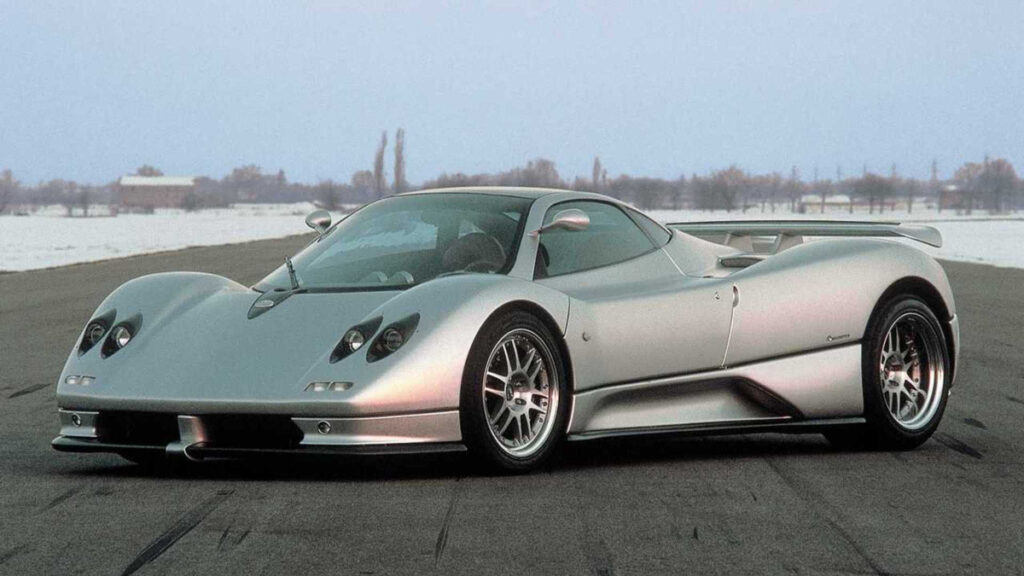
When the Pagani Zonda C12 debuted at the Geneva Motor Show in 1999, it immediately challenged established ideas about what a supercar could be.
Created by a company few enthusiasts had heard of and led by an Argentine engineer with an uncompromising vision, the Zonda arrived in a world dominated by Ferrari, Lamborghini and Porsche. Yet from the moment its dramatic carbon-fibre bodywork appeared under the show lights, it was clear that Pagani was not interested in following existing conventions.
The Zonda C12 introduced many of the principles that would define the brand for decades to come. A lightweight carbon-fibre structure formed the foundation, while a naturally aspirated Mercedes-AMG V12 delivered effortless performance and unmistakable character. Every visible component reflected Horacio Pagani’s obsession with craftsmanship, from the exposed carbon weave and machined aluminium details to the aviation-inspired controls and intricately designed cabin.
What truly distinguished the C12, however, was its philosophy. While many supercars focused purely on speed, Pagani sought to create something that combined engineering, art and emotion in equal measure. The result felt less like a conventional high-performance automobile and more like a handcrafted mechanical sculpture.
More than twenty-five years later, the original Zonda remains one of the most important debut models in automotive history. Not because it launched a successful company, but because it introduced an entirely new way of thinking about the hypercar.
Zonda F
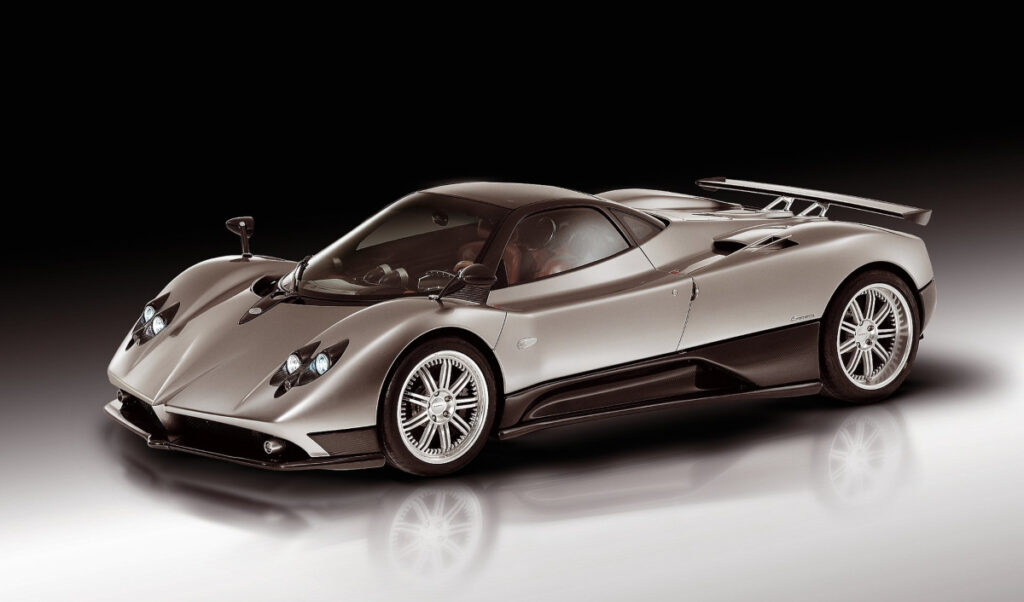
Named in honour of five-time Formula One World Champion Juan Manuel Fangio, one of Horacio Pagani’s closest friends and earliest supporters, the Zonda F represented a pivotal moment in the evolution of the company.
By the time the model arrived in 2005, the original Zonda had already established Pagani as one of the most exciting newcomers in the supercar world. The F, however, elevated the concept to an entirely new level. More than a simple update, it was a comprehensive refinement of everything the company had learned during its first years of production. The chassis was revised, the aerodynamics became more sophisticated, and the naturally aspirated Mercedes-AMG V12 delivered increased performance while preserving the mechanical purity that defined the driving experience.
Visually, the Zonda F also introduced many of the details that would become synonymous with Pagani craftsmanship. Exposed carbon fibre, beautifully machined aluminium components and an interior inspired by aviation and haute horlogerie combined to create an atmosphere unlike anything offered by Ferrari, Lamborghini or Porsche at the time.
For many enthusiasts, the Zonda F remains the definitive road-going Zonda. It perfectly balanced performance, beauty and usability, while establishing Pagani as a legitimate rival to the most prestigious names in the automotive world. More than two decades later, it is still regarded as one of the finest analog supercars ever created.
Zonda Roadster F
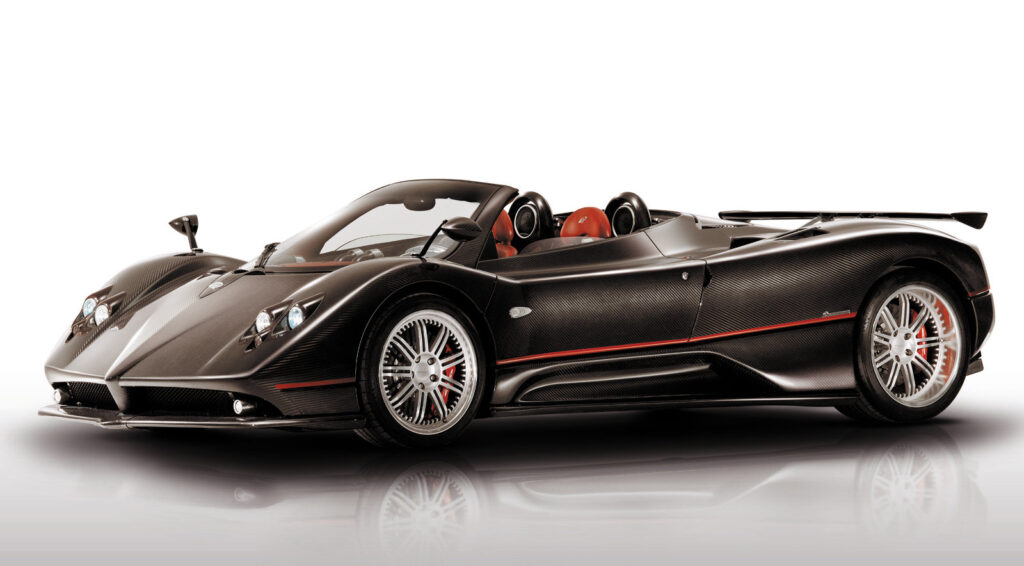
If the Zonda F represented the maturation of the original concept, the Roadster F transformed it into something even more emotional.
At a time when many open-top supercars sacrificed rigidity or performance, Pagani approached the challenge with its characteristic obsession for engineering. The Roadster F retained the dramatic presence, precision and mechanical purity of the coupe while introducing an entirely new sensory dimension. With the roof removed, the naturally aspirated AMG V12 became an even greater part of the experience, filling the cabin with one of the most intoxicating soundtracks of the era.
Visually, the Roadster F also highlighted Pagani’s extraordinary attention to detail. Every exposed carbon fibre surface, machined aluminium component and handcrafted interior element reinforced the company’s philosophy that a high-performance automobile should be both an engineering achievement and a work of art.
For many collectors, the Roadster F remains one of the most elegant open-top hypercars ever created and a defining chapter in the evolution of the Zonda.
Zonda Cinque
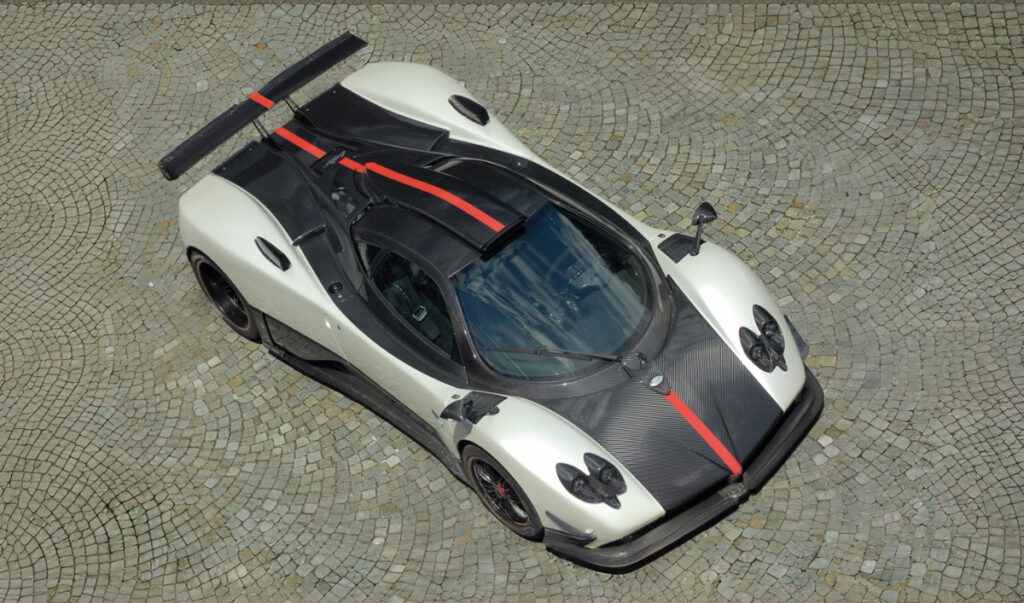
If the Zonda F perfected the original formula, the Zonda Cinque pushed it toward the realm of the extraordinary.
Produced in a series of just five examples — hence its name, the Italian word for “five” — the Cinque was conceived as a bridge between the road-going Zonda and the track-focused Zonda R. It combined the raw engineering ambition of Pagani’s racing-inspired projects with the usability and craftsmanship expected from a road-legal hypercar. The result was a machine that felt dramatically more focused while remaining unmistakably elegant.
Every element of the Cinque was developed with obsessive attention to detail. New aerodynamic components generated significantly greater downforce, while extensive use of advanced composite materials reduced weight and increased structural rigidity. Titanium fasteners, magnesium components and bespoke engineering solutions appeared throughout the vehicle, reflecting Horacio Pagani’s relentless pursuit of perfection. Even the exposed carbon weave and contrasting details were treated as design features rather than technical necessities.
The naturally aspirated AMG V12 delivered an intoxicating combination of power, responsiveness and character, while the sequential transmission reinforced the Cinque’s competition-inspired personality. Yet despite its extraordinary capabilities, the car never lost the sense of artistry that defined every Pagani.
Today, the Zonda Cinque is widely regarded as one of the most important hypercars of the twenty-first century. More than a limited edition, it became the blueprint for the ultra-exclusive Paganis that would follow, proving that rarity, craftsmanship and engineering excellence could coexist in a single automotive masterpiece.
Zonda Cinque Roadster
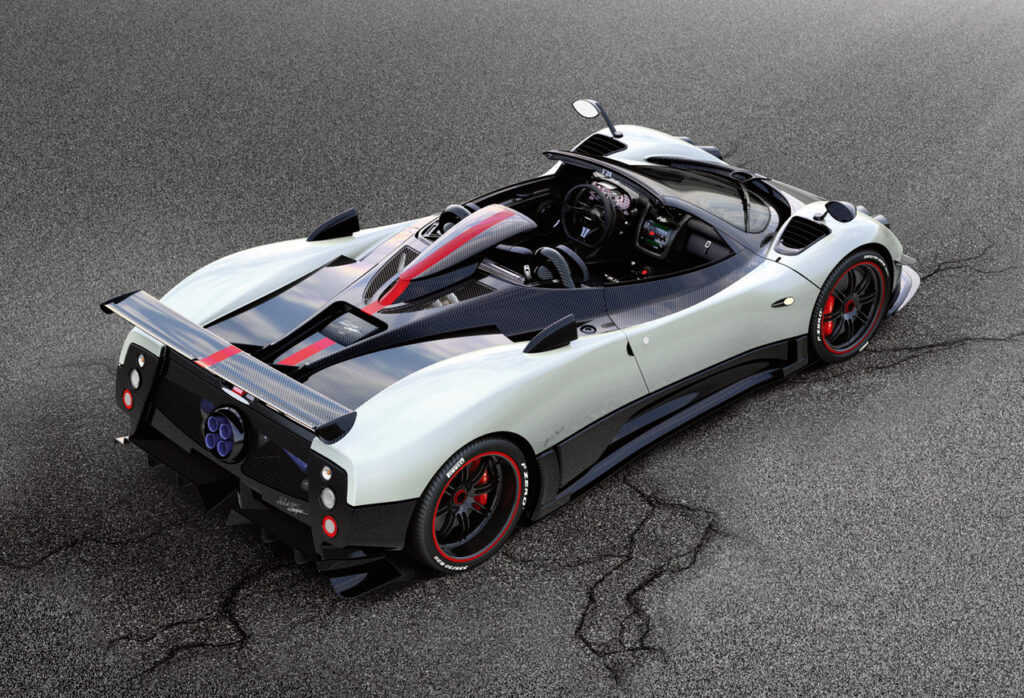
Transforming the Zonda Cinque into an open-top automobile was always going to be a formidable challenge.
The coupe had already established itself as one of the most extreme and technically sophisticated road-going Paganis ever built. Removing the roof risked compromising the structural integrity and precision that made the Cinque so exceptional. Instead, Pagani achieved something remarkable: a Roadster that preserved the performance and character of the coupe while adding an entirely new layer of emotion to the driving experience.
Limited to just five examples, the Cinque Roadster combined breathtaking rarity with extraordinary engineering. Its lightweight carbon-titanium structure, advanced aerodynamics and naturally aspirated AMG V12 created a driving experience that felt visceral, immediate and deeply engaging. With the roof removed, the mechanical symphony of the V12 became even more dramatic, allowing occupants to experience every intake note, gearshift and surge of acceleration with unparalleled intensity.
Visually, the Cinque Roadster remains one of the most striking Paganis ever produced. The exposed carbon fibre bodywork, distinctive aerodynamic elements and meticulous detailing showcased the company’s unique ability to blend engineering precision with artistic beauty. Every vent, scoop and surface served a purpose, yet together they created a machine that looked more like a rolling sculpture than a conventional hypercar.
For many collectors, the Cinque Roadster represents the ultimate expression of the Zonda lineage. It combined the exclusivity of a limited-edition masterpiece, the excitement of open-air driving and the uncompromising engineering that defined Pagani’s golden era. More than a decade after its debut, it remains one of the most coveted open-top hypercars ever created.
Zonda Tricolore
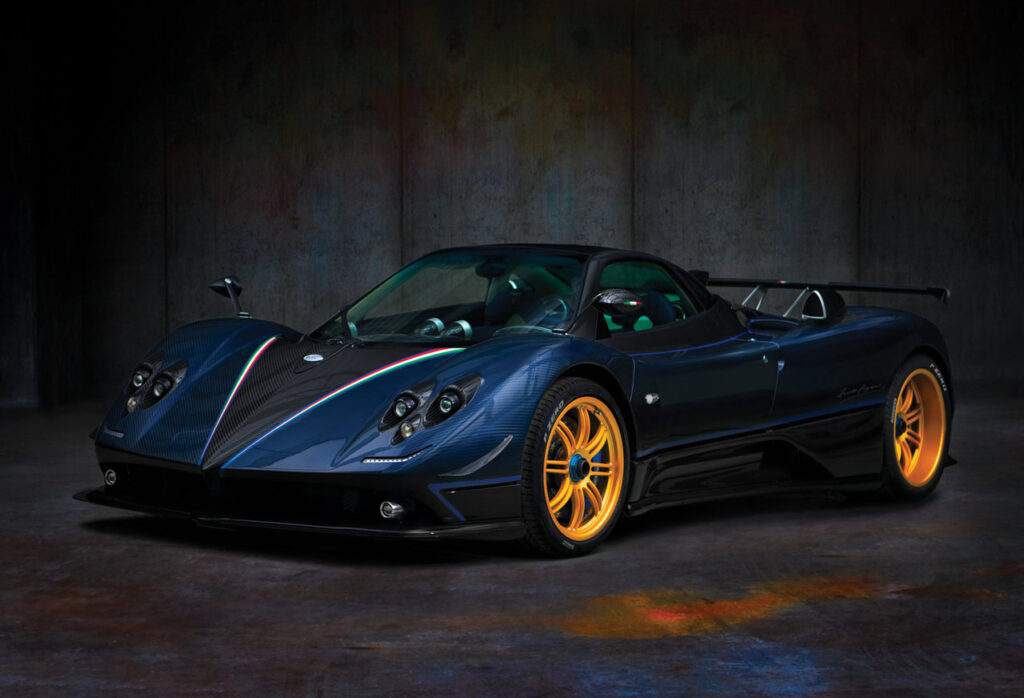
Created to celebrate the 50th anniversary of Italy’s legendary Frecce Tricolori aerobatic display team, the Zonda Tricolore was far more than a special edition. It was a tribute to speed, precision and national pride, interpreted through Horacio Pagani’s lifelong fascination with aviation.
Limited to just three examples, the Tricolore took inspiration directly from the fighter jets flown by the elite Italian squadron. Its most distinctive feature was the extraordinary exposed blue carbon fibre bodywork, a finish unlike anything previously seen on a production Pagani. Contrasting accents in the colours of the Italian flag ran across the body, while subtle aerodynamic refinements and unique detailing reinforced its connection to the world of flight. Even the roof-mounted air scoop and cockpit design echoed the visual language of high-performance aircraft.
Beneath the striking exterior, the Tricolore was based on the Zonda Cinque, inheriting its advanced carbon-titanium construction, naturally aspirated AMG V12 and track-inspired engineering. The combination of immense performance and exceptional craftsmanship ensured that it delivered far more than visual drama alone. Every aspect of the car reflected Pagani’s philosophy that engineering excellence and artistic beauty should coexist without compromise.
Today, the Zonda Tricolore stands as one of the most celebrated and instantly recognizable Paganis ever produced. Its distinctive blue carbon finish, extreme rarity and aviation-inspired character have secured its place among the most desirable hypercars of the modern era. For many collectors, it represents one of the purest expressions of Horacio Pagani’s vision — a machine where technology, craftsmanship and emotion come together in perfect harmony.
Zonda R
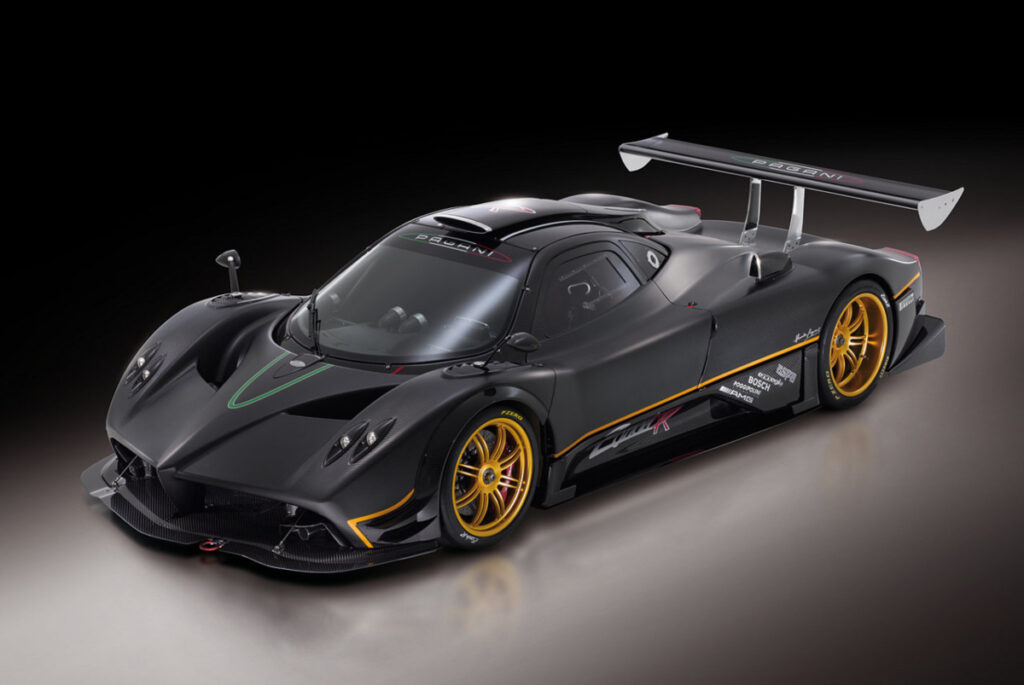
The Zonda R was not designed for public roads.
It was not created to satisfy regulations, homologation requirements or market expectations.
It was built purely in pursuit of performance.
Unveiled in 2007, the Zonda R represented Horacio Pagani’s opportunity to explore the absolute limits of the Zonda platform without compromise. Freed from road-car restrictions, the engineering team developed a machine that shared only a visual resemblance with the standard Zonda. Beneath its carbon-fibre bodywork lay a heavily reworked structure, advanced aerodynamics and a naturally aspirated V12 derived from Mercedes-Benz’s motorsport expertise, producing an experience that felt closer to a Le Mans prototype than a conventional supercar.
Every element of the car was engineered around circuit performance. A massive rear wing, aggressive front splitter, redesigned underbody and extensive aerodynamic development generated levels of downforce previously unseen on a Pagani. Combined with its lightweight construction and extraordinary power, the result was a machine capable of delivering astonishing speed while maintaining remarkable precision and balance.
Yet what truly elevated the Zonda R beyond its performance figures was the emotion it generated. The naturally aspirated V12 produced one of the most unforgettable soundtracks in automotive history, transforming every lap into a sensory event. Mechanical, raw and intensely engaging, it embodied everything enthusiasts love about pure internal-combustion performance.
Today, the Zonda R is widely regarded as one of the greatest track-focused hypercars ever created. More than a technical exercise, it became a symbol of Pagani’s willingness to pursue perfection without compromise, laying the foundations for future masterpieces such as the Huayra R and cementing its place among the most iconic circuit machines of the twenty-first century.
Zonda Revolución
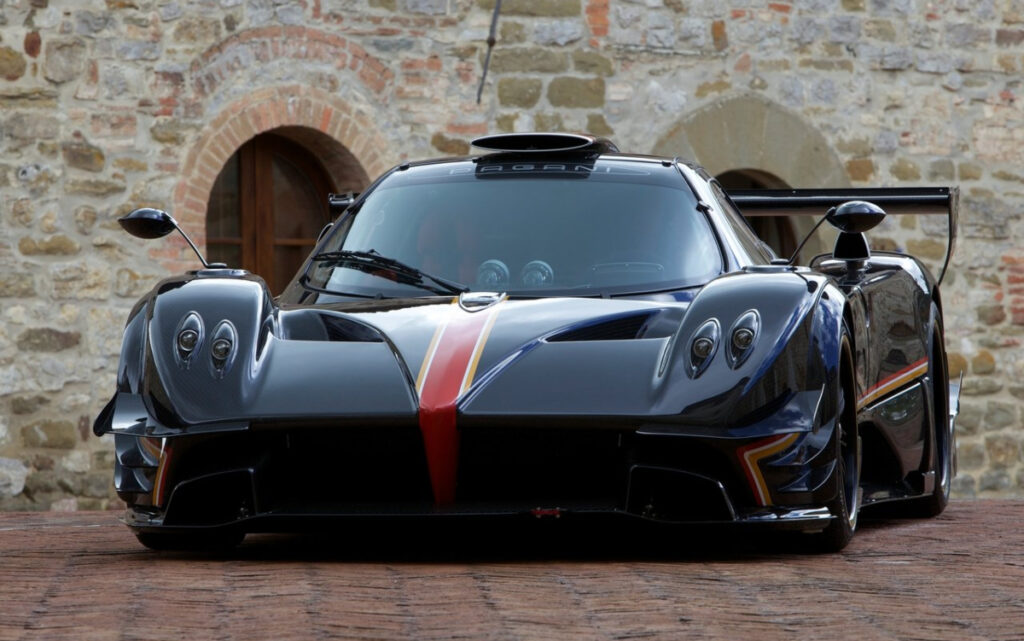
If the Zonda R represented the ultimate expression of track-focused engineering, the Zonda Revolución pushed the concept even further.
Unveiled in 2013 as the final evolution of Pagani’s legendary track-only machine, the Revolución was created without concern for regulations, competition classes or commercial compromise. It existed for one purpose alone: to deliver the most intense and technologically advanced driving experience ever achieved within the Zonda lineage. In many ways, it was Horacio Pagani’s final and most uncompromising farewell to the model that had built the company’s reputation.
Building upon the already extraordinary foundations of the Zonda R, engineers reduced weight even further while increasing power and aerodynamic efficiency. The naturally aspirated V12 produced over 800 horsepower, while a sophisticated Drag Reduction System (DRS), inspired by Formula One technology, allowed drivers to optimize aerodynamic performance depending on track conditions. Every component was scrutinized, refined and re-engineered in pursuit of greater speed, precision and driver engagement.
Visually, the Revolución looked every bit as dramatic as its capabilities suggested. Enlarged aerodynamic elements, exposed carbon fibre surfaces and an aggressive stance transformed the car into something that appeared closer to a prototype racing machine than a hypercar. Yet despite its extreme nature, the attention to detail remained unmistakably Pagani. Every exposed fastener, every machined component and every carbon weave reflected the same craftsmanship that defined the company’s road cars.
For many enthusiasts, the Zonda Revolución represents the ultimate Zonda. Not because it was the fastest or most powerful, but because it embodied the model’s philosophy in its purest form. It was lighter, louder, more focused and more uncompromising than anything that came before it. More than a final evolution, it was the ultimate celebration of one of the most important hypercars ever created.
Zonda HP Barchetta
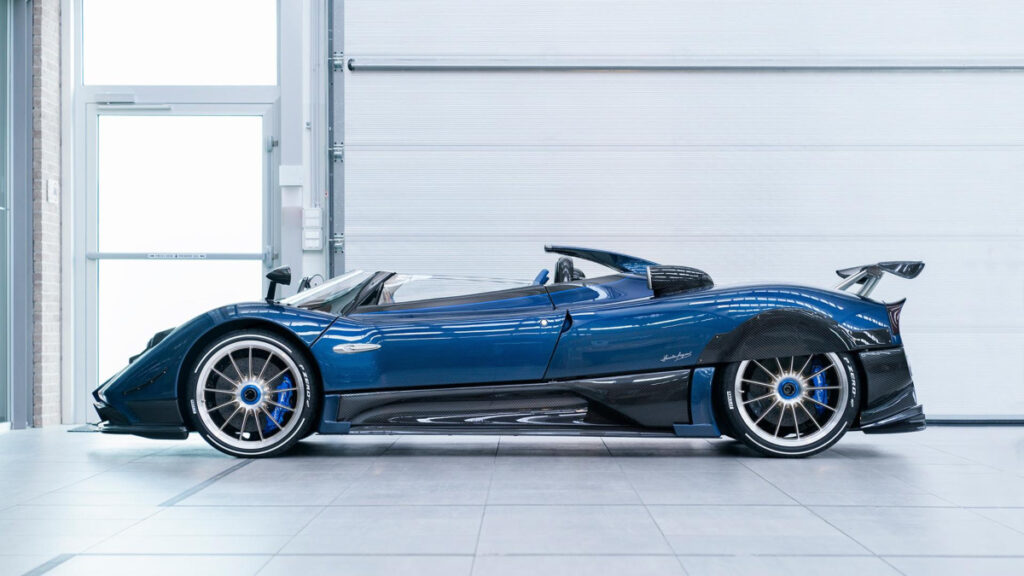
Few automobiles capture the spirit of their creator as completely as the Zonda HP Barchetta. Unveiled as a tribute to Horacio Pagani’s legacy and lifelong passion for automotive design, the model was conceived as a deeply personal interpretation of everything that made the Zonda an icon. Its most distinctive features — partially covered rear wheels, a roofless Barchetta configuration and a dramatic wraparound windscreen — created one of the most unique and instantly recognizable silhouettes ever produced by the company.
Beneath its sculptural bodywork lay the culmination of nearly two decades of Zonda evolution, powered by the unmistakable naturally aspirated AMG V12. Yet the HP Barchetta was never primarily about outright performance. Instead, it celebrated craftsmanship, individuality and emotion, serving as a rolling tribute to the model that established Pagani as one of the world’s most respected hypercar manufacturers. For many enthusiasts, it remains the ultimate expression of Horacio Pagani’s imagination and artistic vision.
Why the Zonda Refused to Die
Most manufacturers replace a model and move on.
Pagani never followed that rule.
Even after the arrival of the Huayra, clients continued commissioning unique Zonda projects.
One-offs.
Special commissions.
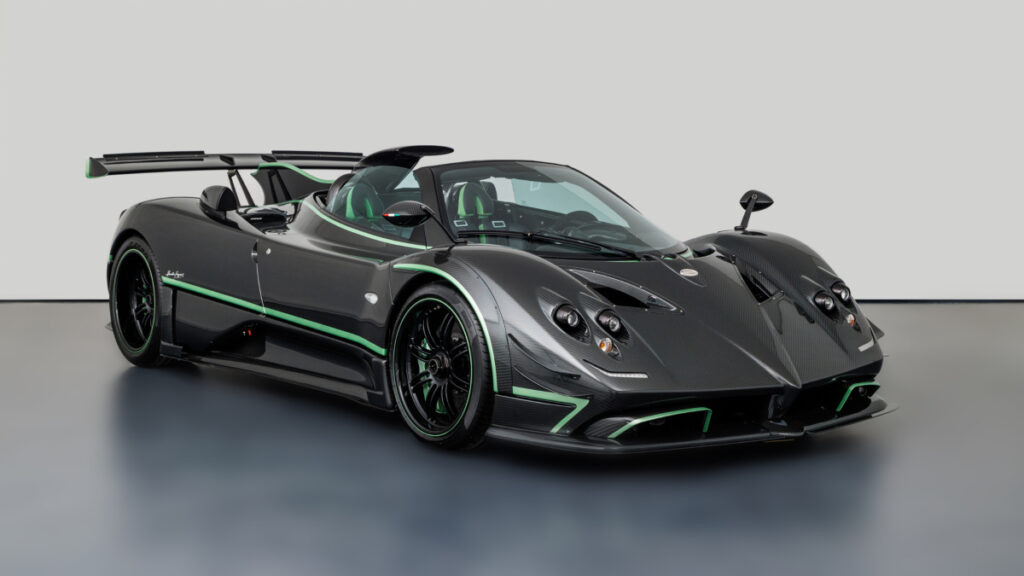
Personal interpretations.
The Zonda became something larger than a production model.
It became a canvas.
More than two decades after its debut, new Zondas were still emerging from the Atelier.
Few automobiles in history have enjoyed such an extraordinary lifespan.
The Complete Lamborghini V12 Legacy: From Miura to Revuelto
The Huayra Era (2011–2025)
Replacing the Zonda was always going to be difficult.
Creating something better seemed impossible.
Pagani did it anyway.
Named after Huayra-tata, the Andean god of wind, the Huayra introduced a completely new philosophy centered around aerodynamics, advanced materials and active technology.
Huayra Coupe
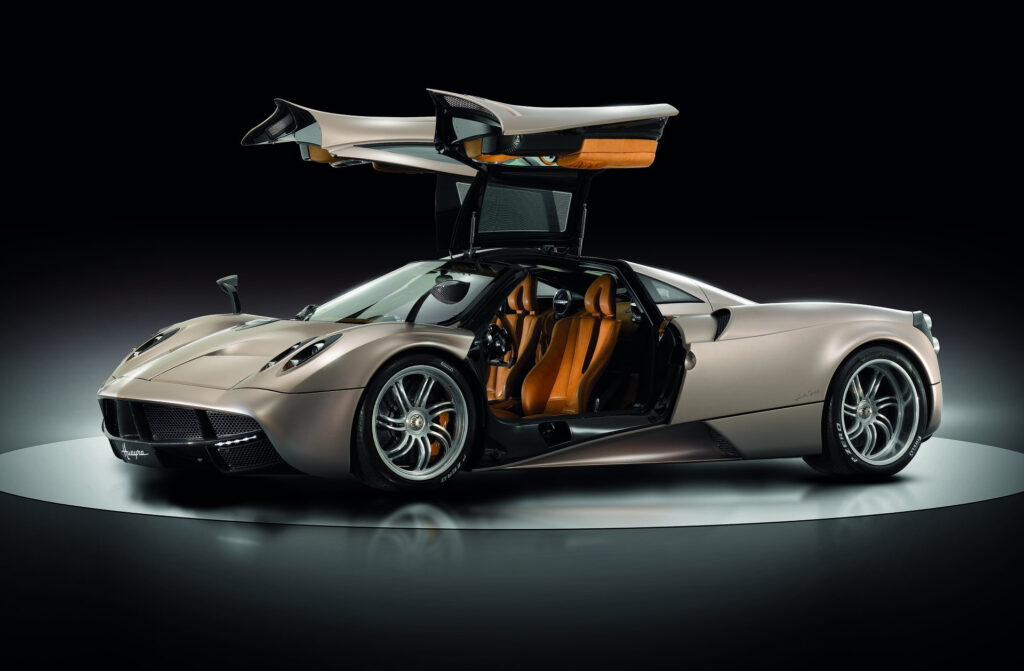
Replacing the Zonda was one of the most daunting challenges in modern automotive history.
After more than a decade of critical acclaim and growing cult status, expectations for Pagani’s second-generation hypercar were immense. Rather than attempting to create a direct successor, Horacio Pagani chose a different path. The Huayra was conceived as a completely new interpretation of the hypercar, one focused on aerodynamics, advanced materials and intelligent engineering rather than simply increasing power and performance.
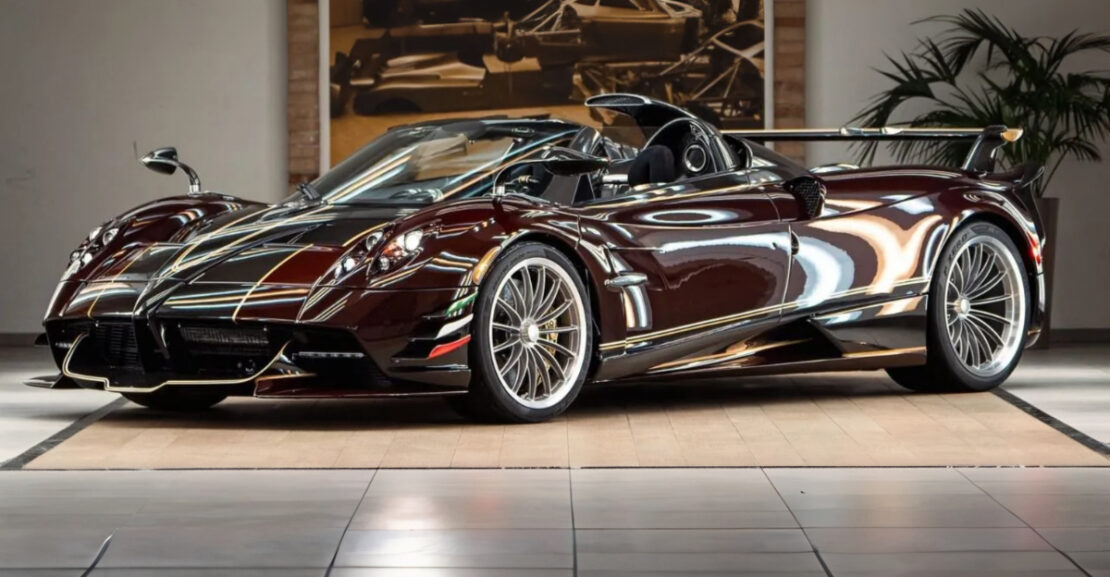
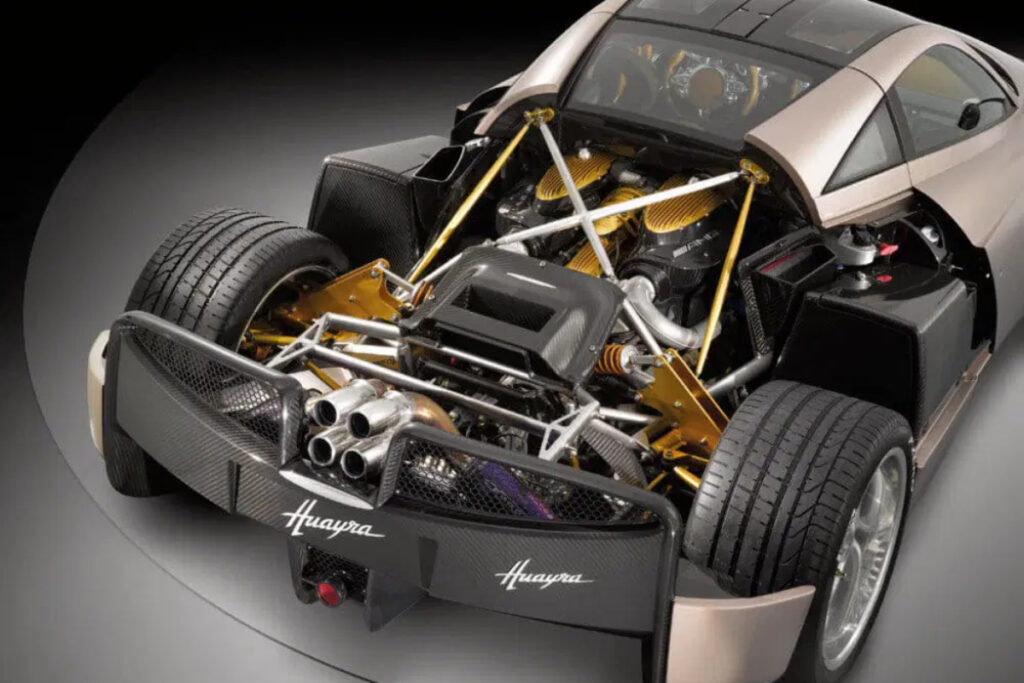
Named after Huayra-tata, the Andean god of wind, the new model introduced a host of innovations that set it apart from its predecessor. Most notably, the Huayra featured active aerodynamic flaps positioned around the bodywork, continuously adjusting to optimize stability, cornering performance and braking efficiency. Combined with its lightweight Carbo-Titanium structure and a bespoke twin-turbocharged AMG V12, the car delivered extraordinary performance while feeling remarkably composed and approachable.
Visually, the Huayra embraced a more organic and flowing design language than the angular Zonda. Every surface was shaped by airflow, creating a form that appeared almost alive. Signature gullwing doors, exposed carbon fibre details and beautifully integrated aerodynamic elements gave the car a unique presence, while the interior elevated Pagani’s craftsmanship to an entirely new level. Intricate aluminium components, exposed mechanical linkages and aviation-inspired instruments transformed the cabin into something closer to a luxury timepiece than a conventional automobile.
When it debuted in 2011, the Huayra represented far more than a new model. It demonstrated that Pagani could evolve beyond the Zonda while remaining faithful to its core philosophy. More sophisticated, more technologically advanced and more refined than its predecessor, the Huayra established a new chapter in the company’s history and laid the foundation for some of the most extraordinary hypercars of the modern era.
Huayra BC
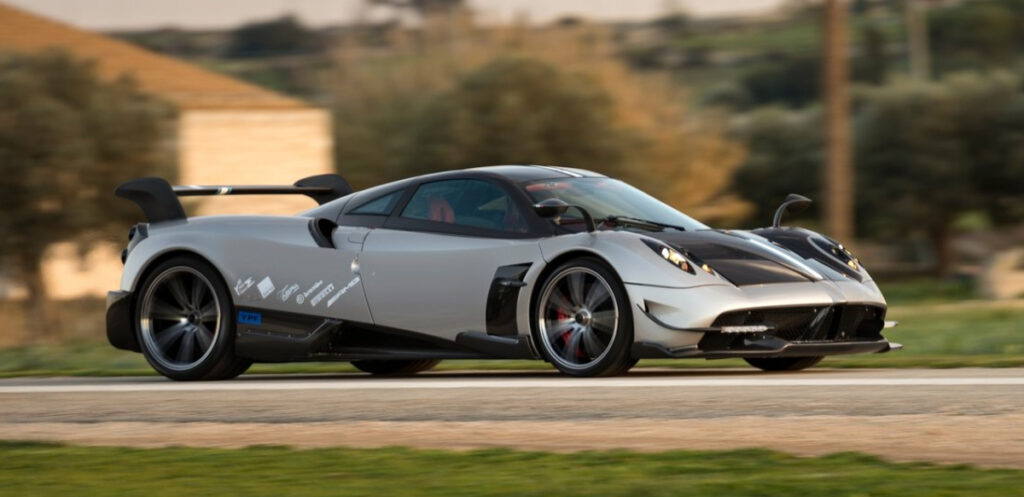
Named after Benny Caiola, one of Horacio Pagani’s closest friends, earliest customers and most passionate supporters, the Huayra BC marked a turning point in the evolution of the Huayra. While the standard model showcased Pagani’s mastery of technology, aerodynamics and craftsmanship, the BC introduced a more focused and performance-driven character. Extensive weight reduction, increased power and a comprehensive aerodynamic redesign transformed the elegant grand tourer into a machine with a far sharper edge, while preserving the artistry and attention to detail that defined every Pagani.
The Huayra BC quickly became one of the most celebrated hypercars of its generation. Its aggressive aerodynamic package, exposed carbon-fibre surfaces and thunderous twin-turbocharged V12 created an experience that felt both visceral and sophisticated. Yet despite its extraordinary capabilities, it remained unmistakably Pagani — a car where engineering and beauty existed in perfect harmony. For many enthusiasts and collectors, the BC is the model that fully unlocked the Huayra’s potential, securing its place among the most important and desirable Paganis ever built.
Huayra Roadster
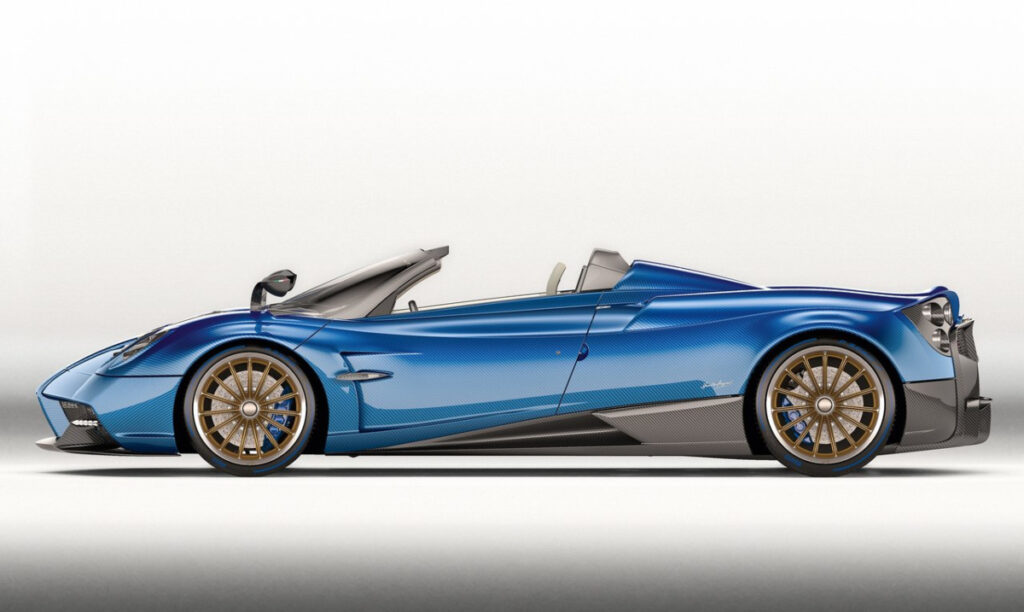
When Pagani unveiled the Huayra Roadster, many expected it to be a simple open-top version of the coupe. Instead, the company surprised the automotive world by engineering what was effectively an entirely new car.
Rather than compromising performance or structural rigidity, Pagani used the opportunity to rethink and refine the Huayra’s architecture. Through the extensive use of advanced composite materials and meticulous engineering, the Roadster emerged lighter than the coupe while maintaining the exceptional stiffness and dynamic precision expected from a modern hypercar. It was a remarkable achievement that demonstrated the company’s refusal to accept conventional limitations.
Visually, the Huayra Roadster is often regarded as one of the most beautiful creations to leave the Pagani Atelier. Its flowing lines, removable roof panels and exposed carbon-fibre details enhanced the elegance of the original design while adding a greater sense of drama and occasion. With the twin-turbocharged AMG V12 positioned just behind the cockpit, open-air driving transformed every journey into a sensory experience, allowing occupants to fully appreciate the sound, character and emotion of the powertrain.
More than a convertible variant, the Huayra Roadster became a statement of intent. It showcased Pagani’s ability to combine cutting-edge engineering, breathtaking design and handcrafted luxury into a single automobile, reinforcing the brand’s reputation as one of the world’s most extraordinary hypercar manufacturers.
Huayra Roadster BC
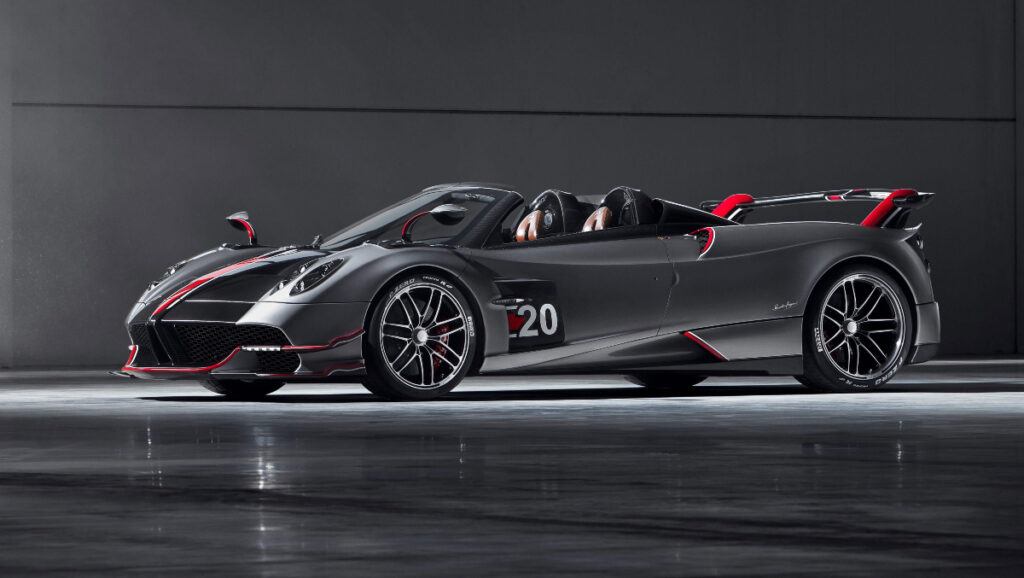
If the Huayra BC represented the most focused and performance-oriented evolution of the coupe, the Roadster BC elevated that formula to an entirely new level of intensity.
Unveiled in 2019, the model combined the advanced aerodynamics, lightweight construction and increased performance of the BC with the immersive experience of open-air driving. Rather than simply removing the roof, Pagani once again approached the project as a comprehensive engineering exercise. Extensive use of next-generation composite materials allowed the company to create a structure that was both exceptionally rigid and remarkably lightweight, resulting in a car that delivered extraordinary performance without compromise.
Visually, the Huayra Roadster BC is among the most dramatic Paganis ever produced. Enlarged aerodynamic surfaces, exposed carbon-fibre elements and a commanding rear wing gave the car an unmistakably purposeful presence, while the absence of a fixed roof amplified every aspect of the driving experience. The twin-turbocharged AMG V12 became an even greater part of the car’s character, filling the cockpit with a soundtrack that combined mechanical aggression with unmistakable Pagani theatre.
For many enthusiasts, the Roadster BC represents the perfect balance between beauty and brutality. It offers the precision and capability of a track-focused hypercar while preserving the craftsmanship, elegance and emotional connection that define every Pagani. More than a convertible version of the BC, it became one of the most exhilarating and desirable open-top hypercars of the modern era.
Huayra R
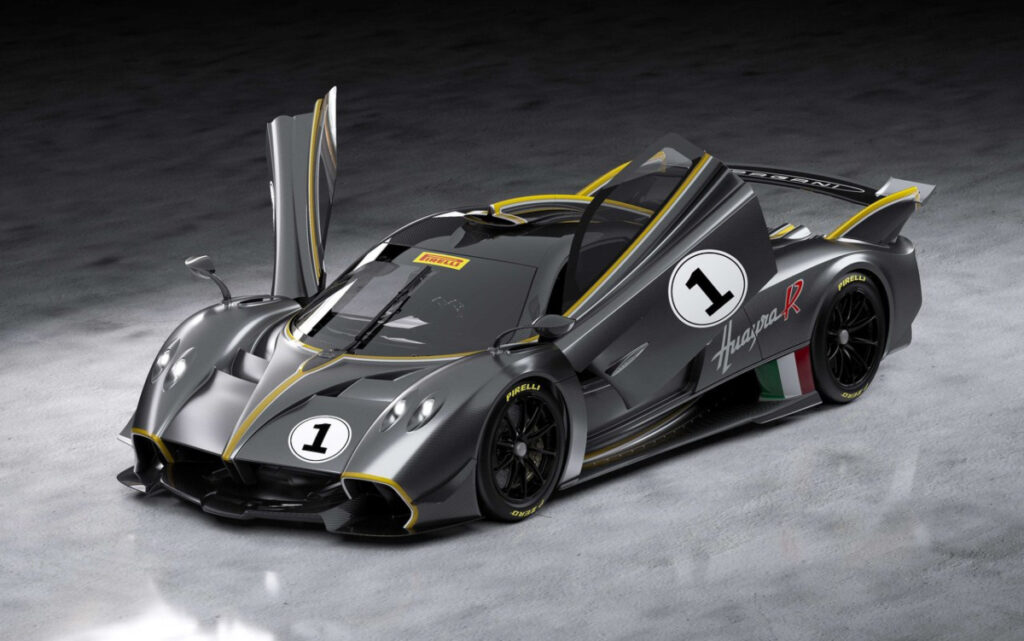
With the Huayra R, Pagani did something few manufacturers would dare attempt in the modern era.
At a time when turbocharging, hybridization and electrification were becoming increasingly common, Horacio Pagani chose to move in the opposite direction. The Huayra R abandoned the twin-turbocharged powertrain of the road-going Huayra and instead introduced a bespoke naturally aspirated V12 developed exclusively for the project. Created in collaboration with renowned racing engine specialists, the engine delivered 850 horsepower while revving beyond 9,000 rpm, producing an experience defined by immediacy, precision and emotion.
Designed exclusively for track use, the Huayra R allowed Pagani’s engineers to pursue performance without compromise. Advanced aerodynamics generated immense downforce, while extensive use of lightweight materials and motorsport-inspired engineering transformed the car into one of the most focused machines ever to emerge from the Atelier. Every surface, vent and aerodynamic element served a purpose, creating a vehicle that felt closer to a contemporary prototype racer than a conventional hypercar.
Yet what truly made the Huayra R extraordinary was its character. The naturally aspirated V12 produced one of the most captivating soundtracks in modern automotive history, combining the intensity of a racing engine with the mechanical purity that enthusiasts feared was disappearing from the industry. Every acceleration, downshift and high-rev sweep became a sensory event, turning each lap into an unforgettable experience.
For many collectors and enthusiasts, the Huayra R represents the ultimate expression of Pagani’s engineering philosophy. It is not simply one of the greatest track cars ever built by the company, but one of the most remarkable modern performance cars of any kind — a machine created not to follow trends, but to celebrate everything that makes driving truly special.
Huayra R Evo Roadster
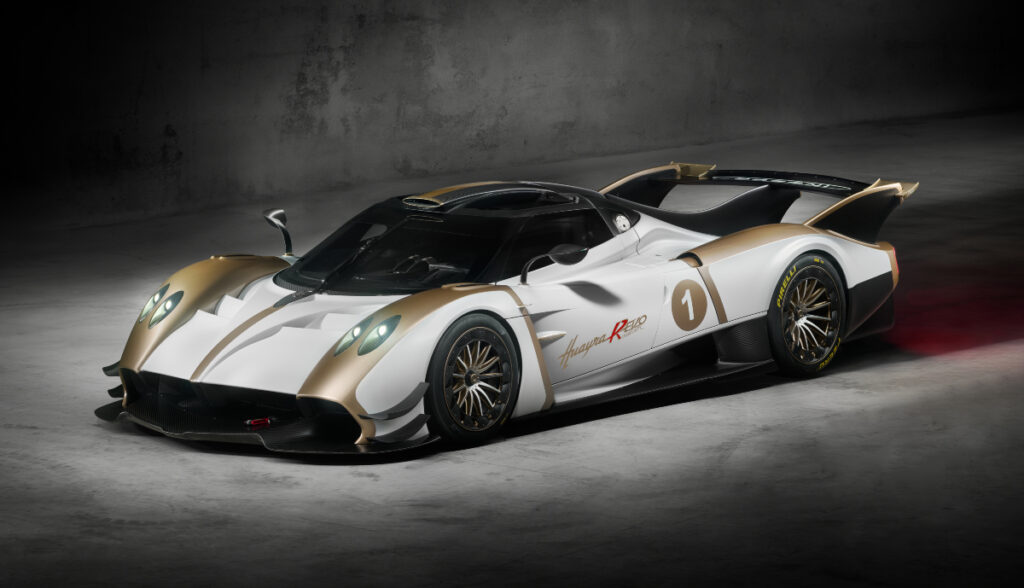
The Huayra R Evo Roadster took everything that made the Huayra R extraordinary and elevated the experience to an even more visceral level. Developed exclusively for Pagani’s Arte in Pista programme, the open-top machine was designed to immerse its driver completely in the sights, sounds and sensations of high-performance driving. Without a roof separating the cockpit from the outside world, every movement of the naturally aspirated V12 became more immediate, every gear change more dramatic and every lap more unforgettable.
Visually, the R Evo Roadster introduced a more aggressive aerodynamic package inspired by modern endurance racing and prototype competition cars. Enlarged aerodynamic surfaces generated significantly greater downforce, while the lightweight carbon-fibre structure preserved the exceptional agility and precision that defined the Huayra R. Combined with its screaming high-revving V12 and uncompromising track-focused engineering, the result was one of the most immersive driving experiences ever created by Pagani.
More than a simple evolution of the Huayra R, the Evo Roadster represented the ultimate celebration of open-air performance. It blended motorsport technology, handcrafted artistry and raw mechanical emotion into a machine that embodied Horacio Pagani’s belief that driving should engage not only the mind, but all the senses.
Huayra Tricolore
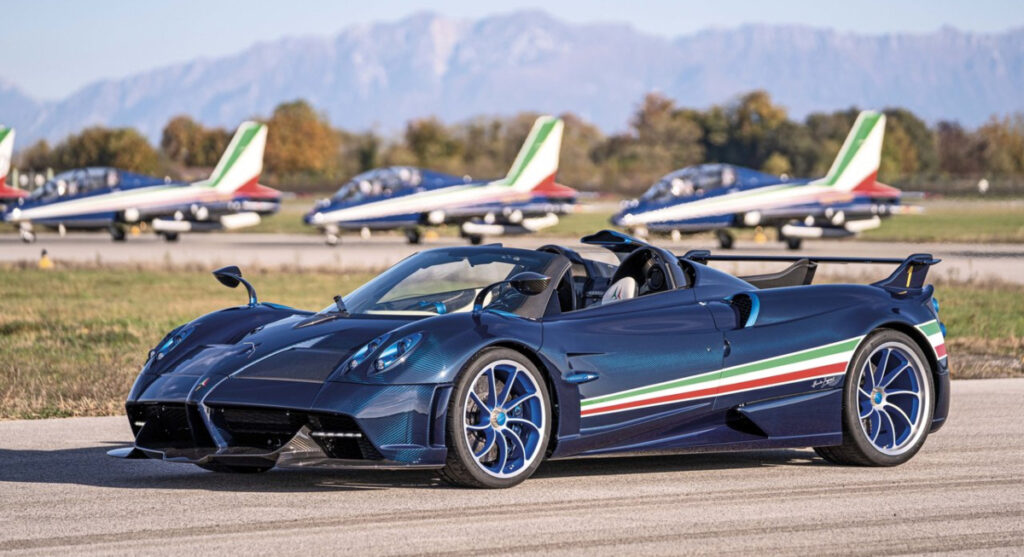
Created as a tribute to the 60th anniversary of Italy’s legendary Frecce Tricolori aerobatic display team, the Huayra Tricolore continued Pagani’s long-standing fascination with aviation. More than a special edition, it was a celebration of precision, technology and national excellence, drawing direct inspiration from the aircraft flown by one of the world’s most renowned aerobatic squadrons. Limited to just three examples, it immediately became one of the rarest and most exclusive models ever to leave the Pagani Atelier.
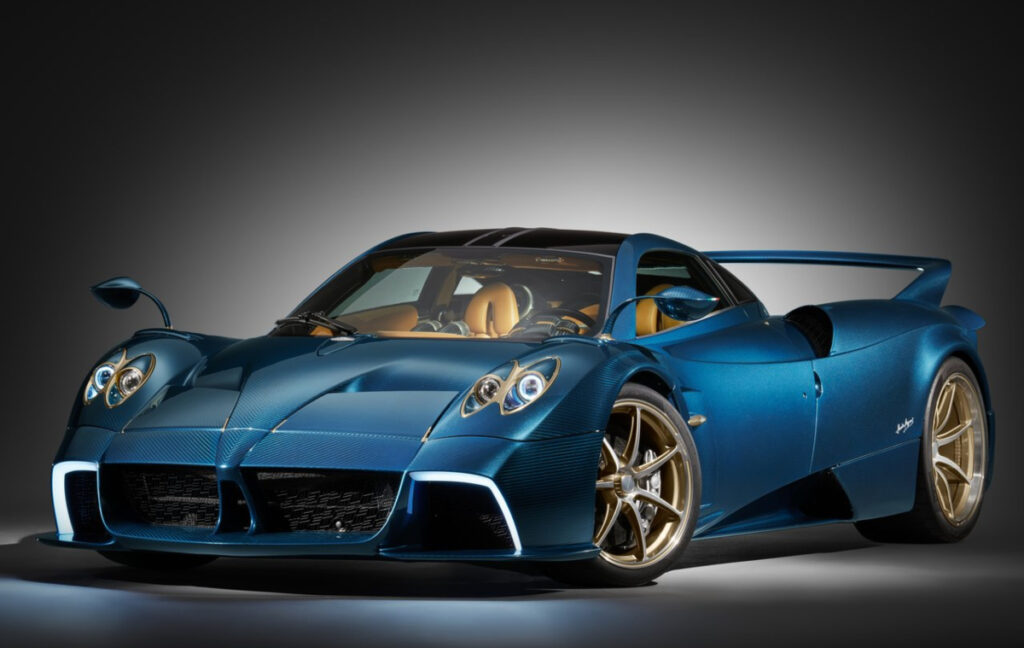
Based on the Huayra Roadster BC, the Tricolore combined extraordinary performance with a distinctive aviation-inspired identity. Its exposed blue carbon-fibre bodywork, accented by subtle references to the Italian flag, echoed the appearance of the Frecce Tricolori’s jets, while numerous bespoke details reinforced the connection to the world of flight. Aerodynamic refinements, unique wheel designs and intricate interior elements elevated the model beyond a simple commemorative edition, transforming it into one of the most visually striking Paganis ever produced.
The Huayra Tricolore perfectly embodied Horacio Pagani’s belief that automobiles and aircraft share a common pursuit of beauty, efficiency and performance. Today, it stands as one of the most collectible and recognizable models in the company’s history, blending hypercar engineering, aviation-inspired artistry and extreme rarity into a single automotive masterpiece.
Huayra Codalunga
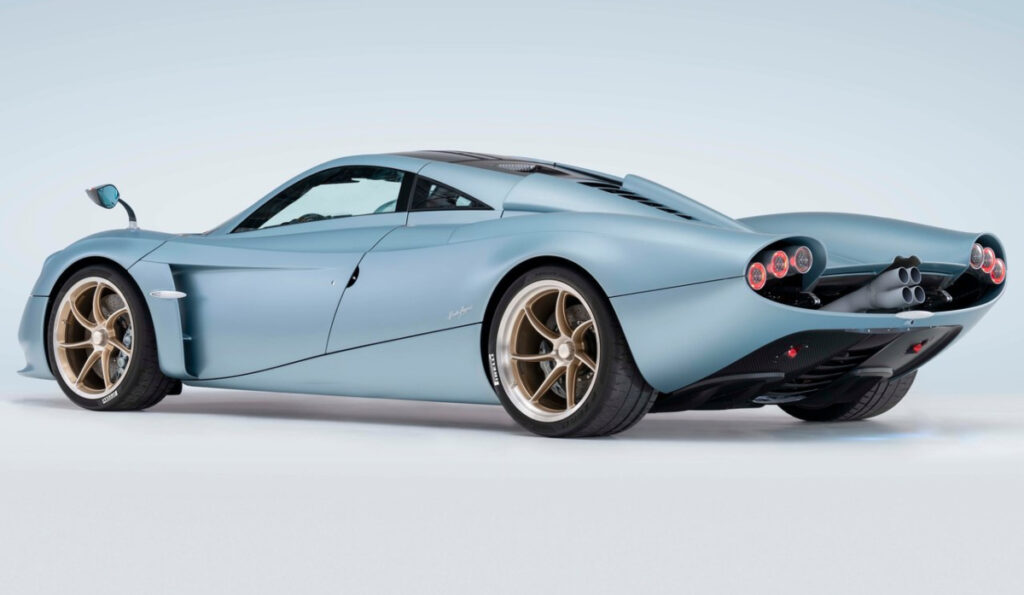
Among all the extraordinary creations to emerge from the Pagani Atelier, the Huayra Codalunga stands apart for a very different reason.
While many modern hypercars pursue increasingly dramatic aerodynamics, aggressive styling and visual complexity, the Codalunga embraced a philosophy of elegance and restraint. Inspired by the long-tail racing prototypes that competed at Le Mans during the 1960s, Horacio Pagani and his Grandi Complicazioni division set out to create a car that prioritized purity of form above all else. The result was a machine that felt less like a contemporary hypercar and more like a timeless piece of automotive sculpture.
Its elongated rear bodywork, smooth surfaces and carefully simplified design transformed the Huayra into something remarkably sophisticated. Every detail was reconsidered, from the redesigned rear section and bespoke lighting elements to the refined interior finishes inspired by classic Italian craftsmanship. The focus was not on attracting attention through excess, but on creating a sense of harmony and proportion rarely seen in modern automotive design.
The Codalunga demonstrated that true beauty often lies in restraint. Beneath its elegant exterior remained the extraordinary engineering and performance expected from a Pagani, yet the car’s greatest achievement was emotional rather than technical. It proved that a hypercar could be just as captivating through subtlety as through aggression, earning its place as one of the most elegant and artistically significant automobiles ever created by the company.
Huayra Codalunga Speedster
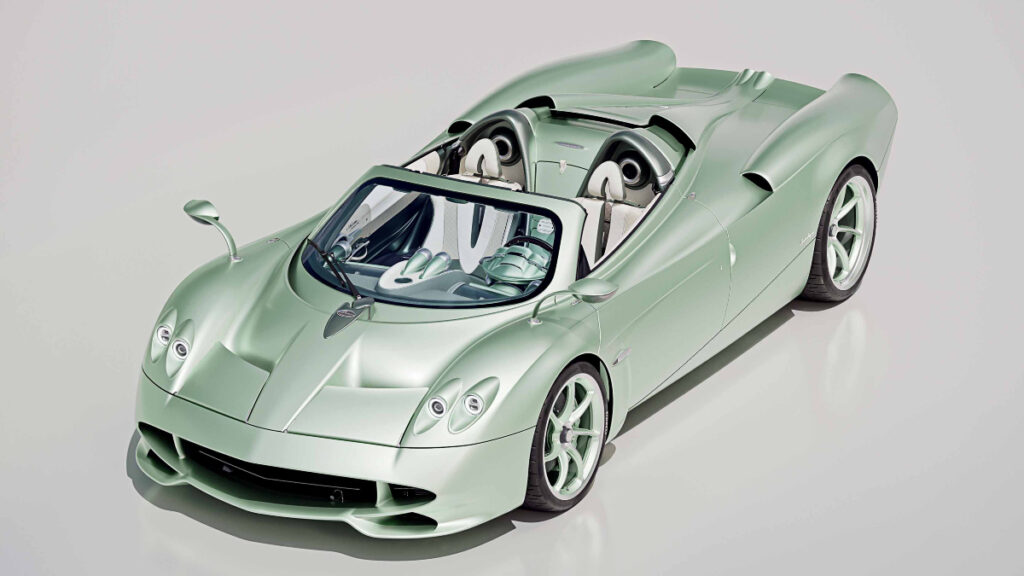
The Huayra Codalunga Speedster took the elegant philosophy of the Codalunga and elevated it through the unique emotion of open-air driving. Created by Pagani’s Grandi Complicazioni division, the model was conceived as a tribute to the romantic era of endurance racing, where beauty, speed and craftsmanship existed in perfect harmony. Rather than pursuing greater aggression or performance figures, the Speedster focused on delivering a more immersive and emotional connection between driver, machine and environment.
Its elongated rear bodywork, inspired by the long-tail racing cars of the 1950s and 1960s, flowed seamlessly into an open cockpit that emphasized the car’s sculptural proportions. Every surface was carefully refined to create a sense of elegance and visual purity rarely found in modern hypercars. Inside, bespoke materials, handcrafted finishes and exquisite detailing reflected Pagani’s commitment to artisanal craftsmanship, transforming the cabin into a work of art as much as a place to drive.
While retaining the extraordinary performance and engineering excellence expected from a Pagani, the Codalunga Speedster stood apart through its character. It was not designed to be the fastest or most extreme model in the range. Instead, it celebrated the pleasure of driving, the beauty of timeless design and the emotional appeal of mechanical artistry. For many enthusiasts, it represents one of the purest and most sophisticated interpretations of the Pagani philosophy ever created.
Huayra Imola
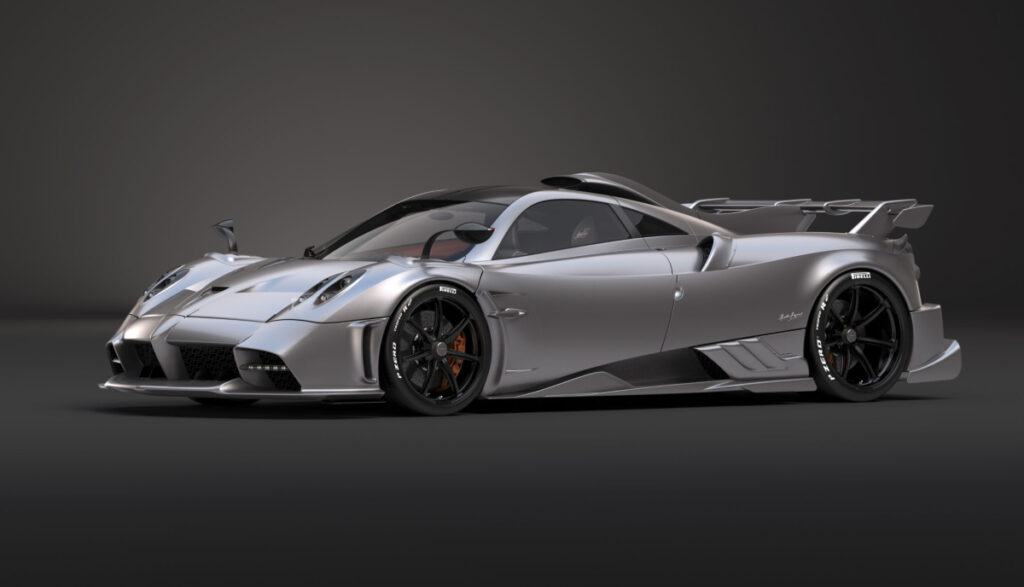
The Huayra Imola represented one of the most extreme road-going projects ever undertaken by Pagani. Named after the legendary Autodromo Enzo e Dino Ferrari circuit, the model was developed through an extensive testing programme that covered thousands of kilometres under demanding track conditions. Rather than focusing solely on power, Pagani approached the Imola as a complete engineering exercise, refining every aspect of the car in pursuit of greater performance, stability and driver engagement.
Visually, the Imola introduced a far more aggressive interpretation of the Huayra’s design language. Large aerodynamic elements, exposed carbon-fibre surfaces and functional bodywork modifications transformed the elegant hypercar into something that looked almost competition-ready. Beneath the dramatic exterior, extensive weight reduction and chassis revisions worked alongside a more powerful evolution of the twin-turbocharged AMG V12, creating a machine capable of extraordinary speed while maintaining the craftsmanship and attention to detail expected from the Pagani Atelier.
Yet what made the Imola truly special was its philosophy. It was not simply a faster Huayra, but a demonstration of everything Pagani had learned since the model’s introduction. Every vent, wing and aerodynamic surface served a purpose, blending science and artistry in a way few manufacturers could achieve. The result was one of the most focused and technically advanced road cars ever produced by the company, while remaining unmistakably Pagani in character and execution.
Huayra Imola Roadster
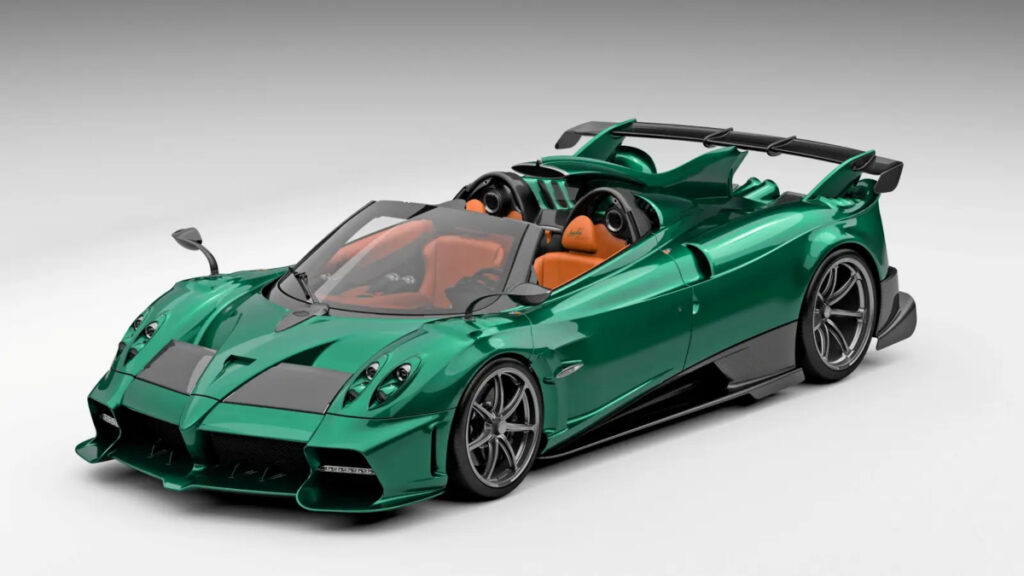
The Huayra Imola Roadster brought together two seemingly contradictory qualities: the uncompromising performance of the Imola and the freedom of open-air driving. Developed as one of the most extreme road-going Paganis ever created, it combined advanced aerodynamic engineering, lightweight construction and immense twin-turbocharged V12 power with a roofless configuration that intensified every sensation behind the wheel.
Visually dramatic and technically sophisticated, the Imola Roadster showcased Pagani’s ability to merge motorsport-inspired performance with handcrafted luxury. Every aerodynamic surface served a purpose, while the open cockpit allowed occupants to fully experience the sound, speed and emotion of the car. The result was not simply an open-top Imola, but a breathtaking celebration of engineering, design and driving engagement in its purest form.
Pagani Zonda Cervino — The Eternal Return of an Automotive Legend
From Hypercar to Rolling Sculpture
The Huayra era transformed Pagani from a boutique manufacturer into a global luxury icon.
The cars became more advanced.
The materials became more sophisticated.
The commissions became increasingly personalized.
Yet the essence remained unchanged.
The Utopia Era (2022–Present)
By the time development began on the company’s third generation, the hypercar world had changed dramatically.
Electrification was becoming unavoidable.
Digitalization dominated the industry.
Performance figures continued escalating.
Pagani chose a different path.
Utopia Coupe
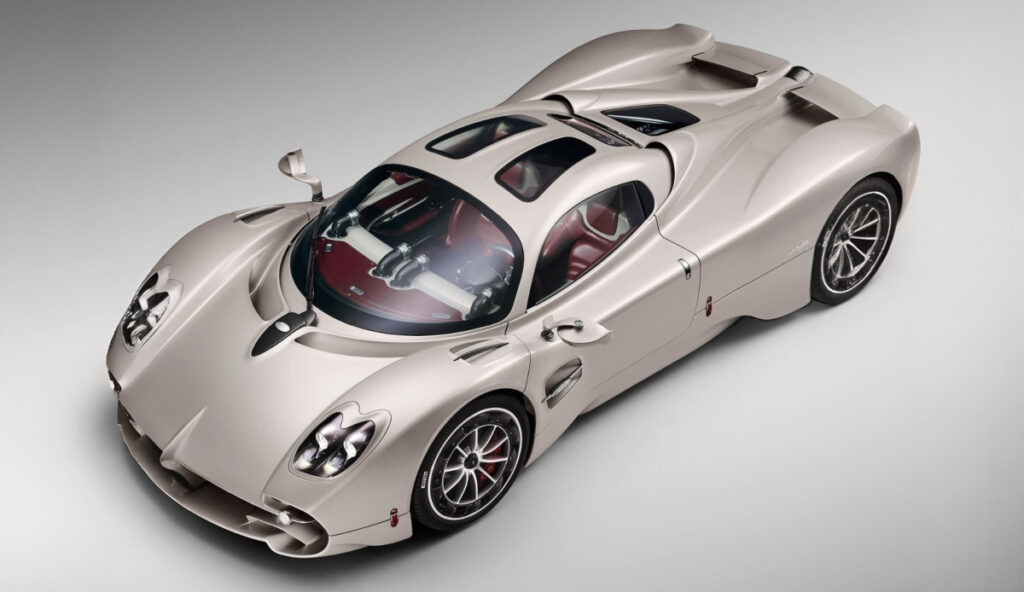
Utopia Coupe
Creating a successor to the Huayra presented Pagani with a unique challenge. The hypercar world had become increasingly complex, dominated by hybrid powertrains, digital interfaces and ever-growing performance figures. Rather than following industry trends, Horacio Pagani chose a different path. The Utopia was conceived around a remarkably simple philosophy: remove everything unnecessary and preserve everything that makes driving special.
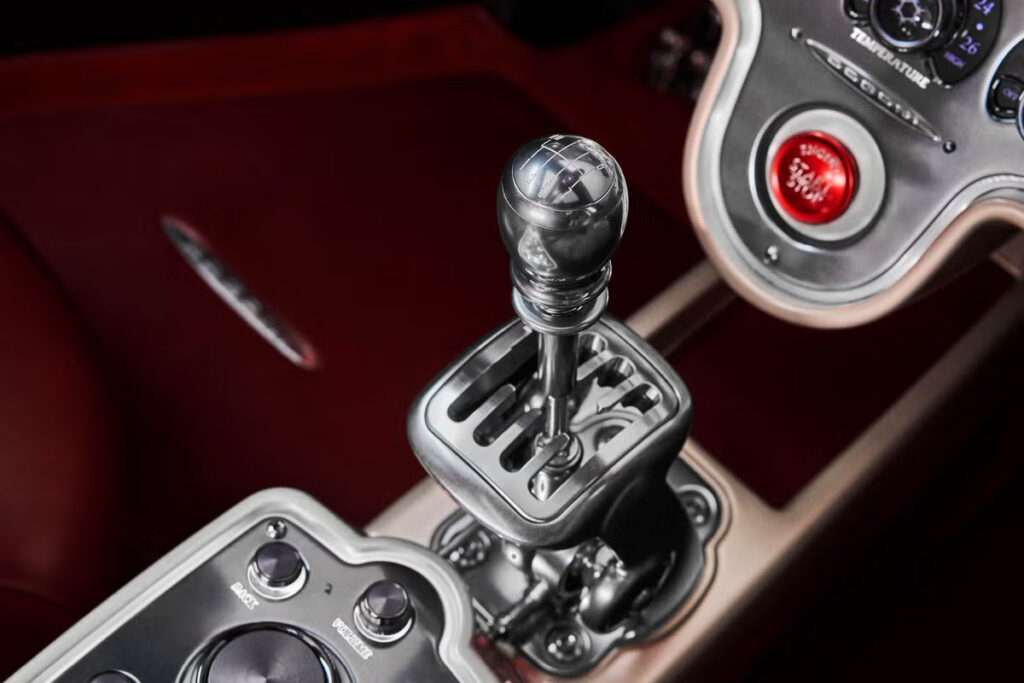
The result was a car that celebrated mechanical purity without sacrificing modern engineering. A twin-turbocharged AMG V12 remained at its heart, while a manual gearbox returned as a central part of the experience — a decision almost unheard of in the contemporary hypercar segment. The design became cleaner, the technology less intrusive and the connection between driver and machine stronger than ever. Every detail, from the exposed mechanical elements within the cabin to the beautifully crafted analogue-inspired controls, reflected Pagani’s belief that emotion should always take precedence over complexity.
More than a replacement for the Huayra, the Utopia represented a return to first principles. It proved that in an age increasingly defined by software and electrification, there is still room for craftsmanship, character and genuine driver involvement. For many enthusiasts, it stands as one of the purest and most authentic hypercars of the modern era.
Utopia Roadster
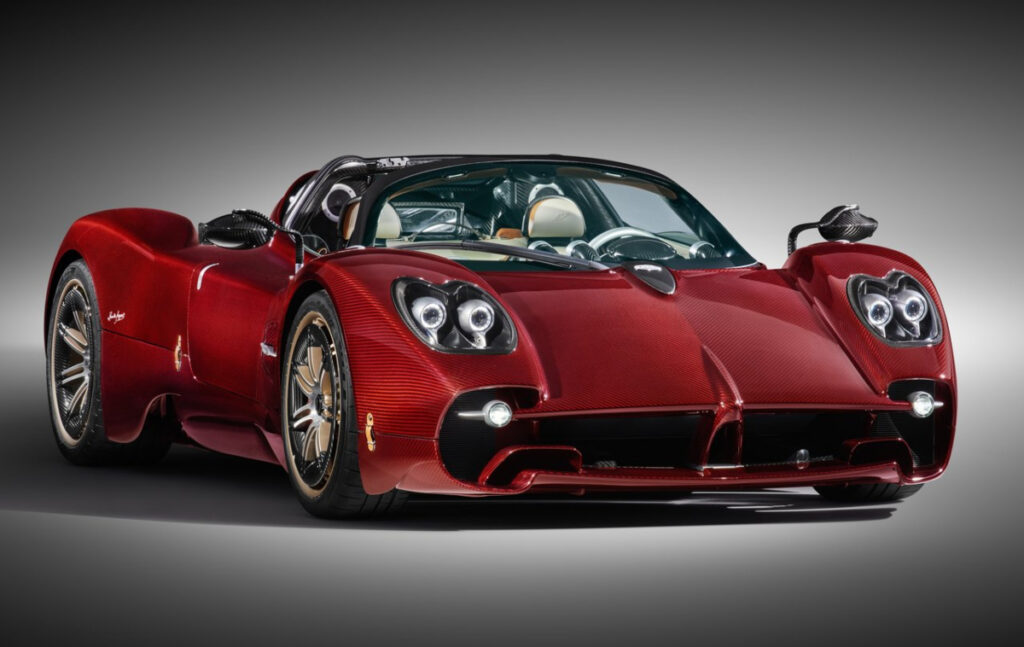
Utopia Roadster
The Utopia Roadster takes the philosophy of the coupe and elevates it through an even greater sense of freedom and connection. Rather than treating the open-top configuration as a compromise, Pagani engineered the Roadster to preserve the structural integrity, performance and emotional character that define the Utopia. The result is a hypercar that feels every bit as focused and engaging as the coupe while offering a more immersive driving experience.
With its removable roof panels, exposed mechanical details and beautifully sculpted bodywork, the Utopia Roadster captures the essence of what Horacio Pagani has always sought to achieve: the perfect balance between art and engineering. The twin-turbocharged V12 and available manual gearbox remain at the heart of the experience, allowing drivers to enjoy one of the last truly analog-inspired hypercars in an increasingly digital world. Open to the sky and rich in craftsmanship, the Utopia Roadster represents the purest celebration of driving pleasure in the modern Pagani era.
For many collectors, it may ultimately become the definitive Utopia. Combining breathtaking design, exceptional exclusivity and an unparalleled connection between driver and machine, it serves as a fitting continuation of a legacy that began with the Zonda more than two decades ago.
The Return of Mechanical Purity
The Utopia stands apart because it refuses to follow industry trends.
It does not rely on hybrid systems.
It does not overwhelm the driver with digital interfaces.
Instead, it celebrates craftsmanship, tactile interaction and emotional connection.
In a world increasingly dominated by software, the Utopia feels refreshingly human.
Beyond the Cars
To understand Pagani fully, one must look beyond specifications.
The company pioneered advanced composite technologies such as Carbo-Titanium and Carbo-Triax.
Its interiors are inspired by aviation, watchmaking and industrial art.
Its manufacturing process resembles the work of master craftsmen rather than conventional automotive production.
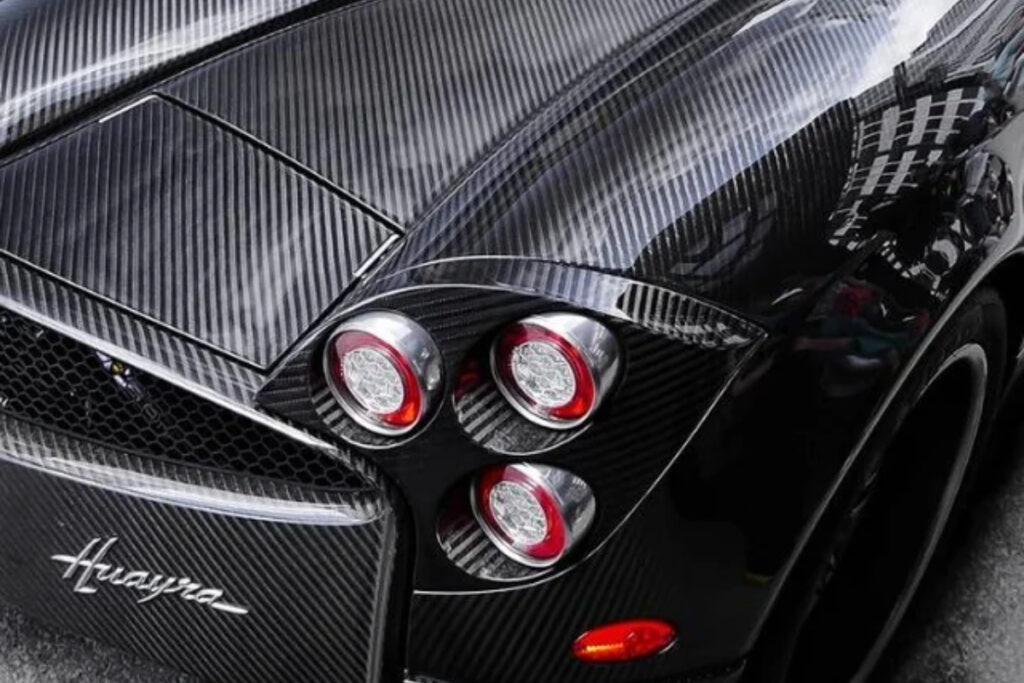
Every vehicle is assembled with extraordinary attention to detail.
Every component is treated as both an engineering solution and a design object.
This philosophy extends through the entire Atelier experience, where clients collaborate directly with the company to create deeply personal automobiles.
No two Paganis are truly identical.
And that is precisely the point.
The Legacy of Horacio Pagani
Few individuals have left a greater impact on the modern hypercar world than Horacio Pagani.
Vision challenged conventional wisdom.
Obsession with materials redefined automotive engineering.
Commitment to beauty elevated the automobile beyond transportation.
More than twenty-five years after the first Zonda appeared, the influence of that vision can be seen throughout the industry.
Many manufacturers build extraordinary performance cars.
Very few build masterpieces.
From the Zonda to the Huayra and now the Utopia, Pagani has spent more than a quarter of a century proving that speed and beauty are not opposing forces.
They are partners.
Just as Horacio always believed.
And that is why Pagani remains one of the most fascinating names in automotive history.