
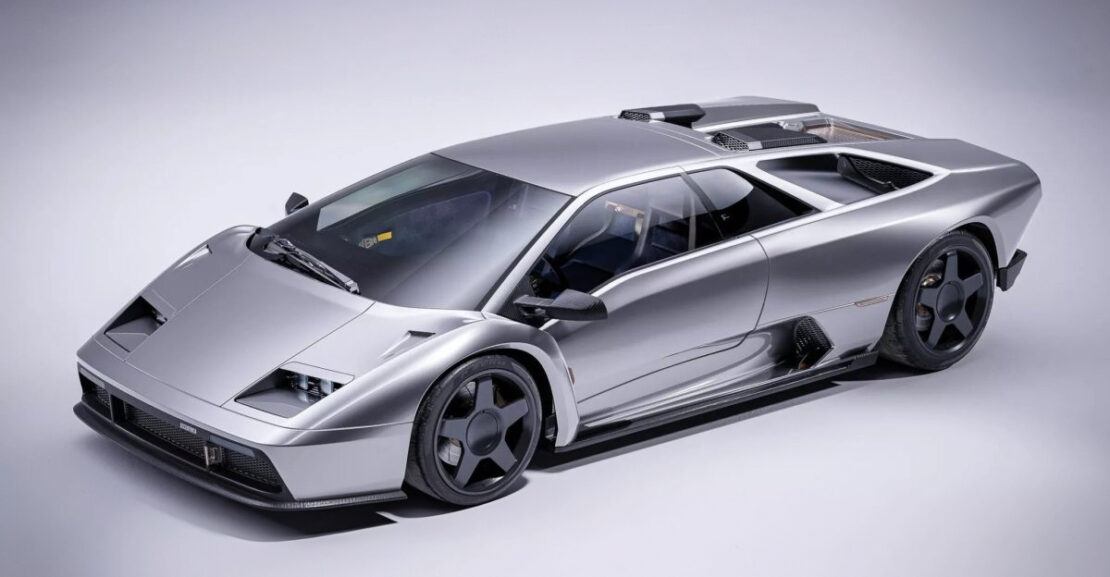
During the last decade, the restomod world has transformed from a niche enthusiast movement into one of the most fascinating sectors of the automotive industry. Companies such as Singer, Kimera, and Gunther Werks have proven that some legendary performance cars can be reinterpreted for the modern era without losing their original soul.
Now, Eccentrica Cars is attempting something many enthusiasts once considered untouchable:
the reinterpretation of the Lamborghini Diablo.
And somehow, against all expectations, it works.
Rather than transforming the Diablo into a completely modernized hypercar disconnected from its roots, Eccentrica has focused on preserving the raw analog personality that made the original Lamborghini so iconic. The result is not simply a restoration, nor a conventional restomod, but a highly engineered reinterpretation of what the Diablo might have become if Lamborghini had continued refining the original rear-wheel-drive V12 platform using modern materials and technology.
The Origins of Eccentrica
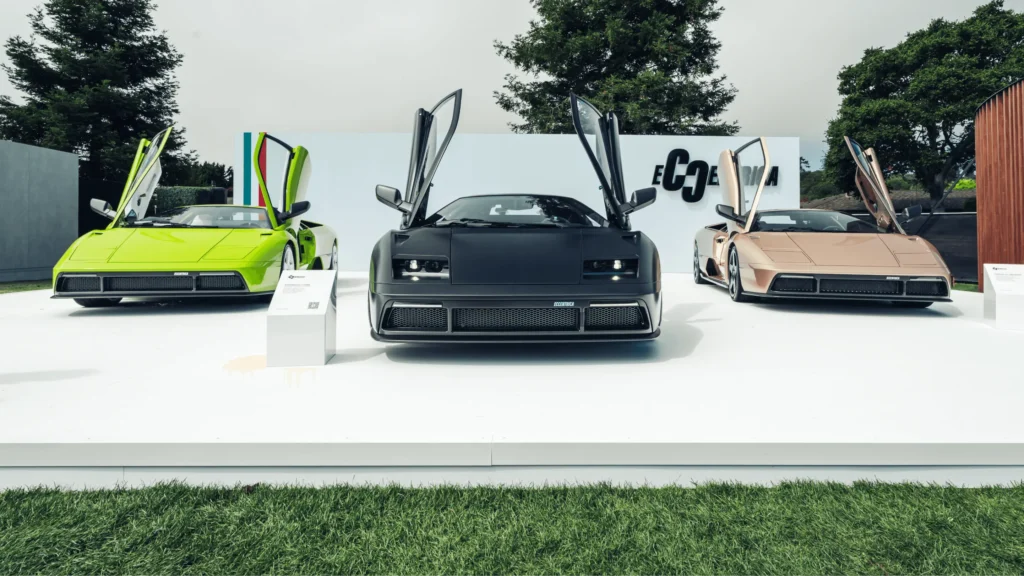
Emanuel Colombini founded Eccentrica Cars after years of fascination with 1990s supercars, particularly the Diablo itself. According to the company’s philosophy, the goal was never to erase the identity of the original car, but to enhance the driving experience while preserving the emotional intensity and visual drama that defined Lamborghini’s most iconic analog era.
That philosophy became the foundation of the company’s first and flagship project:
the Eccentrica V12.
Presented publicly in 2023, the car immediately attracted global attention because of how respectfully — yet aggressively — it reinterpreted the Diablo formula. Instead of chasing extreme horsepower figures or excessive digitalization, Eccentrica focused on balance, usability, engineering precision, and mechanical engagement.
The company collaborates with high-end suppliers and engineering partners including:
- Pirelli
- Brembo
- Capristo
- Alcantara
- Marantz
The project itself was also shaped visually by the Milan-based design studio BorromeodeSilva.
Eccentrica V12
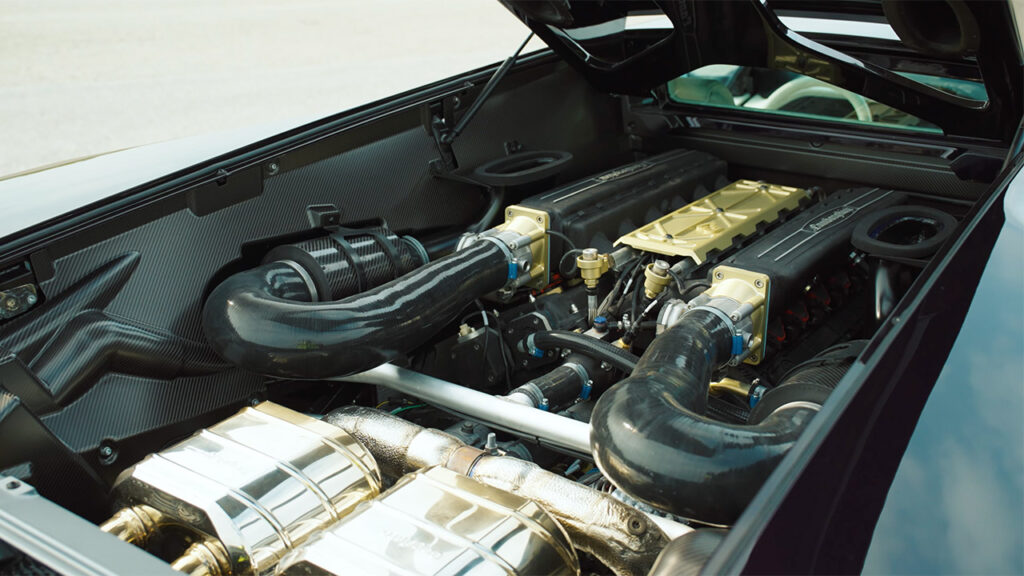
At its core, the Eccentrica V12 remains based on the first-generation rear-wheel-drive Diablo from the early 1990s — a deliberate choice that reflects the company’s obsession with preserving the rawest and most analog version of Lamborghini’s iconic V12 supercar.
The original naturally aspirated 5.7-liter V12 has been comprehensively reworked through upgraded camshafts, revised throttle systems, lighter internal components, and a bespoke exhaust developed with Capristo. Output rises to approximately 550 hp and 600 Nm of torque, while still retaining the dramatic high-revving character and mechanical sensation of the original Diablo.
Crucially, Eccentrica resisted the temptation to replace the experience with modern automation. The car retains a gated six-speed manual transmission and pure rear-wheel drive, preserving the physical and demanding personality that made early Diablos so memorable.
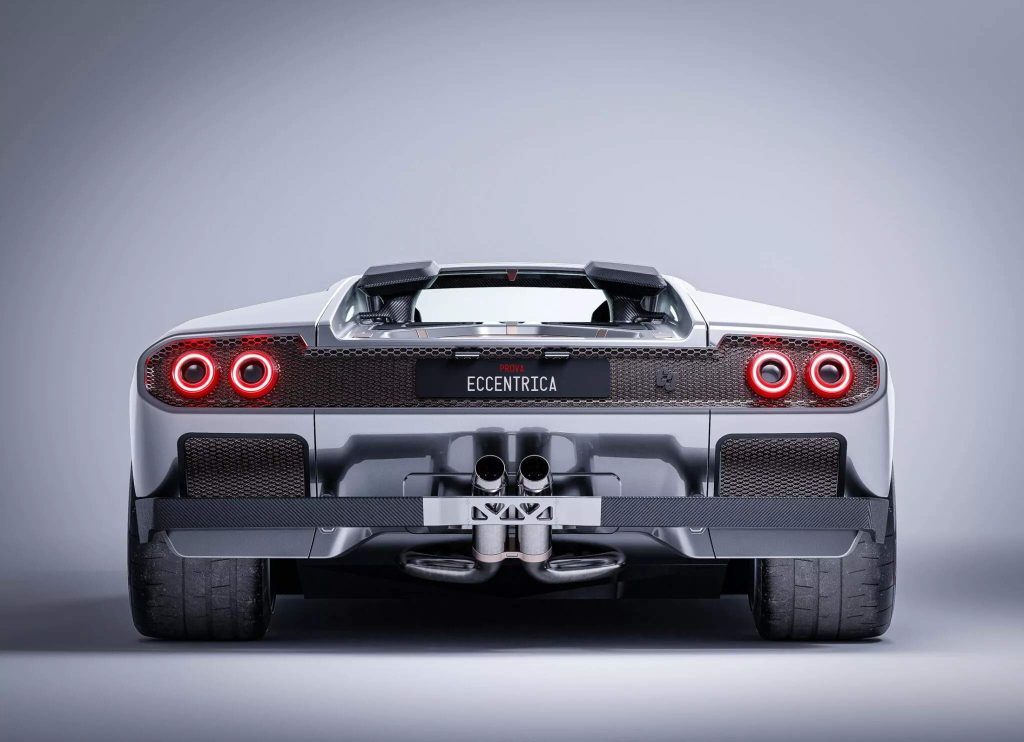
Performance figures reflect the project’s balance between analog emotion and modern engineering:
- approximately 0–100 km/h in 3.5 seconds
- top speed around 335 km/h
- dramatically improved chassis rigidity
- modern adaptive suspension
- Brembo braking system
- Pirelli P Zero Trofeo R tires.
A Diablo Reimagined for the Modern Era
Visually, the Eccentrica V12 feels instantly recognizable yet completely transformed.
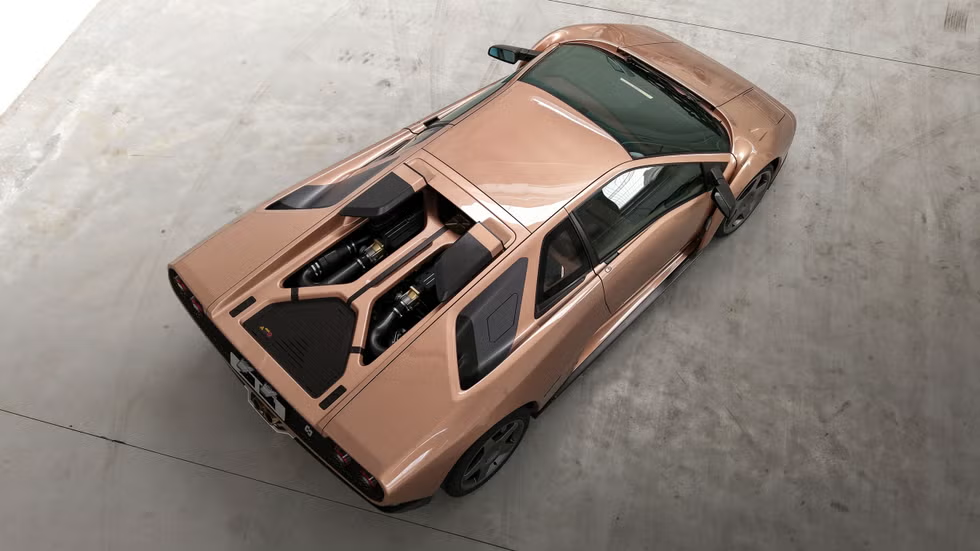
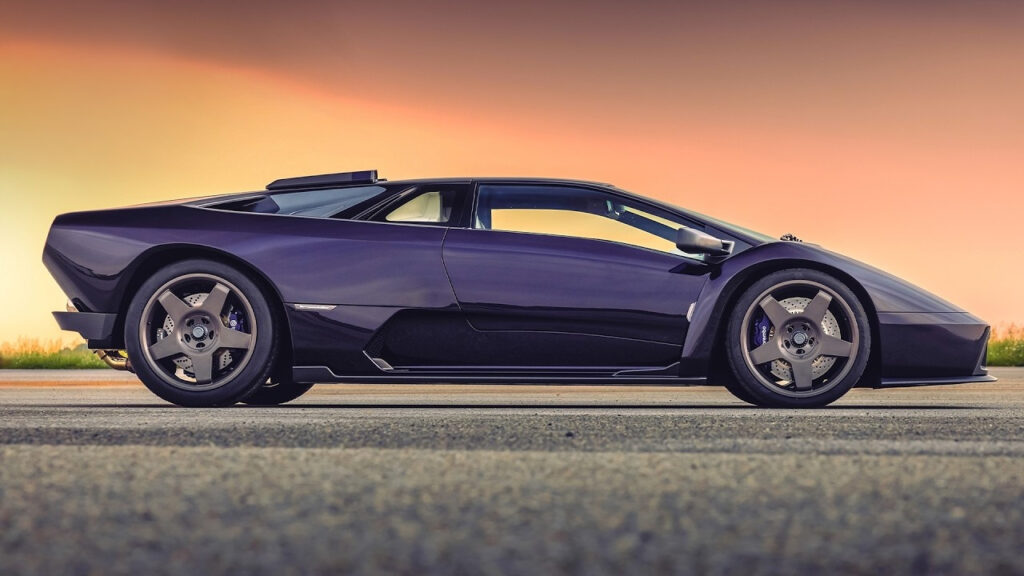
The original Diablo silhouette remains intact, but nearly every body panel has been redesigned using lightweight carbon-fiber construction and modern aerodynamic thinking. Wider arches, revised air intakes, sculpted diffusers, titanium details, and exposed engine elements create a machine that feels closer to a modern endurance prototype than a traditional 1990s supercar.
Unlike many modern restomods that smooth away the personality of the donor car, Eccentrica intentionally amplifies the Diablo’s theatrical aggression. The famous pop-up headlights remain, the proportions stay brutally low, and the rear section embraces exaggerated motorsport-inspired detailing clearly influenced by cars such as the Diablo GTR.
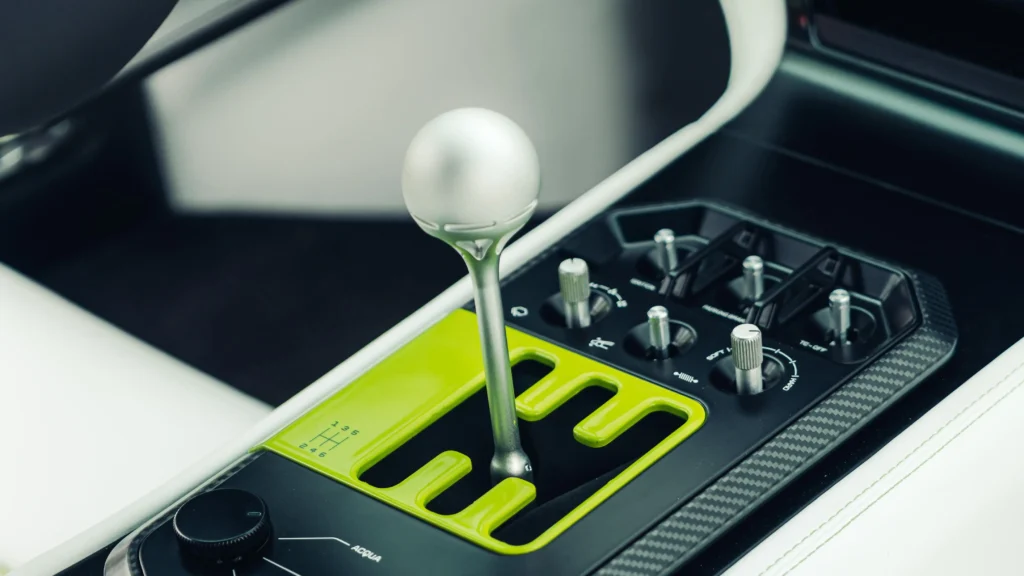
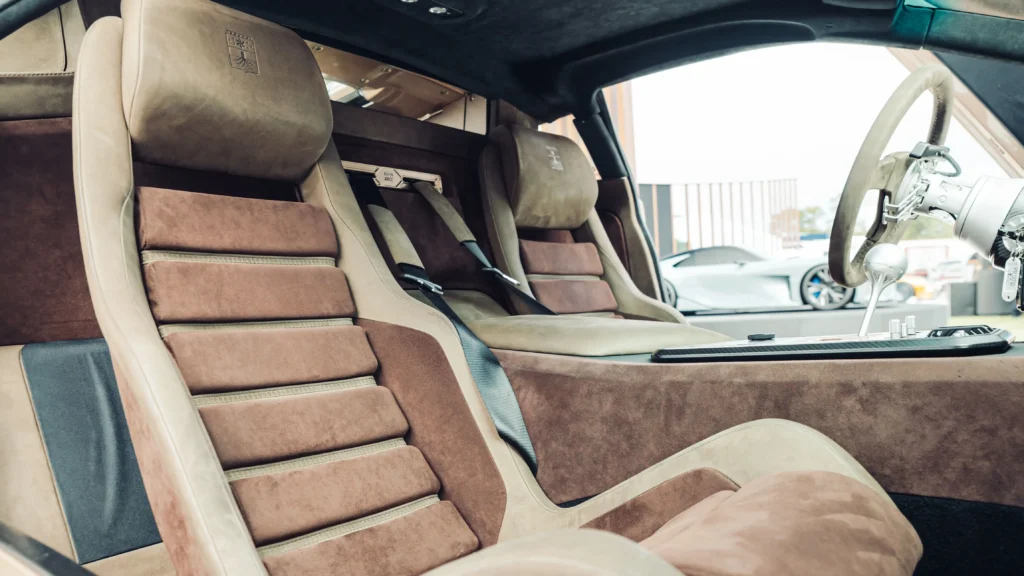
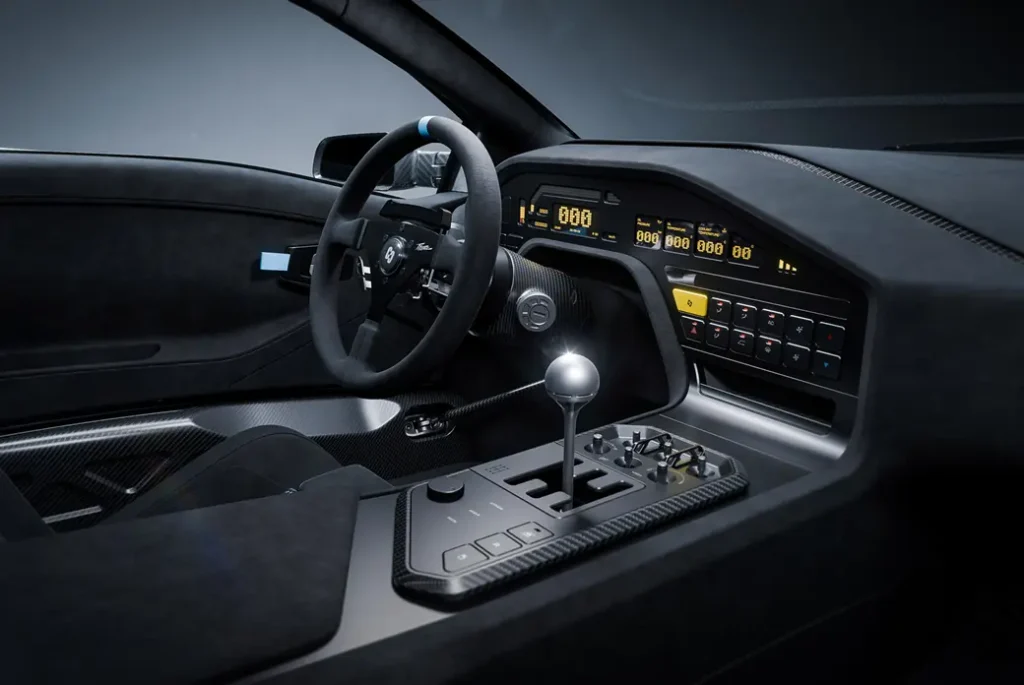
The interior follows the same philosophy.
Original 1990s ergonomics have been completely redesigned, replacing fragile plastics and dated interfaces with aluminum, Alcantara, carbon fiber, and aviation-inspired switchgear. Yet the cabin still feels unmistakably Diablo — just evolved into something far more precise and tactile.
Eccentrica V12 Pacchetto Titano
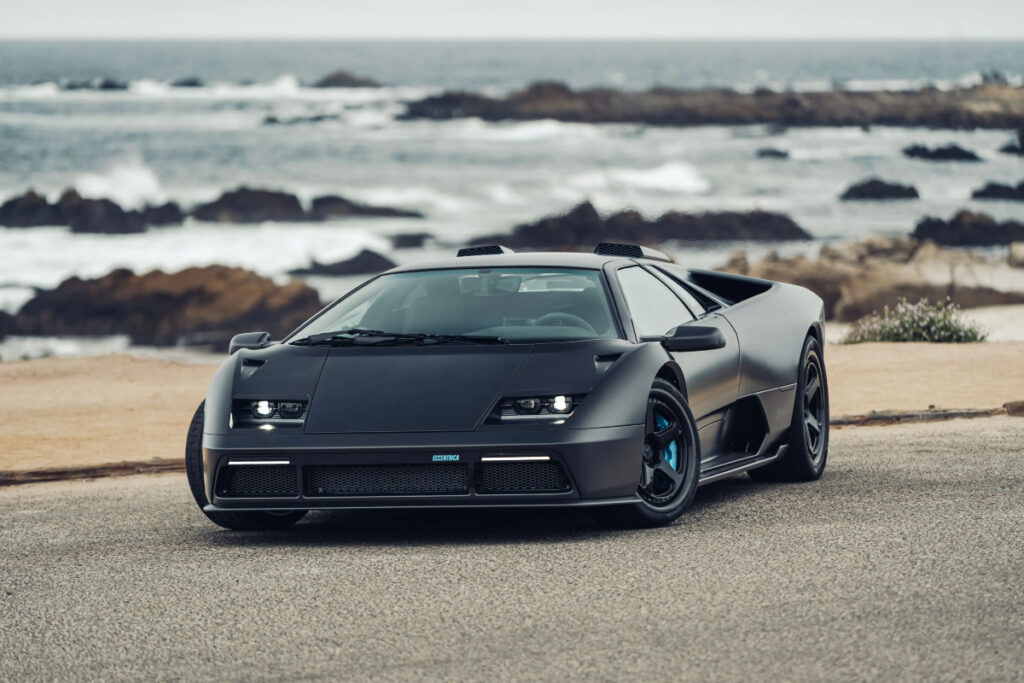
Eccentrica later pushed the concept even further through the introduction of the Pacchetto Titano package — a more track-oriented evolution of the V12 restomod philosophy.
The Titano specification introduces additional exposed carbon-fiber surfaces, revised aerodynamic components, recalibrated adaptive suspension, lighter wheel construction, and further chassis-focused refinements aimed at improving feedback and circuit performance.
Visually, the package embraces an even more aggressive appearance while still respecting the original wedge-shaped Diablo design language. Matte carbon-fiber finishes, redesigned aerodynamic channels, and revised downforce elements create a car that looks simultaneously futuristic and deeply rooted in 1990s Lamborghini culture.
Rather than transforming the Diablo into a sterile modern supercar, the Titano package continues Eccentrica’s central philosophy:
elevating the original car while preserving its analog brutality and emotional intensity.
Limited Production and Collector Appeal
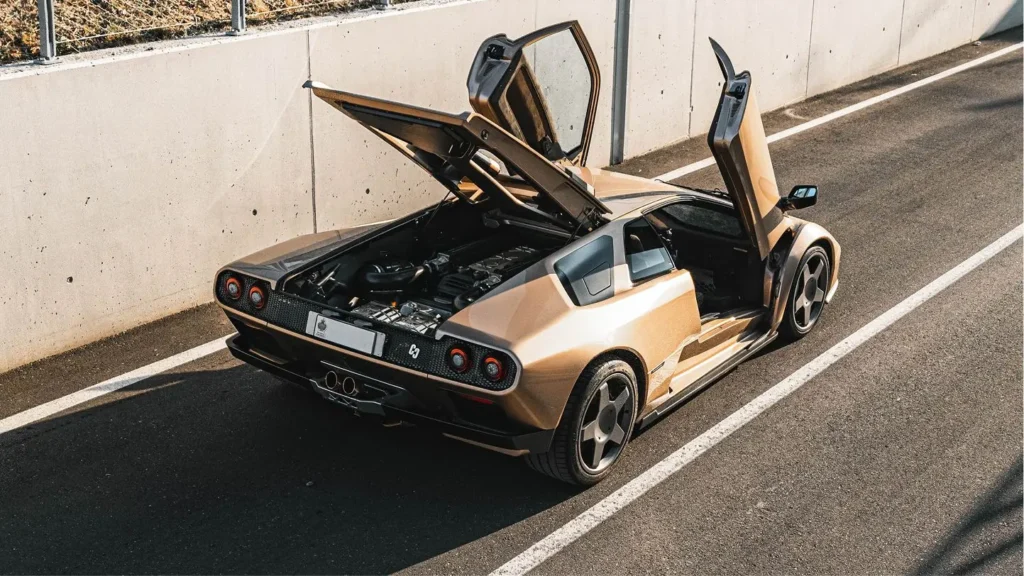
Only 19 examples of the Eccentrica V12 will be produced worldwide, with each car extensively customized according to the owner’s specifications. Production reportedly requires between 16 and 18 months per vehicle, with prices beginning well above €1 million before the donor Diablo itself is included.
That instantly places the Eccentrica V12 in the same ultra-exclusive territory occupied by the world’s most desirable modern restomods.
But perhaps what makes the project so fascinating is that it does not attempt to erase the Diablo’s flaws entirely. Instead, Eccentrica embraces the rawness, violence, and analog drama that made the original car legendary, while refining the engineering around it to create a more precise and usable machine.
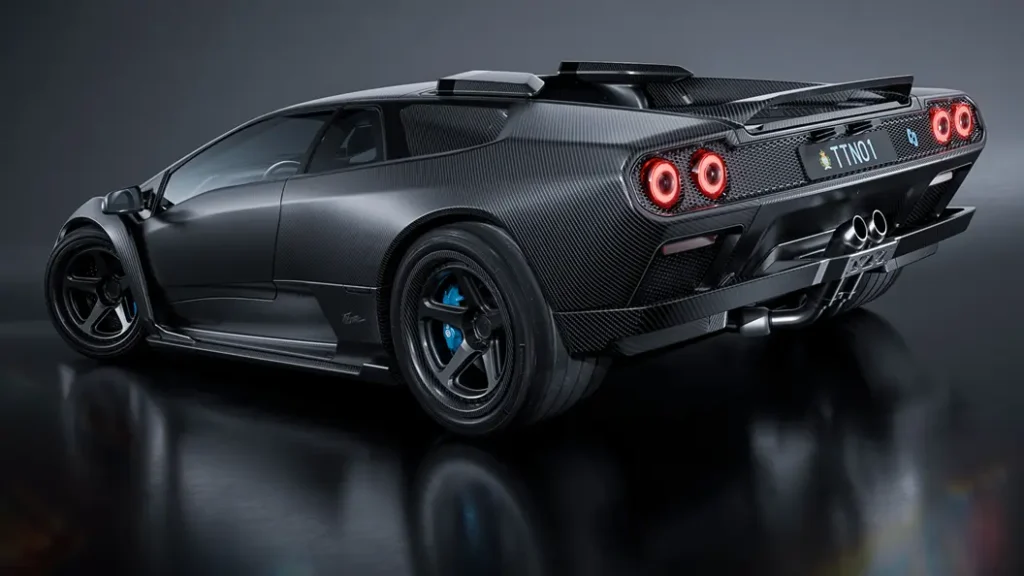
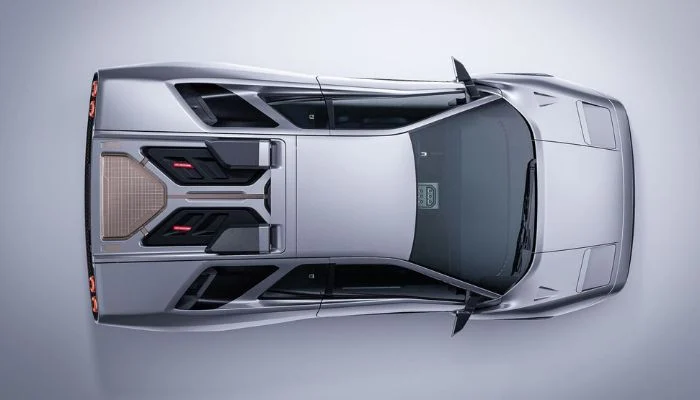
In many ways, the Eccentrica V12 feels less like a modified Lamborghini and more like an alternate reality version of the Diablo itself — a vision of what the iconic V12 supercar might have evolved into if Lamborghini had continued developing the original analog platform without compromise.
And for a generation that grew up idolizing the Diablo on bedroom posters and magazine covers, that idea is almost impossible to resist.
Discover More About Eccentrica Cars
For collectors and enthusiasts seeking a modern reinterpretation of the Lamborghini Diablo without sacrificing its raw analog character, Eccentrica Cars represents one of the most fascinating restomod projects in today’s automotive world. Combining handcrafted engineering, limited production exclusivity, and naturally aspirated V12 emotion, the Eccentrica V12 stands as a unique vision of what the Diablo might have evolved into for the modern era.